
ALL MY SONS: A STUNNING STRATFORD FESTIVAL PRODUCTION OF ARTHUR MILLER’S PLAY THAT FORCES OUR HONEST INTROSPECTION

Very soon into the Stratford Festival’s production of All My Sons, we realize that we intimately know these people before us. We run into them by the hour in our daily lives. However, if we have the guts to admit what we are, we soon here recognize ourselves as well, especially our hidden parts of feeling and deed and memory that we instinctively conceal. The playwright, of course, writes with an expected masterful skill quite beneath the skin of his characters where mask and façade are born. He writes with unrelenting insight where human self-deception and deception of others crack and crumble, no matter how hard we try to maintain them.

What makes this production memorable is that, thanks to these actors—without exception—we see deeply considered lives unfold in a firmly present tense before us. We sense that, as these lives reveal themselves to us, they certainly don’t want to be revealed, they want to protect their illusions, delusions, and daily rituals of survival. We thus feel like intruders, voyeurs of a kind. More to the point, what if they ask us to see ourselves in how they get through life in this world –we too will be exposed. The strength of this cast is that it doesn’t reach out to convince us or to merely demonstrate human propensities, but rather pulls us in to experience the emotional lives of the characters collectively portrayed.

You have met Joe Keller many times. Here, through an insightful Joseph Ziegler, he is the quintessence of ordinary, a man garbed in the American Dream of success and also garbed in baggy pants and a plaid shirt with suspenders. He sits in his back yard, perusing the daily paper with the casual intensity that such reading requires. He seems an okay guy, a reticent blandness you might politely listen to or desperately avoid. “I ignore what I’ve got to ignore” does seem his declared motto, but the tired worried look in his eyes is constant and troubling. And, no matter what happens to him, we’re never quite sure why.

Keller’s style of life seems colourless, yet he is an amiable, unpatronizing friend to the neighbourhood kids, so we feel some comfort in their fun together. Nevertheless, he obviously needs to perpetuate the façade that everything is okay and later urgently tries to discredit his former partner, Deever, with the ironic “the man never learned how to take the blame.” Joe embodies the capitalist, profit-driven American Dream -“It’s nickels and dimes” he summarizes- and we realize gradually that he is both a success story in achieving this dream and a casualty of it. He takes no prisoners and for that he becomes one. His past knows his name and it is getting nearer. Ziegler makes us worry for him.

We meet Lucy Peacock’s Kate Keller at the outset. It is dark, “4:00 a.m.” and she “walks the night” in what seems a habitual emotionally crippled glide into her back yard. There she reaches into the sky, beyond herself and perhaps beyond her existence, one might assume, but a storm is in the works, thunder rumbles, and a tree nearby cracks and falls. We note how she exists on the verge of becoming frail and old. Later we note how she struggles to walk and articulate words, how she seems to dwell in a private hell that will never be reached by anyone. She needs others to share her delusion that son Larry is not dead and declares “I want you to act as if he is coming back.” She also pleads the heartbreakingly desperate “Believe with me Joe, I can’t stand alone”

Usually Kate badgers others into submission through the force of her passionate desperation or beats them down with her own despair. We feel the tension in her pain, not because she might break but probably because she is unable to. In all this, she seems haunted but vigorously so. Later on she goes motherly on George when he is about to reveal the family secret and tries to quiet him with a truism: “We all get hit by some lightening”. And she attacks George and manipulates –she’s good at it- with the unanswerable question “Why do you have to make believe you hate us?” Meanwhile, she tries and tries to will her dead son alive. She goes for the jugular of any suggestion to the contrary. Through Peacock, Kate’s pain is a cosmic force.

Tim Campbell plays Chris, the Keller’s living son, with assertive subtlety. He spars with his dad and we sense a guileless kid playing the role that family life assigns him. This he does even though, according to his mother, he was a “killer” in the war. His body and manner embody irony since, after all, his parents to whom he acquiesces are aging toward frailty while he, their son, stands hulking in a hesitant awkwardness. The undercurrent of contained emotion in him is palpable and we wonder –and know too, don’t we? – why this military guy who has just been through the war cannot be an adult with his parents. He kisses his bride to be nervously and we know he is holding back, but from what we are unsure.

We sense Chris’s ongoing dance with his past in the war and also with the blend of truth and lies that shape family life. Kate as a cautioning mother tells him “You don’t realize how much people can hate, Chris” -is this a clue to something?. Ann observes how he is always finding something good to say about people, and indeed he is accommodating, considerate and a little too nice, like one playing a tightly-scripted role. But like his dad he doesn’t want stability rocked with damaging truth that will disturb his mother. On the other hand, he is frustrated that his mother does not face the fact that her other son is dead. Like a good kid, he is always in the middle, a place some would call hell.

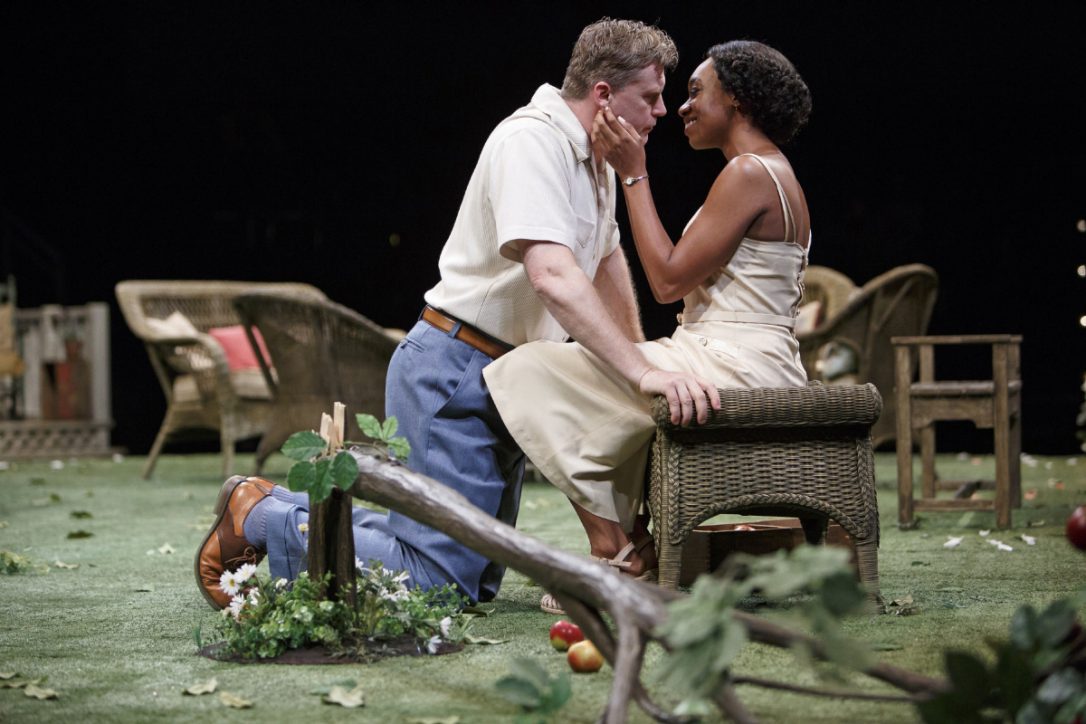
We watch Sarah Afful’s Ann Deever develop before us as a poised young woman with an understandably low key and cautious manner. She is feeling her way in a family situation she has not encountered for three years. These are her former neighbours, the family of her once fiancé and his brother, the latter to whom she would now be wed. Joe Keller had been exonerated for a crime that his partner, her father, a man she refuses to see, is now in jail. Her father is a strong though avoided presence for her and she seems vaguely beaten down by life, but not beaten. She hears and speaks with her body, reacts gradually like one who perhaps knows secrets she must conceal and is feeling her way. Thus we sense we have something to later find out.

On one hand, we see Ann as warm and responsive and politely confident, but she also, at the same time, suggests a woman just out of reach, one on the edge of mysterious. We sense a quietly burning turmoil in Ann, one that her composure usually, but not always, conceals. She is not a woman who declares her inner life outright on her own, but one who reveals by subtle clues. She doesn’t suppress her feelings, but doesn’t make them an ongoing fact of her life. She seems to float like a whisper, albeit with implied unspoken torments, one notch above the social façade of those about her. But she refuses to see her father, she lives with that unresolved fact of her life, and we wonder what else goes on in her head, in her heart.

Each life in All My Sons has its regrets, perhaps pain, and its attempt at a resolution. E. B. Smith’s Dr. Jim Bayliss is a man unobtrusively confident in himself, a good neighbor more geared to helping others than his own wife. We discover a concealed depth to him in his revelation that he always knew of Joe’s guilt. To this Kate adds a pulsating fact, “Chris almost knew,” and again the lie of the Keller’s family situation rises to the surface. Meanwhile, Bayliss speaks for many a life turned sour with “It’s hard to remember the kind of man I wanted to be.”

No doubt the energetic wife of Dr. Bayliss, Sue, has her own regrets. We notice her want of reticence, her outspokenness, her active hips, the way the light fabric of her dress sits like a breeze on her backside, and we know she’s too hot for the tightened Americana of this neighbourhood. Meanwhile neighbour Frank, with checkered slacks, is slightly cocky in hat and manner, while his wife, Lydia, bubbles freshly into the minutiae of middle class life. Each of these neighbours goes home to an existence we can easily imagine from what we see of them before us. They show us enough to make us wonder who they really are and might be.

Joe, Kate, Chris, and Ann each carry heavy emotional loads as they try to stay afloat. It’s a measure of this brave production that as much is left unspoken and implied as is actually said by them. Thus an undercurrent of tension prevails in the unsaid, and we feel the intensity of this volatile situation and its fragile cover-up. We know it will explode, but who knows when? “If your brother’s dead, then your father killed him,” Kate tells Chris. “She’s out of her mind” Joe says.

Indeed, one fears that Michael Blake as George Deever will explode in a performance of barely contained rage against injustice done to his dad, his own frustration at being unheard,  and his having to endure the devices of white humiliating black. And we come to realize more and more that something is rotten in Americana’s back yard. Chris has gradually come to acknowledge, come to admit, that in truth it was his father who was responsible for the death of twenty-one pilots. We then feel Joe’s desperation when he tries to save himself with, “Chris, I did it for you.” In turn Chris agonizes with the impotent “What must I do to you?” but no ocean of water can clear the Keller family, and anyone they touch, of this deed.

The Keller family has lived a cancerous lie supposedly to protect the fragile Kate with her self-delusions. But the lie has been kept secure to prevent revelations of each one’s complicated part in that mutually-supportive lie. Joe’s question “What do I do now?” can have no answer. There is no answer which does not seed its own destruction in some fatal way, like Kate’s remark “Tell them you’re willing to go to prison.” Not long after, Kate alone in the back yard says Joe’s name four times and the last is spoken from the depths of human hopelessness, not for oneself but for another, another human one has loved. It is shattering to hear and I’ll never forget it.

In Miller’s play the American dream may kill itself, idealism may sob its guts out at the compromised world in which it exists, and always people may do their futile and sometimes dirty best to survive. But the only possibility is to live and see it all through –if we can. How much of ourselves can we indeed live with, Miller, through this convincingly human but unrelenting production, seems to wonder and ask. Director Martha Henry never lets us off the hook, never allows her actors to leave their parts unquestioned and deceive us with evasion, never avoids the nitty-gritty of a lie that human nature may decree to keep us going. The characters, and the actors here who find them, take us into truths about ourselves that we as individuals -and as a culture- would rather conceal and much too often do.

Posted in Stratford Shakespeare Festival, Uncategorized | Tagged , , , , , , , , , | Leave a comment

STEWART GOODYEAR: A “MASTER PIANIST” (AMERICAN RECORD GUIDE) AND “BRILLIANT ON EVERY LEVEL” (PHILADELPHIA INQUIRER) PLAYS BRAHMS # 1 WITH THE HAMILTON PHILHARMONIC ON SEPTEMBER 17: A REVIEWER’S INTERVIEW WITH PEOPLE IN THE ARTS

James Strecker: Please tell us about one or more projects that you have been working on, are preparing, or have recently completed. Why do they matter to you and why should they matter to us?

Stewart Goodyear: This year has been very enriching for me as a composer. My projects have included four commissions…a suite for piano and orchestra, an overture, a piano quartet, and a solo piece for piano commemorating Canada’s 150th Anniversary. It is very difficult to say what it is about each project that the audience responds to…all I can say is that every project I have done has been received very positively. It is my responsibility as an artist to communicate my love for the music I create as a composer, and the music I interpret as a pianist, from the heart.

JS: If you were asked for 50 words for an encyclopedia to summarize what you do, what would you say?

SG: A concert pianist begins his/her preparation by being a messenger of the composer’s deepest feelings and thoughts. He/she takes on each composer’s work, researches it to the point that he/she knows it inside out, prepares it to the point that the work is coming out of his/her pores, and swallows every information like it were a capsule. Once the work is completely prepared, the focus is on the audience alone…the interpretation is therefore very personal because the pianist is now in tune to the audience’s deepest feelings and thoughts.

JS: What important beliefs do you express in your work?

SG: “A true disciple knows another’s woes as his own.” I must add joys, sufferings and triumphs as well.

JS: Name two people, living or dead, whom you admire a great deal and tell us why for each one.

SG: I admire Harry Belafonte who has been an ambassador for human rights all his life. His achievements, and who he is as a human being, constantly inspire me. The other person who inspires me, and who is no longer with us, is Nelson Mandela, for the same reason.

JS: How have you changed since you began to do creative work?

SG: I have grown older and way less patient with negative people.

JS: What are your biggest challenges as a creative person?

SG: Exercising delay!…Biggest challenge ever.

JS: Please describe at least one major turning point in your life.

SG: The one major turning point in my life was recording the complete Beethoven sonatas. To me, that was the beginning of finally taking charge of my life as a musician, and doing projects that are very meaningful to me.

JS: What are the hardest things for an outsider to understand about what you do?

SG: I guess the hardest thing for an outsider to understand is how my life as a musician consumes me. When I am walking outside, practicing at home, or meditating, musical thoughts and ideas are always in my head. For that reason, I need to have many moments of solitude to gather all these thoughts and ideas.

JS: How and why did you begin to do creative work in the first place?

SG: Until I was 7 years old, I was a painfully shy kid. Even though I was not very social, I wanted to connect with people in some way. My love for music started when I was 3 years old, and playing the piano was my way of socializing and telling people I liked them. Since then, performing in front of audiences feels like profoundly social occasions for me. Doing creative work gives me breath, and feels incredibly rewarding since the life of a musician is another way of expressing love to the world.

JS: What haven’t you done as yet that you would like to do and please tell us why?

SG: Many projects to go!…What they are, and why, will be announced soon!

JS: What are your favorite achievements?

SG: All of my achievements have meant a great deal to me…Each represents a different chapter in my life.

JS: What advice would you give a young person who would like to do what you do?

SG: Whenever someone tells you that this project, or this musical path, will not work, you are on the right track. Always trust your instincts and your heart.

JS: Of what value are critics?

SG: Critics are very important because they provide information and feedback to the creative artist and the audience, helping both, as well as the medium itself, achieve self-awareness and growth.

JS: What specifically would you change about what goes on in the world?

SG: If there was a world that was not governed by insecurity, tyranny, fear, judgement, and hatred, the inhabitants would finally evolve. It is up to all of us to love, listen and learn from each other. “A true disciple knows another’s woes as his own. He bows to all and despises none.”

Posted in Interviews from Music, Uncategorized | Tagged , | Leave a comment

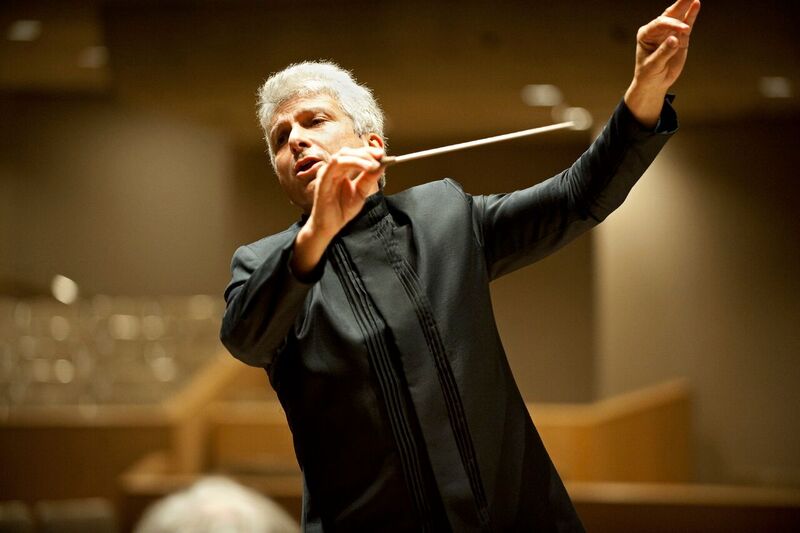
NURHAN ARMAN: CONDUCTOR OF SINFONIA TORONTO AND MAESTRO ON FOUR CONTINENTS: A REVIEWER’S INTERVIEWS WITH PEOPLE IN THE ARTS

James Strecker: Please tell us about one or more projects that you have been working on, are preparing, or have recently completed. Why do they matter to you and why should they matter to us?

Nurhan Arman: Throughout this summer I have been preparing for Sinfonia Toronto’s upcoming concert season as well as my own European guest conducting engagements. The works I have chosen for both Sinfonia Toronto as well as for my own engagements are truly exciting. They combine a wide range of repertoire with both contemporary and standard compositions.

In September I am returning to guest conduct in Poland for my 7th concert tour to that wonderful, musical country. I’ll be conducting the Witold Lutoslawski Chamber Philharmonic which I enjoyed conducting two seasons ago. Right after Poland I go to Austria for another return engagement with the wonderful Arpeggione Kammerorchester. I’ll be doing a three-concert tour with them. I am especially enthused about these concerts as I will be collaborating with great soloists, one of the world’s finest trumpeters Sergey Nakariakov and a brilliant Russian pianist Maria Meerovitch.

In November I return for two concerts to the Nordharzer State Symphony Orchestra of Germany. These concerts are part of Germany’s NUMUS Festival. I’ll be conducting the world premiere of a work by German composer Jan Arvid Prée. To premiere a work is exciting, but also it comes with an immense sense of responsibility. No performer can ruin the reputation of an already-famous composer like Beethoven, but a poor performance can ruin a new work at its premiere.

Sinfonia Toronto’s performances this season include serving Toronto both downtown with our Downtown Concerts at Glenn Gould Studio and uptown at the Toronto Centre for the Arts where we present our North York Concerts series. In addition, we continue serving the province of Ontario. This season we have two tours to Sault Ste. Marie and we return to the Barrie Concerts where we have been a regular presence for seventeen seasons.

Sinfonia Toronto should matter to everyone in Canada. We have been doing our share to promote Canadian composers and Canadian music, both old and new. Over the years we have also nourished the talents of many young Canadian performers. Our tours have carried our city’s name to Europe and will do so again with the 2018 tour to South America; in 2018 we will be touring once again to Montreal; and our recordings (including a JUNO winner) are part of Canada’s cultural heritage.

Regarding my guest conducting engagements in Europe, I hope that it matters not only to my European audiences but also to Canadians. I am always identified as a Canadian artist on posters, and in all other internet or print publicity. My participation in some international festivals has been the reason the Canadian flag is flying.

JS: If you were asked for 50 words for an encyclopedia to summarize what you do, what would you say?

NA: I am a musician, violinist and conductor. Have been making music most of my life for a better world.

JS: What important beliefs do you express in your work?

NA: My passion for creativity, beauty, peace, love of the environment and sustainability.

JS: Name two people, living or dead, whom you admire a great deal and tell us why for each one.

NA: I know I have answered similar questions before by naming people I admire but I always find it difficult to choose.

Humanity has been fortunate to have many outstanding people who made a difference. There are so many such people I admire that I can’t do justice by just naming only two. I would have to mention a very long list in numerous fields.

JS: How have you changed since you began to do creative work?

NA: I really don’t know. I have been making music for so long that I don’t know that ‘change’ is the right word. It has basically molded me. Creativity has become my religion in everything that I do in life.

JS: What are your biggest challenges as a creative person?

NA: To care less for the world’s problems and injustices; to be able to make, at least once in a while, just art for art’s sake. I struggle with this each time I am programming a season or a single concert. The challenge always is to find a balance between music that matters and music that is just for art’s sake, for its beauty.

JS: Please describe at least one major turning point in your life.

NA: I remember one day in grade school when our music teacher was teaching us a song. I still remember his voice, his vibrato, his élan and passion in singing. He was a great singer and a fine musician which is not always the same thing 🙂 That day I knew I wanted to be a musician. The same evening my parents were trying to find me a small violin. My mother was a concert violinist so I was fortunate to have a willing teacher at home!

JS: What are the hardest things for an outsider to understand about what you do?

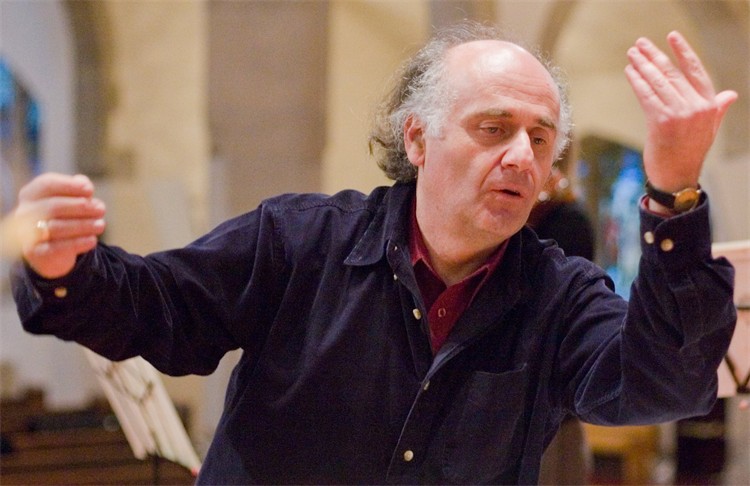
NA: Most of a conductor’s work is done in isolation. It takes an enormous amount of time to prepare a concert program. The conductor must almost virtually memorize the music, must completely internalize the music, must understand the thinking of the composer and yet be able to develop a personal interpretation, must analyze the score from many perspectives, and must prepare a rehearsal strategy. All this is done before the very first rehearsal.

During the rehearsals the conductor must work with musicians creatively and must have an excellent ability to prioritize the immediate problems in order to obtain the best results in a limited rehearsal time.

Conducting is not a single profession, but it is a combination of many professions. To achieve his or her responsibilities, a conductor must be a good musician, must have a working knowledge of the technical aspects of all the orchestral instruments, must be an inspiring leader, a clear communicator both orally and physically, a fine teacher, a tactful diplomat, psychologist, actor, and many other things. It is difficult for an audience member who only attends a performance and doesn’t know what happens in rehearsals and notices a person waving their arms around.

JS: What haven’t you done as yet that you would like to do and please tell us why?

NA: Ars longa, vita brevis! There is so much more great music I would love to bring to audiences. There are so many amazing composers who are writing music that matters and so many amazing performers that I would love to collaborate with.

JS: What are your favorite achievements?

NA: There are a few moments during performances when magic happens. We all work so hard to create those rare moments. I have been fortunate enough to have experienced and shared some of those great moments with my colleagues and audiences.

I am also happy that as a guest conductor I have been invited back to many of the European orchestras that I have conducted. That makes me very happy.

JS: What advice would you give a young person who would like to do what you do?

NA: Work hard and set your goals high, really high.

JS: Of what value are critics?

NA: When critics are well-informed and criticism is done constructively, they can be helpful both to the artists and the public. The critic’s role must include the preservation of the art form. I see the role of the critics as a bit more than one person’s opinion about an artistic event. So for the critic it is important for critics to be active on many levels around an event. This includes inspiring the public to attend the event with informative, tantalizing and intriguing pre-event articles. In the digital age everything has evolved. Today’s concept of a critic should be more than giving a verdict after an artistic event has happened.

JS: How does your work make life more meaningful for you and for others?

NA: Music is powerful. We all have the urge to express ourselves musically. So a life in music should be meaningful to all.

JS: What do you ask of your audience?

NA: To have an open mind and give the artists a chance to express their art. This will help the audience enjoy the art better.

JS: What specifically would you change about what goes on in the world?

NA: At the moment I feel our biggest priority should be saving our environment. I try to do my best in terms of leaving an environmentally small footprint. Clearly, politicians and bureaucrats won’t be able to save it. We all need to do our share. One less plastic bag, one less shampoo bottle will make a difference. Corporations have been surprisingly successful in brainwashing us to buy all kinds of products that we just don’t need.

Posted in Interviews from Music, Uncategorized | Tagged , | Leave a comment

STRINDBERG’S THE DANCE OF DEATH AT THE SHAW FESTIVAL: INSIGHTFUL, MOVING, AND UNAVOIDABLE REVELATIONS

Fiona Reid as Alice and Jim Mezon as Edgar in The Dance of Death. Photo by David Cooper.

For the Shaw Festival’s production of Strindberg’s The Dance of Death, William Schmuck’s set is an existence-defining circular space with bars on the windows in an old fortress on a Swedish island. It helps us to soon conjure up the Sartrean conclusion in No Exit that “Hell is other people.” Also Beckett’s direction in Waiting for Godot, “They do not move.” One is trapped in this space, there is no corner in which to hide. Wherever one goes, the result is the same. As the existentialists have it, one is hurled back on oneself, condemned to one’s existence, whether alone or in one’s relations with others. Strindberg here in his play concurs that one cannot escape other people.

Of course this setting includes a door to an outer walkway where a sentry walks back and forth, back and forth. Perhaps, with Camus’ option of suicide as a possibility, one can jump over the wall and into the sea to one’s death. Or one can continue to live, by choice or by habit. So the set is most apt in reflecting the confined absurdity of existence of the play’s two main characters—husband Edgar and wife Alice. They savour their absurdity, they have no other choice, there is nothing else they can do. They find any way to keep busy.

In her must-read program notes, director Martha Henry recalls seeing a Stratford production fifty years ago of The Dance of Death with Denise Pelletier as Alice and Jean Gascon as Edgar, the Captain. I saw it too and I have seen this masterpiece of a play only one other time—in London with Alan Bates and Frances de la Tour, an unnerving production far from the city’s West End. One thing I recall about the Stratford production is how Gascon said the word Alice. It felt hard as rock, cold as the coldest ice, unmovable, aggressively unaggressive, and so chilling I cannot forget hearing it.

Gascon’s captain was defiantly military in a domestic setting, at war with everyone in a take no prisoners conflict with the world. At the time, I assumed that I understood the innards of Strindberg’s play completely—youth is presumptuous and arrogant, isn’t it? Martha Henry’s production, however, albeit with some modernization and tightening in Conor McPherson’s version, helps me to discover still more, both domestic and marital with an existential twist, and forces me to deal with it. All the while, Louise Guinand’s lighting design for this challenging production creates an atmosphere in which light itself seems doomed to human fate.

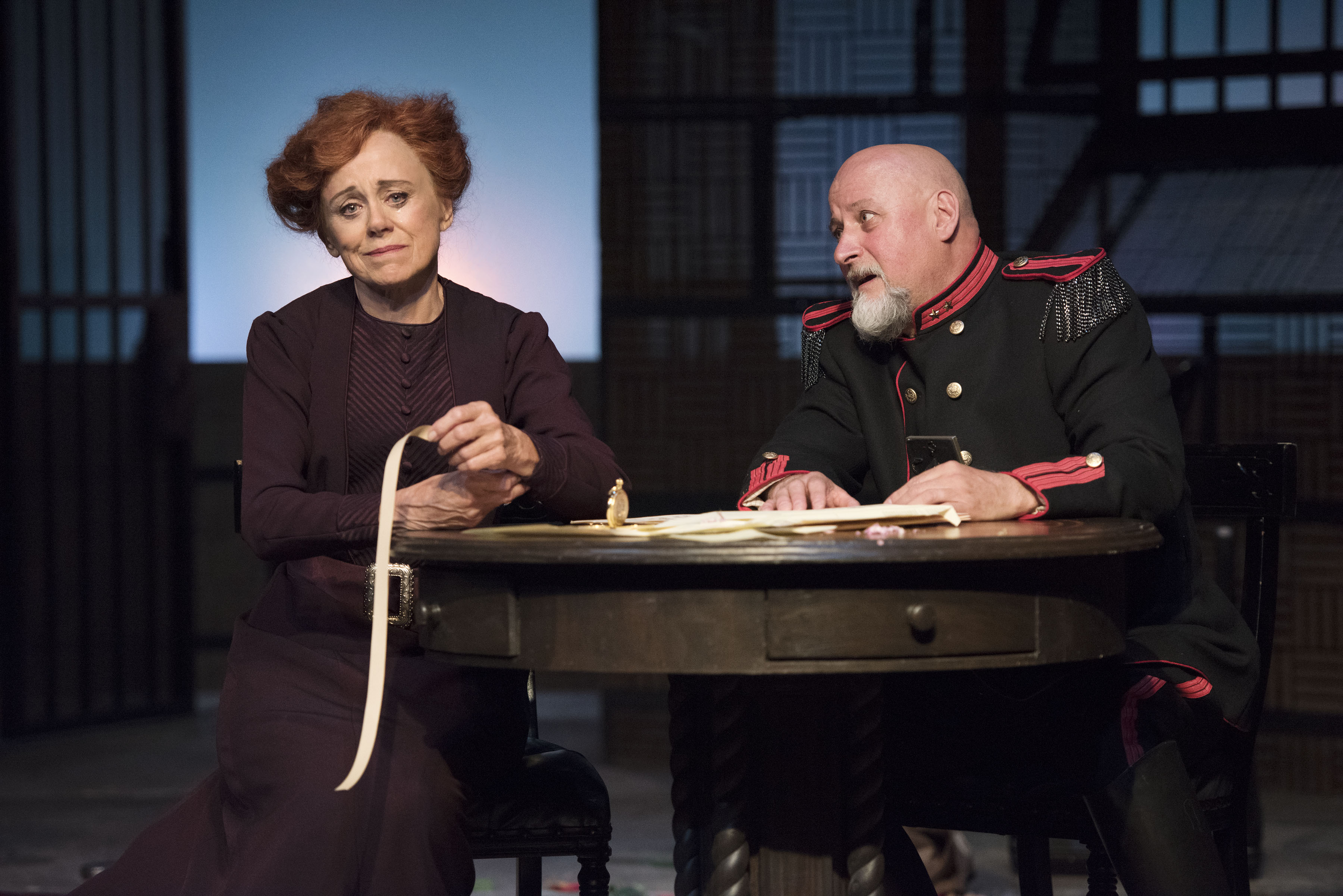
At the outset we meet Alice and Edgar in a not too nasty bickering mode, and she refers to their marriage as “our long miserable mistake.” Each one refers to death and he to blowing his brains out. Jim Mezon, whose large and threatening presence has elsewhere suggested a cosmic force, now seems more an aging old fart, imposing but still obviously getting old. Fiona Reid’s Alice seems quite adept at irony and we hear what is elsewhere one of the most musical of comic voices to now be slightly nasal with a slightly elongated current of whining bitterness. We make note when Alice asks “How can we know what goes on in a marriage,” for this question guides Henry’s production. Preconceptions about these people do not do well here. Much surprises and we have to keep catching up.

At the beginning, these people are not affectionate, but not unaffectionate. Each one seems wired to erupt into bitchiness and to take on the other. She laughs at him because of his unsent letter and he squints at his cards. He seems bumbling, and the two of them like dead end lives trying to get at the other. When Kurt arrives, the need for external acknowledgement and attention, a need from both Edgar and Alice, is broadly demonstrated. They also put on a show for their guest and play at social niceties. “I won’t lie, Kurt, we’ve had our ups and downs” says Edgar, as he grabs and paws at his guest. He also explains “You have to cling onto the wife because the children piss off”.

And when Alice whispers to Kurt “You make him so nervous,” we hear a not unkind marital understanding. But Kurt also tells Alice, “I know how cruel you can be to men.” Meanwhile, we feel that the Captain and his wife are more tired of life than vindictive. Yes, Alice says “That man’s a stranger to me” and, yes, Edgar says “We are bound by some evil force” as each continues to undermine the other. But something more than interpersonal hell is going on—in the production and therefore in us.

When Edgar does his Dance of the Boyars, panting all the way, and collapses, Alice declares “Is he dead” in a matter of fact manner that also suggests some shock, perhaps loss. His stroke is done in a broad physical manner, one that edges towards exaggeration, but this is also the way people’s bodies behave. When he has a second seizure, the audience has a hearty laugh as we witness Edgar’s contorted body, perhaps dead, before us. The audience commits itself, in laughing at him, to laughing at themselves. We are indeed what goes on here before us as we decay. In theatre like this, we see how we ourselves are performers when death is unrelenting and not at all far away.

Since this is Strindberg turf, what goes on before us is not pleasant. Hear what his characters say: “His ugliness was frightening …And I married him” and “You ruined my life before my eyes” and “The captain’s campaign has started in earnest against me—and against you” and “His main goal is to wreck your reputation.” And see what these characters do: Alice dumps his boots on her passed out husband and gives Kurt a flirtatious look, then a passionate kiss. But always in her passion we sense with it a manipulation, a cynicism bred perhaps from living many years in a hopelessness that makes one mean to survive. Sometimes we feel Alice’s rage as she stands by the table. The captain, meanwhile, describes the cruel things he has done, like getting Kurt’s son to be posted under his command. He sneers at his wife that he has petitioned for divorce and of course we get sucked into this marital fray.

Kurt may blurt out, much to his sorrow, “I want to kill him,” but we suddenly realize that we don’t really know these people. They distract us with the cruel things they do and the implications of who they “really” are, but we too, like each of them, feel we are being used to fill in the nothingness that we all live even as we deny it. She says he has long been beating her, he rips up the will leaving all to her, she plans to unite all of Edgar’s enemies, as she vigorously dances on his imagined grave, and the captain demolishes her portrait. People get meaner in order to endure. But what do they mean?

When Alice grits her teeth and Edgar throws away his booze, we too have become part of the fight and don’t know what is genuine and what is pointless, diverting, and even playful distraction. When Alice leads on Kurt with her exposed breasts, he, confused and horny, escapes, leaving her to enjoy her power – and we agree with him that she is a “devil.” But we also sense that she is hurting from a life that hasn’t worked out. Edgar cuts her off when she comes on with her illusions about her failed theatrical “career,” so now she is pleased when she arouses intense sexual feelings, uncontrollable ones at that, because this means power. This means she is alive.

In Henry’s production of Strindberg’s play we witness over and over malicious hearts beating under a veneer of habit. We also witness a surprising male bonding when Kurt and the Captain sit down and chat about life and survival. But maliciousness continues to peak through the silly hurtful antics these people use to keep themselves busy inside these walls, walls that are both physical and symbolic. We are made, as we watch, to feel over and over that there is nowhere to hide. We listen as the Captain creates a whole fabric of lies to get at the other two. And Alice looks ridiculous with her broad gestures as she leaps about to cover up the telegraph message she doesn’t want the Captain to hear. She looks ridiculous because that is what she is—that is what we are. Being alive makes us all ridiculous.

I thought I had mixed feelings about this production at times as I watched, but in truth I didn’t quite know what my gnawing feelings were. We are not given a secure point of view by the director and actors, because in this strikingly honest production we are made to be involved and always unresolved in our feelings And then, after all the mess of human existence we have been dragged through, we see Alice and Edgar, with their shared resolve and affection, holding hands, sharing laughter, almost cozy as he compliments her looks and she his.

In all, they are simply now calmed down to the people they also are at other civilized times in their relationship. But Alice and Edgar still live a “pointless joke” and await more of their “eternal torment.” The Captain says “you forget and you keep going” and though this is said to a background of wistful perhaps hopeful music, it doesn’t make existence bearable or forgivable for anyone. We who have watched others are therefore stranded in thinking about others and therefore about ourselves.

Jim Mezon as an actor can be devastatingly hard, overwhelming and scary, and as the Captain he is also sometimes pathetically inept and vulnerable. Fiona Reid as an actor can be a pinnacle of comic idiom, timing and flexibility, and as Alice she also unsettles us with carefully measured and cruel purpose. Patrick Galligan as an actor can convey a frenzied sincerity and much grace and as Kurt he also conveys a complex and evasive psychology that understandably opts for escape.

These much-admired actors use consummate skill in making their chaotic, complex, nasty, and at times surprisingly humane characters an incisive reflection of us. We are entertained and taken in, through them, by both the comic and the tragic. We are diverted and challenged, but given no answers. Their mastery is to make us look at both the stage where they embody their characters and equally in the mirror where we, as other actors, await our own gaze. And now, because of Henry’s insightful, moving, and unavoidable revelations in this production, we must, if we choose, find answers in ourselves.

Posted in shaw festival, Uncategorized | Tagged , , , , , , , , | Leave a comment

MASTER HAROLD AND THE BOYS AT THE SHAW FESTIVAL: AN UNFORGETTABLE PRODUCTION THAT IS “UNFLINCHING, UNRELENTING, PROFOUNDLY MOVING, AND EMOTIONALLY PAINFUL TO WATCH”

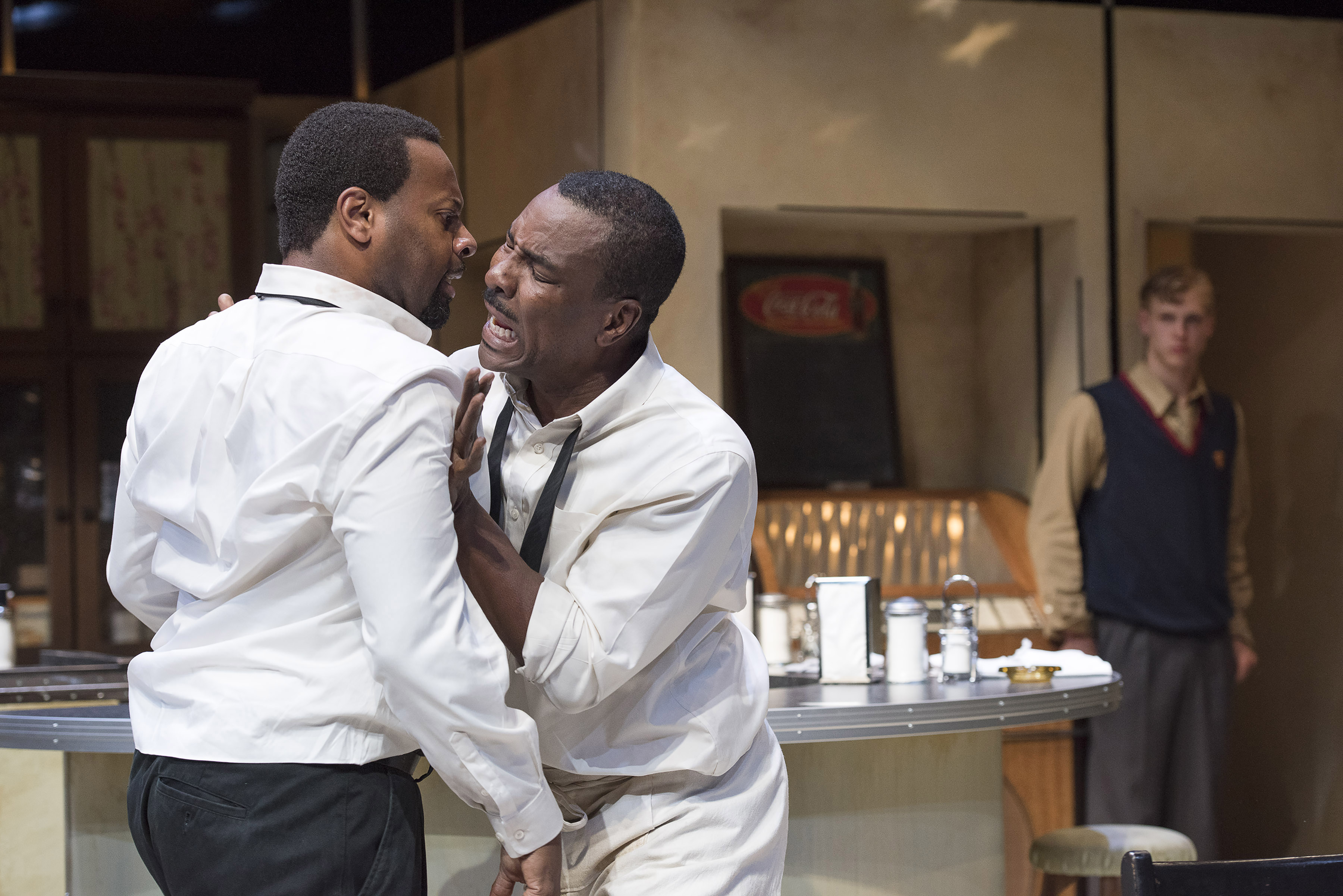
André Sills as Sam, Allan Louis as Willie and James Daly as Hally in “Master Harold” …and the Boys. Photo by David Cooper

When I saw the first New York production of Master Harold and the Boys in 1982, I felt troubled, if memory serves, by the off-handed and nasty racism of Harold and how his cruelty embodied the degrading apartheid conditions for blacks in South Africa. But playwright Athol Fugard’s genius in this play is to incisively demonstrate the impact of such social conditions on individuals, black or white, in their intimate one on one relationships. He explores the many shades of human bonding and how such bonding, when foolishly and deliberately abused, can never be mended. When kindness and understanding are repaid with a smug cruelty, when childish inexperience spits upon human values, we are forced to acknowledge that there is not much hope for our too often trivial species.

The cast of three in the Shaw Festival production of Master Harold includes Allan Louis as Willie, Andre Sills as Sam, and James Daly as Harold also called Hally. Each superbly realized performance helps to penetrate one’s habitual tolerance of racism as a fact of life to whatever degree such tolerance exists. Each performance compels one to see what we do not want to know about ourselves. Equally potent is how these three actors repeatedly help to unglue the protective masks we all wear in our relations with others. As watchers of this powerful production we become raw and feel vulnerable to the complex wounds of other lives as here portrayed. We become aware of the delicacy of one’s ties to others, aware how easily destroyed the nurturing good in human relationships can be. We also witness how unreachable people can be, unable as they are to value and feel gratitude for the kindness of others.

Director Philip Akin effectively keeps this intense production leaning toward subtlety and understatement where the impact Fugard’s carefully crafted masterwork thus gradually builds. We sense that things might here go bad, that an undercurrent of unspoken wrongs in human connections might erupt. We feel unsettled by the suggested and the unspoken in these interactions and, when these find cause to burst open, the impact is devastating. Fugard has written this play from his own life, from his own guilt, and compels us, with the aid of three richly brewed characterizations in this production, to witness the goings on from the depth of our own lives. Once seen this play hurts and cannot be escaped. We observe the pain of these people. We know somehow that we have been complicit in their pain. And yet not too much before us is cut and dry. And the production is full of affectionate vibes, charm, humour, and day to day living that we easily recognize to some degree as our own.

Two black men Sam and Willie, banter with mutual affection in a 1950 diner where they work. One has his troubles with a woman aka “bitch” and is cautioned, “You hit her too much.” Hally, white and in his late teens, enters with something of a chip on his shoulder. Although received with open arms, he starts to pull racial rank as a white and tells Willie, “Act your age.” He seems something of an innocent and the two men are patient as he feels his oats. Sam has an “intellectual” discussion with him and the three together share laughter and memories. It’s a warm shoot the shit atmosphere here, but…..

But what? When Hally asks condescendingly, “What does a black man know?” the undercurrent of racism surfaces and becomes overt. So do signs of teenage rebellion in Hally’s remark about his father: “He’s behaving like a child.” Also teenage frustration in his comment: “Life is just a tiny little mess…..a perpetual disappointment.”Hally is humourless, perhaps understandably whiney. He puts down the enthusiasm of Sam and Willie for an upcoming dance because, we sense, he is too uptight to let go. When the two men practice a dance, Hally orders them to get back to work and we note the snobbishness of the untested youth in him. After all, he intends to write about their dance competition in anthropological terms as a practice of “primitive black society.” And we wonder about academic study as a means of domination over things it cannot control.

Much goes on between individuals and much is implied in this 90 minute theatrical gem that simultaneously rips out one’s heart and punches one’s gut very hard. The connection of black and white is deeply touching but the play’s impact arises more from this connection’s fragility. A young white male who hasn’t grown up hasn’t the goods to understand the two black men who have been his guides into adulthood and who live in conditions of human degradation. He doesn’t comprehend the value they place on mutual caring and mutual respect. Sam explains that the “dance is beautiful because that is what we want life to be” but Hally is too young and too sheltered to understand that there is “too much bumpy in the world and people are getting bruised.” He is white, in a position of privilege, and he talks down on blacks in ways both blatant and subtle. The atmosphere is made of tension.

Still, Sam and Willie are forgiving with Hally who is having, as they explain, a “troubled youth” between his “fighting parents. But lines of tolerance are implicit in this relationship and become a decisive factor when Hally is “disrespectful” to his mother about his father. While Hally plays the role of good kid to his dad in the hospital and lies that dad’s coming home “is the best news in the world” he is nasty to his mother and to Sam and Willie too. He tells Sam to “shut up” about his homework. And when Sam chides, “It’s terrible for a son to mock his father,” Hally says, “Mind your fucking business and shut up.”

Hally ultimately abuses the only ones who care about him by playing the race card: “You’re a servant and don’t forget it.” He then gets more smug and orders, “Why don’t you call me Master Harold” because he is now teaching the two men “a lesson in respect.” When Hally crudely and deliberately refers to “a nigger’s ass” Sam tells him “You’re trying really hard to be ugly” but Hally hasn’t the experience of introspection to understand either others or himself. The two men may explain about Hally that “he’s a little white boy in long trousers now but still a little white boy” but as Willie observes, “It’s all bad in here now.” This and much else takes place in the play’s final twenty minutes, minutes that are close to the most unflinching, unrelenting, profoundly moving, and emotionally painful to watch that I have ever seen in theatre.

Posted in shaw festival, Uncategorized | Tagged , , , , , | Leave a comment

AUTHOR & PETA FOUNDER INGRID NEWKIRK: A REVIEWER’S INTERVIEW WITH PEOPLE IN THE ARTS

INTRODUCTION: My purpose in these interviews for my blog James Strecker Reviews the Arts is to give readers a deeper understanding of creative people  and their work, however the latter perceive it.

JAMES STRECKER: Please tell us about something you have been working on or have recently completed. Why does it matter to you and why should it matter to us?

INGRID NEWKIRK: For months now, we’ve been touring around to campuses, town squares, shopping malls, and festivals, strapping virtual reality goggles onto people and letting them “become” a chicken or an orca, pecking in the fields or swimming in the ocean until something awful happens. It has gone gangbusters, but I want to find a way to make everyone in the world, who still eats animals or goes to SeaWorld and other aquariums, to watch. That puzzle matters to me, and if anyone has ideas, I’m all ears!

JS: If you were asked for 50 words for an encyclopedia to summarize what you do, what would you say?

IN: Bang my head against the brick wall that is human indifference, ignorance and arrogance, knowing that, as hard as it is, if you bang your head against a brick wall for long enough eventually it will fall. It goes quicker, if we all bang our heads against it.

JS: What important beliefs do you express in your work?

IN: I think the most important belief PETA expresses is that it is not hard at all, but super-easy, to help stop cruelty to animals if you realize what opportunities are presented to you all the time. For example, you eat, you put on clothes, you wash your hair, you seek entertainment, and every one of those things can involve animals or not, a kind choice or a cruel one. Deciding not to be photographed with a parrot on your shoulder is easy, but so is checking the labels on your personal care and cleaning products. So is not putting money into the jar if that health charity still experiments on animals -that is easy to look it up on peta.org- and not buying skins or wool or feathers, and trying tasty vegan versions of foods.

JS: Name two people, living or dead, whom you admire most and tell us why for each one.

IN: Sojourner Truth seems to me to be a great role model: feisty, uncowed, truth-telling. She risked constant ridicule and physical violence but kept on saying what she knew to be right: “If your jug holds a quart and mine just a pint, who are you to deny me my little half measure full?”

I must cheat here on the next one, because it is a multiple of one! I admire and am grateful to every single human being who, born with these wonderful gifts of speech and freedom, does not devalue them or waste them, but says and does something at every opportunity: when they hear or see a wrong being committed, certainly, but also every day in countless ways when they have a chance to give others the facts, the choices, the encouragement to know what’s happening to animals and how to stop it.

JS: How have you changed since you began to do creative work?

IN: I have far more crow’s feet. Other than that, I think I worry just as much that I’m missing some marvelous key that will open the door to the box with the solution to human callousness in it.

JS: What are your biggest challenges as a creative person?

IN: The biggest challenge, I think, is always that, as Desmond Tutu said, “It’s hard to awaken a man who is only pretending to sleep.” This I take to mean the people who KNOW they shouldn’t be cruel, but turn a blind eye to it so that they can carry on tacitly contributing to that cruelty, like paying for cheese and milk while pretending that the mothers don’t love their calves or that the cows aren’t artificially inseminated on a rape rack, and kicked down the same slaughterhouse chute as the “beef” cattle.

Other than that, not letting all the horrors you see paralyze you, but instructing that computer between your ears to keep looking for new ways to educate and liberate.

JS: Please describe a major turning point in your life.

IN: When I was about 20, my neighbors moved away, leaving a lot of cats and kittens, so when I drove them to the shelter I was treated to an unexpected “peek behind the scenes” and discovered the world of animal shelters and cruelty investigations. I immediately left my job in the stock brokerage business and went to clean kennels, drive the truck, and help. I imagine that my life would have probably been meaningless, had I not stumbled upon all this and been able to jump in.

JS: What is the hardest thing for an outsider to understand about what you do?

IN: Apparently that PETA isn’t just out there throwing paint on people in fur! Almost every time I do a radio or TV show for the first time, the host says something like “I had no idea you were such reasonable, courteous people!” Of course, we perform a lot of gimmicky stunts, just to keep animal rights issues in the news and part of the social issues buzz, because that’s what it takes nowadays. Even major human tragedies only have a limited shelf life in the news world, so animal issues are really hard to get air time for. And who wants to see blood and guts, the animals’ reality, anyway? So, the gimmicks get covered and the fact we employ more scientists than all the groups combined, who have stopped millions of animals from being experimented upon, isn’t understood.

JS: How and why did you begin to create in the first place?

IN: I’m not artistic, couldn’t draw a stick figure. I’m almost tone deaf, so I can’t play the piano well. But my mind is abuzz with how we can alert people to animal rights issues, plots and plans to save them. I’ve no idea how this happened, but I’m so glad it does.

JS: What haven’t you done as yet that you would like to do and please tell us why?

IN: There’s a long list of specific steps I’d love to accomplish on the road to animal liberation. These include the following:

getting all animals out of circuses (we just got another 13 bears out, and Ringling just took the elephants off the road) and turning zoos into sanctuaries;

switching all animal experiments to fabulous, high tech and sensible non-animal ones (ones “without the patter of little feet”);

making meat and dairy consumption as taboo as child molestation (it often IS child molestation given that the chickens in supermarkets are about 6 weeks old, veal calves, lambs are children);

closing down all animal clothings industries, from Chinese dog leathers that come into North America in the shape of gloves and jacket trim, to fur, angora, wool, exotic leathers (the videos of sheep being beaten while being sheared and snakes filled with water and gutted alive compete for most unwatchable on peta.org);

stopping the use of gut-wrenching poisons and cruel sticky glue traps used for “pest” control.

Oh, nothing big, just change the whole human mindset and win nonviolence as society’s modus operandi. The world is such an upside down place, with PETA considered “extreme” for advocating for respect for other living beings; with few people taking any lesson from the history of our earlier recognized oppressions of others. Money alone, great that it is for funding billboards and TV ads, isn’t enough, so I want to find new ways to influence people.

JS: What makes you noteworthy?

IN: Gosh, perhaps it’s just a public profile really, i.e. being the founder of a big group people know, and holding strong ideas that I speak about.

JS: What advice would you give a young person who would like to do what you do?

IN: Don’t pay any mind to money and title, just DO something that improves the lot of others, because it won’t be long before you see life, not as interminably stretching out ahead of you, but running out! I promise. If you can, work for animals, in some way, as they are the largest group of abused individuals and groups ever in the history of our world, and your own species is responsible for most of that suffering. Come on in, we have internships and jobs.

JS: Of what value are critics?

IN: Critics help us examine more closely what we are doing, and see if there is any room for improvement or a change of view. One must never kowtow to them if they are simply trying to intimidate you and are wrong, but I think it’s good not to waste energy arguing, but to take anything you can find that is useful.

JS: How does your work make life more meaningful for you and for others?

IN: It is meaningful to me that I am totally not wasting my life as a dilettante, which I might have done without finding out about animals in trouble and the philosophy of animal rights. As for others, I do rejoice every day reading the remarks of people, including youngsters, who are going to stop doing something that they just learned hurts animals and start talking to their relatives and friends, even strangers if we are lucky, about it to open their hearts and minds, too. Our materials, videos, downloadable Vegan Starter Kit, cosmetics “no test” lists, and so on definitely make life more meaningful to others.

JS: What do you ask of your audience?

IN: Please, please, please, not only change yourself but move on and change others. By the time we change our own habits, we have already caused a lot of suffering, so we need to get to other people with information as soon as we can. Use the resources, use the videos on social media, ring in to call shows, write letters to the editor, talk it up, talk it up.

JS: What is upcoming for you as a creative person, why does it matter to you, and why will it be important to us?

IN: We are determined to expose all the various and ugly ways in which animals are exploited and deeply harmed to become clothing: so far we’ve shown baby ostriches, alligators, snakes and crocodiles used for bags, belts, shoes and even ridiculous looking suits; we’ve been in dozens of sheep shearing sheds to show these gentle animals being punched, kicked, and wounded; dog leather factories in China; the horror of cattle being turned into leather; rabbits plucked alive for angora; but there’s even MORE. We are working on synthetics, pushing natural materials, talking to retailers about vegan-only clothing, and more, but we need everyone to ask for vegan clothing and to be vocal as to why they reject animal clothing and goods. That’s critically important.

Thank you James!

Posted in Interviews with Writers, Uncategorized | Tagged , , , , | 4 Comments

OSCAR WILDE’S A WOMAN OF NO IMPORTANCE AT THE SHAW FESTIVAL: A STRIKING UPDATE TO THE 1950S THAT IS STILL MUCH TOO RELEVANT

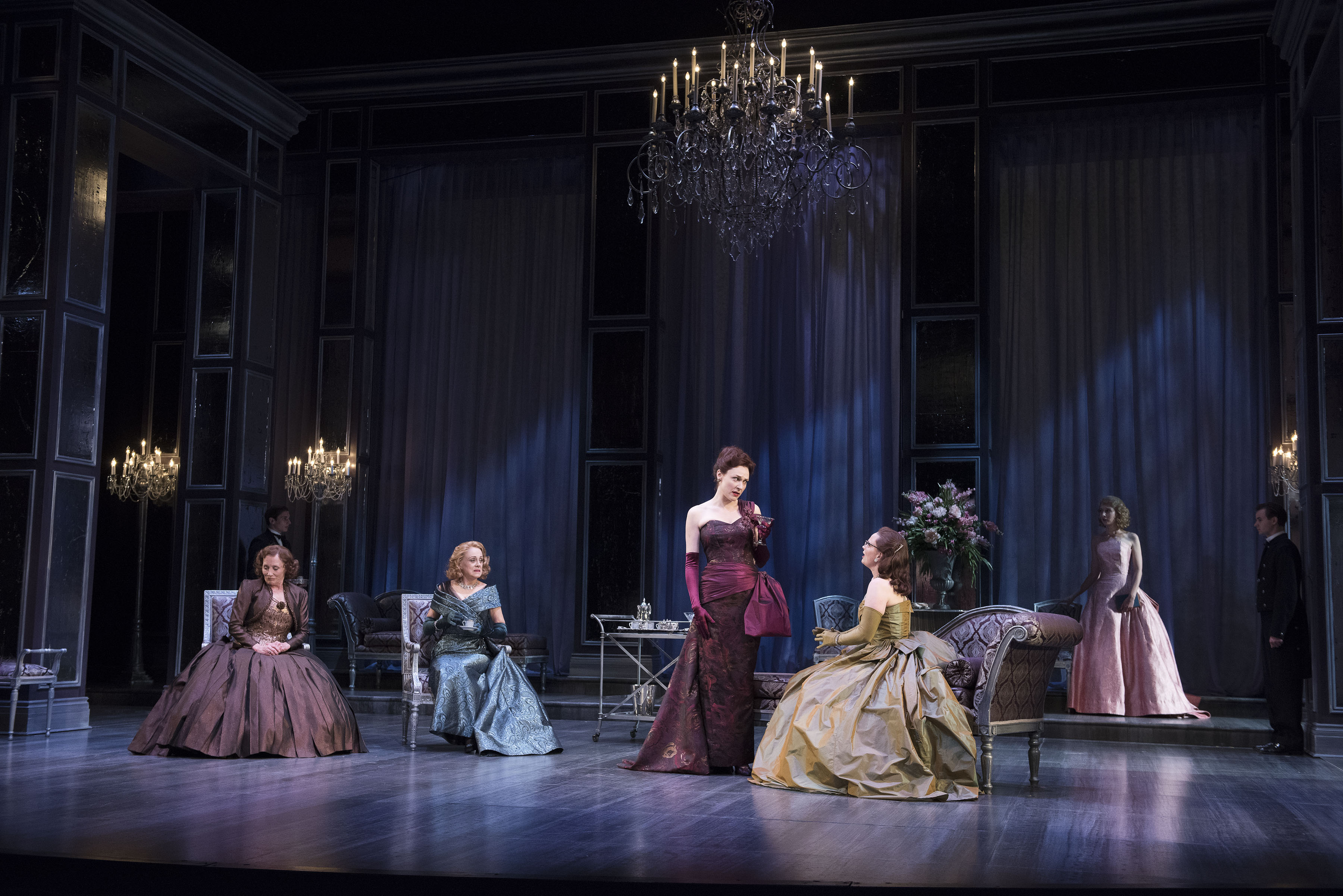
Their identity solidifies in how they are seen, this group of women posing for the world, for each other, for themselves. Sir John Pontefract scurries about with a flash camera, taking one shot here and another there, and their demeanor remains constant from the one for film and the one for society. Their spines and their glances are starched. Their world is what they seem- fashion-heavy, skin deep –as if they, like their stylish dresses, were designed as an abstraction of some kind. Their chat has no anchor in a consequential world –“She is very well-born, the niece of….” —that sort of thing.

Of course we hear “English women conceal their feelings until they are married,” we hear that if one gets a desirable position, then things out of reach may be hoped for. In any case, one is supposed to gossip and look right and say the right thing. Lady Hunstanton does and every awkward moment, every lull, is instinctively repaired by appropriate words. Lord Illingworth and Mr. Kelvil, M.P. converse with a slight backward lean in their posture. When they walk they seem to glide. Lady Stutfield is excessively polite and behaves as if she has been squeezed very hard by social convention. Mrs. Allonby, seated in her instinctive sprawl, seems she would welcome a squeeze wherever it might come from.

This is Oscar Wilde of 1893 set in 1951 and the new date is quite made to measure. Indeed, Lady Hunstanton’s remark -“politics are in a sad way everywhere I am told, they certainly are in England”- is certainly right on for our time as well as Wilde’s. It receives some laughs and dribbling of applause. And we constantly hear why. “Only fashion is serious” says Lord Illington, ergo superficiality rules. When Lady Stutfield agrees with every pontification about purity from Mr. Kelvil’s mouth, we witness women willingly subservient to a dominating male culture.

“Nothing spoils a romance so much as a sense of humour in the woman” according to Lord Illingworth and we sense, both laughable and cruel, a male dominance persecuting even those who laugh. And, bless Oscar Wilde, into this setting of no consequence comes the ironically labeled woman of no importance, dressed not in the distracting colours of surface fashion but instead in the colour of a battered human heart. It is unrelenting black, the price one pays in a smug social structure.

But, lest we forget the superficiality of these folk, scene two opens with Sir John again photographing the ladies in their long fanning dresses. We become aware that each woman is postured and showing a pose every minute. We become aware that our photographs, as Wilde constantly tells us, prove we are constantly putting on the show that is inherent to our species. Again Lady Hunstanton, ever-ready with a comment both functional and unflappable, observes that happy marriages are “remarkably rare nowadays.” Again we see Lady Stutfield, wide eyed with a tight bright smile, as if she might snap from doing the right thing.

While marriage for Lord Illington is summarized that a husband should just “pay bills and compliments,” Mrs. Allonby wraps herself around anything in sight, like something of a tempting serpent. So in this blend of male-serving social rigidity, unapologetic but also rare sensuality, we now meet Miss Hester from America, she with an almost back slapping manner that is seen as “painfully natural.” Hers is another world and she declares “You don’t know how to live.” Thus she tells these “shallow, selfish, foolish” ladies and we sense again how much the newly entered and very subdued Mrs. Arbuthnot has paid dearly for the life she did not intend to live. Yes, the smugly opinionated Lord Illington has “ruined” her life by giving her a son but not a marriage. But this is not a society that cares.

Scene three features an old boy’s milieu with Sir John taking pics of the men at billiards. It is in such a world that the son, Gerald, is quite taken by the self-possessed manner of Lord Illington who has offered him a post as personal secretary. As with the ladies, everything said seems to have little impact on anyone, since social walls seem as thick as each speaker’s skull. The divide between the sexes feels palpably made of hypocrisy and stone. And from all this a socially shamed mother has had to protect her illegitimate son for 20 years during which he has remained innocent and naïve.

Setting Wilde’s play in 1951, a time of conservative government and Dior fashion and stifling social inertia, is incisively appropriate. For beneath all the patronizing complacency there is much unrest, much barely concealed brutality, and as in Wilde’s time social hypocrisy prevails. Yes, the fifties, with the Korean War, McCarthyism, Hungary, the Cold war, and racial rebellion. Eda Holmes’ take on Wilde therefore reveals a thin social veneer on much decay then and now.

People are ruined or rotting from the old values and grabbing for new ones as they cling to the old. Gerald insists that his mother marry Illingworth who abandoned her and gallingly maintain values that almost destroyed her. “The woman suffers, the man goes free,” she says. And what resolution does the second half offer with all of this? It is one of wounded beauty. The system wins, but not the whole game, we find.

Fiona Byrne’s Mrs. Arbuthnot is a quietly breathtaking performance that is painful to watch. She feels stained but knows also that “women are hard on each other,” knows that whatever religion says is a “hideous mockery.” But she also embodies Wilde’s deeply touching summation of a mother’s profound caring for her young. Indeed she has Gerald “too much in my heart”, he being the son that for the mother “feels my dishonor”. Meanwhile, Illingworth still sees women as the “prettiest of playthings” but he does receive a solid slap when he becomes too condescending and vindictive. After all, he is, in a few audience-satisfying words, “a man of no importance.”

Such is the sadly limited but very satisfying resolution to this critique of Wilde’s society. This gripping production doesn’t waver and it unsettles as much as it entertains, for we experience an unmovable emptiness in these entertaining people. We feel it especially hard because these are thoroughly realized performances from this Shaw Company, all guided and supported with masterly skill by director Holmes and her imaginative technical staff. An excellent production all round that proves now is then and then is now.

Posted in shaw festival, Uncategorized | Tagged , , , , | Leave a comment

ENGAGED AT THE SHAW FESTIVAL: HILARITY IN THE HIGHLANDS……..AND LONDON

In the Shaw Festival’s program for Engaged, we read the “Notes” of director Morris Panych on this play by W.S Gilbert of ensuing G&S fame. Panych comments how “we are all subject of the ongoing farce” and how “the characters in this play will last forever, slipping on the banana peels of time. …. reinterpreted, replayed…their words respoken by generations of actors to come; not from some sense of duty or academic curiosity… (or) as an exercise in nostalgia … but because they are funny and life is not.”

Theatre, we conclude, doesn’t avoid life or forgive it, but it sure allows us to mine the absurdities and occasional beauties that we are. We can relax as ourselves sometimes without too much judgment and laugh as well, for that too is what we do. And thanks to Panych, his well-brewed cast, his well-seasoned production team, we laugh a great deal during Engaged. Who wouldn’t, when we begin with two in your face music hall numbers, the first confessing “My mother doesn’t know I’m on the stage.”

The second number, performed somewhere between broad and floozy by Diana Donnelly, mentions “witin’ et the cherch” which you’ll easily translate for yourself and includes the offer to a chap in row three “You married? Busy after?” And where do you think we go after that? Nope, not a room in Soho- we are off to Scotland!

There we get to hear Comin’ through the Rye. It is sung timid at first by the timid Angus, endearingly underplayed with oozing sincerity by Martin Happer, along with Julia Course’s captivating Maggie. Then it is sung ballsy with heels dug into the earth, as only Mary Haney, here as Mrs. McFarlane, can do it. We find we must speak Scottish here – eee for eye, pairidge for porridge, hairts for hearts, — and we also discover that country folk shrewdly mess with the trains so the “well paying passengers” will need lodging as a result.

These latter folks include some of the starchiest from London society. Jeff Meadows’ Belvawney is a contained but wired fellow who makes his 1000 pounds by keeping Cheviot Hill single. The latter arrives with his broadly dramatic Belinda . She is a lady of “impetuous passion” who, though not “mercenary,” does insist on a husband with substantial income. Alas for Belvawney, Cheviot tends to propose to every woman he meets, a la running gag.

Cheviot then arrives with Sean Wright’s Mr. Symperson at which point he shows himself as broad in emotion and over the top in declarations of love for Minnie back home. Cheviot is a self-dramatizing romantic playboy to whom Gray Powell brings charm and a hilarious ongoing dash of not quite tongue in cheek rote. We eagerly await his next proposal. He knows it by heart.

So we have the country poor, blunt in gesture and, like Angus, of innocent values, matched against the moneyed Londoners. Money certainly is the raison d’etre for both these rich and poor except for Cheviot. It’s the ladies who make him into a man of instant turn on. In a few minutes he is blown away first by Maggie and then he is smitten with Belinda, partly because Belinda seems an ever-ready body lurking for another.

What’s a fellow like Cheviot to do but a romantic spiel, some faux poetry, some smoother than smooth convincing, some anxiety, all with exaggeration as his driving force. And, of course, a kilted Ric Reed as Major Mc Gillicuddy arrives sporting not one but two pistols in pursuit of Cheviot. Meanwhile Angus, adoringly bumpkinish and innocent, speaks with his ever ready axe in hand.

While in Scotland, in the “garden of a humble cottage near Gretna on the border between England and Scotland,” Cheviot may now be multi-betrothed or even, thanks to a local custom, unintentionally wed, and then we next find ourselves in a London home. We meet Minnie, who sits on a sofa whose cushions are punitively garish, before friend Belinda enters to ask as she gorges on prepared desserts, “What have I in common with tarts” This must be an in joke – we think of prostitute Mrs. Warren also played by Nicole Underhay. Belinda tends to endlessly rattle off all the possibilities of a situation and this she does as Cheviot enters to worry about marriage as 50 years with one person. An air of idleness prevails in all these Londoners.

With Cheviot, Claire Julien’s maid Parker sends out a mercilessly flirtatious invitation to lust, one so brightly projected that it is probably seen in Buffalo. Cheviot is not unreceptive throughout his rote routine yet pulls back, to which Parker complains “not so much as a shilling and that man is worth thousands.” We also find, cheap as he is, that his wedding cake is made mostly of wood. Minnie and Cheviot discuss their impending marriage and sound horribly dull, no matter that she declares how happy she is, albeit while he remembers that “girl in Scotland.” But being cheap, he will marry so as not to waste the already spent 25 pounds.

As we can see, most of these folks are self-serving, gung ho in artificiality, shallow of purpose, and adaptable. Belvawney will love one of two women and it doesn’t matter which. Cheviot sees himself engaged to two women and will “share” himself with both. There is much “incessant crowing over money” throughout and everything is business. Minnie is called a “mercenary little donkey.”

What makes this production so engaging, entertaining, funny, lively and for all its exaggeration and stereotyping, not unbelievable? Partly it’s the uncondescending tone established by director and cast. Partly it’s the relish of the latter as they inhabit their parts. Yes, these often purposeless and pointless individuals could be poo-pooed in a sententious quest for deeper human values, but save Angus and Mcfarlanes up in Scotland, these folks are quite incapable of them.

These folks are played as absurd but without self-mockery in the mix, played as shallow as the only game in town, and we come to take them for what they are – funny and funny again. Otherwise, they are stuck with themselves and we with them. If Engaged is not “a well-known play” it should be, when done so cleanly and clearly delightful as this. Again the Shaw company proves itself outstanding.

Posted in shaw festival, Uncategorized | Tagged , , , , , , , , , , , | Leave a comment

JOYFUL FUN IN “THE ADVENTURES OF THE BLACK GIRL IN HER SEARCH FOR GOD” AT THE SHAW FESTIVAL

At the outset of The Adventures of the Black Girl in Her Search for God, Guy Bannerman’s crusty G B Shaw, whose short story is the springboard for Lisa Condrington’s adapted play before us, is determined to have a Preface. He is threatened by Black Girl, however, that unless he behave he will soon have his name removed from his festival just as the powers in charge did with the festival of that other author not too far away in Stratford. Of course, we in the audience are wearing party hats given to many seated here by this same Mr. Shaw and, yes, a good time is being had by all. Well, maybe not by Black Girl who, after all, is off to find God, which in many quarters is an entirely speculative venture, though not all.

I doubt that this production will later transfer to, say, the “Amen!” circuit of the deep south. After all, it implicitly spoofs the deniers of Darwin and the oratorical zeal of Bible-toting fundy preachers that passes there for religion. And isn’t all the reference to religion done with one part Shavian twinkle and three parts mockery of the rigidly fanatical who, when their beliefs are taken to logical conclusion, become absurd. Indeed, Ravi Jain directs at times with a “just this side of the Keystone Cops” knack for frenzy that deftly paces absurdities for inevitable laughs. Indeed Jain’s cast chomp vigorously with individual comic smarts at their specific parts. Indeed we don’t stop laughing.

The tale goes like this: Black Girl –not the one from Leadbelly’s song- has been instructed by Tara Rosling’s White Missionary and has demolished her teacher with infinite questions that the unthinking never, well, think to ask. Black Girl is White Missionary’s only convert because of her incessant and time-consuming “incessant inquiries” and her “Why? Why? Why? Why?” give the latter no extra time. Finally, when as something of a last resort Black Girl asks “Where can I find God” set designer designer Camellia Koo has provided a stage-spanning Bible on which Black Girl stands and can read, “Seek and ye shall find” as she walks upon these enormous pages.

Inevitably she finds there are “lots of old ass men pretending to be gods in this forest.” She also finds Guy Bannerman as Lord of Hosts, he with a resounding echo, no less, and of course frustrates him too with inevitable questions about why evil exists. We then have Lord of Hosts (Bannerman) and The Almighty (a joyfully into it Graeme Somerville) having it out, And we then have Micah the Morasthite, a very no holds barred Ben Sanders, doing verge of hysteria stuff as he joins in before Solomon arrives. The new arrival observes, “We are all headed to the gates of nothingness” and later notes “that’s one of my 3,000 proverbs. It’s all done in the spirit of tongue in cheek in vigorous momentum.

Black Girl realizes, “Maybe I have to be more like God so I can find him” which sounds profound, but we also hears things like “It’s just a metaphor” –take that, you literalists- and the crucifixion referred to as “that ridiculous position” and God as “an unnecessary hypothesis.” Graeme Somerville does a turn as a heavily-accented twit and Tara Rosling fusses as the busy-busy Mathematician and we hear the Bible is hopelessly pre-evolutionary. We are self-consciously told that this is a lunch time slot, in which the production occurs, and thus only a “quick look” at issue that have lived in human thinking for millennia.

Nevertheless, the show has time to turn quite sexy with Kiera Sangster’s Black Mamba Snake and Andre Sills’ Black Bearer. There’s a concise condemnation of symbolism in the defiant call to belief in “It’s a rod, not a stick.” Natasha Mumba is pleasantly riveting throughout –inquisitive, defiant, and take-no-shit unstoppable- and we enjoy the journey with her in a setting that is “The Darkest Africa and The Bible” All the actors use the set, dig into it, with gusto, and Ravi Jain helps his actors to go compellingly over the top to the pleasure of all.

I once heard a fundamentalist questioned thus: “Do you really believe this shit?” and here, at least during this thoroughly entertaining lunchtime fare, we can briefly laugh at the fact that too many, Republicans and Conservatives especially, maintain they still do. Now what would GBS say in his Preface about them?

Posted in shaw festival, Uncategorized | Tagged , , , , , , | Leave a comment

MRS WARREN’S PROFESSION AT THE SHAW FESTIVAL: PROSTITUTION, MALE HYPOCRISY, MOMS AND DAUGHTERS, AND AN ALMOST THREE DECADE BAN

Mrs. Warren’s Profession ends with daughter Vivie seated – or is it reborn? – behind a desk. Her blooming manner of efficiency is striking, as if in performance for her new self. She seems self-satisfied and seems washed clean. After all, she has terminated connection with her mother, Mrs. Warren, a former prostitute and now an owner of brothels. But in Eda Holmes terrific production of Shaw’s play, four men surround Vivie and move in closer as if for the killing of female willpower and self-reliance. Will she become a sacrifice to these embodiments of patriarchal society with its economic and male suppression of women? Indeed, at very least, their presence does seem ominous.

In Mrs. Warren’s profession, the tale runs like this: Mrs. Warren, born into hopeless poverty forgoes the inevitable life of deprivation and in time, with support of “capitalist bully” Sir George Crofts, her business partner, now owns five brothels across Europe. Such impressive success allows her to give daughter Vivie the finest education, although the latter, isolated in academia, is very innocent, very unaware of what a cruel place the world is. She has opinions but no wisdom. Her many judgements have not been earned by living an unsheltered life. She has hit the books but the realities of life have never hit her.

In Jean Renoir’s great film, La Regle du Jeu, Octave played by Renoir himself declares, “Ce qui est terrible sur cette terre, c’est que tout le monde a ses raisons. » This famous line certainly resonates throughout Eda Holmes’ evocative, sensitive and implicitly challenging production. We understand Vivie’s shock at her mother’s revelation that she operates a prostitution business, that she works within a male-serving morality which, like today, uses women sexually but then hypocritically degrades them for it. We understand that Vivie is losing her cocoon and all the fantasies left unexplored within it. But ……. Mother too has had her reasons which daughter will probably never understand.

Who then is Vivie, the one who responds “So do I” when Praed declares, “I like hard chairs?” We find she is testy about men‘s assumptions and unquestioning about herself, yet self-assured. She has a strong handshake, yet remains inflexible “She is better than any of us” declares Praed, played subtly worldly and shielded at one time by Gray Powell. “She has such character” says the almost hyper Wade Bogert O’Brien’s Frank, “such sense”. But then, what do men who have benefited from the patriarchal system, as a matter of course, know about women who, albeit their present confidence, very soon won’t? These men can be perceptive and realistic, but only as far as naiveté allows. Inherent in their way of life remains an exploitation of women.

Vivie does feel that people have choices. She values purpose and character and believes that people can change their circumstances. She is abrupt and unbending and her sarcasm is polite but sarcastic none the less. Others have come to see her as a “steamroller” in her intention to be self-sufficient. She does indeed feel “shame” on hearing the truth about her mother and, set on protecting herself, doesn’t want to be sentimental ever again. Thus her parting of her ways with her mom. “There is no beauty and romance in life for me” she declares. Vivie is a complex character and Jennifer Dzialoszynski ably reveals her many sides and tendencies. Vivie is charming and hateful, wounded and determined, full of purpose and naïve. Dzialoszynski delivers her with intense focus that is unsettling.

Nicole Underhay’s Mrs. Warren is ripeness itself. She is a woman of broad gestures and she is physically effusive, as if her body and the air around it share one sensuality. She seems physically close no matter where she stands, always on the verge of writhing and surprisingly sometimes tomboyish. She is passionate and has no desire to inhibit her ample self. We sense well-honed survival skills in her, and also that she has taken ownership of her self-respect from a society of her childhood where women faced lead poisoning, alcoholic husbands, very low wages, and dead end slavery jobs. She now can say “the life suits me” and we believe her. Without question, this lady knows her stuff as she delivers a luscious devouring kiss on .Frank’s mouth.

In her confrontation with her daughter, Mrs. Warren is presented in an audience-draining performance of high pitched emotional intensity. The verbal battle between the two is genuinely disturbing. Vivie shows no mercy for herself or anyone else according to her mother and she certainly will not look after mom in her old age. Their verbal battle is especially heartbreaking because neither has resolved much emotionally, before, during, or after the encounter. Both women need to be active and working, and neither is adept at negotiating human relationships. Vivie says goodbye for good, Mrs. Warren slams the door, and both go to lives where, wounded, they can feel worthy.

The performance of Shaw’s play takes place in the New Lyric Gentlemen’s Club- men’s world equals men’s club- and although we hear reference to hashtags of “oldest profession” and watch selfies being taken, there are 78 rpm recordings available. The world hasn’t changed in all these years. And we do know that this is a male society that wouldn’t allow Shaw’s controversial play to be performed in a public theatre, saddled as it was with 27 year government ban. Mrs. Warren, after all, is an unrepentant prostitute who succeeds in a man’s world.

In the four male actors we have depiction of distinct variety among men. In Tom Marriott’s flexible Sir George, we have a capitalist, perhaps more pragmatic than cruelly exploitive, at least as we see him. Shawn Wright’s Reverend is crabby-looking, flustered, bullied by his son, and more a fellow going through a personal hell of some kind than preaching about it. Gray Powell’s Praed is generally likeable and level headed, like one standing almost safely back from emotional chaos. Wade Bogert O’Brien’s Frank is boyish, charming, and irresponsible, obsessively disrespectful to his father, and full of inner energy akin to popcorn popping.

These four men could easily be simplified types, but here they are very believable as individuals with personal histories. Each is a nuanced performance, full of unresolved qualities, and to condemn any of them we must condemn ourselves. “Tout le monde a ses raisons” after all. But the troubling thought remains that each fares well in the world, at least better than women, because he was born a man.

Posted in shaw festival, Uncategorized | Tagged , , , , , , , , , , | Leave a comment