MARTIN CARTHY, EWAN MACCOLL, PEER GYNT (OR WAS THAT GNIT?), BAREND SCHIPPER, MOZART, AND MY BOOK ON CREATIVITY IS FINALLY WRITTEN….JAMES STRECKER REVIEWS THE ARTS

Early in my career at Sheridan College, which began with a room full of 200 nurses for two years, I was asked if I was next willing to take on another satellite campus, this one dubbed The School of Crafts and Design, and again deliver a compulsory English Media Studies course. I was warned at the outset that the inhabitants were creative and crazy, but nothing was crazier than my eventually doing a large book on the place titled Sheridan: The Cutting Edge in Crafts.

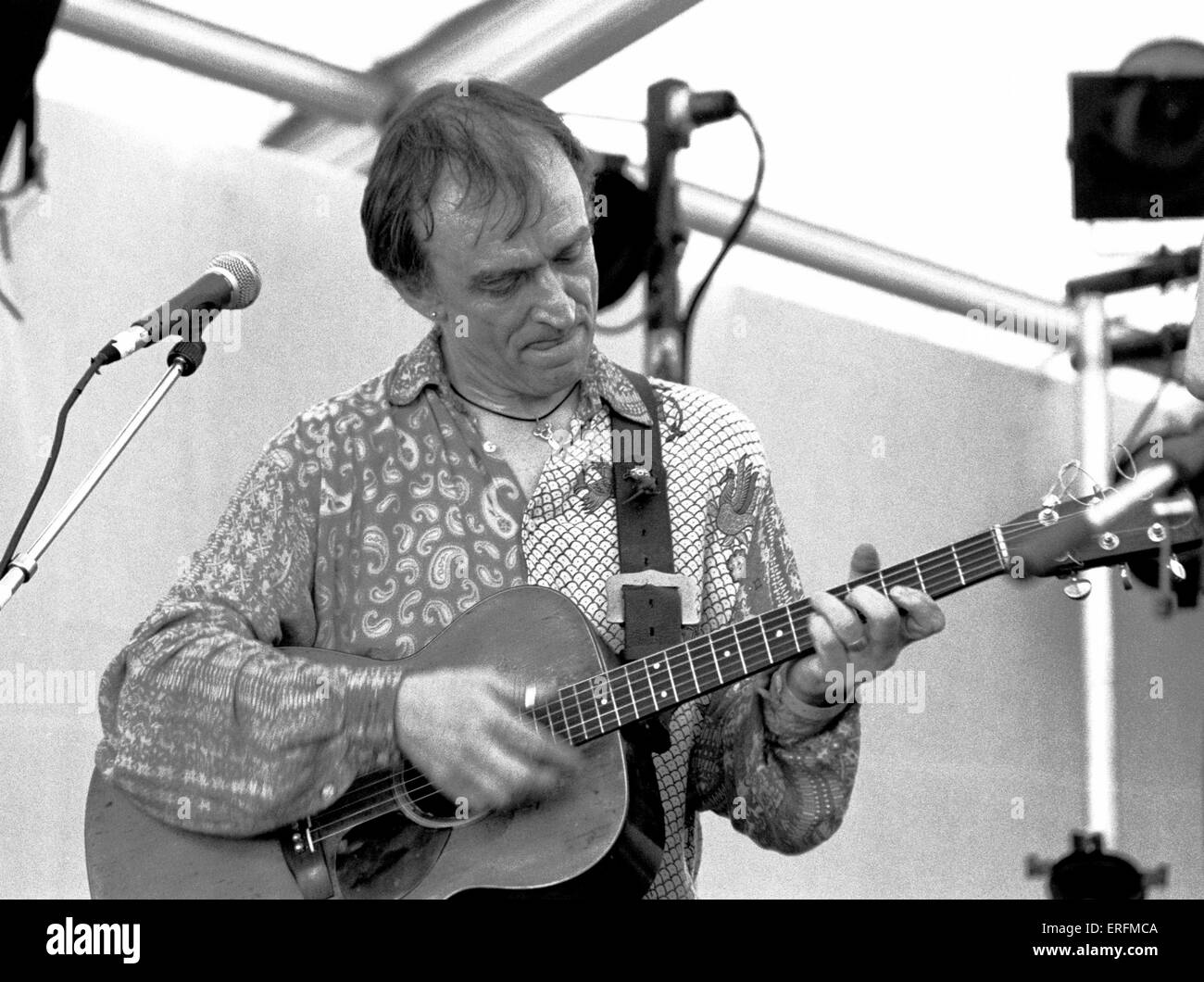
Much else happened during my residence there. One day, for example, the instructor from the textiles studio asked if would like to have a musician acquaintance of hers visiting from Britain do a mini concert for my students. This musician turned out to be one Martin Carthy, at the time unknown to me but now for many years a significant creative presence in my life- and in the lives of many. We did the gig and a few days later, as I drove to New York City for a workshop with depth psychologist Ira Progoff, I played Martin’s tape all the way there and all the way back.

Indeed, I kept playing the song The Famous Flower of Serving Men, eleven minutes long, over and over. Years later I did an interview with Martin over Indian food in London’s Islington and he told me how he’d been blown away by the original first five of six verses of Famous Flower (like much of Martin repertoire, a British traditional song) but deeply disappointed by the mediocre nature of what followed. So, Martin hung the original “good” verses on a clothesline in his flat and as he created further verses they too were hung like laundry on the same line.

I now have a dozen of Martin’s solo CDs, two of him with daughter Eliza, six of Waterson Carthy consisting of Martin, Eliza, and wife of 50 years Norma Waterson who died two years ago, two of Martin with fiddler Davis Swarbrick (once of Fairport Convention), one of Brass Monkey with Martin and John Kitkpatrick whom I was lucky to see together in London in 2018 (at which time Martin told me  about a scary fall he’d recently had), one of Martin as part of The Watersons, and Martin as guitar accompaniment on Anchor with wife Norma and daughter Eliza, and on Norma Waterson: The Definitive Collection.

Martin has been called the most important traditional singer in modern times and has an OBE to verify his stature and significance. His admirers include Bob Dylan who borrowed from him, Paul Simon who stole from him, and the great singer-songwriter-guitarist Richard Thompson who has sung Martin’s praises on all three accounts.  Martin is a truly innovative guitarist and master of effective guitar tunings. I’ve seen him perform many times, once for a dance in London with Brass Monkey

1990s singer performing hi-res stock photography and images - Alamy

Here’s another story, and an explanation. I once interviewed Ewan MacColl, the traditional singer and creator of classic songs like The First Time Ever I Saw Your Face (“I wrote that because I was deeply in love,” said Ewan) and The Shoals of Herring. This was south of London where Ewan – partner Peggy Seeger was out – had even made us lunch. He told me that he once had sung a song he had just written to a fisherman in Cornwall, I think it was. “Oh, yes,” said the fisherman, “I’ve known that song all my life”, said Ewan, laughing. Ewan added, “But I had just written that song!”

Ewan was a master of capturing the idioms of traditional song and this was proof. Later on, when I had just walked into Ewan’s gig, he turned to me and said, “I’ll have to write a song about your hat” and started singing, “Where did you get that hat?” Alas, the song never developed beyond that line, but Ewan also told me that once he and Alan Lomax were going to a Christmas party and he needed a new Christmas song to offer the group. So, he wrote it in twenty minutes and I’ve loved if for years!

Now here’s the explanation I just promised, again by way of anecdote. Once in my life as a writer, editor and publisher, I found myself the Writer-in-Residence at Mohawk College in Hamilton and inevitably, during my readings and talks afterwards, I would discuss creativity in writing. As a bonus, I had also my verification as an Intensive Journal Consultant trained by depth psychologist Ira Progoff in New York and as a Focusing Practitioner trained by psychologist-philosopher Eugene Gendlin in Chicago.

So, one fateful day several students declared, “You should write a book on creativity!” and pretty soon I decided, “Okay, I will.” The book became a way of life for me and very soon I found myself having breakfast with mime Marcel Marceau, watching tennis on afternoon TV with trumpeter Dizzy Gillespies, driving Mash TV star Lorette Swit to Toronto to buy a new dress for an evening event, and having a post gig Coke several times with B. B. King, all in the of course interviewing them for my book. I began in 1988 and have just finished writing, after numerous false starts, in 2025. The book for now is subtitled “Creativity: My Conversations with 310 Masters in the Arts.” And now to find a publisher……

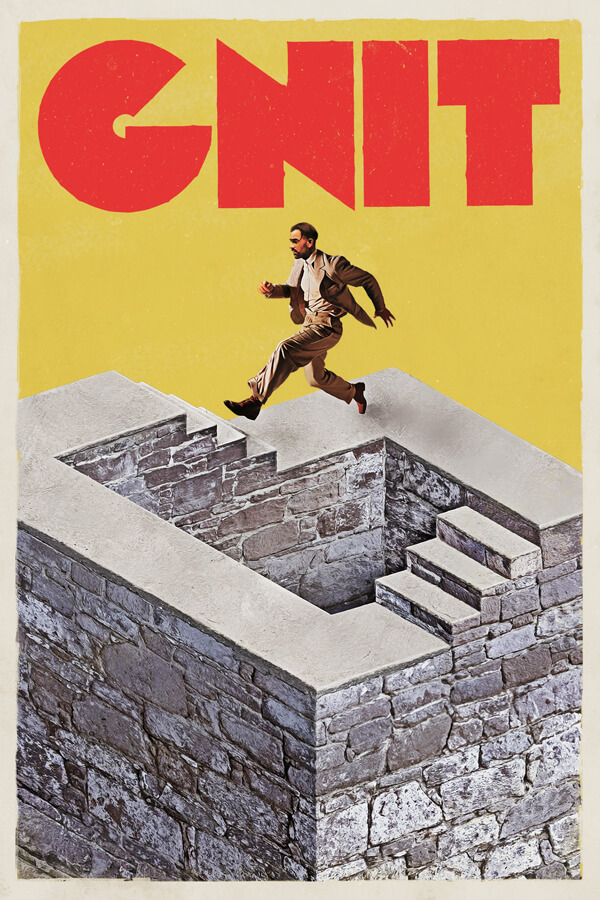
I always stress how experience of one work of art can initiate a chain reaction as one’s further experience of the arts, and this past summer such was the case with the production of Gnit at the Shaw Festival which I saw three times and would have come back for more. Gnit after all is Gynt with a “typo” and a letter change and so I recently bought myself a copy of the original Peer Gynt by Henrik Ibsen and Edvard Grieg featuring Derek Jacobi as the Narrator and Alex Jennings as Peer. Yes, I have played it several times and read the very informative notes in the enclosed booklet.

I do love the work in its original telling of the tale and I did love the brilliant theatricality of playwright Will Eno’s and director Tim Carroll’s modern retelling. So now – chain reaction again – I’m relistening to the classic recording of Grieg’s Lyric Pieces by pianist Emil Gilels and Grieg: Piano Works by a fave newer pianist Ivana Gavric – yes, I have all five of her very compelling CDs of varied repertoire and it’s a pleasure to play these over and over again.

Finally, I was once invited to write a cycle of poems for the Glenn Gould festival in Groningen, The Netherlands. After my reading, I was approached by a native of the city, pianist-composer Barend Schipper, who asked me, “Would you now like to go hear our  orchestra play Brahms or go and have a good Asian meal?” I interviewed Barend during our meal – of course I did – and discovered how much he treasured the sense of play inherent in Mozart’s music.

But this was more the kind of play discussed by Johann Huizinga in his book Homo Ludens as a crucial aspect of culture and creativity.  Barend gets most annoyed with musicians and composers who are only serious, because play and creativity are intimate kin. Composition for Barend, I have discovered, is both serious and fun.

Schipper, Barend Wolter - Composed,Preformed and Vocalised by Barend ...

Anyway, the Shaw Festival is next year offering Peter Shaffer’s Amadeus and because, if I remember accurately, I didn’t really like the film as much as others did, I’m now reading Mozart’s Letters Mozart’s Life, Selected and Edited by Robert Spaethling to discover perhaps more of the Mozart that Shaffer chose not to explore. Mozart did once write to his father in 1777, “I do like to have fun, but be assured that in spite of it all, I can also be Serious.”     I have high hopes for the Shaw Festival production. In fact, I’m looking forward to the whole of the Shaw season of 2026, but we’ll do that next time.

To close, more chain-connection memories. After my interview with British soprano Emma Kirkby, who was performing with Tafelmusik in Toronto, Emma said, “You should interview my friend who is now shooting a film in Toronto.” Her friend turned out to be the Oscar-winning cinematographer David Watkin and I learned a great deal from our interview, both about shooting films and about David’s unique creative attitude.

As well, David then said to me, “Have you ever heard Furtwangler’s 1945 live recording of the last movement of Brahms first Symphony?” I hadn’t, and David sat me down for a twenty-minute listen during which I was so profoundly moved, so consumed by an expanding world created by this greatest of conductors, that I sat in a trance.

Then I rose and, hardly speaking, gave David a hug and walked off into Toronto, again forever changed by the arts. That’s’ one reason, I guess, that I spent so many years interviewing for my book on creativity.


and at the Shaw Festival in 2026!  I absolutely love these images………

Thumbnail

Sleuth

Court House Theatre

April 2, 2026  October 9, 2026

Find Out More

Thumbnail

Funny Girl

Festival Theatre

April 24, 2026  October 3, 2026

Find Out More

Thumbnail

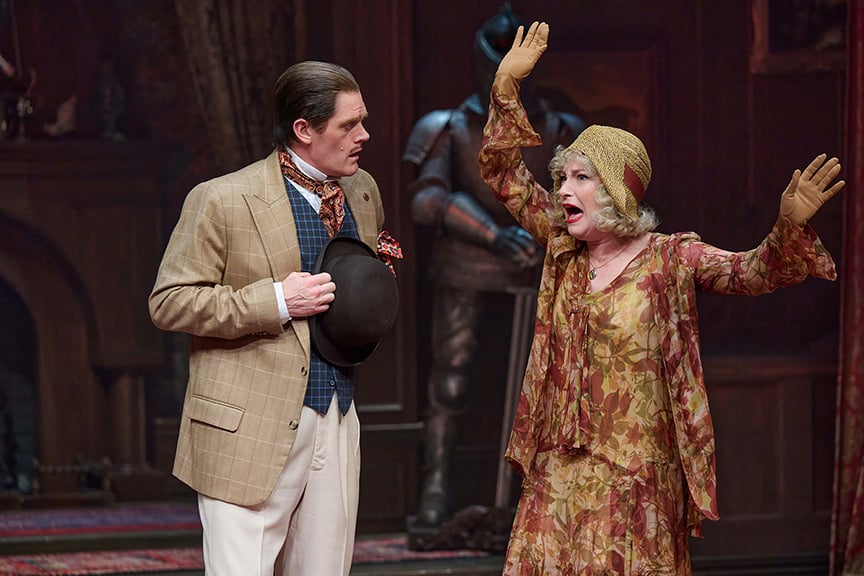
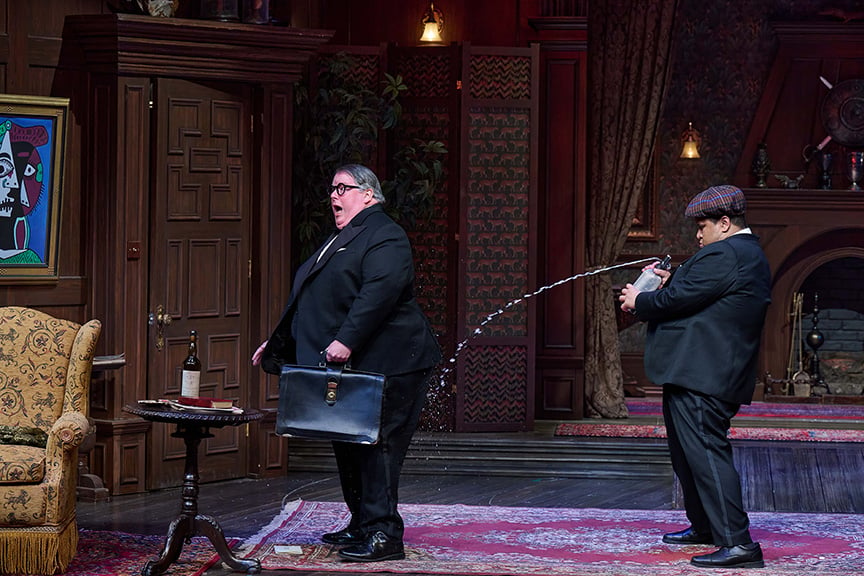
Jeeves & Wooster in Perfect Nonsense

Court House Theatre

May 8, 2026  October 10, 2026

Find Out More

Thumbnail

The Wind in the Willows

Jackie Maxwell Studio Theatre

May 22, 2026  September 27, 2026

Find Out More

Thumbnail

One for the Pot

Festival Theatre

May 27, 2026  October 11, 2026

Find Out More

Thumbnail

Heartbreak House

Jackie Maxwell Studio Theatre

June 20, 2026  October 3, 2026

Find Out More

Thumbnail

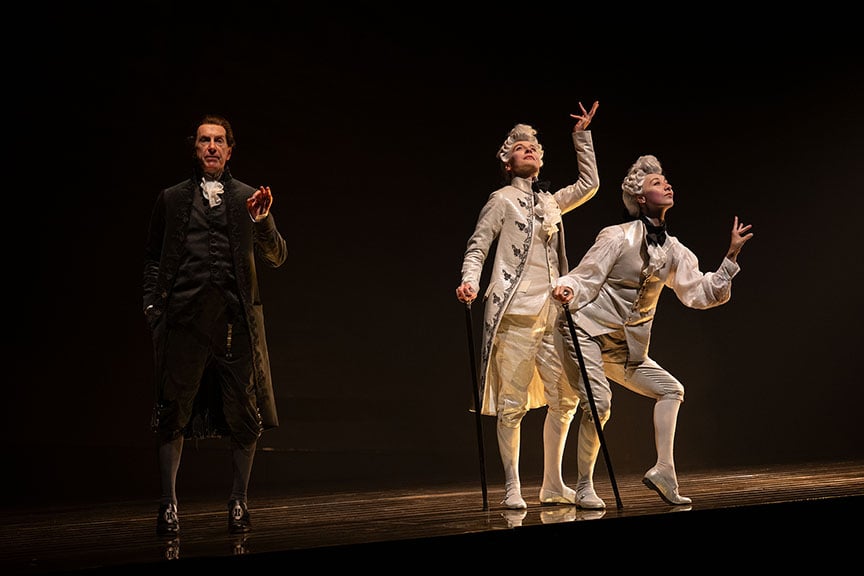
Amadeus

Festival Theatre

July 8, 2026  October 4, 2026

Find Out More

Thumbnail

Ohio State Murders

Jackie Maxwell Studio Theatre

July 19, 2026  October 3, 2026

Find Out More

Thumbnail

A New Work in Progress

Court House Theatre

August 1, 2026  September 5, 2026

Find Out More


Posted in Uncategorized | Leave a comment

TRIPPING A THIRD TIME ON GNIT AT THE SHAW FESTIVAL ………JAMES STRECKER REVIEWS THE ARTS

This happened to me at least twice in London, the need to see the same production of a play three times. The first play was The Best of Friends, in 1988 at the Apollo Theatre, and it featured John Gielgud, Rosemary Harris, and Ray McAnally in the cast as, respectfully, Sir Sydney Cockerell, the museum curator, Dame Laurentia McLachlan, a Benedictine nun, and the playwright and critic George Bernard Shaw.

The play was adapted from the letters and journals of the three over their twenty-five-year relationship and was inspired by the book The Nun, The Infidel, and the Superman. As you might imagine, the production was informative, consistently engrossing and humanly touching to see. It was also thrilling to experience each actor all aglow on stage with creative uniqueness, and before one performance I even waited outside the stage door for Gielgud to arrive so I might thank him.

The street, not that wide, was piled high with many offerings of boxes and garbage for collection the next day and finally, when Gielgud did arrive in this odd setting for one of the world’s legendry actors, he seemed wary at this stranger’s approach on a somewhat dark street, although, in the coming years, we did correspond by mail on several occasions.

The second play which demanded my three-time attendance was The Secret of Sherlock Holmes, starring Jeremy Brett, along with Edward Hardwicke, and written by his friend, the playwright Jeremy Paul. This production was running at the Wyndham’s Theatre s during 1988 when I sent Jeremy a detailed letter requesting an interview with him for my book on creativity. He sent me, in return, a postcard with, on one side, his portrait, and, on the other, his simple handwritten response, “Of course.” So we met, and had a long chat full of detail in Jaremy’s dressing room about how he very diligently prepared his creation of what many consider the definitive Sherlock Holmes.

Naturally, during my flight back to Canada, I only then realized that Jeremy and his unique creation of Holmes would make a fascinating substantial newspaper article, so when the Globe and Mail agreed, I was off back to London in 1989. Jeremy was obviously impressed and quite pleased, when he told Jeremy Paul that I had seen The Secret of Sherlock Holmes three times, and during our final meeting he also revealed a deep love of horses.

He also told me how, on his way home after a performance, he would often go stand among the homeless keeping warm on London’s winter streets. His Sherlock Holmes was the creation of an intense and complex man, and one easily came to expect no less of Jeremy in other ways. I liked the guy.

The first performance of the Shaw Festival’s Gnit I attended was a quite unanticipated experience, an immediately exciting one for a number of reasons. I therefore found myself frantically making notes to understand both what was going on in the pinpoint unpadded writing and how exactly the director proved so decidedly and imaginatively in tune with the playwright’s words and intentions. Indeed, I couldn’t help but suspect that word and physical representation had to be the fruit of one imagination. Margaret and I agreed that we should see Gnit again, especially since she had found my note-taking so distracting and annoying that after the interval she found another seat.

So, we sat apart the second time in the presence of Gnit and, no pen in hand this time, I was consumed by the goings-on before me and swept along by the happily creative combination of playwright Eno and director Carroll, with their respective theatrical energies in full swing.

I was amazed at how, even with so many elements combined, this production possessed a quality of almost unwavering, confident rightness. I watched and concentrated, and one thing I realized was that with the first performance we had seen I had missed the seamlessness of the whole thing, the subtle unity of it.

I also became more specifically aware of the many characterizations by the actors, each one with uniquely compelling human nuances at play. With so many characters in Gnit and with a cast of only six, it took secure artistry to achieve a stamp of individuality each time a character was to appear.  Two of the actors confirmed for me afterwards that, no surprise, how much work was needed to achieve performances of this, well, rightness. I’ve rarely witnessed such split-second production in a play.

I enjoyed just sitting back and being drawn in by this, my second experience of the Shaw Festival’s Gnit. In turn, I also began to think unkindly of our too easily accepted ritual of reviewing theatre and what reviewing, as we tend to do it, actually means. I had read two damning reactions – among a number of enthusiastic ones -to this production, and then found that my reaction, on actually seeing Gnit, was, instead, almost ecstatic and absolutely the opposite. Couldn’t these alleged reviewers see that a vigorous and dynamic creative imagination was the going currency here?

Indeed, I recalled once interviewing an annoyed Christopher Newton who’d just received a letter condemning a recent Shaw production and who now wondered what qualifications such people had to criticize anything when all they knew was “painting on black velvet.”

We do indeed inhabit a culture in which it seems impossible for people to own up to their limitations and ignorance, and to take responsibility for becoming adequately informed. They feel compelled to criticize, to “win” fabricated confrontations as, much too often, they merely broadcast their lack of knowledge, aesthetic sensitivity, and experience. Theatre of substance, on the other hand, can require of necessity that we willingly make ourselves open to new ideas, new experiences, new realities.

We have to repeatedly earn our right to evaluate what is offered in the arts and to call ourselves critics. We have to question whether the high standards to which we at first supposedly aspired still guide us. I stopped reading one Toronto critic a few years ago when he began to simply – often devastatingly, sometimes hurtfully – pontificate. One essence of a worthy critic is, after all, a constant willingness to learn beyond familiarity. And to do one’s job as an insightful, imaginative, and self-searching exploration.

One critic who got me interested in theatre in the first place was the Toronto Star’s Nathan Cohen. In high school, I used to walk home and, on the way, often buy the Toronto Star in order to read a social commentary column by Pierre Berton and a theatrical review column by Nathan Cohen. Years later, at the Royal Alex, we sat behind Nathan Cohen at a performance of The King and I for which he then wrote a rave review the next day. I’d observed, however, that for most of the performance that Cohen had fallen and obviously remained asleep.

And now comes a performance of Gnit for the third time and the notes, take them as you will, that I made during the performance…. I just can’t help it; I have to make notes during a performance….

– the dialogue seems like a waltz and one character easily replaces another in this continuum of life in which momentum is all

– these people don’t converse, they quietly (usually) orate and don’t hear one another

– “Fucking Jesus Shit” exclaims Gnit and we notice that as each character speaks, others just happen to be there….co-existence with communication is not a foregone conclusion with these people

– a favorite scene: Gnit asks Solvay “What are you afraid of?” and she so off-handedly lists many

reasons for her fear….one of many funny moments

– Did I hear this? Solvay tells Peter that he is a person with many “problem causing skills”

– in this world, life happens and we talk, but not too often with a real causal link between event and words

– the play Gnit means x and the play Gnit doesn’t mean, x and both assessments are equally true as our words often float off into space

– some characters live a frenzy every second, some do so even quietly

– Peter makes an art of insincerity

-life happens no matter what we do, or is it a series of random disconnected acts

-Not sure of the sequence here…. mom says to Peter, I love you but you don’t do anything

-these people seem to pound away at nothingness and their existence then emerges for a brief minute or two

-We are, but the world is not ordered for us…. if we are a mirror, there is perhaps nothing there to reflect

-at this frenzied pace actors are sometimes indistinguishable theatrical functions and then they are suddenly touching humans

-I keep thinking of Sartre’s Being and Nothingness, but without equations

– Gnit is so self-absorbed that he doesn’t notice that he is blatantly robbed\

“A very long day on earth” says the bartender…what a great line!

-these people are non-committal in their words…they make sounds with no meanings guaranteed

-It’s fun to hear individuals in the audience connect with a spoken line and then crack up

-I love this line “What part of every word I know don’t you understand?”

-Each character has a unique body with its own dynamics and its own presence, until it doesn’t

— another quietly eloquent summation, from Solvay this time “I’m in sort of a solitary mood”

-did a character say this or did I think it during the performance? “Life is a painful farce sometimes and we’re lucky that we die”

-these actors give us many carefully-etched theatrical gems

-Why do I hear Anitra’s dance as we find ourselves in a loony bin?

-Peter is quintessentially annoying

-Peter who repeatedly wants to be himself looks around the madhouse and observes “They’re nothing but themselves”

– “what’s an important human being? he soon asks…. yes, we do need to matter, even if we don’t

-Like Donald Trump, Gnit is someone out of tune with everything as he ruins this same everything

-what can be said in the end?… “Gnit tried, that’s a life”

-Nice touch in the set with a series of tubes overhead out of which drop fire and even a walking stick in a visual joke

-Peter wonders about “the achievements of my soul” and adds “there’s more to me than I’m saying” …again we realize that some humans are incapable of being clued in

– Peter does realize (or does he,really?) “I don’t know how to live, I never have”


So that was Gnit for a third time: consistently memorable, progressively thought-provoking, entertaining at every turn, eternally present now in my theatre-loving consciousness. Yes, it is a special experience for me when my imagination gets to inhabit a production like this one of Gnit.

Next, A Christmas Carol at the Royal George, though for only the second time. But who knows?



Posted in Uncategorized | Tagged , | Leave a comment

GNIT AT THE SHAW FESTIVAL: THE ELEMENTS SO MIXED IN IT THAT WE MIGHT SAY TO ALL THE WORLD “THIS IS BRILLIANT THEATRE” ….JAMES STRECKER REVIEWS THE ARTS

Home - Shaw Festival Theatre

It is typical of playwright Will Eno’s writing in Gnit, now at the Shaw Festival, that in but a few words he can evoke the pulsations of each character’s state of being. He is also most able in capturing concisely the subtleties of each relationship, of each whole lifetime even.

Every declaration feels poetically infused, a construct that is loaded with meanings, although if you savour one too long you will miss the next – especially at the unbelievably nimble pace of this production created by director Tim Carroll.

Moreover, not only is every dialogue crisp and concise, but it repeatedly evokes complete realities for us to inhabit. Eno is very adept in negotiating through our imaginations with the outpourings of his. As a result, this production becomes a very real place for us to take up residence.

Right at the outset, in a scene between Gnit and his mom, we have a brisk dialogue of quick turns and penetrating trains of thought that veer sharply, reverse, and maybe even reject themselves. It’s an invigorating experience to keep up with exchanges that may be challenging or even confrontational, and to try to decipher the human element within. Hearing such encounters is always engaging, since our growing understanding of the characters becomes one essence of our experience.

We try to keep up with sentences that, like the workings of an impressionist’s dabs and brushstrokes, accumulate into a shape of some kind, be it a characterization, an event, an emotion. We are compelled to constantly pull things together and celebrate language as we do.

Eno’s writing is consistently poetical and compact, to be sure, and we happily find that humour is another given possibility. The text is sprinkled with truisms about existence and although Gnit may wax eloquent, he can hear in response, “How wordy.” I still smile at that one.

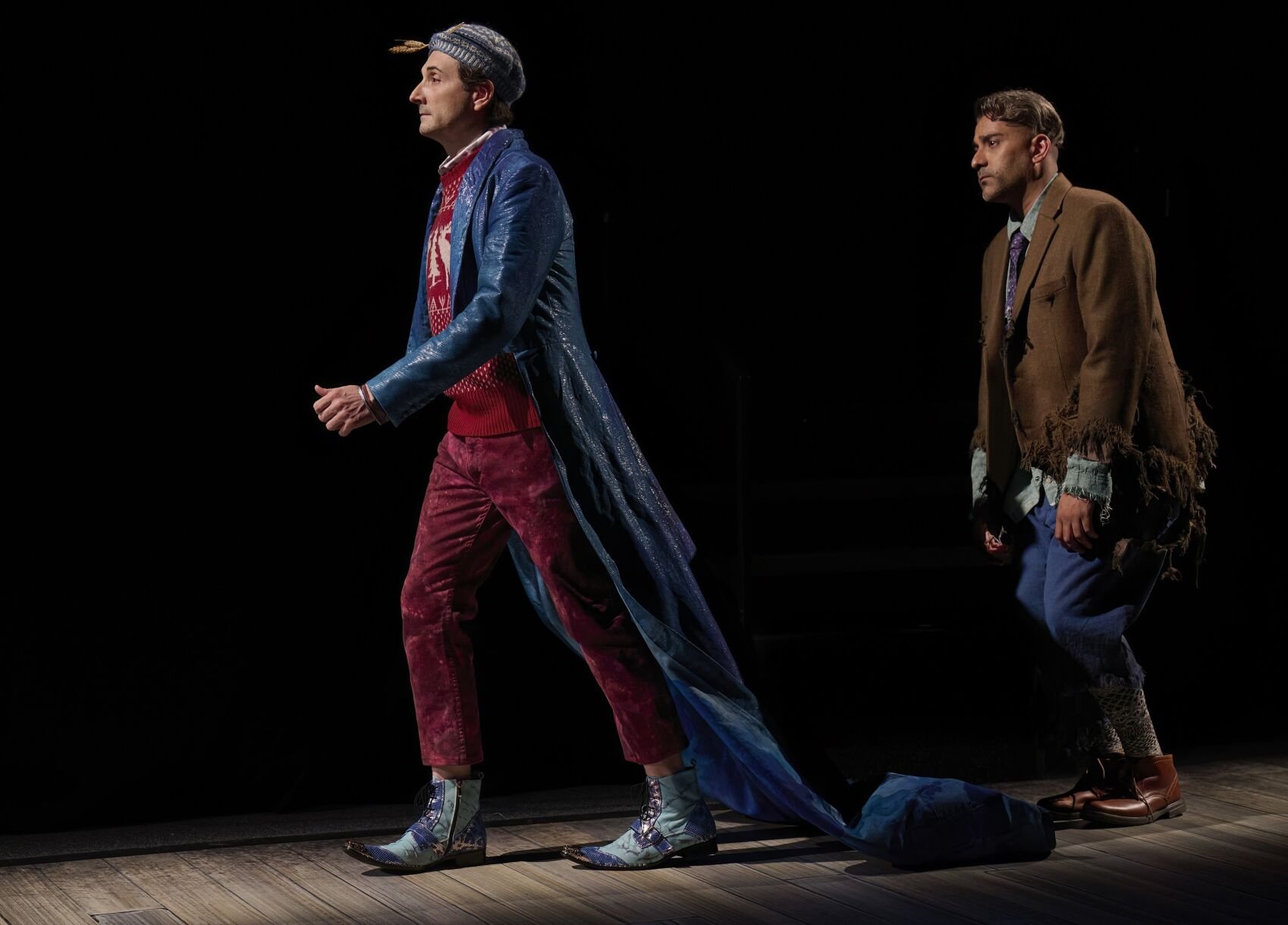
This production of Gnit is both intellectually and physically propelled. It is directed by Tim Carroll for the dynamic potential of each line, the nuances of each conjured reality, and the concise potency of communication between people. And certainly, of the physical reality lived by them. The choreography of movement is here consistently dynamic and exciting as it takes us along like hitch hikers into our own fantasies,

Hanne Loosen’s costume designs, with their arbitrary extensions of robes or pants seem like delightful whims of imagination. They are fun. Kevin Lamotte’s lighting simultaneously enhances both the presence and the essences of each character. Darkness and light are effectively seductive elements in this production and our minds are always giving personally workable form to the sources of the words we hear. We are engaged.

Indeed, director Carroll has created an exhilarating continuum of vibrating theatrical instances within this blend of light and motion. In each scene we are compelled to ask not only where but what we are. The dialogue doesn’t necessarily guide us but seems to point with us and we wend our way through whatever understanding of life we each have achieved that is here awakened in us.

One quietly thrilling aspect of this production is the choreography of its moving parts, its characters. If they are the hues made of lifetimes and if their psychological colours blend in interactions with one another, they also live an existence of motion, both physical and psychological.

When Gnit realizes that his mother has died, he lets out a quiet “Oh, no” but with a “Bye mom” he reverts to a functional and superficial Peter, all tellingly paced by actor and director, all back in motion. Perhaps if Peter stops, he may not exist, who knows?

The opening of part two is both functional and thus hilarious. The bartender played by Julia Course asks of Gnit how it’s going and in response receives a summary of the play thus far, things we knew and things we didn’t. Gnit, it turns out wants to “talk about the nature of self” and we sense he is out of his depth.

The writing, however, is so full of human experiences that it cannot help but reach our individual lives as we watch. But we are not, as usual, on quite familiar turf with a given speaker and hearing “You don’t have to go home but you can’t stay here” is one of many lines that leave one wondering why it was said and also why it was said the way it was. Yes, we are engaged.

When Gnit says, “I don’t know how a person is supposed to make it all the way to his death” we hear the playwright’s inner poet and his ability for concise and precise and evocative simplicity. Often with Eno, each spoken line has the quality of occasion and it resonates with existential truth.

At other times, the very self-aware writer deliberately plays with dialogue that, as a result, feels like something of a shorthand code for undergraduates who have not really been bruised by experience. Eno certainly knows what we can be in all our moods and because he is a well-honed craftsman of his art, he can understate with irony at will. He loves writing so much, it seems, that he does what it asks of him.

No more than five minutes into the performance of Gnit I attended, it struck me that this production of this play with these people was possibly one of the most artistically realized that I have experienced in many decades of attending performances of plays, most often as a reviewer. I realized that something very special was going on and that I was lucky to be there.

And yes, we can count some of the ways. The writing touches brilliance in its concise poetic simplicity, its sense of effective placement, its editor’s wisdom. The direction is so unobtrusively brilliantly-keen that we may take for granted both its perfected theatrical smarts and imagination in realizing each actor’s and the playwright’s potential for consummate theatricality.

The acting company is ripe with individual brilliance in using human depth – or shallowness – as a resource of reference. The abundance of technical skill on display feels like a repeatedly-right outlet of imagination. Individual eccentricity delights throughout as an effectively employed tool of the actor’s trade. I found myself eager to see each new entrance, to see what each actor would now do.

Lighting, set design, costume design, movement and music direction – how often did I hear Grieg? -all augment tantalizingly, in their own ways, the intentions of playwright and director. There’s many a force of inspiration at work and play here, in the process from page to production. The result is that we can’t help but inhabit a world which vibrates with life, imagination, and theatrical artistry at every turn, and we find ourselves vibrating with it. The play begins, sets our involvement in motion, and consumes us long past the end.

Indeed, I did one thing after seeing Gnit. I bought us two tickets for another performance.


gnit-main
Posted in Uncategorized | Leave a comment

PINTER AT SOULPEPPER AND SHAW (WITH MRS PAT) AT THE SHAW FESTIVAL, JAMES STRECKER REVIEWS THE ARTS  

OLD TIMES BY HAROLDPINTER

Before the current run of Old Times at Toronto’s Soulpepper, the last time I saw a performance of a Pinter play was in 2018 at the former Comedy Theatre now renamed the Harold Pinter Theatre near London’s Leicester Square.

As usual the seats were very uncomfortable, but I still could see, aching bottom and all, a long-treasured play available only on DVD with Alan Bates, Laurence Oliver, Helen Mirren, and Malcolm McDowell. The more recent one I saw in London featured David Suchet.

I used to show Harold Pinter plays to my students at Sheridan College, partly to develop an experience of unsettled and involved unknowing in them, a method at which Pinter was an acknowledged master. Of course, on occasion, one could feel that Pinter was self-consciously trying to be Pinter, but the playwright was often brilliant at keeping an audience on their toes.

Pinter could also touch the human core in people. I remember showing one class Pinter’s The Homecoming and one student complaining about the stupid plays he was forced to look at. Other students disagreed and finally Student #1 burst out, “Those people, when they fight all the time, are just like my family.”

The Homecoming featured Paul Rodgers, Ian Holm, and Cyril Cusack, all memorable.

For the performance of Old Times at Soulpepper, I found myself scribbling notes in reaction, certainly not explanation. Here we go:

Feels like a string of idle thoughts which verify that if we talk we exist

As if to prove they exist because they once were

Language makes us quests in our own lives

Who owns my memories? Are they here or were they once here. Are they something only about to happen?

Everything is an issue but whose issue is it?

Every thing they do is something to prove….do we try or want to verify we exist?

We have thoughts so we can speak them

They have nothing to say as long as they say it

They have nothing to say and they say it

People exist only when they remember, but are they really remembering?

Yes, he matters, if it matters that he matters

A play to see when you are semi conscious

Three people trying to collectively explain or understand what they just saw ……all as ushers are trying to empty the theatre….” he said he was Ordon Welles” says one

Is this an accurate quote?  “looking up your skirt in her underwear”

People find aggression to hire ??

Undercurrents of psychology are given direction in speech

Each character is a walking non sequitur

People the way they now are post COVID

What truth does anyone speak?


DEAR LIAR

My love of George Bernard Shaw has been fuelled by many experiences. No doubt, having the annual Shaw Festival forty miles from my home offered me annual opportunities from the early seventies on to become repeatedly acquainted with the Shaw canon.

But what of Shaw the writer, the mind, the personality, the human being? Decades ago, the CBC ran The First Night of Pygmalion, a drama which featured William Hutt as GBS plus Elizabeth Shepherd and the always inimitably glorious Paxton Whitehead, once the artistic director of this very Shaw Festival, and I started to wonder then about all these matters.

Then, once in London, I saw that John Gielgud was sharing the bill in what turned out to be a very entertaining and touching play titled The Best of Friends with Wendy Hiller and Patrick McGoohan as GBS. Gielgud always had some influence on my feeling for spoken language as I wrote my poetry, and so I saw The Best of Friends not one but three times.

In time I corresponded with Gielgud on several occasions and always marvelled at his miniscule handwriting always on a marked slant on a blank page. I also later had the opportunity to interview Michael Holroyd, Shaw’s biographer in four meticulously detailed volumes of which I got to read just one. Suffice it to say, Shaw has long been a person of interest in my life.

So, I enjoyed and was moved by Graeme Somerville as Shaw and Marla McLean as the actress Mrs. Patrick Campbell, stage name for Stella Tanner, in Dear Liar, a two-character play that uses for text the correspondence between the two. And I was left wondering about playwright and actress almost as much as with characters in a Pinter play.

Shaw and Mrs. Pat are both compelling users of words, very articulate in their declarations and most adept in their ability to play with others through the language they use – and to simply play most of all. Play is a most delightful aspect of their connection but play, when it is true to play, is always in motion and instinctively reinventing what is taken for reality. Play blended with intelligence is irresistible.

The two actors here convincingly imply qualities in Shaw and Mrs. Pat that in a way we are not allowed to understand too deeply, since each character is doing an involving and distracting verbal dance as a means to protect oneself. And this is tricky turf for any actor, to reveal a character who doesn’t want to be revealed too much, although that same character loves to play, loves to perform a role.

So, at the end of Dear Liar, I was asking as many questions as I did at the end of Pinter’s Old Times.

If you really want to mess with your head, try reading Bernard Shaw and Mrs. Partrick Campbell: Their Correspondence Edited by Alan Dent. I bought my used copy in London years ago and throughout this performance I kept having aural déjà écouté.

In any case, you should see this engaging production for its delightfully fresh perspective on GBS and Mrs. Pat.

Shaw Festival Review: Dear Liar » Theatre | My Entertainment World


Posted in Uncategorized | Leave a comment

MERRILY OVER THE SPEED LIMIT IN “TONS OF MONEY” AT THE SHAW FESTIVAL

  • “Tons of Money” Shaw Festival 2025

I usually return from performances at the Shaw Festival – with its invigorating standards in acting, direction, design and production  – as a somewhat changed individual. I have been inwardly moved, delighted, and eased into deeper self-reflection in some intense or light-hearted way. In so doing, I’ve enjoyed myself.

Don’t let the comparatively smaller scale of Niagara-on-the-Lake fool you in comparison with, say, Stratford and the latter’s sleek and almost overwhelming self-promotion. The Shaw Festival maintains the highest of theatrical standards with ingratiating poise, by presenting the honed imagination of its casts and production teams through consummate skill, on or behind the stage.

The Shaw Festival’s underlying modus operandi combines aesthetic and human values with a refreshing knack for entertainment, and for some reason I always feel closer here to the art of theatre and the art of being human at one go. After all, these people on stage are the same ones who will soon peddle past my car on their inevitable bikes as we each, respectively, wend our way homeward.

Of course, my initial reaction to a performance of the farce Tons of Money last week was not quite so enthusiastic. Try these thoughts that filled my brain: “What the hell is this?  This makes no sense! I think I might leave if all this chaotic and pointless business on stage doesn’t click in. What are they doing?”

And then I was suddenly and totally seduced by the undeniable zaniness on stage, the physical unpredictability of every body movement, the speeding ticket delivery of every line which still felt, without any flaw, like finely cut diamonds. And the inner magic of the cast, one that seems to take the actor and we who watch into a new dimension of being where logic seems to function like the flip of a coin.

Do you remember the performance of Lorne Kennedy in The President in this same Royal George maybe twenty years ago? As he spoke ninety miles an hour in our thirty miles an hour existential speed zone, I sat in awe of his enunciation, certainly, but also in profound delight of sharing madness with an unbelievably perfect guide. Bless you, perfect Lorne Kennedy!

And so, it was at the performance of Tons of Money. I felt amazed to share the existential space of these delightfully entertaining and magically precise characters on stage, I felt completely in the hands of a reality I couldn’t, as a mere everyday human, even try to master.

My purpose was to give in, learn to exist in this new dimension, and accept surprises as the going rate of being there. My purpose was to discover myself in the mirror of farce on stage as I, like everyone else nowadays, must do in our everyday, but cruel, increasingly deadly and hopeless world outside.

Tons of Money - Shaw Festival Theatre

  • Happy Discoveries

I went to the Shaw Festival this year as a different, temporarily handicapped person, one in a new situation, one with needs alien to me. In May I had fallen several times and ended up with a fracture in my back and several stretched muscles, all of which made movement quite painful, awkward, and very limiting.

So, thank you, usher staff of the Shaw’s Royal George who understood my difficulties and anticipated my needs in getting me to and from my seat. And thank you to the Festival for installing an outdoor washroom outside the theatre’s side door for folks like me.

I always enjoy chatting with the staff at the Shaw and when I told the usher that I’d first come to the Festival in the early sixties, she said that she was a student then who worked at the Festival in the summers.

  • DVD: Takacs String Quartet

I just can’t get enough, it seems, of the Takacs String Quartet’s DVD that features Beethoven’s first Razumovsky Quartet Op 59 no.1, Schubert’s D810 “Death and the Maiden”, and Haydn‘s op 33 no, 3 “The Bird.”

Originally a group of four Hungarians and at the time of filming now one of two Hungarians and two Brits, we are fortunate to hear performances potent with a blend of collective individuality and consummate, dedicated artistry.

We hear totally involving and unforgettable performances from the group that strongly influence one’s future experience of a given composition. As well, each musician actually gets to speak at sufficient length from inside his own creative life, so we get to hear what they do and what they feel about it.

We observe the personalities and passions of these musicians whose performances we are about to hear, and we have a warm and very informative encounter with them. The additional documentary, Introducing the Takacs Quartet. is rich with insights into music and how a string quartet functions – it includes selections of Bartok which are acutely idiomatic and very, very thrilling to hear.

Books: Timeless Favorites and Hidden Gems of World Cinema by Alicia Malone

One of my current ongoing reads is TCM Imports: Timeless Favorites and Hidden Gems of World Cinema by Turner Classic Movies host Alicia Malone, and it has a number of reasons to recommend it. The author offers a 4-6-page consideration of 52 films from around the world and each these chapters features 4-6 boldly present photographs.

The text, although not that extensive, is quite informative and sufficiently compelling with background and contextual information to briefly bring each film tantalizingly to life in the reader’s mind. A book of this size and format can’t avoid omissions, like of all directors Luis Bunuel, but it could avoid rather empty devices like having a line at the beginning of each chapter that begins with “To watch when……”

When I first saw Larisa Shepitko’s film The Ascent, for example, I was profoundly disturbed at being incisively and subtly reminded how humans can be deliberately cruel as they savour their mastery over helpless others. Malone, however, writes this rather distanced observation, “to watch when you…..want to be awed by a powerful and thoughtful war film.”

On the other hand, Malone’s book will, through its informed and perky manner, tempt many readers into checking out the films she discusses and to which she, in passing, refers. I had already seen 36 of the 52 she discusses, and will, no doubt, in time give in to the temptation to view many of the rest.

Review: TONS OF MONEY at the Shaw Festival


Posted in Uncategorized | Leave a comment

BIRTHDAY BLOG APRIL 15…..JAMES STRECKER REVIEWS THE ARTS

Today is my birthday and, since I don’t feel up to two hours at the seniors’ gym at McMaster University, I shall listen instead to favorite recordings and try to conquer a steadily growing list of things I must – must! – do. Beside my player, to begin, I have a pile of CDs I tend to rely on as old friends who give me pleasure, profundity and emotional support when I need it.

My oldest stand-by is The Golden Age of English Lute Music with lutenist Julian Bream, a recording I have listened to for maybe 60 years. I remember asking lutenist Bream post-concert at Wigmore Hall when it would be available on CD and fairly soon – well, ok, a year after – I bought a copy at HMV. Bream had told me that the quality of sound was a production issue, but I find the sound is fine on this treasured recording.

Julian Bream – The Golden Age Of English Lute Music (CD) - Discogs

……………………………………………………………………………………………………………………….

Another essential recording is Gayatri Mantra, with Hein Braat from the Netherlands chanting in a deep and resonant voice. This recording inevitably brings a peaceful calm to my agitated self and I got my copy by ordering from Hein Braat’s site, although it’s also available online.

Gayatri mantra Hein Braat

Hein Braat CD Gayatri Mantra / Maha Mrityunjaya Mantra 

One of the most beautiful and well-known mantras is the Gayatri Mantra. An invocation to liberate the soul from ignorance and darkness and – like the sunlight – gain clarity in our insights. Insights to walk that path that will enlighten our hearts and lead us to an ever higher state of spirituality. This mantra is called the essence of the ancient holy ones.

The second mantra on this CD is the Maha Mrityunjaya Mantra. And what a mantra that is! This mantra is said to juvenate, maintain good health, improve well-being and prosperity and to take care of a long life in peace, love, prosperity and satisfaction. That seems quite a lot, but just listen to it, (with your heart, not just your ears) and yes, it’s all that. It is the mantra of the lord Shiva. It arouses the Shiva force within you and puts an end to fear of death and liberates you from the circle of life and death. Impressive as can be.

The continuous recitation of this mantra (patiently and with dedication) could lead to nothing less than enlightenment. This mantra evokes peace and reflection. Listen or sing along with Hein’s impressive voice

…………………………………………………………………………………………………………………………….

During my first year at university, centuries ago, I began to borrow LPs from their Mills library and one regular take-home was Gregorian Chants with Monks of L’Abbaye Saint Pierres de Solesmes. As with Braat’s CD, this recording sets up an atmosphere of subtle serenity that embraces one’s spirit. I also tend to hold my breath with both recordings.

Play Gregorian Chants by Monks of l'Abbaye Saint Pierre de Solesmes on ...

……………………………………………………………………………………………………..

Violinist Yehudi Menuhin long ago hosted a TVO series on music that briefly featured a most gripping and strangely seductive Abed Azrié performing the Epic of Gilgamesh. I eventually found a CD in Paris on the ETHNIC label and once asked a feminist artist I knew to listen to it with me. But after only a few minutes of “Ancient Mesopotamia’s most famous work which dates back to 2500 B.C.,” she said that hearing it disturbed her too much.

Abed Azrie: Epic of Gilgamesh in performance

Abed Azrie: Epic of Gilgamesh

Abed Azrie: Epic of Gilgamesh

French-Syrian composer and singer Abed Azrie has brought new life to the Sumerian Epic of Gilgamesh with his unique music and voice. Here, The text is sung in Arabic instead of extinct Akkadian, The language that the tablets of the epic of Gilgamesh were written in.

Also listen: Song “The Epic Of Gilgamesh” In Sumerian language on Sumerian lute

Ancient Mesopotamia’s most famous work dates back to 2500 B.C. and tells the story of a tragic friendship and a quest for immortality.

The Epic of Gilgamesh, the oldest great work of world literature, did not originate in a specific environment, at a certain age or within a single nation, but arose from the Sumerian mythology and has spread over Babylon and Assyria, and has found its way to the Middle East within more than a millennium.

Epic of Gilgamesh summary

It is primarily the story of a friendship between Gilgamesh and Enkidu that arises first from a rivalry, strengthens in danger, deepens in common heroic deeds, and finally dissolves painfully in death of Enkidu. It is also the topic of exorbitance of the heroic figures (Gilgamesh and Enkidu) who, hasting from victory to victory, do not know how to control themselves, and thus offend the gods.

This sacrilegious arrogance results in punishment and death: in the heart of the survivor (Gilgamesh), the fear of death turns into an unbearable anguish of the human being, who is suddenly aware of the uncertainty of life. His desperate search for the secret of immortality is in vain: all attempts to find immortality throw him even deeper into despair until the day on which he is returning from a long odyssey, eventually finding peace and wisdom.

……………………………………………………………………………………………………………………….

One time in London we were so lucky to see the National Theatre’s spirited and imaginative production of The Mysteries: The Nativity, The Passion, Doomsday – with music performed by Home Service, featuring Linda Thompson. I don’t subscribe to any religion, but I do love British traditional music and found myself learning two of the songs on the CD of musical selections from the production. In fact, I find myself quite moved by Shepherds Arise and Wondrous Love, and sing along, even when our cats protest by exiting my office.

Much more music to write about, but not now since my long list of things I must do calls…


Posted in Uncategorized | Leave a comment

EYBLER QUARTET’S MASTER TAKE ON HAYDN & JULIA WEDMAN’S MEMORABLY PROBING SONATAS AND PARTITAS OF BACH ….. RECENT PLEASURES IN THE ARTS: NOVEMBER 2024

JUST RELEASED! EYBLER QUARTET CD OF WEISS QUARTETS

********************************************************************************

Many years ago, I was slowly easing through Vienna’s Haydn Museum, once the residence of the composer. It was almost eerily quiet and inviting of contemplation when, with a dynamic air of urgency, an American tourist burst into the stillness and declared, “I have a plane to catch and my cab is waiting outside, but I love Haydn most of all and had to come back one more time.” “Stand where you wish and I’ll take your photo and send it to you,” said I – which we did right then and which I did later. When he departed, I sensed that a pilgrim had visited his Mecca and departed fulfilled, blessed in a way. Haydn does that to people.

Thanks to Bud Roach and his Hammer Baroque series on Hamilton’s Locke Street, we had opportunity for similar blessing last Saturday when the Eybler Quartet visited to perform the first three of Haydn’s six Opus 33 String Quartets. As I listened, I sensed an increasing warmth of human connection between musicians and audience and composer. I felt the joyful energy of being alive in the music of Haydn as played with the undeniable commitment, mastery and joie de vivre of the Eybler Quartet. But then, Haydn and the Eybler Quartet are certainly each at home in the spirit of the other. The concert began and the very atmosphere of the place we all occupied was soon made of celebration. Please note that the Eybler Quartet recording of Haydn’s six Opus 3 quartets is available on their site or from Analekta. I play mine often.

Mystery Sonatas, Julia Wedman | Muziek | bol

For many years my go-to recording of Bach’s Sonatas and Partitas for Solo Violin was Nathan Milstein’s. As with other recordings I held dear, I knew I could turn to this one for its qualities of heart and spirit, all infused with seductive virtuosity, as an inspiring and supportive presence I needed at that moment in my life. But on Saturday, at the Eybler Quartet concert, I finally got myself a new recording of this treasured music by Eybler violinist Julia Wedman, and now as I write I find myself in something of trance as I listen to it. It’s a state of mind or being I know well from listening to Wedman’s previous recording of Biber’s Mystery Sonatas inspired by paintings she saw in Salzburg and revisited the very next day, violin in hand. Wedman explains that playing the Mystery Sonatas “inspired me to become a baroque violinist.” Her recording is on SONO Luminus and listening to it becomes a fulfilling experience of one’s ethereal, or spiritual, being. And yes, I play this one often too.

I once interviewed an Egyptian novelist who, while in prison, had witnessed a fellow prisoner tortured to death. As I asked him about his life, he sometimes responded by asking me some relevant specifics about my own existence, and I soon welcomed the opportunity to be meeting him on another, more human, level of honesty. Which leads me, if you’ll pardon my roundabout return to Wedman’s recording of Bach’s Sonatas and Partitas for Solo Violin, to reasons I appreciate this recoding. I feel throughout a deep and constant human truth in the performance, one that is at once poetic, gutsy, existentially complex, vulnerable yet secure of purpose, and emotionally open to the imminent unknowns of life. I feel here a vigorous grasping of the demands of human existence and also a wisdom that knows a lightness of being to be another language of human truth. This Bach seems to say, “May I dance as I explore the meaning of everything?”

Julia Wedman CD COVER . JPG.jpg

Certainly, Wedman is expertly at home in the implicit needs of Bach’s music for delicate shadings of airy nuance, for heels dug in the earth assertiveness, for the constant interplay of statement and afterthought both wistful and logical, for technical mastery that holds perfectly true in shaping human meanings. A number of times I sat still and breathless at runs of notes that seemed free of gravity as they created new realities true to some ineffable mystery. At times I felt a passenger atop my drifting mind as my masters, Bach and Wedman, conjured realities just beyond my grasp. But then, this recording is indeed a continuum of new discoveries, a collaboration of composer and interpreter that with creative virtuosity and human self-searching honesty give us new realities and new meanings so that, as well Bach’s and Wedman’s, we live in awe of new worlds of our own. This is a special performance that draws listeners toward and into their unknown selves. This CD is available on the Gallery Players label.


Posted in Uncategorized | Tagged , , , , , | Leave a comment

AN UNMISSABLE CANDIDA AT THE SHAW FESTIVAL & A PRICELESS JUDI DENCH BOOK, SHAKESPEARE: THE MAN WHO PAYS THE RENT

Sanjay Talwar as Rev. James Mavor Morell and Sochi Fried as Candida Morell in Candida (Shaw Festival, 2024). Photo by Emily Cooper.

I’ve long maintained that an exceptional production of a play by, say, Shaw is much akin to a memorable concert of, say, Beethoven. Try this synchronicity. The August issue of Gramophone was sitting in our mailbox, when I arrived home from a performance of Shaw’s Candida a few days ago, and therein contained was an article on the best recordings available of Beethoven’s Piano Sonata No 31 in A Flat Op 110. In his paragraph on “The Historic Choice,” author Charles Timbrell said this: “Edwin Fischer’s recording contains revelations without point-making, and it is both engaged and engaging.” “Amen,” said I, but I was then thinking of Shaw’s masterwork and not Beethoven’s.

Directed with sensitive and evocative precision by Severn Thompson, one which achieves a quietly stated and unforced but thus potent theatricality, this production is rich with humane insight. One is gently moved, one is entertained, one feels an admiration for all involved. The actors, in the top-grade fashion one expects from the Shaw Festival company, play their parts with emotional versatility, negotiating the gradations of human feeling with deceptive ease and assertive subtlety. We in the audience think we understand a character until they reveal a new flavour, a new spiciness perhaps, that requires further adjustment on our parts.

Of course, that’s just GBS keeping us on our toes as he always does, you might say. But one of the numerous virtues of this production is how the characters slip imperceptibly into their new distinct realities with ease. We are always catching up, but we are constantly unsure as to what specifically it is that eludes us of a character. Perhaps that’s what our Beethoven reviewer means by “revelations without point-making,” that with each new insight we do not have any security in something conclusive we might say, and we must live with striking but inconclusive understandings of what we experience from the stage.

Each of this Candida’s cast is certainly “engaged” – in their characters, in their narrative purpose, in their theatrical function, and, to be sure, in their art of acting. Thus, each one in turn is thoroughly “engaging.” Immediately, Claire Julien as Miss Prosperine Garnett displays a blend of fidgetiness, emotional suppression, heartbreaking need, and to some degree suggestions of inner volcano. Damien Atkins as Rev. Lexy Mill suggests a socially adept quirkiness that, albeit awkwardly, inhabits its own reality and any other as the need presents itself. Ric Reid’s Burgess, whose raison d’être has dollar signs on it, conveys an ingrained assuredness with no suggestion that he might ever understand a need to get beyond himself – he would vote for Ford and Poilievre, no doubt.

In the primary trio, Sanjay Talwar plays Rev Morell as a lifetime of unquestioned security now playing still the role of his much-admired self, although he does convey an inner realm of unspecified wounds that add mystery to his person. As young poet Marchbanks, Jonathan Sousa is both dynamic and receding, emotionally frail and all over the place until tied down to specifics. Like the rest of the cast, Sochi Fried as Candida carves out dramatic turf that quietly owns the stage even as she shares it. She implies a captivating and compelling blend of grace, firmly-set etherealness, and savoir-faire in the ways of the world – or is that savoir-être? We always wonder what it is she really thinks, don’t we?

I thoroughly enjoyed and admired this Candida, with its distinctly palpable characterizations and its many astutely-realized touches on the part of director Severn Thompson. I want to see it again to experience these human lives as they unfold as realities in their time, some with which I can connect and some not because they come from another era. But they are human, they are lives that are here carefully thought out and presented with the mastery that only accomplished artists can offer. We are very fortunate to have such an offering available to us, as we observe a play that is an insightful and critical look at Shaw’s period in time, one that very much approaches the human being with an honesty that makes it relevant to us now in our time.

And speaking of priceless: Once, when I’d arranged for an interview with her in London, Judi Dench met me at the stage door of the National Theatre and guided me to the theatre’s cafeteria where we then chatted for maybe an hour. She was delightfully unaffected, quite at ease in moving from levity to the serious and on to thoughtful recollection. When the interview was ended, I handed Dame Judi a photo I’d just picked up in the National’s lobby store and asked her to inscribe it for my wife, at which point she declared, “Oh I hate that photo and I’ve asked them to stop selling it.” She then ripped the photo into many pieces but, happily, then said, “Let’s go to my dressing room and I’ll give you a better photograph.”

All of which leads me to recommend, and I won’t take no for an answer: Shakespeare: The Man Who Pays the Rent, 400 pages of discussion/interviews by Judi Dench and Brendan O’Hea. I read it ten pages at a time and, take time to absorb because the book is rich with Judi’s personal experiences, her many insights and her uninhibited, and ripe vocabulary. A priceless must read, theatre addict or no.

Posted in Uncategorized | Tagged , | Leave a comment

RECENT PLEASURES IN THE ARTS—FILMS, BOOKS, CDs

photo of John Whiting

I’ve seen Carol Reed’s The Third Man many times – it’s one of my favourite films, after all. But after a recent viewing, I finally decided, as well, to read Graham Greene’s “Cold War classic novella,” in which the film’s Holly Martins is Rollo Martins, and the literary version is, for me, a rather different experience from the film. And then I was pleased to discover a number of dialogue segments on the CD Third Man Original Score which, of course, features a good helping of soundtrack composer Anton Karas aka “the first man of the zither.”

Of late, I tend to dip into writers I hadn’t much explored before, one being Georges Simenon, but more often the short stories and not always the Maigret volumes, since I’ve done repeated watchings on DVD and enjoyed Michael Gambon playing the part in English and Bruno Cremer doing likewise in French. Both actors are memorable, with unique nuances in their individual interpretations, and I’m so glad I got to see Gambon, recently deceased, on stage several times. As for Simenon, much praised as an author by masters like Andre Gide, I find myself something in awe of him, especially for one in his mastery of proportion in what needs to be said.

Another writer who inspires awe is Isak Dinesen, partly because I am each time consumed by her world after only a few of her perceptive and instantly gipping sentences. She is a masterly weaver of tales and I find myself instantly woven into  her repeatedly surprising and unpredictable narratives, the latest for me being Babette’s Feast – first the humanly sensitive film and then the gently mind-expanding short story. Her characters live on several levels or within several simultaneous dimensions, as in The Immortal Story, written by Isak Dinesen and made into an equally haunting film by Orson Welles co-starring Jeanne Moreau, who also appears in his film of Kafka’s The Trial……and in the lively and heartbreaking Chimes at Midnight featuring Shakespeare’s Falstaff, played by guess who?

And talking about Orson Welles, you need to see Mark Cousins’ The Eyes of Orson Welles which turns out to be an exploration of Welles as a visual artist, and yes that means sketches and drawings too. I do hope you have had the pleasure of Mark Cousins fifteen-part series The Story of Film: An Odyssey, an extremely insightful, informative, and eye-opening account of the film medium.

When you think about heartbreaking film, try Wim Wenders quietly devastating film Paris, Texas which explores at an unyieldingly hypnotic pace the impossibility of people connecting. I don’t ever think I’ve sensed isolation as poignantly in film before, as in this work mostly penned by Sam Shepherd, although Wenders’ imagination-fueling film Wings of Desire makes many nuanced points on the experience of human solitude. So does the recently popular film Living, starring the incomparable Bill Nighy, which is based on Kurosawa’s film Ikiru, both of which pointedly dare the turf or pointless bureaucratic existence in memorable fashion.

As for Bill Nighy, I am hooked on his CD series titled A Charles Paris Mystery of which we now have seventeen, and what better companion on a long drive by car anywhere than these dramatizations of novels by Simon Brett here delivered by Nighy’s drily insinuating narrations.

I am hooked on a number of ballets I have recently seen by choreographer Roland Petit. Carmen features Nicholas Le Riche, a dancer of confident rightness who translates dramatic import into a musical but also assertive physicality, whether partnered by a ballerina or what seems the countless chairs Le Jeune Homme et la Mort. Petit’s sense of humour has a decidedly physical dimension to it and while watching we are constantly amazed at the quirky lightheartedness that Petit and his dancers can pull off. It’s the language of a master, one which I also enjoyed in his Notre Dame de Paris which featured ballerina Natalia Osipova, always magnificent in balletic flight and a favourite.

A year or so ago I made the happy discovery of Norwegian violinist Vilde Frang in the Stravinsky violin concerto on Mezzo television and immediately agreed with accompanying conductor Ivan Fischer, who said about her in his introduction, “This music is hellishly difficult for the violinist and I don’t know how Vilde Frang plays everything perfectly, everything with meaning.” One thing I later discovered in CDs of Frang playing Mozart Violin Concertos, Violin Concertos by Britten and Korngold, Beethoven and Stravinsky Violin Concertos, and Bartok, Grieg, R. Strauss: Violin Sonatas was the confidence, exquisite beauty of tone, unflinching bravery in rhythm, enchanting sense of implicit musical meaning in Frang’s playing, all without one ragged note but much – what is it? -mystical clarity.

The film Love, Cecil comprehensively explores Cecil Beaton’s always fascinating professional and personal lives, with helpful contributions from relevant friends, colleagues or informed experts. Beware that the tons of irresistible photos will compel you perhaps to purchase the oversize volume Love, Cecil: A Journey with Cecil Beaton and, no doubt, other related books like The Unexpurgated Beaton: The Cecil Beaton Diaries As They Were Written. It contains this: “Beaton wrote in his diary: “I have always loathed the Burtons for their vulgarity, commonness and crass bad taste, she combining the worst of US and English taste, he as butch and coarse as only a Welshman can be.”

The PBS blurb that once announced its program The Magic of Horowitz cannot say it all about this very special pianistic genius. Nor, in fact, can the CD Horowitz in Moscow, even with its detailed notes. But seeing parts of the recital on PBS and having pianist Daniil Trifonov declare, as we watch, that Horowitz never forces the keys, or having Martha Argerich declare that the Chopin mazurkas played by Horowitz are the “very best” provides tempting revelation.

When Argerich later declares that Horowitz is “the greatest lover the piano ever had” we watch the program again – well, over and over again, as I do – because something too special for words is going on between pianist, piano, music itself, and meaning, something it feels wondrous to experience. And I love the twinkle we get to experience in Horowitz, something I was lucky to take in first hand at a recital of his years ago at Massey Hall. He was playing his Carmen Variations and at one point hit a single note that vibrated with humour. I let out a large laugh from the ground floor seat surrounded by a reverential audience and was pleased to see in his smile that I was sharing my laugh with his twinkle, his humour.

If you weekly watch TCM’s guide to film noir, Eddie Muller, you might already be lucky to have the man’s books in your collection. Muller’s passion for film noir is thorough, his knowledge of the genre as complete as it gets, his enthusiasm for films from the dark side of the human coin infectious, and I’ve made many delicious discoveries through his hosting and programming.

In 1956 I became an usher at our neighbourhood cinema, for three years, at a time when Noir’s influence was still present as a natural force in film. As you may guess, I have a number of Muller’s books. The first, Dark City: The Lost World of Film Noir, blew me away with the comfort and creativity of Muller’s voice in the Noir idiom. It indeed seemed a natural manner of speaking for him and I delighted next in Dark City: The Lost World of Fim Noir (Revised and expanded edition) which now, in larger format took on the presence of a religious tome.

Dark City Dames: The Wicked Women of Film Noir is another Muller gem but let some of the Amazon’s text speak and fill us in: “He profiles six extraordinary actresses — Jane Greer, Evelyn Keyes, Ann Savage, Coleen Gray, Audrey Totter, and Marie Windsor — as they balanced love and career, struggled against typecasting, and sought fulfillment in a ruthless business.” Dark City Dames is a priceless gem of first hand remembering of times when these ladies nudged our fantasies.

The Art of Noir: The Posters and Graphics from the Classic Era of Film Noir is another unique consideration of film noir. It addresses the visual impact of posters used to attract audiences, for one, but also includes comparisons, from culture to culture, of how a film was perceived in each. The comparisons of specific emphasis from culture to culture are always revelations into the nitty-gritty of each cultural bias, especially that of North Americans. The designers of these posters were speaking to many a subconsciousness, weren’t they?

In brief, a few more recommends: Prine on Prine: Interviews and Encounters with John Prine by Holly Gleason  is an informative read at every turn, one that certainly takes the reader into the heartbeat of John Prine and makes him or her into an even more appreciative listener.

When I saw two performances of My Name is Rachel Corrie twice in London in 2005, I discovered that it was a play composed from Corrie’s journals and emails from Gaza and compiled by actor Alan Rickman and journalist Katharine Viner, later in a production directed by Rickman. Corrie, an American, had been crushed to death. by an Israeli bulldozer during her attempt to stop the demolitions of Palestinian homes by Israelis, and Rickman discusses Rachel Corrie and much else in Madly, Deeply: The Diaries of Alan Rickman, page by page a humanly rewarding read by Alan Rickman, Rima Horton, et al.

Literary, you say? Of late I’ve been dipping into the poems of Paul Eluard in both French and English, Pablo Neruda, Rumi but not in all translations some of which seem intrusions in a New Age voice, The Complete Poems of Anna Akhmatova, and The Complete Poems of Anne Sexton.

Drama? Last summer I asked Tim Carroll, the artistic director of the Shaw Festival, if we would ever see a play by British playwright John Whiting on the festival stage and discovered that his favourite Whiting play is A Penny for a Song. I haven’t read Whiting since I studied him extensively while doing my M.A. in Drama in the early 1970’s, so here I am again reading A Penny for a Song and hoping it is on the Festival’s agenda for imminent production.

The play is gently “Empire” in tone, depiction and manner, and only an attuned director like Tim Carroll might bring it into unselfconscious, crisply moving, good-naturedly British, existence. I chuckled as I read the text and would very much like to see what the source of so much chuckle looks like on stage, in the original version of the play, and what both director and actors must do to keep an audience engaged and entertained. These characters all have their unending exits and their entrances, and how, I finally wonder, will Whiting and the production maintain connection with us, of another culture, in our own brand of dottiness.

Posted in Uncategorized | Leave a comment

CROW’S THEATRE DOES AN UNFORGETTABLE UNCLE VANYA AT THEATRE AQUARIUS UNTIL JANUARY 27

Back in 1994, while in the middle of several intense writing projects, I took ten days in London as a needed sanity break. In turn, I ended up at the at the Royal National Theatre sharing eye level with the cast, one which included Judi Dench and Bill Nighy rolling around at one point in lusty if awkward embrace. The play was Chekhov’s The Seagull.

Nighy was Trigorin the writer, and each time he described, in that pinched sort of whine that Nighy can conjure at will, Trigorin’s perplexed state of mind during a befuddled process of creativity, I laughed loudly from the belly. Trigorin was describing familiar turf I had, that very evening, gone to theatre to escape. Later, when the cast took their bows, I stood in front of Nighy, gave him “two thumbs up, and he winked at me in response.

More locally and more recently, Crow’s Theatre does an unforgettable Uncle Vanya at Theatre Aquarius until January 27, after which it transfers to Toronto’s CAA Theatre from February 2-25. This production achieves much of what fine work in theatre can offer, and let me count but a few of the reasons I urge you to go see it.

To begin, director Chris Abraham and his cast achieve a world into which each inner life of an audience can segue, willing or not, with ease. We recognize these characters as much as we are willing, in our own self-deceptions, in our own existential torments, to acknowledge ourselves. These Chekhovian characters live individual lives and we in the audience live distinct lives, and over and over a life on stage overlaps with the watcher’s life.

Now try acting Chekhov as a Taoist, as many in this cast seem able to do as they “work without doing.” Chekhov the playwright suffers as a genuine explorer into humanity whenever his acted characters become self-consciously realized and remote from us. However, one beauty of Abraham’s production is how we can’t compactly describe any character, we can’t point at them and judge them. They are what they are, and so we are what we are, all of us bound to be here – and who knows what to say about it?

One joy of a humanly honest production of Chekhov is not to feel acted at, and such is true in this case. We feel we are living with these people and that gradually we need to pull back, emotionally drained as we are. We gradually feel more and more weighed down but rarely, oddly, do we isolate the actors’ art already so well-honed and then subtly guided into being the reality we here experience. Judi Dench once explained for me how, on the other hand, Laurence Olivier was quite conscious of the effects he was having on his audience. This Vanya cast, however, keeps it all unaffected and real.

I always cringe when I read that a play I’m going to see is “adapted” since, too often, such designation merely seems to mean playing selections of popular music to help a contemporary audience understand how a given play is ‘relevant.’ Liisa Repo-Martell’s adaptation, happily, feels genuinely present and humanly authentic through the words spoken by these characters. My mother’s mother was Ukrainian, her father Polish, and as a kid I heard many relatives in conversation, and it was quite natural to imagine these characters presented by Repo-Martell as both Slavic and English-speaking.

The “lived-in” set of this Uncle Vanya, created by Julie Fox and Joshua Quinlan  does convey daily human presence. It’s a space where various humans make their physical and emotional way and make an atmospheric mark on their surroundings. Kimberly Purtell’s lighting accentuates and seems to echo many inner lives. We as watchers feel compelled to inhabit this space, to interact with it, and like  Chekhov’s characters be made, body and emotion, by it.

It’s a sign of an emotionally rich production, like this Uncle Vanya, that the play’s characters continue to unfold when one has returned to mundane concerns. One has gained new insights, unlidded some emotions, and also been set to rethinking individuals one knows or has known. A line that separates Chekhov’s characters and the people who inhabit one’s life becomes less precise, even non-existent. It also can be unsettling the way a Chekhovian character seems to inhabit one’s mirror, as one shaves perhaps, and says, “We are one and the same.”

Yes, I do connect with these characters. For one, I feel I run into Marina from time to time, maybe buying groceries, and again appreciate the unaffected earthiness that Carolyn Fe brings to the part. I have worked with and been impressed in past years by a person like the subtly realized Astrov, played by Ali Kazmi, and found that, for all his dedication, ideals, and passions, he is still unreachably alone, and can’t do anything about it. Or Shannon Taylor’s inwardly wandering Yelena, gently underplayed, who never has the goods for – if indeed she wants it – human connection.

I once had a publisher much like Eric Peterson’s dynamically-realized Alexandre, a man of public stature in his field, big-mouthed, and, as we are reminded by Vanya, superficial and shallow. Each character we here meet, however, is, in truth, as much an unknown as a person of identifiable qualities. The emotionally charged and emotionally suppressed Sonya of Liisa Reo-Martell is one. Her declaration that ends the play is so ripe with longing and hopelessness that, on listening, one’s heart quietly breaks. But who is she?

Tom Rooney’s Uncle Vanya, in his frustrations, social clumsiness, and implicit sense of pointlessness, does seem a quiet and nuanced summary of Chekhov’s work. In this dead-end and long burned-out existence of his, Vanya carries on because, in most cases, that’s what one does with one’s life.

One does laugh too, out loud or simply with one’s eyes, although humour is not present in all Chekhov productions because too many non-Slavs would probably not understand it, not get it even as they live it. Once in the factory where I worked one summer, a Ukrainian welder came over to ask, “How come a chicken drinks water and doesn’t pee?” See what I mean?

So, do see Chris Abraham’s production, and think about what’s going on. We live in perilous times when murder is often unquestioned, often even declared as justified. These characters are real people in front of you. Are they, with all their flaws, worth saving?


Posted in Uncategorized | Tagged , , , | Leave a comment