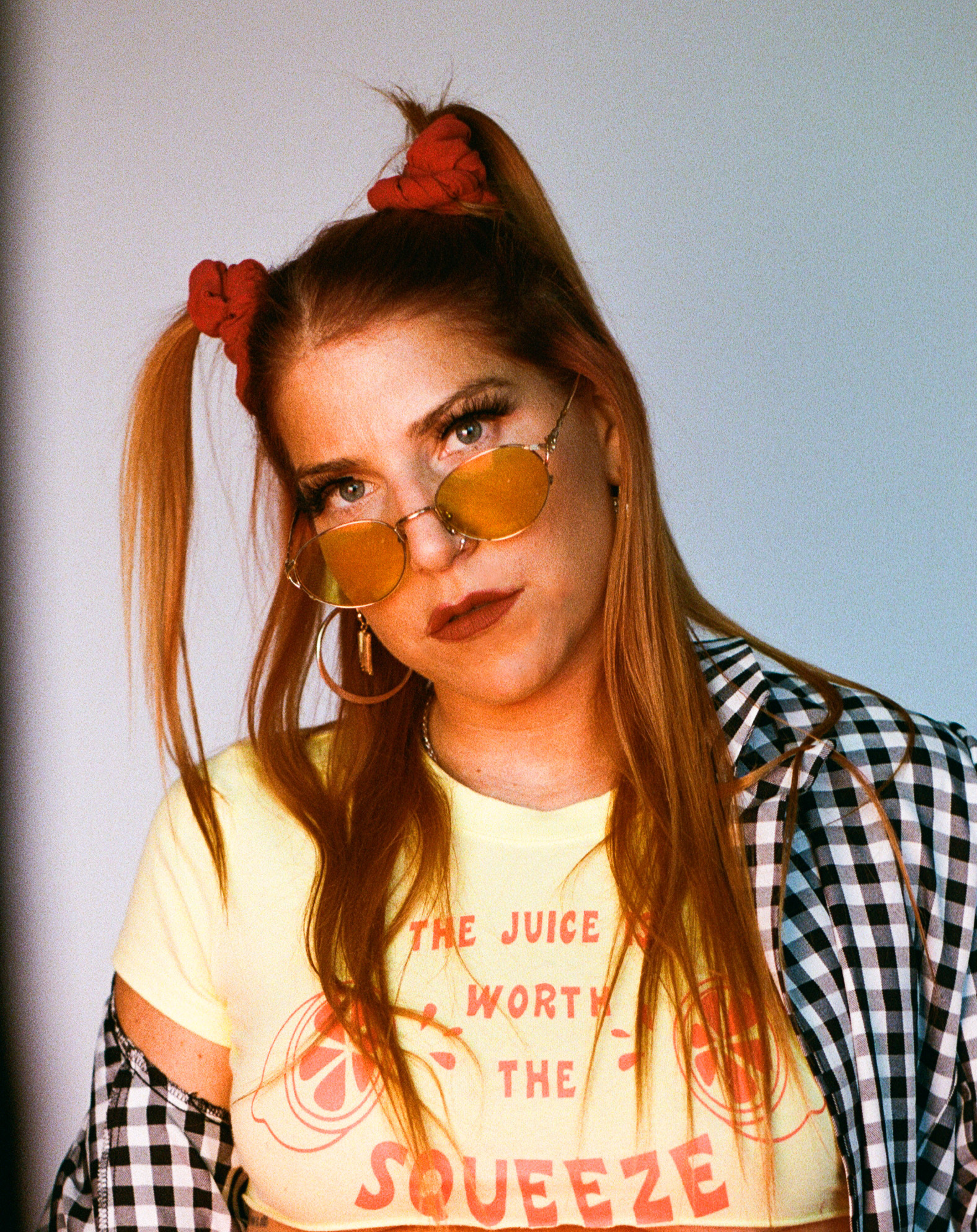
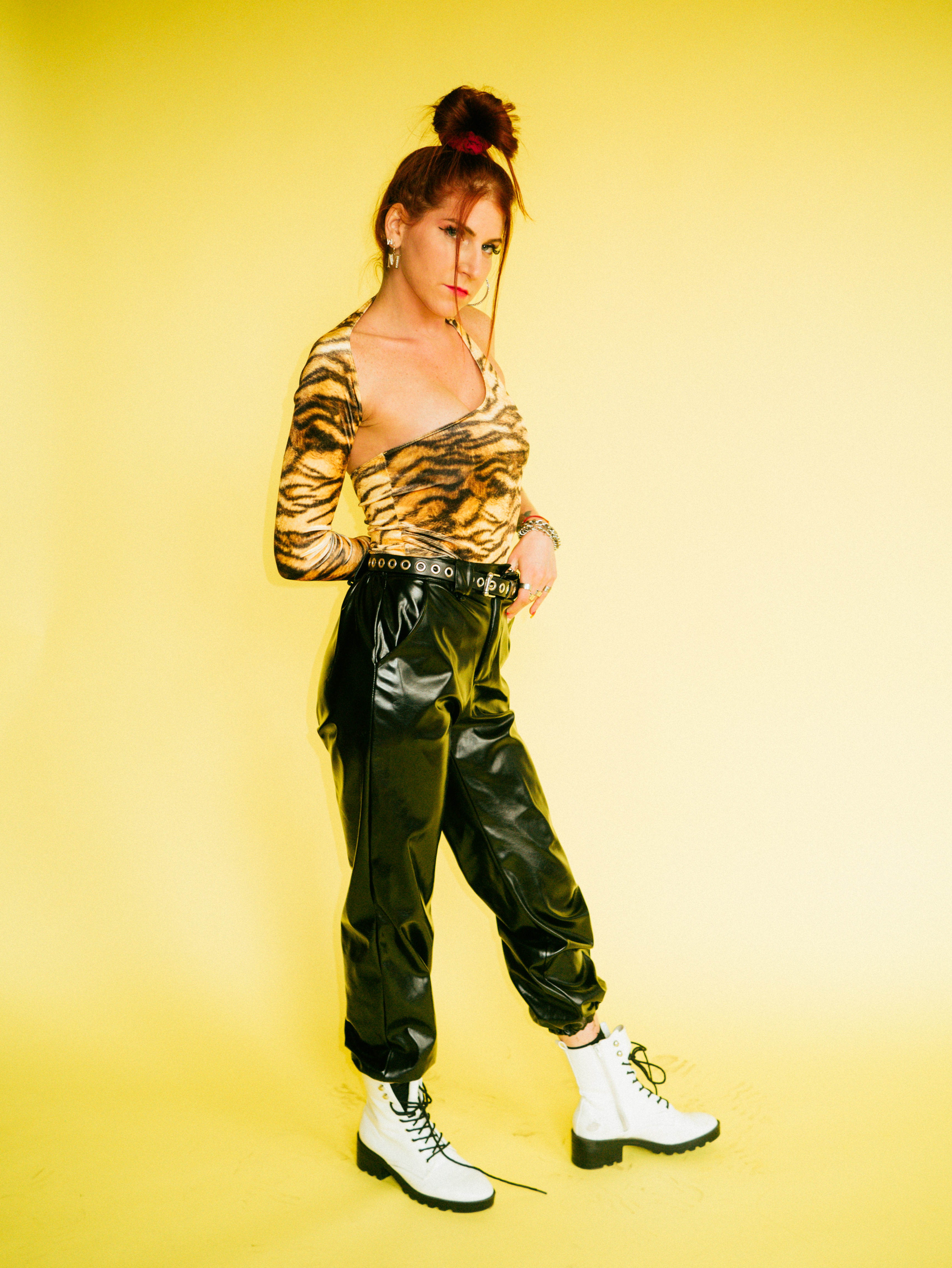
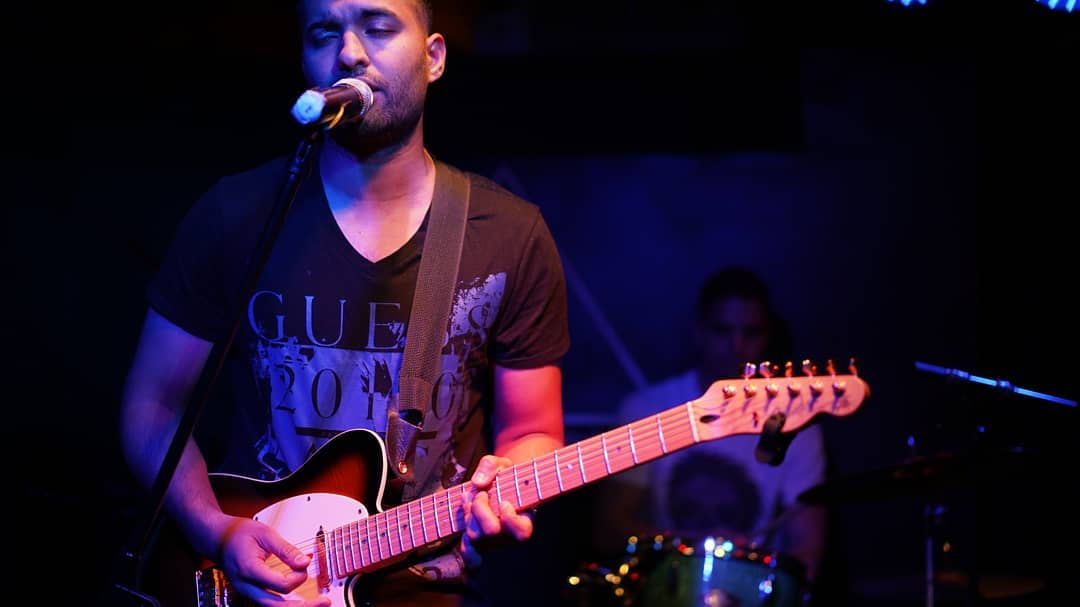
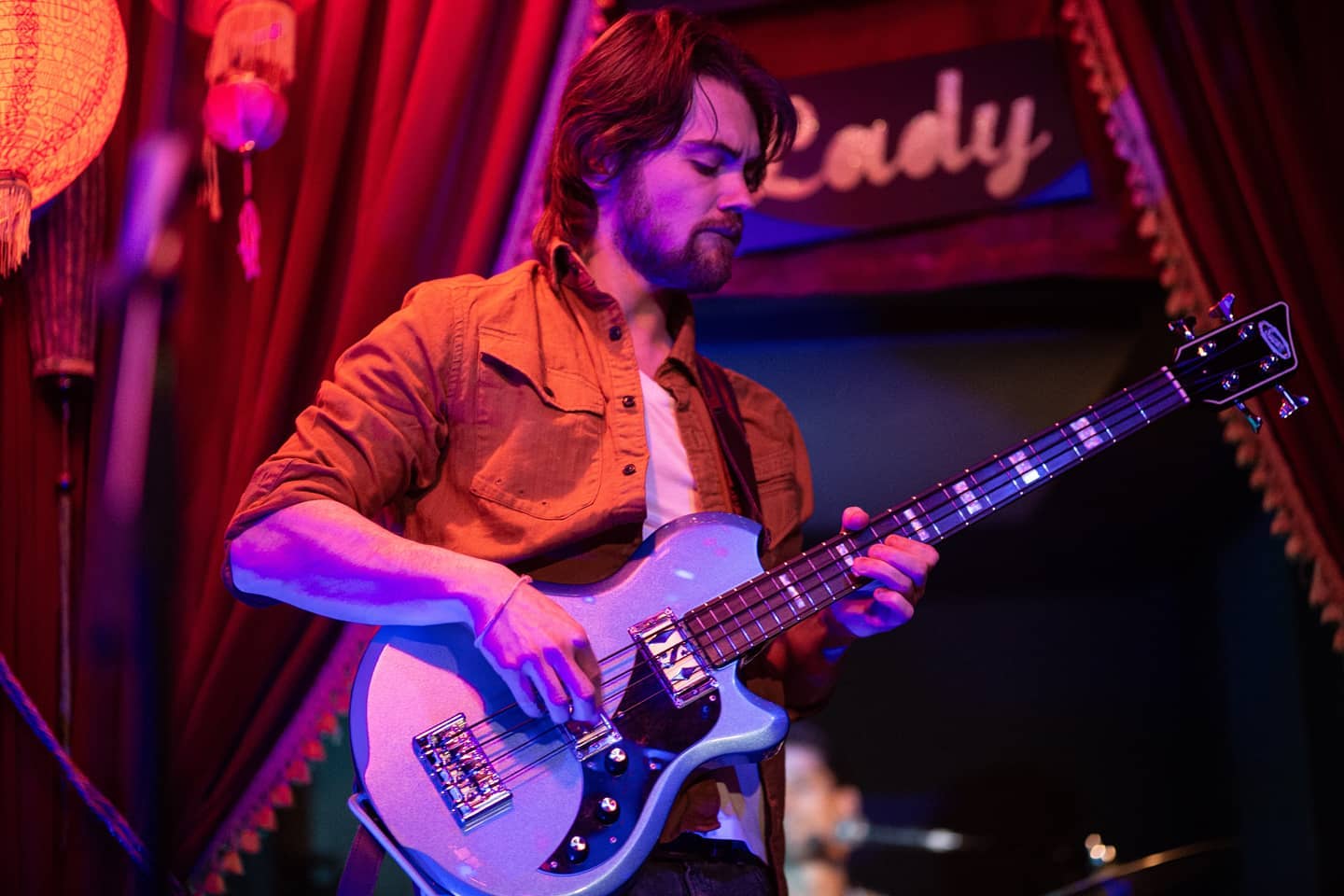
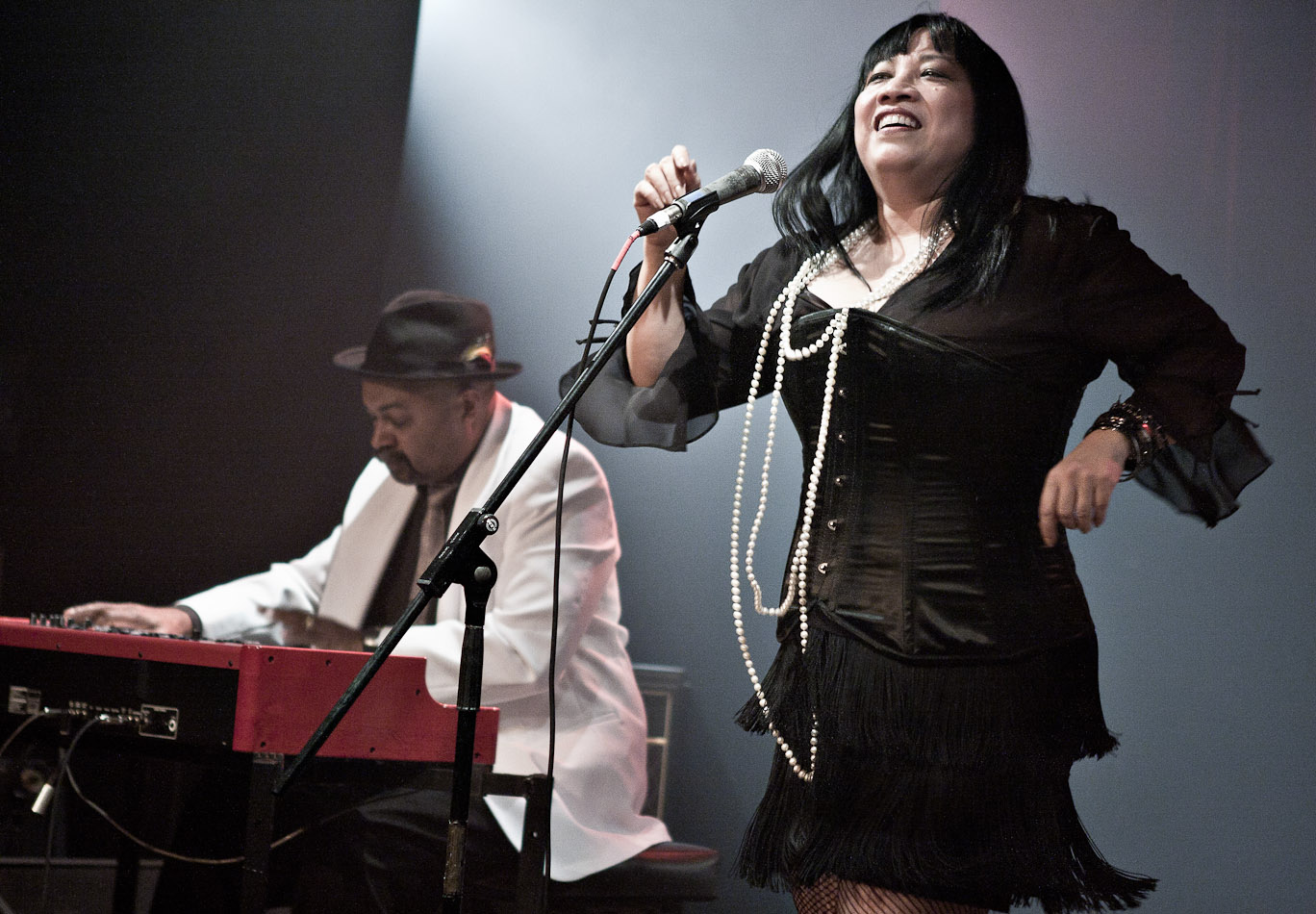
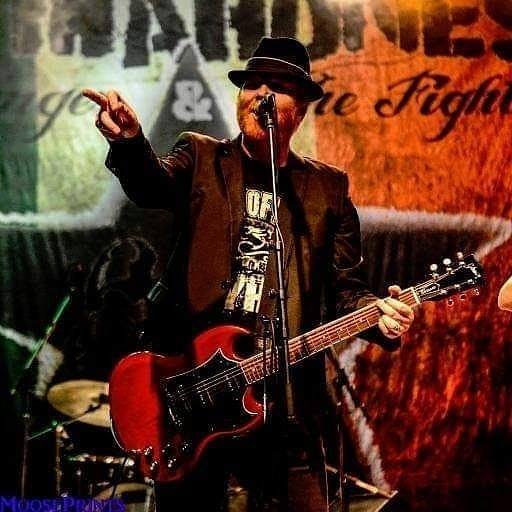
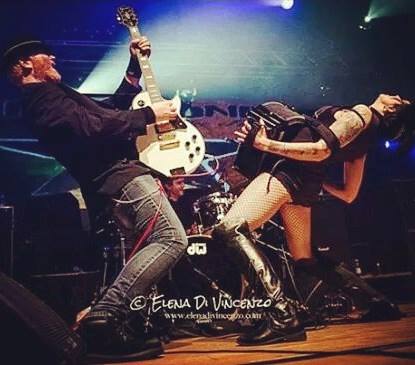
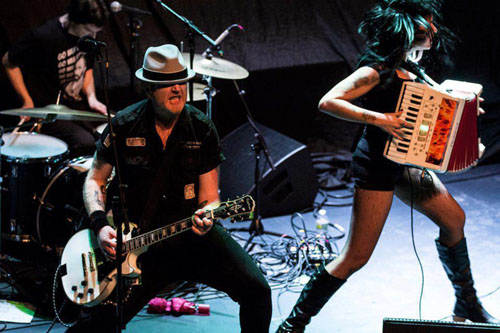
BLACK CREEK REIGN ‘S DARREN ARMOOGAM AND LEX STULTZ ON THEIR SIGNATURE BLEND – WITH JAKE BIRMAN – OF ROCK, FUNK, WITH DASHES OF REGGAE, POP AND JAZZ… A REVIEWER INTERVIEWS PEOPLE IN THE ARTS

JAMES STRECKER: Please tell us about one or more projects that you have been working on or have recently completed. Why exactly do they matter to you and why should they matter to

BLACK CREEK REIGN: Hi James, looking forward to chatting with you, hope you’re keeping safe in all this craziness.

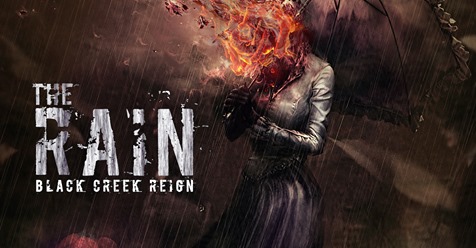
Both of our previous releases as a band were extremely important to us, the 1st being our debut EP “Excommunicado” and a single release entitled “Culture Shock”. Our EP was the culmination of time spent in Los Angeles, Nashville, and of course, Toronto, and it was a way to showcase the best material we wrote in that time. Definitely time well spent for us going out and feeling different musician cultures. Especially Nashville, the writing that’s happening there is on another level. It’s known for its country scene, but there’s some very cool stuff happening there in rock and hip-hop as well. As for Culture Shock, that was extremely important because it was the very first song ever written by our frontman, Darren. It’s been reworked since then, but it kept its reggae groove, which we think makes it special. We’re just about ready to release our next single, a song called “The Rain”. It’s much more of a rock track and brings out what we do best, guitar rock and a strong beat.

JS: How did doing these projects change you as a person and as a creator?

BCR: The songs are always going to be a reflection of what we’re going through as people at the time so they keep a history of those experiences long after they’re gone. Even now, we can look back at some songs we didn’t end up releasing, and think, “Oh wow, I can’t believe THAT’S what I thought!”. I think they help shed the layers too. The more we write, the more it feels like the smaller more personal things come out in the music, and we can share those experiences with people and be really open about them. And that’s what it’s all about. Creating a simple human connection of “oh yeah, I know exactly how that feels”.

JS: What might others not understand or appreciate about the work you produce or do?

BCR: I think how you phrased it is great. It’s just that, it’s work. I think a lot of people have this idea that art is sort of just magically put into existence but that’s not true. The writing, editing, re-writing, arranging, rehearsal, recording, workshopping. All of it takes a long time to put together. Days, sometimes weeks, are put into a single 3-4-minute song to get exactly right. Sometimes sure, you’re right the first time and that idea is complete, but that’s pretty rare. The craft of it is much more important than raw inspiration, so to speak.

JS: What are the most important parts of yourself that you put into your work?

BCR: I think the unique perspective we have on the things that have happened to us. If you get 100 artists to write about heartbreak, you’re going to get 100 different songs. We’ve come from pretty different backgrounds too, so each of us has something different to offer. I think that deep down, I feel like I’m a story-teller first and foremost, and I’d like to think the songs reflect that. These ideas are less than 3 minutes sometimes, and it can be a challenge to tell our story in a very small window. That’s what I find moving about it all, we all have the same interface as to how we get songs across (through singing and writing), but how can you maximize the effectiveness of those 3 minutes? Jason Isbell or Ed Sheeran are great at that, they’re phenomenal songwriters.

JS: What are your biggest challenges as a creative person?

BCR: I think for me, going in and dredging up those emotions can be a little uncomfortable to deal with. I think vulnerability is essential in good songwriting, and it’s hard to articulate those emotions in a way that the experience of writing is equal to that of listening. You have to figure that out, I’m not sure it can be taught. A good love song will make you cry, and a bad one will make you laugh. We all know the difference when we hear it. So, for me, getting in and getting my metaphorical hands dirty is always going to be a challenge, but that’s where the magic is.

JS: Imagine that you are meeting two or three people, living or dead, whom you admire because of their work in your form of artistic expression. What would you say to them and what would they say to you?

BCR: That’s a tough one. Just shooting in the dark here, having a conversation with Jimi Hendrix would be incredible. For a guy to be on the map for less than 5 years, and have THAT kind of impact on music as a whole is incredible. I’d love to tell him how he changed the game, and even 60 years later his name is still in the conversation. I’d ask him if the stories were true, about how when he played in those bars in England, people would be a mess of tears and joy, if it was true that there was dead silence when he stopped, because no one knew what to do afterwards.

The Beatles would make an obvious choice too. Paul’s still here, so’s Ringo, but Lennon and Harrison were part of the songwriting group that made pop music what it is today. I’ve gotta say, I don’t know of a mainstream pop group that did more to break songwriting rules as much as they did, and still somehow make it so listenable (maybe The Beach Boys, Brian Wilson would be another great brain to pick). When you go back over their catalog the choices they made sort of make you go “that’s what they did?!” It was just so unexpected, with some of the key changes and modulations they used. Wild stuff from a musical standpoint, and that doesn’t go out of style.

JS: Please describe at least one major turning point in your life that helped to make you who you are as a creative artist.

BCR: The one turning point that stands out for us (which in turn started the band), is a story that happened 6 years ago to our frontman Darren. It’s a long story so the gist of it is as follows, his girlfriend at the time decided to leave him for an abusive ex-boyfriend. They were on again-off again, but he heard she was moving on, and he didn’t like that. He showed up at her place and demanded she take him back, but she refused. He then (and I kid you not, this really happened) picked her up, threw her in his car, and drove around yelling at her. Months later, he visited her and apologized… and she took him back. Terrible situation all around, and Darren got caught in the middle of it, he cared about her, and tried being there for her but it didn’t matter much in the end. He then wrote a song about it, then another, and that became the process. This changed everything, and introduced a positive way to channel emotions. It really showed the healing power of music, and It shaped his personality, outlook on life, and desire for musical success ever since that fateful day.

JS: What are the hardest things for an outsider to understand about your life as a person in the arts?

BCR: It’s hard to explain to non-artists the joy of hearing the crowd sing along with you, or the freedom of being your own boss, or the pursuit of creative perfection. And it’s a goose to chase, so to speak. I think a lot of people have this perspective of good music, or art in general, and their thermometer for sensing amateur art is miscalibrated. You’ve got to go support those artists when they’re still developing, so they can put together those works you expect when you turn on the TV or stream a top-40 song on Spotify. There’s a long journey between a first song and a song that’s actually palatable to an audience, we’ve just been spoiled by a music industry that’s gotten very efficient at pulling the cream to the top and sort of letting those developmental artists flounder around and try to put it together without any support.

JS: Please tell us what you haven’t attempted as yet that you would like to do in the arts? Why the delay so far?

BCR: Definitely sit down and write a full-length album. I think a lot of growth that happens personally and professionally happens, sort of when it’s supposed to, whether or not you feel like you deserve it in the moment. Right now, money is an issue, and we’re also growing a fanbase in Toronto. It’ll happen when it’s supposed to, I think. And a North America and European tour, that’s a dream we’re still chasing.

JS: If you could re-live your life in the arts, how would you change it and why?

BCR: It’s a tough question. It’s hard to really want to change much, you know, the bricks we laid-down brought us to where we are, so it’s hard to complain too much. For me (Lex) definitely starting sooner. I dropped music completely and sort of did a lot of wandering and figuring stuff out and didn’t get back to it until a couple of years ago. Sometimes you’ve got to learn what you don’t want to figure out what you do want, and it’s hard to really feel like it was a waste of time.

JS: Let’s talk about the state of the arts in today’s society, including the forms in which you work. What specifically gives you hope and what specifically do you find depressing?

BCR: There is So. Much. Talent. Out there. And so much incredible music being made. And now it’s easier than ever to go find that music and have it in your ears in seconds (if you know it’s out there). It’s a bit of a double-edged sword, because streaming and social media should have, in theory, democratized the industry, but instead, what we got was a pooling at the top and a trickle down to the rest of the artists that’s unsustainable to pursue the art by itself.

I think ultimately people will find good music, and if they like it, they’ll share it, if they share it the artist grows, and gets to keep going. It’s the most human thing to share what you love with who you love. There’s just so much, I think there is, as an artist, a fear of drowning in a sea of abundance. But that’s much too depressing to think about, I’d prefer to be ignorant and just make what I think is cool. Hopefully other people will think so too.

What gives us hope is the fact that the teen pop idol era is over. In our opinion, the quality song writers are climbing the charts and are holding popularity, and that’s really important to us. Ed Sheeran is a great example as a guy who is exceptionally talented. We’ve seen him live and he’s even better on stage than in studio. He slept on couches, busked at subways, and did it the hard way, so to speak, but it shows, and he’s one of the best singer/songwriters to come along in the last two decades. That’s the musical world we want to live in, where it feels like a meritocracy, where the good music will find its place in your ears one way or another. What’s depressing is the state of the live music scene in Toronto, venues are closing. It’s gotten worse now with the Covid-19 pandemic, with the venues closed down. But I think symptoms and sickness get confused sometimes. A great band starting to come up will attract people and they’ll congregate. It just has to be worth it to them. What do we have to offer as a band that will make them choose us over a hundred other things in Toronto on a Friday night? That keeps me up at night, but we’re working on it.

JS: What exactly do you like about the work you create and/or do?

BCR: It’s ours, and we’re the only ones that can make it. As an example, I have a feeling a lot of people are going to have to process this epidemic, and how they dealt with it. And if 100 musicians wrote about that you’d have 100 different perspectives on what the experience was. I like our perspective, and I think we throw back to an era of music that’s gotten lost a bit on modern radio. The guitar-driven band sound is definitely what we’re chasing, and our internal philosophy sort of dictates that these songs work as well on a stage with a full band as a guy by himself with a guitar. A good song doesn’t need more than that if it’s really a good song.

JS: In your creative life thus far, what have been the most helpful comments you have heard about your work?

BCR: To keep going. This is a marathon, not a sprint. Friends and family that believe in us definitely help keep the spirits up when you feel like what you’re doing isn’t good enough. I think any artist will have doubts about their creativity, and having people in your corner to remind you that it’s normal to have those doubts keeps things in perspective.

JS: Finally, what do you yourself find to be the most intriguing and/or surprising things about you?

BCR: My musical taste is slowly becoming my dad’s. I would’ve laughed in your face if you told a 16-year-old Lex one day he’d prefer The Beach Boys to Guns n Roses, but God Only Knows is a perfect song and I’ll fight anyone who disagrees

Posted in Uncategorized | Tagged , , , , | Leave a comment

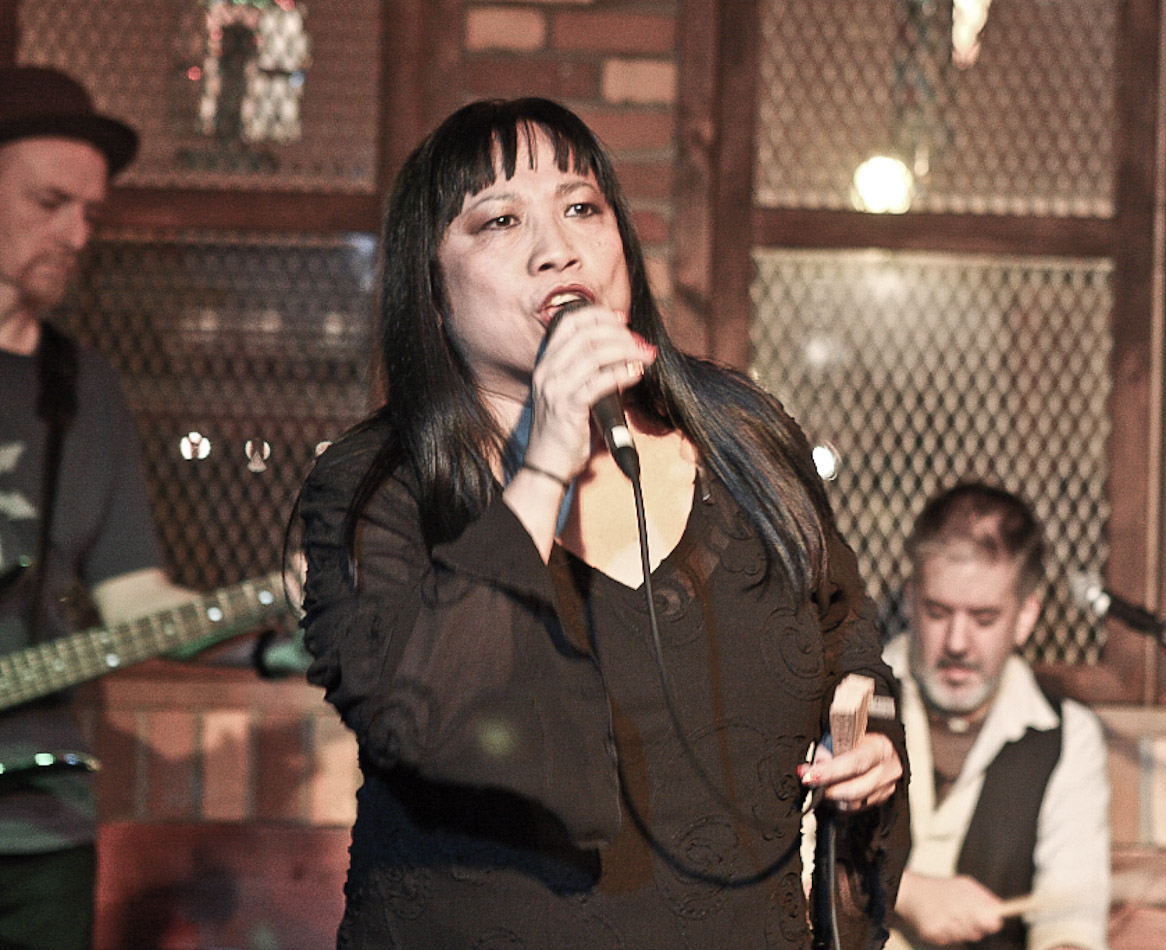
CAROLYN FE: SINGER/SONGWRITER/ACTOR EXPLAINS “I LIKE TO PUSH THE ENVELOPE. I LIKE TO CHALLENGE THE STATUS QUO; I LIKE TO SEE HOW FAR I CAN GO WITH MY WORK. I LIKE TO BREAK THE PARAMETERS AND STEP INTO THE UNKNOWN AND UNCOMFORTABLE. AFTER ALL, ISN’T THAT WHERE WE LEARN AND EVOLVE AS HUMANS?” …A REVIEWER INTERVIEWS PEOPLE IN THE ARTS

Carolyn Fe Blues Collective
(c)2014 – All rights reserved
www.carolyn-fe.com
www.litratista.com

Carolyn Fe Blues Collective
(c)2014 – All rights reserved
www.carolyn-fe.com
www.litratista.com

JAMES STRECKER: Please tell us about one or more projects that you have been working on or have recently completed. Why exactly do they matter to you and why should they matter to us

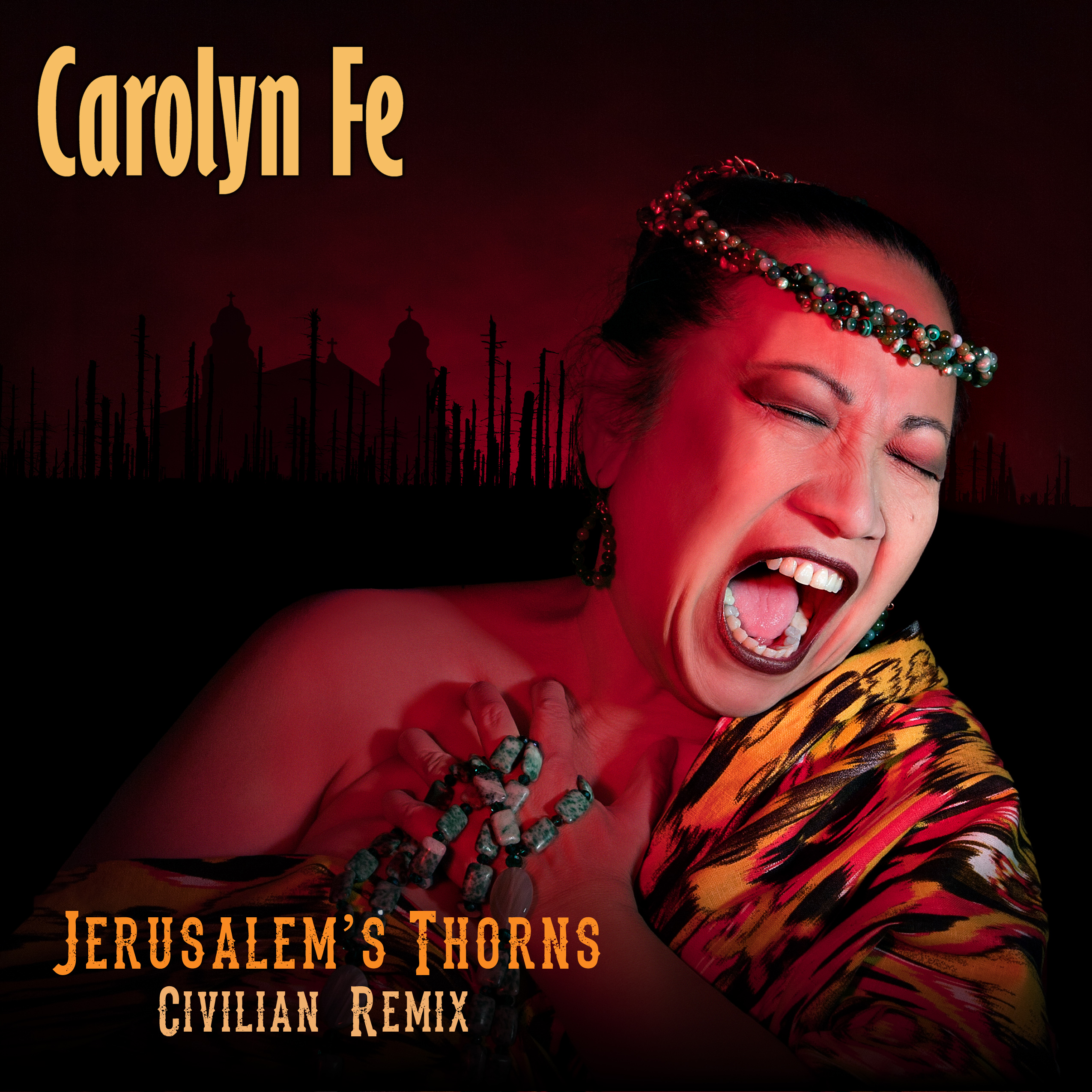
CAROLYN FE: As a musician: I just released a single “Jerusalem’s Thorns Civilian Remix” available on carolynfe.bandcamp.com since May 22, 2020, which happens to be Asian Heritage Month in Canada. I am also collaborating with musicians from all over the world on new works with me laying down my voice on their tracks and/or my lyrics and melodies to their music.

As an actor: I am in the midst of writing a play about how someone saw their life as they reach their end game; gratefully, I am working from my home studio on voice acting gigs for commercials, audio books, PSAs and animation. With the theatres and venues closed due to the pandemic and social distancing restrictions I am preparing, with fellow actors, for a two of online readings of plays that will be recorded and presented as old-style radio to be broadcasted on the CBC and podcasted in the near future.

These artistic activities matter to me as they are my life-savers especially during this lockdown period. I sorely miss performing live but these activities keep me in line, focused on creating and see the possibilities that there are. It matters to me as it allows me to have an outlet to voice my views and frustrations by sharing my (fiction and non-fiction) stories through music, theatre and writing – no matter how deep or superficial they may be. I feel it should matter to others, especially during lockdown when corporate structures and everybody’s lives are in flux (due to quarantined, social distancing, isolating), this is a time that can be taken to reflect. How better to reflect on one’s situation than through art – even if it’s only for light entertainment to simply forget the realities of our current situation. People are faced with who they really are without their corporate identities, they are stripped down to what is real, what more to ease that pain with the help of music, the written word, movies, plays, visual arts?

JS: How did doing these projects change you as a person and as a creator?

CF: It took me a long time to come to myself as a creator. I am a late bloomer. “Pop-industry” is geared to promoting the 20 somethings, I missed that boat and instead, bloomed as a full-time creator in my mid-40s. I am loving the ground I stand on. I have come to myself without reporting to anyone or justifying my actions. I am free as a person to say and create whatever, however and with any artistic outlet I choose whereas in my younger years, I was told to choose one outlet. I didn’t want to conform. Today and at my age, there are no holds barred and, although I do appreciate and am grateful people’s feedback, I do not need their approval.

JS: What might others not understand or appreciate about the work you produce or do?

CF: I like to push the envelope. I like to challenge the status quo; I like to see how far I can go with my work. I like to break the parameters and step into the unknown and uncomfortable. After all, isn’t that where we learn and evolve as humans? Those who appreciate my work understand that at any time I can return to that comfort zone for them. They know that there is a journey to be had when they follow my work; in music I can do a standard Blues sound to keep things comfortable and then move on to pushing the sounds of what the Blues can be. In acting, I like to take on roles the defy “my category” as an actress playing the antagonist even though I can play a soft, loving, cookie-baking mother or grandmother anytime. What folks may not understand or appreciate is the “WHY” I do this. All I can say to them is, “Aren’t you the one who’s been looking for something different? Something that challenges you? Something that makes you catch your breath?”

JS: What are the most important parts of yourself that you put into your work?

CF: Myself. All of me. There is no faking, even in the lighter moments with my lifetime of experiences, it’s all me in all my shades.

JS: What are your biggest challenges as a creative person?

CF: To be seen as someone who has something to say. As a POC (person of color), an Asian and as a late-bloomer, the industry has to widen their horizons with their claim to inclusivity. They need to take a good look at who they have been excluding.

JS: Please describe at least one major turning point in your life that helped to make you who you are as a creative artist.

CF: It was in my high school years: my dramatic arts teacher gave me the Dramatic Arts Award. After ceremonies, we had a quick chat and she said that it was a difficult decision as it was between me and a classmate; and that although she believed in the two of us, she felt that I was going to “fight hard for it in the future”. To this day, her exact words are either a blessing or a curse depending on the situation but, regardless, I keep on fighting hard.

JS: What are the hardest things for an outsider to understand about your life as a person in the arts?

CF: Folks who have not checked their privilege. They do not seem to understand that I do not have the facility to go through the door as easily as someone who has the privilege. Don’t get me wrong, the industry where I am able to create IS a difficult industry go into, to be part of and to remain in it. It takes perseverance, will, smarts, champions who support are important to have as assets but what they do not realize is that I wade against the currents of performing and creating life because of my Asian (Filipino) heritage, now I have ageism added on to the load I carry.

JS: If you could re-live your life in the arts, how would you change it and why?

CF: If I could re-live my life would be louder in my younger years. I wouldn’t feel the urgency as I have so many things left to create but at my current age, I see and feel time is “not a forever” as it is for someone younger.

JS: Let’s talk about the state of the arts in today’s society, including the forms in which you work. What specifically gives you hope and what specifically do you find depressing?

CF: The industry has to widen their horizons with their claim to inclusivity. They need to take a good look at who they have been excluding.

JS: In your creative life thus far, what have been the most helpful comments you have heard about your work?

CF: The most helpful comments have been how my art has affected someone’s life. When I am performing with my band, I love seeing the audience close their eyes and lose themselves in my words and music. I have been told that my lyrics go for the jugular and their significance go deep; I rarely do cover songs for that matter. In theatre, I love how audience members appreciate my interpretation of someone else’s words on stage as an actor.

JS: Finally, what do you yourself find to be the most intriguing and/or surprising things about you?

CF: In the end, it is a job. I love my job and my job does not define me.

Posted in Uncategorized | Tagged | Leave a comment

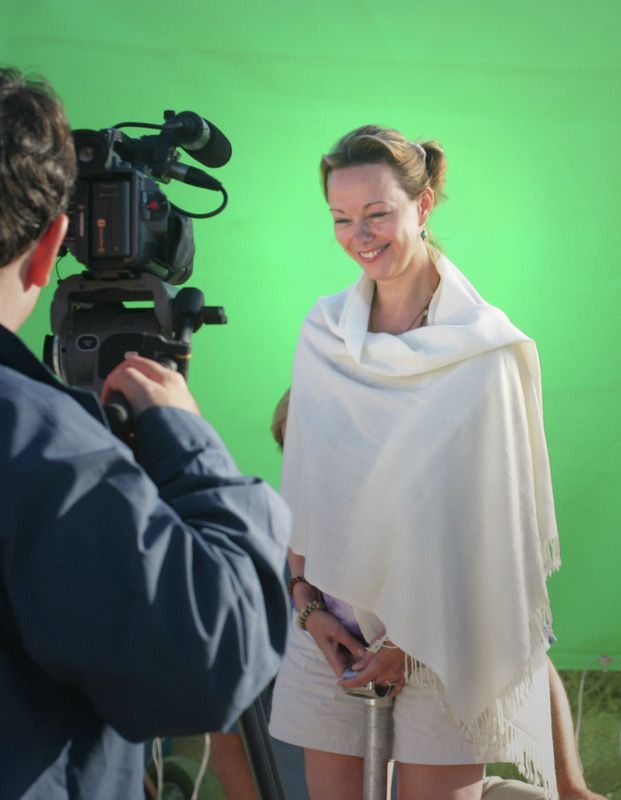
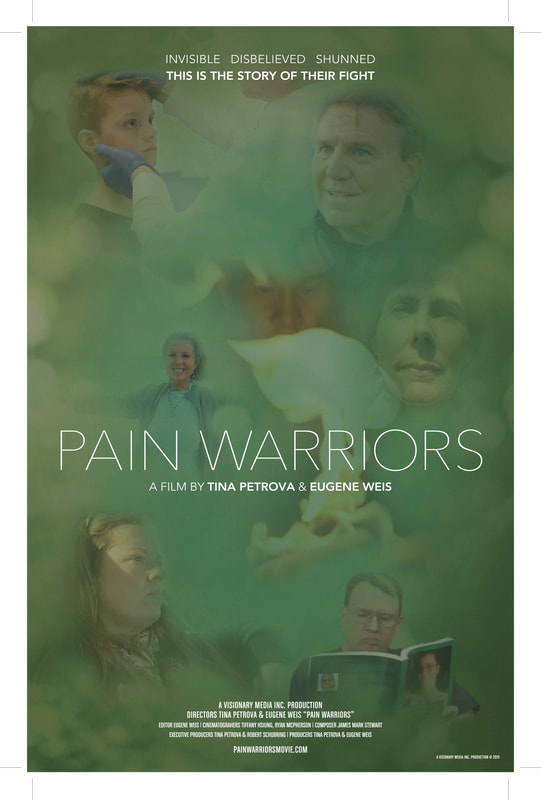
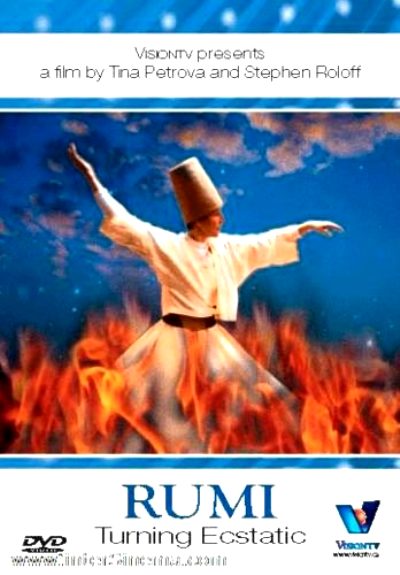
TINA PETROVA, MULTI-AWARDED ACTRESS/ DIRECTOR, EXPLAINS “I HAVE NEWLY COMPLETED A SOCIAL JUSTICE FEATURE DOCUMENTARY TITLED “PAIN WARRIORS”…..AS SOMEONE WHO HAS LIVED WITH CHRONIC PAIN FOR YEARS, THIS STORY WAS PARTICULARLY CLOSE TO MY HEART” … A REVIEWER INTERVIEWS PEOPLE IN THE ARTS

JAMES STRECKER: Please tell us about one or more projects that you have been working on or have recently completed. Why exactly do they matter to you and why should they matter to us.

TINA PETROVA: I have newly completed a social justice feature documentary titled
Pain Warriors. An indie filmmaker will often spend between 6 and 10 years of their life on one project, sometimes more. This period includes concept / development, research, pre-production, production and post production/ marketing. Oftentimes, other crew members won’t come on board in a low budget doc until principal photography begins.

As someone who has lived with chronic pain for years, this story was particularly close to my heart. It courageously speaks to the invisibility of my demographic.

Documentarians are a special breed of people. A cause, or perhaps a person’s life, affects us so deeply, we have no choice but to give up all we are doing, in pursuit of something that calls out to our very soul.

The cry cannot be stifled, once heard. It haunts our every waking hour.

JS: How did doing these projects change you as a person and as a creator?

TP: The project you start off making is, more often than not, not the end project you release to the public. This has to do with many factors. One, the filmmaker will often start with a seed, a kernel of something that’s not quite formed. As pre interviews occur and research is underway, a story concept can change hundreds of times, as new information comes to light. Add to the mix your eventual creative partners who bring with them their own keen eyes, life experience and talents. Each one of your key creatives builds on the small seed that you brought to the table initially, adding their own expertise such as editing or music scoring, bringing depth, breathing life into what is not yet born, merely gestating.

In some ways, your key creatives become additional parents or guardians of the eventual picture – they shepherd it through a multitude of growth stages, such as childhood, adolescence and young adulthood. This community of guardians enrich your idea and elevate it to levels near impossible to reach solo.

Pain Warriors was initially titled Pandemic of Denial, referring to the extremely large number of chronic pain patients in North America that are essentially invisible to the wider public. I saw a need, a hole, a gap that wanted a voice. I merely listened, and gave it that voice.

JS: What might others not understand or appreciate about the work you produce or do?

TP: Being an indie filmmaker is not for the faint of heart. Some pet projects don’t make it to the funding stage, others may get partially shot then abandoned due to lack of financing, and shelved forever. More often than not, additional monies need to be raised in post-production as the project develops a life of its own and its needs change, as a growing child’s needs would organically require things one hadn’t accounted for in the beginning.

JS: What are the most important parts of yourself that you put into your work?

TP: I can’t help but put my heart, my soul, the entirety of my being into a project. I’m an “all in” kind of gal. In most areas of my life it’s all or nothing. I don’t care for half – heartedness in myself, or others.

JS: What are your biggest challenges as a creative person?

TP: Financing financing financing. You may think you have the world’s next Mona Lisa. Funders may not get your concept at all and reject it time and time again. Funding a film is a tricky business. It’s somewhat of a shell game.

JS: Imagine that you are meeting two or three people, living or dead, whom you admire because of their work in your form of artistic expression. What would you say to them and what would they say to you?

TP: Carpe Diem! Seize the day or the moment. Some things only come round once. “Waiting” is not in my vocabulary.

Follow your heart. Let it be your North Star. It won’t steer you wrong if you are true to it.

JS: Please describe at least one major turning point in your life that helped to make you who you are as a creative artist.

TP: I started off in the entertainment industry as an actress at age 11. Somewhere in my mid 30’s I was given the opportunity to direct and produce a short film. Once behind that camera, there was no going back. Something magic happened that first directing job. I fell in love with being behind the lens, and never looked back.

JS: What are the hardest things for an outsider to understand about your life as a person in the arts?

TP: Making films can look like you’re leading a charmed life to an outsider. Aside from film festivals and premieres it’s 98% blood sweat and tears much of the time .

Ongoing stress levels can be through the roof with deadlines, and finding that elusive diamond in the carbon dust is always a challenging puzzle.

JS: Please tell us what you haven’t attempted as yet that you would like to do in the arts? Why the delay so far?

TP: This film is my swan song. I’ve had a long run in the arts and I’m ready for the next chapter, that has yet to be written. It will probably involve doing a very long self- directed retreat in the CA desert. I have a lot of healing yet to do.

JS: If you could re-live your life in the arts, how would you change it and why?

TP: I think each stage of the way paved the next part of my journey in the arts. I believe that each stage informed what was to come

I don’t think I would change much, except be born into more money! So I could fund pet projects at will and not stress about raising money time and time again. Fund-raising is thankless and can be highly stressful.

JS: Let’s talk about the state of the arts in today’s society, including the forms in which you work. What specifically gives you hope and what specifically do you find depressing?

TP: Seeing a lot more female directors out there gives me hope. The doc industry, at least, is quite gender balanced.
Funding is the biggest barrier to getting great projects made and seen. More endowments to arts, specifically doc financing and grants, are direly needed.

JS: What exactly do you like about the work you create and/or do?

TP: Creating something from nothing is magic. It’s like you are Harry Potter with a wizard’s wand in hand. You can conjure whole new worlds into being. What a super power you wield!

JS: In your creative life thus far, what have been the most helpful comments you have heard about your work?

TP: I guess the most helpful comment about my work is that film can be a tool for healing on many levels in one’s own life and in the lives of those in the audience. It can be a game changer. Press reviews have stated that I have created projects of “faith and healing”. In many ways my projects have informed my personal faith and healing. They have forever changed me from the inside out.

JS: Finally, what do you yourself find to be the most intriguing and/or surprising things about you?

TP: I’m surprised I’m still standing! I’ve had a hell of a year, beginning with a neck / head injury just before completing the film, that I’m still very much in recovery from. I would have never thought I was capable of surviving what I’ve been through this past year. I had no idea of the strength and resilience that have put the “pedal to the metal.” Each day I wake up, I wonder WHO it is inside me that keeps on going in the face of great adversity. Friends have said it’s the story of my next project, but in the infamous words of the late great Amy Winehouse I say “no, no no, no…”


LINKS

iTunes:
https://itunes.apple.com/us/movie/pain-warriors/id1506122098

Google Play Store:
https://play.google.com/store/movies/details/Pain_Warriors?id=Ud85kd5e-ZY.P

Amazon Prime:

DVD:

Blu-ray:

Reviews
Internet Movie Database (IMDb),
https://www.imdb.com/title/tt8438478/

Distribution
Gravitas Ventures USA
.

PRODUCTION
Pain Warriors is co – produced by Tina Petrova and Eugene Weis.

Posted in Uncategorized | Tagged , , , | Leave a comment

BOOK RECOMMENDATIONS: MY NINE BEST FOR MAY 2020

I didn’t intend to read as many patriarchy-challenging/condemning books at one go over the last while, but most of the following nine, each one highly recommended, turned out to be, at least partially, thus inclined. These books often either celebrate admirable aspects of gutsy women or document the horrible conditions of women in often brutal patriarchal cultures, sometimes both.

1)A CURIOUS HISTORY OF SEX by Kate Lister

This endlessly informative, perkily and energetically written, sometimes humorous and always challenging book ends with the following: “We must talk about consent, pleasure, masturbation, pornography, love, relationships and our own bodies. Because the only way we will dispel shame is to drag sex out in the open and have a good long look at it. History has shown us how damaging shaming sexual practices. in their myriad forms, can be. Let’s learn the lesson.”

Chapter titles include A History of the Cunt, A History of Virginity Tests, Medieval Impotence Tests, Sex and Cycling, Sex Work in the Ancient World, Filthy Fannies, Hair Today Gone Tomorrow and too often one learns how medical/cultural authority has been male stupidity at its egotistical and terrified worst. Images include an “Indian gouache painting of a giant penis copulating with a female devil c. 1900” and a photo titled: “Anonymous same-sex Victorian lovers enjoy a spot of cross-dressing and mutual masturbation.” Also included is a photo with the caption: “Tart cards in a British phone box in 2004.”
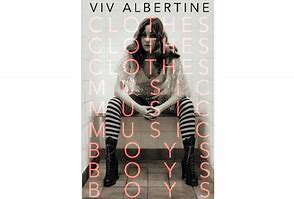
2) CLOTHES CLOTHES CLOTHES MUSIC MUSIC MUSIC BOYS BOYS BOYS by Viv Albertine

In the seventies, male-dominated, and virtuoso-worshipping rock scene in Britain, what better course for a female revolution than through a band called The Slits with a drummer called Paloma aka Palmolive, a guitarist and a bass player who knew almost nothing at first about their instruments, and a totally uninhibited lead singer aged fourteen about whom we read: “..halfway through the set she was dying for a piss, she didn’t want to leave the stage and couldn’t bear to be uncomfortable, so she just pulled down her leggings and knickers and pissed on the stage – all over the next band’s guitarist’s pedals as it happened – I was so impressed. No girl had pissed on the stage before, but Ari didn’t do it to be a rebel or to shock, it was much more subversive than that: she just needed a piss. In these times when girls are so uptight and secretive about their bodies and desperately trying to be ‘feminine’, she is a revolutionary.”

This hard-to-put-down, unflinchingly yet casually honest, uninhibited, and instinctively perceptive autobiographical account by guitarist Viv Albertine, friend of Sid Vicious and Johnny Rotten and tour-mate of The Clash, inspires affection and admiration as it takes us into the life of a young woman learning the ropes not only of making music but subtly of existence.

3)FIGHTING THEORY: AVITAL RONELL IN CONVERSATION WITH ANNE DUFOURMANTELLE. Translated by Catherine Porter

“According to Mary Shelley, the author of Frankenstein, democracy in America began with a violent break, one that has haunted America ever since, because this violence (as we are seeing it today) keeps returning in a ruthless or ungovernable way. … And for Nietzsche as for Mary Shelly, America is a sort of laboratory that contains and spikes monstrosity also.” Elsewhere, Ronell says, “The hatred directed against women that comes out in the Judeo-Christian is hatred directed against the impulse to know.” …. Or try this, “I try to show that idiocy, for Wordsworth, for Rilke, for Wallace Stevens and others, is poetry itself. It is the place of extreme nonknowing, or rather the site of an absence of relation to knowledge, a place of pure reflection that nevertheless has nothing to do with philosophy or cognition.”

Ronell’s scope could be daunting as could her high-speed chase and nabbing of relevancies, but it is indeed an inspiring ride that stimulates, teases, informs, and dances with the reader’s mind. Learning doesn’t need to plod if it can fly, and Ronell’s mind certainly soars, all with a sense of humour and deep human feeling. As a result, it’s time to reread some Heidegger, Nietzsche, Derrida and and and…..and read some more Ronell. Ronell comes across as instinctively hip in pulling in her densely-populated realm of ideas, and exciting as she does so. Is this book, as it challenges on every line, intimidating? Or does Ronell with her articulation of provocative ideas and connections constantly provide a reader with a freshly-watered path of seeds for the mind.
A very fulfilling experience.
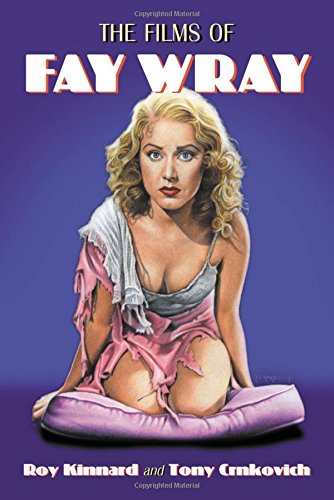
4) THE FILMS OF FAY WRAY BY Roy Kinnard and Tony Crnkovich

I think I was first curious about actress Fay Wray because she was born on an Alberta farm and, of course, was later famously paired with King Kong in both jungle and atop the Empire State Building. It’s strange how one becomes gradually fascinated by a porcelain-skinned screen actress, one whose eyes seem often rooted in a trance as she speaks with precise early talkies diction, and I progressed in no particular order through the following:

The Wedding March of 1928 with Erich von Stroheim; The Finger Points of 1931 – and the somewhat stilted early sound-era acting shows – based upon the murder of an idealistic reporter who took on gangsters and was killed for it; The Most Dangerous Game of 1932 with Joel McRea and Fay Wray stranded on a remote island where a madman Russian count enjoys hunting human prey – it is here we first have a leggy Wray in tattered dress and wide-eyed stare of horror; the classic King Kong of 1932 with its “notorious censored scene” of ape undressing woman and Miss Wray on all cylinders with wide-wide-eyed stares and screams at many a turn (terrific photos of all included); 1934’s Once to Every Woman with Wray as “dedicated nurse Mary Fanshawe in love with, and soon disillusioned by, that cheating Dr. Preston; the 1934 crime melodrama Woman in the Dark, with its Dashiell Hammett roots; and two personal favorites – a charming comedy, The Richest Girl in the World, with costars Miriam Hopkins and Joel McCrea, and a suspenseful The Clairvoyant in which Wray “certainly holds her own opposite Claude Rains, one of the screen’s greatest actors.” Rains is another one I’ve been checking out.
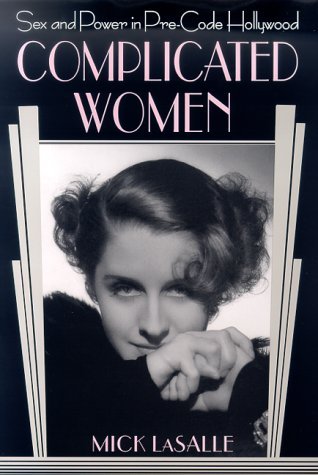
 

5)COMPLICATED WOMEN: SEX AND POWER IN PRE-CODE HOLLYWOOD by Mike LaSalle

It was indeed a “true Golden Age of women’s films” from 1929 to 1934, and we are told why: “Between 1929 and 1934, women in American film were modern! They took lovers, had babies out of wedlock, got rid of cheating husbands, enjoyed their sexuality, led unapologetic careers, and, in general, acted the way many think women acted after 1968….Before then, women on screen had come in two varieties ‘good or bad – sweet ingenue or vamp. Then two stars came along and blasted away these stereotypes. Garbo turned the femme fatale into a woman whose capacity for love and sacrifice made all other human emotions seem pale. Meanwhile, Norma Shearer succeeded in taking the ingenue to a place she’d never been: the bedroom. Garbo and Shearer took the stereotypes and made them complicated.”

Of course, these two ladies were not alone – their companions soon included, to name only several, Claudette Colbert, Marlene Dietrich, Kay Francis, Jean Harlow, Miriam Hopkins, Barbara Stanwyck, Mae West – but then the “Production Code became law in Hollywood,” vigorously propelled by Joseph Breen, an avid Catholic, political reactionary, and anti-Semite who wrote, “These damn Jews are a dirty filthy lot.” In other words, Breen pulled real life and creativity, with much help, up the ass of right-wing America and the Catholic church. As a result, films in Hollywood were bound and gagged for three decades to follow. This too is a very important book.

6)FANTASYLAND: HOW AMERICA WENT HAYWIRE, A 500-YEAR STUDY by Kurt Andersen

Okay, let’s do Trump first. Author Kurt Anderson, co-founder in 1986 and, for seven years editor, of Spy magazine recalls the following concerning Donald Trump: “we devoted dozens of pages exposing and satirizing his lies, brutishness, egomania, and absurdity. Now everybody knows what we knew then. It was kind of providential that he came along just as we were creating a magazine to chronicle America’s rich and powerful jerks…..Trump’s reality was a reality show before that genre or term existed…Among the many shocking things about Trump is his irreligiosity – that our Christian party chose the candidate who was the least Christian of the lot, and that white evangelicals nonetheless approve of President Trump overwhelmingly.”

In this context in which a major country’s leader is a liar, cowardly bully, and a ridiculous and egomaniacal ass, he has, according to perverted logic, a great number of followers. They too live a reality-denying and fantasy existence “as the ultimate expression of our national character and path. America was founded by wishful dreamers, magical thinkers, and true believers, by impresarios and their audiences, by hucksters and their suckers. Believe what you want fantasy is deeply embedded in our DNA.”

This brilliantly conceived and realized book is informative, mind-opening, keenly insightful, and gripping in its detailed and intriguing narrative. It is also disturbing as hell, and after each dip into the text I need a break from this unrelenting account of a fucked-up country whose founding dreams were made of Puritanical severity, whose exploratory impetus was out and out greed, whose nobility of heart was too often racist and sexist suppression, and whose rugged individualism was self-centred and immature inability to face life as it is without hypocrisy. I’ve personally known, admired, loved even, a number of Americans who were and are special human beings. They despair of Trump, and his America, as much as the rest of us – and despair of his followers.

7)MIRIAM HOPKINS: LIFE AND FILMS OF A HOLLYWOOD REBEL by Allan R. Ellenberger

What is it about the great actresses who emerged in the thirties? A subtle feminine grandeur? A confidence of being that imbued every performance with solid but unforced presence? A blend of individual human personality and complex technical smarts that shaped every character with distinct qualities? A long-lasting impact because we can’t imagine their performances done any other way? A knack for greatness in the art of acting? The mystery of everyday womanhood?

Here are the films of Miriam Hopkins I have watched from one to ten times already and will again watch again any time anywhere. Take the dinner scene of Hopkins and Herbert Marshall in Trouble in Paradise directed with a polished sense of sexual fun and European sophistication for adults by Ernest Lubitsch – she pickpockets his watch, he her garter, and both delight in the game, and so do we. Or watch the two films in which Hopkins and her archrival Bette Davis star together – Old Acquaintance and The Old Maid – and compare how two theatrical presences emerge and hold their ground, each in competition with the other. In the former film, Davis gets to shake Hopkins quite violently and no doubt quite happily so– it’s in the script. Yet in Men Are Not Gods, Hopkins is quite touching in her compassion for an actress who is pregnant and the actor, her husband, with whom Hopkins is in love.

Or what about the two men and Hopkins of Design for Living and her believably casual final resolution – why not have both? Hopkins is quite at home in The Heiress among de Haviland, Clift and Richardson and gut-wrenching during and after the rape in The Story of Temple Drake. Do you know a sexier moment in film than when Hopkins as the “sluttish” Champaigne Ivy sits naked and sheet-covered on a bed and dangling her naked leg to tempt Dr Jekyll to “come back soon?”

Perhaps Hopkins was “one of the most difficult stars in Hollywood” but she was also gifted and admirably gutsy in taking charge of her film and stage careers. She had intellectuals Dreiser, Parker, and Stein as friends and had “a close and enduring friendship with Tennessee Williams.” In The Richest Girl in the World, the scene where Hopkins realizes she is coming to love Joel McCrea is a lesson in reaction acting with Hopkins doing a whole palette of expressions – I’ve watched this scene several dozen times. And I recommend this book about an underrated and overlooked major actress.
8) EARLY RECORDINGS AND MUSICAL STYLE; changing tastes in instrumental performance 1900-1950 by Robert Philip

Author Robert Philip spells out his purpose at the outset: “Recordings show how performance has gradually changed from the early twentieth century to our own time”. and we can witness how “performing styles can be seen as remnants of nineteenth century style.” “They demonstrate how the practices of the late twentieth century, including those we take entirely for granted, have evolved. The greatest value of this is that it forces us to question unspoken assumptions about modern taste, and about the ways in which we use it to justify our interpretations of earlier performance practice.”

The recordings of the early twentieth century are the link between two eras and they provide a “valuable key to understanding both the development of modern performance practice, and the practices of earlier centuries,” Philip also points out. One of the themes running through this book is that “musicians do not necessarily do what they say”… “and that in many cases it would be impossible to deduce everyday features of performance without the recordings” Philip takes us through quite detailed comparisons and discussions in chapters titled, for example, Flexibility of Tempo, String Vibrato, Orchestral Portamento, Tempo Rubato, and Long and Short Notes.

Be warned that you’ll inevitably compile a list of performances you have to hear, really hear. I am so tempted by this passage: “On recordings, the contrast between the old and the new school is very vivid. Sometimes the two styles can be heard side by side, for example in the famous recording of J. S. Bach’s Concerto for Two Violins made in 1915 by Kreisler and Zimbalist. This shows very clearly the difference between Kreisler’s continuous vibrato, which was unusual at that date, and Zimbalist’s traditional, more sparing use of it…”
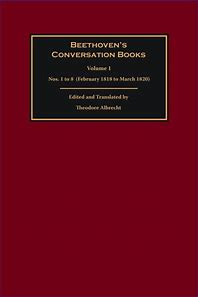
9)BEETHOVEN’S CONVERSATION BOOKS VOLUME 1 NOS. 1 TO 8 (FEBRUARY TO MARCH 1820 Edited and Translated by Theodore Albrecht

Beethoven lovers rejoice! A few months ago, this announcement grabbed my attention: “A complete new edition of Beethoven’s conversation books, now translated into English in their entirety for the first time. Covering a period associated with the revolutionary style of what we call “late Beethoven”, these often lively and compelling conversations are now finally accessible in English for the scholar and Beethoven-lover.”

Beethoven had increasing deafness from around 1798 and by 1818, he’d begun “carrying blank booklets with him, for his acquaintances to jot their sides of conversations, while he answered aloud. Often, he himself used the pocket-sized booklets to make shopping lists and other reminders, including occasional early sketches for his compositions. Today, 139 of these booklets survive, covering the years 1818 up to the composer’s death in 1827 and including such topics as music, history, politics, art, literature, theatre, religion, and education as perceived on a day-to-day basis in post-Napoleonic Europe.”

I’m now reading “February 1818 to March 1820” which means having a huge number of “new footnotes exclusive to this edition and brand-new introductions” in support of comments written by a variety of individuals who chatted and dined and drank with Beethoven. We don’t learn much of Beethoven’s own thinking, since the books usually contain questions and responses of Beethoven’s company at the time and not Beethoven’s own verbal comments and responses.

The editor has much to deal with, from, say, the self-serving forging of entries of Schindler, Beethoven’s occasional friend/secretary , to even the changing of numbering system on Vienna’s streets, to passing indications – perhaps – of Beethoven’s being commissioned to compose the Missa Solemnis. Let’s face it, these books, chaotic and mysterious as they can be on each page, do suggest fascinating aspects of the day to day life of a great composer. What did Beethoven say to evoke a specific comment, one often wonders, and one is gradually drawn, in countless fragments of conversation, into the world of a great creative spirit and mind.
Posted in Uncategorized | Leave a comment

FINNY MCCONNELL OF THE IRISH-PUNK THE MAHONES EXPLAINS “THE HARDEST THING TO DO IS TO COME UP WITH FRESH NEW IDEAS, WITHOUT LEAVING YOUR MUSICAL GENRE AND PISSING OFF ALL YOUR FANS” … A REVIEWER INTERVIEWS PEOPLE FROM THE ARTS

JAMES STRECKER: Please tell us about one or more projects that you have been working on or have recently completed. Why exactly do they matter to you and why should they matter to

FINNY MCCONNELL: I am writing a new Mahones album now (untitled), I am putting together our 30th Anniversary Best Of album and also working on our Live In Hamburg album that we recorded in Germany on Friday the 13, March 2020, on the final night of our European Tour before the plug was pulled. We did get in 30 shows in 10 countries in Feb and March, so we were lucky.

These projects are all very important to me for celebrating The Mahones amazing 30 years as a band. I am very proud of what we have done and accomplished all over the world and I want everyone to enjoy the very best work of our career. All songs on the 30th Anniversary album were handpicked my me. All my favourites.

JS: How did doing these projects change you as a person and as a creator?

FMCC: The old stuff in the back catalogue was great to hear again and go through. I brought back many amazing memories from over the last 30 years. The new album is in the very early stages, so I am just excited to see where it takes me again. Every album you make is always an exciting new adventure, and now I just have to make it great and keep on the tracks!

JS: What might others not understand or appreciate about the work you produce or do?

FMCC: Some people assume we are an east coast folk band like Great Big Sea or something like that (p.s. I love Great Big Sea), and don’t come to the shows because they do not like Celtic music? Then when they finally do, they see we are more like The Clash and The Pogues and apologize for not coming earlier and say they LOVED IT and come to every show after. I just think people should. never assume. Just support live music, go see the bands and artists and leave if they suck. That’s what I do. When they are bad, I do the Irish goodbye and when they are great, I am in the pit!!!

JS: What are the most important parts of yourself that you put into your work?

FMCC: I just try to make all The Mahones albums and concerts amazing. We give 200% all the time. 10 or 10,000 people in the crowd, everyone gets the best show!!!

JS: What are your biggest challenges as a creative person?

FMCC: I think the hardest thing to do is to come up with fresh new ideas, without leaving your musical genre and pissing off all your fans. I have found a way to mix my love of Punk Rock and Irish Celtic music together, so it really works great for me right now. The Mahones Black Irish Album was the one where I really found The Mahones sound.
JS: Imagine that you are meeting two or three people, living or dead, whom you admire because of their work in your form of artistic expression. What would you say to them and what would they say to you?

FMCC: I would have liked to have met David Bowie and talk to him about songwriting and fashion. He was absolutely the best. Maybe also it would nice to travel back in time and meet Bach and Mozart and find out how the hell they wrote the music they did? I would have also liked to meet Grant Hart from Husker Du and help him and try to get healthy again and get back on top. I really hard to see people die slowly from drugs and bad health reasons. Heartbreaking to see. Such a great loss.

JS: Please describe at least one major turning point in your life that helped to make you who you are as a creative artist.

FMCC: I can really go back to when I was little child in grade 3 at school in Kingston, Canada. I was invited onstage by the Rick Fondell Funband on the Island Queen boat. I got up onstage to play and sing The Beatles song Rain (I love that song) with them and never looked back. I knew this was what I wanted to do then and there. I now wanted to play live concerts and make albums.

The second time was when I moved to England in 1985 and leaving my band The Filters in Kingston, Ontario (with Gord Downie and Rob Baker who would soon form The Tragically Hip at Queen’s University). When I first got off the plane in London, England, I went straight to Piccadilly Circus and bumped into The Clash in the now gone Regent’s Palace Hotel. I knew then I had landed in the right city to start my professional music career. I am a huge fan of The Clash!
:
JS: What are the hardest things for an outsider to understand about your life as a person in the arts?

FMCC: I think people sometimes separate being a professional musician and a “real job”, which I find quite funny. I have been in The Mahones for 30 years now and it is my only job. I just work very hard to keep it going. Musicians do not retire.

JS: Please tell us what you haven’t attempted as yet that you would like to do in the arts? Why the delay so far?

FMCC: I have attempted most things on my list now. I have done a double concept album (The Hunger & The Fight, the first in Celtic Punk), and I have recorded more records and done more world tours than most musicians in the music business these days. I have also done loads of collaborations with other musician’s and played guitar for British punk legends UK SUBS on tour. The Mahones just did our first acoustic UnPlugged album (only took 30 years) which was then released in March 2020. I am not sure what to do next. Any ideas for me?

JS: If you could re-live your life in the arts, how would you change it and why?

FMCC: I would not play Irish music next time. I would do a different style to explore new things. That said, I am very happy being in The Mahones and love my artistic life now.

JS: Let’s talk about the state of the arts in today’s society, including the forms in which you work. What specifically gives you hope and what specifically do you find depressing?

FMCC: I love the fact we can record at home and release our music worldwide now. That is a beautiful thing. The only problem now is we no longer get paid for our music like we used too, so it is very hard to make any money these days. You have to go on tour and sell merchandise to survive in this industry today. That is just the way it is now. I may just release singles in the future. The Mahones have already made 21 albums, so I don’t even know if we should make any more these days. The future is unwritten, as Joe Strummer would say.

JS: What exactly do you like about the work you create and/or do?

FMCC: I like my work because I always try to be the best at what I do. I love the challenge, and the rewards. I have very high standards, but I like to keep one foot in the gutter to keep it real!

JS: In your creative life thus far, what have been the most helpful comments you have heard about your work?

FMCC: We quite often hear from our fans and read online in our reviews that we are one of the best in the world in the Celtic Punk, and that we are one of the hardest working bands. I like that!

JS: Finally, what do you yourself find to be the most intriguing and/or surprising things about you?

FMCC: That I never give up. I never take no for an answer to follow my dreams and I believe you can do anything you want to. Just do it!!!!

Posted in Uncategorized | Tagged , | Leave a comment

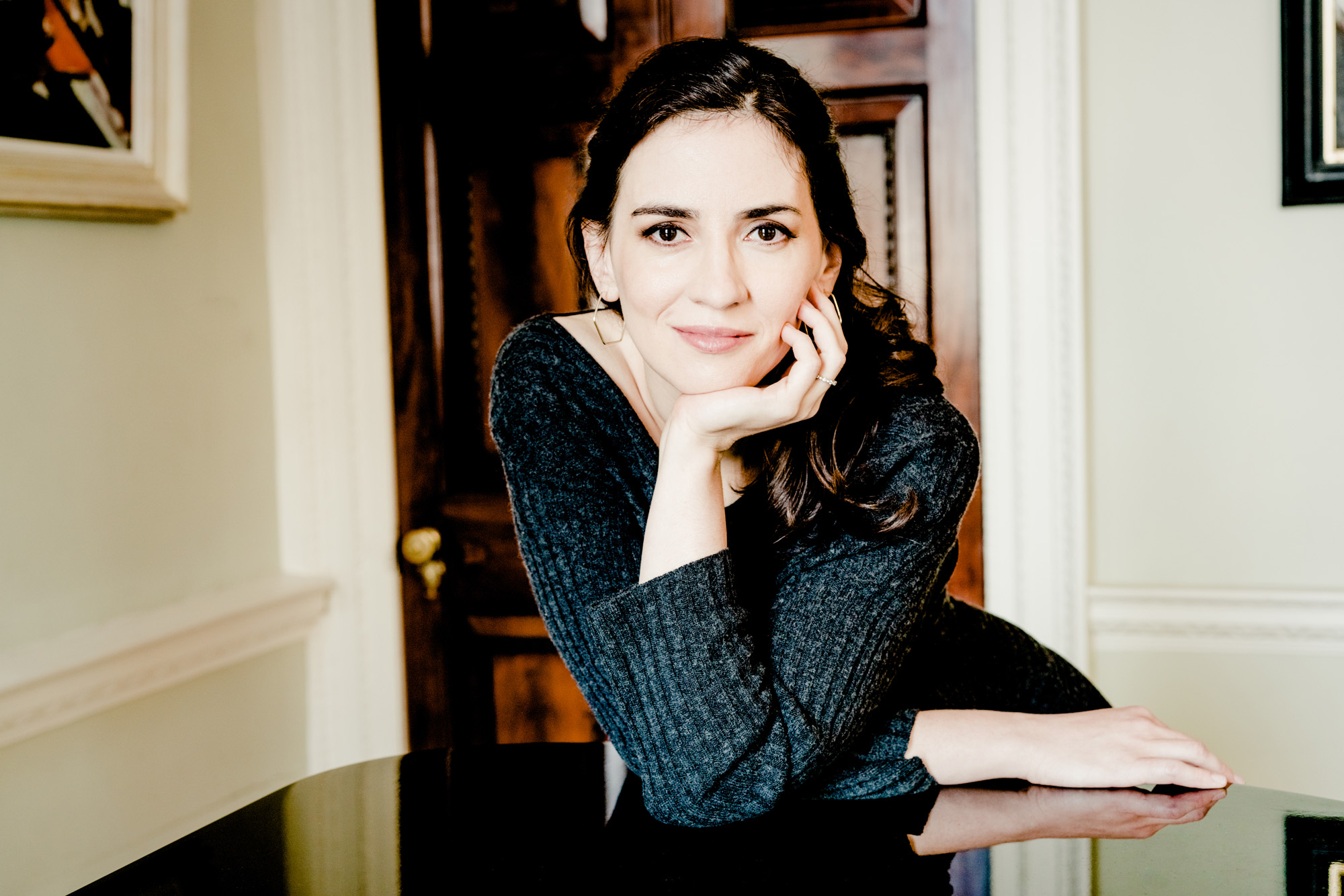
IVANA GAVRIĆ, SARAJEVO-BORN PIANIST, EXPLAINS: “FOR ME, THE QUINTESSENCE OF PERFORMING IS COMMUNICATION. THAT MOMENT IN A CONCERT, WHEN THE MUSIC BREATHES AND YOU HEAR THE AUDIENCE LITERALLY BREATHING WITH YOU, IS INCREDIBLY POWERFUL”…A REVIEWER INTERVIEWS PEOPLE IN THE ARTS

JAMES STRECKER: Please tell us about one or more projects that you have been working on or have recently completed. Why exactly do they matter to you and why should they matter to us

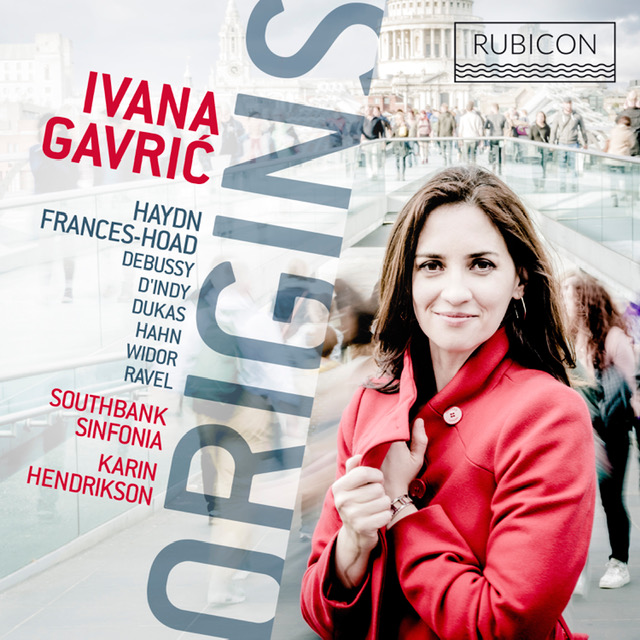
IVANA GAVRIĆ: A large project I have been involved with over the last couple of years has been my album called ‘Origins’, which weaves different threads together, both musical and personal. It includes two concerti – the Haydn D major Keyboard Concerto and a concerto written especially for me by the British composer Cheryl Frances-Hoad called Between the Skies, the River and the Hills. In her concerto, Frances-Hoad pays homage to the Haydn but also my own origins by using a Bosnian folk melody in her finale. On the album I also play solo pieces by 6 French composers (Ravel, Debussy, Dukas, D’Indy, Widor and Hahn) who were invited to commemorate the centenary of Haydn’s death by writing a short homage based on the musical spelling of his name. Finally, I also play a short homage to Haydn by Frances-Hoad on the same theme, written on the two hundredth anniversary of Haydn’s death, so the whole programme nicely ties together and comes full-circle.

And why the Haydn concerto in the first instance, I hear you ask? Well, contrary to the title of his finale Rondo all’ungherese, certain musicologists at the start of the 20th century suggested that this movement was actually based on a Bosnian Round dance, not a Hungarian one. Having been born in Bosnia, this naturally got me excited. I don’t believe the claim is true, and in a way, it doesn’t really matter, but finding out about it gave me inspiration to try and create a piece which does use a folk song from the region and celebrates its rich and diverse culture.

JS: How did doing these projects change you as a person and as a creator?

IG: It was really only after completing this recording that I became aware that for the last few years I have been trying to understand my origins, my influences; I have been trying to really understand myself. I guess we all go through this process at some point! Having grown up in two very different countries, for not the nicest reasons, this journey becomes a little more complicated. I feel this recording is a musical representation of my Bosnian and British heritage, as well as love for the music of Ravel and Debussy. Surprisingly, it has given me a feeling of freedom and a closing of a chapter.

JS: What might others not understand or appreciate about the work you produce or do?

IG: In my performances, both live and recorded, I always try to tell the story of the piece. I like to take the listener on a journey with me.

JS: What are the most important parts of yourself that you put into your work?

IG: I seek is to always give an honest, passionate and, I hope, thoughtful interpretation.

JS: What are your biggest challenges as a creative person?

IG: To find a life-work balance!

JS: Imagine that you are meeting two or three people, living or dead, whom you admire because of their work in your form of artistic expression. What would you say to them and what would they say to you?

IG: Only 3 people! It is really difficult to narrow down the choice so much, but one intriguing dinner party I would enjoy would be with Diaghilev, Beethoven and Ravel. I imagine I would prefer not to talk to them, but just listen and watch their interactions. Diaghilev, though not a musician, is a fascinating figure to me. He is the reason some of my favourite works have been written. Undoubtedly a very difficult man, he had such a great instinct and charm to bring the most fascinating artists from all fields and different countries together to create the Ballets Russes. Beethoven – I don’t really need to explain why. I will never cease to be amazed how some music (and other artworks) that is centuries old can be so relevant today. I adore Ravel. The colours, subtlety and sensuality he writes never fail to entrance me.

JS: Please describe at least one major turning point in your life that helped to make you who you are as a creative artist.

IG: I don’t think that there has been one major turning point. I feel it is more a sequence of gentle turns, cross-roads and some roundabouts which have brought me to where I am now! Perhaps the most significant moment was getting to know the music of Janáček. I feel I really found my voice through his music and I felt I had something new and interesting to say when playing his piano pieces. If only he had written more! His music gave me confidence to express myself as an artist much more boldly, which I then carried with me to other repertoire.

JS: What are the hardest things for an outsider to understand about your life as a person in the arts?

IG People often don’t appreciate just how much time and hard work goes into being a musician, especially a concert pianist. I get the impression many outsiders often assume that one is simply born talented, and so that we live on our gift. I believe talent is about 1 (very important) percent necessary to be an artist. But 99 percent is incredibly hard work, sacrifice of what many people would consider ‘normal life’ and take for granted, perseverance and a thick skin.

JS: Please tell us what you haven’t attempted as yet that you would like to do in the arts? Why the delay so far?

IG: I am developing a new project with my husband, who is a neuroscientist, around music and emotions. We are planning to give interactive concerts with talks. Why the delay – ask him! Sadly, Covid-19 at the moment…

JS: If you could re-live your life in the arts, how would you change it and why?

IG: I try not to spend time dwelling on ‘what ifs’, but if I were able to give advice to my younger self, it would be “go for it and don’t worry what people will think”.

JS: Let’s talk about the state of the arts in today’s society, including the forms in which you work. What specifically gives you hope and what specifically do you find depressing?

IG: I do despair at how undermined music has become in mainstream education, in the UK at least. It is vital to expose children to music, to get them playing instruments and reading and writing music, even if they don’t take it up professionally. They learn to listen, to express their emotions, improve their coordination, concentration… the list is endless. At the same time, it is great to see how innovative and enterprising certain music organizations and individuals have become about reaching new audiences over the last decade; reaching out to a young as well as old new audience.

It is a really poignant time to be answering this question right now. The current pandemic has been absolutely disastrous for my profession, and the long-term resolution seems very uncertain. Our audiences are often elderly, and many music organizations struggle to stay above water anyway as they are so badly underfunded, so I worry about how and what awaits us at the other end of this long tunnel. But, on a personal level, I have found it really moving to see how much comfort my own children have got from singing to themselves and each other during this lockdown. I get the impression music has been a very powerful tool for many people around the world during this time. Music heals the soul and there is nothing like hearing it live. I hope that some of the lessons learnt from this worldwide difficult time is to devote more importance to the arts.
JS: What exactly do you like about the work you create and/or do?

IG: I love how each day is different. I have the luxury of playing an instrument for which there is such a vast amount of repertoire that I will never be able to say that I have played it all – I am constantly learning something new. I love the physicality of playing the piano and the weird and wonderful worlds music exports us to. I love performing to audiences – for me the quintessence of performing is communication. That moment in a concert, when the music breathes and you hear the audience literally breathing with you is incredibly powerful.

JS: In your creative life thus far, what have been the most helpful comments you have heard about your work?

IG: It makes me happy to hear people say that I took them on a journey during my performances; that I told them a story and that it felt like I was speaking only to them. It means a great deal to hear praise of your work, especially if it is something that is very dear to you, and even more when it comes from ‘an outsider’ and not a professional or a connoisseur. We bear our soul to audiences in performances, and when people appreciate it, magic happens.

JS: Finally, what do you yourself find to be the most intriguing and/or surprising things about you?

IG: I am often surprised to find how drawn I am to playing classical music which is inspired by folk music – from Grieg evoking the Norwegian landscapes and the Hardangerfiddle, to Chopin remembering his native Poland in his Mazurkas, and of course Janáček imitating folk melodies and the rhythm of the language to create a voice that was different from the German tradition. I am surprised, as I really was not the biggest fan (by any means!) of folk or traditional music as a child…!

Posted in Uncategorized | Tagged , , , , , | Leave a comment

CAROL WELSMAN, JAZZ VOCALIST & PIANIST, EXPLAINS: “IT IS WONDERFUL TO BE A PART OF THE RHYTHM SECTION AS WELL AS BEING THE VOCALIST…BEING ABLE TO CHOOSE THE COLOR PALETTE HARMONICALLY ON THE PIANO FOR EACH SONG GIVES MY MUSIC A CERTAIN SIGNATURE SOUND.” … A REVIEWER INTERVIEWS PEOPLE IN THE ARTS

JAMES STRECKER: How did doing your recent album change you as a person and as a creator?

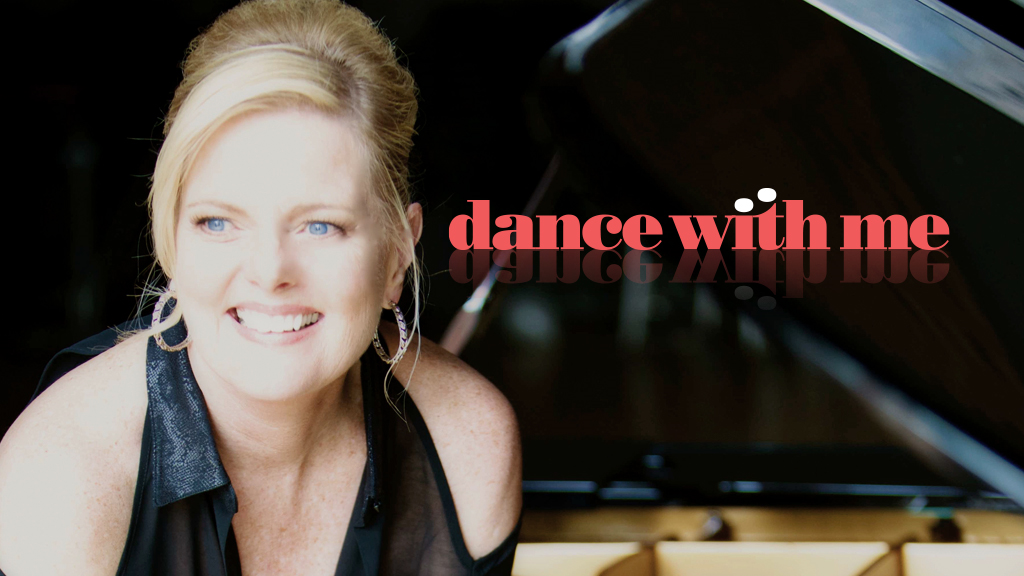
CAROL WELSMAN: This year I fulfilled a longtime dream of recording a Latin jazz album with an all-Latin band, entitled “Dance with me”. It will be released worldwide July 31, 2020. I am a jazz vocalist and pianist, and since moving to Los Angeles 20 years ago, I have always had Latin musicians in my band. I am essentially the arranger for the band; however, the musicians contribute many beautiful musical ideas to the repertoire and overall sound. My previous 12 albums have been either themed, like “JOURNEY” (songs about travel) or tributes to Benny Goodman or Peggy Lee, each containing Great American Songbook standards with swing, ballads and some Latin rhythms. This time, I wanted to create an album of songs with authentic Latin rhythms. For the first time, I gave the arranging hat to 4-time Grammy winning producer and arranger, Oscar Hernández and I’m glad I did. This music is in his soul, and I wanted to hear the songs I chose from his point of view.

As a result, the song arrangements were so exciting and musically challenging for me, so I had to really practice new musical styles like Montuno, Cha Cha Cha and Salsa rhythm piano accompaniment. Figuring out how to groove with the band (bass, drums, percussion and sax/flute) was more difficult than I imagined, since so many of the rhythmic patterns are being played by drums and percussion. Oscar was very helpful as a pianist himself, and guided me every step of the way.

I decided to adapt some Latin song classics into English for this album with my co-writer, author Jo Perry. These songs will be heard by English speaking audiences for the first time. The piece de résistance is a bilingual duet with multiple Grammy winning Latin superstar, Juan Luis Guerra. I wrote some original songs with Latin flavor for this album, and strategically chose some standards that would lend themselves well to Salsa and Mambo treatments. So, I would say this project has been the one that has changed me most as a creator.

JS: What might others not understand or appreciate about the work you produce or do?

CW: People often say that I play the piano and sing so effortlessly. I also sing in 5 languages, some only phonetically, like Portuguese. It’s challenging enough to sing in English, pouring your heart and soul into a lyric in order to send the message to the listener, let alone in other languages. Though it’s fun, and it certainly has broadened my fan base, the level of preparation and execution of these multi-lingual songs will probably always remain a mystery to many.
Playing an instrument and singing requires a certain skill in itself. But I wouldn’t have it any other way because it is wonderful to be a part of the rhythm section as well as being the vocalist. I feel this sets me apart from other vocalists, and being able to choose the color palette harmonically on the piano for each song gives my music a certain signature sound. For that I am grateful.

JS: What are the most important parts of yourself that you put into your work?

CW: My heart and soul.

JS: What are your biggest challenges as a creative person?

CW: Though I have a lot of drive generally in life, I need a creative deadline to work with, or I can be the world’s biggest procrastinator. As soon as I’m given a deadline, I can produce. This is something I really need to try and change.

JS: Please describe at least one major turning point in your life that helped to make you who you are as a creative artist.

CW: In my early twenties, basically at the beginning of my performing career, I was diagnosed with a serious vocal disorder; polyps on my vocal cords. And, I was told by the ENT that I would never regain my vocal register. Surgery was out of the question. I received a grant to study with Christiane Legrand (sister of Michel) in Paris back in the 80s, and with Christiane’s expertise in this area of vocal rehabilitation, I was able to overcome this huge hurdle and sing with a clear voice. The emotional strain was as damaging as the physical strain of simply talking, and though it was early in my career, re-learning how to breathe, talk and sing correctly was a major turning point for me. It showed me how driven I was creatively, working the next ten years on regaining my full vocal register.

A beautiful turning point in my life was living 7 years in Europe in my twenties following the studies with Christiane Legrand; four years in Paris and three in Rome. Learning both French and Italian fluently, and collecting a plethora of songs native to each culture is something that has enriched my life and career to this day.

Another turning point for me creatively was meeting Oscar Peterson. He encouraged me to follow my dream, not worrying about how much I was influenced by the pop world as a jazz artist. I feel blessed to have been invited several times to sing and play for Oscar Peterson tributes over the course of my career.

JS: What are the hardest things for an outsider to understand about your life as a person in the arts?

CW: What I have figured out over the course of my career is that people who are not in the arts seem to view the arts as a hobby; a lark. When you think of it, you watch a dancer or singer or pianist in performance, and they make it look effortless. The same can be said for acting. But again, people outside of the arts really have no idea how much work goes into developing one’s craft. Also, there are no hours for what I do. There really is very little routine in my life. Music is infinite. An idea comes for a song, maybe at 4 am. You can’t stop it and often you get up to write it down. A friend of mine who is writing a book said to me “If you’re at a dinner party and one of the guests who is a brain surgeon says he has to leave before dessert because he has surgery at 7 am, people completely understand. If you are a guest and tell them you have to go to finish a chapter of your book, or the lyrics to a song, they might feel offended that you left early for such a frivolous reason.
Artists are self-centered. We have to be. To a certain degree I have had to really work hard at getting ahead in the business and making a living doing what I love. The competition is fierce. That means taking care of me many times before taking care of others. That can sometimes be pursued selfish to an outsider.

JS: Please tell us what you haven’t attempted as yet that you would like to do in the arts? Why the delay so far?

CW: I would love to become proficient on the guitar. Years ago, when I was studying in Paris, my friend left her guitar behind and went traveling. Under major vocal rest, I taught myself bossa novas on the guitar, by ear. Many years later, thanks to solo piano/vocal Facebook Lives since the pandemic started (Saturdays at 2pm PST at https://www.facebook.com/carolwelsmanjazz/ ), I have re-united with my guitar and will receive a Trans-acoustic classical guitar from Yamaha to play live! This should be enough impetus to start lessons and eventually play well enough to add the guitar in my concerts.

JS: If you could re-live your life in the arts, how would you change it and why?

CW: I would have preferred not to have developed polyps on my vocal cords at the beginning of my performing career. I don’t wish that road-block on my worst enemy. However, it gave me such a deep understanding of how to recover from the condition, that I am going to start an online course for people with similar vocal ailments, working one on one over Zoom or Skype.

JS: Let’s talk about the state of the arts in today’s society, including the forms in which you work. What specifically gives you hope and what specifically do you find depressing?

CW: With live performances at a complete standstill due to the COVID 19 pandemic, for the foreseeable future, I am using any spare time to develop the curriculum for teaching vocal rehabilitation. It is something that is very rewarding, and it gives me hope because I know there’s a lot of need for it among those who use their voice for their vocation; i.e. singer, teachers, public speakers etc.
What gives me hope is I can do concerts by myself. With the eventually re-opening of the world, I’m told that the smaller the group format, the more concert opportunities there will be. What is depressing is knowing that we are almost in an economic depression, and it will be a long time before things are back to “normal”.

JS: In your creative life thus far, what have been the most helpful comments you have heard about your work?

CW: Of all the songs we record and play, the fans tell me they love the ballads and Latin rhythms. This is invaluable information. My Japanese jazz promoter/producer actually acted on this and produced my first solo piano/vocal album in 2016. He chose all the music, knowing which songs were most popular in Japan. The album, “This is Carol – 20 Love Songs” was the #1 selling jazz album at retail for 6 months in Tokyo and my guitarist and I enjoyed a 15-concert tour of Japan. He followed it up with Volume 2 which was released last year, and it was the #1 selling album of 2019 in Tokyo.

Posted in Uncategorized | Tagged , | Leave a comment

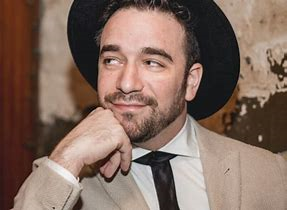
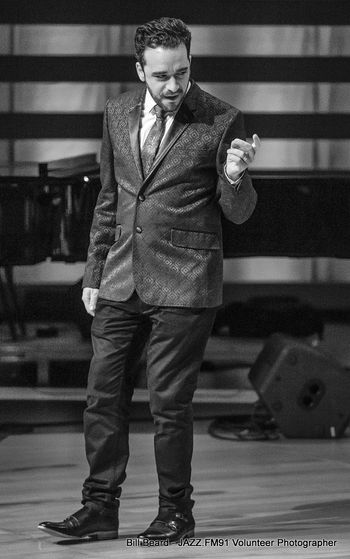
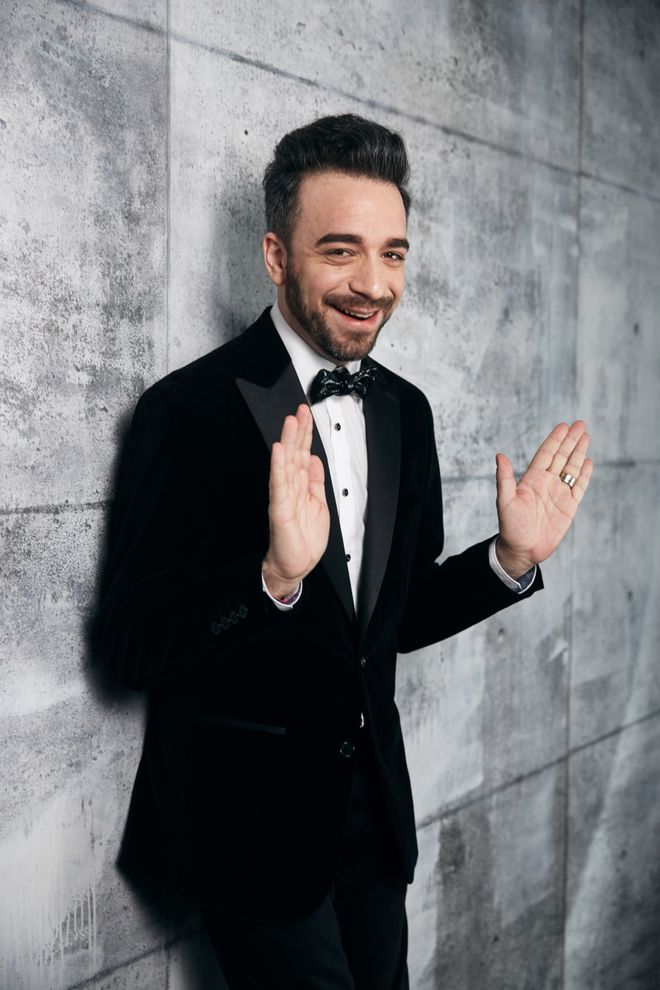
ORI DAGAN, JAZZ SINGER-SONGWRITER – CREATORS/ARTISTS/PEOPLE IN THE ARTS DURING COVID-19: WHAT THEY’RE DOING AND WHAT WE CAN DO TO SUPPORT THEM

Black jacket portraits by Peter Nguyen/ Blue jacket photo by Dan Brown

JAMES STRECKER: In what specific ways has COVID-19 changed your creative life in the arts?

ORI DAGAN: Cancelled gigs included my first tour of Quebec and my first European showcase opportunity, but I am very lucky because most of my out-of-town gigs will be rescheduled as opposed to cancelled, thanks to my agents at Station Bleue. The main thing that changed in my own creative life – and personal life, see below – is not being on the Toronto jazz scene at all hours of the night. Whether I’m playing a gig, absorbing inspiration of a concert, sitting in with my friends or trying out a song at an open mic I’m at one of these places on far more nights than I’m not. So, it has been a bit of a shock to my system to say the least to be home so consistently.

As a performer I’ve adapted to the situation by creating an online gig, live streaming from my Facebook page. I started this on March 27th which was Sarah Vaughan’s birthday and have since kept it going every Thursday night. The transition from performing in the clubs to performing to social media has been challenging to say the least. In the clubs I had the luxury of collaborating with other inspiring musicians; online, to accompany my singing I’ve had to brush up on my piano chops which were getting rusty. It’s also quite different not to see and hear an audience. On the plus side, I’ve been able to reach audiences far beyond Toronto, and the response has been overwhelmingly positive. More than ever I think that people feel the need to escape, to be entertained, to smile, to cry, to feel joy or catharsis through song. I am really grateful to be able to still connect with people through music.

JS: How creative are you feeling with COVID-19 on your mind?

OD: I have been feeling very creative as a musician and have been focusing my energy on practising the piano, which is a discipline I have struggled with my whole life. So that has been very positive and productive. While I have not yet been able to translate that creative energy into songwriting yet, I’m working on incorporating this into my routine. In January I got approved for a FACTOR grant to write an album of original music and I am planning on writing a song, if not several songs, inspired by our current situation. There certainly is no shortage of inspiration in these surreal times.

JS: In what specific ways has COVID-19 changed your personal life?

OD: Being home all the time is a huge change! I have to hand it to my husband for being so supportive of my career and accepting the fact that I’ve been usually out at least 5 nights of every week – it has been quite nice to spend more time with him. We have been eating at home almost every night and I shamefully admit that I don’t cook but he is inspiring me to learn. With a background in filmmaking, he has played a big role in my career as the producer of all my music videos. He now produces my weekly show on Facebook, making sure it looks and sounds as good as it can technically. We recognize that we are lucky to have one another and are doing our best to be there for our family and friends however we can.

JS: What are your primary worries, at this time, about the present situation in the arts because of COVID-19?

OD: There are so many in our industry who are struggling – artists, venues, industry members – without work for the foreseeable future. The hardest part about it is the uncertainty. Not knowing when this will change, and not being able to plan for the future. I’m grateful that for the time being the Canadian government has been supportive of arts workers, and hope that it will step things up with small businesses including music venues as the crisis unfolds.

JS: What are your primary worries about the future situation in the arts because of COVID-19?

OD: Frankly it is quite scary. I worry in particular about the future of live music and the survival of live music venues. Our line of work as musicians was already in danger before this epidemic, with many music venues struggling to stay open in the 21st century due to astronomic costs of running shop contrasted with the decreasing need for consumers to leave their house to be entertained. My hope is that whenever things return to a more “normal” routine, patrons will be so inspired to go out and support the music after having this freedom taken away so suddenly.

JS: What are you yourself doing to get through this time of crisis?

OD: Music is everything to me and being able to connect with people through music is a gift I cherish. The Facebook Live performance series on Thursday nights has been keeping me focused and sane. Last week I did a show that was entirely by request and the response was overwhelming! I took 22 requests, all of which were given to me in advance and included some songs I learned for the occasion. I did not want to leave anyone out so I fulfilled all of the requests and the show went overtime by 25 minutes. It has been amazing to see the generosity and kindness of people tuning in and supporting this endeavour, sending tips if they are able to do so.

A few weeks back I was selected to be part of the #MusicTogether series which was sponsored by Ontario Creates, Arts & Crafts, Shopify and Slaight Music. So, for that particular episode, I wanted to pay it forward by supporting a charity. I announced that half of my tips that week will go to the Daily Bread Food Bank. It was amazing to be able to raise $212 – according to the charity’s website $1 buys a nutritious meal so that was 212 meals! I am very much inspired right now by kindness and looking for more ways to work with charities.

JS: What are other creative people you know doing to get through this time of crisis?

OD: Everyone has their own way of dealing. I have friends who have completely lost their inspiration to make art, while others like myself are more driven than ever to channel creativity and find new ways of reaching audiences. Besides live streaming, while others have found ways of editing videos together so that music can be produced in a time of physical distancing.

Artists are often extremely sensitive humans, so I think the most important thing is for us to be able to reach out when we need to in order to maintain sanity. Staying safe and staying sane. Overall, I think one of the greatest blessing through this crisis is that we can remain connected virtually – otherwise the forced isolation would truly be dangerous to our well-being.

JS: What are the saddest stories you’ve heard about creative people during this time of COVID-19?

OD: The absolutely saddest has been the people we have lost to COVID-19: heroes like John Prine, Ellis Marsalis, Lee Konitz. Most of the stories I hear about artists involve cancellations of shows, tours, etc which are sad but not tragic in a health crisis. I feel that we are pretty lucky to be living in Canada – I can only imagine the many struggling artists in the United States with a far less stable situation there. This is a time where being kind, generous, and conscious has never been so important.

JS: What are the most encouraging or inspiring stories you’ve heard about creative people during this time of COVID-19?

OD: I have been particularly inspired by artists who are adapting to the crisis in positive ways. For example, the Niagara Jazz Festival, run by husband and wife team Juliet Dunn and Peter Shea, has been presenting an online series of performances and interviews with Canadian artists. Singer-pianist Jim Clayton does a live stream literally every single night at 9pm to raise money for the Glad Day Bookstore Emergency Fund. My friend Laila Biali launched her March 27 album “Out of Dust” as planned despite having to cancel a massive tour; she recently embarked on “Quarantunes,” a series in which musicians in her band recorded their parts separately and were edited to still produce beautiful, engaging videos.

My friends Jennifer Walls and Heather Luckhart, who normally host “Singular Sensation: A Monthly Musical Theatre Open Stage” and “120 Blues Night” at 120 Diner respectively, have both adapted the event online for Facebook, and as a result members of our community are able to connect with one another in a time of isolation. Beyond the Toronto jazz community there are some incredibly inspiring stories, most notably rock band The Arkells, whose lead singer Max Kerman has been doing a daily Instagram live show at 1pm which includes tutorials for fans on how to play the band’s music. The recent telethon #StrongerTogether featuring Canadian artists was beautifully done, with over $8 million raised for Canadian Food Banks through the single “Lean on Me.” Plenty of kindness, positivity and inspiration exists in the face of this crisis.

JS: How can we support people in the arts during this difficult time?

OD: Musicians can be supported in many ways. For those of us who are able to perform via live stream, there is usually a way that you can contribute specified. You can also buy recordings from musicians’ websites, or through a great platform called BandCamp which waives its fees on the first Friday of the month so 100% of the contribution goes to the artists (#BandCampFriday). I have a lot of colleagues who are offering music classes online – I feel that is an amazing way to support a musician while at the same time developing one’s own musicality, a total win-win!

JS: Finally, what specifically can we do to support your life and work in the arts?

OD: I would be so grateful to folks who are able to be part of my live stream show on Thursdays. As we speak, I am getting ready for the first “double-header” as I’m trying a 2pm slot in addition to the 7pm slot – two live shows. The stream goes live on my page at www.facebook.com/oridaganjazz and the schedule is on my website. The show is free to watch, and while tips are appreciated there is absolutely no expectation as I know many folks are in hard times. That said, if you are watching and enjoy the show, a “share” on social media goes a long way to helping any artist spread the word about what they do. Besides tuning in to my show folks can support my music by buying CD’s from my website: www.oridagan.com.

Posted in Uncategorized | Tagged | Leave a comment

DENIELLE BASSELS, SINGER-SONGWRITER-BANDLEADER – CREATORS DURING COVID-19: WHAT THEY’RE DOING AND WHAT WE CAN DO TO SUPPORT THEM

JAMES STRECKER: How creative are you feeling with COVID-19 on your mind?

DENIELLE BASSELS: In the beginning, over 5 weeks ago, it took a while for me to get creative. I was too busy trying to catch all the balls that were suddenly all up in the air. It took a good two weeks for the dust to settle, but when it did, I felt more creative than I have been in long time.

JS: In what specific ways has COVID-19 changed your personal life?

DB: I had to make a decision to stay in Toronto and eek my way through everything without income or go to the country to the safety of my family and the fresh country air. The catch was that my family is very intense all day every day, so that’s really been a challenge. I chose wisely though. I’ve been safe, fed, and have been connecting with my adorable little nephews. There is so much to be grateful for. Glad it won’t be forever though! I’m also glad I’ve discovered Zoom meetings and virtual get togethers to touch base with friends and loved ones.

JS: What are your primary worries, at this time, about the present situation in the arts because of COVID-19?

DB: I guess my primary worry is that we will lose the momentum and the relevance that we have worked so hard over the years to build up. A lot of things have gone on hold. My record for one. We were smack dab in the middle of recording it when COVID struck.

JS: What are your primary worries about the future situation in the arts because of COVID-19?

DB: It seems it will take some time before we can start to perform regularly again. Will we have as many options? Toronto has had a bad time in recent years of losing many coveted music venues. Will the venues that we depend on now still be open for business when the world gets back to its “new normal?” Will we all have to become more savvy at internet apps? Is that the future for artists?

JS: What are you yourself doing to get through this time of crisis?

DB: Expanding my horizons. I’m writing more than ever and have joined groups of songwriters to stretch artistically. I’m upgrading my instrumental skills and learning as much as I can about the technological side to music such as production, internet apps for presenting works of art and film editing. Learning new skills makes me feel more positive about the future.

JS: What are other creative people you know doing to get through this time of crisis?

DB: Many of my colleagues are using this crisis as a chance to self-reflect, to rediscover what is important to them as people and as artists. Many of us are working together in one capacity or another. I find myself creating more collaborative relationships than I’ve ever had in the past.

JS: What are the saddest stories you’ve heard about creative people during this time of COVID-19?

DB: I feel like we take care of each other here. I haven’t heard any sad stories about artists in my community. Knock on wood. Maybe it’s because I’m not as connected in isolation, I hope that’s not the case. I try to stay in the know and make sure all my contacts are safe and well.

JS: What are the most encouraging or inspiring stories you’ve heard about creative people during this time of COVID-19?

DB: I’m loving the front row experience to my favourite artists offering free online concerts at home. It’s so encouraging and inspiring to see the artists that I most look up to forgoing the bells and whistles and just playing from the heart. I’m seeing people come together for each other. One artist in our community has called his entire roster of musicians and friends just to check up on them personally and make sure they are well and not in need. That’s just beautiful.

JS: How can we support people in the arts during this difficult time?

DB: Artists in times of crisis will do what they know, they will perform or create art to lighten hearts and inspire hope and strength. Look out for artists in your community that need help. Buy their work if it’s online. Attend an online concert, donate, subscribe, like, follow, share their work if you like it. Ask questions.

JS: Finally, what specifically can we do to support your life and work in the arts?

DB: Listen to my work online! If you like it please spread the word. Send me a message, keep in touch. 🙂 Purchase music if you can. Bandcamp offers the most revenue from sales to artists, they also allow the opportunity for fans to make donations. Spotify isn’t so good for artists, but sharing the music is helpful.

Posted in Uncategorized | Tagged | Leave a comment

DIANA STUDENBERG, SINGER OF ALT ROCKERS TROPE, EXPLAINS “THE MUSIC ITSELF CHANGED ME A LOT, IN PROVIDING A VEHICLE TO EXPRESS SOME REALLY CHALLENGING EMOTIONS FROM EXPERIENCES THAT I’D BEEN HOLDING ONTO, IN SOME CASES, FOR YEARS. I DIDN’T FIND THAT THERAPY HELPED AS MUCH AS ACTUALLY WRITING ABOUT IT.” … A REVIEWER INTERVIEWS PEOPLE IN THE ARTS

JAMES STRECKER: Please tell us about one or more projects that you have been working on or have recently completed.

DIANA STUDENBERG The two most recent projects that I’ve been a part of that have had releases are:

– The rock band I’m in, Trope. Trope is a 4-piece alternative rock band with progressive elements and we’ve completed recording our debut album ‘Eleutheromania’. We just released our cover version of the Tears for Fears song ‘Shout’ and will be releasing more music in the coming months.

– I co-wrote a song called ‘I Choose’ performed by Alessia Cara in the new Netflix animated feature ‘The Willoughbys’.

JS: How did doing these projects change you as a person and as a creator?

DS: Trope changed me as a person for many reasons. The music itself changed me a lot, in providing a vehicle to express some really challenging emotions from experiences that I’d been holding onto, in some cases, for years. I didn’t find that therapy helped as much as actually writing about it. What I didn’t realize is that being in Trope would also accrue some of its own intense challenges. It’s definitely been a crazy journey, but, ultimately, I’m extremely grateful for it. I’m thankful every day that I get to sing in Trope. It’s completely changed me as a creator because it’s the most challenging thing I’ve ever worked on, and just taught me the value of crafting and just doing the work, no matter how long it takes, or how many tries.

2- Working on the Willoughbys’ song with incredible songwriters and getting to see how they do their thing was really something. And outside of the song, actually being included in the early scratch days, vocalizing in the booth, working on characters and just being around so many people in animation really expanded my mind. It was amazing and humbling to observe that ecosystem. And also see just how much work goes into creating an animated feature. It introduced me into a new passion for voice acting, which is an art form I was never really familiar with, but also gave me perspective on how I approach my band actually. Many of the people who worked on this from the creative to the distribution side have so much experience, that it was just a fortunate situation to be able to listen to those conversations and try to soak up as much information as possible on the creative process, to distribution, marketing, sound mixing, storytelling etc.

JS: What are the most important parts of yourself that you put into your work?

DS: I’m not sure… I think the most important part of myself is my care for the work. In tandem with that I think is just being as honest and exploratory as possible. I think writing about things that really stir me up intensely does more service to work too, because if it’s something I personally feel is worth saying, it’ll just come out better in the sense of, a more cohesive and laser sharp emotionally clear piece of music. I’m extremely fortunate to get to write to such vast, complex and layered instrumentals.

JS: What are your biggest challenges as a creative person?

DS: I tend to overthink things… my brain is very active and ping pongs a lot. It looks for alternatives, patterns, solutions, problems, possibilities. You name it, I’m thinking about it :)! That makes it challenging at times to write the Trope stuff, because sometimes I see an infinite amount of possibilities. Getting in the right headspace of exploration, freedom, response, presentness, intention takes work for me. Once I zone in and understand what I want to say, it’s a bit easier. I’ve been getting better at just shutting off the voices, but it’s still a work in progress.

JS: Imagine that you are meeting two or three people, living or dead, whom you admire because of their work in your form of artistic expression. What would you say to them and what would they say to you?

DS: Oh. I’d love to meet Jeff Buckley. And actually, Kurt Cobain, and David Bowie. I would thank them for their incredible artistic, heart and soul contribution to the planet and ask them about the creative process. What inspires them? Were they hard on themselves? And in my dream-world, maybe they’d tell me [in a British accent of course] ‘it’s all be okay babe, the essence exists around you already and you don’t gotta overthink it, have fun, connect and most of all love. love matters, it’s worth it, most people try to shut it out, but they yearn for it. It’s what keeps this whole ball of dust going. hey here’s a drink, you could stand to drink a bit more, you’re a bit stiff, ya can’t bring what you’re holding onto to the next life y’know, loosen up a bit… is that moustache hair on your upper lip? Don’t worry love, at the end of the day… it’s all just rock n’ roll.’

JS: Please describe at least one major turning point in your life that helped to make you who you are as a creative artist.

DS: Meeting my producer Moonhead was I think the biggest turning point for me as an artist. His mentorship taught me so much. Fields of knowledge… on the creative process, artistry, honesty. I’m extremely grateful I get to work with such a talented, experienced and committed human being. Other than that, really the other largest contributors have been a flurry of very challenging situations sprinkled with abuse lol… seriously though, nothing screams ‘evolve’ louder than pain.

JS: What are the hardest things for an outsider to understand about your life as a person in the arts?

DS: This is great question after another :). Honestly – the focus. I suffer already from severe ADHD, I make lists to remember stuff and this career path is so all consuming. It consumes your mind, your time, your sanity. It’s probably extremely unhealthy to be so obsessed. But I just don’t think things get made and shipped unless there’s this intense energy and focus and work put into it. Also, the only certainty is in one’s ability to do the work. So, given that, all I can do to calm the voices in my head is work harder. Also – if I don’t play music for a few days because I’m in marketing or logistics mode, I become a mess. My thoughts darken, my whole alignment shifts, self-esteem drops, etc. I can’t speak for others, but I think I’m just ultimately not the mentally healthiest person, and I’m also not the kind of person to take my demons out on others, or revert to addictive substances, so I heavily rely on work and art to survive. I think that’s perhaps hard to understand when you’re maybe wired differently.

JS: Please tell us what you haven’t attempted as yet that you would like to do in the arts? Why the delay so far?

DS: Oh, there’s so much! I’d like to produce and act in a short film, write a solo album of progressive acoustic songs [more for myself than anything], and publish a poetry book.
I actually have started compiling some of my favorite poems and regarding the solo album… it’s something I’m more interested in doing down the road, maybe in 5 years from now. Right now, musically I’m loving writing the Trope stuff, and Divine Astronaut [which is another project I’m in that’s electronic alternative]. Regarding the short film… I really just need to invest more brain cells into coming up with a concept. I know I want to tell a story, I’m just not sure what that is yet. Like anything else… I just need to do the work and throw some paint on that blank page.
JS: If you could re-live your life in the arts, how would you change it and why?

DS: Oh my… that’s a loaded question for me. It’s loaded because it would have been nice to feel safer to explore and express my true self more freely from a younger age… and/or known how to deal with an environment of judgment. I think that kills creativity. Fear can really suppress the spirit, if at a young age you don’t know how to fight against it and even worse – if you’re in denial of being affected. And I really just didn’t know how to. And I’m still teaching myself. I think ultimately, everyone learns differently. I’ve had a lot of learning via judgment and tough-love, and on the one hand that’s helped me undo some patterns or shocked me out of them as well actually. But there are dangerous by-products of that too. If, in my experience, the self-esteem gets too low [like plummeting], it makes it challenging to assimilate those lessons into love. And art is love. It’s creation. No amount of explaining that we must make it about the work, works when you’re just too low or an empty shell. Or it didn’t for me.

For me, love lifted me up. Seeds of hope really made all the difference. I wasn’t able to do that for myself as significantly at first. I stayed in it, and kept working, but for the first long stretch, things felt like a slog and very uphill because I was also trying hard to undo patterns and writing a lot. I really needed people who believed in me. I needed to cut out the people who were naysayers, abusive, and even those who don’t see me as an artist actually. And then I was able to see that I’m worth investing in. I mean we each are worth investing in. That’s when I was able to clear the space to work more intensely. I’ve always been an extremely hard worker, but there was so much murk, that I was spinning my wheels at first and wasn’t as effective as I am now.
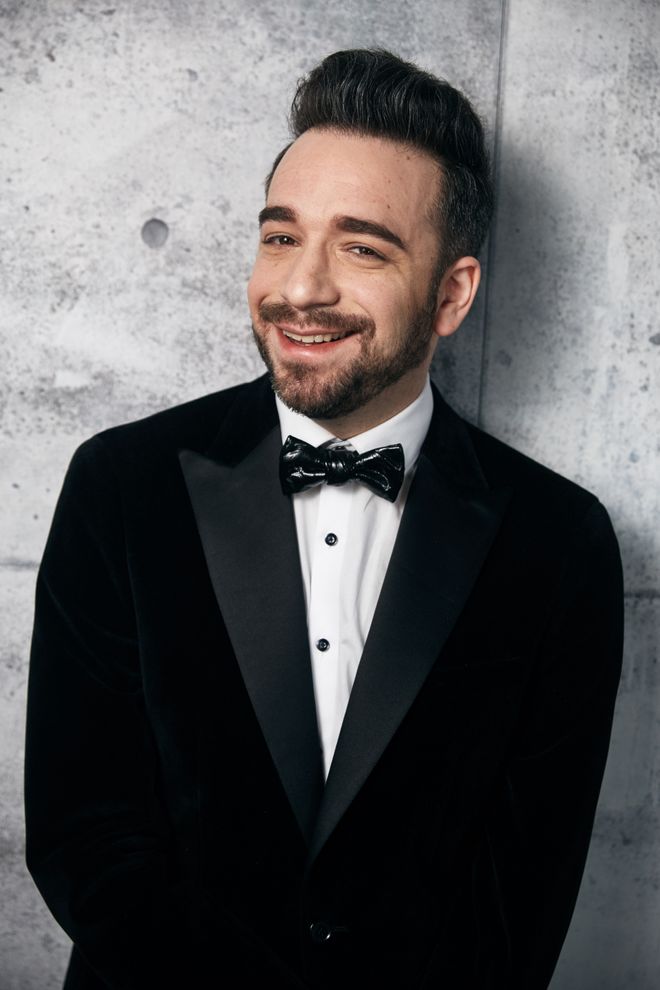
So, to come full circle – I’m actually extremely grateful for all the windiness, and how challenging it’s been on different levels. I think I have things to write about because of this. It’s my journey, and honestly… there’ll always be things that maybe I wish were easier earlier, but for me, that’s not the stuff that fuels me as a writer. I also wouldn’t take it back because I love and admire the people I’ve met along the way. And who I get to collaborate with. I’ve built lifelong friendships with a small handful of people who are very special to me. In the end, I’m very fortunate I get to do this.

JS: In your creative life thus far, what have been the most helpful comments you have heard about your work?

DS: What’s helped me a lot was ‘That’s not good enough! What’s your intent? That’s generic garbage lol. It doesn’t matter what other people think, or if it’s ‘good’, write what you need to write about.’

JS: Finally, what do you yourself find to be the most intriguing and/or surprising things about you?

DS: My long-windedness is very surprising.

Thank you so much for this interview. Thanks for the thoughtful questions and sharing our music.
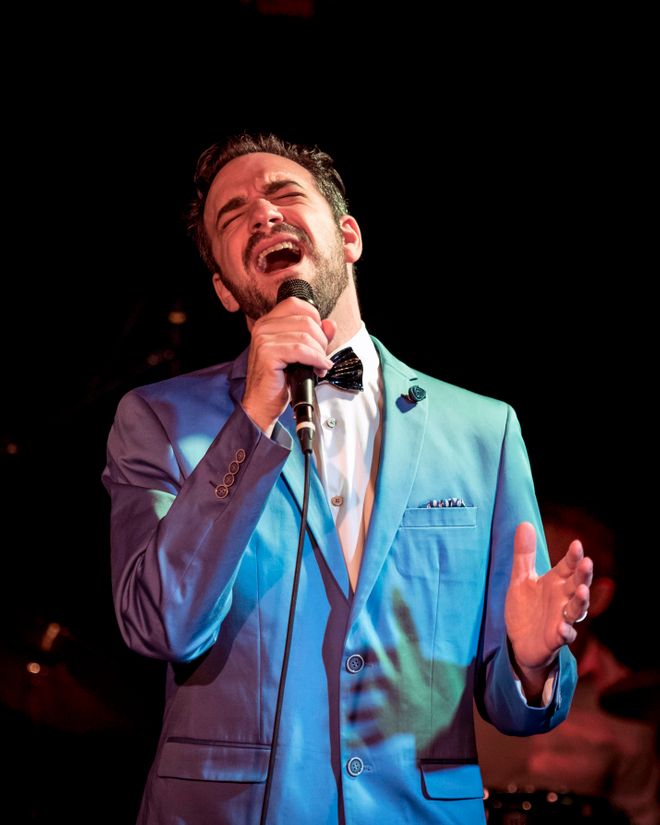
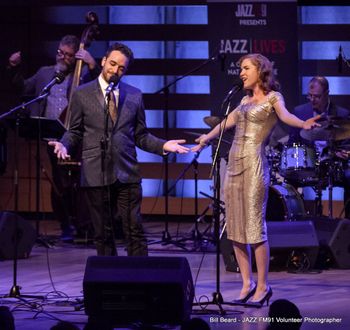
Posted in Uncategorized | Tagged , , | Leave a comment