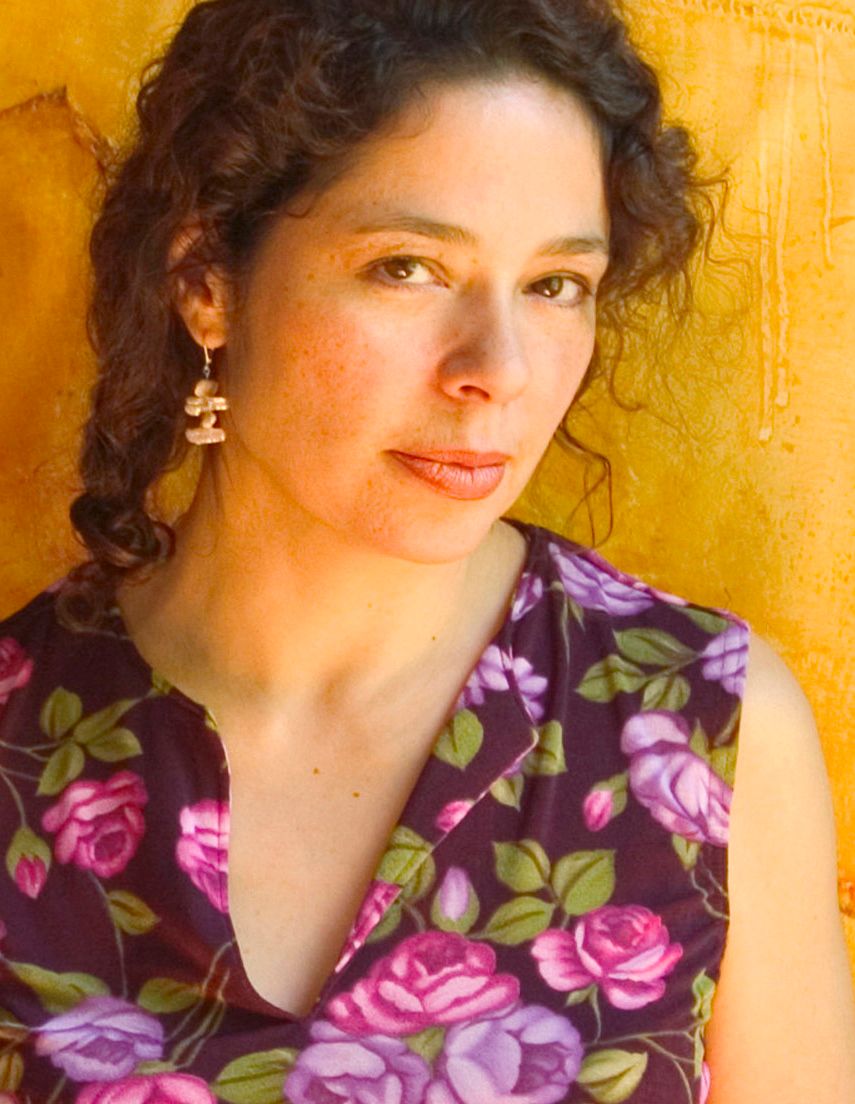
MARGARET LINDSAY HOLTON: CREATORS IN THE ARTS AFTER ONE YEAR OF COVID…. A REVIEWER INTERVIEWS PEOPLE IN THE ARTS


JAMES STRECKER: If, before the COVID crisis, you were asked for 50 words to summarize what you do, or have done, in the arts, what would you have said about your purpose and creations?

MARGARET LINDSAY HOLTON: I’ve been active in the local, national and international arts community for over 40 years through a variety of disciplines – Canadian fine furniture design & making, painting, writing, experimental photography, and short film works.

Essentially, I am offering my vision of ‘how I see the world’ from this exact point – in Time and Space – on this, our amazing home planet. This has been my job.

JS: If you are asked today what you are doing in the arts and what your purpose is, what would you say?

MLH: My purpose and activity have changed very little over this past year. I am still offering my point of view. The only difference is the gentle insistence, at times, that others re-consider their own relationship to our finite planet. Why? Because we can see that Mother Nature is hurting.

It behooves all of us to see ourselves as caretakers of the planet for future generations, not just continued takers of Earth’s limited resources. Everyone can play a part in this much needed transformation.

The pandemic was a poignant wake-up call. As the human world stood still for weeks, then months and now a year, it was very telling how the polluted skies cleared, other species began to roam freely on land and sea without fear of exploitation and the delightful sounds of nature could be heard once again. It was marvellous to see, hear and behold. It also underscored, not only our prior unthinking dominance of the natural world, but a genuine opportunity to reinterpret our singular breath-taking relationship to our home planet.

JS: What exactly are your biggest challenges today as a creative person?

MLH: Early on, I recognized the value and necessity of aligning the vibrant creative spirit with rigorous hand-eye-mind-heart work. Artists can build on historical precedent and improve the quality of life for others through their individual expressions, be it painting, crafting, writing, or film-making.

I’ve never subscribed to the dystopian ‘horror’ or Armageddon interpretation of ‘where we’re at’. I just don’t see the point of amplify this kind of Doomsday thinking in or through the arts.

There’s no question that, as a species, we’ve made terrible, near irreversible, errors by exploiting and spoiling our essential Life Support system, aka Earth.  The one element that does distinguish us though from other Earth-bound species is our capacity to innovate solutions. Today, the material and abstract sciences are aligning with the more potent creative spheres to combat our own self-destruction. Rather than being the on-going problem, we CAN all rally to find sustainable solutions.

JS: How has living with the pandemic affected your creative life?

MLH: In truth, not that much. An artist often produces their best work in isolation from others. I’m no different in that regard.

During 2020, I did align with a voice artist, local actor Jens Hansen from Beamsville, and sound engineer, Craig Watkins, to produce an audio version of my third novel, TRILLIUM, first published in 2018. We did all the work remotely and transferred audio files back and forth via computers until I was satisfied with the final product. The 14.5-hour TRILLIUM audiobook was released towards the end of the 2020 via iTunes and Amazon.

TRILLIUM is a timely tale of life on the Niagara peninsula over a period of 250 years. Starting in the mid 1750s, a young British foot-soldier, Tom Hartford, crosses over the wild and majestic Niagara River and decides to settle under the Escarpment brow near what is now Beamsville, Ontario. Two other diverse families intertwine over time with his, in this “epic” story about resilience, deceit, love and hate. TRILLIUM is about the stuff of human life. It paints a broad picture of an evolving community through major technological advancements, (i.e., the horse, to the car, to the plane – and from the smoke signal to literacy to tele-communications.)  Underneath these life-altering advancements remains the human heart and mind.

Other than that, I’ve been working on several other written and visual projects that should reach maturation within a year. It’s just what I do and have always done. One project at a time.

JS: How have you changed as a person and a creative artist since COVID became a significant factor in your life?

MLH: Not much at all. I am very conscious of following the recommended guidelines to protect others during the pandemic. And, touch wood, I have not been afflicted by COVID or any other debilitating disease during this ‘lockdown’ period. I did break my toe, but I can’t blame anyone or any other circumstance for that. It was just my own stupidity for not watching where I was going!

JS: What important beliefs do you usually express in or through your own work? How have these changed?

MLH: Central to most of my work is the thought or belief, that we, as a species, are just a small part of a much greater whole. As conscious beings, we have been able to articulate who and what we are through the assorted skills we manifest, as example, through architecture, or, as another example, transportation. This conceptual framework has not changed as a result of the pandemic. I still believe this, and just hope that others will begin to realize it too – be it via philosophy, religion, science and/or the arts.

Clearly, most are now aware, that humanity really is not, (and never has been), the centre of the universe – even though it is this very distinct ‘humanness’ that does give us the ways and means to ‘be’ in and on the world. The pandemic has given us pause and a huge global opportunity to re-consider our role within a much larger multi-verse. It’s been humbling, even devastating at times, yet also profoundly encouraging too.

With a realignment to emerging ‘alternate’ perceptions, we can move forward, (not backwards or downwards or even sideways). We, globally, collectively, locally, have an amazing opportunity now to build on what has preceded us to manifest an alternate path ahead.

As this transition continues, as the ‘old ways’ are understood for what they have both given and taken, we are being called upon to reshape ourselves, our cultures and our civilizations for a more sustainable future. We can do it.

Humanity just has to give up one little OLD thing – hubris.

JS: Please tell us about the projects that you are working on or will soon be working on and why they draw you to them.

MLH: I am currently collating a collection of short stories, essays and poems for an anthology that I hope to release under my own artists’ imprint in the fall. This material has lain dormant for quite some time in my writing box. I feel the time is ripening to share these thoughts and imaginings.

Well-chosen words can ignite others and cross-pollinate ideas.

Aside from that, I have just ordered another roll of canvas and hope to create new large canvases over this year in response to several lucid and tell-all dreams I’ve had over the past three months.

I’ve spent a lot of time during this past year considering the ‘screen environment’ that envelops us all. We can barely function now without some device in front of our eyeballs or at our fingertips.

Increasingly, most are aware that manufacturers of these devices want to keep us there – trapped. But we’re getting smarter too. We are using these tools now – (as much as they continue to use us) – to independently research, explore, investigate and expound. We are done being their consumer guinea pigs: we want these tools to serve us better. More are demanding just that.

Keep at it – for the betterment of all – and future generations.

JS: Any advice for other creative people who are enduring pandemic conditions?

MLH: Do your chosen work with conviction and determination. Do not give up or give in. Be who you are meant to be. Be your Self. And, when at all possible, ease the pressure on others who are feeling the strain, the seeming hopelessness of it all. Bolster them with words of encouragement. Give them inspiring and hope-filled literature or mind-expanding scientific links and tracts to read. (Example: Heard of the advances in thorium use? Google it!) Offer them soulful music to listen to. Encourage them to create from their own inner-beings. Help them adjust to the planetary transition that is upon us.

Above all, do your caretaking with love. Do your chosen work as well as you can.


MLH Book links: https://linktr.ee/MargaretLindsayHolton

MLH Twitter: https://twitter.com/TrillLINDSAY

MLH Website: https://canadadaphotography.blogspot.ca

MLH Music: https://canadada.bandcamp.com

See the source image


Posted in Uncategorized | Leave a comment

MUSIC AND MEMORIES PART TWO: ESSENTIAL CDS FROM FAIRUZ, FARID EL ATRACHE, MELINA KANA, ALEX PANGMAN

See the source image

*The Fairuz CD Almahaba is a powerful yet finely-realized up-close experience, one that requires the listener’s surrender. Here, surely, is evidence why Fairuz is a legend in the Arabic world. Her vocal embellishments are very difficult to achieve, according to an Arabic singer friend, but it’s the inherent beauty and complexity within her voice that incisively haunt and enchant at one go. I wrote a poem to Fairuz in my first book of poetry years ago, but, in truth, I’m not sure how one could capture her unique aura of intimacy a she sings. As I said, one surrenders, and then there is no better place to be. Note that you might find The Very Best of Fairuz and The Legendary Fairuz easier to find.

See the source image*My My friend Brenda Bell was known as the legend Badia Star in Canada, even before she took up residence as the featured belly dancer at a posh hotel in Cairo. She has told me often about her thrilling connection with an Arabic audience who know the songs to which she dances and understand the nuanced sexuality of her performances. Canadians instead want what they call sex, bluntly done, while an Arabic audience knows how to savour gradually and thus enjoy more fully.  Which leads me to an outstanding CD titled Farid el Atrache: The King of the Oud on which the singer/oudist/actor communes through his jaw-dropping virtuosity on the oud with a sometimes hysterically appreciative audience that that goes very nuts very often in response.  This man’s a subtle master of his art, one who never does brilliance for show in a music that echoes the depths of the earth.

*I once received a copy of Melina Kana: Portrait to review in my newspaper column and on my first listen I found it only pleasantly appealing, which in retrospect reveals my occasional and appalling lack of awareness in these matters. On my second – to five hundredth – listen, however, it became one of my essential CDs, a collection of compelling and potent performances that range from the initial bouzouki-driven hip-incited Alkoolika Stichakia Vers Ivres (Drunken Verses), to the toe-tapping yet very surreal Tou Christara (For Christara), to the methodically wild and totally irresistible Milo Gia Sena (I Tell of You) with the group Ashkabat from Turkmenistan. This is a song, one finds, that each of Kana’s audiences knows well enough to join the singer. Kana’s voice can sound like a caress, like a firm but distant echo from the mountains of Greece, like a woman deep inside her own long-wounded heart, and like a woman of sophisticated poise who can carry both a taverna or an upscale club and communicate in either with ease.
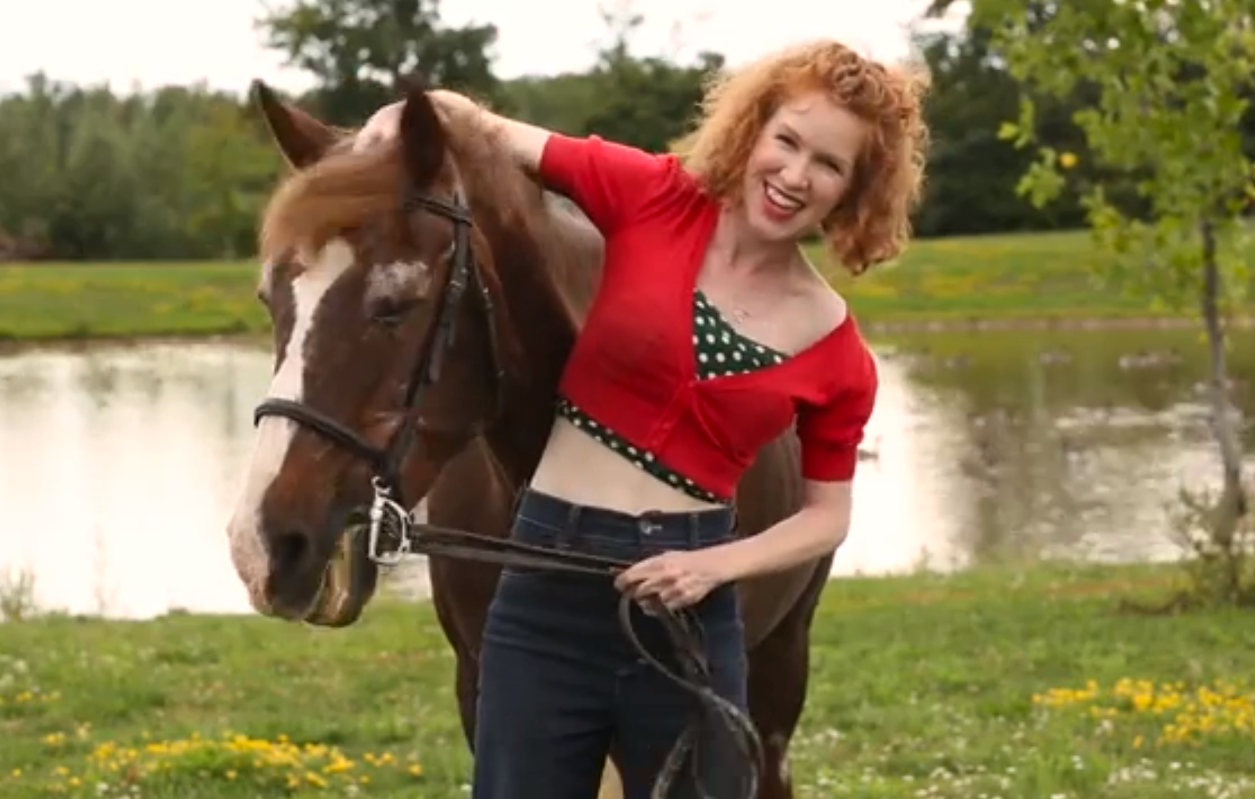
I’ve long been annoyed with singers who affect a swing era style while, in truth, they are paint-by-numbers stylists whose only individuality lies in emulation. Whatever their hype by the uninformed, they are painful to hear.

So, for me and many others, Alex Pangman has long been a crucial singer on the Canadian jazz scene, for many reasons. Alex knows her idiom as one born in its fibres, knows the nuances of style, knows the racial importance of her material. She knows the individual quirks of those singers long ago who have fuelled her, knows the many potentials of a lyric, knows the roots of a lyric in the human heart, knows the ways a lyric fits in with accompanying musicians. She is an individual on her own terms by instinct.

Alex Pangman finds a lyric’s nitty gritty bubbling in her own flesh. Her method can sometimes be conversational and sometimes she hangs on the musical underpinning of a great tune and lets herself be music’s tool. Her very presence seems an extension music’s rhythm, music’s love of taking a risk, music’s way of taking the listener into late night hours where he or she is changed from what they were and is something else now, though none can say what that is. We don’t have our feet too solid on the floor anymore because rhythm, not blood, flows through our veins. We are music, we live.

In the forties, when I was young, the big bands were gone and singers were still trying to somehow keep as real as possible, albeit with making a living and shallow producers a constant reality. Swing music and the music of twenties became more of a truth to me when I did two books with jazz singer Jackie Washington. One day I played Jackie my box set of swing era bands and I’ll be damned if he didn’t rattle off all the musicians, section by section, pausing only a second here and there. It was fun to hear Jackie’s tales of Teddy Wilson, Jack Teagarden, Benny Goodman, and the rest, because, like Alex Pangman, he dwelt heart and soul in the music.

Any Alex Pangman recording is a good place to start in her catalogue, although today I’m into Have a Little Fun which features Special Guest Bucky Pizzarelli and Alex Pangman 33, two spirited recordings that include crack musicians as much at home in her repertoire as she. I’m especially enjoying the ways that small, barely detectable mysteries of life seep into her singing of a phrase and create an intriguing and mysterious adult personality, the moniker of Canada’s Sweetheart of Song notwithstanding. Alex Pangman can sing a woman’s whole lifetime in a song, can sing it done hip, wisely adult, and playful to the end.

See the source image


Posted in Uncategorized | Tagged , , , | Leave a comment

MUSIC AND MEMORIES:  MUST HEAR CDS PART ONE

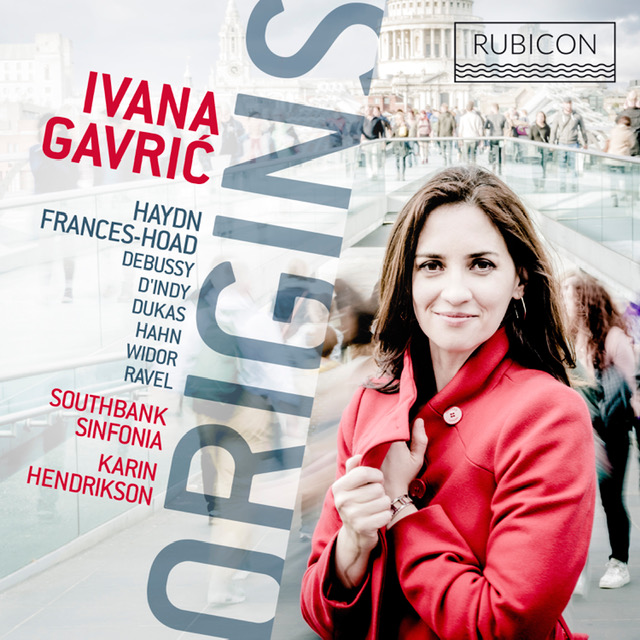
*On the CD Origins, pianist Ivana Gavric inhabits Haydn’s Piano Concerto No, 11 in D as familiar turf of his spirit, as if pianist and composer share not only one joie de vivre, but one joie d’être as well. We sense a clarity of being immediately in the spirited confidence of her entry, and one soon feels good to be alive. Once, at Haydn’s house in Vienna, a man from New England, with taxi waiting outside, rushed past me and about the room of displays for “just a few more minutes with Haydn” – and over time I’ve come to understand why Haydn is often greeted with profound affection.  We all have many mysteries of life to learn from Haydn’s guileless and playful heart. Take the CD at hand which also contains “homages to Haydn” by Debussy, d’Indy, Dukas, Hahn, Ravel, Widor – and Hoad. Included too is Hoad’s systematic but existentially-contained epic Between the Skies, the River, and the Hills, a composition with an enticing knack for the impending unknown, Gavric, always a subtly-voiced yet emotionally-precise pianist, performs this with Southbank Sinfonia.

La Voce del Violoncello

*On La Voce del Violoncello, we have Elinor Frey on baroque cello – with Esteban La Rotta on theorbo and baroque guitar and Susie Napper also on baroque cello.  Always pensive but with an assertive intention to explore gripping the atmosphere she creates about her, Frey probes the colorful and image-conjuring potential of both the inner and outer worlds of these “Solo Works of the First Italian Cellist Composers.” For me, at least, Frey draws one’s imagination down streets populated by people of seventeenth/eighteenth century Italy, and it’s delightful to imagine here the lives of day-to-day humans with their laughter, inner thoughts, and the sweat of living on their skin.

See the source image

* Recordings of Schubert’s “Death and the Maiden” quartet, by the Talich and Busch quartets, long ago permeated my consciousness and helped to shape my personal Schubertian world.  Add now to the mix a thrilling recording of much technical sophistication by the Pavel Haas Quartet of both the “Maiden” and the D956 Quintet. These are outstanding performances of metaphysical propulsion, uncannily integrated ensemble playing, and meticulously-realized yet subtle drama. I have been more accustomed to rougher edges in performances of the quartet and now I happily recommend the madness in finesse of the Pavel Haas Quartet in the “Maiden” and their elegantly textured and painfully touching narrative in the Quintet

* Many years ago, I got to tell lutenist Julian Bream, after his recital at Wigmore Hall, that his recording The Golden Age of English Lute Music had been a treasured and intimate companion of mine since it first appeared in the early sixties – then I thanked him two or three hundred times! And certainly, this recording has consumed my spirit and my thinking each time it began with Robert Johnson’s Two Almaines and took my imagination to unanticipated mysteries of the world offered, sometimes wistfully, by Dowland, Byrd, and company. I always feel at home in the music of this recording, though I doubt I would as secure in the threatening era in which the music was born. If I were to be buried in a pyramid, I would certainly take this CD along as an eternal everpresence to which I already feel eternally bound!

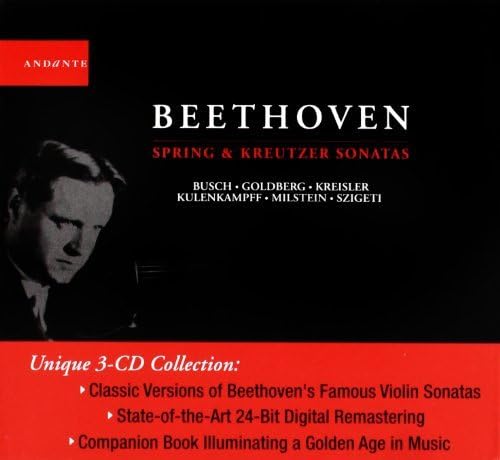
*It’s a special and too rare thrill to hear a composer recorded, whatever the music, and to know that a creative mind whose compositions we’ve often enjoyed is inevitably doing its thing before one’s very ears in the service of performance. Take this 3 CD set titled Beethoven Spring & Kreutzer Sonatas in which the seven violin-piano pairings include Kreisler/Rupp (1936) and Milstein/Balsam (1950) on the Spring Sonata and Kulenkampff/Kempff) (1935) and Busch Serkin (1941) on the Kreutzer. And at this very moment I’m listening to Szigeti/Bartok (1940) on the Kreutzer in an interpretation that often surprises in changes of tempo, emphasis, distinct personality, and dynamics. This is altogether delicious stuff and I can’t help but recall once working on my book on crafts while playing – over and over -the Emerson’s set of Bartok quartets, fueled, especially, by the fifth quartet to keep going without rest. In this Kreutzer, I hear a human heart and an always searching mind which I’ll take back to listens of Bartok’s own compositions.

See the source image

*I once visited the Brahms Museum in Murzzuschlag, Austria where, besides investigating the rooms and fascinating contents therein, I did two things: I played a middle C on Brahms’ own piano and purchased a two CD set of the composer’s music titled Brahms: Jorg Demus (In Memoriam Claudio Arrau).  Demus here indicates a naturally confidant and full-bodied – though not excessively so -presence, even in lyrical passages, rather than musical hues of reflective and perhaps wounded vulnerability. The playing has the quality of, perhaps, full-lunged singing atop the mountains not far away. Or is it the quality of the ringing of cathedral bells? It was in this summer residence that Brahms worked on his 4th symphony and almost lost it to a fire. I wrote a travel piece – for the Spectator or the Globe – and remember ending it, while looking through the train windows on the route back to Vienna, with something like, “A composer is lucky if he sees these mountains and writes music that is worthy of them.”


Posted in Uncategorized | Tagged , , , , , | Leave a comment

ARTIST/WRITER MARK RYALL ON HIS NEW NOVEL AGE-DECODED – “ABOUT THE IMMINENT TSUNAMI OF GENETIC ENGINEERING TECHNOLOGY” – AND HIS PAINTINGS …. A REVIEWER INTERVIEWS PEOPLE IN THE ARTS

May be an image of 1 person and text that says 'K HSC Trojans'May be an image of text that says 'AGE-DECODED THEY CÃNQUERED AGING BUT IMPERILED HUMANITY A Speculative Fiction by MARK P RYALL'JAMES STRECKER: You have a new book just published and a number of recent paintings, so please tell us about these projects. Why do they matter to you and why should they matter to us?
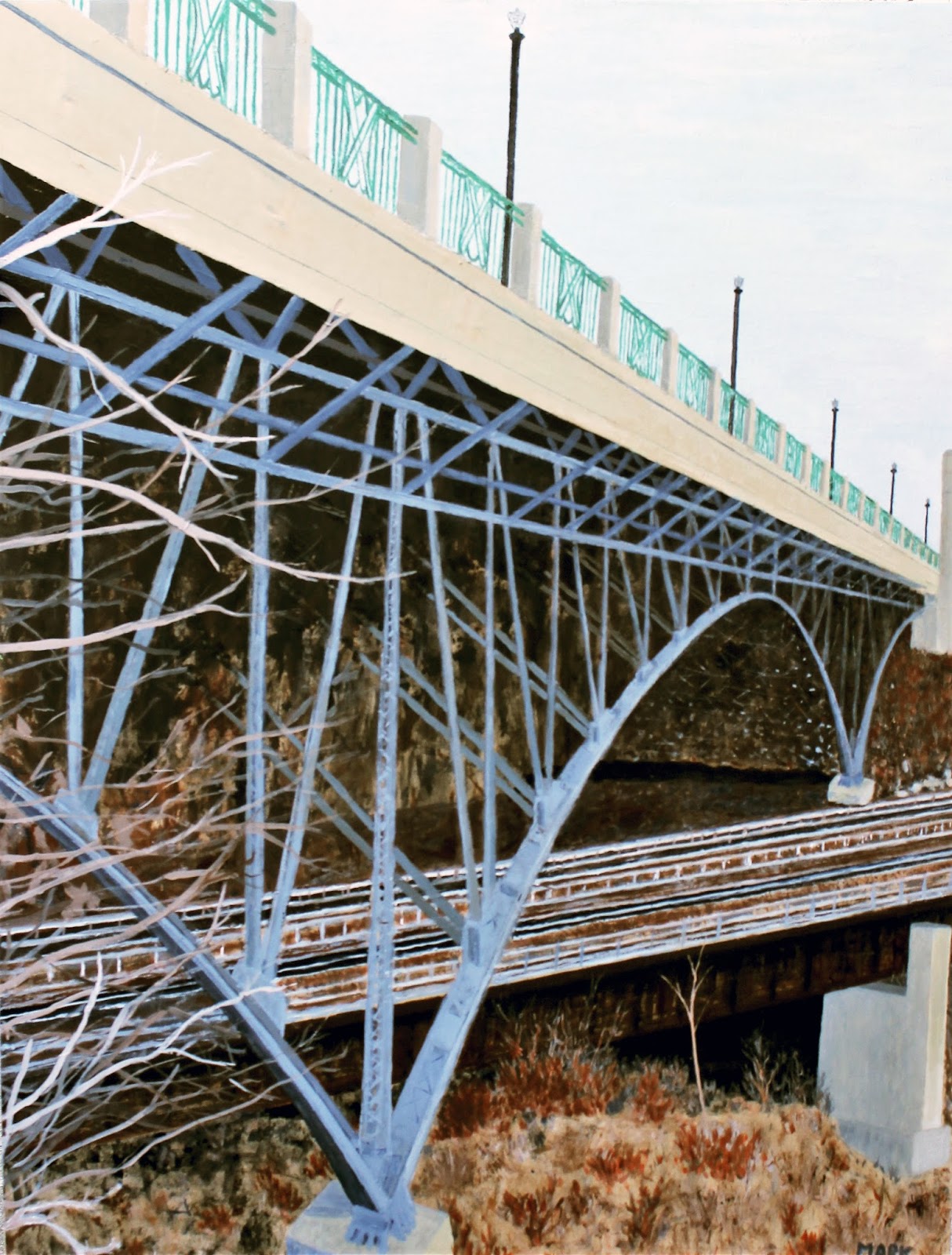
MARK RYALL: They matter to me because they allow me to express views that are conservative in the sense that I’m reacting to the broad technological march forward of our world. We’re all part of this and I’m trying to make sense of it both for myself and others. A painting of a historical Hamilton Stelco structure has the same motif as a dystopian fiction about genetic engineering. Both are conservative clarion calls for mindfulness.

JS: Please tell us about the projects that you will soon be working on and why they draw you to them.

MR: Over the next few months I will be promoting my new book, Age-Decoded. As a self-published first-time author, marketing is a responsibility that rivals the actual writing of the book. In this age of social media, I’m discovering tools and levers needed to help me reach an audience. I believe many people could not just enjoy but also benefit from reading my novel, because it represents “hard science fiction,” i.e., my best attempt to portray the actual world we’re headed towards. This summer I will also produce two more acrylic paintings. I’ve been incubating on the subject matter, but they’ll probably be sports portraits or natural landscapes.

JS: What important beliefs do you express in or through your work?

MR: The novel Age-Decoded is all about technological change and unforeseen consequences. In that sense I’m a conservative, but hopefully not a Luddite. For example, in this novel everyone is offered the publicly-funded procedure of age-decoding, which uses CRISPR technology to halt the aging process. Naturally, most people jump at this! But what are the consequences for these individuals, and more saliently, for humanity? I offer up many, most of which are not good. This artistic expression of beliefs I do not see as scifi/fantasy, but as speculative fiction meant to portray what I think is bound to happen 50-100 years out.

JS: How have you changed as an artist and as a person since you began to do creative work?

MR: In terms of the writing, I can’t answer that question because I haven’t begun a second book. My gut tells me it’ll be yet another dystopian work: perhaps on the use of technology to track/surveil peoples’ actions, not just physical but also thoughts and feelings? In my paintings my subject matter has shifted since I began: originally it was all structural – old buildings, bridges, etc. – but it’s evolved to personal compositions, most notably sports portraits.

JS: What are your biggest challenges as a creative person?

MR: I have no big challenges or compelling excuses. Art is a wonderful opportunity to express myself. It helps that I don’t depend on it to support myself financially, so I’m liberated me to just go — in any direction! This luxury is a privilege I do not see as challenged.

JS: What are your most meaningful achievements?

MR: Teaching economics to young people was most meaningful. Not the supply and demand aspects, which are technical and quantitative, but the softer social, political and environmental issues surrounding the discipline. Young people can comprehend that economics is not an exact science, in fact is not a science at all. I spent twenty-five years teaching economics and never grew tired of experiencing this revelation in collaboration with my students.

JS: What do you ask of your audience?

MR: Mindfully reflect. In this buzzfed, new-media-amped, click-baited, likes-driven, tech-laden world we need to slow down and become more Buddhist-like in our mental temperament. One of the characters in my novel, Jesus (ironically a Buddhist) is very good at mindfully appreciating interconnectedness, even as chaos unfolds around him.

JS: What do you yourself find to be the most intriguing and/or surprising things about you?

MR: That I’ve become more spiritual and more social in growing older. In my early adult years, perhaps because of my aptitude for math and science, I was preoccupied with studying and pursuing work in science and business. But something inside me always rebelled and I gradually moved into the softer realms through teaching. Working daily with young people taught me to draw energy from humans instead of things. Intriguingly, I know myself better, I also am myself better. My art is a good example of this shift to things nontangible and social. Twelve years ago, I was not even painting or writing.

JS: How has living with the pandemic affected your creative life?

MR: It’s been a boon. I say this knowing that Covid-19 wreaked havoc on the work or personal lives of many others. But for me, recently retired, it’s been a positive. Practically, it’s opened up enormous amounts of time to devote to art, without the usual distractions. For example, I now spend little time triathlon training, due to all competitions being cancelled, which liberates about 2-3 hours per day for pursuits such as drinking cheap wine and writing. Spiritually, the pandemic has shone the light on the human spirit, the common good, and the interconnectedness of nature. Witnessing all of this unfold propels my creative juices.

JS: How and where can the public buy your book and your paintings?

MR: My paintings can be viewed on Instagram at m.ryall; some available for purchase which can be arranged by Instagram direct message or email contact markpryall@gmail.com

My speculative fiction Age-Decoded eBook is available at all major online retailers. The Books2Read link for that is:  https://books2read.com/age-decoded


Posted in Uncategorized | Tagged , | Leave a comment

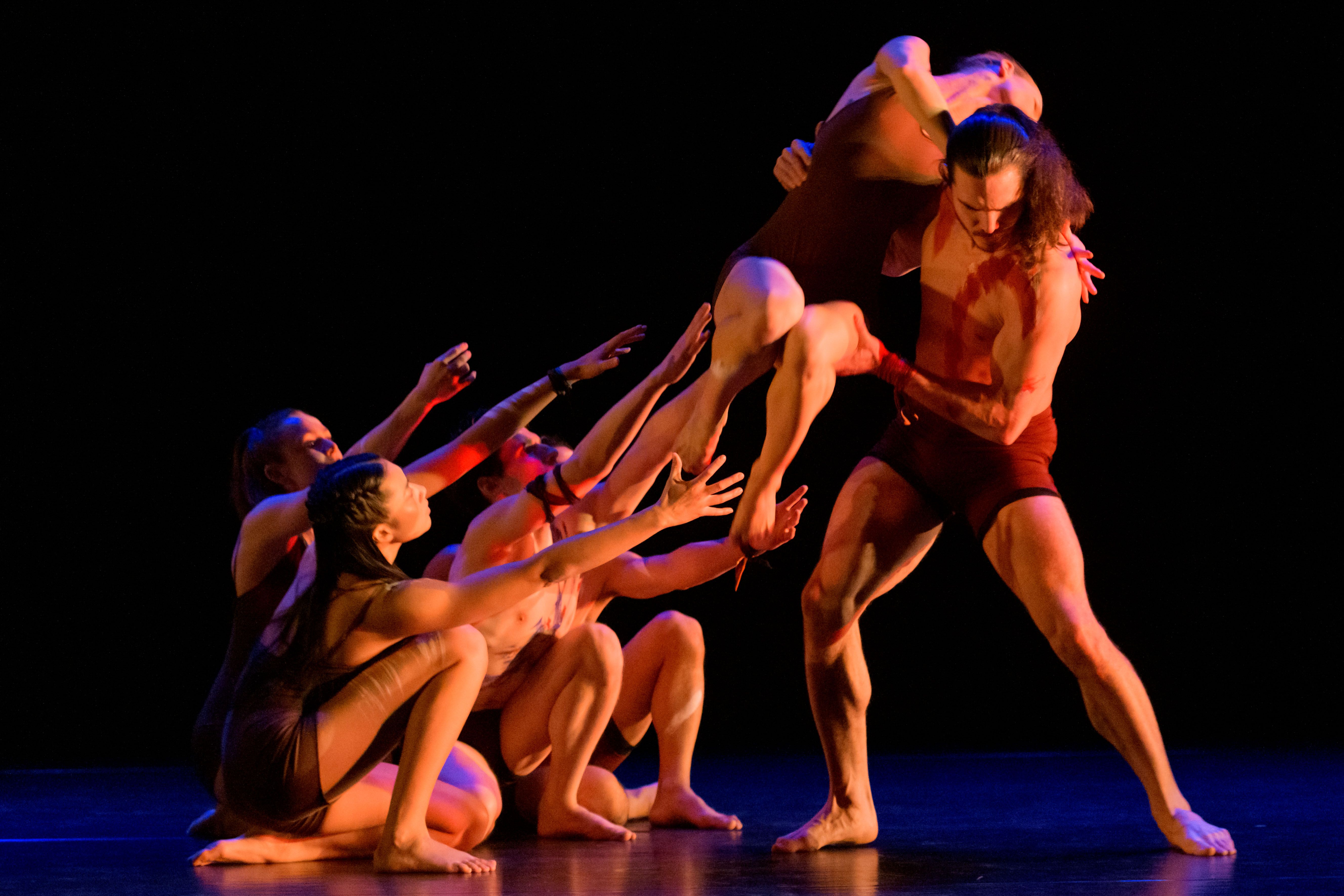
NATHALIE BONJOUR ON “DIGIDANCE” PRESENTATION OF CRYSTAL PITE’S BODY AND SOUL, AN EXCLUSIVE CANADIAN FILM PREMIERE, PERFORMED BY LEGENDARY PARIS OPERA BALLET – STREAMING ONLINE FEBRUARY 17-23, 2021…A REVIEWER INTERVIEWS PEOPLE IN THE ARTS

Tickets & information on Body and Soul and Digidance at harbourfrontcentre.com

JAMES STRECKER: Please tell us what you want the public to know about the creation of Digidance. What is it, why did it need to happen, and how did it come to be?

NATHALIE BONJOUR: Digidance is a new joint initiative of Canadian dance presenters to deliver exceptional, full length Canadian and international dance content online to patrons across the country. Created in July 2020 as a response to the COVID-19 pandemic, Digidance consists of the following leading dance Presenters: DanceHouse (Vancouver), Harbourfront  Centre (Toronto), the National Arts Centre (Ottawa), and Danse Arboriform (Montreal).

JS: What kind of audience will this project interest? What new audience are you also seeking? Why to both questions?

NB: We seek to offer affordable programming at $15 per ticket to our existing, as well new, dance audiences. We hope that the ticket price will be conducive to developing a new audience that wouldn’t necessarily spend a lot on a dance ticket for an in-person show but will give this format a try. The other advantage of a digital offering is that it is accessible for audiences in geographically remote parts of the country. We will also partner with other presenters interested in specific programming for their own audiences—for instance, partnering with Springboard in Calgary to offer Body and Soul to their audiences. And finally, we also add some interviews and historical context for the pieces for a deeper appreciation.

JS: In what ways was/is this project easy to do and in what ways was/is it difficult to realize? How long did it take and why that long?

NB: We have been meeting informally on a weekly basis since last summer. We’re all presenters juggling various other offerings to our audiences, as well as other ways to support artists in our communities. We had to find a formula that we all could support and get behind. One of the silver linings of this pandemic is that we have worked to find new ways to collaborate. We are launching Digidance now but we started working together last year and tested the format with two other films, Dancing at Dusk (the Pina Bausch’s Rite of Spring with l’Ecole des Sables), and the Jack of All Trades livestream from Montreal.

JS: How are you planning to promote, market, and sell this project to the public?

NB: Through our e-newsletters, websites, and social media.

JS: Please give us a brief autobiography, some stuff about yourself, that is relevant to this project.

NB: I have worked as a presenter and producer of Canadian contemporary performing arts for 25 years.

JS: What exactly do you like about your role at Harbourfront Centre as Director of Performing Arts?

NB: I like to work in a multidisciplinary setting, and that we offer so much free and accessible excellent programming. I like the research that goes into programming; I like that we play a vital role in supporting artists in the creation and presentation of their work. And I love the shows—where the artists and audiences meet! There is nothing that beats the feeling of a theatre full of people being moved by a production that’s happening in front of them.

JS: Let’s talk about the state of the arts in today’s society, including the forms in which you work. What specifically gives you hope and what specifically do you find depressing?

NB: We are living in particularly challenging times for performing artists but the changes that we are witnessing in society give me hope for new forms of art and expression, and a more just society.

JS: What’s next for Digidance?

NB: We will have another presentation in March and another one in April—both important Canadian companies in the dance landscape. Details to be announced soon!


Posted in Uncategorized | Tagged , , , , | Leave a comment

FIVE POEMS ON THE DEATH OF REGAN RUSSELL James Strecker © 2020, James Strecker

I read the last of these now revised poems at the presentation of the Dr. Jean Rumney Award posthumously to Regan Russell on September 14, 2020 at the Hamilton/Burlington SPCA


REGAN BRINGS WATER TO THE PIGS

Regan brings water to the pigs.

For this deed of mercy, she is

killed – some say murdered – where

they, so gentle and tortured, die.


Her body is dragged in pieces to

the slaughterhouse she condemns.

This house of legal cruelty kills

ten thousand innocent pigs each day.


But behold, our government bows

down low to their butcher masters.

Our government makes laws to


protect their backers of blood-red

hands that drip needless suffering

and pain. Our government decrees

that we close our eyes, that we


become inhuman to such pain. They

believe a pig does not matter, no more

than women battered, children abused.


Look here, outside, a woman ate

flesh, she shook a fist at Regan’s

face, she spit on Regan’s skin. Is it


she who murdered my friend of

humane purpose, my friend who

knew all life sacred and the same?


Regan’s gentle hand said “No” to

this woman’s curse. Regan brought

easing water to these pigs in agony,

these pigs concealed from the world.


But if the death of pigs must

prevail, by a cowardly government’s

decree, let darkness now consume

these men who safeguard butchers


with their insane passion to slaughter.

They give murder a legal name

and would make us killers too.


But Regan would raise the bar of

your humanity, and speak kindness

for all, a new beginning. Regan


would see in pigs not dollars and

coins of commerce, but the soul

of life that you, without a soul,

would claim for yourself.


Yet, if destiny does not agree that

in time we see eye to eye, for once

have the guts to answer this question:


If you kill animals, and refuse to

hear their pain, why should you,

so inhuman, not also die like pigs?


THOSE BUTCHERS

Their mantra is free enterprise,

they have conquered a world once

ruined by all of us. We now sit in

carnage made for profit by only a few.


What need we to prove? Why shout

once again the evil that evil men do?

You would have us hear the wounded

pig’s cry and do nothing. But if such

heartless society kills to eat meat, it no

longer matters what they have to say.


Their scheme is this, that we ignore

these innocent pigs in days and nights

of pain you cannot, dare not, imagine

for yourself. But are you even worthy

of the pigs who have died, still die

and die, for your butchered dinner?


Tell the world we need no science to

prove a pig can feel. The pig squeals

in pain, the pig’s eye pleads for mercy

of you, so listen, dammit, and see.

Nothing else, no reason, needs be said.


And tell the world beware these men

like you: a willful blindness guides

their cruel hearts. Take care, these men

will make your silence your own

brutality – they will make your passive

silence your fate of meaningless doom.


A NEW MORNING

Outside a window, the sunlight

sounds of morning light. Dawn

caresses the awakening of a

piglet’s eyes. No need of a killing

religion here, for lives already holy.


Man is now not much of lasting

consequence, man destroys at will

and too long has been. When we

think, you and I, of humankind, only

devils and cowards come to mind.


But it sometimes comes to be,

when love is shared for animals,

that one human being is able to

trust, and even feel hope, in such

love from the heart of another.


Regan’s passion was her humility,

she knew a pig – or any animal –

her equal. The killer, by a bloodied

pig’s death defined, adds up to

nothing more than base brutality.


No, Regan did not commit suicide.

And you are diseased in spirit to say

it was so, a liar who invents a story

like this to fill the hollow of your


heart. Regan was killed because the

law, made by men, prefers murder

done so they can walk away, so none

can have their say. Let rage be my

echo when I speak of such a man.


ESSENCES

Regan held high a sign outside the

slaughterhouse, all life to defend: “If

you were in this truck, we would be

here for you too.” Yet, she knew too


well this paradox: the carnivore she

would save can hear loud cries of

suffering, and stand unmoved and

distant like a stone. Some even grin


wide to cause more pain. They

prove themselves masters of nothing.


How many dismissed as lunacy this

woman who dared to stand up for

the wondrous senses in all of life?


Some answered her drunk in loathing

that lives to idly kill. Some held their

knives, too eagerly, that hacked

sacred, sentient lives into dead


chunks of flesh.? Their greed called

the shots and made greedy dollars

from murder. Or was it for killing

alone they lived and drank their


victims’ blood? Who knows the mind

of one who drove a transport truck

that day? The law merely said he was

careless, the death unintended, inquiry


closed. This killer was so many men

like him, a curse to the beauty of life.

Why do they need conceal his name?


TO REGAN

We fused our watches to noon one day

and had a long due vegan lunch. I held no

hope for overrated man. Uh huh, you agreed.


You spoke, I nodded yes, I spoke,

you finished my sentences. We were

often, each one, amen to the other.


You said I had been so kind when you

were lost and down. I felt protected by

you when the fire burned us out of home.


Mention animals, we were both one

spirit and fueled alive. Our silences

trusted each other. Now I reach for the

phone to call you, now I put it down.


The system finally killed you, a monster

truck of thirsty, frantic pigs ran over your

compassion.  But, Regan, you are stronger,

dead, than any killer’s willful knife.


Your death leaves a wounded emptiness

behind, your death is too cold, too soon

before we are hopeless and old. But

look how many rush to stand with you.


The carnivore still licks his lips, inhales

perfumes of killing and pain. A goon

government would bid you eat more meat.


We already have meat, and the world is

polluted. We already have meat, and we

are dying from it. But your deeds, your


ideals, now flow through us like life’s

blood itself.  We are open to the giving

wisdom of your potent, loving heart.


You gave your body and your will to

the wounded and abused. You caressed

their breathing, in and out, and they

replied with gentle sounds of trust.


A wounded bird or pig or cat – or any

animal – was a dearest friend in need,

and you walked your own path to save


the helpless from the murdering species

we always will be. But these mere words

cannot embody your ineffable love.


Who willed this cruel, unspeakable

irony? You are killed, yet you have won

this round, where murdering men with


their killing toys will always be boys,

and courts cover up the kill. You are

martyred, yes, but your cause of mercy


is now spoken around the world – loud

with gentleness and turbulent with love,

a paradigm of human for all humans to


Your firm devotion to the living

must now be ours, deep as your spirit

and just as feisty, humble and strong.


Posted in Uncategorized | Tagged , , , | Leave a comment

FIVE POEMS FOR REGAN BY JAMES STRECKER presented on Sunday, August 23 at Niagara-on-the-Lake, in memory of his friend, Reagan Russell, for AT WAR FOR ANIMALS NIAGARA

I read my new cycle of poems dedicated to my dear friend of over forty years, Regan Russell, titled FIVE POEMS FOR REGAN, at Rally for Regan in Niagara-on-the-Lake on Sunday, August 23. The event was sponsored by AT WAR FOR ANIMALS NIAGARA.

Regan was killed by a truck full of inhumanly abused pigs at the Fearman’s Slaughterhouse in Burlington, two months ago, as Regan protested Premier Ford’s AG-GAG law which, like other of his machinations, has been branded dictatorial, undemocratic, and inhumane.

Some have called the deed murder. Regan was bringing water to these pigs and the driver saw she was there. Shouldn’t an inquiry be necessary, even in Ford’s misogynistic Ontario?

FIVE POEMS FOR REGAN by James Strecker     © 2020, James Strecker


REGAN BRINGS WATER TO THE PIGS

Regan brings water to the pigs.

For this deed of mercy, she is

killed – some say murdered – where

they, so gentle and tortured, die.


Her body is dragged in pieces to

the slaughterhouse she condemns.

This house of legal cruelty kills

ten thousand innocent pigs each day.


But behold, our government bows

down low to their butcher masters.

Our government makes laws to


protect their backers of blood-red

hands that drip needless suffering

and pain. Our government decrees

that we close our eyes, that we


become inhuman to such pain.

They believe a pig does not matter,

no more than women battered, abused.


Look here, outside, a woman ate

flesh, she shook a fist at Regan’s

face, she spit on Regan’s skin. Is it


she who murdered my friend of

humane purpose, my friend who

knew all life sacred and the same?


Regan’s gentle hand said “No” to

this woman’s curse. Regan brought

easing water to these pigs in agony,

these pigs concealed from the world.


But if the death of pigs must

prevail, by a cowardly government’s

decree, let darkness now consume

these men who safeguard butchers


with their insane passion to slaughter.

They give murder a legal name

and would make us killers too.


But Regan would raise the bar of

your humanity, and speak kindness

for all, a new beginning, Regan


would see in pigs not dollars and

coins of commerce, but the soul

of life that you, without a soul,

would claim for yourself.


Yet, if destiny does not agree that

in time we see eye to eye, for once

have the guts to answer this question:


If you kill animals, and refuse to

hear their pain, why should you,

so inhuman, not also die like pigs?


A NEW MORNING

Outside a window, the sunlight

sounds of morning light. Dawn

caresses the awakening of a

piglet’s eyes. No need of a killing

religion here, for lives already holy.


Man is now not much of lasting

consequence, man destroys at will

and too long has been. When we

think, you and I, of humankind, only

devils and cowards come to mind.


But it sometimes comes to be,

when love is shared for animals,

that one human being is able to

trust, and even feel hope, in such

love from the heart of another.


Regan’s passion was her humility,

she knew a pig – or any animal –

her equal. The killer, by a bloodied

pig’s death defined, adds up to


nothing more than base brutality.

Let rage be my endless echo when

I speak in contempt of such a man.


THOSE BUTCHERS

Their mantra is free enterprise,

They have conquered a world

now ruined by all of us.

We sit in carnage made

for profit by only a few.


What need we prove?

Why shout once again

the evil that evil men do?

You would have us hear

the wounded pig’s cry

and do nothing. But if such

heartless society kills to eat

meat, it no longer matters

what they have to say.


Their scheme is this, that

we ignore these innocent

pigs in days and nights of pain

you cannot, dare not, imagine

for yourself. But are you

even worthy of the pigs

who have died, still die,

for your butchered dinner?


Tell the world we need no

science to prove a pig can feel.

The pig squeals in pain, the

pig’s eye pleads for mercy of

you, so listen, dammit, and see.

Nothing else needs be said.


And tell the world beware

these men like you: a willful

blindness guides their cruel

hearts. Take care, these men

will make your silence your

own brutality – they will make

your silence your own doom.


ESSENCES

Devotion to the living was her essence.

It must now be ours and as strong.


Regan held high a sign outside the

slaughterhouse, all life to defend: “If

you were in this truck, we would be

here for you too.” Yet, she knew too


well this paradox: the carnivore she

would save can hear loud cries of

suffering, and stand unmoved and

distant like a stone. Some even grin


wide to cause more pain. They

prove themselves masters of nothing.


How many dismissed as lunacy this

woman who dared to stand up for

the wondrous senses in all of life?


Some answered her drunk in loathing

that lives to idly kill. How many held

knives, too eagerly, that hacked sacred,

sentient lives into dead chunks of


flesh.? Their greed called the shots

and made greedy dollars from murder.

Or was it for killing alone they lived

and drank their victims’ blood?


Who knows the mind of one who drove a

transport truck that day? The law merely

said he was careless, the death unintended,

inquiry closed. This killer was so many men

like him, why do they need conceal his name?


TO REGAN

We fused our watches and had a

long due lunch. I held no hope for

overrated man. Uh huh, you said.


You spoke, I nodded yes, I spoke,

you finished my sentences. We were

often, each one, amen to the other.


You said I had been so kind when you

were lost and down. I felt protected by

you when the fire burned us out of home.


Mention animals, we were both one

spirit and fueled alive. Our silences

trusted each other. Now I reach for the

phone to call you, now I put it down.


The system finally killed you, a monster

truck of thirsty, frantic pigs ran over your

compassion.  But, Regan, you are stronger,

dead, than any killer’s willful knife.


Your death leaves a wounded emptiness

behind, your death is too cold, too soon

before we are hopeless and old. But

look how many rush to stand with you.


The carnivore still licks his lips, inhales

perfumes of killing and pain. A goon

government would bid you eat more meat.


We already have meat, and the world is

polluted. We already have meat, and we are

dying from it. But your life, your ideals,

now flow like life’s blood itself to our hearts.


Who willed this cruel, unspeakable

irony? You are killed, yet you have won

this round, where murdering men with

their killing toys will always be boys,


and courts cover up the kill. You are

martyred, yes, but your cause of mercy

is now spoken around the world – loud

with gentleness and raging like a storm.


.

Posted in Uncategorized | Tagged , , , , , | Leave a comment

REGAN RUSSELL: SHE BROUGHT WATER TO THE PIGS – WHY WAS SHE KILLED?

ATTENTION: IF YOU WANT TO SHARE MY ARTICLE
ON THE KILLING OF REGAN RUSSELL

A number of people have had difficulty in trying to share my blog article on Regan Russell below (it’s still posted at James Strecker Reviews the Arts on the Internet).
I’ve here done a cut and paste to help you to share this tribute to a special human being whom we all miss and with whose humane values we must all work to dominate the killers among us, whatever their cowardice and power.

REGAN RUSSELL: SHE BROUGHT WATER TO THE PIGS – WHY WAS SHE KILLED?
by James Strecker

Preface: My good friend Regan Russell and I used to do public presentations. Regan would discuss issues related to animals and I would read my poems on animal rights. We were planning to do more. Regan was killed on June 19 and I wrote the following article the next day. I would like to write a few poems as well, but I just can’t right now.
………………………………………………………………………
We’re lucky how, from time to time, we hear human decency spoken from the heart of an inspiring individual. We’re doubly fortunate when this merciful nobility of character we hear becomes fuel for a challenging journey of spiritual maturity in ourselves. We now echo another’s decency in our own deeds, we bring potent kindness to the world – we can finally, clearly, demonstrate we matter.

Regan Russell, who was killed by a truck stuffed with terrified pigs outside Fearman’s slaughterhouse in Burlington a few weeks ago, knew well that her compassionate beliefs and her challenging vision were a guidebook for how we might live more humanely in this world. She truly embodied her ideals and couldn’t help but make an ethical mark on us. She is dead, but her values live even more fervently than before.

Regan embodied her concern for animals, including humans, and often carried a sign outside Fearman’s which read “If you were in this truck, we would be here for you too.” At the same time, she – and we – had to acknowledge the paradox that too many in our carnivorous culture she would save were enthusiastically sadistic and deliberately indifferent to the suffering of others.

While Regan showed respect for all lives, including the lives of her critics, many dismissed as lunacy the words and actions of this outspoken woman who dared to stand up for the value of life. They answered her compassion with a hatred – yes, hatred – that animal rights activists know too well. Some made patronizing and sexist digs at her. Some, often male, spit at her, and threatened violence.

We live, after all, in a collapsing – and insecure – macho culture of smug and willful stupidity, a violent culture that holds knives too eagerly in hacking sacred sentient lives into dead chunks of flesh, a culture in which capitalistic greed calls the shots and makes profit from suffering and murder. We cannot escape this same culture where men and women also spout platitudes about accepting the world as it is, play at being decent folks, and imagine themselves spiritual or some other virtue du jour.

Regan, however, was challenging the rest of us to justify our actual presence in this world, to explore our values if indeed we had any that were really our own, and to discard our unthinking acceptance of murder done in our name. She was asking us to find out why so many tend to be cruel, why we allow the utterly horrid conditions of slaughterhouses to remain, why we glorify eating the corpses of those who lived and now, after unbelievably painful lives, are dead on our behalf. She was asking us to prove we are even worthy of those who die for our dinners.

Regan was also asking why we tolerate the Ford government’s newly-passed Bill 156, with the suffering of living beings on farms and in slaughterhouses kept suspiciously secret and free of unbiased investigation. She was asking why Ford would make it illegal for animal advocates to have access to abused animals. She might also have inquired why, in Ford’s Ontario, widely-criticized misogynistic policies prevail.

Regan no doubt knew too well that it’s impossible to influence such a government with humanitarian arguments to protect beaten women and abused children, let alone with photos of the desperation in the eyes of brutally tortured pigs who were bred for death.
I first met Regan Russell over four decades ago at an anti-fur demonstration in Gore Park, and we soon became friends. We often paired up as guest speakers on animals and ethics at universities. I would do a reading from my book of animal rights poetry and Regan would explain the “circles of concern” that reflected societal development from slavery to women’s rights to the rights of animals.

Regan always challenged her audience to raise the bar in being human. She certainly challenged my students at Sheridan College, and won them with her impeccable logic, her irresistible dedication, and, no doubt, her model’s good looks.

If you say you are a worth anything as a human being, she stated, you must bring your humanity to all living beings and respect the intrinsic worth in them that you claim for yourself. Your ethical values must be genuinely altruistic, you must not harm any living being, you must stop the cruelties you now passively support.

Regan vigorously advocated compassion with a unique passion that was distinctly her own. She was momentum incarnate, a compelling dynamo who gave all she had on behalf of animals. She put her kindness on the line and stood her ground with it. Something inside us sang with meaning and purpose when Regan was around. Our self-centred values could now do good for all lives.

It’s hard to explain why one feels a bond with another human being. I once helped Regan survive a rough time in her life and, years later, she and her partner Mark Powell helped us though the aftermath of our house fire, so the gratitude felt on both sides was palpable. But also, I felt connected to something essential to being alive when we talked.

I will never forget the instinctive caring, the enthusiasm, the humility, the need to understand, that I could sense in Regan’s voice as she spoke of animals. I will never forget the sharing of something very intimate and ineffable that is usually kept close to one’s heart. I felt equally open with Regan these times when we discussed our love for animals and, as a result, two friends each felt a grateful deep love for the other.

It sometimes comes to be, through a shared love for animals, that one human being is able to trust and even feel hope through the decency of another. I’m so glad that my friend Regan felt trust and strength many times with those who loved her deeply and shared her compassion.

I’m so glad that Regan’s will to kindness grew even stronger before she, this woman who valued other lives above her own, was run down in the cruelest of ironies by a truck at Fearman’s slaughterhouse. It’s a place of death where 10,000 pigs are slaughtered indifferently each day.

Regan was there with Toronto Pig Save to show pigs, crammed into the truck, their first act of mercy. She was there to give a few pigs a brief drink of water, before they were soon methodically slaughtered and cut into pieces.

…………………………………………………………………………
James Strecker of Hamilton is a writer, poet, human development consultant, and author or editor of thirty books. His latest book is “Who Is Not an Animal? Poems on Animal Lives and Rights 1984 -2018

(c) James Strecker

Posted in Uncategorized | Leave a comment

REGAN RUSSELL, IN MEMORY: SHE BROUGHT WATER TO THE PIGS – WHY WAS SHE KILLED?

Preface: My good friend Regan Russell and I used to do public presentations. Regan would discuss issues related to animals and I would read my poems on animal rights. We were planning to do more. Regan was killed on June 19 and I wrote the following article the next day. I would like to write a few poems as well, but I just can’t right now.
………………………………………………………………………………………………………………………………

We’re lucky how, from time to time, we hear human decency spoken from the heart of an inspiring individual. We’re doubly fortunate when this merciful nobility of character we hear becomes fuel for a challenging journey of spiritual maturity in ourselves. We now echo another’s decency in our own deeds, we bring potent kindness to the world – we can finally, clearly, demonstrate we matter.

Regan Russell, who was killed by a truck stuffed with terrified pigs outside Fearman’s slaughterhouse in Burlington a few weeks ago, knew well that her compassionate beliefs and her challenging vision were a guidebook for how we might live more humanely in this world. She truly embodied her ideals and couldn’t help but make an ethical mark on us. She is dead, but her values live even more fervently than before.

Regan embodied her concern for animals, including humans, and often carried a sign outside Fearman’s which read “If you were in this truck, we would be here for you too.” At the same time, she – and we – had to acknowledge the paradox that too many in our carnivorous culture she would save were enthusiastically sadistic and deliberately indifferent to the suffering of others.

While Regan showed respect for all lives, including the lives of her critics, many dismissed as lunacy the words and actions of this outspoken woman who dared to stand up for the value of life. They answered her compassion with a hatred – yes, hatred – that animal rights activists know too well. Some made patronizing and sexist digs at her. Some, often male, spit at her, and threatened violence.

We live, after all, in a collapsing – and insecure – macho culture of smug and willful stupidity, a violent culture that holds knives too eagerly in hacking sacred sentient lives into dead chunks of flesh, a culture in which capitalistic greed calls the shots and makes profit from suffering and murder. We cannot escape this same culture where men and women also spout platitudes about accepting the world as it is, play at being decent folks, and imagine themselves spiritual or some other virtue du jour.

Regan, however, was challenging the rest of us to justify our actual presence in this world, to explore our values if indeed we had any that were really our own, and to discard our unthinking acceptance of murder done in our name. She was asking us to find out why so many tend to be cruel, why we allow the utterly horrid conditions of slaughterhouses to remain, why we glorify eating the corpses of those who lived and now, after unbelievably painful lives, are dead on our behalf. She was asking us to prove we are even worthy of those who die for our dinners.

Regan was also asking why we tolerate the Ford government’s newly-passed Bill 156, with the suffering of living beings on farms and in slaughterhouses kept suspiciously secret and free of unbiased investigation. She was asking why Ford would make it illegal for animal advocates to have access to abused animals. She might also have inquired why, in Ford’s Ontario, widely-criticized misogynistic policies prevail.

Regan no doubt knew too well that it’s impossible to influence such a government with humanitarian arguments to protect beaten women and abused children, let alone with photos of the desperation in the eyes of brutally tortured pigs who were bred for death.

I first met Regan Russell over four decades ago at an anti-fur demonstration in Gore Park, and we soon became friends. We often paired up as guest speakers on animals and ethics at universities. I would do a reading from my book of animal rights poetry and Regan would explain the “circles of concern” that reflected societal development from slavery to women’s rights to the rights of animals.

Regan always challenged her audience to raise the bar in being human. She certainly challenged my students at Sheridan College, and won them with her impeccable logic, her irresistible dedication, and, no doubt, her model’s good looks.

If you say you are a worth anything as a human being, she stated, you must bring your humanity to all living beings and respect the intrinsic worth in them that you claim for yourself. Your ethical values must be genuinely altruistic, you must not harm any living being, you must stop the cruelties you now passively support.

Regan vigorously advocated compassion with a unique passion that was distinctly her own. She was momentum incarnate, a compelling dynamo who gave all she had on behalf of animals. She put her kindness on the line and stood her ground with it. Something inside us sang with meaning and purpose when Regan was around. Our self-centred values could now do good for all lives.

It’s hard to explain why one feels a bond with another human being. I once helped Regan survive a rough time in her life and, years later, she and her partner Mark Powell helped us though the aftermath of our house fire, so the gratitude felt on both sides was palpable. But also, I felt connected to something essential to being alive when we talked.

I will never forget the instinctive caring, the enthusiasm, the humility, the need to understand, that I could sense in Regan’s voice as she spoke of animals. I will never forget the sharing of something very intimate and ineffable that is usually kept close to one’s heart. I felt equally open with Regan these times when we discussed our love for animals and, as a result, two friends each felt a grateful deep love for the other.

It sometimes comes to be, through a shared love for animals, that one human being is able to trust and even feel hope through the decency of another. I’m so glad that my friend Regan felt trust and strength many times with those who loved her deeply and shared her compassion.

I’m so glad that Regan’s will to kindness grew even stronger before she, this woman who valued other lives above her own, was run down in the cruelest of ironies by a truck at Fearman’s slaughterhouse. It’s a place of death where 10,000 pigs are slaughtered indifferently each day.

Regan was there with Toronto Pig Save to show pigs, crammed into the truck, their first act of mercy. She was there to give a few pigs a brief drink of water, before they were soon methodically slaughtered and cut into pieces.

………………………………………………………………………………………………………………………………

James Strecker of Hamilton is a writer, poet, human development consultant, and author or editor of thirty books. His latest book is “Who Is Not an Animal? Poems on Animal Lives and Rights 1984 -2018


Posted in Uncategorized | Tagged , , | Leave a comment

MELANIE: ROCK SINGER/SONGWRITER, WITH LATEST SINGLE “LOVE SUCKS” AT 200K PLAYS, EXPLAINS “THE SONG IS AN ODE TO LOVING OURSELVES FIRST AND SAYS THAT LOVE DOESN’T SUCK WHEN YOU DO. LOVE IS AMAZING IF YOU CAN LOVE YOU FIRST…A REVIEWER INTERVIEWS PEOPLE IN THE ARTS

JAMES STRECKER: Please tell us about one or more projects that you have been working on or have recently completed. Why exactly do they matter to you and why should they matter to me

MELANIE: The last project /single I released which is almost at 200K plays is a song called ‘Love Sucks’ which I released on Valentine’s day. It was talking about how as kids we’re programmed to think romantic love means finding your prince charming, but no one teaches us the importance of finding love in ourselves first. The song is an ode to loving ourselves first and says that love doesn’t suck when you do. Love is amazing if you can love YOU FIRST. Happily ever after needs to live inside of you and you need to be your own love story. This single was important to me because my message as an artist is to help people remove their own masks, and things they are hiding behind, whether that be in love or in life in general. I want people to fight the ‘norm.’ so this loud rock song is fighting for people to fight for themselves. I want people to get their voices back. Through my photos, write ups and songs, I want people to regain their voices and their confidence. I want my fans to know they have a friend in me. That I understand and I TRULY GET IT.

JS: How did doing these projects change you as a person and as a creator?

M: All of my projects take everything out of me. I write from my heart and I write from a place where I want people to know that I’m going through the same things as them. I don’t have it all figured out and know that none of us do but we’re all doing the best we can. All my projects/songs are creative but relatable. I touch on topics that can be gripping and quite emotional, but I do it in a way people don’t need to feel alone. M? is in everyone and we are all together and trying to find ourselves. My projects change me as they change the people around me.

JS: What might others not understand or appreciate about the work you produce or do?

M: Sometimes people don’t understand the work I do. Rock music has been very misunderstood the last few years to 10 years in Canada and especially in Toronto. A lot of people aren’t leaning towards this genre of music. Also, my imagery tends to be on the provocative side of things because I like to shock people sometimes to get my point across. But I’ve stayed consistent with my messages and maintained relationships with my growing fan base, and people haven’t given up on me, despite all the changes I’ve made and time to myself I’ve taken. I’m finally making a small dent and I won’t give up on my message and purpose for the people who DO believe and have ridden with me.

JS: What are the most important parts of yourself that you put into your work?

M: I always speak MY truth. How I feel, who I am, what I’ve been through personally so that people who are reading, listening and coming and tuning into me for the first time know it’s a safe space with me.

JS: What are your biggest challenges as a creative person?

M: Being in ROCK music, being a FEMALE in rock music. Being an independent artist and going up against massive labels and distribution these days.

JS: Imagine that you are meeting two or three people, living or dead, whom you admire because of their work in your form of artistic expression. What would you say to them and what would they say to you?

M: I would just say to Kurt Cobain “I’m so sorry you had to suffer the way you have and thank you for your music in the most authentic way I knew how.” The same for Amy Winehouse and Tracy Chapman and I would ask them what they have learned the most and what I need to know.

JS: Please describe at least one major turning point in your life that helped to make you who you are as a creative artist.
JS: What are the hardest things for an outsider to understand about your life as a person in the arts?

M: What is a big turning point is constantly getting turned down over and over again with no inspiration but yourself telling you to keep going. No one knows how truly ugly and grueling this is. There’s nothing pretty about it and I haven’t even gotten to the nice part yet. It’s constant and it’s ugly. It’s a constant no. No income. So, people really need to have a respect for artists who don’t give up!

JS: Please tell us what you haven’t attempted as yet that you would like to do in the arts? Why the delay so far?

M: I haven’t toured— the pandemic delayed it and I haven’t been signed and put enough music out yet! That is happening now!

JS: If you could re-live your life in the arts, how would you change it and why?

M: I would have started a lot younger and not been so scared of myself!

JS: Let’s talk about the state of the arts in today’s society, including the forms in which you work. What specifically gives you hope and what specifically do you find depressing?

M: TikTok makes me depressed and the fact there’s not a lot of “real” music being made. REAAAAL rock music with live instrumentation and stripped down powerhouse vocals. But what gives me hope is when the real music being made by some of the cool artists coming out of my very own city like Tobi and Allan Rayman gets recognized! Those guys are killing it and I hope to follow in their footsteps.

JS: What exactly do you like about the work you create and/or do?

M: All real instruments and amazing production! And when I go live, you’ll see!!!

JS: In your creative life thus far, what have been the most helpful comments you have heard about your work?

M: That I don’t need to hide behind gimmicks. I just need to sing

JS: Finally, what do you yourself find to be the most intriguing and/or surprising things about you?

M: That I’m so much more badass then I know and I can take over the world if I just do it!

Posted in Uncategorized | Tagged , | Leave a comment