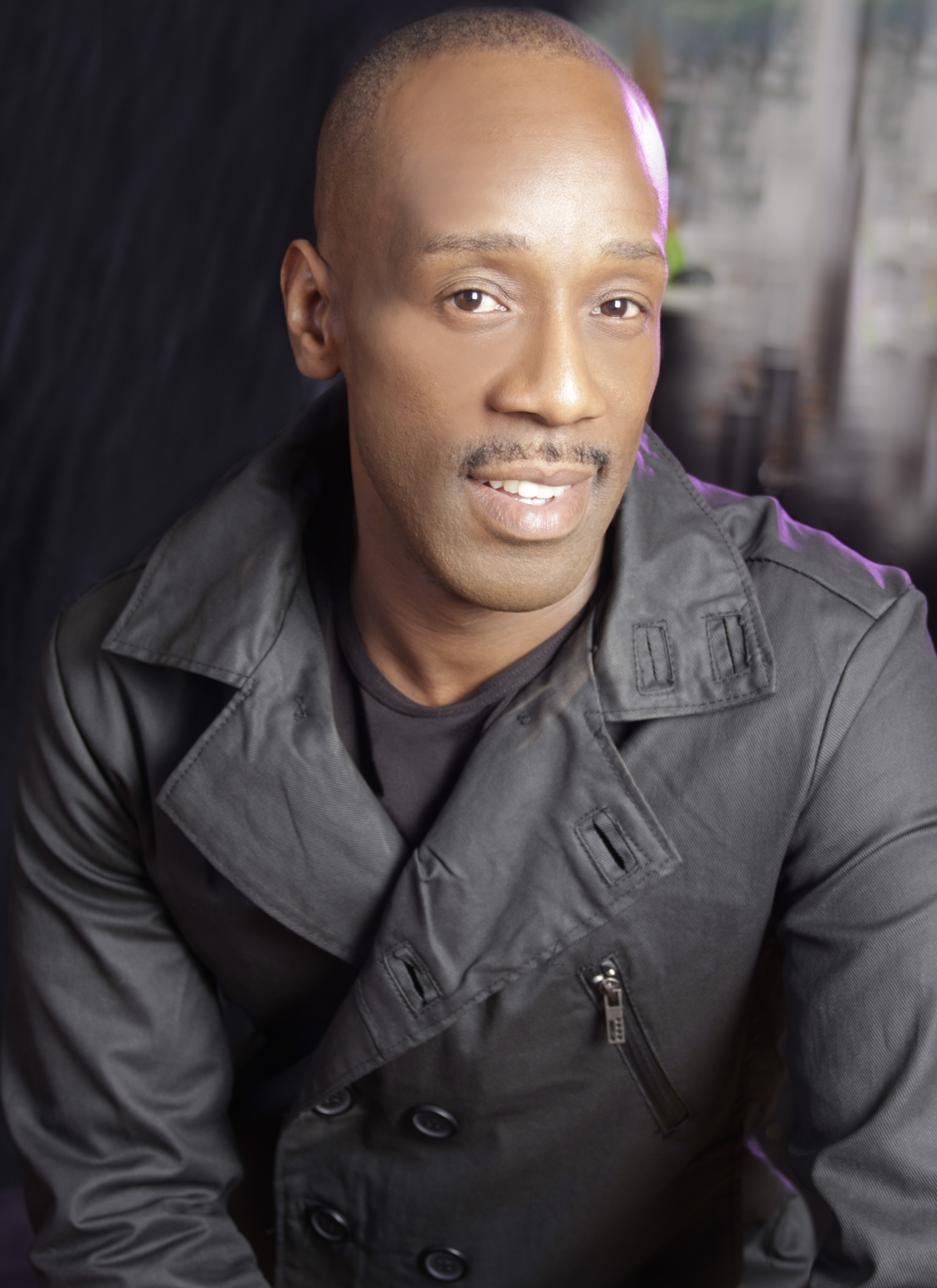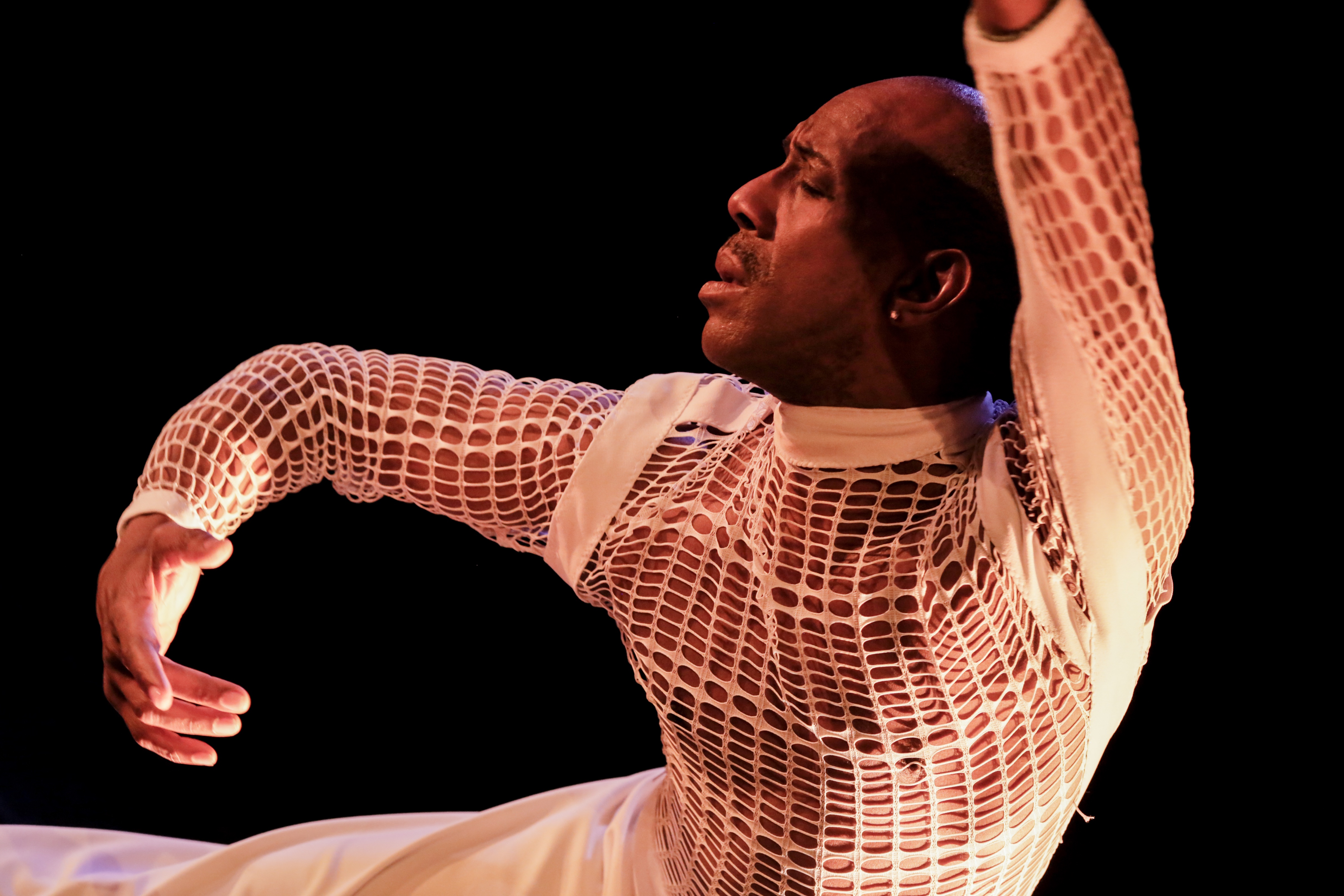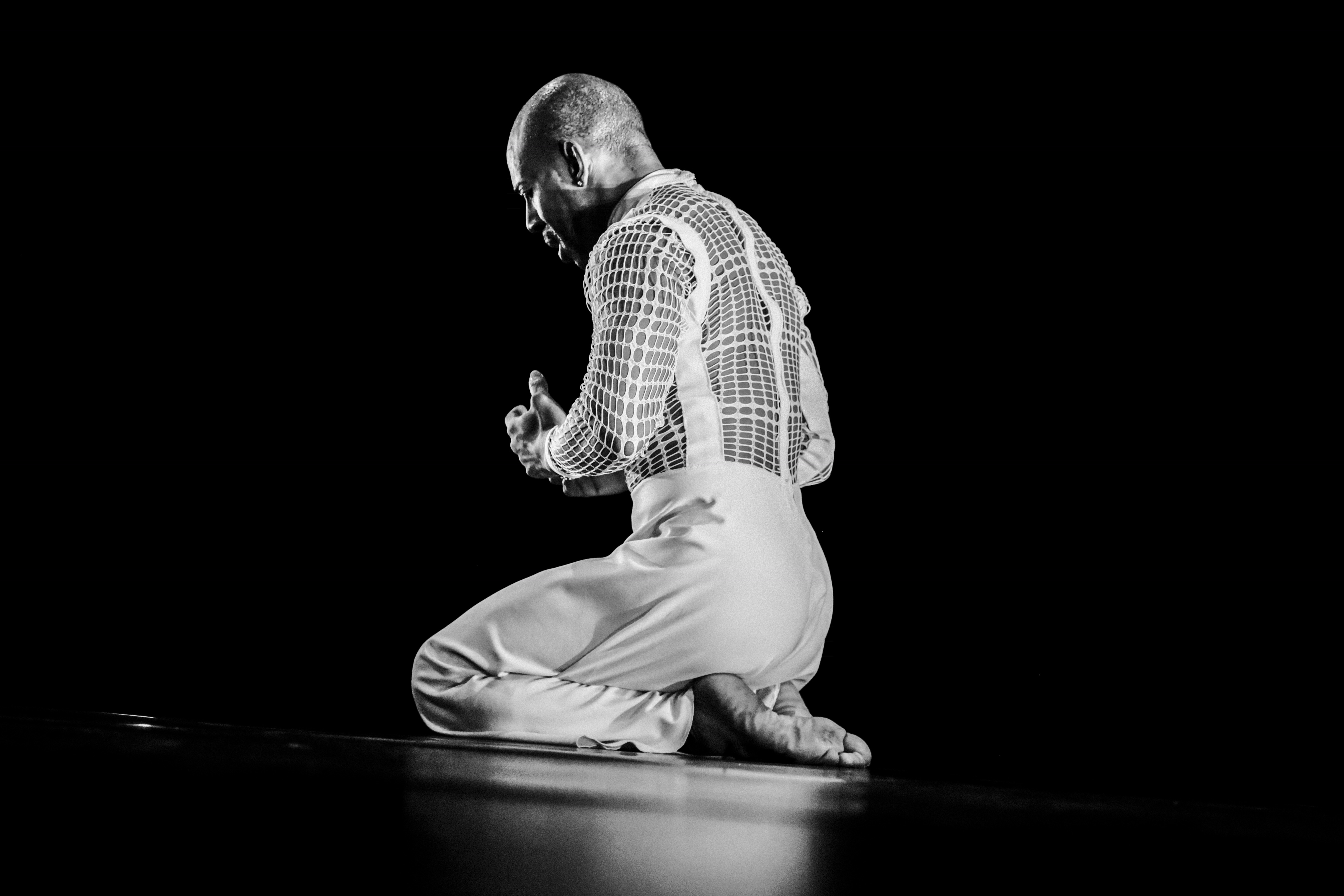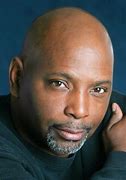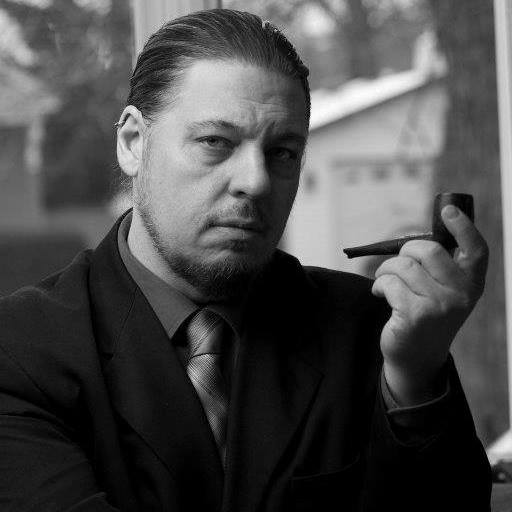
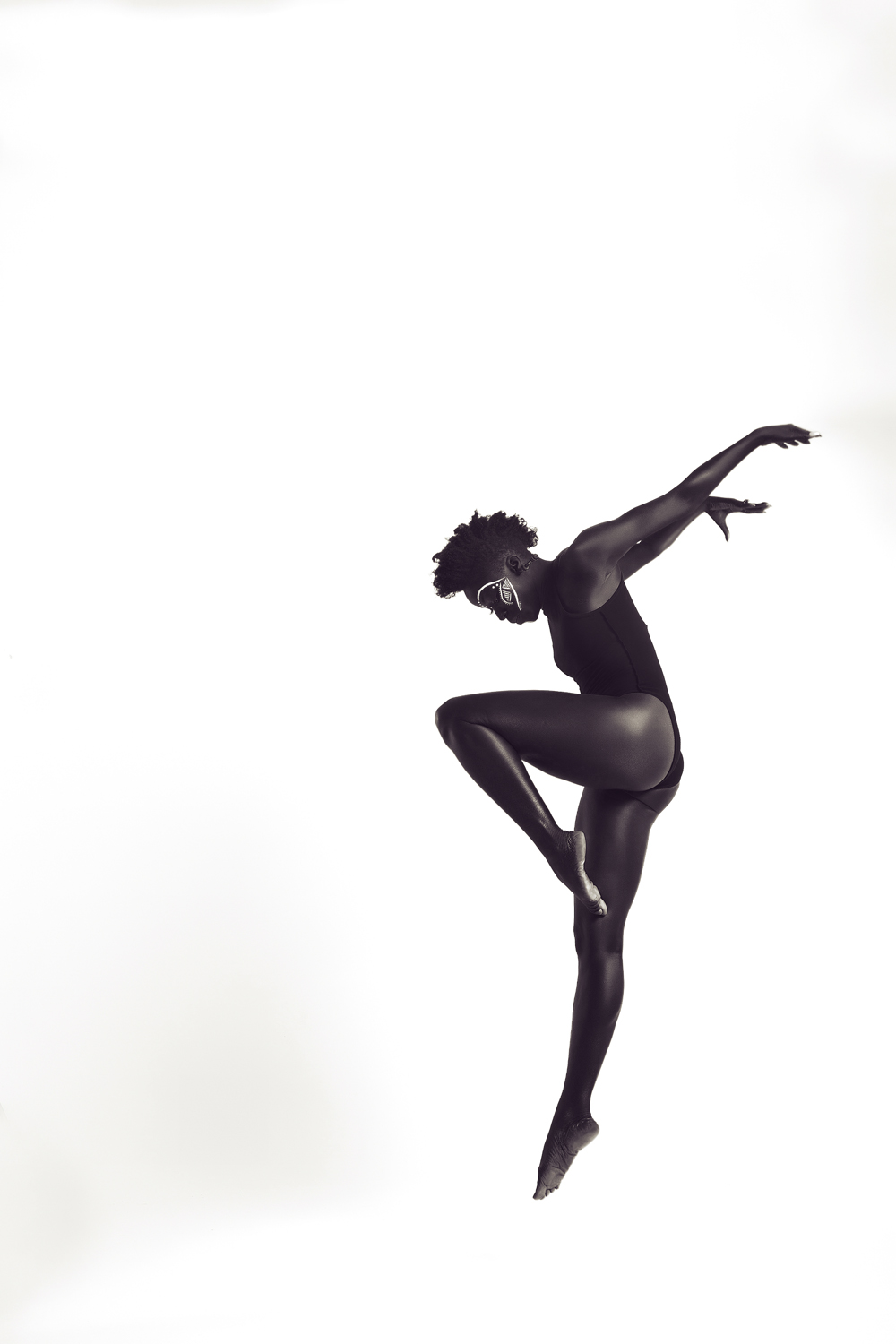
DANCER BAKARI IFASEGUN LINDSAY PERFORMS OCTOBER 2 AT FALL FOR DANCE NORTH: A REVIEWER INTERVIEWS PEOPLE IN THE ARTS

JAMES STRECKER: Please tell us about one or more projects that you have been working on or have recently completed. Why exactly do they matter to you and why should they matter to others?

BAKARI IFASEGUN LINDSAY: You might not be expecting this answer, but the most recent project I have been working on has been my health. I was diagnosed with a life altering illness which had both an emotional and physical impact on my life. I guess my creative mind is what saved me. It certainly put a reflective perspective on my life as an artist because for three and half months I was incapable of moving beyond going from my back to my side which took a great deal of effort and caused tremendous pain. For a moment I thought I would not be able to dance again.

JS: How did doing these projects change you as a person and as a creator?

BIL: Well, I guess I can say it has opened my heart to appreciating the smaller things in life. I look at a lot of sunrises and sunsets. I even notice the fact that I am walking because there was a time just to walk was a challenge.

JS: What might others not understand or appreciate about the work you produce or do?

BIL: I work from an Africanist movement aesthetic that has reached a level of development and sophistication that it sometimes seems inherent because of my ethnicity (African Descent). So, the years of research and development get overlooked as natural talent.

JS: What are the most important parts of yourself that you put into your work?

BIL: The most important parts of myself that is in all my work are my spirituality, style and identity. Sometimes the use of spiritual elements is deliberate, while other times they are understated and support the performance. Design and beauty are key elements in my creative process, while my experiences often influence the work.

JS: What are your biggest challenges as a creative person?

BIL: Time, there never seems to be enough time to thoroughly investigate work through the creative process. Which I guess is tied to resources, both physical and intellectual.

JS: Imagine that you are meeting two or three people, living or dead, whom you admire because of their work in your form of artistic expression. What would you say to them and what would they say to you?

BIL: I would love to meet the late Martha Graham, and Alvin Ailey.

‘If you were not able to dance or create dance, what would you have done?’ It’s difficult to know what they would probably say, but they have left phenomenal words of wisdom.

JS: Please describe at least one major turning point in your life that helped to make you who you are as a creative artist.

BIL: Working with Vincent Mantsoe, the physical and spiritual power he was able to evoke in my dancing influenced my notion of physical limits for movement.

JS: What are the hardest things for an outsider to understand about your life as a person in the arts?

BIL: I feel it’s the insanity to practice an art form that offers so little financial rewards, but yet we continue to practice.

JS: Please tell us what you haven’t attempted as yet that you would like to do in the arts? Why the delay so far?

BIL: I think I have attempted all that has interested me artistically; however, there are opportunities that I would like to have, such as creating work for bodies that exist outside of my physical aesthetic.

JS: If you could re-live your life in the arts, how would you change it and why?

BIL: No regrets, no changes. I have a full, notice I said have and not had, because I plan to have lots more of an artistic life.

JS: Let’s talk about the state of the arts in today’s society, including the forms in which you work. What specifically gives you hope and what specifically do you find depressing?

BIL: It’s depressing, but very little gives me hope in the ARTS. There seems to be less and less resources and respect for the form. The advent of technology has made the arts and artist dispensable.

JS: What exactly do you like about the work you create and/or do?

BIL: My work often transforms an audience and that excites me. I love that I tell physical stories that offers transcendence to the audience participant.

JS: In your creative life thus far, what have been the most helpful comments you have heard about your work?

BIL: That the work was developing a new Canadiana in dance.

JS: What exactly has the impact of the COVID pandemic been on your creative work and your life in the arts?

BIL: Hmmmm, because I was ill for most of the pandemic it has not really impacted me yet. I guess I am slowly getting back to it. I would say ask me in a year from now.

JS: How has the pandemic changed you as a person?

BIL: Yea, my illness coincided with the pandemic, so my focus has been on me and not so much of the pandemic. I guess as I begin to reintegrate into regular life, whatever that is, I will have to reflect. Ask me in a year or so.

JS: Finally, what do you yourself find to be the most intriguing and/or surprising things about you?

BIL: I am a very spontaneous person; however, I am a very methodical and analytical person which is kind of an oxymoron.

Posted in Uncategorized | Leave a comment

NOTES ON THE ARTS: TOP THEATRE, BOOKS, DVDS, PLUS AN ASININE REMARK

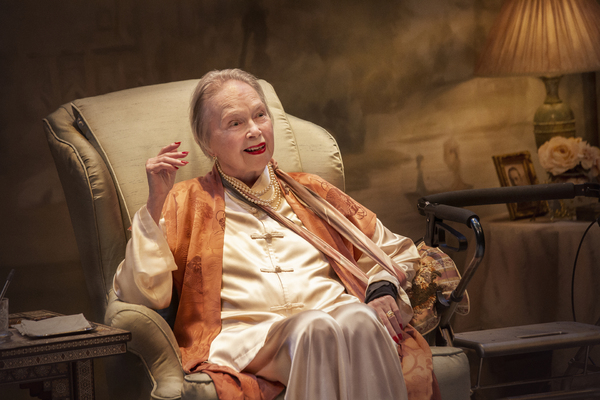
1.Three Tall Women by Edward Albee at the Stratford Festival: At one point, as I watched Martha Henry playing A, I listened to her speak Edward Albee’s meticulously crafted lines and let my eyes wander into the deep darkness above the last row of the Studio Theatre. Henry’s authoritative voice then became and took hold of that absolute realm of darkness where physical body becomes sound, a resonance of human existence that we see in the voices we hear. It was a breath-stopping moment for me since, if anywhere, live theatre, live dance and live music, say, tend to offer for me a deeper intimacy in spirit with my own species.

Theatre, like dance and music, is the language of now and essential to us. Now is most often taken away from us, but all the arts – not too many years ago I was transfixed by a Barbara Hepworth sculpture at London’s Tate Modern – keep us real in now. Watching Lucy Peacock working her own unique magic as B, I also remembered once taking my mother, who had never in her life been to a live play, to a performance of As You Like It at the Festival Theatre in which Ms Peacock did some essence of rustic charm as Rosalind and inspired affection, even love, love from all of us who watched. My mother’s response: “Can we come back and see it again?” Theatre had worked its unique magic again.

———————————————————————————————————-

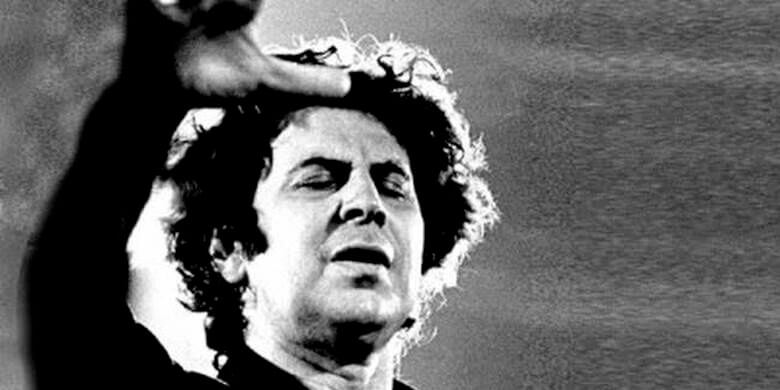
2.Mikis Theodorakis (1925-2021): Long ago in 1969, during the seven-year period of the junta that imprisoned the recently-deceased Mikis Theodorakis, we were walking through the Plaka area of Athens and got into a casual chat with, of all people, a Greek soldier. A month later, we saw the film Z which had just opened in London, and started to feel deeply uneasy because, as All Movie Guide says, “The Greek junta or Regime of the Colonels was a far-right military junta that ruled Greece from 1967 to 1974. On 21 April 1967, a group of colonels overthrew the caretaker government a month before scheduled elections which Georgios Papandreou’s Centre Union was favoured to win. The dictatorship was characterized by right-wing cultural policies, restrictions on civil liberties, and the imprisonment, torture, and exile of political opponents.” The producers had used the music of Theodorakis for the film.

Many years later, I went backstage at Madison Square Garden during intermission to ask Theodorakis for an interview when he brought his company to Toronto in a few days. We spoke in French and, soaking in sweat, he willingly agreed. Alas, singer Maria Farantouri fell ill and the interview, like the concert, was cancelled. Nevertheless, I had already got to attend several Theodorakis concerts and have played – often weekly – LPs (some bootleg), CDs, and even a DVD of his music for decades. Many of his recordings have been essential to my life since I discovered them years ago; they seem to push the blood in me through my veins and into the earth we all of us share.

Allow me to recommend some of these:

-Axion Esti that uses the poetry of Greek poet Odysseus Elytis, especially with distinctly-voiced and legendary Grigoris Bithikotsis singing the lead parts;

– Canto General that uses poems of Pablo Neruda (I prefer the live recordings from Piraeus and Athens in August, 1975, in which Petros Pandis and Maria Farantouri are featured;

-The Ballad of Mauthausen which uses  lyrics based on poems written by Greek poet Iakovos Kambanellis, a Mauthausen concentration camp survivor;

-L’Otage based on a play by Brendan Behan and featuring the well-known To Yolasto Pedi;

-18 Lianotragouda that uses poems by Greek Yannis Ritsos, especially the recording by singer George Dalaris whom I did indeed once get to interview with his wife in Toronto (he later sent me five of his LPs from Greece), all signed “very friendly”;

-the soundtrack to the film Z, the soundtrack to the film Zorba the Greek of course, and so many songs sprinkled throughout his recordings.

-Oh, yes, Peoples’ Music, The Struggles of the Greek People from Smithsonian Folkways contains a personal favorite: In the Cellar of the Taverna.

I remember two very useful books by Gail Holst and read long ago: Theodorakis Myth & Politics in and Modern Greek Music and Road to Rembetika: Music of a Greek sub-culture, songs of love, sorrow and hashish. Each provided, many years ago, much hard to find information. I also just remembered that I used to track down stores on the left bank or at the Bastille in Paris that sold hard to come by books of Theodorakis songs.

And this just popped into my memory: I once bought a copy of Axon Esti by Elytis at a Greek bookstore on Charing Cross in London, so I might understand the musical works, and when I stepped outside, Vanessa Redgrave walked by and I asked her to sign my book of Greek poetry, which she did.


3.If You Should Fail by Joe Moran: We live and we fail, repeatedly, over and over, endlessly. Why? Because we are alive, because we are human. Of course, you can’t tell this to the folks at McMaster University near my home, since they promise, blank at heart and thus blanketly, the achievement of excellence to all who enter here (thank you, Dante, for “Abandon all hope, ye who enter here” – but that was another kind of hell). Moran eschews the automatic, empty-souled, and out-of-touch, cowardly “positive thinking” of our time and prefers our looking into the mirror, where fourth-placed Olympians and Leonard da Vinci (yes, even the master reconsidered as a failure) also dwell. One feels a new beauty to one’s fucked-up life while reading Moran’s hard-hitting but insightful, provocative, and very kind book.

———————————————————————————————————-

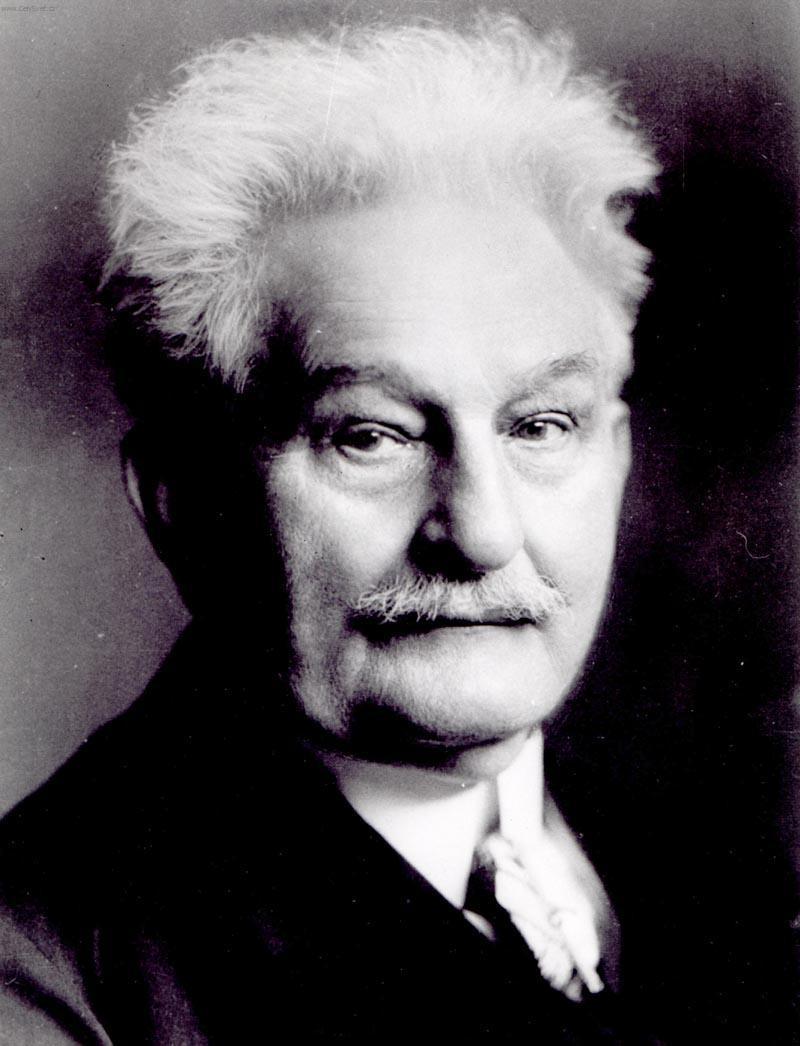
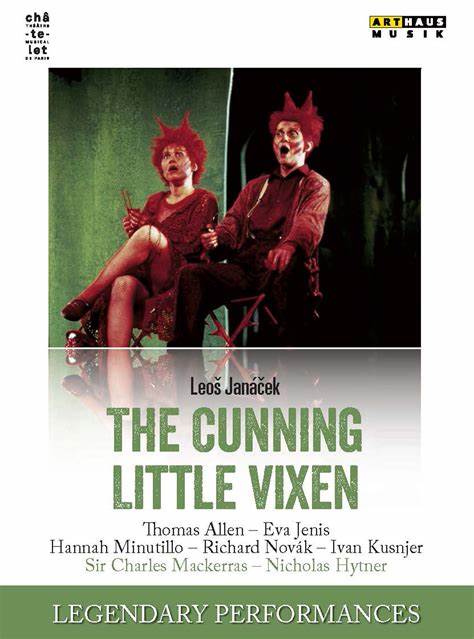
4.I’d been long wanting to re-experience Leos Janáček’s opera The Cunning Little Vixen, and some of his other operas too, since Opera Canada’s productions long ago at the O’Keefe Centre, Then recently, in the middle of Milan Kundera’s book of essays titled Encounter, I got the needed push when Kundera writes “Among Janáček’s operas are five masterworks…” Immediately I ordered two DVD recordings of “Vixen,” one conducted by Charles Mackerras, widely valued as a right-on specialist in the composer’s works and the other featuring the uniquely timbred and hauntingly heartfelt soprano Isabel Bayrakdarian. Kundera’s book is rich with meaty prose, charm and sophistication, mind and passion – it’s a book I eagerly returned to each day, and now it’s Janacek’s turn.

———————————————————————————————————

5.Casablanca: Script and Legend: Certainly, there are six essays included here by the likes of Roger Ebert and Umberto Eco, but it’s an especial pleasure to read the truly classic film’s script and mutter the lines under one’s breath as one’s memory and imagination work side by side, with the help of “25 classic stills” included in the book, to become Bogie, or Ilsa if you will, and bring the film to life again for the thousandth time.

———————————————————————————————————-


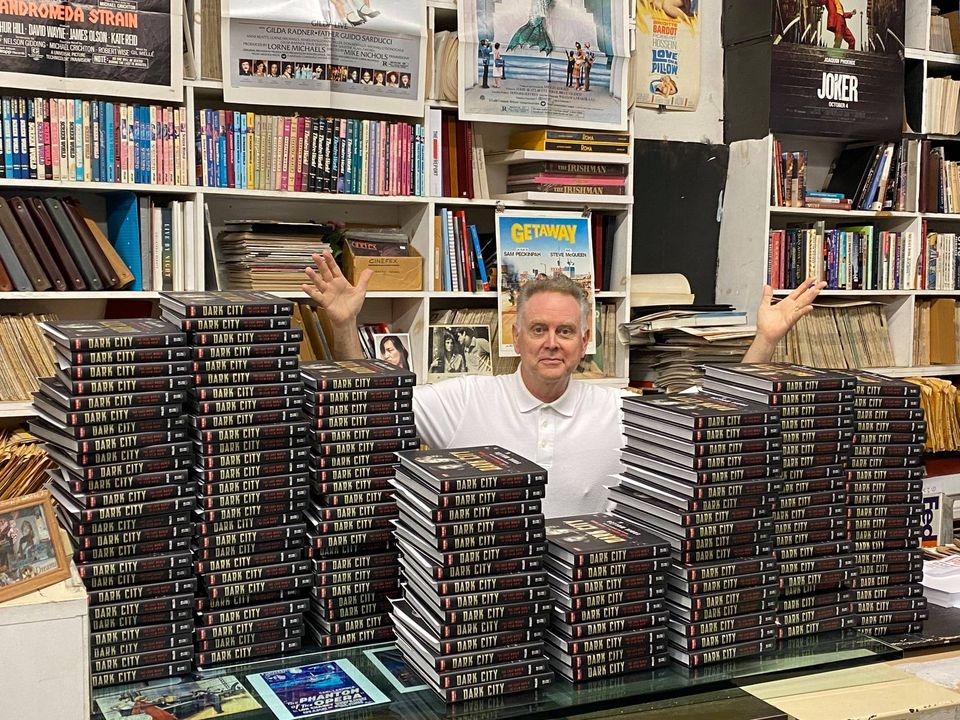
6.Dark City: The Lost World of Film Noir: Eddie Muller’s now “Revised and Expanded Edition” appears on glossy paper with sharply-focused photos throughout, so the book is both a visual and tactile delight that one holds respectfully but lovingly in one’s hands. Muller, who hosts TCM’s weekly Noir Alley, is encyclopedic in his references and here he lives and breathes the idiom with an infectious writing style that sends us all, unselfconsciously, back to the forties and fifties. This is underbelly of America stuff, stylishly done, and very irresistible, whether you own a trench coat or not.

———————————————————————————————————-

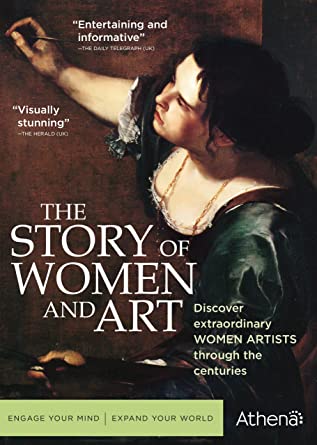
7.If you want to explore the hollow, pretentious, cowardly, self-centred, artificial, destructive, stifling, unsportsmanlike, clueless, selfish, jealous, self-limiting, phony, spiritually-vacant, culture-killing, and pathetic (etc,etc.etc.) dominance of patriarchy in our culture, two invigoratingly passionate and scholarly-based series from historian Amanda Vickery are essential viewing: “The Story of Women and Power” and “The Story of Women and Art,” both highly-recommended, will surprise you at every turn, inform you richly, make you angry in your heart, fill you with admiring respect, and inspire you in ways you didn’t yet know about.

In this vein, what better ending for this posting than an example of male limitation, here from critic Norman Lebrecht’s The Life and Death of Classical Music, in which he describes contralto Kathleen Ferrier as “devoid of beauty, brilliance, or sexual appeal.” Such unreflective and puerile posturing, one that points elsewhere and does not look into the mirror at oneself, does not reflect on Ms. Ferrier at all. But it does bring into question the life experience and the personal biases, of this critic, that determine the aesthetic limits of his views, whatever the subject at hand.


Posted in Uncategorized | Tagged , , , , , , , , , , , , | Leave a comment

WELCOME BACK, SHAW FESTIVAL, AND THANKS FOR THE DEVIL’S DISCIPLE

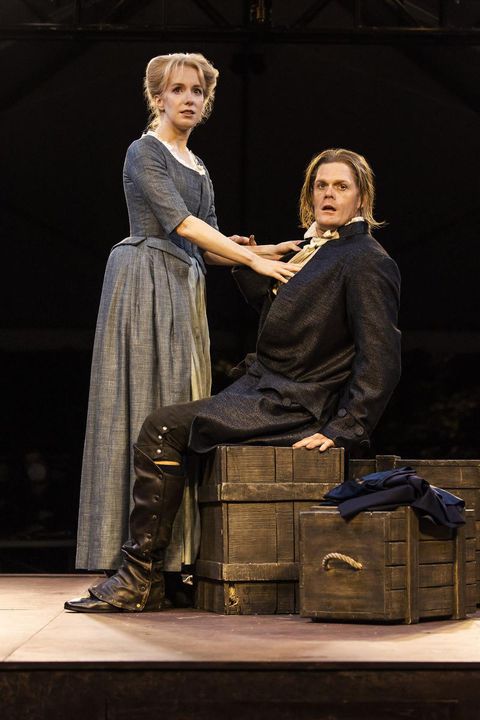
I think it was 1968 on one of my first trips to the Shaw Festival, situated at the time in the charmingly tiny Court House of Niagara-on-the Lake, when the announcement was made that Frances Hyland was too ill to perform that day. Ergo, much disappointment, and home we went. Leap ahead to COVID of 2020 and the cancellation of the whole Shaw season. Keep leaping and it’s now 2021 and my first live play in two years, Shaw’s The Devil’s Disciple. Am I thrilled to be here? Let me count the ways!

I’m having a coffee in the Festival Theatre’s courtyard when the Shaw company’s Patrick Galligan and Neil Barclay walk by. “Hark, do I see actors” says I. “We’re glad to be back, says Galligan. “I am so glad that you are back,” says I, this to an actor whose performance in Edward Bond’s The Sea a few years ago still haunts my memories of the Festival. If you’re in the mood, check my review of that production and my interview with playwright Edward Bond elsewhere on this blog.

The theatre is a tent in the Festival Theatre’s parking lot, one that holds an audience of 100, 50 observing the play from one side of the stage and 50 observing from the other. We are all of us separated according to the shifting sands of Ontario’s guidelines and actors must climb a few stairs to the stage. Fresh air is all around us and it’s weird indeed to see actors attired a la 200 years ago of revolutionary America making exits behind the bushes.

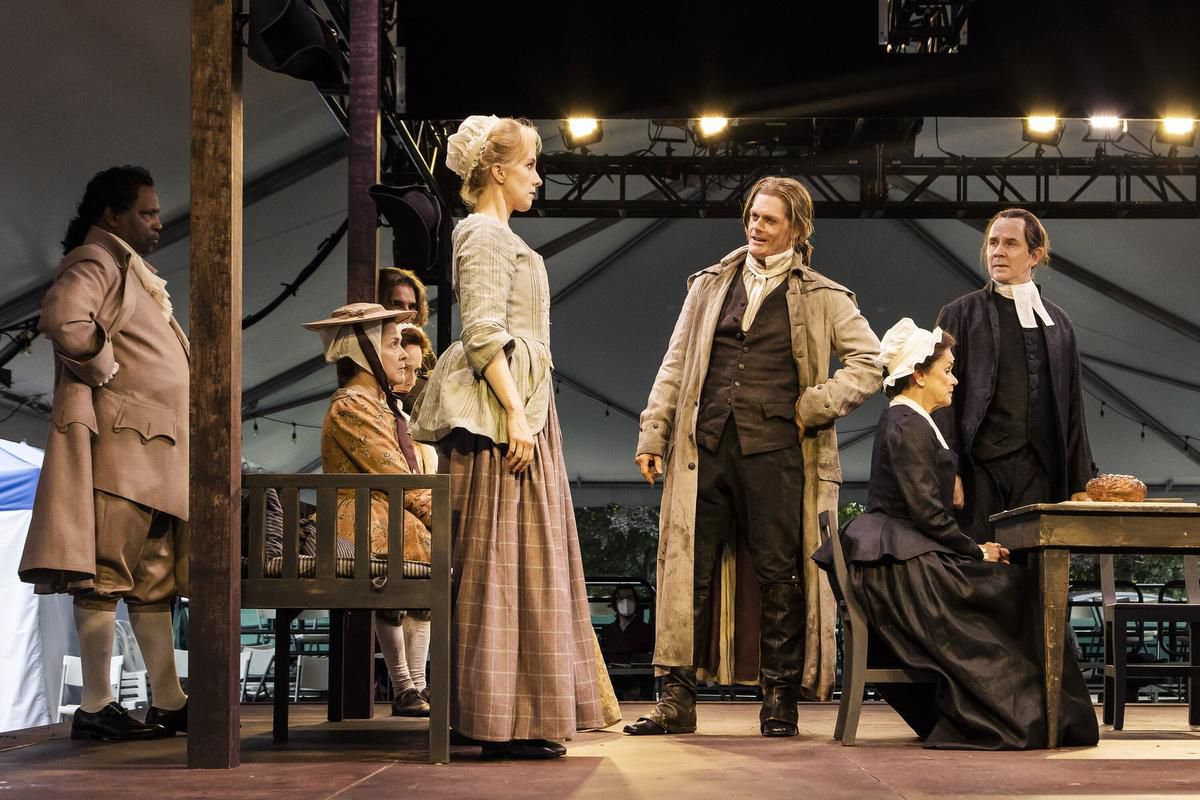
But it’s also a thrill, truly a thrill, to have imaginatively accomplished actors collaborating with my imagination to create a reality that soon becomes my own. A few words into the play and already I share the seething inner turmoil Chick Reid’s Ann Dudgeon. I’m soon suspicious of the self-assured decency of Graeme Somerville’s Reverend Anderson, soon intrigued by the lifetime-tested and hip wisdom of Tom McCamus’ General Burgoyne.

The key dramatic tension is a delightfully compelling one between Martin Happer’s Richard Dudgeon and Katherine Gauthier’s Judith Anderson, the former being both a dynamic everyday guy plus a ‘Devil’s Disciple’ quite at home in Shavian dialogue and the latter being the minister’s duty-bound wife plus a woman of awakened multitudinous urgings that gallop through her attempts at piety and composure. We are hooked as both Happer and Gauthier negotiate the inner shadings and ambiguities that propel them.

But this is the Shaw Festival and the whole cast, as expected, represents a company of sharply-honed and wide-ranging depth that makes for memorable productions. Small parts thus possess the inherent weight and substance of large parts, and over the years I’ve come to maintain that each character as portrayed according to the Festival’s high standards could easily be fleshed out into the focus of his or her own play. Of course, having an insightful and incisive director like Eda Holmes, ensures that a playwright’s text deftly and subtly melds our hearts and our minds.

Thus, to name a few, we have Kristopher Bowman’s Major Swindon, Jonathan Sousa’s Christy Dudgeon, and Shauna Thompson’s Essie as individuals who seem, each one, trapped in a box of some kind. Some, like Peter Millard as Uncle William or as Sergeant, seem to create a world around them, a world made of brushstrokes that no other hand can erase. When Sergeant orders his soldiers to march, his unforced but unbending authority takes command of all of us and we know, if even for a few seconds, a real life unfolding through art before our eyes. That’s one reason why the Shaw Festival is so important to me.

Posted in Uncategorized | Tagged , , , , | Leave a comment

TWO NEW POEMS ON THE KILLING OF REGAN RUSSELL – JUNE 19, 2021

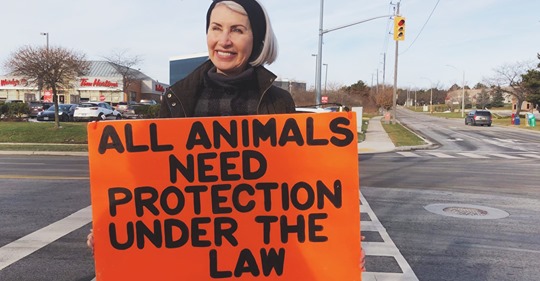
INTRODUCTION:   Last June 2020, when animal activist –  and friend for forty years – Regan Russell was killed or murdered at Fearman’s Slaughterhouse in Burlington, I wrote a cycle of five poems which was included in this blog later last summer. On the anniversary of Regan’s death on June 19, 2021, I wrote two new poems, the first – FOR REGAN, JUNE 19, ONE YEAR AFTER – being a poem of loving remembrance.  The second poem, in five small sections,  -REGAN DIED ONE YEAR AGO, THIS JUNE 19 – is one which Ingrid Newkirk of PETA told me was “moving and right and righteously angry.” The two poems follow below in that order.

FOR REGAN, JUNE 19, ONE YEAR AFTER

    for Mark, Pat, and Bill


     “..all I want to do is tell people to DO SOMETHING for her,

      carry her torch by DOING.” …Ingrid Newkirk

—————————————-

She was made of a love beyond any pride or vanity,

a giving love plain and secure.

I knew her in a deep unspoken place, where words

surrender their intentions to silence, and silence

speaks a bonding I have no words to describe.


We were lucky, both of us, to love cats, feline friends

who see beneath our camouflage of words, and still

come close. In time, they seem to say, “I am safe here,

I will not be wounded if I put down my guard, I need

no weapon for defense, beside you I am already safe.”


Regan and I loved to talk about our cats, endlessly.

We knew our cats trusted us, because they knew

us deep. And when they took us into their grasp,

where we could be silly, unguarded, and open

to their care – it was a place where they could have

their way with us – and we felt a freedom, for an

hour or two, from the burdens of the world on us.


We were free somehow as they dangled us like

puppets. We did not win, we did not lose, we felt

honoured to be valued and trusted by cats – we would

never let them down. But how brief is our trust in

most people of the world – once broken, our trust learns

only, looking behind itself, to get through the day


Yet sometimes another person gives us ease,

and we need no pretense as we too often do.

We know the other has unchangeable wounds and

is trying, still, to be kind. Such kindness lets us dare

to hope and, harder still, to be loved. When my trust,

unspoken, was valued high and given back to me,

I knew myself new again and glad to be alive.


So many of us exist, washed over by self-deceptions.

We need fantasies to call ourselves real. The

cruelties we see are too much for us. And why do

we, willful, cause pain, why do we kill, why are we

so often lowly and mean? Would the earth not be

better off without us? For every animal is equal to us.


And if you would talk religion or philosophy,

when you speak of humans and other animals, go

stand knee-deep in slaughterhouse blood, and learn,

in this hidden killing place, good reason to be kind.


But we are bound to this world. We cannot change

our species, we cannot, with honest hearts, abide the

rottenness we can be. Still, Regan’s existence was

a blessing to her world where we live – and to me.


I admired you, Regan. You took on the world

endlessly, that it might put away its cruelties and

knives. You lived unbending passion for animals,

you loved with a bowman’s accuracy and took good aim.

You made a large mark of your beautiful self on all of us.


Some days the suffering, you were witness to, might

drape your spirit in despair. But you were more a bold,

enduring light. It showed us, bright, the kindness that

our species can become, and must – must – forever be.


It is your heart that stays with us, even within the

unbearable pain of your dying. It is your heart that

now speaks for us. You were driven by compassion

and your love would not be silenced. Your love


for all the living would have its way. You looked

each cruelty in the eye and offered all your love,

though each animal’s suffering hurt you through

and through. To truly honour your spirit and cause,

we must vow, all of us, to have a heart like you.


Wherever your spirit may be woven into darkness,

now, I touch a cat and know that you are dancing free.

I touch a cat and know, once again, that I touch your


heart. In your heaven of cats and pigs, chickens, fish,

and cattle, know that we understand life’s value as you

understood. Your compassion guides us, from this day.


© 2021, James Strecker


REGAN DIED ONE YEAR AGO, THIS JUNE 19

1.

I read this account of her dying:

The driver sets up his kill. He sees

Regan clearly and studies all her

moves, left and right. Then he

accelerates, digs his foot into the floor.


His truck becomes a weapon of

misogyny, masculine and gutless. Her

body is now his trophy, crushed in

bloody pieces through the asphalt below.

His speed has broken the law, but police,

duty-bound to be here, stay away.


Has her body become a trophy for

killer and police somehow? The facts

are plain, this was murder. The killer

walks free to kill again, his charges

show contempt for us, for Regan’s

cause – careless driving, nothing more.


2.

We’ve become a people that looks the

other way. We vote what proves

deceiving con men to govern us, to

make their cowardly laws so we can

have no say. When they, uncaring

and blasé, destroy our lives and


land, we do not condemn the venom

of their presence, we do not stand

tall in dignity’s name. We feel no

shame for words we do not say.


And my poem becomes a beggar for words.

It fails to spit defiantly on these artisans

of death: to spit upon free their enterprise

and its fawning, doormat government.


Yet we, in feeble silence, despise you

“buddies” for profit at any cost, who gag

compassion for cattle and swine – and for


women beaten and raped, for men who

decay in their needy old age, for children

molested, abused, and forever terrified.

The powerless living are condemned by you.


3.

It is our government that idly wills more

suffering than any living flesh can endure. I

dare you give your own helplessness to the

malice of these men who make their laws


of ego, profit, and, for you, disdain. One

day, at their mercy, you will understand

their purpose for greed so well, that

you, in despair, will beg and plead to die.


But are you made of equal measure

that would wound and disembowel

them until, like pigs in slaughterhouse,

they scream endlessly? I warn that you

have these human enemies: they are

your fatal disease, they are your hell.


4.

At three in the morning, it is aloneness

we feel. We look into darkness and our

memories of the dead we loved so much

stand firm beside the living we look

upon and despise. We become


entrenched with impotent sadness, we

feel unworthy to smile, as we allow these

butchers and murderers their way.


But have you, like Regan, a word

that is tender in love for the tormented,

beautiful swine she gave her own life

to save? Have you, like Regan, seen

all life’s beauty and meaning spoken


soft in one pig’s eyes? Have you a well

grounded curse that will forever damn

the cowards who conceal her murderers?


5.

Regan might walk with justice among

us now, if Region of Halton upheld the

law. Still, Mr. Premier, do not assume we

shall look the other way. Your Bill-156


has deemed compassion a crime. I twice

wash my skin when you call us your

“friends” and shed your cynic’s tears.


Yes, Regan had more balls than any

man, like you, Mr. Premier. And when

she died to fight your hush-hush, cunning,

strategy, she dealt an open hand of


compassion, she exemplified humanity.

Without your façade of politics, without

the laws you have twisted into your own,

she wrote disgrace beside your name.


Regan stood, long-lasting and fearless,

for the standards of human worth you

are too empty to reveal with humane


heart. Regan was courage, integrity,

decency, she gave her deepest love

for all of life. Regan offered a boldly


merciful heart that beats for all the

living, not merely a trifling, greedy deceit

that creeps along too cowardly for shame.


Posted in Uncategorized | Tagged , , , , | Leave a comment

CHRISTOPHER DARTON: FILMMAKER, WORKING ON HIS NEW DRACULA FEATURE FILM, SAYS, “I REALLY FIRMLY BELIEVE THAT WHATEVER I DO MAKE WILL COME OUT WELL ENOUGH TO ATTRACT AN AUDIENCE OR AT LEAST INTEREST SOMEONE ENOUGH TO SAY, “HEY, I WONDER WHAT THIS GUY COULD DO WITH A LITTLE MORE MONEY?” …. WHAT’S HAPPENING IN MY CREATIVE LIFE? – JAMES STRECKER REVIEWS THE ARTS

.JAMES STRECKER: Please tell us what you want the public to know about your recent project you are actively working on. What is it, why is it, and how is it done?

CHRISTOPHER DARTON: Thanks James. Well, I’m working on my first feature length non-documentary film; after eight years of shooting documentary films and doing very well with it; making two feature length docs and a third unfinished one, on The Cameron House on Queen Street West in Toronto … as well as five short documentaries. It’s been a really good run. I’ve had films screened in festivals all over North America, in particular a number of Indigenous Film Festivals. Most recently two of my docs screened in the First Nations Film and Video Festival in Chicago and last weekend I won Best Editor and Best Director at the Hollywood North First Awards in Toronto. No complaints … documentaries have been very good to me. But also in there I’ve shot a couple of music videos, promo videos, you name it … most importantly though I produced a couple of short horror films that did well and the end goal has always been to produce or direct a feature length genre film. I love all forms of films but horror is where I first found a real love of film and the reason I attended Sheridan College for film in the 80’s. So here we are in 2021 and I’ve been working on this film since last November; it’s written, it’s about 95% cast and crewed, I’m scouting locations, FX are being designed, storyboards and shot listing is being worked on and musical compositions created. It’s a huge project for me and unlike my documentaries where everything hinged on me and the story because I acted as a one-man band, this new film is a team effort. But it’s a real challenge because for a film of this size it’s a small group and I’m handling all the producing chores. So on any given day I’m sourcing out prop weapons that we really can’t afford, hotel rooms, food services, locations, coordinating crew meetings on Zoom, our first script reading is in a week with the cast … you name it. To say there’s a lot of moving pieces is an        understatement. It’s overwhelming really. But I feel like I’m finally “doing it” after this over 35-year love affair/obsession with making a horror feature … so I’m not complaining. It’s all part of the process.

JS: Please tell us how you fund such a project. How can others help?

CD: So the film will be financed via crowdfunding and the goodwill of family and friends and of course if I have to reach into my own pocket to make it happen that’s what I’ll do. I’ve applied for a grant through the Canada Council for the Arts but that’s a really crap shoot. The grant coming through would be the equivalent of winning the lottery. I’ve structured the budget in three tiers: a low $12,000, medium $27,000 and a high $55,000 if the grant happens; but I’m not counting on that. So, we’re in the midst of year two of a pandemic and I’m running an Indiegogo campaign shucking and jiving for money throughout the month of June. Talk about uphill battles. So, no matter the outcome of my budgets it’s going to be tight making this film but I’m prepared. I’m extremely organized. My cast and crew are talented and dedicated and ultimately when we get backed into a corner instead of being able to throw money at it as a way out … we’ll get creative. Our Indiegogo campaign can be found under The Damnation of Dracula or by this link https://www.indiegogo.com/projects/thedamnation-of-dracula? utm_medium=email&utm_source=lifecycle&fbclid=IwAR1REXLiMZGp Ygnb3n21U4fVZ9NvXeBm84LyWH2NAOVfdKVI49jnQLY40WE#/

JS: What kind of audience will this project interest? What new audience are you also seeking? Why to both questions?

CD: Horror fans are probably the most passionate and dedicated film fans there are out there. I decided early on if I was going to take a year and a half of my life to work on something this big it had to be something I would want to see on screen myself. I didn’t want any easy ways out, so it’s not your typical micro budget project … it’s very ambitious. I think it will appeal to fans of horror, Canadian cinema fans because it’s very very Canadian in tone and finally I think that there’s always a built-in interest from Indigenous people when a film gets made that speaks to them, relates to them and portrays our people as real living breathing thinking entities. We gravitate to these projects because there’s so few of them. Jeff Barnaby made the fantastic Blood Quantum a couple of years ago and that’s certainly a positive model of what I was shooting for with the script … a smart, socially relevant Canadian Indigenous piece. As far as a new audience, well I think it will appeal to anyone that’s not a horror fan too because it’s astute and not over-the-top, so really anyone might appeal in the characters who are very real.

JS: In what ways is this project easy to do and in what ways is it difficult to realize? How long will it take and why that long?

CD: I’m not sure any of it is easy. Without the cash hose to wash away your problems you really need to burrow in and stay determined. Be tenacious. Filmmaking like this takes guts, it really does. I said to our director Sebastien Godin, “if this doesn’t kill all of us a little, we’ve problem done something wrong.” That said … I don’t want to sound morose … I’m thrilled and, really, I’m going at this with a very stoic philosophy, “the obstacle in the path; is the path.” What brings me great comfort is I’ve got friends working with me and we’re like family. I’m the catalyst but they’re a talented group of creators that I’ve helped bring together. So in that sense, we’re all in it together and we’ll make it happen together. The impetus for the whole project was Seb Godin asking me to do some work in his last film The Abominations of Frankenstein, a $3000 feature he shot in his hometown of North Bay. I knew Seb from Facebook and running into him at an occasional horror convention. He was a huge fan and out there making films, and even though he was about 21 when I first met him, I admired his perseverance. So, I had the idea that Seb is out there making film after film, I’m making documentaries but want to venture into a feature horror film … what if I produced his next film? The objective being we bring together his resources with mine, we up the budget some, bring in some better equipment, some of my crew and friends and just really shoot for something bigger and better. He agreed. We chatted and I left it to him what we would shoot … he pitched me Dracula. My heart sank. How do you do Dracula in a 2021 setting? Dracula is costumes, castles, horses and buggies and exotic locations. I asked Seb if he wrote, he said not really, more or less story concepts but not screenplays, so I decided to write it; which was a huge leap for me. I wrote screenplays for over 20 years but never really “made it” and I hadn’t written a feature in at least 11 years. So, I just really burrowed in, watched a ton of vampire films, read a lot of books on writing, reflected and decided to re-image a Dracula set today, here in Ontario and make it socially relevant without being pretentious and added in a healthy dose of me and what I know. I had just graduated University online getting my degree in Indigenous Studies so those teachings were fresh … so I just kept it real and grounded despite how fantastical the situation. It turned out to be the fastest screenplay I’ve ever written by far because I set definitive deadlines and goals. We’ve been in preproduction since January and will been shooting in November 2021.

JS: How are you planning to promote, market, and sell this project to the public?

CD: That’s the wild card … always. For me it’s always the Field of Dreams philosophy … build it and they will come. We’re really hoping on a distribution deal on this one. I think it’s going to be that good, despite the budget. I feel confident that we make this one for however much it ends up being and hopefully the next one is a $75,000 or a $100,000 film. That’s the goal. That’s always been the path for me since producing the horror shorts, that the progression would be a couple of shorts and then a low low budget feature and then hopefully something moderately budgeted. I really firmly believe that whatever I do make will come out well enough to attract an audience or at least interest someone enough to say, “hey I wonder what this guy could do with a little more money?”         .

JS: Please give us a brief autobiography, some stuff about yourself, that is relevant to this project.

CD: I’m a filmmaker and writer always. Since graduating last December from Laurentian University in Indigenous Studies I’ve gone on to work for the Métis Nation of Ontario as an educational officer. We do a lot of preserve the Michif language, perpetuate our history, culture and traditions with grade school, high school, college and university students. I’m just in the final stages of Illustrating a book written in Michif, English and French. It’s fantastic and I love it. On top of my Bachelor’s degree from Laurentian I studied Illustration for a year at Sheridan and then did three years in the media and film programs. I’ve had a magical approximately eight year run of shooting documentaries and everything else that crosses my lens. Stories that range from blues musicians like Gary Kendall and Danny Brooks to suicides going over Niagara Falls; Ornithologist, scientist, musician, philosopher Harold Axtell to Angie Sandow who was born was a congenital birth defect in her right arm and overcame that obstacle to play guitar in her own band and ride motorcycles. I’m that guy that when the first 10 or 15 people on the list say no to making a film someone mentions me and I do it. I’ve embraced that and kind of relish in it. It seems like being a hotshot never worked for me; the role of the underdog is much more conducive to a healthy creative life. With regards to this project, I have a couple of really fun award-winning horror shorts I’ve produced, I’ve watched horror films my entire life and at 55 I like to feel I’m finally ready to tackle something this big. All the chess pieces are in place. I just feel it’s time, not just for me but for the people I’ve surrounded myself with. My oldest son Tobe is shooting the film, it will be his first feature after some fine work on shorts and music videos in Toronto … so this is a golden opportunity for him as well. He’s a talent and it brings me a lot of pride to be working with him.
JS: Let’s talk about the state of the arts in today’s COVID society, including the forms in which you work. What specifically gives you hope and what specifically do you find depressing?

CD: It’s been a long haul. It’s sad because I see people struggling everyday between losing jobs and mental health; illness and the challenge of separation from family. Artists are resilient but the fact that many have had their livelihood swept out from under them, that makes it tough. For me personally, I was in University online for the first part of Covid and then was hired by the MNO, working from home. So, I was in training for this isolation stuff. I’ll be honest, I’m almost embarrassed to say it but I’ve thrived during this period. I love being at home and creating. I released two films last year and both have done wonderfully. I wrote the screenplay to the new film, started pre-production … it’s been good for me. The only issue I had was due to the lockdown’s and everything that goes with it, I had a new documentary derailed. It was a short, 30 – 45 minutes that I was ready to go on but put the brakes on because it was unsafe. I would have been shooting out in the streets a lot, around vulnerable people. It was unsafe for them, unsafe for me so it didn’t happen. It’s a shame because it would have been an important one but I get it, these things happen in life. I’m hopeful that we’re in the final chapter of this thing. Maybe we’re seeing the light at the end of the tunnel finally. I find it really disheartening though that like anything that happens on this scale, like a pandemic, you see the absolute best in society and the absolute worse. But I fear the worst outweighs the best. What we saw this time around is something we’ll live with the consequences of for a long time, there’s no easy fix to this division or righting this ship. When it comes to changing a culture it’s a monumental undertaking.

JS: What’s next in the coming few years of your creative life?

CD: I’ve got a couple of other docs in the waiting and if the horror film goes well, or even if it doesn’t, I’ve got a next feature idea that I’ll write and produce and maybe even direct. I work constantly, being busy is extremely healthy for me creatively. As well I’m going to write a book. That’s always been in the cards for me to do. So, as I get older and hauling the equipment all over gets tougher, I’m getting close to that moment. The book writing has been very patient waiting for me to be ready. I love making films but making films on a big scale like this current project brings a lot uncontrollable dynamics to the table … like money. It’s great to be able to “pull it off” like a magic trick but to do it time after time wears on you. The little docs I make or even the features … I was in control of every single aspect of those processes. That’s comforting to me knowing that if it’s good, it’s because I’ve made it so. My instincts and decisions were right. And if it’s no good … that’s on me too. No one else. It helps that I have ultimate support system in my wife Katherine. She loves that I do what I do and never waivers when I say … “hey, this Friday I might drive to Ottawa to interview David Wilcox for the new film, I’ll be back the next day.” Or when I hang up the phone as she walks in and I say … “I was just talking to a guy with only one leg that we need for an effect in the film.” That’s not normal in a relationship that your partner rolls with that kind of lunacy. But that’s us and it brings me great solace.

Posted in Uncategorized | Tagged | Leave a comment

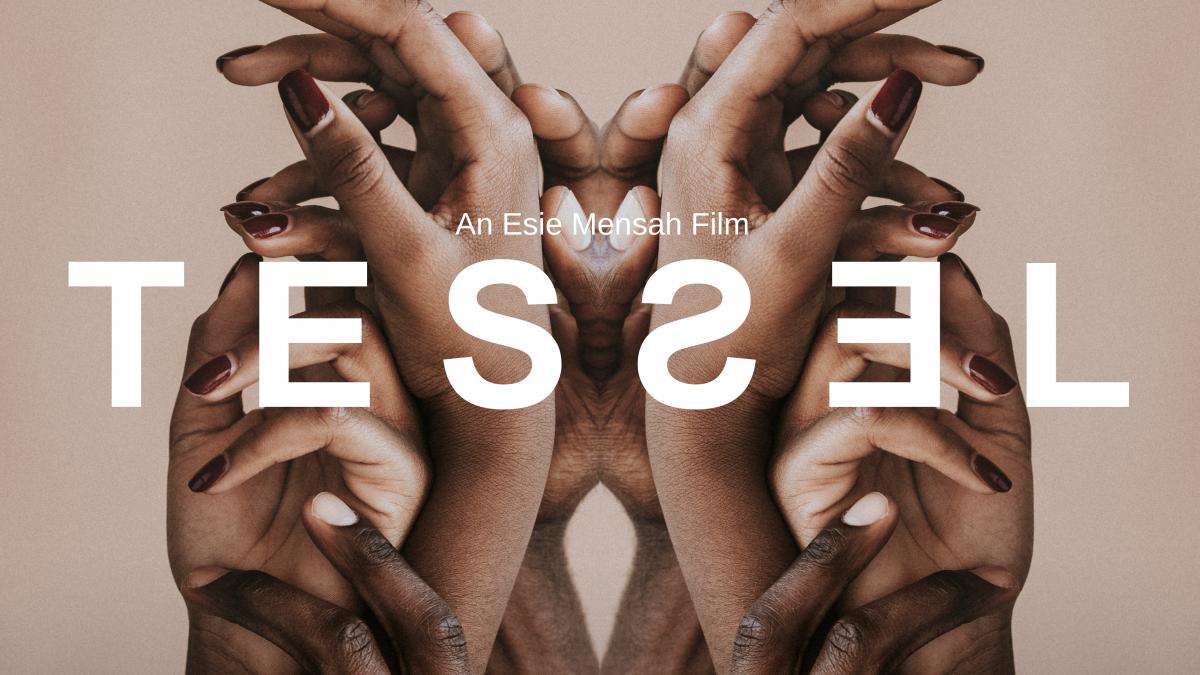
ESIE MENSAH – DORA-NOMINATED CHOREOGRAPHER, DANCE ARTIST, & DIRECTOR ON HER FILM TESSEL AND ITS WORLD PREMIERE ON JUNE 1…. A REVIEWER INTERVIEWS PEOPLE IN THE ARTS

asiko

asiko


Photo byMikka Gia

Photo by Felix Russell-Saw, Design by Tony Tran

JAMES STRECKER: Please tell us about one or more projects that you have been working on or have recently completed. Why exactly do they matter to you and why should they matter to others?

ESIE MENSAH: I am releasing my second film within the pandemic called TESSEL, which amplifies the voices and bodies of 14 Black dancemakers that come together in conversation of what change looks like today. Due to the pandemic, the myriad of deaths that occurred in North America and the micro and macro encounters with racism unveiled a truth that many have been struggling to deal with. They occur on an insidious level that breaks down the spirit like 1,000 paper cuts. As a Black woman, I’ve had my fair share of micro and macro aggressions throughout my life and career. However, after last year I knew I needed a space to talk, so when I got the call from Ilter Ibrahimof (Artistic Director of Fall for Dance North), I instantly knew I wanted to give space for conversation so I could amplify these voices and not just their bodies. I knew that in order to break the pattern we all needed space to lean into our vulnerability so our words can be heard and felt by the community.

JS: How did doing these projects change you as a person and as a creator?

EM: It reminded me how much I needed to believe in myself. This project was a tall order. I asked a lot of myself with this project from conception to facilitation, to writing and directing. I recognized only during the project the amount of work that was required of me. The amount of times I felt like I needed to come up for air because I was too deep under the water, became great life lessons. Learning to pace myself. Not drowning myself in work and taking care of myself. Listening deep to the voice within me to guide me through and I made my way to the other side. I am grateful. Now I get to enjoy riding the wave.

JS: What might others not understand or appreciate about the work you produce or do?

EM: The source of my ideas come as a powerful burst of energy. It feels very clear and concise. Then I spend the remaining time trying to understand why the idea came and how to manifest it. Why did this idea choose me? Why now? Why is this important? What do I need to learn from this journey? My creations serve me and my community and I learn just as much, if not more, from what I create.

JS: What are the most important parts of yourself that you put into your work?

EM: My Spirit. I bring all of myself into my art. I continue to challenge myself to invest more than just the steps or just an idea. I feel that is what makes my work so unique. I’m extremely intentional but I do love some happy accidents—the things you didn’t know would end up the way they did when you were working. The syncing of ideas in a beautiful cosmic way.

JS: What are your biggest challenges as a creative person?

EM: Doing the work! It’s tiring, it’s taxing but it’s also very rewarding! Moving through the ebb and flow of manifesting the idea can take a lot out of you. We don’t discuss enough how the work can affect the person but it can have a major impact on you personally and emotionally. Finding a balance to step away is necessary and important if you want to create good art.

JS: Imagine that you are meeting two or three people, living or dead, whom you admire because of their work in your form of artistic expression. What would you say to them and what would they say to you?

EM: Maya Angelou is someone I would love to sit down with. She has had such an extraordinary life and used her most traumatic events as her superpower. I would ask Dr. Angelou what she feels we need at this point in time to help us move forward in this ever-changing world. I feel she would take my hand and tell me that everything we need is inside of us. To look deep within and that the answers are all inside of us waiting to come out.

I would also love to speak with author Paulo Coelho about creating The Alchemist. That book felt like a download from God. A message to the people of Earth. I would want to ask him what the process was like creating the book and how it feels to create something with such impact on people’s lives. That book felt like it was created for every individual who reads it. A story of self-discovery, trust and, most of all, faith. I feel he would say that it’s important to maintain a connection to the soul of the world in order for it to receive what it needs to move forward. To not lose sight of what is meant for us.

JS: Please describe at least one major turning point in your life that helped to make you who you are as a creative artist.

EM: One major turning point in my life was not allowing my shade to dictate my future. I dealt with a lot of uncertainty and closed doors throughout my career that often made me feel pigeon holed. It restricted me but it didn’t stop me from finding new ways to see myself. That restriction was my breaking point. I said to myself I have to be so good they can’t deny me. I have to be so amazing, extraordinary, undeniable that my shade will never be an issue. My dark skin became my superpower and that empowered me to walk the path that I am on today.

JS: What are the hardest things for an outsider to understand about your life as a person in the arts?

EM: As a dancer, we are often placed on the bottom of the spectrum of society’s ideas of elite art. People often look down on dancers, whether they are aware of it or not. Helping the general public to see the opportunity and impact that dance can bring is integral to its growth. Dance was one of the first forms of expression amongst racialized communities. We danced to celebrate, mourn, and everything in between. Movement has always been a part of us and reminding people how important it is can truly give those around a different point of view and experience.

JS: Please tell us what you haven’t attempted yet that you would like to do in the arts? Why the delay so far?

EM: It would be amazing to create a feature film or Broadway show. I have many more ideas but I’ll keep those ones close to me.

JS: If you could relive your life in the arts, how would you change it and why?

EM: I think if I could relive a moment then I think I would go back at different times in my career and cherish the memories more. There is not much to take home after a dance performance (the video will never do it justice). The chance to hold onto these experiences a little longer would be amazing.

JS: Let’s talk about the state of the arts in today’s society, including the forms in which you work. What specifically gives you hope and what specifically do you find depressing?

EM: What gives me hope is that people are waking up to the beauty of dance. I always tend to find that within the arts industry, dance tends to be on the lower end of the spectrum. I feel we don’t receive the same level of notoriety as visual arts or theatre. I’ve been feeling this increase on the horizon and I think it’s very promising to witness. For genres outside of ballet, I do feel the public is getting accustomed to discerning different types of dance as an elite artform.

What I find depressing is that funding for dance is still rather low. Dancers are still being paid a couple hundred (even if that) to perform for shows, music videos, and productions. Anything to help support an artist’s vision. This is highly problematic and has been for a long time. However, as a producer myself I do understand that you are stuck between a rock and a hard place because of funding issues. Do you fulfill the project with less funding or do you cancel? It’s important to fulfill your vision and I think many artists can relate to this struggle. I’ve never been certain of the solution as I understand both sides but I hope there is some common ground that we can get to.

JS: What exactly do you like about the work you create and/or do?

EM: I enjoy seeing my ideas transform into reality. It’s exciting to feel an idea download into my spirit and then see how it begins to manifest. It’s quite humbling to go through the growing process and pains of an idea. It is an uncomfortable growth period but I find it yields the best results.

JS: In your creative life thus far, what have been the most helpful comments you have heard about your work?

EM: I’ve heard from audiences how visceral and impactful my life has been. That has changed peoples’ point of view of the world that surrounds them. I never knew that creating art could truly have that impact. Once I understood that impact, I recognized I had a greater responsibility to myself and my community. So, I am grateful people respond to my art as they do.

JS: Finally, what do you yourself find to be the most intriguing and/or surprising things about you?

EM: I love me some cartoons! Pixar movies are my best friends.


Posted in Uncategorized | Leave a comment

HIGHLY RECOMMENDED TIMES FIVE: A SERIES CALLED PUNK INCLUDING THE SLITS, A CENTENNIAL EDITION OF LADY IN SATIN, A MEDIEVAL FLORENTINE GARDEN WITH THE SOLLAZZO ENSEMBLE, VIOLINIST VILDE FRANG, AND MATHEO ROMERO’S ROMERICO FLORIDO

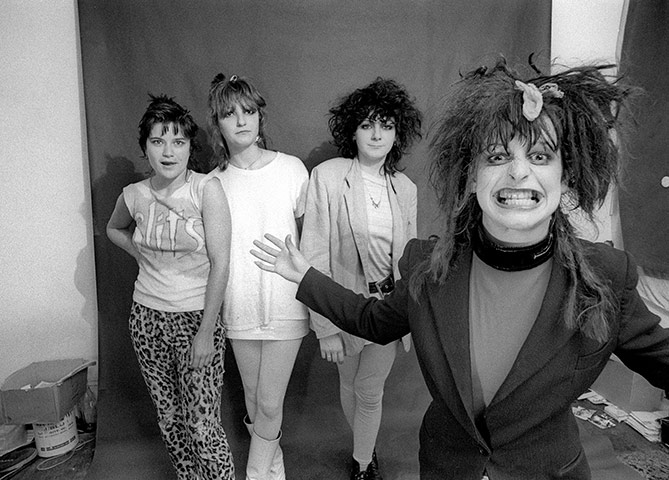
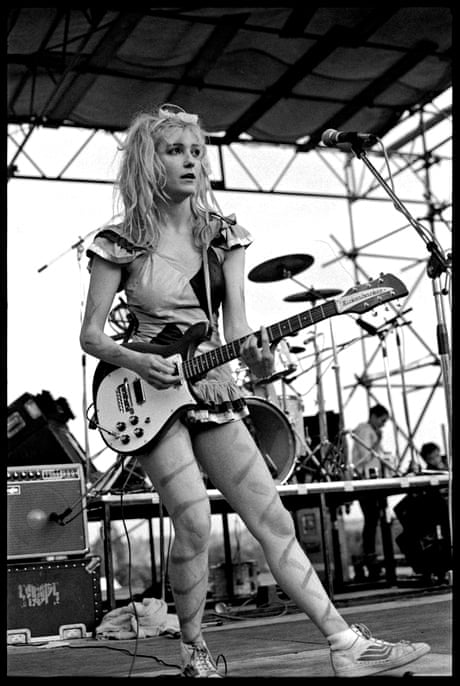
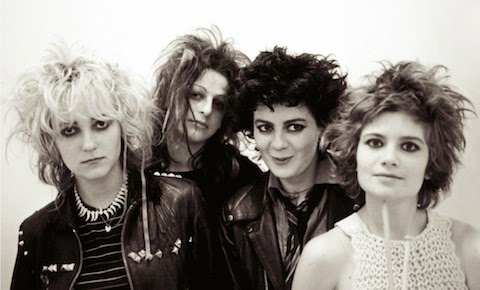
.1.I’ve watched many times the four-part film series “PUNK,” with its executive producer being Iggy Pop, partly because it’s a necessary release nowadays to vicariously bring down the shitty system in which we find we live by listening to the brilliantly anarchic Never mind The Bollocks, Here’s The Sex Pistols. Also, because I admire and feel bluntly refreshed by the assertively driven The Clash on their eponymous first CD. Didn’t I play “I’m So Bored with the U. S. A.” over and over during the Trump years? And, by the way, I have a photo of me with an American cop in front of Washington’s Capitol in 1947, so it’s a well-grounded connection in many ways over the years – plus an American-born editorial-reading mother, and I also diligently followed McCarthy. Vietnam, Watergate, et. al. and had many arrogant relatives in the USA to tolerate from childhood onwards. My fave discovery in the PUNK series was The Slits whose CDs The Slits: In the Beginning and The Slits: Cut have been repeated listens, especially for their -as drummer Paloma/Palmolive puts it – “beautiful, wonderful noise.” It’s an inspiring story how the Slits pushed their way through a misogynistic world onto musical stages and I very much enjoyed reading guitarist Viv Albertine’s memoir “Clothes, Clothes, Clothes. Music, Music, Music. Boys, Boys, Boy: A Memoir ” which was “Selected by the New York Times as one of the 50 Best Memoirs of the Past 50 Years.” I found it to be a splendidly candid, touching, and unerringly insightful read on many counts.

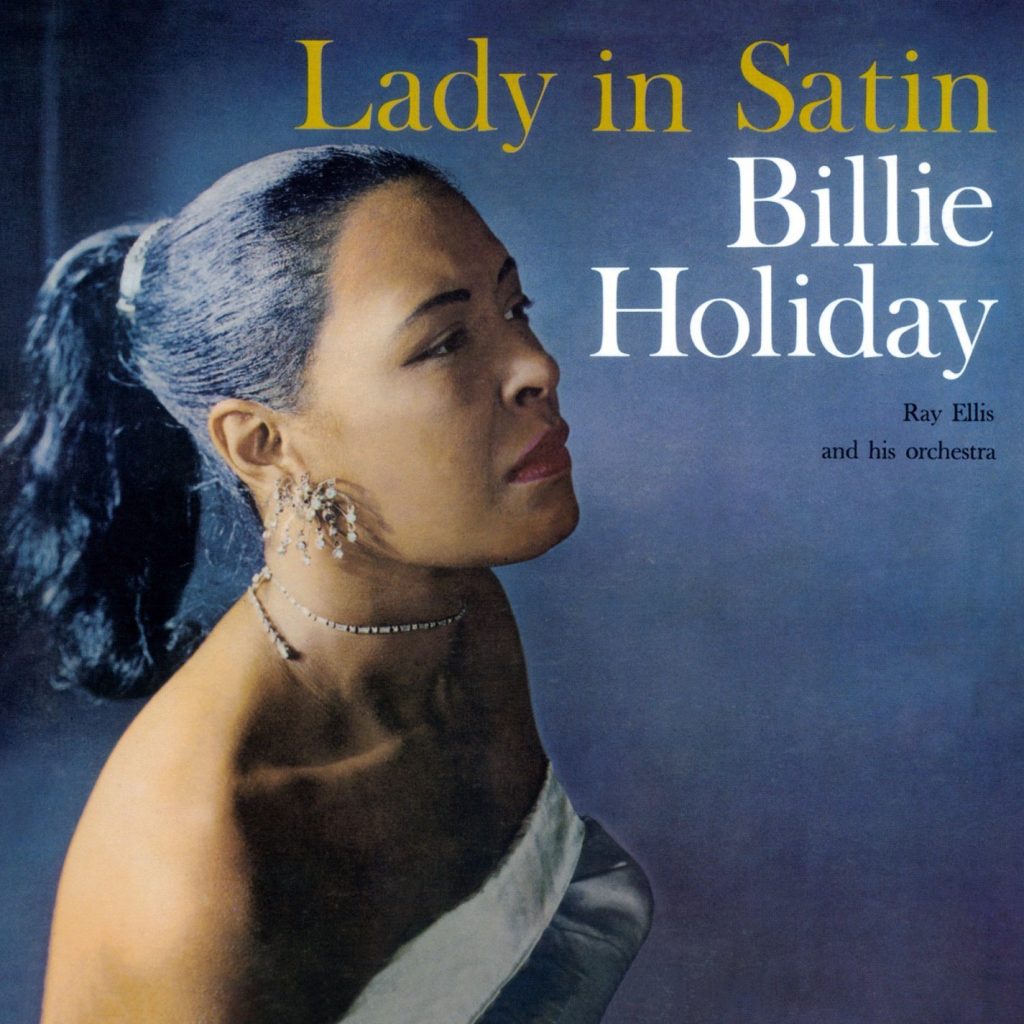
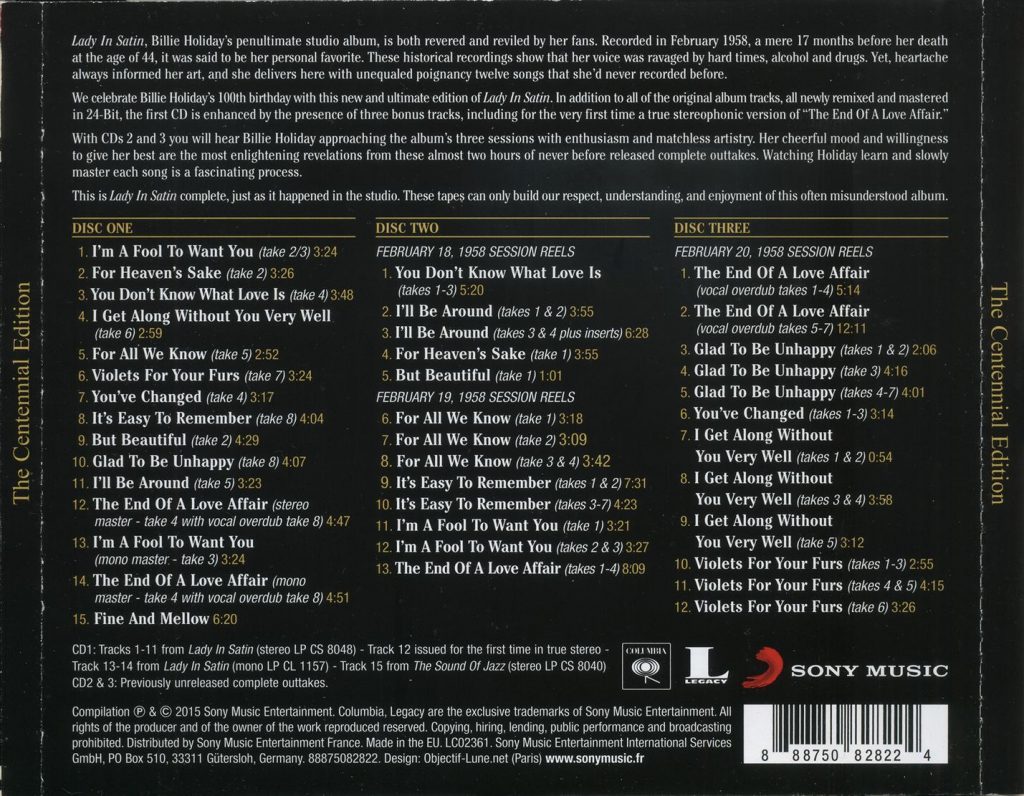
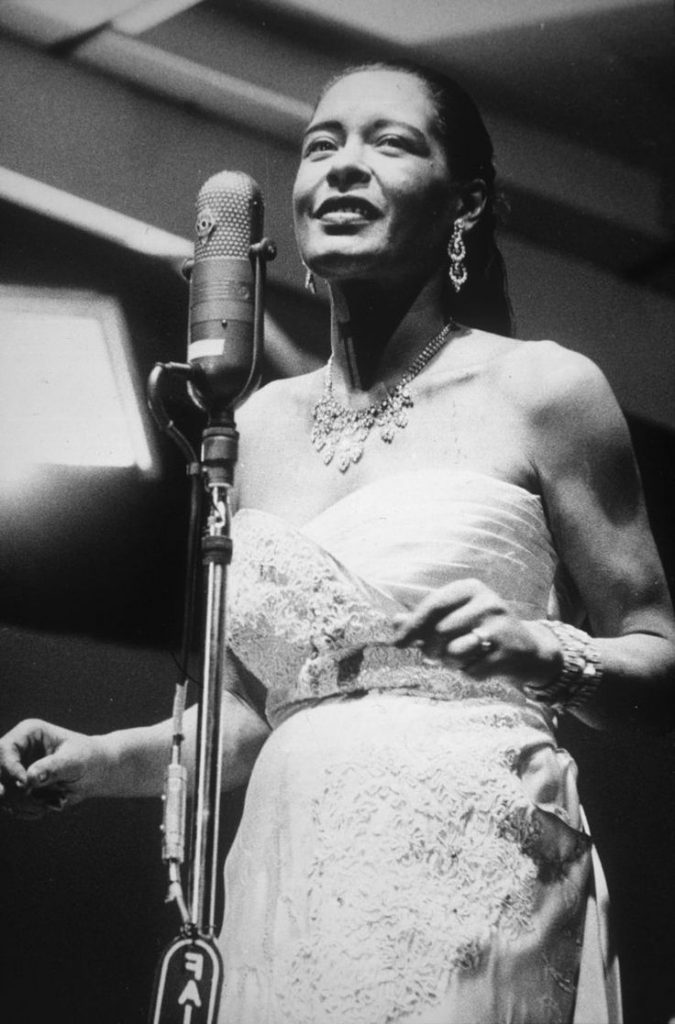
..2.Lady In Satin: The Centennial Edition from Billie Holiday features not one but three CDs, the first being an expanded version of her original album Lady in Satin and the second and third being a collection of twenty-five cuts like It’s Easy to Remember (takes 3-7) or February 19, 1958 The End of a Love Affair (takes 1-4) or February 20, 1958 The End of a Love Affair (vocal overdub takes 1-4). This is in-session, in-studio stuff with all the repeated attempts at nailing a song, including a number of flubs after which, for example, we hear from Billie “la di da O, I messed up.” We also hear the great one talking and laughing and trying out different phrasings but only briefly because a good take was the goal. I once hung out with Dizzy Gillespie in his hotel room after our interview and, before I drove him to his gig at Artpark, at one point he said, “come see this.” “This” turned out to be the inside of his trumpet case in which he had attached maybe a dozen photos, one being of Billie Holiday, a photo I’d never seen before. Lady in Satin was a rare recording of Billie with an orchestra because her most perfect fit was with comparatively smaller jazz groups in which her voice was truly like an instrument. But even here, in an alien unswinging musical context, we hear, when she sings, a trumpet or a sax in how she plays with the beat, with dynamics, with the sound. She was truly a wonder, so of course she, a black woman, was persecuted by the white man’s sexist, racist laws.

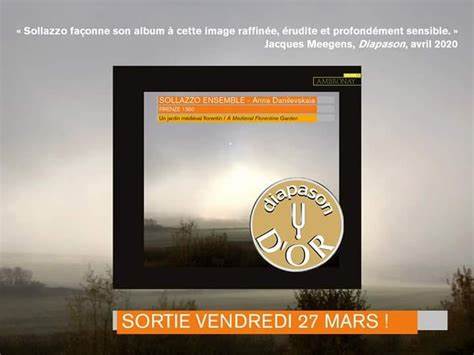
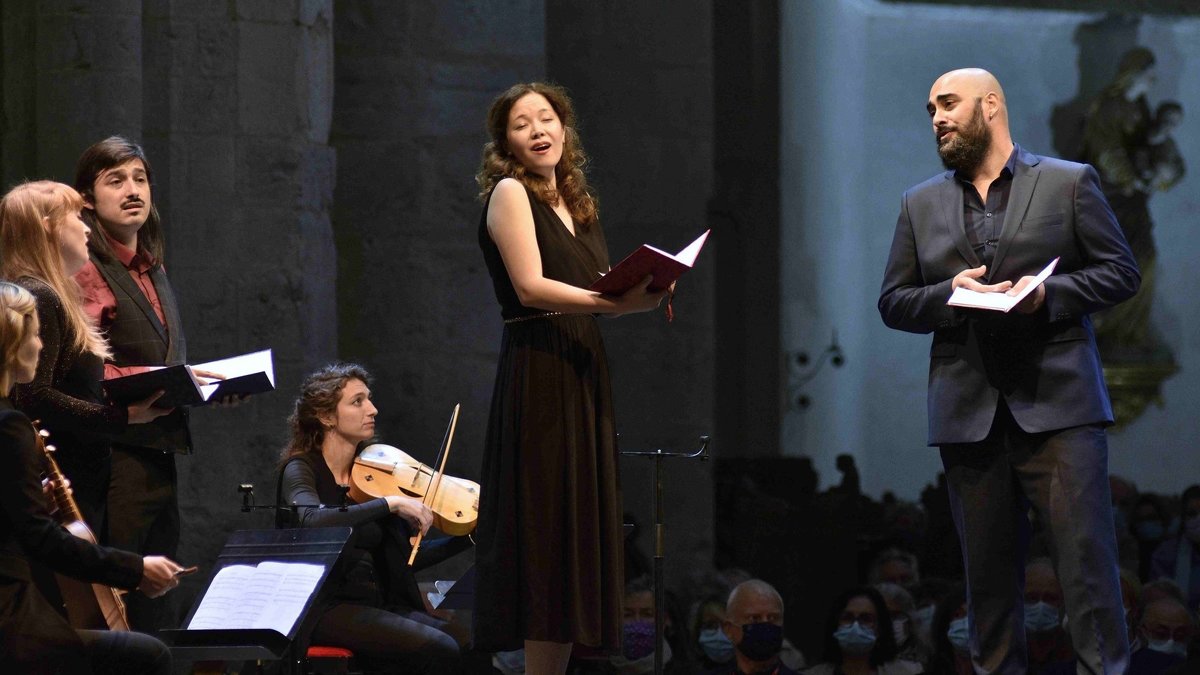
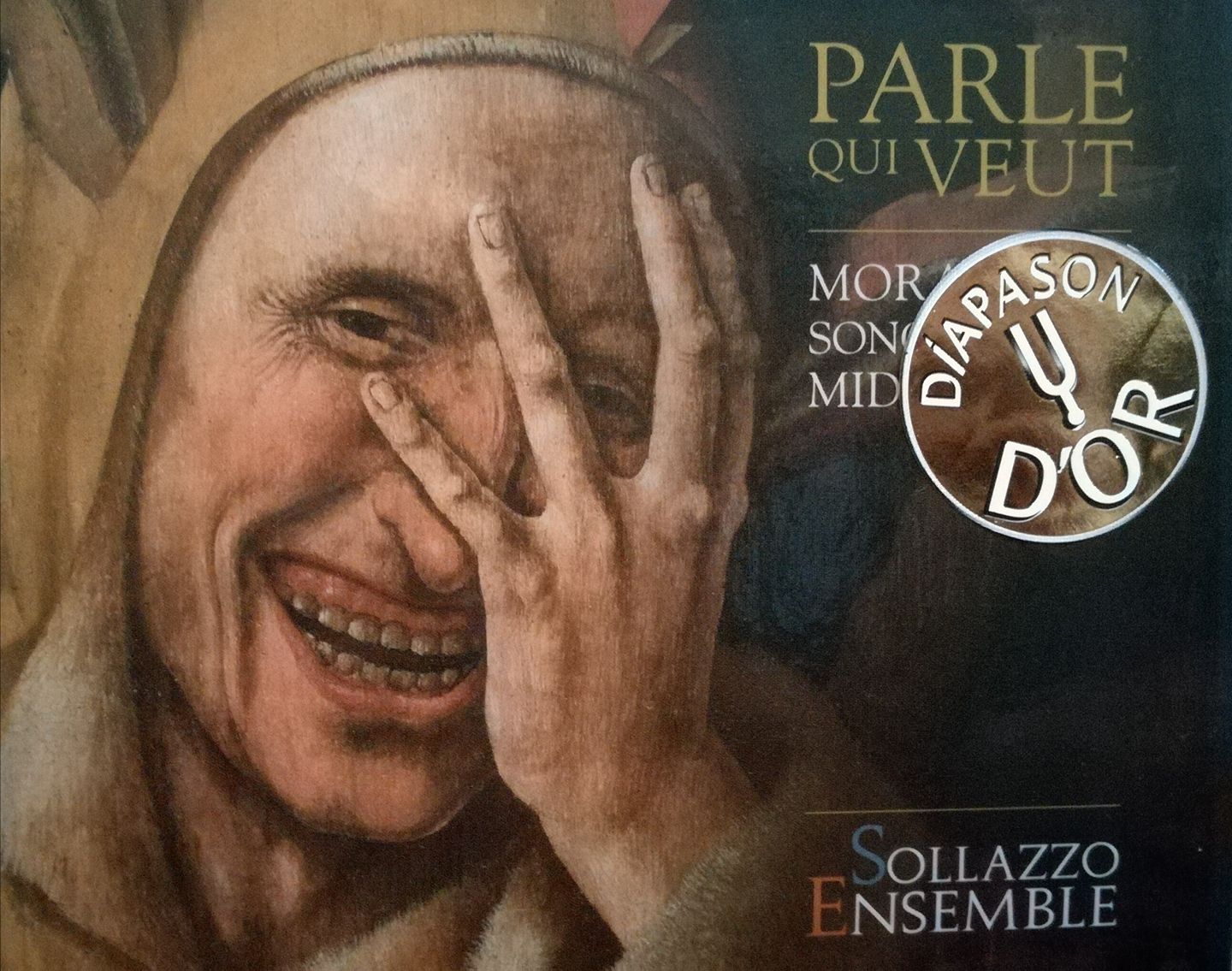
.3.Firenze 1350 – A Medieval Florentine Garden from Sollazzo Ensemble with Anna Danilevskaiaas leader “brings together musicians passionately attached to the medieval and Renaissance repertories, with a particular interest in the transition between the two periods.” I got turned on to this group and their repertoire when I caught a televised performance on Mezzo/Mezoe Television featuring four other singers, and not those of this CD. They were an uncanny blend of ethereal magic, flesh-rooted passion, and haunting timbres of voice which I fortunately recorded and play over and over. Thus, I’m only gradually adjusting to the equally fine singers on the CD, but, either way, I spend much time with this music, especially at 3:00 a. m.  when one torment or another is keeping me awake and I need the world to be, at least briefly, a good place of meaningful connections.

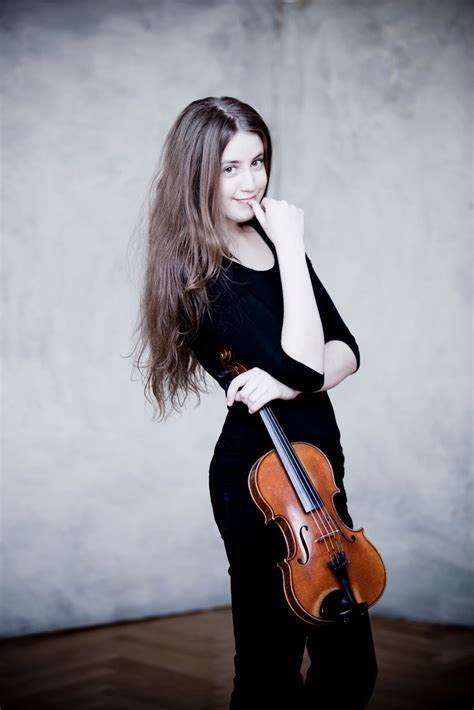
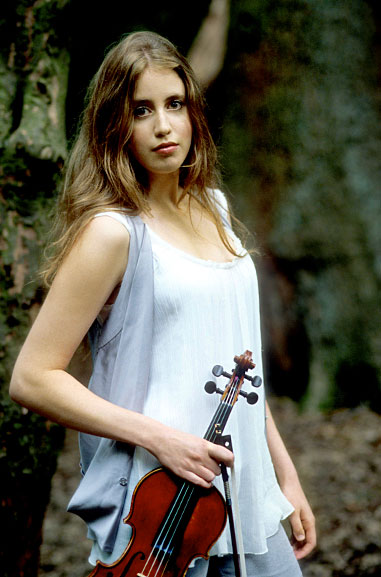
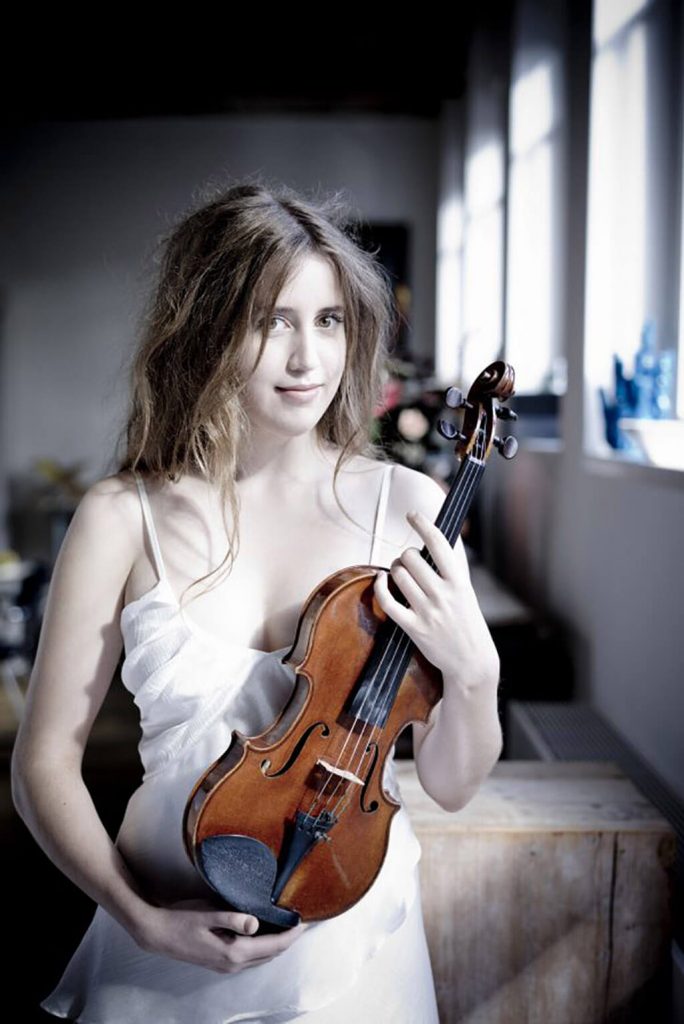
.4.Another enjoyable discovery, first the music, that being the Britten and Korngold Violin Concertos, and second, the violinist, that being Vilde Frang. This violinist obviously feels assertively at home in the technical and evocative demands of both works, as she did in the Stravinsky Violin Concerto I saw, again, on Mezzo Television. We are informed that “both concertos on this new disc were written when their composers were exiles in the USA around the time of World War II.  The Korngold was completed in 1945, the Britten in 1939.  In the course of the 1930’s Korngold, an Austrian Jew, had become a prominent Hollywood composer, but could not return to his homeland after 1938; the young Britten, a pacifist, left the UK for New York shortly before the declaration of war in 1939.  Both composers had been child prodigies and both concertos are centered around the key of D, the most ‘natural’ key on the violin and the tonal focus for the violin concertos for Beethoven, Brahms, Tchaikovsky and Stravinsky.” One bonus for me is that Frang has the bearing of a hippie, a pixie, and a lead in an Ingmar Bergman film all mixed together, ergo an endearing and mysterious presence which invites the listener into ever new worlds.

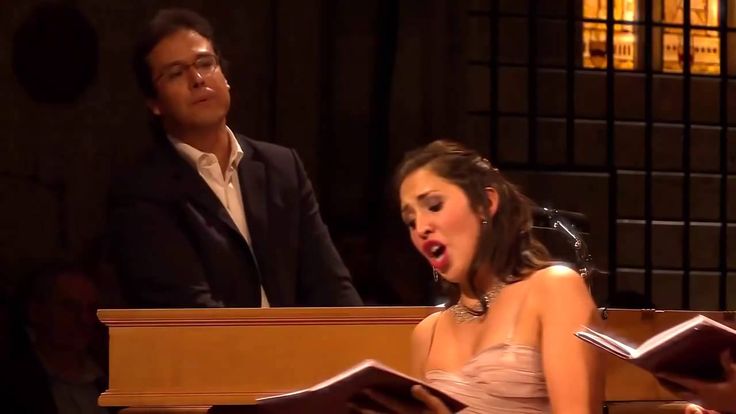
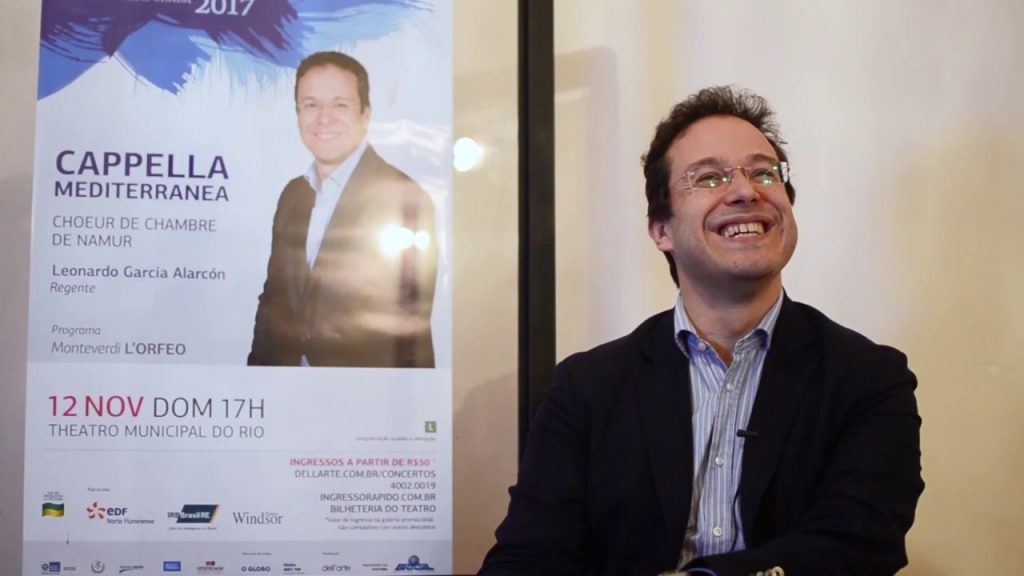
.5.Matheo Romero’s Romerico Florido sung here, uninhibited and invigorating, by Cappella Mediterranea, with the ten instrumentalists of the Ensemble Clematis and their leader Léonardo Garcia Alarćon, is devoted to the composer’s secular work. We read that “the three- or four-voice tunes are clearly influenced by Iberian music, and also bear witness to the influence of Italian madrigal, Franco-Flemish polyphony, and everything that heralds the birth of opera.” Included is Romerico Florido sung by soprano Mariana Flores, who also performed it in overdrive, verging on Flamenco-ish, at the Ambronay Festival in France, a performance I also saw on Mezzo/Mezoe TV. Like Sollazzo Ensemble, this group displays a compelling excellence in music-making throughout and takes us into many, perhaps unknown, worlds.


Posted in Uncategorized | Tagged , , , , | Leave a comment

KALYA RAMU: JAZZ SINGER/SONGWRITER/MUSICIAN EXPLAINS, “CREATIVITY HAS ITS OWN EBB AND FLOW THAT IS NOT CONSISTENT. THIS CAN BE HARD TO DEAL WITH AND MANAGE ESPECIALLY WHEN IT’S YOUR CAREER. FINDING A BALANCE FOR YOURSELF BETWEEN CREATING ART AND KNOWING WHEN TO REST IS IMPORTANT.” …. A REVIEWER INTERVIEWS PEOPLE IN THE ARTS

JAMES STRECKER: Please tell us about one or more projects that you have been working on or have recently completed. Why exactly do they matter to you and why should they matter to us?

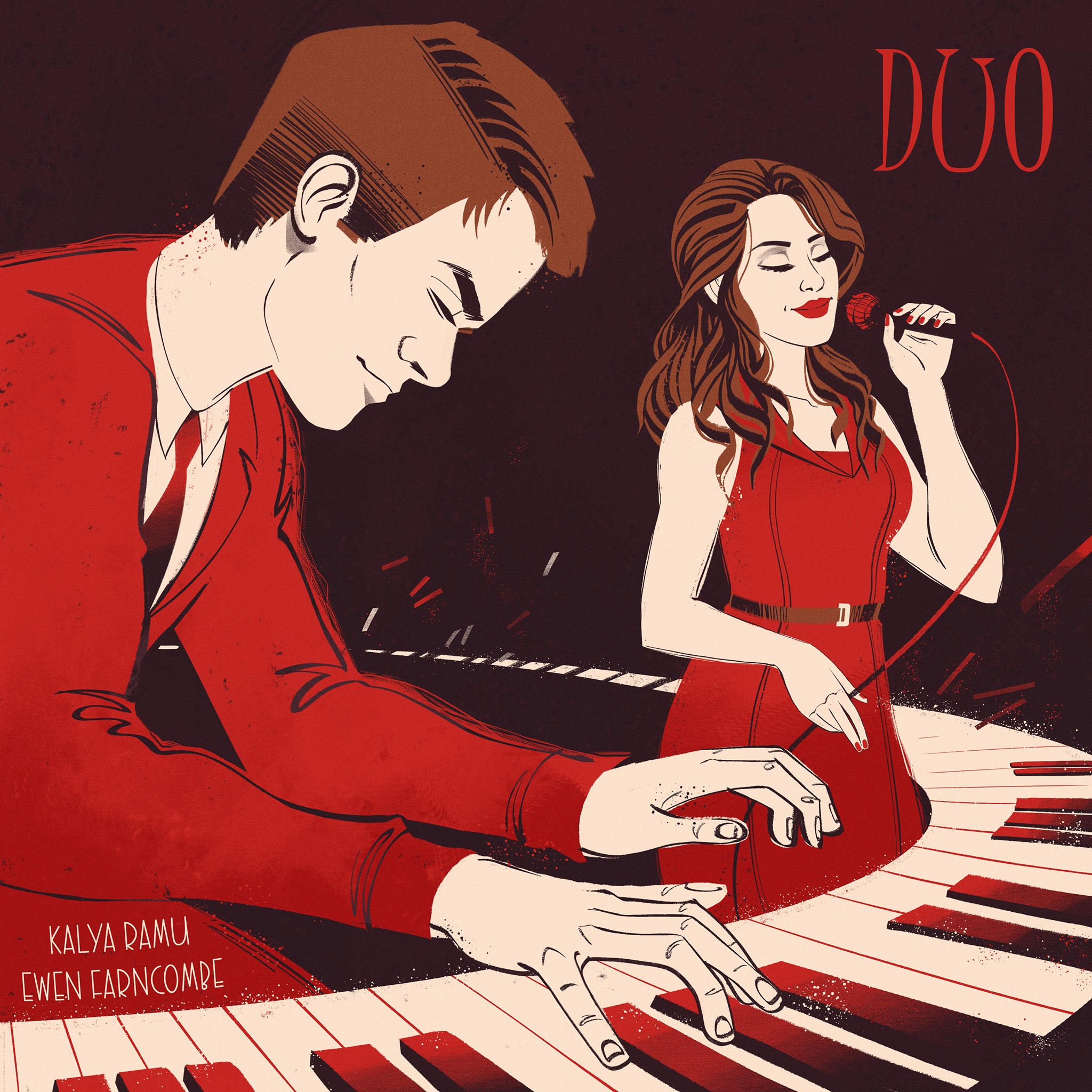
KALYA RAMU: I wrote and recorded a five-track album of original Jazz music called Duo with my friend and pianist Ewen Farncombe. These songs are manifestations of the many forms of love, not only directed towards a person, but to the various pleasures in life. The goal was to release some positivity out into the world during this time of isolation.

JS: How did doing these projects change you as a person and as a creator?

KR: This project has inspired me to “keep keeping on”. Even when faced with a world-wide pandemic and lockdown, I was able to find the motivation to keep creating and sharing music.

JS: What might others not understand or appreciate about the work you produce or do?

KR: The amount of unseen effort that I put into every part of my music. Writing music that you are happy with and prepared to send off into the world feels like a rare thing. I am very meticulous with this, so it takes a lot of effort and time to come up with and successfully marry the melodies, lyrics, and harmony.

JS: What are the most important parts of yourself that you put into your work?

KR: I like to think that I put a lot of my humor and imagination into the music I create. I believe that humor is such an interesting and entertaining ingredient in the arts, especially in music.

JS: What are your biggest challenges as a creative person?

KR: Writing a good song that I am happy with. A song that I can perform over and over again with the same enthusiasm I had when I first wrote it. Composing a song that is “timeless” is probably one of the biggest accomplishments for a songwriter. I don’t feel I’m there yet, but it’s something I hope to achieve.

JS: Imagine that you are meeting two or three people, living or dead, whom you admire because of their work in your form of artistic expression. What would you say to them and what would they say to you?

KR: What I’d really wish for is to sit in a room with a grand piano and play with either Oscar Peterson or George Shearing. These pianists are well known for both their solo careers as well as their skill in accompanying vocalists. I feel like the musical interaction with one of these phenomenal musicians would be so beneficial to me as an artist, having a conversation through music.

JS: Please describe at least one major turning point in your life that helped to make you who you are as a creative artist.

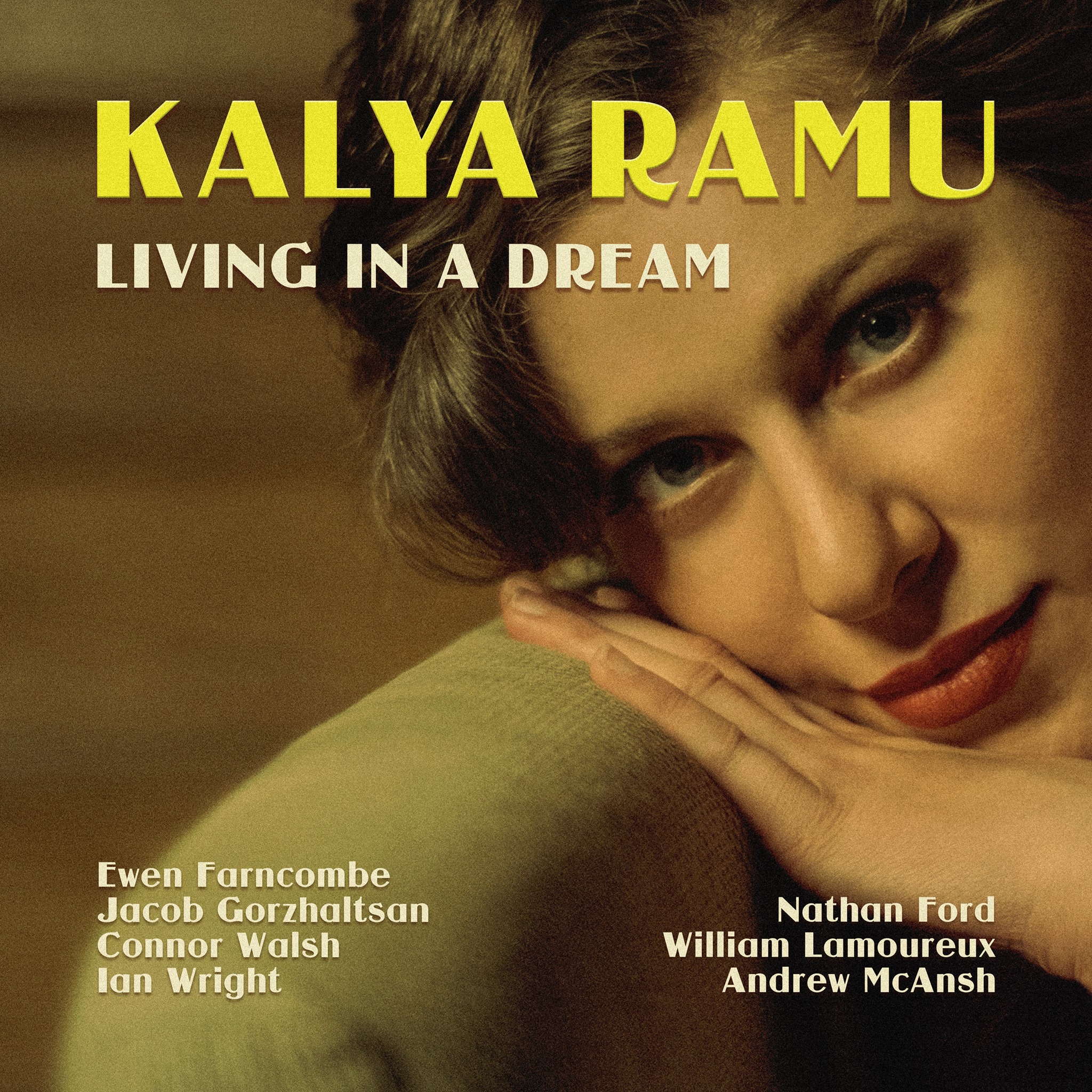
KR:  I’m still waiting for it reveal itself! I’ve had some smaller turning points such as the first time I recorded and performed with a big band when I was 12, that really guided me to where I am today. Another event was my first full day in the studio when I was recording my debut album Living in a Dream. Events like these are more like sparks that light the fire of passion for what I do. I am looking forward to what is yet to come.

JS: What are the hardest things for an outsider to understand about your life as a person in the arts?

KR: I think that many people are unaware of how much time and effort goes into being a musician. Aside from the years of music lessons and schooling, musicians, a lot like athletes, have to stay in shape, both mentally and physically. Another aspect that is perhaps more hidden is the fact that being an artist can be incredibly difficult mentally. Creativity has its own ebb and flow that is not consistent. This can be hard to deal with and manage especially when it’s your career. Finding a balance for yourself between creating art and knowing when to rest is important. Having a good support system of friends and/or family is also key.

JS: Please tell us what you haven’t attempted as yet that you would like to do in the arts? Why the delay so far?

KR: Touring! While having had many in-and-around-town gigs lined up since I graduated from Humber College in 2015, I haven’t had the chance to take my band and music on the road yet. Performing concerts and big Jazz festivals worldwide is a dream that I am committed to seeing through, but a certain amount of funds and PR momentum is required to make a tour successful. Once live music is an option again, I plan to apply for a touring grant for my next full album release (date unknown) and eventually perform all over the world.

JS: If you could re-live your life in the arts, how would you change it and why?

KR: I don’t think that I’ve had enough time in this life so far to determine what I would change yet. I’m quite happy with the way this first try is going and looking forward to where it’ll take me!

JS: Let’s talk about the state of the arts in today’s society, including the forms in which you work. What specifically gives you hope and what specifically do you find depressing?

KR: With most events being cancelled, postponed, or moved to an online platform, it’s been near impossible to make a living as a performer nowadays. So, this has been quite a depressing time in that sense. That being said, I have heard from many friends and family members, who are avid live music supporters, that there’s a big empty hole where live music used to live in their hearts. Perhaps there will be more respect and higher pay for live music at venues and private events once the world has opened back up…fingers crossed!

JS: What exactly do you like about the work you create and/or do?

KR: My favourite thing about creating music and performing is the effect it has on my listeners. Since I was little, I loved making people smile and laugh, bringing out emotions in the people around me. Singing for me is giving, sharing a feeling, telling a story or sharing a memory with my listeners, rousing a physical or emotional response.

JS: In your creative life thus far, what have been the most helpful comments you have heard about your work?

KR: In this industry as an artist, the most helpful thing I have been taught – as cliche as it sounds – is to be myself. I have found that whenever I let go and stop overthinking the way I act or move on stage, the more I connect with my audience. The more I connect with my audience, the more I enjoy performing.

JS: What do you yourself find to be the most intriguing and/or surprising things about you?

KR: Recently I’m very surprised at myself – I’m 100 percent a dog person, I grew up with dogs my whole life, but lo and behold, my partner and I recently got a cat. I’m obsessed.

JS: How has the pandemic affected your career as a person in the arts?

KR: 1) I’ve been asking musician friends to create quarantine collab videos with me – it’s been wonderful to sing with others again, even virtually. You can find these videos on YouTube and all my social media outlets. 2) I’ve learned how to record myself (as professionally as I can from home) and acquired basic mixing and video editing skills – very helpful for creating new music to release online. 3) I was able to write, record and complete a whole EP of original songs with Ewen Farncombe and release new music into the world!

JS: Where/how can people purchase your creations? Any events coming up?

KR: All my albums are for sale on my Bandcamp page https://kalyaramu.bandcamp.com/, where you can purchase digital or physical copies of my latest works. Ewen and I are performing together live on Friday May 7th at 7pm. You can watch the free live-stream show on the JazzinToronto Facebook page via this link: https://www.facebook.com/jazzintoronto/. Hope to see you there!

Posted in Uncategorized | Tagged , , | Leave a comment

MUSIC AND MEMORIES: LATEST FAVORITE OR NEW CDS – WITH NOTES AND BORROWED QUOTES……PART THREE

1.Christmette by Praetorius and performed gloriously by the Gabrielli Singers led by Paul McCresh is one of my go-to CDs whenever I want to feel pure, uncluttered joy, although, ironically, I gave up on both Christianity and Christmas decades ago. It’s strange that not long ago I rhymed off to a fundamentalist I know a substantial list of favorite music that happened to be Christian in its leanings – none of which she knew. I remember when I first heard the Mass in B Minor during my first trip to Rome a century ago, I was spellbound and carried the echoes of the Kyrie in my mind for months afterwards. And this work by Praetorius, at least in the recording by McCresh et al, fills my heart and if I knew the words it would do so with my lungs. As soon as I hear “Ein kind geborn zu Bethlehem” in the Introitus and later “Lob sei der heilgen Dreifaltigkeit” I feel a real inner peace and don’t even think to remember how the Fundamentalists supported evil Donald Trump.

2.Film India with Pandit Ravi Shankar brings to mind the Satyajit Ray films in which the music here, written for films like Pather Panchali and The Music Room, helped create an otherworldly atmosphere – although Pather Panchali decidedly shows the poverty and grime of this world. The day I once met Ravi Shankar for an interview, he asked “What is your name?” to which I responded “James” at which he delightedly replied “Ah, James Bond!” Relevant here is how he described the impact of technology’s needs on traditional Indian Classical music. An alap can go on for twenty minutes but in the scene of a film he’d be allowed twenty seconds perhaps, and even with very long ragas the 78 rpm recordings could last only 8-10 minutes on both sides of a disc, so compromise was the name of the recording game, like it or not. I looked hard for this CD, since I’m always aware of Shankar’s mood-developing music when it appears in films. Moreover, I’ve loved his music for decades on sitar and the playing of Ali Akbar Khan of Sarod even more. I once interviewed Khan, a man that Yehudi Menuhin called “the greatest musician in the world” as well, and we sat on the edge of someone’s bed in Mississauga smoking cigarettes!

3.Stimmung is music for six voices by by Karlheinz Stockhausen and it is performed here by the group Singcircle, who are most adept at producing vocal sounds, often unexpected and unusual, to some, of many varieties. It is “a long-form exploration of vocal harmonics for six vocalists and six microphones. The entire piece is based on a low B flat, from which the vocalists spread out harmonically using overtone singing.” Also, “over the course of the performance, the vocalists are singing meditations on numerous deities from the all over the world, interspersed with various spoken ‘recitatives.’” It’s quite impossible to convey in words what one is hearing, let alone commenting on it, but I’ve had a copy of Stimmung to hear for decades, although my wife insists that I not play it when she is in the house, since it drives her nuts. It does, however, have the effect of causing a trance for me, I find, and in places it can bring on inner giggles.

4.Hard Luck Stories: Richard and Linda Thompson collects all the recordings that this highly regarded duo made before their famed separation with Linda kicking Richard in the shins on stage on their last tour. Hers is a haunting, profoundly wistful, and emotionally-measured voice, while Richard is one of the most creative guitarists on the planet, a compelling singer, and an inspired and genuinely creative songwriter who doesn’t get the wide appreciation he deserves, one that others of better-selling and contrived reputations achieve. I say much more about Richard in a review of his concert elsewhere on this blog, so let it just be said that it’s a pleasure to have their collected recordings – some of it, the Hannibal recordings, previously so hard to find. Let me add that I once did say to Richard that if I needed music for my funeral (but I certainly don’t plan to have one) I would ask for his original recording of Dargai, an instrumental that in its simplicity does speak volumes.

5, 6, 7.Three solo instrument CDs I play and give in to often are (5). Britten Solo Cello Suites played by Jamie Walton; (6) Horowitz in Moscow; and (7) Satie Piano Works, including 3 gymnopćdies and 6 gnossiennes played by pianist Anne Queffélec. I discovered the three Britten Suites one late night driving from Toronto to Hamilton and loved then, as I do now, their well-aimed economy of musical methods and ideas in developing both atmosphere and narrative. I once gave a copy to an actress friend who was playing it when visited by the concertmaster of the TSO and apparently he was quite impressed. The Horowitz is another constant listen since I saw the DVD of this same performance in which Martha Argerich comments that no one plays Chopin’s Mazurkas better than Horowitz. I saw Horowitz in person only once, an afternoon (of course) concert at Toronto’s Massey Hall during which he did his Carmen Variations. At one point he hit a deliberately odd note which caused me, in this reverential and very silent audience, to laugh HaHa out loud, at which Horowitz smiled his famous impish grin. As for Quefélec’s much loved recording, j’aime quelquesfois d’être très languissant ou flétrissement comme le coeur de Satie.

Posted in Uncategorized | Leave a comment

SANDRA LARONDE: RED SKY FOUNDER/EXECUTIVE & ARTISTIC DIRECTOR OF TORONTO’S INDIGENOUS INNOVATORS ON THEIR 20TH ANNIVERSARY AND UPCOMING CANADIAN PREMIERE OF NEW FILM….. A REVIEWER INTERVIEWS PEOPLE IN THE ARTS

JAMES STRECKER: If you were asked for 50 words for an encyclopedia to summarize what you do, or have done, in the arts, what would you say about your purpose and creations?

SANDRA LARONDE: My purpose is to center and elevate Indigenous narrative through the telling of our own stories through interdisciplinary creations and to make a difference.

We have contributed to the “Indigenous canon” as our new creations contribute to the breadth and scope of Indigenous-led work in Canada while strengthening an international presence.

We have played a pivotal role in the Indigenous cultural resurgence of Canada for 20 years and counting.

JS: Please tell us what we need to know about the film More Than Dance, We Are A Movement.

SL: The film “More Than Dance, We Are a Movement” shows extended excerpts of our recent work (notably “Trace” and “Miigis”), and viewers will meet exciting collaborators and voices from the community. They will experience the contemporary spectrum of Indigenous arts. They will gain insight into our creative process and the context in which Red Sky rose to prominence. They will learn why it’s important for a company like Red Sky to exist.

JS: What important beliefs do you express in or through your own work?

SL: The important belief that I express through my work is the fundamental belief that we live in a world that is more-than-human. I do not limit myself by the constricting belief that only humans matter and only create with humans in mind. There are many other beings that are alive and sentient in this great web of life and how do I tell and elevate that interconnected story in exciting and meaningful ways? How can humans feel more connected up to the natural world and feel less isolated?

JS: What are your biggest challenges as a creative person?

SL: I am someone who has strong creative ideas. The biggest challenge is to know when the right time is for certain ideas to be realized. Ideas seem to have their own life.

Existing colonial systems and structures sometimes constitute barriers or walls to my imagination, change, and positive risk-taking. It can sometimes create self-doubt.

JS: What are your most meaningful achievements?

SL: My most meaningful achievement is creating a compelling vision for the future of Indigenous arts in the 21st century and to have made a difference. I have created a company from scratch and a company that matters, especially during a time of cultural resurgence in this country.

We have travelled extensively across Canada and around the world, putting Indigenous arts on the world map. In terms of a specific project, I’m very proud of “Tono” as an example of this. It was a three-country collaboration with Canada, Mongolia, and China. Everyone put their hearts into the work, and it was such a big accomplishment for all of us. We became family in the process, and we ended up performing at the Beijing (2008) and Vancouver (2010) Cultural Olympiads, World Expo Shanghai, and we performed across Canada and Mongolia as well.
JS: What do you ask of your audience?

SL:  I only ask them to come on the journey with us. Our performances are highly sensorial, and it will engage all of their senses. Our hope is that they feel differently than when they first walked through our doors.

JS: How has living with the pandemic affected your creative life?

In light of the global pandemic and its significant impact upon the arts sector, I have created and produced energetic digital content. As a company, we were moving more towards the digital world before the pandemic, but covid-19 has certainly accelerated our learning curve. I’ve made new inroads toward a meaningful shift in the digital space that will help people to connect with Indigenous stories and ethos.

I’ve also wanted to write a novel for a few years now. When the pandemic hit, I thought that I better do it now as there won’t be another time to do so. Right now, I’m completing my first novel for mid-school readers which will be published in 2022.

The pandemic has certainly reminded us all of what’s important in life. It has made me take stock, realign, refresh, and reboot. It’s been great to see people realize that the arts are essential to our well-being. People needed stories and artistry to find hope, meaning, and wisdom during such a time of great upheaval.

The film, More Than Dance, We Are A Movementwill stream in Canada only from  April 14-20, 2021, in celebration of the 20th anniversary of Toronto’s award-winning  Red Sky Performance. It is presented by the national initiative Digidance and partner Harbourfront Centre.


Posted in Uncategorized | Tagged , , , | Leave a comment