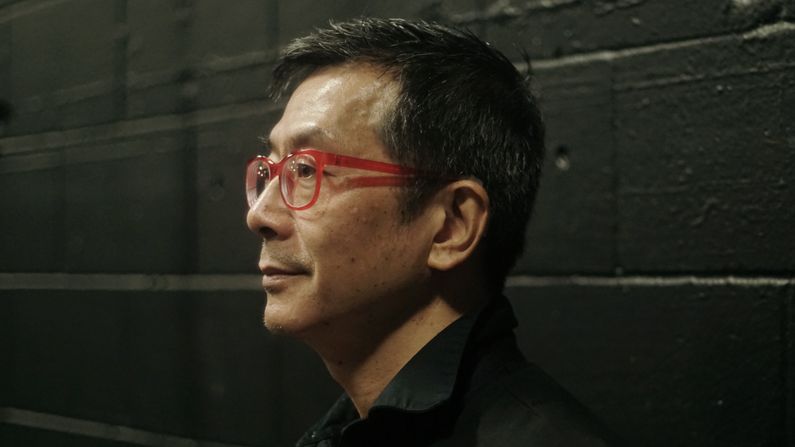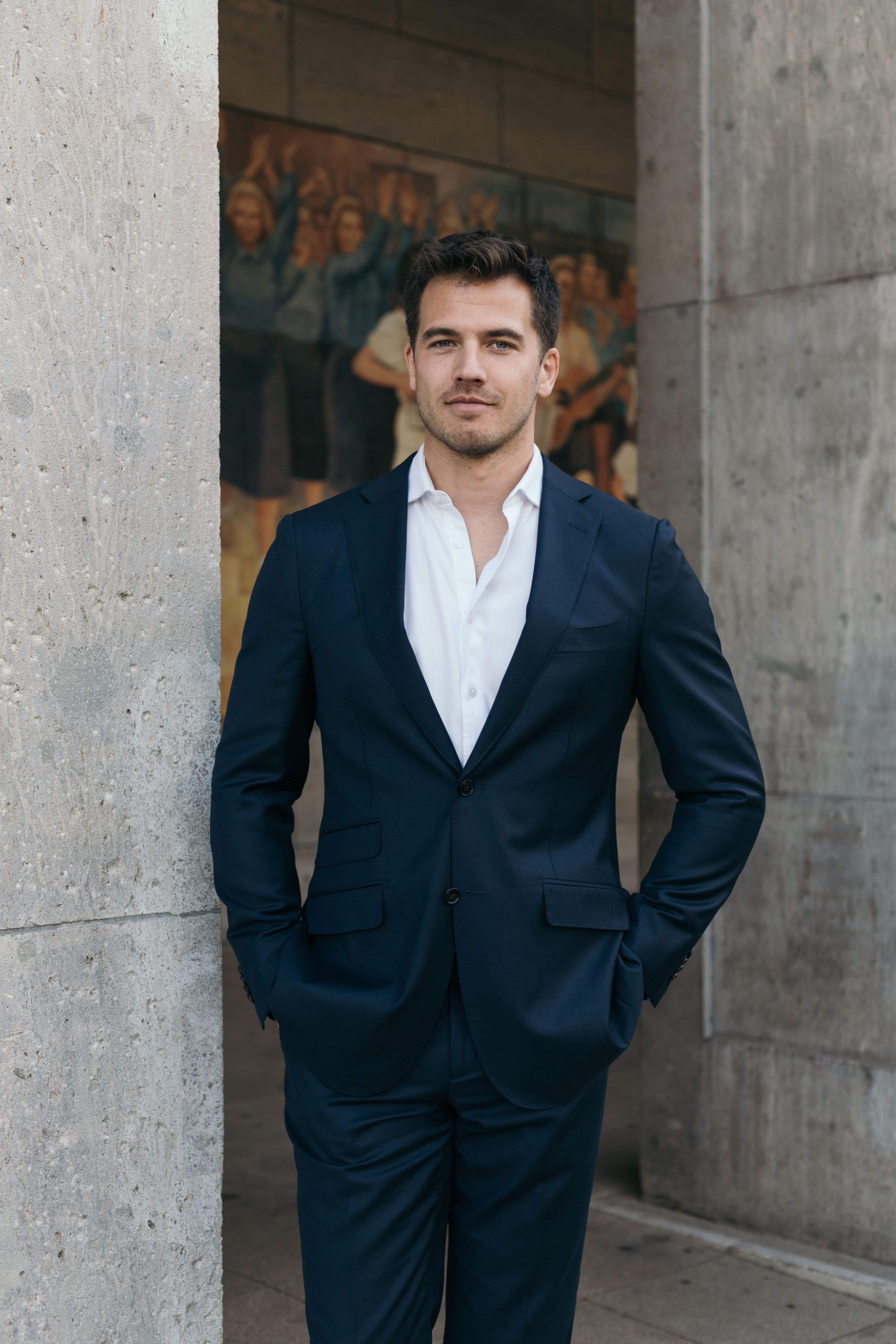
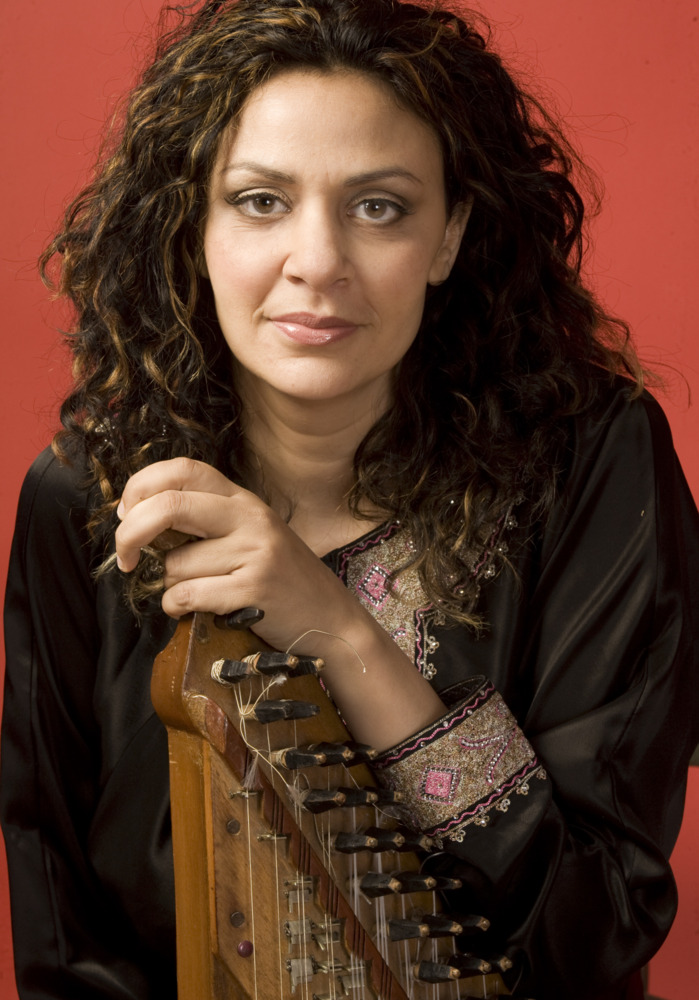
NJO KONG KIE: COMPOSER-PIANIST-PERFORMER ON HIS NEW WORK AT CANSTAGE “I SWALLOWED A MOON MADE OF IRON” – “I AM CHALLENGING MYSELF TO RESPOND TO XU LIZHI’S WORDS IN MULTIPLE WAYS, WHETHER THROUGH SETTING THE TEXT TO MUSIC, DISCOVERING WHAT MY VOICE WANTS TO DO, OR HOW MY BODY WANTS TO RESPOND TO THE POETRY”. A REVIEWER INTERVIEWS PEOPLE IN THE ARTS

  JAMES STRECKER: Please tell us about one or more projects that you have been working on or have recently completed. Why exactly do they matter to you and why should they matter to us?

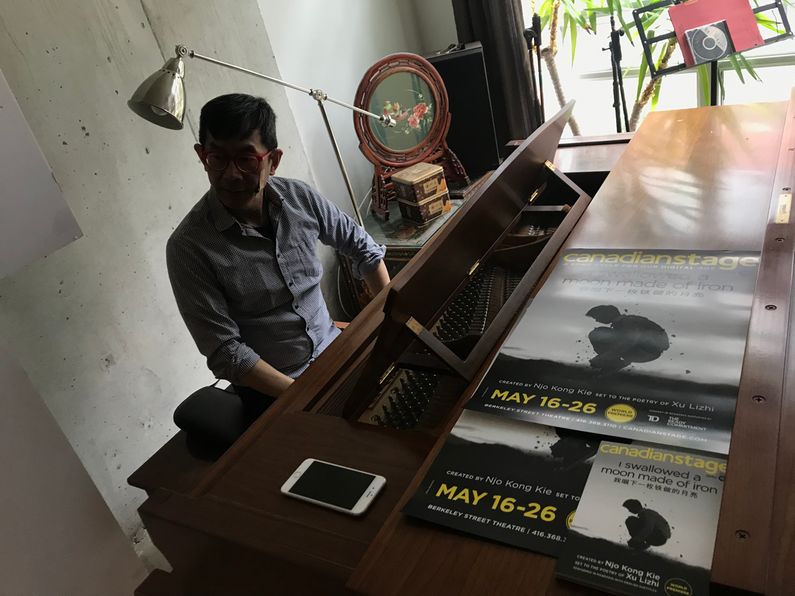
NJO KONG KIE: I have a production running from May 16 to 26 at the Berkeley Street Upstairs Theatre at Canadian Stage. At its core a song cycle for voice and piano, I Swallowed a Moon Made of Iron is a musical and theatrical setting of the Mandarin poetry of contemporary Chinese poet Xu Lizhi.

In 2010, a number of workers committed suicide at the Shenzhen factory of Foxconn, the world’s largest contract manufacturer of electronics for many of our popular digital devices. In 2014, 24-year-old Xu Lizhi, working at the same plant, did the same. Xu was a poet, known as one of the most promising young writers in China’s worker-poet literary movement, comprised of young labourers writing about the working class. His death sparked headlines in China and across the globe. This news showed up on my social media feed. I was quite shocked and overcome by the tragedy, of course, and at the same time extremely moved by Xu’s words.

Writing very plainly in a way but with astounding imagination, Xu gives us a vivid glimpse of life on the assembly line and gives voice to millions of workers worldwide. What he describes is not just the story of one factory, but of many factories and not only in China but all over the world. And the hopelessness and purposelessness he speaks of in his poetry is not limited to the experience of only factory workers either, workers in white-collar jobs experience it too. And I as a freelance artist, experience it as well. His poetry resonates greatly with me, and prompted me to create this work. I think the audience would appreciate discovering this poet and finding out what he has to say.

JS: How did doing these projects change you as a person and as a creator?

NKK: Despite the immeasurable differences of our circumstance, I really resonate deeply with Xu’s longing for home and family, his desire for love, his lament of the drudgery of jobs, and his questions around the meaning of life, and the relevance of artistic pursuits.

Reading Xu’s insightful, haunting and often gut-wrenching words reminded me how global and inter-connected our lives are. Working on this piece reminds me constantly of the innumerous people, near and far, whose struggles, often unseen, unheard and forgotten, provide the amenities for our modern-day life. It is easy to get complacent in the relative comforts of our day to day. The work made me ponder the role, however small we think it is, each of us plays in this world.

When writing this work, I am mindful of the song cycle tradition of Schubert and Schumann, but of course of Mahler, whose Das Lied von der Erde set music to German translation of Tang Dynasty’s poems that speak of life and solitude and melancholy and yes death. And the moon figures as prominently in Xu Lizhi’s poems as in the Tang poetry, except now it takes on a completely different poetic association. In my mind are also songs of Jacques Brel and Chinese traditional music as well. This work certainly embodies different aspects of the cultures that I have lived.

The biggest challenge of the work comes in the decision to stage this work as a solo performance. Conceptually, I do see a parallel between being alone on stage and Xu’s solitary journey as a poet. Doing it in this form, I am shadowing the poet’s creative journey in my own. Just as the poet had found his own way to his artistic expression, I am challenging myself to respond to his words in multiple ways, whether through setting the text to music, discovering what my voice wants to do, or how my body wants to respond to the poetry. I have been coaching with Stacie Dunlop on vocal and William Yong on movement to bring out the artistic impulses in me that I have not previously explored.

I hope that echoing Xu’s solitary experience in the form of a solo-performance allows the work to resonate more authentically and with much more immediacy, spontaneity and fragility.

JS: What might others not understand or appreciate about the work you produce or do?

NKK: Haha, “others” is such a broad group of people to summarize.

We do of course make assumption of people but I have been proven wrong many times. So, anything I can name would all be insecurities (and there are many) that I feel about my own work and much less about what this large group of “other people” may feel about them.

JS: What are the most important parts of yourself that you put into your work?

NKK: Empathy and a sense of play.

JS: What are your biggest challenges as a creative person?

NKK: The fear of making mistake is quite strong. I long for perfect solution. But in the end, I tend to take the first decision I make despite having spent lots of time weighing the options over and over.

Not taking enough risks. I take only calculated risks. While this may have helped to protect my ego, it may also have slowed down my progress.

I need to be way more organized so that I am not always racing against the clock and actually have the peace of mind to enjoy the process. But after so many years of doing just the opposite, I have kind of convinced myself that this is just how I roll and that I should just trust that things would happen. While some things do get done, other things do fall by the wayside. And so, I am always racing to catch up.

I don’t schedule time off for myself, and many freelancers will know this challenge, we have really blurred boundaries of work and leisure. We feel un-productive when taking time off.

JS: Imagine that you are meeting two or three people, living or dead, whom you admire because of their work in your form of artistic expression. What would you say to them and what would they say to you?

NKK: Right now, the person I would most like to speak to is Xu Lizhi. I would thank him for sharing his life experience with us with such beauty and profundity. I hope he would be happy with our effort.

As for people in my own artistic expression, I would love to meet Jacques Brel and his arranger(s). I just love their work. I will ask them about their creative process.

JS: Please describe at least one major turning point in your life that helped to make you who you are as a creative artist.

NKK: Early on in my work with La La La Human Steps, which was my first experience as a musician on a big stage, I discovered that the nerve I experienced on stage, although quite palpable, was also manageable. I realize the importance of choosing the right repertoire for yourself, preparing sufficiently and committing to the tasks at hand.

When Wayne Strongman of Tapestry Opera accepted me into the LibLab program as a composer, he gave me the encouragement to work towards being one.

JS: What are the hardest things for an outsider to understand about your life as a person in the arts?

NKK: This is of course standard for many freelance artists – that we can live with so much uncertainty – with hugely fluctuating income, no safety net whatsoever, always having to hustle for opportunities, always being evaluated for our work and always dealing with “rejections” (by granting bodies, presenters, peers, critics, audience and yes, by ourselves even), dealing with imposter syndrome, not being able to separate our artistic identity from that of our person, having to do so much admin and producing work ourselves (say a good 80% of my time) in order to get anything up on stage…

JS: Please tell us what you haven’t attempted as yet that you would like to do in the arts? Why the delay so far?

NKK: I should like to learn to write for a larger ensemble. I have mostly stuck to writing smaller size work so that I can self-produce and tour them. Funding, even when they are available, is never sufficient. So, I remain small and nimble in order to make things happen. Working on a large-scale project does really rely on major institutions to step forward and that just has not happened yet. I should also like to write a proper pop song, or a piece of electronic dance music. But as long as I get to write, I am thankful.

JS: If you could re-live your life in the arts, how would you change it and why?

NKK: If I ever discovered the moment and circumstance that made me such a cautious person, then I would like to change it.

JS: Let’s talk about the state of the arts in today’s society, including the forms in which you work. What specifically gives you hope and what specifically do you find depressing?

NKK: I often engage in hybrid form, so pitching them to presenters and the audience can be challenging. Finding the right vocabulary to describe the work is difficult. But interdisciplinary approach is not new and audience is finding ways to receive it for sure, so that is hopeful.

But in general, pitching anything is challenging. There are so many choices, and only 24 hours a day. And we all have limited energy. Diversifying our audience is so necessary but getting people to engage in unfamiliar activity is difficult. Adding distance to it and you have a very steep hill to climb. I Swallowed a Moon Made of Iron can serve the Mandarin speaking community quite well, but getting the audience to come from the Greater Toronto area to a downtown venue to see a production in an uncommon form by artists they don’t know is a big challenge.

And given our limited resources, there is no way to do a major campaign. So, we put our outreach focus in the downtown community, but over time, I would really like to attract the audience downtown. But transit between the suburbs and downtown is really difficult. I had friends performing with the Hong Kong Ballet a while back and they were performing in Markham, and on those particular days, I just couldn’t spare the 3+ hours on transit to go see them perform. That’s frustrating.

JS: What exactly do you like about the work you create and/or do?

NKK: What I generally like in other people’s work and what I aspire to create are works that offer both a visceral and cerebral experience at the same time.

JS: In your creative life thus far, what have been the most helpful comments you have heard about your work?

NKK: Simple works do not need to be simplistic. This ties back to the work of Xu Lizhi. His poetry may consist of simple and ordinary words, but they offer the most profound meaning.

JS: Finally, what do you yourself find to be the most intriguing and/or surprising things about you?

NKK: That I have somehow managed to make and produce work at all.

Posted in Uncategorized | Leave a comment

RON KENNELL: ACTOR-WRITER, NOW AT 2019 STRATFORD FESTIVAL (IN HENRY VIII AND NATHAN THE WISE), EXPLAINS “MY MIND EXPLODES WITH IDEAS. I AM A STRANGER IN MY OWN DREAMSCAPES AND IN THEM I SPEAK IN LANGUAGES I DON’T EVEN KNOW. I WANT TO WRITE ABOUT IT ALL BUT I DON’T WANT TO MISS ANYTHING WHILE I AM HOLED UP IN MY ATTIC. IT IS A JOYOUS PROBLEM; A CURSE AND A BLESSING.” …A REVIEWER INTERVIEWS PEOPLE IN THE ARTS


JAMES STRECKER: Please tell us about one or more projects that you have been working on or have recently completed. Why exactly do they matter to you and why should they matter to us?

RON KENNELL: I have been doing a lot of writing lately. I wrote a screenplay about the Komagata Maru incident for First Take Entertainment. As it often goes, I am still awaiting word about when it will go into production. I am also working on several plays including a play about Vera McNichol a renowned psychic who lived just outside Stratford, in Milbank Ontario. I gratefully received a grant from The Ontario Arts Council to bring that story to light.

JS: How did doing these projects change you as a person and as a creator?

RK: Writing the Komagata Maru incident called upon my love of history. It demanded to be told with very little creative fiction, but we didn’t want it to be a documentary either. It became a puzzle. I had to keep the integrity of the broad epic story while keeping intimacy of the characters and their intentions very clear. Happily, it gave rise to an incredible character who more than peripherally bears witness to the incident and allows the story to continue when it looks like it is done. It is exciting to write this way because, as an actor, I have been given a keen insight into motivations and drives of people and characters and the secrets they keep and the power of seeing them revealed. The play about Vera McNichol ties my family heritage to a local legend. My grandmother visited Vera on several occasions and Vera would “charm” for my grandmother and actually heal her. Melding the personal with possibility is the creative world in which I thrive.

JS: What might others not understand or appreciate about the work you produce or do?

RK: I am a character actor. People who meet me, tend to see me in a certain way. I think this is especially true for those who work in casting. I am not knocking them but it is hard to feel categorized. Our first instinct is to make assumptions about a person when we see them. Who we are is primarily defined by our looks. I personally think many would think it worth crossing to the opposite side of a dark street – to avoid me. In my career it has meant that I play some really dark characters – especially in film and TV. As a character actor in Shakespearean plays, I have played Benvolio, Oswald, K=Launcelot Gobbo, Lucullus, Macduff, and Caliban. But I have a Romeo inside me; a Hamlet; a Petruchio; and a not always tempered Richard III, too. It would be fun to delve into larger roles as deeply as I am able to explore a character part.

JS: What are the most important parts of yourself that you put into your work?

RK: I sometimes wish I was a painter. Then I could see the vision and create it. Because I am by nature a sharing person and theatre as a perfectly imperfect collaborative art it is the best place I could have hoped to have landed. I need other people to express myself. We create paintings together. I never forget that. If the show has a social commentary; if it helps the underdog or casts a new light on an old trope, I am in! Even writing requires meeting and expressing all types of people; and especially the ones that we don’t understand and may not like.

JS: What are your biggest challenges as a creative person?

RK: One of my biggest challenges as a creative person is focusing on one thing at a time. My mind explodes with ideas. I am a stranger in my own dreamscapes and in them I speak in languages I don’t even know. I want to write about it all but I don’t want to miss anything while I am holed up in my attic. It is a joyous problem; a curse and a blessing.

JS: Imagine that you are meeting two or three people, living or dead, whom you admire because of their work in your form of artistic expression. What would you say to them and what would they say to you?

RK: I would ask Laurence Olivier if he ever really felt like he gave a definitive performance of a role: Hamlet, for example. He would likely say “Yes, of course darling I was a brilliant Hamlet. But what I hope I would hear is that we all fail beautifully as artists. We all win too. We continue to tell these stories because each person resonates differently with the role. There is no such thing as definitive. I would ask Fellini how theatre inspired him and how it failed him? He would likely tell me that it neither failed him nor inspired him, that humanity inspired him and failed him. Art is the way of focusing the lens of chaos. And I would ask Madeline Khan how I could be more funny. She would likely say., “You can’t force it. You are funny or you are not.” But what I think she would mean is “Clowns have all survived the most terrible of tragedies.”

JS: Please describe at least one major turning point in your life that helped to make you who you are as a creative artist.

RK: I did a play called Aurash at the International Theatre Festival in Tehran, Iran in 2002. It was a Persian story told in English. It was a very physical show and a part of the legacy of Persian drama that lives in the heart of Iranian culture. The way they know their mythology, tell stories, absorb theatre and appreciate artists gave me an entirely different perspective on theatre and its relevance as a social construct for change and freedom of expression.

JS: What are the hardest things for an outsider to understand about your life as a person in the arts?

RK: Sometimes I despair as an artist when I am told that “celebrities” should keep their mouths shut when it comes to politics. We are citizens too and like a chorus in any Greek drama we are looking for a leader who is going to represent our ideals too. It is almost as if because we are mercurial in our ability to change characters and to alter our own perspectives, it makes us untethered, unmanageable.

JS: Please tell us what you haven’t attempted as yet that you would like to do in the arts? Why the delay so far?

RK: Well, I have never directed a play. Not because I don’t want to, but because I know how much work goes into directing a play. I have stretched myself in other ways with my writing and directing screenplays. So, I want to honour my own limits. That’s not to say I don’t want to direct. I have been honoured by being asked to direct, but the time was just not right.

JS: If you could re-live your life in the arts, how would you change it and why?

RK: I would have studied dance at an early age, for the discipline and for the minute expression that dancers can access. I would build a movement vocabulary for theatre through dance. And I would have started writing sooner.

JS: Let’s talk about the state of the arts in today’s society, including the forms in which you work. What specifically gives you hope and what specifically do you find depressing?

RK: We still do not have status of the Artist legislation in Canada legislation. We are easily dismissed as elite. We are dismissed as glorified waiters. We are rarely considered artists. We were often told as young artists, “If you can do anything else, do it. It’s hard. Success is rare. Fame is fleeting.” We are an army of fighters – battle worn, dismissed before we started. And we are still here. Yet we rise. I have vowed to never dismiss a child with an interest in the arts. It is viable if we MAKE it viable, important if we make it IMPORTANT. not if we dismiss it.

JS: What exactly do you like about the work you create and/or do?

RK: I love finding choices that are not obvious ones. I look for the writer’s sense of irony. I love finding a song that will express my character. I love meeting new people all the time and sharing intimate stories with them, on and off the stage. In theatre we hug each other a lot. We are like a family in many ways. We are dysfunctional at times. Sometimes we are passionate about the wrong things. But there is always love to be had. We are playing with emotion. It is real. It is delicate. I remember being told by Paddy Crean – ‘Hold the handle of a sword as if it is a bird. You don’t want it to escape but you want it to still have its freedom.” That’s like theatre emotion too.

JS: In your creative life thus far, what have been the most helpful comments you have heard about your work?

RK: When people tell me, “I didn’t recognize you in that role”, or when they say, “I didn’t know you did that kind of theatre.” I am always excited that they have seen a different aspect of who I am. I try not to let praise inflate my ego. When you believe the praise, you have to believe the criticism too.

JS: Finally, what do you yourself find to be the most intriguing and/or surprising things about you?

RK: I am not ashamed to say I am a really good cook and I am a good listener (which has helped me immensely in my work and life). I am certain my fascination with Quantum Physics has wrought an incredible amount of infrastructure to my sub-conscious Dreamwold. Some might call it madness and it may very well be, but I know what it is like to breathe underwater with the whales; to fly like a bird in the sky and to navigate my latitude and longitude by picking out constellations reflected on the surface of a still lake in southern Spain. It’s the artist’s life for me.

Posted in Uncategorized | Tagged , , , , | Leave a comment

ALEXANDER DOBSON: “THE PIECE HAS MANY LAYERS THAT ARE REVEALED THROUGHOUT THE EVENING” SAYS BARITONE APPEARING IN “AGAINST NATURE,” JAMES KUDELKA’S BLEND OF MOVEMENT AND VOICE, AT THE CITADEL: ROSS CENTRE FOR DANCE, 304 PARLIAMENT STREET, TORONTO, MAY 22-25, MAY 29-JUNE 1, 8PM…A REVIEWER’S INTERVIEW WITH PEOPLE IN THE ARTS

JAMES STRECKER: Please tell us about one or more projects that you have been working on or have recently completed. Why exactly do they matter to you and why should they matter to us?

ALEXANDER DOBSON: The project that is consuming me right now is preparing for the upcoming production of Against Nature with Citadel + Compagnie and performers Laurence Lemieux and Korin Thomas choreographed by James Kudelka. We are re-visiting the piece and I am very excited to play such a complex character again.

What is wonderful about this piece is that it incorporates movement and voice. This is a new medium which James Kudelka has created and I am thrilled to be a part of.

JS: How did doing these projects change you as a person and as a creator?

AD: As a classically trained singer, movement has always been secondary to the voice. In Against Nature they are harmoniously intertwined.

JS: What might others not understand or appreciate about the work you produce or do?

AD: Since the performances take place in a Performing Dance space, audiences might be expecting a purely dance piece. This is far from what it is. The piece has many layers that are revealed throughout the evening.

JS: What are the most important parts of yourself that you put into your work?

AD: Honesty. It is the hardest thing to be honest on the stage, but when an artist lets the audience see their sincerity, art is taken to a new level. This is what I strive for every time I am on stage.

JS: What are your biggest challenges as a creative person?

AD: Preparation. I spend many hours alone getting ready for a production. Once in the creative process with other collaborators, it is pure joy. It is the preparation that is so important so that the fun can happen, but unfortunately, this can be quite lonely.

JS: Imagine that you are meeting two or three people, living or dead, whom you admire because of their work in your form of artistic expression. What would you say to them and what would they say to you?

AD: I have been very fortunate to have worked with many people whom I admire. I find it best to just absorb as much as possible and thrive off their creativity while in their presence.

JS: Please describe at least one major turning point in your life that helped to make you who you are as a creative artist.

AD: Meeting my fiancée Jimin. She is the grounding force that I need in my life that frees me up for my creative projects as well as being the love of my life.

JS: What are the hardest things for an outsider to understand about your life as a person in the arts?

AD: Financial Instability. In France artists receive a stipend from the government when they are between Projects. This helps let them be creative without having to worry about necessities. In Canada we need to go from gig to gig hoping to make ends meet. I have been extremely fortunate to have been performing professionally for almost 25 years but that does not mean it has always been easy.

JS: Please tell us what you haven’t attempted as yet that you would like to do in the arts? Why the delay so far?

AD: I have always wanted to start an Opera Company. I have had various ideas about it over the years but it has not yet come to fruition. Luckily, I have been quite busy performing so I have not been able to give this much focus. I do however hope to in the future.

JS: If you could re-live your life in the arts, how would you change it and why?

AD: I am actually living my dream as a performer. I feel very blessed and am extremely happy with every Opportunity that comes along.

JS: Let’s talk about the state of the arts in today’s society, including the forms in which you work. What specifically gives you hope and what specifically do you find depressing?

AD: There is so much creativity around. Against Nature is a pure example of this melding of art forms together. This is an exciting time in the Arts and to be an artist, the fact that nothing is Taboo. The flip side is that there is a lot going on and with Netflix and home entertainment being what it is, it is harder and harder to convince people to go out to enjoy live theatre. There is nothing more satisfying for me than being in a theatre and experiencing a silence that is deafening. The collectiveness of people all experiencing the same emotion at once is unmatchable.

JS: What exactly do you like about the work you create and/or do?

AD: Every Character I play there is always a little bit of me in them. With each role, I discover something new about myself.

JS: In your creative life thus far, what have been the most helpful comments you have heard about your work?

AD: I once had a teacher who told me “You are only as good as your last performance” This statement, though quite sobering, keeps me on my toes and helps me to aspire for excellence each time I am on the stage.

JS: Finally, what do you yourself find to be the most intriguing and/or surprising things about you?

AD: I am introspective by nature but once on stage, something deep down comes pouring out; I feel completely alive and invincible, which often catches me by surprise.

Posted in Uncategorized | Tagged , , , | Leave a comment

STEPHEN SITARSKI: VIOLINIST/CONCERTMASTER, WHO PERFORMS PROKOFIEV’S 2ND VIOLIN CONCERTO ON APRIL 27 WITH HAMILTON PHILHARMONIC, EXPLAINS, “SINCE PROKOFIEV WAS NOT A VIOLINIST (HE WAS A VERY FINE PIANIST), MUCH OF THE VIRTUOSIC PASSAGEWORK IS NOT IDIOMATIC FOR A VIOLINIST. SO, I WAS FORCED TO BE A REAL PROBLEM SOLVER AND HAD TO PUSH MYSELF TO ‘THINK OUTSIDE THE BOX’. MANY OF MY SOLUTIONS FOR SOME OF THE TECHNICAL CHALLENGES TOOK MONTHS TO DEVELOP” … A REVIEWER INTERVIEWS PEOPLE IN THE ARTS

JAMES STRECKER: Please tell us about one or more projects that you have been working on or have recently completed. Why exactly do they matter to you and why should they matter to us?

STEPHEN SITARSKI: I’m currently preparing to perform the Prokofiev 2nd violin concerto on April 27th with the Hamilton Philharmonic Orchestra. It’s a big deal for me because I have not played this particular piece in public before. It is always a challenge and ultimately a thrill to push oneself to achieve something new. The concerto is a wonderful piece and I’ve gained so much technically and musically learning it.

As for why it may be important to others…Needless to say, great music (or any music for that matter) doesn’t just exist on paper – it must be presented live to an audience in order for the composer to be able to communicate directly with listeners.

Also, because I am the concertmaster of the HPO, it is of interest to the other orchestra members and especially the HPO patrons what their leader can do. It is important to put my reputation to the test to retain my credibility as a leader.

JS: How did doing these projects change you as a person and as a creator?

SS: It is always a little scary accepting a project that requires learning something new, especially a difficult work. At the beginning of the process many questions abound: am I capable of overcoming the hurdles inherent in the music? Will I rise to the challenge? Will I do justice to the composer? Can I convincingly portray the musical essence? Will I be favourably compared with the myriad of violinists who have performed and recorded this concerto before me?

So, aside from the technical challenges, there are self-confidence issues as well. But I believe that part of the experience of being human is to constantly push oneself beyond a safe, comfortable place. This is the area in which one can grow and develop – regardless of the level of success or failure.

JS: What might others not understand or appreciate about the work you produce or do?

SS: Playing a musical instrument is very similar to being an athlete in terms of the discipline required – the rigour of physical repetition under strenuous conditions, plus the mental toughness to be your own harshest critic. Success requires the constant striving to find better practice techniques, to find outside channels for learning (listening to recordings or watching videos of other musicians performing the same music, and/or seeking the advice or coaching from an experienced expert who can see/hear issues that we may miss ourselves.

And lastly, music inspires a personal, spiritual kind of vulnerability from each artist. When we perform, we expose part of who we are, for better or worse. It takes a lot of courage to summon the strength and energy to stand in front of both musical colleagues and an audience of hundreds or perhaps thousands of people. The rewards can be huge, but the failures can be devastating. Almost every other medium of artistic expression allows for the artist to correct, edit, and revise their work before exhibiting it before peers and public. Live performance happens completely in ‘the now’. One cannot take back any one moment…

JS: What are the most important parts of yourself that you put into your work?

SS: With this particular project, it has been a challenge overcoming many of the technical problems built into the music. Since Prokofiev was not a violinist (he was a very fine pianist), much of the virtuosic passagework is not idiomatic for a violinist. So, I was forced to be a real problem solver and had to push myself to ‘think outside the box’. Many of my solutions for some of the technical challenges took months to develop. Sometimes what works on a particular Monday doesn’t work on the subsequent Thursday and it’s ‘back to the drawing board’ until a solution is found that is reliable in as many different situations as possible. Just a few days before my performance and I’m still ‘tweaking’ some details.

JS: What are your biggest challenges as a creative person?

SS: Trusting my instincts. When you are an interpreter, unless you are playing a piece that no one has ever heard before, there are resources available of other musicians who have performed that music before. And while it is tempting to just copy a particularly strong interpretation, it is far more interesting to bring to an audience ‘your’ feelings about the music. Therefore, while one can learn certain things from studying someone else’s ideas, it is incumbent on one to discover how YOU wish to tell the musical story.

The musical score ‘on paper’ is basically a composer’s blueprint for the structure of the composition. Basic elements must be followed quite accurately for the integrity of the musical structure. In other words, there are weight bearing pillars, exact proportions to be followed, and specific materials used or the structure is wobbly, or even worse, cannot stand.

As an interpreter, the decisions are more cosmetic: painting the front door green, putting drapes in the front window, having an area rug in the living room, etc. These design features are what distinguishes different performances. Imagine if every house on a street had exactly the same architectural specs, but then ALSO had the exact same decorating features. Not too interesting…

JS: Imagine that you are meeting two or three people, living or dead, whom you admire because of their work in your form of artistic expression. What would you say to them and what would they say to you?

SS: I think first and foremost I would like to meet Beethoven. He was arguably the most revolutionary composer in Western classical music history. He dealt with all sorts of personal strife and outside challenges and yet remained completely uncompromising in his creative output right until the very end. I would love to understand more about his inner drive in aspiring to such heights of creativity.

Among living artists, I would love to spend time with the great violinist Patricia Kopatchinskaya. She is among the most innovative and inspiring performers in the whole world. Carrying on the tradition set out by violinist Gidon Kremer, she refuses to take any piece of music for granted. She is constantly striving to reinvent the way a piece of music can be approached and ultimately presented. Some of what she does could be considered eccentric, nevertheless her creative process is fascinating to me.

JS: Please describe at least one major turning point in your life that helped to make you who you are as a creative artist.

SS: I can’t think of one watershed moment. I consider myself as always learning and always believing that there is no end to self-improvement. I try to be inspired by as many things as I can be, musical and nonmusical. I almost never turn down a challenge or opportunity, even if it is in unfamiliar territory.

Seven years ago, I quit a full-time concertmaster position with the Kitchener-Waterloo Symphony. I had been doing the job there for 15 years and I felt that I needed different stimuli and different environments and colleagues in order to keep learning and pushing myself. This decision has certainly led to countless opportunities that I may not have been able to do otherwise.

JS: What are the hardest things for an outsider to understand about your life as a person in the arts?

SS: One thing that is not often understood about a professional artist is the level of training and discipline that is required to even have a CHANCE of being successful. The physical training usually begins when one is quite young (4-6 years old) in order to begin developing the neural pathways and small muscles that are necessary to perform the complex functions inherent in playing a musical instrument. Most professional musicians have the equivalent training and practice as doctors and elite athletes. If you’ve heard of the idea that mastering a skill takes 10,000 hours of practice, most musicians have completed their 10,000 by their mid-teens. And they are still not even close to being fully fledged professional musicians. And yet, the great majority of highly skilled musicians don’t earn even a small fraction as professional scientific and sports people. And we are required to provide our own instruments (many of which cost tens or even hundreds of thousands of dollars), our own concert clothing and other accessories. It is very difficult to earn a living as a full-time professional musician.

JS: Please tell us what you haven’t attempted as yet that you would like to do in the arts? Why the delay so far?

SS: I would eventually like to run a concert series of some sort, probably chamber music. There is so much wonderful music for smaller ensembles that I would love to explore.
The delay is simply being too busy doing other things.

JS: If you could re-live your life in the arts, how would you change it and why?

SS: Tough question. All I can come up with at this point is that I wish I had listened more to my teachers and practiced more diligently when I was young. I have spent too much time subsequent to my youth correcting technical mistakes and playing ‘catch up’ with fundamental issues.

JS: Let’s talk about the state of the arts in today’s society, including the forms in which you work. What specifically gives you hope and what specifically do you find depressing?

SS: The single most hopeful thing about the state of the arts currently is that there is now overwhelmingly conclusive evidence of how important the arts are in childhood development, especially studying a musical instrument. Plus, as our society continues to become more automated and ‘robotized’, the arts will become even more critical in the continuing development and evolution of the human spirit and condition.

As for depressing elements of the arts, the push by conservative minded politicians to designate the arts as ‘frivolous’ and ‘expendable’ is robbing more youth of this critical experience in their education.

And even as the arts in general generate much more revenue for the government than it pays out in the form of grants, the perception is that the arts are ‘elitist’ and therefore not eligible for public support. Take the CBC for example – that network used to be a world leader in creative artistic projects, and now it has been gutted to such bare bones that there are almost no resources to produce anything original.

There’s a wonderful quote from Winston Churchill from the Second World War era. When the British parliament was discussing where to siphon money from various departments to help pay for the war effort, eventually the department dealing with the arts and culture budget was under consideration.

Allegedly Churchill said that if this department was cut, then what were they fighting for? The artistic expression of people is what make all of us human.

JS: What exactly do you like about the work you create and/or do?

SS: I live and breathe music. Fortunately, it has worked out for me that I am involved in many different projects with many different ensembles and organizations. I am constantly challenged by new things to discover, and new people to understand and respond to. As I’ve said earlier, I try to learn from as many experiences as possible. Right now, I have very few predictable or ‘dull’ moments in my musical life.

JS: In your creative life thus far, what have been the most helpful comments you have heard about your work?

SS: Perhaps that I practice what I preach? To be a good leader you must be consistent, reliable, and open to the needs of those that follow your leadership. I have been told that I am very sensitive and conscientious about providing the messages and cues that are helpful to others. I’ve never forgotten that an effective leader must always be HELPFUL.

JS: Finally, what do you yourself find to be the most intriguing and/or surprising things about you?

SS: I guess that what surprises me is that I continue to possess a deep drive to keep improving and learning. To what end? I don’t know yet.

Posted in Uncategorized | Tagged , , , | Leave a comment

HEATHER DALE: CELTIC SINGER-SONGWRITER DESCRIBES 20TH CD: “SPHERE FOCUSES ON STORIES OF WOMEN BREAKING FREE FROM SILENCE — THEY FIND THEIR OWN POWER, THEIR OWN VOICE….: LAYERING THE OLD WITH THE NEW MAKES ME FEEL CONNECTED TO MY CELTIC ROOTS, EVEN AS I’M LIVING MY LIFE IN THE 21ST CENTURY. …. A REVIEWER INTERVIEWS PEOPLE IN THE ARTS

Photo by Bruce Zinger

JAMES STRECKER: Please tell us about one or more projects that you have been working on or have recently completed. Why exactly do they matter to you and why should they matter to us?

HEATHER DALE: I’m just about to release my 20th album Sphere, which coincides with my 20th year as a recording artist. In many ways those years have flown by: spent circumnavigating the USA several times in a station wagon, singing in 12th century Welsh castles, and driving through the Australian outback doing live concerts. Throughout these twenty years, each time I’d have a few weeks in one place I would condense all those experiences into a new recording. Each song I write is very deeply personal. And fairly uniquely in the music world, every one of them is twinned in my own mind with a similar Celtic legend, Greek myth, Russian tale or some other story. Layering the old with the new makes me feel connected to my Celtic roots, even as I’m living my life in the 21st century. Sphere focuses on stories of women breaking free from silence — they find their own power, their own voice.

All of these old stories survive through the ages because they have some pearl of wisdom, some resonant element that persists from storyteller to storyteller. Cinderella is about having to stay silent in an abusive environment; Medusa refuses to back down even though she is shunned; King Arthur is willing to lead ethically even if it means personal sacrifice.

JS: How did doing these projects change you as a person and as a creator?

HD: My partner Ben Deschamps and I have moved back to Toronto after a full decade of being on the road, and so we had much more time to devote to making Sphere. We consciously put aside our regular ‘go to’ instruments (guitar, piano) and wrote this project without those overly familiar tools. I’m delighted by the epic percussion- and strings-driven scope that the album has. We also had the luxury of including a fresh artistic presence in the form of our co-producer Dave MacKinnon, whose specialty is creative tape looping and other audio manipulation. He really brought out the spirit of songs like Sleeping Beauty and Three Axes.

JS: What might others not understand or appreciate about the work you produce or do?

HD: My music always has at least two layers of meaning, sometimes more. I never write a flat story, where everything is on display on first listen. I work to create something nuanced, three-dimensional, deep — something you can dive into and experience multiple times. If something sticks in my memory or imagination, I do my best to figure out why and then use that underlying truth as a springboard for songwriting. I’m a very intuitive creator. Each song hints at something very personal, while also connecting the listener to other tales people have told about the same issues.

My music requires one big leap of faith: you have to accept that fairytales are not silly. You can have them in your life, without losing your adult status. Once you take away the Disney stereotype, old stories suddenly become rich with humour and wisdom.

Another personal element that isn’t always noticed: I write gender ambiguity into a lot of my work. I write love songs that work equally well for untraditional relationships. I sing first-person songs that might be from either a man’s or woman’s perspective; this isn’t accidental. I’m always drawn to telling stories that aren’t being told anywhere else. If they surprise people, then I’m doing something right.

JS: What are the most important parts of yourself that you put into your work?

HD: I have always pushed the envelope where creation is concerned, though in a ‘work within the system’ kind of way. I will bend the rules as far as possible, and distort them without completely abandoning them. I aim for an end result that is oddly fascinating yet still a tiny bit familiar. Some people might be disappointed that I haven’t made the same album 20 times over, but I would disappoint myself if I played it safe. It’s important for me to always be trying new things. Each of my fans seems to gravitate toward a different song from my recordings; that’s ideal in my opinion.

JS: What are your biggest challenges as a creative person?

HD: I invest as much time managing my own record label Amphis Music as I do making music. I see business and art as equivalently creative activities: each is a complex thing made up of daily creative impulses. When I was a teenager, I looked at the independent career that Loreena McKennitt was crafting for herself, and I realized that I wanted to start building the same kind of entrepreneurial life; there would be no sense of accomplishment in waiting for some studio executive to magically discover my music and make me a star. I much prefer building strong things slowly, than having a moment of flash-and-dazzle that fades quickly.

The only drawback of keeping complete control over my art is that (amusingly) it becomes increasingly difficult to carve out time to make that art. I’ve learned to do find that balance reasonably well over the years, but it certainly doesn’t come naturally.

JS: Imagine that you are meeting two or three people, living or dead, whom you admire because of their work in your form of artistic expression. What would you say to them and what would they say to you?

HD: If I can approach this question sideways: I’ll start with someone I’ve actually had the privilege of meeting: Moya Brennan from the Irish supergroup Clannad (who is also Enya’s sister). I saw her show at Hugh’s Room almost 15 years ago and managed to get her autograph, which was a total thrill… but it struck me 2 weeks later, as I was headlining the same venue, that all the people lining up to meet me were feeling much the same. It caused a sudden and permanent shift in my own mind: musicians are normal people, whose art creates an excited sort of glimmer in the minds of others. Now, if I had the chance to meet Moya again, I’d love to simply say thank you, give her a cup of tea, and leave her to some peace and quiet. She’s a person under all the stardom, and it would be nice to give her a moment where she didn’t have to be ‘on’. Similarly with Loreena McKennitt — though it would take me a lot much more self-discipline not to absolutely melt in the presence of my fundamental artistic inspiration. Of course, if I were to ever meet the enigmatic Enya, I think I would simply ask if I could live in her coach house. I’d be very quiet and not be a bother, cross my heart.

JS: What are the hardest things for an outsider to understand about your life as a person in the arts?

HD: I think there is a fair bit of confusion over what being an introvert really means. I am most assuredly an introvert, but I have no problem being the life of the party if that’s what’s needed; after 1400 concerts where I was both the event hostess and the on-stage personality, I don’t think there’s any question about that. But while I like social activity, it doesn’t leave me energized… rather I require a lot of recovery time where I’m absolutely alone afterward. I really treasure the friends who understand that odd mixture of “lively” and “reclusive”.

And while I may appear to wear my heart on my sleeve, I feel very much that “Capital H, Capital D” (me as a working artist) and my private side are very different. They are both facets of my true self… but honestly, I’ve been on stage immediately after losing a friend to suicide, and no one in that audience had any idea. My small private family get to know those things, while I let my fans see the parts of me that feel strong, confident, mellow, and joyful. I delight in being HD, but it does sometimes surprise people to discover that they’re not seeing all my vulnerabilities.

JS: Please tell us what you haven’t attempted as yet that you would like to do in the arts? Why the delay so far?

HD: I am building up to performing with an orchestra or large chamber ensemble. There is such a dramatic sweep in my music that having a full sound palette would be brilliant. I’ve started touring with the Amphis Chamber Strings, and I adore it — the quartet adds so much to the emotional landscape at our concerts. I really look forward to the day when I am singing with a giant ensemble of musicians at my back.

JS: If you could re-live your life in the arts, how would you change it and why?

HD: Ben and I have both, at times, been too shy about promoting ourselves. Being Canadian is a such a big source of pride: of course, no culture is perfect, but we grew up in an environment where difference was turned into interest rather than fear. Canadians generally try to get along peacefully with people. Unfortunately, part of that is that Ben and I are so culturally polite when we’re working in America or Europe, it feels rude to talk loudly about what we have for sale, or trumpet our achievements. It just feels gauche to us. Of course, we do it anyways (otherwise we’d starve), but I think that many of the people at our concerts over the years were unaware of how popular we’d become online and overseas.

JS: Let’s talk about the state of the arts in today’s society, including the forms in which you work. What specifically gives you hope and what specifically do you find depressing?

HD: Honestly, I’m quite happy about it all. Evolution is natural. Nothing will be the same as in the past; that’s just not how humanity works. There are brilliant artists of all ages trying new things, reviving and maintaining old forms, and creating art using tools that didn’t exist a decade ago. I am able to access pop music from Mali, devotional music from Bangladesh, opera from Canada, heavy metal from Sweden, and watch a Maori modern dance troupe — all on the same afternoon. Whereas 20 years ago, I had to go to the local library to learn how to start a small business. I don’t deny that traditional sources of funding are waning, but crowdfunding is on the rise. Recording studios are closing, but my nephew is podcasting at his kitchen table. There is negative and positive in almost everything, and I do my best to stay with the positive.

JS: In your creative life thus far, what have been the most helpful comments you have heard about your work?

HD: I can actually point to a very important piece of advice that I utterly ignored — and I was glad I did. In 2005, a well-established label approached me and made me a great offer where I’d retain 100% creative freedom and get all the benefits of national representation. But when the negotiations were nearly complete, the label owners very seriously looked me in the eye and insisted that two songs be dropped from the album, before they’d release it. They didn’t like them. After blinking a few times, I put the pen down before signing anything, and left. I released “The Road to Santiago” on my own, and 14 years later it’s still seeing strong sales. Their advice made me realize that I already had 100% creative freedom, and all they could offer me was a more complicated life. If autonomy comes with the responsibility of keeping my own company going from year to year, then I consider it a great exchange.

JS: Finally, what do you yourself find to be the most intriguing and/or surprising things about you?

HD: Many people are surprised to learn that I actually enjoy heavy metal music. I knew nothing about it until I started touring with Ben… but now I sing along with Nile and Candlemass, I’ve been right up front at two Iron Maiden concerts, and I can differentiate between Viking Folk Metal (which is a real thing) and Scottish Pirate Metal (also a thing). I see a lot of similarities to early opera: it’s wildly dramatic, deliberately larger-than-life, and intended to make you feel strong emotions. Art is a many-splendored thing, indeed.

Posted in Uncategorized | Tagged , , | Leave a comment

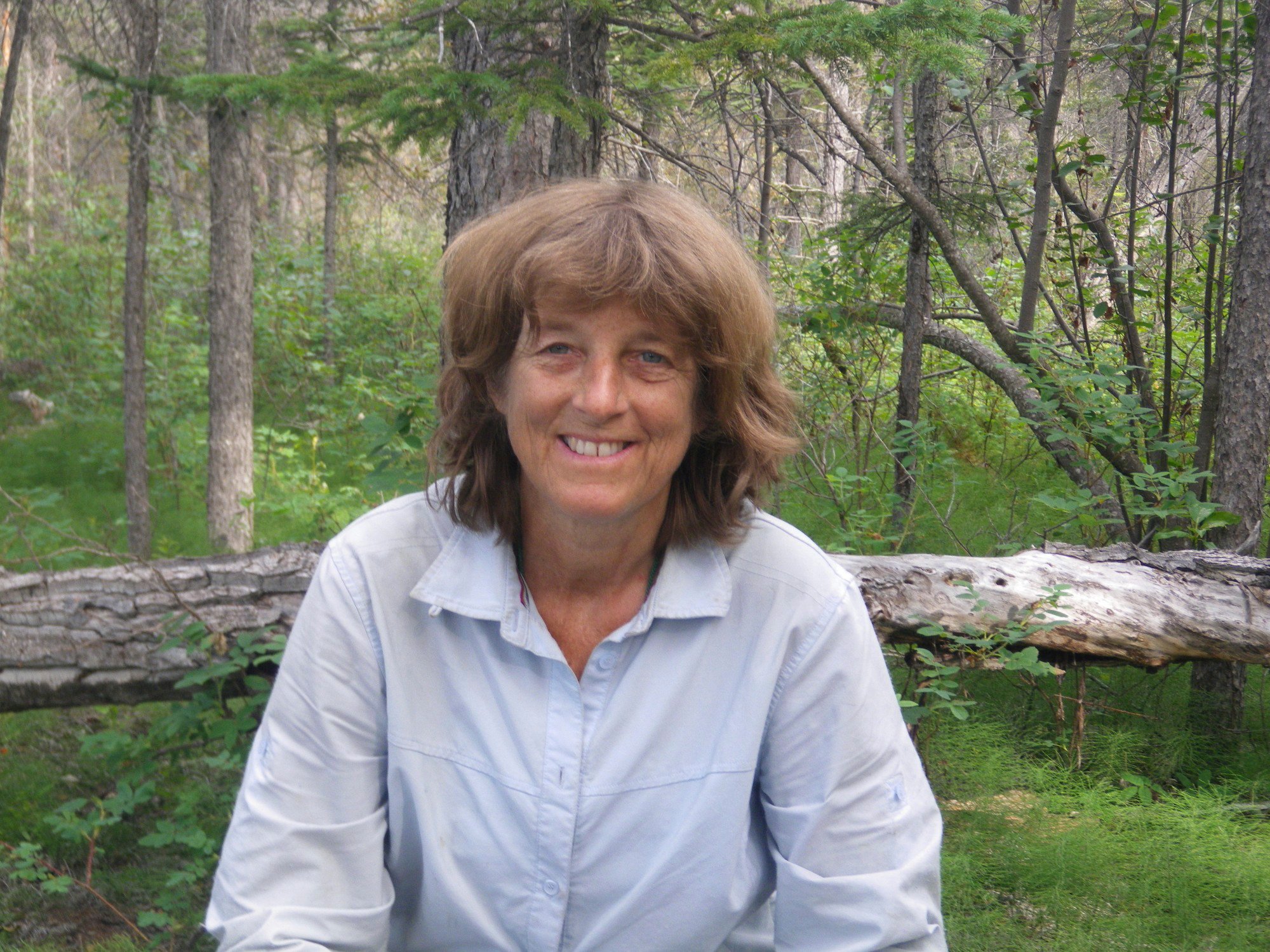
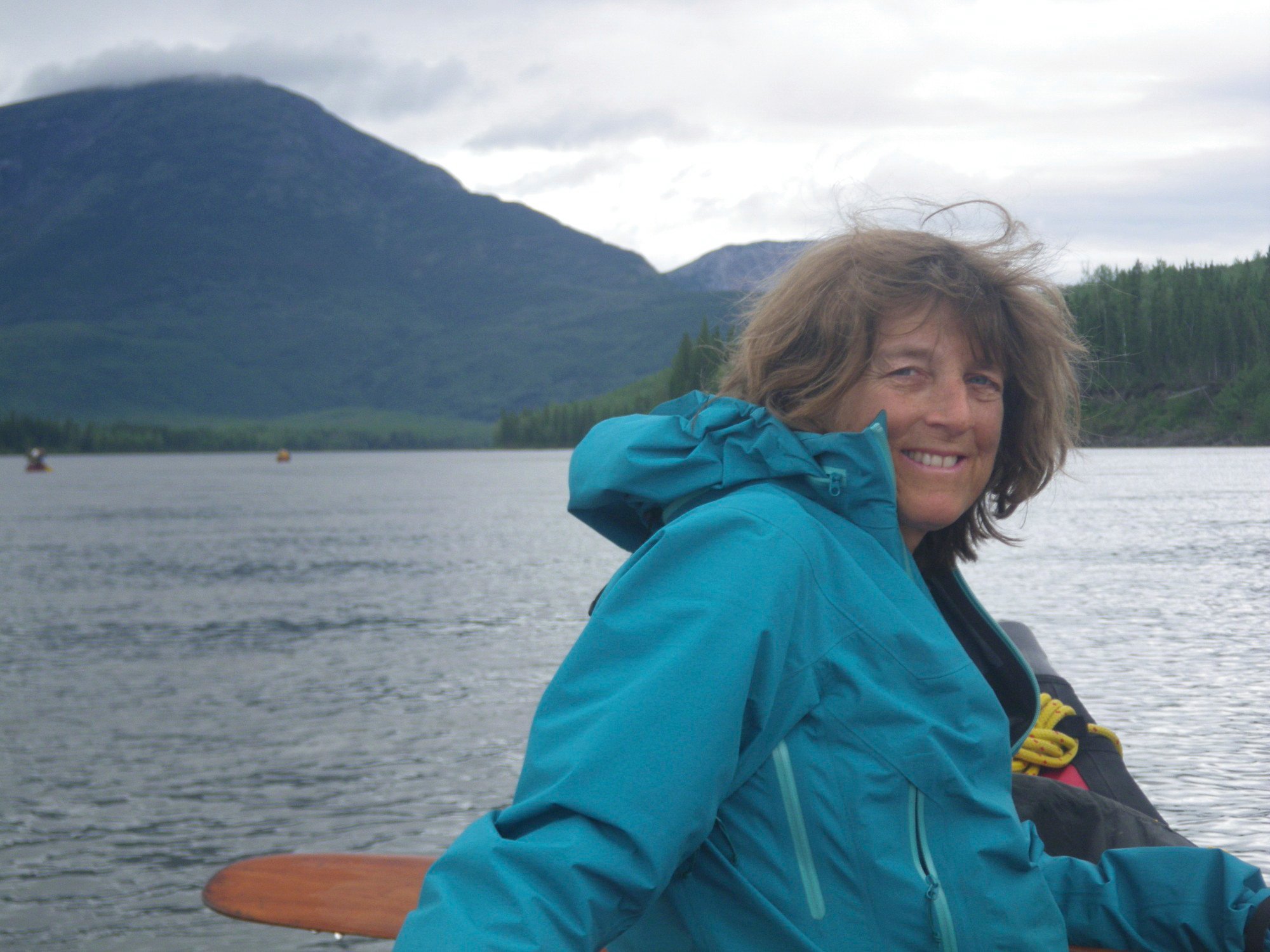
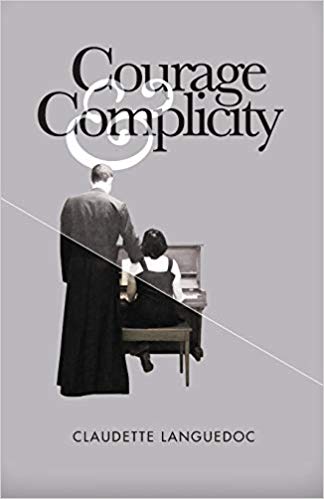
CLAUDETTE LANGUEDOC: AUTHOR OF COURAGE AND COMPLICITY EXPLAINS, “I FELT DEEPLY ASHAMED OF JUST BEING WHITE… THE RESIDENTIAL SCHOOL SYSTEM ROUTINELY USED SHAME TO SUBJUGATE THEIR STUDENTS, SO PERHAPS IT IS USEFUL FOR MY WRITING THAT I FELT THIS WAY.” …A REVIEWER INTERVIEWS PEOPLE IN THE ARTS

JAMES STRECKER: Please tell us about one or more projects that you have been working on or have recently completed. Why exactly do they matter to you and why should they matter to us?

CLAUDETTE LANGUEDOC: The book I have recently completed, Courage and Complicity, is the fictional story of a young white woman who, in the late 40s, travels north from Toronto to teach at an Indian Residential School. Mary begins her time at Bear Lake Indian Residential School as a wide-eyed neophyte eager to prove herself and excited to meet her students. When the underbelly of the school becomes impossible to ignore, her attempts to make changes are met by a wall of indifference and submission. Outside the school, she gets her own life lessons from people on both sides of the tracks that divide the town of Bear Lake, literally and figuratively, into white and “Indian”.

I believe that we, as a country, need to face up to our past. But the legacy of residential schools, both as a trigger and as a symbol of Canada’s attitude toward the Indigenous people who live here, has created an anger and frustration that has co-opted many attempts at meaningful dialogues. Issues relating to Indigenous people living in Canada are seldom raised without strong emotions from both sides which makes meaningful dialogue difficult at best.

I think that part of the problem is that most non-Indigenous people cannot hear the residential school story without hearing the anger and blame. Emotions they believe are directed at them, which they feel is unfair. So instead of listening, they build their own walls. What I want to do with this book is to present, to non-Indigenous Canadians, a story that they can engage in. I want to show the insidious nature of bigotry and racism, without the anger, and to encourage those who believe they are not racist, to look more deeply into the beliefs and biases that most of us in the white world unknowingly buy into. I want people who have never had any personal connection with residential schools to get a personal perspective, through Mary and her experiences.

JS: What might others not understand or appreciate in the work you produce or do?

CL: I am curious to hear what Indigenous people think of this work. It is a sensitive and topical story. I hope I have presented it sensitively.

JS: What are the most important parts of yourself that you put into your work?

CL: I went through a phase where I felt deeply ashamed of just being white. Shame is not a pleasant place to be. The residential school system routinely used shame to subjugate their students, so perhaps it is useful for my writing that I felt this way. But the most important part of myself that I put into this book, was to try and look honestly and how I would have dealt with residential school had I been a young teacher there. I trust that this honesty comes through and makes the book more believable. My protagonist is no heroine.

JS: What are your biggest challenges as a creative person?

CL: My biggest challenge, in this work, was to be objective and to avoid preaching.

JS: Imagine that you are meeting two or three people, living or dead, whom you admire in your form of artistic expression. What would you say to them and what would they say to you?

CL: I would love to meet Rumi, and just sit in his presence. His writing, even translated brings together joy and wisdom, humanity and divinity in a way few others have mastered.
I would also love to meet Shingwauk. He was an Anishinaabe leader in the early days of residential schools. He supported the idea of young people getting a western education. I would love to have the chance to talk to him and to understand his vision.

JS: Please describe at least one major turning point in your life that helped to make you who you are as a creative artist.

CL: Being part of a writing group has made a huge difference to me as a writer. It has meant that I am constantly being asked to write, with a deadline. Hearing other people’s interpretations of the same prompt has been very influential as well, and helped me look at whatever I write more objectively.

JS: What are the hardest things for an outsider to understand about your life as a person in the arts?

CL: That writing is a job.

JS: Please tell us what you haven’t attempted as yet that you would like to do in the arts? Why the delay so far?

CL: A children’s book. I need to find an artist!

JS: If you could re-live your life in the arts, how would you change it and why?

CL: I would read more, and give more value to sitting down with a good book. In our/my busy life, sitting with a book is something I still see as the last thing on my list, something to do when everything else is done. It’s rare that “everything else” is ever done, so reading happens in bits and pieces.

JS: Let’s talk about the state of the arts in today’s society, including the forms in which you work. What specifically gives you hope and what specifically do you find depressing?

CL: At the depressing end is the short attention span that seems to be prevalent today. And especially the lack of time many people have to just think. Even the trip to work, walking the dog or a trip on the bus, is occupied with podcasts and games.
At the hopeful end is the acceptance of any and all types of artistic expression. We are seeing large scale works such as performance arts, and interactive installations. “Graphic novel” sounds much more legitimate than “comic book”. Macramé around lampposts and murals on the sides of building provide us with a view of artistic expression without ever entering an art gallery.

JS: If you yourself were a critic of the arts discussing your work, be it something specific or in general, what would you say?

CL: Many people have told me, in response to the book, that it is well balanced. I’m not sure if an Indigenous person would feel the same, but I think that as a general critical comment, I would agree. Many of those same people have said that it was the first time that they were able to empathize with survivors of residential schools and the intergenerational trauma it produced. So, specifically, I would say that using a white woman as a protagonist was a unique device to make the residential school story accessible to non-Indigenous readers.

JS: Finally, what do you yourself find to be the most intriguing and/or surprising things about you?

CL: I think that what most people would not expect, is that, at 66, I am still doing canoe trips. What continues to surprise me about myself is that, at 66, I still care about what people think of me. And I haven’t learned to read their minds, although sometimes I like to think that I have!

Posted in Uncategorized | Tagged , , | Leave a comment

DOUGLAS WILLIAMS: BASS-BARITONE, NEPTUNE IN MOZART’S IDOMENEO WITH OPERA ATELIER APRIL 4-13, AND THEN NICK SHADOW IN STRAVINSKY’S “THE RAKE’S PROGRESS,” WITH THE MUNICH PHILHARMONIC CONDUCTED BY BARBARA HANNIGAN, EXPLAINS: “WHETHER OR NOT YOU’RE A SINGER, YOUR VOICE IS ONE OF THE BIGGEST WAYS THAT YOU PROJECT YOUR SOUL INTO THE WORLD.”…A REVIEWER’S INTERVIEW WITH PEOPLE IN THE ARTS


Photo by Juan Camilo Roa

Photo by Florian Grey

JAMES STRECKER: Please tell us about one or more projects that you have been working on or have recently completed. Why exactly do they matter to you and why should they matter to us?

DOUGLAS WILLIAMS: At the moment I am just days away from performing the role of Neptune in Mozart’s “Idomeneo” with Opera Atelier at the Ed Mirvish Theatre. This is my third production with Opera Atelier and each time I’ve sung with this company they have found new ways to challenge me. This time Director Marshall Pynkoski has expanded the role of the voice of Neptune (perhaps in the original performance the character was not even seen) into a character with a choreographed physical presence throughout the opera, causing storms and calamity that propels the drama. It is a movement intensive role. I like working with Opera Atelier because you utilize your entire body — you bring the drama of the music and the story through your body. This is uniquely Opera Atelier’s style.

I am also preparing the role of Nick Shadow in Stravinsky’s “The Rake’s Progress,” for staged performances next month with the Munich Philharmonic conducted by Barbara Hannigan. This is a role that I have dreamed of singing for years, and I feel like the opportunity has arrived at the right moment in my vocal development. I don’t think it’s a role I could have sung successfully even a few years ago. Dramatically it’s so much fun to play. Nick is a devil charged with unleashing the hedonist in his protégé, Tom Rakewell. Barbara has cast young, emerging voices for this “Rake.” It’s also her opera conducting debut, so there should be a lot energy and attention around this project. We already had workshops on the piece last November and I have every confidence it’s going to be an exciting performance.

JS: How did doing this project change you as a person and as a creator?

DW: Well, the Rake is not yet complete, but in process. In preparing Nick Shadow, I felt a synthesis of a lot of things that I’ve been working on over the years and that I never want to lose sight of in my singing: This balance between darkness and light, graveness and fun, power and agility. Nick is spontaneous, and insistently positive even as he drives Rakewell toward ruin. There is a sense of play within a very strong frame of this supernatural, evil character. And I think that especially as a low, dark voice that is something I never want to lose sight of and I want to integrate into my singing with everything I approach.

JS: What might others not understand or appreciate about the work you produce or do?

DW: Whether or not you’re a singer, your voice is one of the biggest ways that you project your soul into the world. So, there is a lot of unconscious psychology and ideas we have of ourselves and of our bodies that needs to be stripped away to find one’s true voice. To surrender to your real voice. That has been a part of my story as a singer and perhaps that something non-singers would not think about as part of the training and development of a singer.

JS: What are the most important parts of yourself that you put into your work?

DW: I’m a little bit crazy and weird, and an opera stage is often a perfect place to let that flow. As a bass-baritone I’m usually in the role of the menace, the wicked one, the loner, the seducer. Figaro would be a sunny exception of a role that I do that is good-hearted and earnest and normal! I embrace the opportunity to live other lives on stage, and I commit to it once I’m there.

JS: What are your biggest challenges as a creative person?

DW: I’m sensitive. To other’s egos, to the energy in the room, to my own faults or failures. Sometimes it takes a lot of emotional focus (like a warmup before I sing or rehearse) to brush off what’s going on around me and stick to my first intention.

JS: Imagine that you are meeting someone, living or dead, whom you admire because of their work in your form of artistic expression. What would you say to them and what would they say to you?

DW: I would love to meet Emanuel Schikaneder, the actor, singer, composer, and most famously the librettist of Mozart’s “Magic Flute” and the first Papageno. He was someone who created his own unique path — unbound by any category and also bringing together all the arts in his work. He thrived in collaboration.

JS: Please describe at least one major turning point in your life that helped to make you who you are as a creative artist.

DW: Coming out as a gay man. I was not completely hooked up to my body prior to that, and so I think my singing was less interesting than it is now. I was also distanced from my impulse — and a creative person must learn to hear and respond to impulse.

JS: What are the hardest things for an outsider to understand about your life as a person in the arts?

DW: What appears to be a circus life of being away from home most of the time, juggling multiple works of music at once in your brain, having income fluctuate… all of the stuff that comes with being a performer can be quite manageable and richly enjoyable with some mindfulness, loving and supportive friends, and a voracious sense of adventure and curiosity for life.

JS: Please tell us what you haven’t attempted as yet that you would like to do in the arts? Why the delay so far?

DW: I would like to create more music-films. Maybe even a film of an entire song cycle, such as Schubert’s Schwanengesang. I love combining music and imagery. This will take a fair amount of money. Doubt — that I would have a clue as to what I’m doing — is also factor. I’m also starting to write some music (art song) for myself. This is also coming with a lot of doubt.

JS: If you could re-live your life in the arts how would you change it and why?

DW: I’ve only just dabbled in acting — and I know that I am too much a musician and too in love with it to do without music — but, sometimes I do think about a second life as a Shakespearean actor. I think it has to do with empowerment. Without music you lack the genius of the composer’s text setting, but then you have to dig even deeper and find your own connection to the text. This is a very exciting feeling. I recently heard Natalie Dessay speak about her transition from the opera stage to the theatre stage. She said what’s different between the two worlds is that in theatre the challenge is: how present can you be? I love that.

JS: Let’s talk about the state of the arts in today’s society, including the forms in which you work. What specifically fives you hope and what specifically do you find depressing?

DW: I’m amazed by the quality of singers these days. There are just so many fine singers it seems. I’m also inspired by increasingly diverse group of composers, librettists, conductors, and directors who are creating new work for the opera genre. Opera is also a hot place for collaboration with artists from visual disciplines. There is a lot to be excited about.

I’m concerned about the diminishing baseline knowledge of fine arts in society. You need just a little tiny seed of awareness of opera to get you in the door. You won’t go if you have zero reference point. But gone are the days, it seems, when an opera star might also be a mainstream celebrity. The shrinking attention span is also a huge problem. Curiosity and the simple willingness to sit through anything for a couple hours without your phone is seriously under threat. When part of the audience leaves at the intermission of a Saint Matthew Passion (as happened to me in January) you have to wonder, what did they go off to do? Was it so uncomfortable for you? Or was there something just more safe and convenient awaiting at home.

JS: What exactly do you like about the work you create or do?

DW: There are so many things I like about what I do. Singing is a learning experience about yourself that has no end, and I am so grateful for that. Singing music that spans four hundred years is like cultural time travel — you can never stop learning or making new connections to history and across art forms. I like traveling and the challenge of meeting a new team and creating something special in that city, for those artists, at that time. What better way to experience a place than to participate in its cultural life? Most of all, I like that singing opera can be both playful and highly disciplined at the same time. A rehearsal room is a space to experiment, to open the costume box in your mind, to indulge your childlike imagination — while at the same time working very hard and drawing satisfaction from challenges and craft and the skill of those around you.

JS: In your creative life thus far, what have been the most helpful comments you have heard about your work?

DW: I have a teacher, Neil Semer, who is very honest with me. You need love and support in this career, but when it comes to improving your work you don’t need fluffy praise. More generally speaking a mentor of mine once told me to trust in who I am and what I’m doing and the right people will notice. Patience and trust were tools that older and wiser people had to teach me.

JS: Finally, what do you yourself find to be the most intriguing and/or surprising things about you?

DW” I respond strongly to nature. It’s so vital to me that I’ve learned I need to do a camping trip in some spectacular landscape at least once a year. These experiences used to seem mysteriously unrelated to my life as a singer, working in cities and theatres. But I recognize it’s all coming from the same deep place. Experiences in spectacular nature seem to lift the ceiling for me, remind me of unbound possibilities, primal impulse, and declutter my soul.

Posted in Uncategorized | Tagged , , , , , , , | Leave a comment

DANIEL CABENA: WITH SCARAMELLA IN VIVALDI’S CHAMBER CANTATAS ON APRIL 6, A “COUNTERTENOR OF THE HIGHEST QUALITY” EXPLAINS, “THESE CANTATAS ARE SECULAR – MOSTLY ABOUT LOVE AND ITS, LET’S SAY, UPS AND DOWNS – ESPECIALLY ITS DOWNS!” …A REVIEWER’S INTERVIEW WITH PEOPLE IN THE ARTS (Tickets at www.scaramella.ca/ticket%20order.pdf)

JAMES STRECKER: Please tell us about one or more projects that you have been working on or have recently completed. Why exactly do they matter to you and why should they matter to us?

DANIEL CABENA: I’ve been working on a program of Vivaldi cantatas for a concert with Scaramella in Toronto next week on April 6. So, we’ll be a quartet of musicians: Joëlle Morton, Paul Jenkins, Neil Chen and me. These cantatas are secular – mostly about love and its…let’s say ups and downs. …Especially its downs! And there’ll be instrumental pieces too, thank heavens; for I’ll need the rest: these pieces are good old-fashioned hard work! It’s funny: had it not been for this question of yours, I certainly would have prepared rehearsed and performed this program of music without any heed to why or how it matters to me or should matter to you. I’m not sure if I just take for granted that it ‘matters,’ that to make music together is just simply good, or if I actually don’t think that it ‘matters’ in any specific or easily expressed way…. Thanks for this question. How would it be if I were to say that it doesn’t matter: that it’s actually just lovely to get together and share some music? That’d be one approach to the question, one that I quite like. Another would be to say that it matters terribly, that, in the face of all that’s so painfully and disorientingly wrong in the world, we simply must and perhaps can only respond by getting together and making something together – like music. I like that answer too. Would either of those do?

JS: How did doing these projects change you as a person and as a creator?

DC: To make friends with these Vivaldi cantatas has been a humbling experience, for the virtuosity that they demand is, though almost manageable, still beyond me! So, they’ve helped me to develop some new skills and to really dig deeply into my method of practice and preparation. By that I mean that I’ve really had to trust in my methods and that, over the course of times and through careful work, I would grow into the demands of this music. This process so far – and we haven’t even begun rehearsals yet; so, I’m still speaking now of my own study and practice – has also allowed me to return to first principles and especially to the…let’s say, ‘shared primacy’ of text, rhetoric and music. (For, in Vivaldi’s time and tradition, those three were understood to be equally important.) So, it’s been a fruitful challenge, and it’s allowed something of a shoring-up in my practice and thinking. I can’t wait to get together with my wonderful colleagues at Scaramella and start rehearsing!

JS: What might others not understand or appreciate about the work you produce or do?

DC: I think people might be surprised to know how much time and work it takes to mount a program of music. I won’t quantify that, as it varies so widely from program to program, piece to piece; but I will say that it’s a considerable investment of effort. It’s wonderful, too – really like forging and growing into a relationship. There’s an encounter to be made… Visually, through the score, or aurally, through listening; then there’s a kinaesthetic encounter with the work, the feeling out of the singerly demands. Then there’s all kinds of messy and multi-layered study of the music and text. There’s analysis, research into meaning and structure and character. And, alongside all of that, there’s a growing familiarity that’s taking place – you and the music and text start to get comfortable together, likely through fits and starts, and sometimes through conflict! So, yes, I think people might be surprised by how similar this preparatory work is to getting to know a person.

JS: What are the most important parts of yourself that you put into your work?

DC: Well – and that’s another potentially surprising thing – I think it’s really a whole person sort of job. There’s analytical work. There’s emotional work – sampling from the smorgasbord of affect and motivation. There physical work, the ongoing experimental process of learning to coordinate yourself in the particular activity that is singing the music. Then there’s all the ‘self-care’ sort of stuff – the rest and repose – that’s essential to the integration of the work and, later, the sharing of that work in performance. The whole self is the instrument.

JS: What are your biggest challenges as a creative person?

DC: It’s a bit like in the Tom Petty song: ‘the waiting is the hardest part.’ It’s hard to wait off-stage before the concert starts, hard to cope with the lively and occasionally confounding stimulus of that particular brand of expectation. But it’s also hard to do the kinds of waiting that the profession demands; for one often has to wait for opportunities to arise in which to offer whatever it is that one has to offer. …All of that despite the knowledge – and sometimes something of an urgent feeling – that one has something to give and say. One has to let all of that simmer and find a way to do the work, even when one’s waiting. I’m getting into pretty deep stuff there, so I don’t mean to belabour the point! But I’ll turn it over towards the practical and say that I’ve never found this area of experience to be challenging in the busiest times. So, if we were all just making a heck of a lot more art, I suspect we’d have found a cure to the angst that I’m describing!

JS: Imagine that you are meeting two or three people, living or dead, whom you admire because of their work in your form of artistic expression. What would you say to them and what would they say to you?

DC: I’ve been lucky to have the opportunity to meet and work with a lot of my musical heroes, one of whom is Hervé Niquet. I found singing with him to be an exquisitely freeing and clarifying experience, so based upon the reality of being joined together in a single purpose and doing so playfully. I’ve not sung for him for five or six years now, so I’d like to chew the fat with him now, and ask him to be a fly on the wall in my teaching studio (he’s a great voice teacher!) and give me feedback. I’d thank him for his example and guidance. I’ve also had the huge privilege of meeting with and studying with one of my countertenor heroes, Paul Esswood. Nor have I any specific questions to ask him, for I found all my questions to be answered in his singing and his fellowship (over meals in the village of Saint-Bertrand-de-Comminges). The simple elegance and generosity of spirit that he evinced in his conversation and teaching are of the same substance as his singing. I’d thank him again (also for his Dichterliebe, which is beautiful!). I’d thank my teacher, Wendy Nielsen, who manifests in her work and her friendship this extraordinary constructive acceptance and cheerfulness, and I’d ask her just how she manages to know exactly what to work on in exactly which moment – for she embodies that and many other virtuosities! Finally, I’ve had the privilege to be brought up by a musical hero, my father, Barrie. His rhythm, his sense of fun, his commitment to text, his respect for craft, his refusal to take himself seriously while, at the same time, taking the work seriously, his devotion to the forgotten, the overlooked, his encouragement to go my own way…. For all of this I’d thank him. And I get to thank him in person, too, as he lives just ‘round the corner.

JS: Please describe at least one major turning point in your life that helped to make you who you are as a creative artist.

DC: I had an extraordinary experience in a masterclass once that was really THE door that I needed to pass through in order to get…anywhere at all. The teacher (the wonderful Margreet Honig) stopped me in the midst of my struggle with ‘Che faro senza Euridice’ and said, ‘Hey, Daniel: you are thinking in muscles.’ To which I replied, ‘Well, yes, of course I am. What else is there?’ ‘But, Daniel: I think in air,’ she replied, without missing a beat. That insight allowed me to tap into an organizing principle, something of a higher…no: I think I mean deeper…plane by which to coordinate myself in singing. That moment brought together and clarified decades of voice study and liberated me to continue in my work. It also confirmed me in my feeling of being called to teach. So that’s one turning point. There have been lots of others…. And I find that so many of my singing lessons – with Richard Cunningham, Daniel Lichti, Jan Simons, Catherine Sévigny, Suzie LeBlanc, Mark Pedrotti, Victor Martens, Gerd Türk, Margreet Honig, Paul Esswood, and Wendy Nielsen – have been major turning points in my life; and, since undertaking Alexander Technique teacher training with Susan Sinclair in Toronto, I find that there are more and more of these turning points! But I do like that one that I described. ‘I think in air.’ Ain’t it grand to be a breathing person!?!

JS: What are the hardest things for an outsider to understand about your life as a person in the arts?

DC: I think it’s hard for an outsider – and for an insider, to boot – to understand how it works. …Practically, I mean, and financially. It’s not only that a person in the arts is almost always precariously and only occasionally employed, but to grow to a certain level and then to maintain that level of craft is a costly proposition. This wouldn’t be hard to understand, I think, if we hadn’t so willingly abandoned in our quotidian speech all language but the language of business. I’m not antagonistic towards business by any means, but I think we should rethink our adoption of business language in other arenas of work. I’ll get to the arts; but first I would suggest that it behooves us to reject the use of business language in our discussions of governance and citizenship. At some point I went from being a ‘citizen’ to a ‘tax-payer’ and then to a ‘consumer’; and it’s disorienting, because I am still, in my bones and purposes and sense of belonging, a citizen. Anyway, the artist has undergone same process, I think: and we’re now expected to speak of ourselves as ‘products’ and then to ‘sell’ those products. But I just don’t think that we function that way, and our work doesn’t function that way. So why don’t we use language that better reflects the lived reality of arts and craftspeople (not to mention of citizens)? Different paradigms require different language. And maybe different language would allow us to notice that, in fact, it is working – and we are working: that there is ongoing activity in our cultural life, even if, for a business person, I mightn’t appear to ‘add up.’ Can we be ‘practitioners,’ or ‘craftspeople,’ or simply ‘artists’ (though I sometimes worry that that last one may have taken on too much weight!)? Anyway, I think there’s a language barrier around some of these things. Nor does that barrier limit our understanding only of the life and value of artists and craftspeople: it’s also very much a theme, I would suggest, in other fields, like in medicine, say, or parenting. All of these disciplines and activities are essential strands in our social fabric, and their value is not easily described in the language of business and commerce (even though all of these fields interact with one another, smooshily).

JS: Please tell us what you haven’t attempted as yet that you would like to do in the arts? Why the delay so far?

DC: I would like to spearhead a big old messy musical ensemble project of some kind, one that enfolds under its auspices students, professionals and amateurs, music-makers of a variety of stripes and ages and interests. I’d like for that to explore at the same time early and contemporary music, and I’d like it to blur the lines between the educational and the performative. Nor am I sure that there’s been a delay, exactly (though I’d sort of like to get going right…now!) …. I have been ruminating considerably over how to ‘house’ a project like that, whether to look for an institutional framework or something less permanent. So that’s something of a hurdle; but I think I’ve mostly just been picking up steam. So, look out! Or listen up, I suppose!

JS: If you could re-live your life in the arts, how would you change it and why?

DC: I’m blessed to be able to say that I haven’t any tremendous regrets. Nor do I think that there’s a perfect formula for how to live a life in the arts or a life, full-stop: for each of us, it’s a grand and messy cobbling together of interests and skills and opportunities, of needs and desires and capacities. I would say, though, that there’s something fruitful in having the fullest and widest possible exposure to and understanding of the arts. And I think that, therefore, a full and deep arts education is extremely important. So, with all of that in mind, I’d say that, if I were to change anything, re-live my own life in the arts, I’d devote more time to the visual arts and dance, with both of which I’ve fallen in love later in life. But, instead of through re-living, I’m keen to redress that lack – and many others! – in my current living.

JS: Let’s talk about the state of the arts in today’s society, including the forms in which you work. What specifically gives you hope and what specifically do you find depressing?

DC: Well, I guess I touched upon one element just a moment ago that worries me: education. I’m concerned that the arts have become too much of a niche or set of niches and that their value is too often understood conditionally…along the lines of ‘Mozart is good for the developing brain,’ or ‘a study in music develops good soft-skills.’ I believe that both of those things are true; but it’s also depressing to have music or the other arts reduced in that way: for I think it’s much more important to acknowledge that the arts are not only just plain good but also an essential part of a person’s life and of our shared cultural life. I also worry when the arts cease to be understood as informed by craft and tradition. In the absence of those things, I worry about our losing our moorings; and I worry about our ongoing obsession with ‘genius.’ I know I’m expressing that a bit stridently…but let’s take an example, like J.S. Bach. I couldn’t possibly count the number of times that I’ve read and heard Bach’s name and ‘genius’ in the same sentence; but surely, though he must have had a fairly generous intelligence quotient, and though he was magnificently creative, I suspect that he would have been appalled at our focus on his ‘genius,’ which utterly misses the point. His music works, fulfills a practical cultural purpose. And his musical voice emerged from the great chorus of tradition; and he was a musical craftsperson. I think we need to celebrate those elements – of craft, function and tradition – and let go of our obsession with the idea of ‘creative genius,’ upon which our cultural programming, not to mention our curricula, are too often based.

JS: What exactly do you like about the work you create and/or do?

DC: I love that it’s, by its nature, collaborative: the making is done with others, and the whole team is gorgeously essential; and the sharing is done with others, by and for the performers and by and for the audience. I love that. I also love that the work really is a full-person sort of work. And I wish that that experience – of working with the whole – were celebrated in other fields. I’ve done a bunch of construction and renovation work, and I find in those fields a lot of togetherness; and teaching certainly demands a holisticness of approach. But I hope that that’s possible also in the non-Handwork disciplines – administration, finance, research, and countless others. So, yes: I love collaboration and to work with ‘all of me.’

JS: In your creative life thus far, what have been the most helpful comments you have heard about your work?

DC: I must say that encouragement is hugely helpful. I know that it’s sometimes suggested that our society at large is suffering from an excess of unconditional positive regard, but that is not a condition that I have ever so far observed in the arts. We’re really hard on ourselves and really self-critical. One of the hardest things for my students to do, for instance, is to name even a couple of things that they liked about a performance that they’ve just given. The negatives pour forth effortlessly, by contrast; and they’re of terribly little pedagogical value! So – and this might seem silly or facile or childish – but just to hear from an audience that they appreciate what you did or are doing is a gift without price. And, you know what: I believe that we just simply learn more from that, that those gifts bear fruit.

JS: Finally, what do you yourself find to be the most intriguing and/or surprising things about you?

DC: I don’t know what might be particularly surprising or intriguing about me, but I must say that I never cease to be surprised by and intrigued with every single person that I meet. We’re, each of us, so magnificently ourselves. I do have a lot of extra-musical interest, though. I collect vintage clothing and am fascinated with textiles and design. I think that’s part of a wider fascination with ‘how humans lived then.’ I’m blessed to have a partner, my wife Mary, who’s keen on such things; and we have a grand time making the ‘garden’ of our shared interests to grow. (That’s an odd metaphor for me to choose, though, since Mary and I have about 13 grey thumbs between us!) I’m also very keen on cocktail-making (nor do I have a strong objection to cocktail-drinking, mind you). And I simply adore reading fiction (quietly) and poetry (aloud). I’m very interested, also, in this Alexander Technique work that I’m involved in and which I hope within a few years to be qualified to teach. It’s a long and wonderful adventure, and it has the benefit of making everyday things, like tying one’s shoes and emptying the dishwasher, fabulously interesting.

Posted in Uncategorized | Tagged , , | Leave a comment

JOHN HOLLAND: BARITONE-MUSICOLOGIST IN DON GIOVANNI MARCH 2 AT BURLINGTON PERFORMING ARTS CENTRE EXPLAINS, “SOMETIMES OUR LARGEST GROWTH AS ARTISTS COMES FROM WHAT OTHERS WOULD PERCEIVE AS FAILURE. MUSICIANS TAKE CHANCES, AND WHILE THEY DON’T ALWAYS TURN OUT THE WAY WE WANT, INVARIABLY THEY INFORM US MORE ABOUT OURSELVES AS MUSICIANS, AND HELP US REFINE OUR CRAFT” …. A REVIEWER INTERVIEWS PEOPLE IN THE ARTS

JAMES STRECKER: Please tell us about one or more projects that you have been working on or have recently completed. Why exactly do they matter to you and why should they matter to us?

JOHN HOLLAND: This year has been a ‘Year of Leporello’ for me, so to speak, and it continues to be a joy to take on the role of Don Giovanni’s sidekick, and cataloguer of his romantic conquests. This role journey continues with the March 2nd performance of Don Giovanni with Southern Ontario Lyric Opera (SOLO). Not only is this an opportunity to revisit Mozart’s beautiful music, but it is also a chance to grow in the role of Leporello, and to refine my interpretation of him.

JS: How did doing these projects change you as a person and as a creator?

JH: Singing opera has a significant impact on the way I listen, the way I think, and the way I make music. Opera is very different from art song and other forms of singing. the music is always rooted dramatically in a character of scenario, and very seldom detached. Opera is an arena of action and reaction. You listen to the other characters, and have to react vocally as your own character would. You have to embody your character both dramatically and musically, and that process has to inform your singing.

JS: What might others not understand or appreciate about the work you produce or do?

JH: Bar none, the biggest thing that people don’t understand is the language immersion that takes place. Not only do professional singers practice regularly, but many of us take extensive language training in sung diction, spoken diction, and grammar and vocabulary. I took three years of German in university days, French and Latin all the way through high school, three summers of Italian diction work with Nico Castel (the former diction coach at the MET), and also, for my area of expertise, Czech language study as well. I haven’t even begun to talk of the variants of sung Latin (French Latin, German Latin, etc). Classical singers are also linguistic experts.

JS: What are the most important parts of yourself that you put into your work?

JH: Definitely my imagination. Opera singers cannot become a character without visualizing themselves as that character. I imagine my character in different situations. How would they react in these scenarios? How do they feel about the other characters in the opera? This is all a huge part of how I prepare for a role, and how I interpret a character’s music.

JS: What are your biggest challenges as a creative person?

JH: I think the one of the biggest challenges is finding the time to create. Having the time to experiment with repertoire choices, vocal colours, collaborative projects, and the like, can be very difficult. Also, sometimes our largest growth as artists comes from what others would perceive as failure. Musicians take chances, and while they don’t always turn out the way we want, invariably they inform us more about ourselves as musicians, and help us refine our craft.

We live in a society that is a results-driven world, and it can be non-conducive to experimentation, and taking those chances to create something amazing. Also, music is a lifelong process. It is not something one studies for in university and then just stops growing. Singers in particular go through vocal changes their entire life, and travel through different phases in regards to operatic roles. Since our instrument is directly connected to our physical body, as we age, our voices mature. The greatest challenge in this regard is the feeling of being rushed, and the pressure of having to excel and achieve before a voice is fully ready and developed.

JS: Imagine that you are meeting two or three people, living or dead, whom you admire because of their work in your form of artistic expression. What would you say to them and what would they say to you?

JH : Dietrich Fischer-Dieskau, the great German baritone, and lieder specialist. I would probably ask him for a lesson, and he would say yes but only if I brought something other than German Lieder. I read in his biography that he was always disappointed more students didn’t to him to study opera arias over German Lied. Nico Castel, the diction guru from the MET. I studied with him for three summers at the Opera Nuova training program, and coached major Italian roles with him, including Figaro and Leporello. He was a wonderful mentor and friend, and to him I would thank him for passing on his dedication for clear and comprehensible sung language, and, in turn, Nico would probably ask me to speak recitative lines as dialogue so he could hear my diction. I would hope he would be happy.

Lastly, it is a tossup between Mozart and Dvořák, my two favourite composers. I admire both so much and adore their music. For both, I would ask them to each write one more opera, and I feel the music world could only benefit this. While Dvořák was a bit more methodical in his composing, I’m sure Mozart could fire off an opera in short turn-around time, and we would all be the better for it!

JS: Please describe at least one major turning point in your life that helped to make you who you are as a creative artist.

JH: I have had a few major turning points in my life as a professional singer. The first was being part of the Ontario Youth Choir back in 1999. That was my first opportunity to be part of an artistic experience with peers who were as addicted to music as I was. I had found the courage to be musical amongst those who were just like me.

I have been able to work with many great voice teachers over the years, but my time studying with Ted Baerg at the University of Western Ontario was a defining moment for me as a young singer. With Ted, I was with a vocal instructor who was my voice type, who knew everything that was going on with my voice from a pedagogical sense, and knew every bit of repertoire that I had sung, or would ever sing, on an intimate level. Studying with not only a great teacher, but also a great performer, was pivotal in my growth as an opera singer.

I recently spent three summers in Prague as part of the Prague Summer Nights Festival, performing in opera productions as Leporello and Masetto (Don Giovanni) and Figaro (Le Nozze di Figaro). Not only was it great to sing these roles, but the productions were at the Estates Theatre, one of the oldest opera houses in the world, and the last remaining opera house in which Mozart himself had conducted. In fact, it was in 1787 in that very theatre, that Mozart conducted the world premiere of Don Giovanni. Stepping on to that stage, and knowing that Mozart had stood there to conduct Don Giovanni, was a moment that elevated the performances for me. You could sense Mozart there in the theatre, and needless to say, everyone raised the bar on their performances.

For three summers, Prague and the Estates Theatre were my operatic home. Also, the fact that the production was directed by the legendary baritone Sherrill Milnes (a famous Don Giovanni in his career) was truly something else. Being able to rehearse recitatives and duets with one of your idols, myself singing Leporello, and Sherrill singing the Don, was a period of substantial learning and growth for myself.

JS: What are the hardest things for an outsider to understand about your life as a person in the arts?

JH: As I mentioned somewhat before, the idea that music is a life-long journey, is something that can be difficult to process. In university I had friends from other faculties who would ask when I finished classes for the day, and would suggest going out to socialize, and I would often say, “Well, I have practice times booked”. They would often respond by saying that I had told them my classes ended at the same time as theirs. I would agree, but restate that I had practice times set up. They would always say that when they were done classes, they were done for the day and would leave campus. They couldn’t fathom that once music classes were finished, there was still more work to be done. The daily dedication that professional singers put in, whether vocal warm-ups, practice sessions, language study, or stage work, singers are daily engaged vocally, physically and mentally in their profession.

I am fortunate to have a wife who understands the dedication that goes into this profession. She sees me through the entire process, from learning new roles and bashing out notes on the piano, to seeing that same role on stage. In the case of Leporello, she has seen me from that learning stage, to singing the role in Prague at the Estates Theatre, to a 2018 Ontario tour of Don Giovanni, and now to the upcoming SOLO production.

Also, there is no on-the-job training. When you are hired for a new role, you are expected to have it learned and ready to go at the first scheduled rehearsal. There is no grace period to learn on the job, or paid training sessions. All of our preparation is done on our own. We are responsible for having our roles in good shape, and if not, there are eager singers waiting in the wings for roles.

JS: Please tell us what you haven’t attempted as yet that you would like to do in the arts? Why the delay so far?

JH: Honestly, I have very few aspects of singing that I feel I have missed. I have sung in professional choirs such as the Ottawa Bach Choir, the Toronto Orpheus Choir and the like. I have sung with the Canadian Opera Company, and operas houses and concert spaces in Europe. Outside of singing, I am the conductor and music director at Blessed Trinity Church in Toronto, I regularly lecture on opera and other musical topics for the COC, RCM, and other venues, and have been a six-time judge for the Juno Awards.

I have tried to be a well-rounded musician, and while sometimes I have bit off more than I can chew, I feel that performance, research, lecturing, and the like all inform who I am as a musician. The only thing that has been delayed or sidetracked is composition. I used to compose a fair amount in my undergrad days and I would like to explore it a bit more. It is just another creative outlet.

JS: If you could re-live your life in the arts, how would you change it and why?

JH: There is not much I would change in my artistic life as I feel I have grown into the artist I was meant to be. For example, I bought my Don Giovanni score ten years before I ever used it for a professional production, so that ‘loose end’ so to speak, was tied up very nicely with all the Leporellos I have done in the past few years. The main things I would change is to have kept my piano skills in better shape. Growing up, I took years of piano studying, and then got out of it for a long time as I focused on singing. Now my muscle memory has all but vanished, so I am working at getting back into playing shape.

Obviously, If I could have carte blanche, I would change it so that opera was treated on the same level as hockey in Canada. While I am a huge hockey fan, and don’t take anything away from the ability needed to play the game, the same amount of intense training goes into singing, and we would certainly love to share the same pay grade!

JS: Let’s talk about the state of the arts in today’s society, including the forms in which you work. What specifically gives you hope and what specifically do you find depressing?

JH: Opera gets a bad rap in today’s society, perhaps more so than any other musical genre. I am confronted by people who love the melodies, but don’t like to listen to singing, or people who say that opera is an elitist artform, or those who have never seen and opera, but say that they don’t like it. First of all, if you never try it, then you won’t know if you like it or not. It’s the only way to know for sure. Opera is a vocal art form, and I feel that while beautiful melodies are what they are, the original intention of a composer work can be taken out of context, or diminished, when removed from its medium. The accusation of opera being an elitist artform is extremely outdated. While throughout history there were royal court opera companies, there were many more public opera houses across the world, putting on these works for the masses, not just the elites. Opera has been loved by people from all classes and ways of life. Also, when hockey tickets in this country are in high triple-digit prices, and it is not called elitist, then opera should have nothing to worry about.

So, what makes me happy about my artform? Well, the fact is that there is more access to opera than any point ever in history. There are thousands of opera productions on DVD and Blu-ray, there are streaming broadcasts from many opera houses across the world, that are shown in movie theatres and streaming services. In Canada, we are blessed with a strong group of professional opera companies, and also, we have a plethora of pop-up opera companies, in-concert opera companies, and artist-driven opera companies. These groups such as SOLO, Against The Grain Theatre, Opera By Request, Pellegrini Opera, Abridged Opera, Bicycle Opera, OperOttawa and others, are bringing opera to audiences at the grassroots level all across the country! There has never been a better time to take a chance on opera and experience it for the first time!

JS: What exactly do you like about the work you create and/or do?

JH: I am addicted to stories and music, and opera combines these two loves. I love becoming a character and following their story through music. I love being able to leap in an out of imaginary worlds for blocks of time, and being able to create something that transcends our everyday lives. It is a chance to exist in time periods specific to the composer’s music, or the setting of the drama. I have spent a lifetime indulging my imagination, and am invigorated and rejuvenated through musical drama. I have the opportunity to the favourite aspects of my life (music, singing, acting, history, and imagination) and combine them into one artform!

JS: In your creative life thus far, what have been the most helpful comments you have heard about your work?

JH: The most helpful piece of musical advice has been repeated to me by multiple teachers, conductors, and coaches, and that is to listen and absorb. Sherrill Milnes would often tell us to be sponges, and to soak up all we could from recordings, live performances, masterclasses, and of course, colleagues. He always advises “if you like what a certain singer is doing on a recording or live, then steal it!” I was always told to listen to multiple interpretations, of a piece or a role, and discover things that I would like to emulate and make my own, or things I would like to stay away from. There is a worry out there from some teachers that some singers will just end up mimicking a specific performance or voice, but that is very different. Informing oneself about the stylistic and interpretive choices that generations of singers have done before us, is something for which one is responsible, and in an age where so much is available through recordings, and re-discovered archival footage, there is more to absorb than ever before.

JS: Finally, what do you yourself find to be the most intriguing and/or surprising things about you?

JH: I have always been very goal-driven, and for myself, I am consistently pleasantly surprised by my strength of character and my dedication to this artform. Opera has a glamourized view in popular culture, but it is a difficult lifestyle, whether through long rehearsals, constant auditions, difficult learning processes, living out of a suitcase, or being away from loved ones for extended periods, it is not a lifestyle for everyone. I have seen many colleagues take themselves out of the opera world, and while they all remain wonderful singers, the commitment can sometimes be overwhelming.

I grew up doing a lot of competitive sports (hockey, figure skating, swimming, etc) and I surprisingly, a lot of that goal-driven nature applies perfectly to role study and opera performance. You immerse yourself in a project that may last for a month or so, and focus on it right until the performance, and then do it all again. Aside from performing, I am die-hard musicologist, and many of my colleagues find it odd that I perform but am also a dedicated music researcher. Again, it comes from my addiction to stories. I want to know about an opera, the composer, the context of its composition, and other aspects of music. I sometimes feel like I lead two lives, the singer, and the musicologist, and a lot of people are shocked that I have time to do both.
.

Posted in Uncategorized | Tagged , , , | Leave a comment

MIREILLE ASSELIN: SOPRANO FEATURED AT ROM ON FEBRUARY 21 EXPLAINS, “I AM VERY MUCH LOOKING FORWARD TO REVISITING ANGEL SPEAKS WITH OPERA ATELIER AND TAFELMUSIK…. A PROJECT UNLIKE ANY OTHER I’VE PARTICIPATED IN – PART RECITAL, PART DRAMATIC CANTATA, PART DANCE – AND ME NOT ONLY A PERFORMER BUT ALSO A COLLABORATOR…IT’S A FASCINATING, FORMAT-BENDING HOUR OF MUSICAL THEATRE.

Photo: Bruce Zinger

JAMES STRECKER: Please tell us about one or more projects that you have been working on or have recently completed. Why exactly do they matter to you and why should they matter to us?

MIREILLE ASSELIN: It’s been a wonderfully busy 2019 so far, with recitals in France and the UK, performing and recording Haydn’s Harmoniemesse with the Handel and Haydn Society in Boston and debuting a new role, Helen of Troy, in Gluck’s Paride ed Elena with Odyssey Opera. With that now behind me, I am very much looking forward to revisiting Angel Speaks with Opera Atelier and Tafelmusik this Thursday at the ROM. Angel Speaks has been a project unlike any other I’ve participated in – part recital, part dramatic cantata, part dance – and has involved me not only as a performer but also as a collaborator on the dramatic and musical elements of the new piece. It’s a fascinating, format-bending hour of musical theatre.

JS: How did doing these projects change you as a person and as a creator?

MA: I love to seek out projects that challenge me, or that are beyond the mainstream, and these projects all did that in a variety of ways. But with Angel Speaks, specifically, I had the opportunity of being brought in to the composition and development process of the piece in a way that was completely new and refreshing. Edwin Huizinga, the composer, had a really keen interest in tailoring his music to fit me and Jesse Blumberg (our baritone) as idiomatically as possible and I feel he has really achieved this! He started out by having us sing in a variety of ranges and colours and parts of our voices to explore how that all sounded, and then found some unique overlaps in Jesse and my voices that he used as inspiration moving forward. It opened up my eyes to a different way of developing new musical material, which I find very exciting, but I appreciate that it is also a luxury that isn’t often afforded to composers! We were very fortunate.

JS: What might others not understand or appreciate about the work you produce or do?

MA: This is a hard question to answer because I often am surprised and delighted by what audience members experience from a performance, and so I don’t presume to know what others may or may not understand or feel from my work. I often feel that great music and great art is more about the person receiving it than the person producing it. Someone who is grieving a loss, or who is exhausted from a long day, or someone who might be distracted by life or by the person rifling through their bag next to them, will all react differently to the very same thing. And so, I try to be as honest and straight forward with my singing as possible, as true to the composer’s intent as I can be, to remove as much of my own ego from the equation, and let the piece speak for itself.

JS: What are the most important parts of yourself that you put into your work?

MA: Quite simply, all of me. My voice, of course, which is an immensely personal and vulnerable thing to share (ask any singer!), but also every ounce of my own personality, soul, energy, and life experience.

JS: What are your biggest challenges as a creative person?

MA: My biggest challenge as a creator is to strike the balance between the two ideas I explored above: putting all of myself into something, while also removing my own self-importance from the product.

JS: Imagine that you are meeting two or three people, living or dead, whom you admire because of their work in your form of artistic expression. What would you say to them and what would they say to you?

MA: I would love to meet Edith Piaf! I’d probably tell her she’s incredible and that I love how she uses text and sings with such risk – and she’d probably tell me sing with more text and take more risks 😉

JS: Please describe at least one major turning point in your life that helped to make you who you are as a creative artist.

MA: I did a competition once (which shall remain nameless), which really destroyed my love of singing and confidence for a while. Unpacking that experience and building myself back up was incredibly difficult, but it made me a better singer, a stronger human, and more determined to carve out the kind of career that I want instead of following blindly down paths that aren’t meant for me.

JS: What are the hardest things for an outsider to understand about your life as a person in the arts?

MA: I think that most people outside of the arts think that my life must be so very different from theirs, but in reality, it isn’t. We all do our work as best as we can, try to pay the bills, find and nurture the relationships in our lives that bring us comfort and joy and community, and make our mark on the world in our small way. I think the hardest thing to relate to is how linked our work is to our sense of self. When I’m sick and can’t sing, it’s like my whole identity has been stripped from me for those few days! They really need to come out with a NyQuil gel cap that also treats existential angst. 🙂

JS: Please tell us what you haven’t attempted as yet that you would like to do in the arts? Why the delay so far?

MA: There are lots of projects I would love to take on, and new places I would love to perform, but there are only so many hours in a day! And one has to follow where your opportunities take you – I’m going to continue to follow my own personal breadcrumbs and see what the future brings.

JS: If you could re-live your life in the arts, how would you change it and why?

MA: I am always curious what life would be if I had followed one of the many different spokes that presented itself along the way, but I honestly wouldn’t change anything. There are certain things I wish I had learned or mastered sooner, or moments when I wish I had been more confident in myself, but even those things offered me valuable insights that I wouldn’t now want to live without.

JS: Let’s talk about the state of the arts in today’s society, including the forms in which you work. What specifically gives you hope and what specifically do you find depressing?

MA: I remember during the financial crisis of 2008 how many companies were folding, and how we all felt like this might just be The End. And then. it wasn’t. Companies re-emerged from the ashes, innovators reinvented themselves and the structures in which they operated, and artists did what they do best – they were creative! They were scrappy and resilient! I have great confidence in artists of all kinds. New audiences are finding our work as we adapt to new mediums and platforms, and great singing is still happening all over the world. Is it hard? Yes. Is it worth it? Still, yes.

JS: What exactly do you like about the work you create and/or do?

MA: My favourite part of the singing process is still the feeling of cracking open a brand-new score and discovering what’s inside. It’s like reading a treasure map – full of clues not only of the past world in which is was created, but also for the future when I will get to sing and share it with a room full of strangers. I get to be a historian, a linguist, a technician, a custodian of something greater than me. It’s wonderful to be a small part of a greater tradition.

JS: In your creative life thus far, what have been the most helpful comments you have heard about your work?

MA: Someone once told me that my singing makes the notes “leap off the page”, and I always loved that image. I strive to make all music do that – to transform notation into something living and vital and expressive.

JS: Finally, what do you yourself find to be the most intriguing and/or surprising things about you?

MA: Oh, I really don’t know…! In a lot of ways, I feel that I am a profoundly normal person in a very unusual job. I seek out balance in my life as much as I can – I love the open sky of the prairies where my husband grew up, I love the ocean where I grew up, I love camping, I love good food as much as I love mediocre comfort food, I love dogs, I love my people. I love crime shows and have been known to go to math tutoring for fun, I have worked as a copy editor and love the minutia of that kind of work.. I just try to do my best and be good to those I care about, because at the end of the day, that’s all that matter

Posted in Uncategorized | Tagged , , , , , | Leave a comment