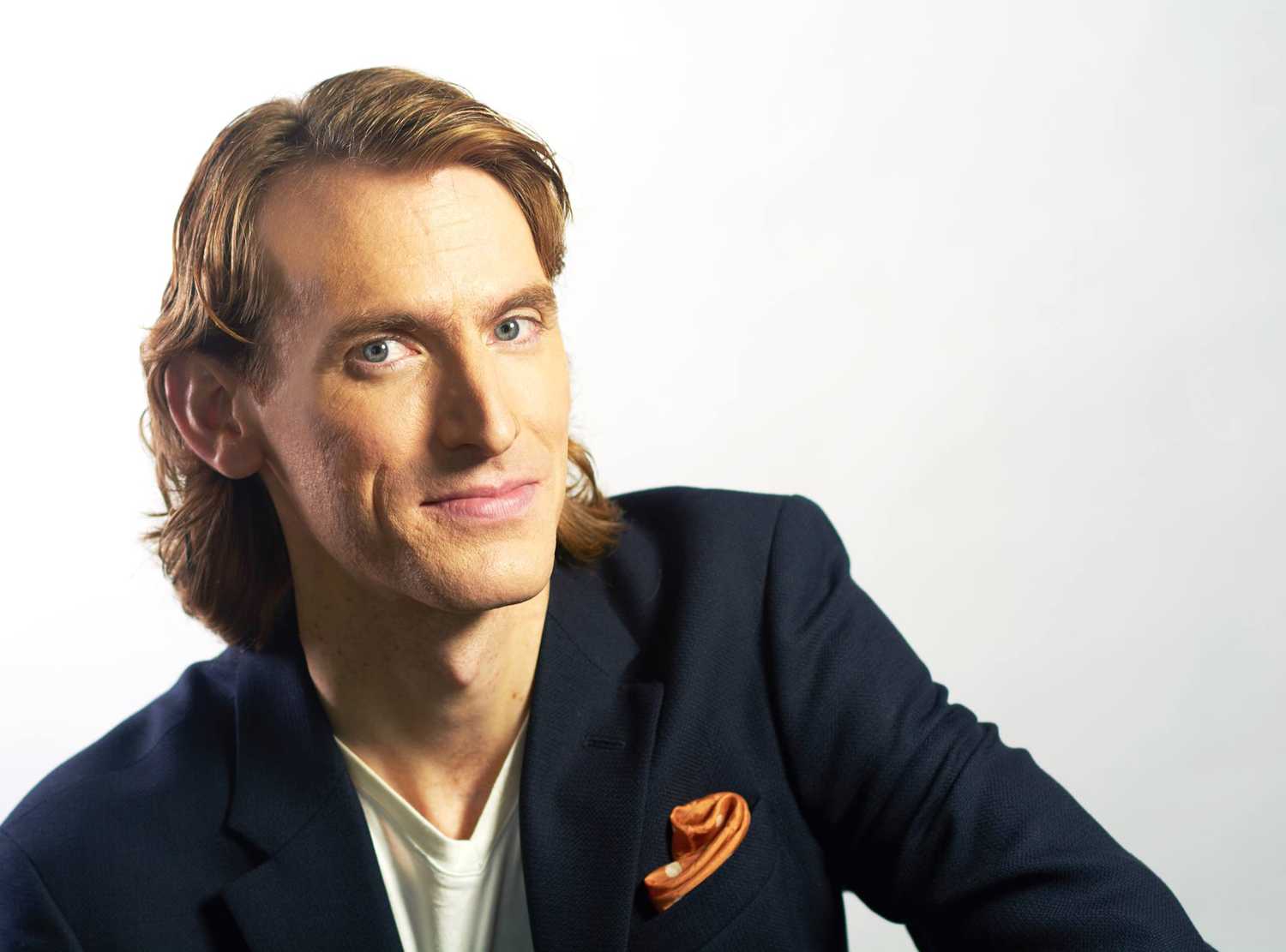
BARBARA HANNIGAN & THE TORONTO SYMPHONY: SOME THOUGHTS ON A VERY SPECIAL CONCERT


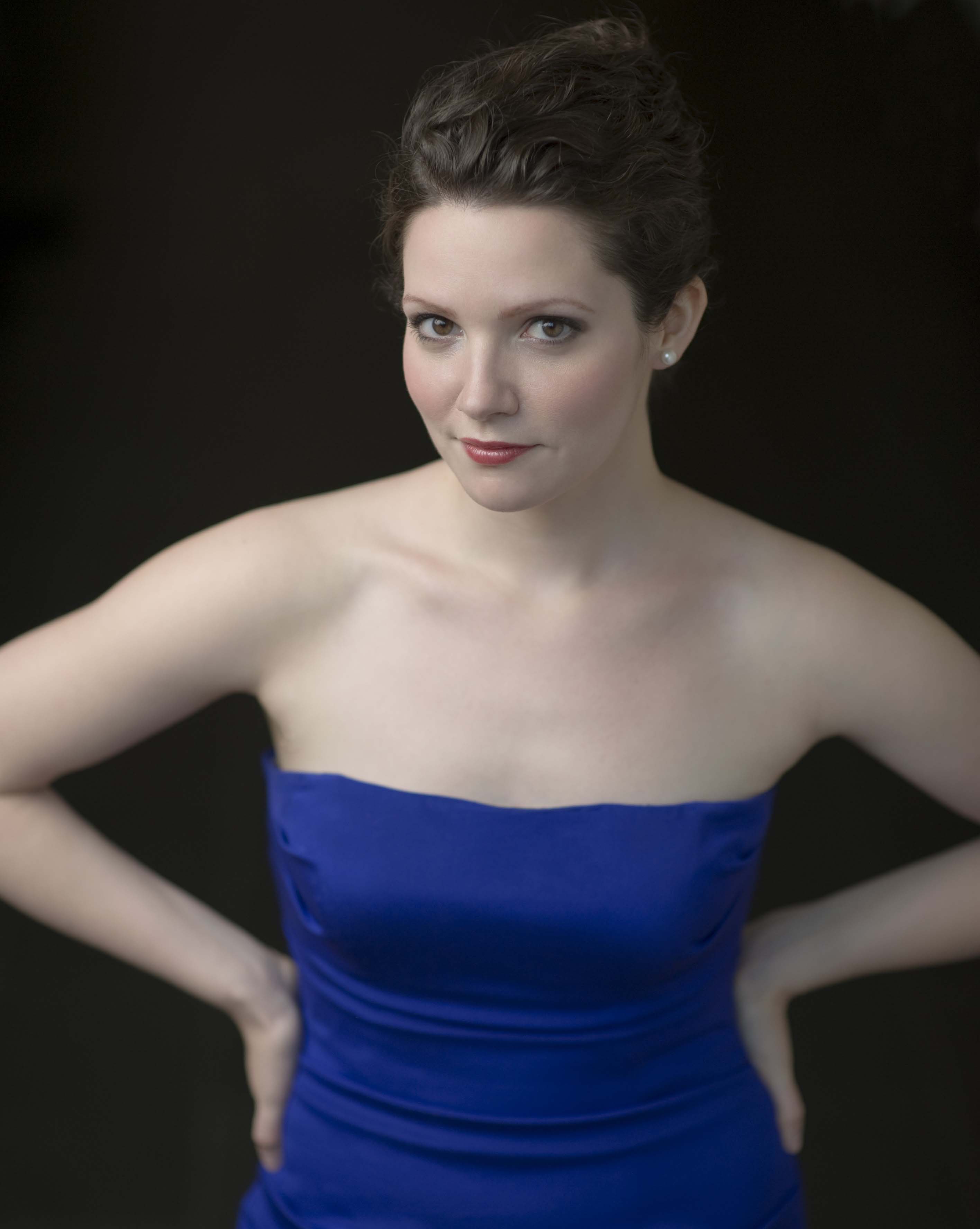
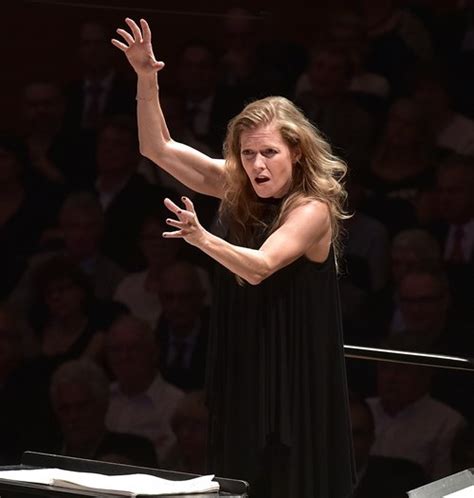
Barbara Hannigan
photo: Marco Borggreve

It was one of the saddest days in my life. And yet, there I sat, front row, for a Toronto Symphony concert conducted and often sung by Barbara Hannigan at Roy Thompson Hall, laughing with deep delight through much of Haydn’s Symphony 86. I felt something deep and true was going on. But allow me to segue for a moment or two to explain,

During my years of training with depth psychologist Ira Progoff in New York, to become an Intensive Journal Consultant, we learned an essential truth: implicit in each individual is a potential, call it what you will – spiritual, creative, meaning-enhancing – that unites the various elements of one’s life with a unique life force that is that person’s. Moreover, the person who openly and sincerely explores and connects with his or her inner life, often what Ira called the non-conscious, comes to feel a connection to something ineffable and larger than an individuality of self.

Segue number 2: During my M. A. studies in Drama, I once read G. Wilson Knight on King Lear and he said that in this painful tragedy there was something akin to cosmic laughter as well. Further, I’m just now rereading Homo Ludens in a newer translation than before in which author Johan Huizinga explores the element of play of human culture. In other words, if existence is or can be tragic, it also laughs and dances and sings and shouts poetry too. Poet Yevgeny Yevtushenko once told me that everything in life is poetry – and who can argue, even as life too often breaks our hearts.

So back to Barbara Hannigan and her take on Haydn. Although I felt I owed some misery to my sadness, I here and there, in fact for long stretches, laughed and was consumed by laughter and the magical performance before me. There was something of Haydn here that one gradually comes to appreciate over a lifetime, that the often-underrated composer knew where he stood and that his life was dictated not, say, by simply doing time at Esterhazy, but by expressing a realized and rich inner state of being that celebrated life as human essence.

Haydn certainly knew the foibles of humanity and still he could sing, always attuned to the world through his exuberance, his tongue-in-cheek, his melodic delicacies, his gift for surprise and construction in motion, his humility, and, yes, his inner laughter. In turn, I found myself thinking, “This woman’s an ideal interpreter of Haydn,” certainly after checking out a violinist who was almost bursting with delight while bowing – I’d never seen that before on a concert stage.

Barbara Hannigan is a special energy in the current world of classical music, one who like Haydn has a natural and honed instinct for effective but unforced theatricality. To be specific, this concert opened with a dimming of lights and Debussy flute solo from somewhere behind us, beside us. The musicians were all frozen stillness and darkened grey, a world of the imagination in waiting given some sound and solid form. Next, from this stillness where she was seated among the first violins, Hannigan emerged to conduct and sing Luonnotar, a work by Sibelius unknown yet immediately haunting to me, a work to which I’ll return to know it from a deeper place in myself.

After the ensuing Haydn, the Symphonic Pieces from Berg’s opera Lulu continue always to unsettle, a feeling that is emotional and not one that any degree of analysis can placate. I first saw Lulu at the Comedie Francaise in 1970 and remain, yes, unsettled from experience of it, perhaps because the score is atmospheric with foreboding, or because the singing seems at once an expression of inner torment in a world of outer torment, or because Berg’s persistent score makes one inhabit his world. Or, being here in Roy Thomson Hall, because Hannigan’s subtly otherworldly persona fits into these goings-on like hand into glove, like life into death.

Suite from Girl Crazy, a weird but relieving juxtaposition with Lulu, ended the program as an upper supreme. And no, check the program how you will, there was no chorus scheduled to accompany Hannigan on Embraceable You, but – another delightful surprise for the evening – the orchestra members themselves, to their own delight and our own. Hannigan here showed herself a naturally radiant stage creature, one of creative instincts in many directions, one of personal magic. And because her magic is often one step ahead of her audience, it is something we very much need, perhaps to remind us of ours. She gives us magic because she seems to live her own, as she demonstrates to us that there is much to the totality we each one are

Posted in Uncategorized | Tagged , , | Leave a comment

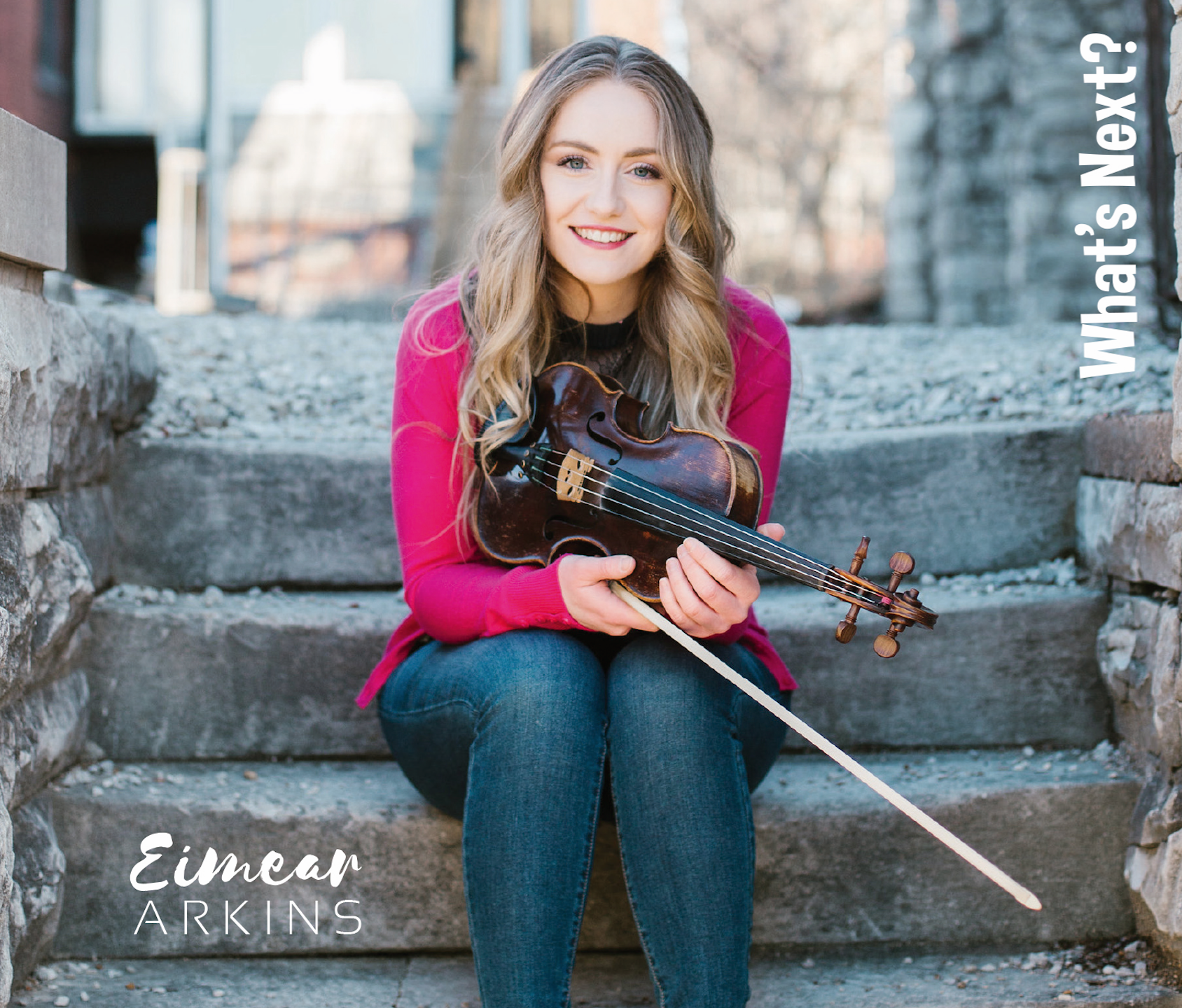
EIMEAR ARKINS: MULTI-INSTRUMENTALIST, SINGER AND DANCER FROM COUNTY CLARE, WITH DEBUT ALBUM, WHAT’S NEXT? EXPLAINS: “RECORDING FORCES YOU TO REALLY LISTEN TO YOURSELF IN A WAY THAT YOU MAY NOT HAVE DONE BEFORE…. I SOON REALIZED THAT PERFECTION IS NOT AN ATTAINABLE GOAL AND THERE COMES A POINT WHERE YOU HAVE TO SAY ENOUGH IS ENOUGH” …. A REVIEWER INTERVIEWS PEOPLE IN THE ARTS

JAMES STRECKER: Please tell us about one or more projects that you have been working on or have recently completed. Why exactly do they matter to you and why should they matter to us?

EIMEAR ARKINS: In June 2018, I released my debut album, What’s Next? The album is a collection of Irish fiddle tunes, ballads and sean nós songs. I’m excited to have a compilation of songs and music that mean something to me, and to be able to share them with others!

JS: How did doing these projects change you as a person and as a creator?

EA: The recording process first seemed daunting, and once I got started, it then seemed never-ending. In reality, the album was recorded and produced in just a few months. Anyone I’ve spoken to agrees that recording makes you hyper-critical of yourself, whether it be your playing or singing or your interpretation and execution of melodies and lyrics. Recording forces you to really listen to yourself in a way that you may not have done before. I heard things in my performance of tunes and songs that I liked and plenty of others things that I didn’t. Although there were frequent frustrations, I found the whole process very humbling and rewarding. I soon realized that perfection is not an attainable goal and there comes a point where you have to say enough is enough; if it hasn’t improved in the last three takes, it’s not going to improve in the next three. Of course, there are things that you hear yourself that nobody else hears. It’s like looking in the mirror, you might see a blemish every time you look in the mirror because you know it’s there, but anyone else looking at your face might never see it. From recording to production and promotion, the entire process was a wonderful learning experience. I am very pleased with the finished product, but of course, if I was back again, I would do certain things differently. And that is probably my biggest takeaway from the experience – a recording is just a snapshot of who you are and how you play or sing at a particular moment in time. Everything I learned I can use in the future when I record again.

JS: What might others not understand or appreciate about the work you produce or do?

EA: Some people may not understand the thought that goes into performing pieces of Irish music. When you see an Irish tune written down, it looks much simpler than a piece of classical music – typically only a few lines long and the range rarely spans more than two octaves. But to play the tune exactly as written on the page would not be doing the tune or the tradition justice. A lot of thought goes into putting one’s personal stamp on the tune through embellishments, dynamics, tempo variations and so forth. These aspects of performance are written into classical pieces but in Irish music their inclusion is left to the discretion of the performer. Furthermore, Irish tunes are rarely played in isolation, they are typically arranged into sets of two or three tunes and again these pairings are the performer’s choice. In essence, I think some people may not necessarily understand or appreciate that playing Irish music amounts to more than just “playing a few tunes.” The same goes for singing. There is far more involved than just learning the lyrics and the melody. Lots of thought goes into the process of selecting, rehearsing and performing these tunes and songs.

JS: What are the most important parts of yourself that you put into your work?

EA: I am very proud to have grown up in County Clare; a place known for its rich musical heritage. When I moved to America in 2014, I started to incorporate a lot more Clare music into my repertoire. It became increasingly more important to me to promote and preserve the music of my home-place and to share the compositions of some of the great Clare fiddle players, that have influenced so many players. Even though I visit Co. Clare regularly, performing Clare tunes and songs allows me to stay connected to my home-place during the periods of time that I’m not there.

JS: What are your biggest challenges as a creative person?

EA: One of the challenges I’m often faced with arises when working with others. Collaboration can be so rewarding and fun and can make you hear and think about a piece of music in a way that you may not have done so before. But sometimes it’s hard to reconcile two musicians’ conceptualization of how a piece of music or a song should or shouldn’t sound. One might like it fast, the other slow or one might like it with lots of accompaniment and the other may prefer it a capella. This is more of a general challenge of working with others than specifically a creative challenge but it is important to me to feel comfortable when I perform a song or tune and I want those playing with me to feel comfortable too. Often the only way to make this happen is to reach a creative compromise.

Another challenge is being patient. There are creative avenues that I would like to pursue and there are milestones that I would like to meet but you have to walk before you can run. Finding balance between where I am now, and where I would like to be in the future can be a challenge sometimes and certainly not one that I face alone.

JS: Imagine that you are meeting two or three people, living or dead, whom you admire because of their work in your form of artistic expression. What would you say to them and what would they say to you?

EA: I would love to have met Kitty Linnane, a wonderful piano player from County Clare who was at the helm of the Kilfenora Ceili Band for 40 years. The band has played concerts and céilís the length and breadth of Ireland, traveled extensively internationally and has played major festivals like Glastonbury and Milwaukee Irish Fest. The band celebrated its centenary in 2009. Recently, there has been a lot of talk about gender equality in folk music and I wonder if Kitty would have anything to say about that. What was it like being a female piano player in the mid-1900s, when very few female musicians played publicly? What were some of the challenges she faced as leader of the band and what advice would she have for someone taking on that task today? Is there anything she would have liked to have done differently or anything she would like to have achieved that she did not, either in her own personal playing or with the band. I wonder did she anticipate or dare to anticipate how successful the band would become?

Another person I would love to have met is Junior Crehan. I am a huge admirer of his compositions and I would love to have had the chance to talk to him and play some of his tunes with him.

JS: Please describe at least one major turning point in your life that helped to make you who you are as a creative artist.

EA: I came to America in 2014 to attend Graduate School and when I was approaching the end of my studies, I was offered a place on a month-long music tour. Initially I declined as my focus at the time was on finishing my studies and beginning my career. Up to that point music had always been a hobby and I had never really considered pursuing it full-time. A few months later, I was offered the same tour again as they still had not found a fiddle player and singer to fill the role. At that point I decided that perhaps I should take a few months or a year to focus on music and see what comes of it. And I am so glad I did!

JS: What are the hardest things for an outsider to understand about your life as a person in the arts?

EA: I think the hardest thing for most people to understand is why I have a life in the arts! A frequent question that I am asked is “why did you spend so many years in college if all you want to do is play music?” I know many other talented performers who have been asked the same question on more than one occasion. It’s as if people cannot comprehend that you can be both an intellectual and a musician. I’m not sure why some people believe that this is an either/or situation and many insinuate that a life in the arts is somehow not as respectable as having a regular job. I have two Masters degrees, which I worked very hard for, but they don’t have expiration dates. And I didn’t just wake up one morning and think “to hell with full-time employment, I wanted to be a musician.” Becoming a musician has taken years of dedication and continues to take hours of practice and patience. You never stop learning, regardless of your profession. I know that I still have so much to learn and there is a lot I want to accomplish in my artistic career.

JS: Let’s talk about the state of the arts in today’s society, including the forms in which you work. What specifically gives you hope and what specifically do you find depressing?

EA: There is no doubt that Irish music, song and dance is in safe hands. There are thousands of young people learning to play music in Ireland and there is massive interest in Irish culture across the globe. As a lover of the Irish language, I do worry from time to time about its demise but there has been a renewed interest in it of late, particularly through song. It is very much on trend right now to translate pop songs to Irish and I hope that other trends like this will help to preserve the language.

I sometimes worry that Irish music will never achieve the same level of respect as other musical genres from a general audience. There are some that will always just consider it “a bit of diddly-i” and not appreciate the work and time that many Irish musicians dedicate to their craft. Perhaps if there was more coverage of Irish music on mainstream national radio and television shows, people would have a better understanding of the artform. There are designated Irish music programs on Irish radio and television but it would be hugely beneficial to artists, concert venues and festivals to get more exposure on mainstream shows, to increase their audience and awareness.

JS: What exactly do you like about the work you create and/or do?

EA: Performing is an absolute joy. I love having the opportunity to share music with other performers and with audiences around the world. I take great pride in being a cultural ambassador for my county and my country. It is a privilege to be considered an exponent of traditional Irish music and to be able to promote the rich cultural heritage of my home-place.

JS: In your creative life thus far, what have been the most helpful comments you have heard about your work?

EA: All comments are helpful because they offer an opportunity for self-reflection. Some of the most helpful comments I’ve received have been critical comments. Even if I didn’t necessarily agree with the criticism at the time, the comments forced me to listen to an aspect of my performance through the ears of someone else. Some criticisms make you think twice (both subconsciously and consciously) when preparing for future performances.

One helpful comment that stood out for me came from an audience member after a concert a few years ago. I was one of a number of performers in the concert and I came out on stage, did my piece and left, just like everyone else. Or so I thought. But this particular audience member told me that it looked like I rushed off the stage, and I probably did in order to get out of the way of whoever was coming on after me. She told me that in future I should wait on stage for a few minutes to soak up some of the applause. Initially I thought that this would look a bit odd or self-serving but she went on to explain that applause is her way of showing how much she enjoyed and appreciated what I shared. She felt that connecting with the audience for just a few moments after the performance, made the entire performance just that bit more special for her. I always try to engage with the audience during a tune/song but I never thought about how that engagement and connection could continue when it ends. She showed me the importance of allowing the audience to play their part.

JS: Finally, what do you yourself find to be the most intriguing and/or surprising things about you?

EA: An Irish girl, from a small village in the west of Ireland, now based in St Louis, Missouri, making a living playing and teaching Irish music… I think that makes me one of a kind!

Posted in Uncategorized | Tagged , , , | Leave a comment

ALISON MACKAY: TAFELMUSIK’S DOUBLE BASSIST AND CREATIVE FORCE EXPLAINS HER MULTIMEDIA CREATION OF FEBRUARY 21 TO 24: “WE ARE PREPARING NOW FOR A REVIVAL OF OUR TALES OF TWO CITIES CONCERT, IN WHICH WE TRAVEL BACK AND FORTH BETWEEN BACH’S CITY OF LEIPZIG AND THE SYRIAN CITY OF DAMASCUS IN THE EARLY 18TH CENTURY, CONJURING UP TWO COFFEEHOUSES WHICH ARE TRANSFORMED THROUGH THE MAGIC OF IMAGES AND MUSIC,”…A REVIEWER’S INTERVIEW WITH PEOPLE IN THE ARTS

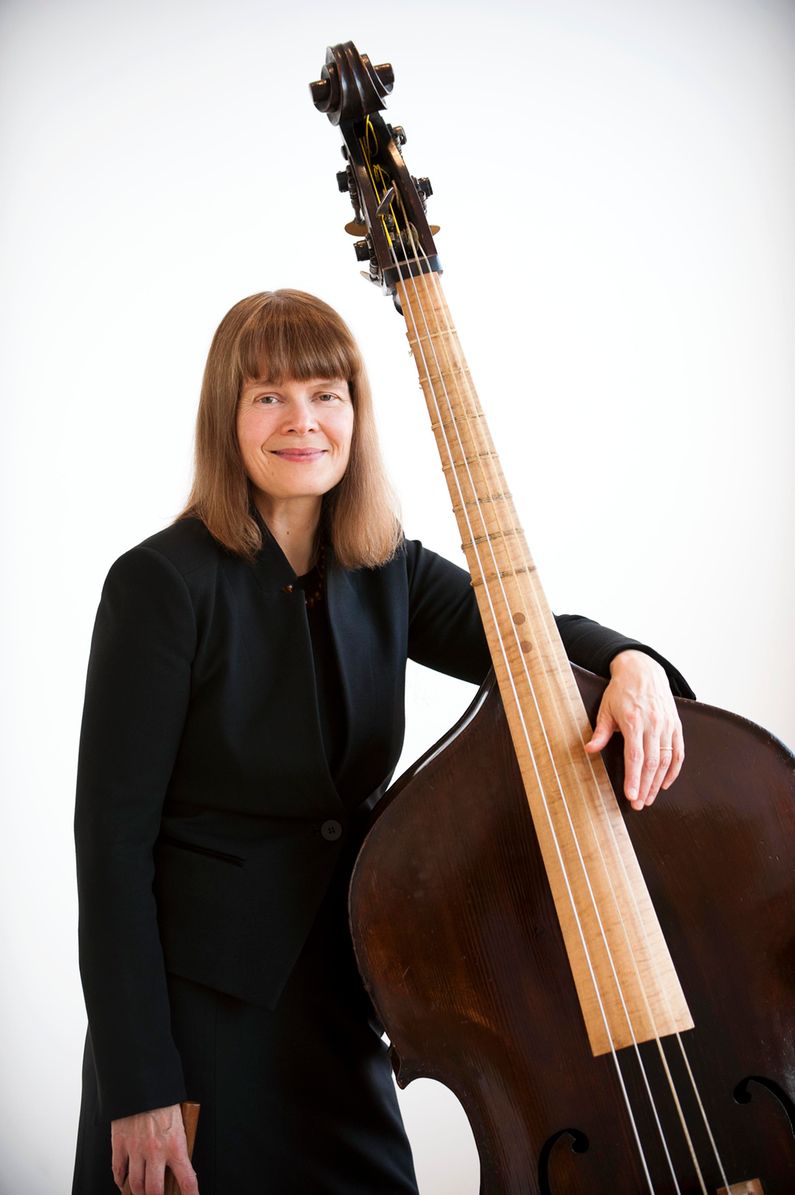
Photo by Sian Richards.

Tafelmusik’s double bassist since 1979, Alison Mackay, retires as a core orchestra member at the end of the current season. Her immersive multimedia fusion of Saxon and Arabic music, Tales of Two Cities: The Leipzig-Damascus Coffee House, returns to Koerner Hall from February 21 to 24, 2019, before embarking on a six-city tour of the United States. Tales of Two Cities is performed entirely from memory by Tafelmusik Baroque Orchestra with narration by actor Alon Nashman, and classical Arabic music performed by Trio Arabica—Maryem Tollar, voice and qanun; Demetri Petsalakis, oud; and Naghmeh Farahmand, percussion. Details at tafelmusik.org.

JAMES STRECKER: Please tell us about a project that you have been working on. Why does it matter to you and why should it matter to us?

ALISON MACKAY: We are preparing now for a revival of our Tales of Two Cities concert, in which we travel back and forth between Bach’s city of Leipzig and the Syrian city of Damascus in the early 18th century, conjuring up two coffeehouses which are transformed through the magic of images and music.

Although the cities were 3,000 kilometres apart, Leipzig and Damascus shared several defining features. Because they were both situated at the crossroads of ancient highways, they became centres for famous trade fairs with visitors coming from far and wide to buy and sell goods.

They were also both important centres of scholarship and the dissemination of ideas. The University of Leipzig was one of the oldest in Europe and the city was an important centre for the publishing of fiction and works of theology, law, and philosophy. Damascus was an even more cosmopolitan hub of intellectual activity – scholars writing in Greek, Persian and Arabic travelled to the city to have their works on mathematics, astronomy and philosophy copied by famous scribes.

And in the eighteenth century, both cities enjoyed a lively coffeehouse tradition with people gathering to hear performances by the most accomplished musicians in town over the newly popular drink of coffee. The orchestra will be playing music by Telemann, Handel and Bach, who directed a coffeehouse ensemble in Leipzig.

The project also involves a deep connection with performers of Arabic classical music (Trio Arabica will be our guest artists for the performances), with the wonderful actor, Alon Nashman, and with a circle of international scholars who have been generous advisors in the creation of the programme and donors of the stunning images which are projected in the course of the concert.

The relationships which have been forged between the orchestra and these collaborators – relationships which continue to deepen – have given this project particular meaning for me and I am thrilled that it will be performed four times in Toronto and then on tour in the U.S., ending at Frank Gehry’s Walt Disney Hall in Los Angeles. It will be particularly exciting to explore the music with our new Music Director, Elisa Citterio, and a little nostalgic since it will be my last major tour with the orchestra before retiring at the end of this season.

I think the exploration of Syrian history and culture is important for us at the moment in Canada as we seek to welcome and understand the heritage of some of our newest Canadians. And I think that the contemplation, in the context of a concert performance, of the values which we all share has something important and perhaps uniquely Canadian to offer Tafelmusik’s international audiences.

JS: How did doing this project change you as a person and as a creator?

AM: Each time we have the opportunity to explore our repertoire in the particularly deep way that playing an orchestral concert from memory demands, I am humbled by the dedication and passion of my colleagues and inspired by the incredible virtuosity of our colleagues in Trio Arabica. Also, I want to try to be as generous with younger artists as the intellectual contributors to this project have been with me.

JS: What might others not understand or appreciate about the work you produce or do?

AM: A casual audience member might not be aware of the time it takes to research the history, choose the music in collaboration with the Music Director, write the script, choose the images and work with the wonderful image designer Raha Javanfar, and meet with Glenn Davidson, the brilliant lighting designer, and Marshall Pynkoski, the famous stage director.

But that is a good thing! I think the result should just be an enjoyable piece of entertainment, with the “learning” aspect light and palatable.

We musicians do feel a little deflated when audience members don’t notice that we are playing for a whole evening without music stands – it takes so many hours of work to get to that point!

JS: What are the most important parts of yourself that you put into your work?

AM: For me, the social context of music is endlessly fascinating and I try to convey the excitement I feel at discovering the tiny historical connections which shine light on the past.

I like to ponder the emotional effect each piece of music might have on the performers and the listeners. I like to try to choose repertoire that can be played repeatedly with pleasure over the long months of memorization and several years of touring.

I like to explore and celebrate the anonymous artisans, labourers and innovators whose contributions made and continue to make a life in the arts possible.

I like to see parallels between our modern condition and the conflicts and challenges of the past.

Most of all, I like to try to create a performance which is challenging but uplifting – sending the audience home on a wave of beautiful music.

JS: What are your biggest challenges as a creative person?

AM: I wish that I were better at learning foreign languages and I wish that I were a faster writer. And I wish I were better at ceding control to others!

JS: Imagine that you are meeting two or three people, living or dead, whom you admire because of their work in your form of artistic expression. What would you say to them and what would they say to you?

AM: I would love to have had dinner with Haydn to discuss life and art. I would love to have been an invisible spectator while Bach taught, directed and played the organ. I perhaps wouldn’t have directly conversed with Bach in case I didn’t end up liking him, (I really couldn’t bear that) but I might have asked someone else to ask him about the tempos he had in mind for all of his works that I love the most.

As far as what they might have said to me, they would definitely have both told me to practise more.

JS: Please describe at least one major turning point in your life that helped to make you who you are as a creative artist.

AM: One of the most inspiring experiences I have had was at the ancient mosque in Cordoba, Spain, which is now used as a Christian cathedral. (My husband) David and I went on a midnight tour with a group of about 20 visitors from all over the world. Our journey through the building was animated by dramatic lighting and historical music and narration (in each person’s native language), heard on earphones. The commentary and music were on the highest level – the whole experience was absolutely scholarly but absolutely accessible and beautiful. It has always remained a model event for me.

JS: What are the hardest things for an outsider to understand about your life as a person in the arts?

AM: Sometimes people imagine that music is a hobby – members of the orchestra are often asked how we earn our living. It’s not surprising perhaps, since we have something we love so much as our work….
On another note, once at a formal post-concert dinner a very rich person said to me “It must be a big treat for you getting to eat this nice food.” For some reason I found that very enraging.

JS: Please tell us what you haven’t attempted as yet that you would like to do in the arts? Why the delay so far?

I would like to create a piece of music theatre for children to act and sing in. Maybe some time I’ll have the time and the courage to do it.

JS: If you could re-live your life in the arts, how would you change it and why?

AM: I would have had more focus on technique and practising when I was very young. A friend of mine, who is a very accomplished performer, works as a practise coach for a young student for two hours every day. I wish I had had that!

JS: In your creative life thus far, what have been the most helpful comments you have heard about your work?

AM: Of course, kindly meant critical comments are always helpful. But in the larger picture, I would say that I’ve been helped most by the people who were encouraging – who helped me overcome my self-doubt!

JS: If you yourself were a critic of the arts discussing your work, be it something specific or in general, what would you say?

AM: Ha – good question! I’m not sure what I’d say about my work. But I always feel as if I sound like a complete egomaniac when responding to interview questions – if I were a critic of my answers, I think I’d be rolling my eyes by now!

JS: Finally, what do you yourself find to be the most intriguing and/or surprising things about you?

AM: It’s a little surprising that I don’t know how to drive – a bit pathetic for a bass player!

Posted in Uncategorized | Tagged , , | Leave a comment

PATRICK JORDAN: VIOLIST WITH TAFELMUSIK AND THE EYBLER QUARTET SUMMARIZES: “MOST DAYS I LIKE HOW IT FEELS TO PLAY THE INSTRUMENT. I REALLY ENJOY THE DETECTIVE WORK IN FINDING NEW PIECES AND MAKING MEANINGFUL CONNECTIONS BETWEEN HISTORICAL FIGURES AND THEIR WORK. I IIKE BEING ON STAGE AND GETTING DOSES OF BOTH HUMILITY AND THE ADRENALINE IN LIVE PERFORMANCE. I LIKE PRODUCING LASTING DOCUMENTS THROUGH RECORDING. I ENJOY PASSING ALONG TO OTHER ARTISTS SOME OF WHAT I’VE ACCUMULATED OVER THE YEARS.”… A REVIEWER INTERVIEWS PEOPLE IN THE ARTS

JAMES STRECKER: Please tell us about one or more projects that you have been working on or have recently completed. Why exactly do they matter to you and why should they matter to us?

PATRICK JORDAN: There are several on the go at the moment, some related to my work with Tafelmusik, some with the Eybler Quartet, and some rather free-floating. The Eybler Quartet is just about to release the second and final volume of Beethoven’s Opus 18 quartets. The quartet’s approach has been to take seriously Beethoven’s metronome indications. While controversy swirls around that topic, we committed ourselves to relearn those works, and what it has revealed to us about Beethoven and his relationship to his own musical world his been fascinating. We love how they sound too!

When we first proposed to release these albums, our publicist, who had delivered great results for a release of a lesser known composer, went to great lengths to manage our expectations about the kind of coverage we might receive. “Another recording of Beethoven in an already saturated field is a tough sell,” she warned, but I think what we have brought to the discussion has proven to be substantial.

Our next recording will feature some of the quartets of the considerably less well-known Franz Asplmayr. Asplmayr was a long-time friend of Haydn’s and an early contributor to the newly emerging repertoire for the string quartet. His distinctive voice is one that provides a real sense of the connection between some of the fading practices of the earlier decades of the 18th century while harnessing the galanterie of mid-century, putting in place the pieces that we have come to know as the Classic style. Along those same lines, I have been working with Elisa Citterio, Tafelmusik’s new music director, to put together an upcoming program of early symphonies making precisely the same kind of connections. I suppose it matters to me because I think the music is fantastic and I hope you do too!

JS: How did doing these projects change you as a person and as a creator?

PJ: That’s an interesting question. I think I’ll answer those in reverse order. I frankly don’t think of myself as a creator, but rather as a crafts person. As I type that I realize I don’t really know where the line is between those two descriptors! I can, however, say that pursuing these various interests has sharpened, deepened and made considerably more nuanced my understanding of the working and personal relationships of the composers and performers of the various eras in which I focus my efforts: if it’s not too hackneyed a description, I feel like I can see both the forest AND a bunch of individual trees.

As a person, I would say that the value of the personal working relationships I am lucky to enjoy has become increasingly more obvious and more important over time, and here I’m speaking primarily of the members of the Eybler Quartet (including the recording team we’ve assembled) and Tafelmusik. The depth of understanding and shared vision one can develop over the years becomes essential to the work itself. I am also aware these days of the years passing, with the concomitant realization that not everything I can imagine doing is going to come to fruition. I suppose that both focuses the mind on what can be done, but also provides a sense of mild urgency to get on with it!

JS: What might others not understand or appreciate about the work you produce or do?

PJ: I’d be inclined to let them answer that question, and I would be very interested in their answers. I do worry that people will still mistake the works of Vanhal for Haydn…. Ha! More work to do….

JS: What are the most important parts of yourself that you put into your work?

PJ: The work itself is so varied that I find it hard to narrow it down. For example, here are some of the ways I’ve spent my days lately: reviewing and negotiating a recording contract for the Eybler Quartet; type-setting newly discovered music; practicing the viola; memorizing a program for Tafelmusik; editing audio files; wrangling the Eybler Quartet’s schedule into some sort of shape; playing a concert on tour and answering James Strecker’s interesting questions on the bus ride back to the hotel; reviewing Tafelmusik’s collective bargaining agreement in preparation to be part of negotiating same; doing my taxes. Some of those are downright mundane, but they all need to be done. To sum it up, I’d say discipline, list-making and an unquenchable curiosity have been assets.

JS: What are your biggest challenges as a creative person?

PJ: Well, having the time to do everything I want is the first thing that comes to mind. I also have a recurrent and long-term conversation with myself about the value to society and humanity of what I do, if that’s not too grand a conceit. My mother has for nearly fifty years been a public-school teacher of children with learning disabilities and other challenges. She says she never wonders for a second whether what she does matters. I envy that sense of certainty. As fortune would have it, while I was answering these questions, the chaplain at the Calgary airport happened by and struck up a conversation. Upon learning that I was a musician, he extolled the value of those of us who are able to touch the hearts of others!

JS: Imagine that you are meeting two or three people, living or dead, whom you admire because of their work in your form of artistic expression. What would you say to them and what would they say to you?

PJ: Wow, that’s an interesting one. I would love to be in the room for a performance of a Haydn symphony in London under his direction, and I would want to say to him, “You’re admired for all the wrong reasons, no one really appreciates your genius!” And he would probably call security. I would want to ask Beethoven (in late 1826) “What are you thinking about metronomes right now? Care to share some thoughts about that and hook me up with the metronome marks for the quartets you’ve recently composed?” In my fantasy of that exchange he would both spill the beans and also show me his process for determining the marks. Bliss. I would also love to talk to Maddalena Lombardini, the solo violinist who made quite a splash in Paris in the early 1770s. I would ask her what it was like to grow up in one of the orphanages in Venice, the San Lazzaro dei Mendicanti and what music meant to her. I have no clue how she might respond.

JS: Please describe at least one major turning point in your life that helped to make you who you are as a creative artist.

PJ: The first would be my initial meeting with Susan Schoenfeld, my viola, music and life teacher in Lubbock, TX. I started learning music late, at age 11 and had spent a couple of years with attentive and adequate training, a ton of enthusiasm, and possibly something to show for it. She listened to me play, heard something interesting, I suppose, and basically said: “You can really do this if you want to, but you have an enormous amount of work to do? Are in all the way?” I felt Iike I was being swept off my feet, and to recall that moment, I still feel like I was being invited to the best party ever. The second came a little over a year after I had left New England Conservatory. I had indeed taken Susan up on her invitation and worked very hard during high school to get into the Conservatory. Once there, I must say I didn’t necessarily make the most of the musical networking opportunities presented to me. The reasons for that are probably the topic for another kind of interview, although my generally iconoclastic frame of mind (not a great match with the “conservative” part of “conservatory”) would take a leading role.

In any event, after being out of school for a while, I was thinking pretty seriously about going to law school or possibly studying the history of science. One night, my girlfriend at the time discovered a weird, hard lump on my right upper arm, and within a few weeks I was scheduled for surgery to remove a tumour. My surgeon happened to be the son of a violist, so he took a particular interest in my case. He also explained in terrifyingly sobering detail the possibility that there could be damage to my radial nerve in the procedure, which could make playing an impossibility rather than something I might choose to pursue. That got my attention in a way that few things have in my life.

JS: What are the hardest things for an outsider to understand about your life as a person in the arts?

PJ: The level of devotion to the craft of playing is a tough one for most outsiders to grasp. The weird hours of an entertainer don’t really compute with a lot of people either. There are people in the world for whom trading your weekends for a lifetime of practicing or playing concerts is incomprehensible. As I write this, I can kind of see their point….

JS: Please tell us what you haven’t attempted as yet that you would like to do in the arts? Why the delay so far?

PJ: Most days I find myself wishing to engage in some other form of art. I look at Monet and think “Man, I wish I could manage colour in two dimensions like that!” I read one of Anne Michaels’ sublime paragraphs or poems and think, “Geez, I wish I could actually write!” Or on a memorable and rare occasion, I tasted several dishes from Joël Robuchon and thought “I wish I could balance flavours like that!” Anyway, you get the picture.

In terms of things closer to the field in which I already work, I have come over the last while to realize that I deal with a built-in conundrum common to the curious and ambitious person. Part of what makes me tick is the energizing novelty that a new project represents. Another part of what makes me tick is actually accomplishing the projects I’ve created for myself. Seeking the thrill of novelty is very attractive, but the time demands of what you’ve already committed to don’t generally get much shorter or go away. In short, I have more than a lifetime’s worth of projects bubbling away in my mind! Who knows which ones will find their way out?

JS: If you could re-live your life in the arts, how would you change it and why?

PJ: I know Drake has distanced himself from the phrase “You Only Live Once” (YOLO), but it’s true!! I generally believe that the things I’ve missed or opportunities that I haven’t seized have kept me plenty busy doing the things I actually have done. I don’t have a lot of energy for regret.

JS: Let’s talk about the state of the arts in today’s society, including the forms in which you work. What specifically gives you hope and what specifically do you find depressing?

PJ: That is a huge topic, and I’m no expert. At the moment, we’re at about 7.7 billion people on the planet, and the forms of society people experience range from harsh dictatorships to relative political democracy (without, perhaps, the concomitant economic freedoms). Art has an absolutely dizzying role to fulfill in that spectrum, from total support of a regime to relative freedom to criticize power. The “go-to” for hope is of course the notion that we’re all so interconnected that the truth will out. Another attractive feature of that interconnectedness is the relative ease with which we can access almost any document, image or idea.

I find it depressing that we are not the authors of our own interconnectedness. The fantasy that our exchanges aren’t for the most part being mediated is just that, a fantasy. Another irksome thing is that the material wealth of our work, distributed in this system, tends to flow to those who control the platforms rather than those who populate those platforms with meaningful content.

On a more manageable scale, the world of classical music frets about levels of audience attendance. The number one indicator for whether someone actually buys a ticket or makes the time to attend a concert or other live performance is having actually participated in some artistic endeavour: they have played in a band or orchestra, sung in a choir or were in a play. The opportunity to participate in the arts in public schools has certainly declined since my childhood, and that makes me very nervous for the future health of all sort of art forms. That said, the number of incredibly gifted and dedicated young performers I’ve gotten to know and work with in the last few years is very inspiring and hopeful indeed.

Finally, a part of our Zeitgeist seems to be a willingness to question the value of liberal democracy with an enthusiasm that disturbs me. My worries about who’s singing in a choir in Grade 3 or who’s getting the larger share of digital royalties would look awfully quaint if we give up on that incredible experiment.

JS: What exactly do you like about the work you create and/or do?

PJ: Most days I like how it feels to play the instrument. I really enjoy the detective work in finding new pieces and making meaningful (to me) connections between historical figures and their work. I Iike being on stage and getting doses of both humility and the adrenaline in live performance. I like producing lasting documents through recording. I enjoy passing along to other artists some of what I’ve accumulated over the years.

JS: In your creative life thus far, what have been the most helpful comments you have heard about your work?

PJ: There are a raft of comments that begin, “That was great, but….” The trick is to remember to hear the support in the “That was great” part before obsessing about the “…but…” There are three other very specific remarks that stick with me. One came from the legendary Louis Krasner who was a chamber music coach of mine at New England Conservatory. We were playing the excruciatingly beautiful slow movement of Schumann’s Piano Quartet and in the course of the coaching, he asked me to play the viola solo a second time. And a third time and then perhaps a fourth time, without any remarks from him about my performance. I asked him, “Mr. Krasner, is there something you`d like to say about this passage?” He answered, “No, it is quite expressive, but there’s just something profoundly dissatisfying about your playing. I cannot say what it is. Let’s move on.” In the moment it was in equal parts crushing and infuriating to me: what kind of teacher are you that can’t help me make it better? Upon reflection it was a fantastic way to learn the lesson that even if you’re playing expressively, you can’t please everyone.

The second came from Philip Naegli, a violinist and violist with whom I studied very occasionally in my twenties. At our first meeting he asked what I was busy with professionally. I gave him the rundown on all the gigs and groups I was part of and at the end of that he said, “Your twenties are a great time to figure out what you don’t want to do.” Which I have understood as receiving a kind of permission to stay busy but keep assessing the value of what you’re involved with. (I’m glad I remembered that line because I certainly didn’t really understand it when he first uttered it.)

The other came from my teacher Susan Schoenfeld. When I began to go down the path of period performance, she was at first concerned. Toward the end of her life, and after hearing me play a few times, she finally said, “You’ve found a way to marry your intellect to your passion.” That was a pretty nice send-off!

JS: Finally, what do you yourself find to be the most intriguing and/or surprising things about you?

PJ: I appreciate the “and/or” nature of your question. I’m going to take a pass on “intriguing” because I can’t for the life of me come up with anything there. “Surprising”… hmmmm. I think what’s most surprising to me about myself is that the few lessons I can learn, I have learned. The ones I can’t learn are the ones that just keep coming back around, over and over again, rubbing my nose in it!!

Posted in Uncategorized | Tagged , , , , , | Leave a comment

PAULA BOCHNAK: TRADITIONAL UKRAINIAN DANCER AND SINGER EXPLAINS “IT’S IMPORTANT TO STAY CONNECTED TO YOUR ROOTS, WHETHER IT BE IN THE FORM OF ART, LANGUAGE, FOOD, FAMILY TRADITIONS OR OTHERS…… WITH MOST OF MY FAMILY LIVING OVERSEAS IN UKRAINE, TO ME MUSIC AND DANCE IS ONE WAY I AM ABLE TO FEEL CONNECTED TO A BIGGER FAMILY AND PROUDLY DEFINE WHO I AM.”…..A REVIEWER INTERVIEWS PEOPLE IN THE ARTS

JAMES STRECKER: Please tell us about one or more projects that you have been working on or have recently completed. Why exactly do they matter to you and why should they matter to us?

PAULA BOCHNAK: Being part of a Ukrainian song and dance ensemble, I have the opportunity to perform for a variety of cultural events, charity fundraisers, festivals, weddings and celebrations throughout the year. Recently, we’ve been invited to perform in Florida, U.S. on the Disney World stage this upcoming August. I am both thrilled and humbled at the chance to showcase Ukrainian dance and culture on a world-renowned stage. I have always been very proud of my heritage and am passionate about sharing the beauty of my culture through the arts of dance, music, singing, and theatre. I think it’s important to stay connected with our cultural identities, to have a better understanding of our history, and to preserve these traditions for future generations.

JS: How did doing these projects change you as a person and as a creator?

PB: I started learning the art of Ukrainian music and dance from a very young age of four, and each year I’m finding I continue to learn and grow both artistically and as an individual living in multicultural Canada. What intrigues me is how cultural song and dance has the ability to connect so many people of all ages all around the world. It carries such deep meaning of history- stories of how our ancestors lived, and expression of their innermost desires. Through it we see a glimpse of the past, and for a moment we are living it in the present. I truly believe actively participating in Ukrainian arts has greatly influenced the shaping of who I am today.

JS: What might others not understand or appreciate about the work you produce or do?

PB: I often get asked about the type of dancing and singing I do, and people are often amazed when I tell them it’s Ukrainian folk! But then I also get questions like, “So what exactly is Ukrainian dancing?”. And my answer to that is it’s a unique form of traditional dance that is unlike any other- you have to experience it for yourself and feel the dancers’ energy and the lively music. Like many other kinds of performing arts, the final product the audience sees on stage is a result of teamwork, dedicated practices and repetition. There’s quite a large population of Ukrainians in the Hamilton/Toronto area and the various cultural groups do a great job of putting on events throughout the city. With my involvement in the arts, I hope to bring more awareness and appreciation to Ukrainian folk song and dance.

JS: What are the most important parts of yourself that you put into your work?

PB: I’d like to say I put my whole self into the work. I’ve always thought that expressing one’s passion through the heart and soul makes a world of a difference in the ability for a performer to connect with the audience and create a meaningful experience.

JS: What are your biggest challenges as a creative person?

PB: Trying to find a healthy balance between critiquing my work and appreciating the process of continual learning and growth.

JS: Imagine that you are meeting two or three people, living or dead, whom you admire because of their work in your form of artistic expression. What would you say to them and what would they say to you?

PB: I would ask them about what it was like to train, perform, about their life in general as an artist. I’d be interested to know what sparked their interest in a career in arts and what motivated them to continue going forward.
I’d imagine they would be completely open with talking about their personal and professional lives and would encourage me to keep going!

JS: Please describe at least one major turning point in your life that helped to make you who you are as a creative artist.

PB: When I was about 12 years old, I performed a song at the Festival of Friends in Hamilton one summer. There was quite a crowd of people and I was really enjoying the atmosphere. Having finished the song, I began to walk back through the audience and I remember an older gentleman stopping me and handing me a dollar from his pocket into my palms. He said, “Here is your first small earning. It’s not much, but one day, when you’ll be earning a lot more, you can think back and remember this moment. Great job”. The kind gesture from the old man was so sweet and unexpected, it made me realize how just one song can positively impact others and create lasting memories for both performer and listener. Every performance afterwards I felt very grateful for the opportunity to sing for people, and still today I am so humbled when an audience appears to truly enjoy and appreciate my work.

JS: What are the hardest things for an outsider to understand about your life as a person in the arts?

PB: Probably the amount of passion one has to have towards the arts to dedicate many hours perfecting the work. That time and effort can easily be spent doing other things; however, it’s the clear vision in my mind and rewarding feelings of fulfillment that continually motivate me.

JS: Please tell us what you haven’t attempted as yet that you would like to do in the arts? Why the delay so far?

PB: I would love to further challenge myself in dance with more intricate partner-work, lifts and spins…some of these ideas are already in the works- stay tuned for upcoming shows! With voice, I would also love to experiment with challenging pieces, to continue building confidence in my voice and do more performances to build exposure. Time tends to be an issue for this, but I’ve discovered how simply beginning a conversation with just one person can lead to many open doors for new possibilities.

JS: If you could re-live your life in the arts, how would you change it and why?

PB: I would have taken more time when I was younger to truly open up on stage and feel more confident in my abilities and talents instead of being self-conscious.

JS: Let’s talk about the state of the arts in today’s society, including the forms in which you work. What specifically gives you hope and what specifically do you find depressing?

PB: Our audiences and support groups give me hope that cultural arts will continue to thrive and be an appreciated form of art. Social media also provides an opportunity to inform others about our work and is an accessible means of sharing music and dance to people around the world. I’m saddened to think what would happen if cultural identity were lost…I think it’s important to stay connected to your roots whether it be in the form of art, language, food, family traditions or other.

JS: What exactly do you like about the work you create and/or do?

PB: I absolutely love that it is very unique! My dance group choreographs dances that represents different regions of Ukraine- each region has distinct yet recognizable dance steps that can be varied to have a more traditional or modern approach. Our costumes are authentic and are all made in Ukraine. We collaborate with local Ukrainian musicians and are very fortunate to have live music for all our performances. I’ve made lasting friendships with so many talented dancers and singers because of our bond in a love for our culture. With most of my family living overseas in Ukraine, to me music and dance is one way I am able to feel connected to a bigger family and proudly define who I am.

JS: In your creative life thus far, what have been the most helpful comments you have heard about your work?

PB: There have been many people from Ukraine, other parts of Europe, and around the world commenting on how it’s so nice to see Ukrainian dance and culture being actively continued in Canada, and not just by first generation Canadian Ukrainians, but carried on by many generations. Many older seniors in the community often bring up memories of when they used to partake in folk dancing and congratulate our group for keeping the tradition of Ukrainian dance alive. Other non-Ukrainians are just astonished by the intricacies of the footwork and crazy spins and lifts that we do. It’s these kinds of heart-warming positive comments that motivate us to continue striving forward.

JS: Finally, what do you yourself find to be the most intriguing and/or surprising things about you?

PB: That’s a difficult question! I’m not sure what I find surprising, but I find that I’m intrigued by life itself. I think it’s so interesting how we meet certain people in our lives, and along with having our own unique experiences, we are shaped into the people we become. I often think things in life happen for a reason and because of that we are always reflecting, learning and growing. It’s as if our whole lives we are not really finding ourselves, but rather creating ourselves.

Posted in Uncategorized | Leave a comment

MARTIN JULIEN: ACTOR IS READER IN FROM TREBLINKA TO AUSCHWITZ: VASILY GROSSMAN AND PRIMO LEVI: A DIALOGUE BETWEEN WITNESSES, JANUARY 29, AT ALLIANCE FRANÇAISE…. PLUS, SENIOR EDITOR OF THEATRE PASSE MURAILLE: A COLLECTIVE HISTORY, PUBLISHED BY PLAYWRIGHTS CANADA PRESS IN JANUARY 2019…. A REVIEWER’S INTERVIEW WITH PEOPLE IN THE ARTS

Istituto Italiano Di Cultura presents the North American premiere of From Treblinka to Auschwitz: Vasily Grossman And Primo Levi: a dialogue between witnesses, a theatrical reading with live music for Holocaust Remembrance Day, January 29, 2019, 6:30 pm at Toronto’s Alliance Française (free admission).
Martin Julien is a specialist in spoken word in concert with musical ensembles, for ten years premier spoken word artist for the Toronto masque theatre, an instructor of acting, theories of acting, acting through song, theatre history, and modern play study, author in respected journals, and senior editor of Theatre Passe Muraille: A Collective History, published by Playwrights Canada Press in January 2019.


JAMES STRECKER: Please tell us about a project that you have been working on. Why does it matter to you and why should it matter to us?

MARTIN JULIEN: At the moment, I am preparing to participate in a project that matters to us all. This is not a hyperbolic statement. On the occasion of the Holocaust Remembrance Day 2019, the Istituto Italiano di Cultura will be presenting “From Treblinka to Auschwitz: a dialogue between witnesses”, a theatrical reading of extracts from “Auschwitz Testimonies” by Primo Levi and “The Hell of Treblinka”, by the Russian writer and journalist Vasily Grossman. Actor Michael Miranda will be reading from Levi, and I from Grossman. Superb musicians Robbie Grunwald and Drew Jurecka will be providing live accompaniment. The event is on Tuesday, January 29 at 6:30, in the Spadina Theatre, and admission is free.

These eyewitness accounts by Grossman (1944) and Levi (1947) are two of the first to be written and published about the Holocaust – the murder of almost six million Jews by the Nazi regime in Germany. Our remembrance of the worst mass murder in human history needs to include these firsthand and unsparing testimonies. After all the analyses and moral reckonings are done (and these are processes never to be finished) the recorded details of individual experience continue to be our clearest path to recognizing the collective horror of this event in history.

JS: How did doing this project change you as a person and as a creator?

MJ: The horrors of the Holocaust are almost unspeakable. Words cannot but fail to faithfully represent the experience of those who were there. And yet, here are these words. Unsparing, clear, sparse, unflinching. The challenge of giving them voice, so that more of us may hear the immediacy of their truth, is perhaps the most vital and serious I have undertaken in a long career encompassing the spoken word.

JS: What might others not understand or appreciate about the work you produce or do?

MJ: Primarily, though not exclusively by any means, my career in theatre and media has been as an actor. I’m not a well-known name outside of some small circles – certainly nothing approaching a “star” – but rather that entity known as a “working actor”. I think that many people who do not work in the performing arts industry don’t get that actors are always working. The most typical question actors encounter is probably: “Have you been in anything I’ve seen?” (Followed by: “How do you learn all those lines?” Answer: the hard, repetitive work of mastery, as in anything worth doing.) The truth is, we may well have been in “something you’ve seen”, but you probably didn’t see us. Most actors’ work is supporting and ensemble work. Against popular stereotype, actors are usually team-players who do not draw unnecessary attention to themselves but work to support the project and the company.

Even when not working actively on stage or on set, actors are forever preparing for auditions, honing skills, and clearing time for potential employment. Most of the actor’s work is invisible.

JS: What are the most important parts of yourself that you put into your work?

MJ: Potentially – and, perhaps, idealistically – I put all of myself into the work. This is the unique demand of, and opportunity for, the actor: you – body, mind, heart – are both the instrument and the one playing it.

JS: What are your biggest challenges as a creative person?

MJ: Continually committing to the unknown. To what cannot be known until it is risked, experienced, and assessed.
And, also, making a living as what the media call a “creative”.

JS: Imagine that you are meeting two or three people, living or dead, whom you admire because of their work in your form of artistic expression. What would you say to them and what would they say to you?

MJ: I am always surprised, delighted, and intrigued to hear women talk about acting. Historically, their voices have been suppressed, and their practice tends to cleave closer to the supportive and observant nature of the actor’s work.

So, I would invite three great stage actresses of the twentieth century to meet: Olga Knipper (of the Moscow Art Theatre), Helene Weigel (of the Berliner Ensemble), and Dame Peggy Ashcroft (of the Royal Shakespeare Company). Having never seen them on stage, I would say: “People have said you are the greatest. Is it true?”

And they will answer me, “Yes, and here’s why and how!” They probably would never say such a thing, but that’s where my imagination ends.

JS: Please describe at least one major turning point in your life that helped to make you who you are as a creative artist.

MJ: Having the great fortune, as a young person, to spend three years in an acting academy as a fellow-student of Canadian stage director Peter Hinton. His dedication to artistry and excellence set the benchmark for me.

JS: What are the hardest things for an outsider to understand about your life as a person in the arts?

MJ: That the outsider needn’t be outside. There is a way for everyone into the arts. All it takes is an open mind and heart.

JS: Please tell us what you haven’t attempted as yet that you would like to do in the arts? Why the delay so far?

MJ: I have never done a full-length one-person show. Probably because I am so committed to the idea of a company of actors. Also, fear of what it might reveal about myself that I do not yet know.

JS: If you could re-live your life in the arts, how would you change it and why?

MJ: This is purely hypothetical, but there are certain career opportunities that presented themselves to me as a younger actor that I chose not to take. I always thought they’d “come around again”. Through living longer, I’ve realized that some things may come only once, if at all.

JS: In your creative life thus far, what have been the most helpful comments you have heard about your work?

MJ: Inevitably, the most helpful comments are craft-oriented: they arrive from other practitioners, and are often very specific, and frequently banal. However, they are always useful.

JS: If you yourself were a critic of the arts discussing your work, be it something specific or in general, what would you say?

MJ: That I sometimes try too hard. And that it is always better when I don’t, but simply do the work at hand honestly and unselfconsciously.

JS: Finally, what do you yourself find to be the most intriguing and/or surprising things about you?

MJ: That – after having made my professional stage debut at ten and my film debut at eleven – I am still an actor nearly five decades on. Maybe not the most notable thing about me but, as a performing artist, rather astonishing.


Posted in Uncategorized | Tagged , , | Leave a comment

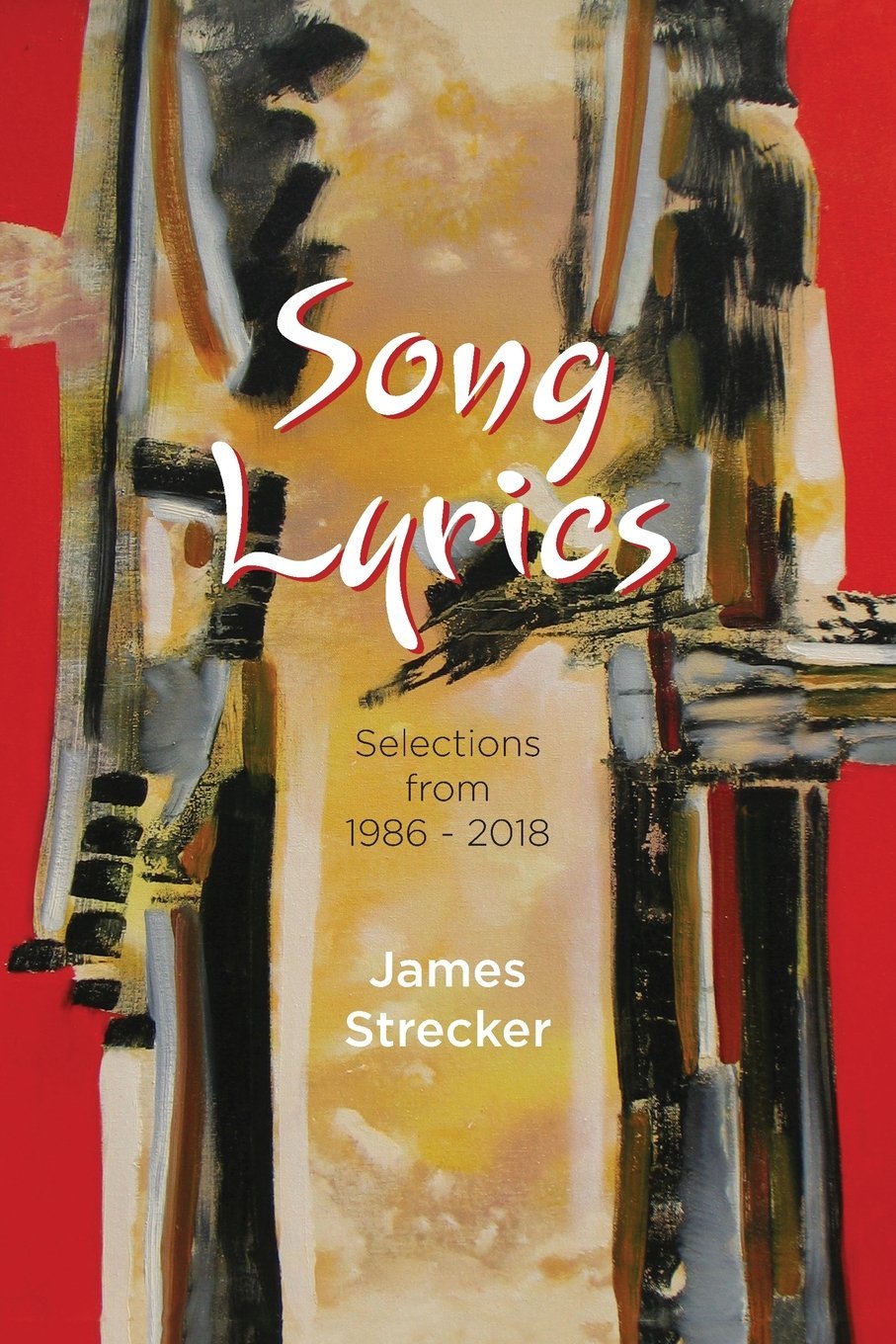
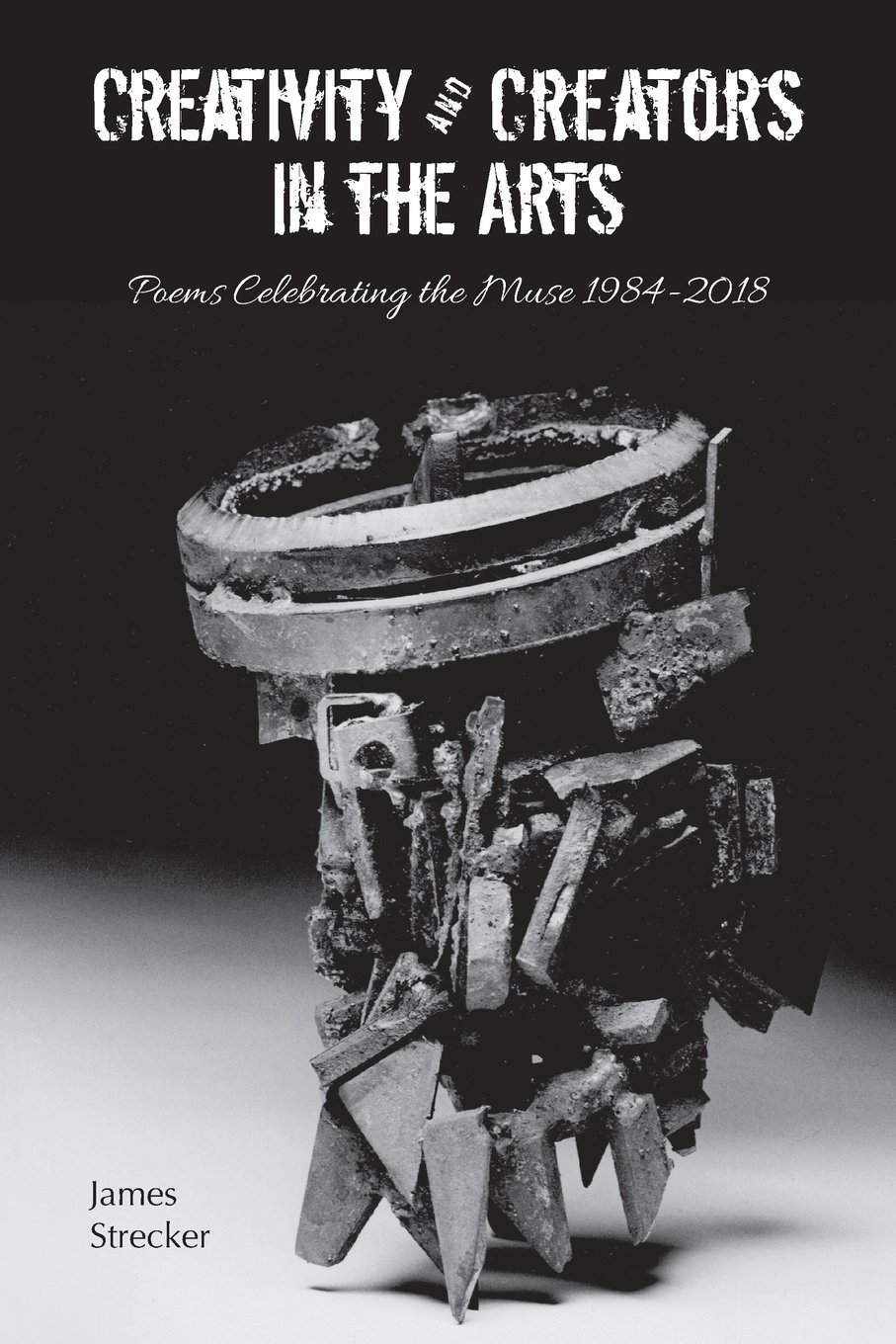
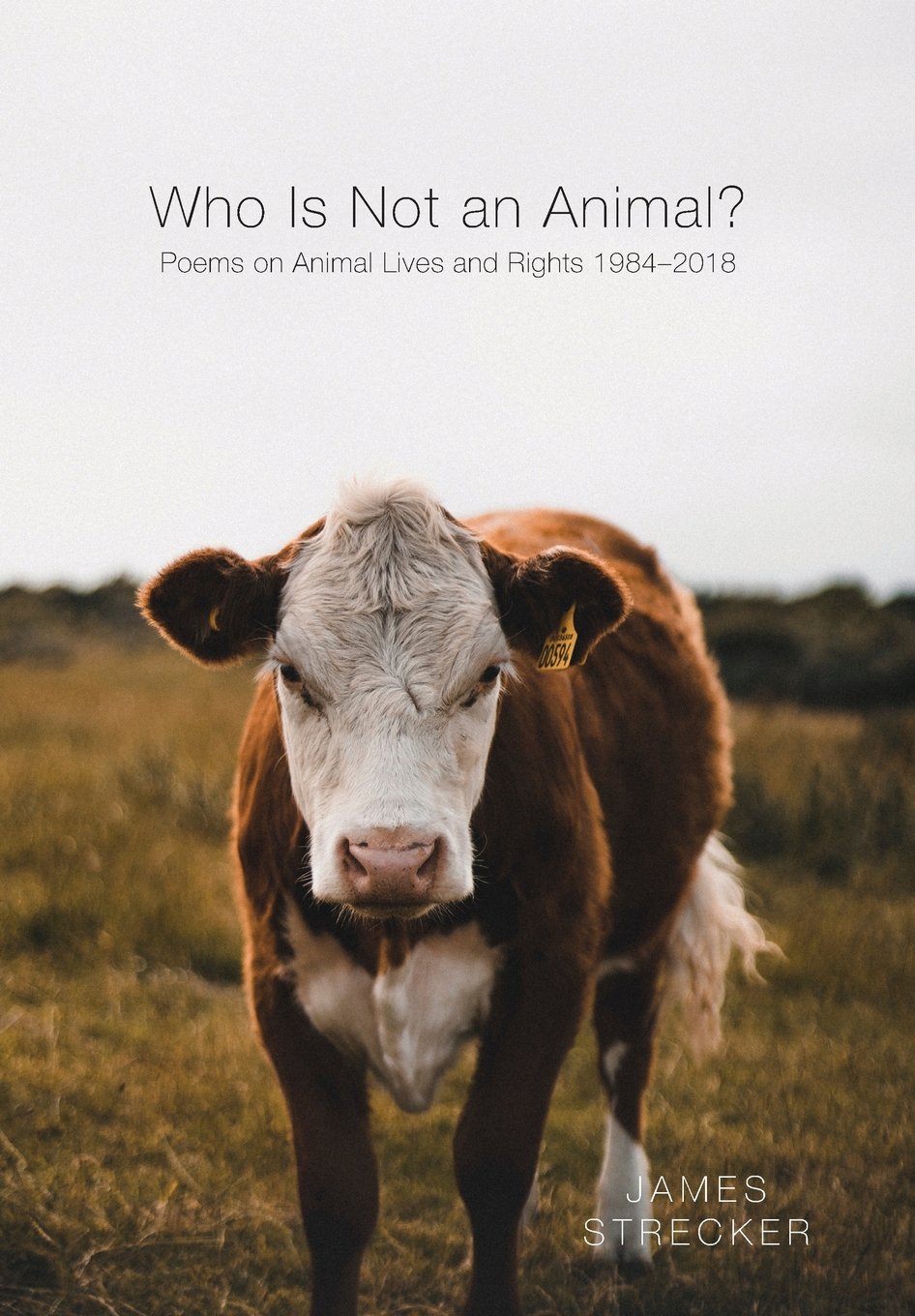
WRITER TO WRITER ON ANIMAL RIGHTS, SONG LYRICS, AND CREATIVITY IN THE ARTS: AUTHOR VALERIE HARMS INTERVIEWS JAMES STRECKER ON HIS THREE NEW BOOKS

Valerie Harms is the author of 10 books and lives in Bozeman, Montana. See www.valerieharms.com She will soon be interviewed by James Strecker for this blog.

VALERIE HARMS: What made you bring out such a diverse collection books at this time: Song Lyrics, Who is Not an Animal? (Animal rights poems), and Creativity and Creators in the Arts (Poems Celebrating the Muse)?

JAMES STRECKER: Our house fire, I suspect. And the emphatic reality of death. I’d been working like a maniac for over a year on six manuscripts, and then on December 1, 2016 came so close to losing everything, myself included, to fire and smoke damage. Indeed, the fire chief said that if we’d been asleep, we wouldn’t have survived, and I still shudder at the memory of running about our basement in a constantly thickening and blinding smoke, trying to save our many cats. I wrote one long poem about the fire a week later, and have been able to reread it only once. Too painful.

Anyway, to your question, book by book. With the animal rights book – it includes humans as animals – I wanted to again to be a more public activist and again do public readings against our culturally-supported cruelty to all living beings. I needed a new book that included my unpublished works as well as poems from previous books. Also, because I tend to be an obsessive reviser and proof reader, I didn’t want to face these sometimes bluntly graphic poems of animal suffering again. I needed the book to be done.

As for the song lyrics, which I’d become addicted to writing, I wanted to use the collection as a means to seek out appropriate composers and singers to use them. Previous works had already been set to music, sometimes recorded by classical and jazz musicians, so I wanted the new lyrics to find a good home. I do love finding new possibilities through collaboration. One example is the composer-performer Barend Schipper in The Netherlands, who has always surprised me in how he used my words, and I always learn from such experience.

The reason for the creativity and creators book is twofold. I’ve always been a promoter of the arts – even became a publisher to do so – and my blog James Strecker Reviews the Arts also serves that purpose with loads of interviews and reviews. So, these poems bring attention to creators and how and what they create. The second purpose is to explore how a creator in one medium of words can respond uniquely and poetically to the arts in other, very different, media.

Moreover, I guess I was weary of uninspired, uninformed, uninvolved, and pompous writing that sometimes passes for criticism and does much harm There are fine critics around from whom one can learn a great deal, but too many others avoid an intense and complex inner world they must bring to an evaluation of art works by others.

VH: Regarding your Song Lyrics book, did you compose these for your guitar?

JS: In a word, no. I wrote the lyrics, in part, to achieve and support musicality in their performance. Because I live intensely in music in many ways, I went for the option of singability in a given lyric. You might say, I was thinking as much of John Gielgud and Bill Nighy as of Ramblin’ Jack Elliot and Shelby Lynne and Billie Holiday as I imagined the sound of these words set to voice and music. Also, I’d lost to the fire a number of musical instruments with which I’d established an intimate relationship over the years, so whatever tunes I imagined remained in my head, at least for the time being.

VH: Now your Animal Poems book: In this book, you really assault people who eat meat. Other animals eat meat. Is your message to people to stop the cruelty?

JS: The United Nations has recently officially declared that human carnivores eating meat significantly contribute to the devastation of the earth. Many, many humans don’t eat meat and the others now have a moral obligation not to. For the sake of animals who endure unimaginable suffering and for the sake of our planet, they should stop. But, of course, they won’t, whatever the ecological and moral price.

This book is also an expression of accumulated frustration and despair that many humans are too self-centred to feel compassion for others and that too many get away with being deliberately cruel. The book also deals with incest and wife abuse, for example.

VH: In your Creativity book you seem equally entranced with musicians, dancers, and actors. What moves you the most and makes you recognize the performer as someone with depth?

JS: I just watched a film on the great French ballerina Yvette Chauviré. Actually, when I was a teen, I discovered a very evocative photo of her as Giselle and I immediately sat down and did a huge pastel drawing of her. Years down the road, I did a book of poems on ballet with illustrations by Harold Town called Pas de Vingt. I was entranced, as you say.

Anyway, in this film titled Yvette Chauvire: France’s Prima Ballerina Assoluta, Rudolf Nureyev remarks that the greatness of an artist lies in the artist’s vulnerability, and that is so true. The depth of an artist involves addressing profoundly existential concerns. As well, I’ve interviewed hundreds of people in the arts and many confirm that the perceived depth of an artist is contingent on art’s witness. As you watch or listen, how deep are you willing to go into the rich and uncomfortable regions of yourself and let go of habits and comfort zone and work to understand the ineffable regions of being and existence? So, in truth it’s the artist who goes deep and asks equal depth of the witness.

VALERIE HARMS: How would you describe your work in the arts?

JAMES STRECKER: I try to be profoundly and playfully engaged, sincerely open, hungry to understand, and wary of humanity. Making art for me is hard work, but a consuming thrill, and I try to be good at what I do to earn that elation. What people say and whether they take notice are peripheral issues, since you can’t work seriously if you’re looking around to check out reactions. You have to learn to know what your art can do and be able to do it.

VH: What prompted your beginning as an artist? Why primarily a poet?

JS: In part because, like most others, I was desperate for ways to endure the life-draining, uninspiring, and systematically applied, perhaps punitive, tedium of schools. So, I needed a creative outlet to keep my imagination and enthusiasm for living alive. The arts in many forms gave my spirit fresh air to breathe. I did have art courses in high school and was awarded a gold ring for art, and almost went to art college instead of university. I even started a folk music publication which I distributed to the coffee houses in Toronto and Hamilton

As for poetry, poetry for me is not a form or genre as much as it is a way of living and doing things, a way of being from which words ensue. Day to day conversation is poetry and many creators, like Yevgeny Yevtushenko, Lhasa de Sela, and Janis Ian, to name only several, have told me that anything in life can be art.

VH: Let’s talk about development as an artist.

JS: The word development implies sequence and linear progression on a kind of uncluttered road to some, but much is also learned by simultaneity of energies and back-tracking. Being creative also involves unlearning too, and knowing what to throw away. Development is a complex unending process. I’m not aiming for an end, I’m aiming for now, especially after the fire.

VH: What important beliefs do you express through your work?

JS: We must “rage against the dying” of compassion and imagination. We must “rage against” the deliberate shallowness of our culture and always keep open the door that lets in awe. We must be very aware, we must give a damn, we must avoid our destruction by clichés of any kind.

VH: What achievements have been the most meaningful to you?

JS: You yourself have done many enlightening and challenging books, so you know that getting that absolutely right word that won’t prove a deceiver the next day, one that you worked so hard for and didn’t expect, is a kind of heaven. It can be one note as B. B. King told me, or a colour as Harold Town stated, or a gesture as Marcel Marceau remarked, or a way of phrasing as Judi Dench told me. Getting the “right” thing to happen through your efforts is why we breathe, isn’t it?

Other “achievements?” That as a publisher I got over 100 worthy writers into print and that I mentored author Diane Esther through her book on incest, which in turn is helping so many to have a voice in a society that wishes to hide its very dirty laundry. In some cases, my writings gave the reader no option but to be vegetarian. Sometimes I have pissed off a few. As a reviewer, to have the respect of artists like, say, Oscar Peterson, or Martha Henry, or Harold Town, all who have been quite outspoken about unqualified critics, has assured me that I’m reviewing from an informed and insightful level that each art deserves. Finally, that I’ve learned to live with fibromyalgia.

VH: What feedback do you get to your poems?

JS: In my new animal rights book I quote, among others, Farley Mowat who said he admired my courage for writing what I did, and Ingrid Newkirk who said that my animal rights poems were “true to the core.” But the three new books are really too new for much reaction yet, although one person said that she appreciated my telling undesirable truths about humanity’s cruelty, that she could read the painful poems only a few at a time, but also that there were beautiful poems in the book. Another, however, read all three books and said simply, “I have more hope than that.” I truly do not know what to say about that reaction.

VH: What did you learn being a professor?

JS: I’ve always felt uncomfortable about being designated a professor. My job, I’ve always felt, has been to activate learning. I’ve long held and written that “people learn by doing” and as an educator I’ve tended to put people into situations that juggled their preconceptions of how they should think or feel or what they should be. That said, what have I learned?

On one hand, a former student told me that she used to complain to the department head about my class. Another said that I and my class “were the only good things about the college.” The former was speaking three decades after her experience and, while I was surprised at such long-lasting effect, it troubled me that she hadn’t gone the route of introspection that my course had stressed and taken more responsibility for who she was, then or now.

I’ve learned that an educator – just as a creator of any kind in the arts must do – has to rethink everything he or she does, at least once a day. People are indeed different and an educator needs to find out how. Also, we must always question the praise as well as the criticism we receive of what we do.

VH: What prompted you to start your state of the arts newsletter, which you call James Strecker Reviews the Arts? Where is it distributed?

JS: For my as yet unpublished book on creativity, I did 300 interviews and, since I’d been reviewing and interviewing artists for publication since I was a teen, I knew I’d never lose the bug. So, I created my blog James Strecker Reviews the Arts where, to date, I have over 80 informative and provocative interviews and 150 reviews in order to inform readers about the arts and connect them meaningfully with those who make the arts. It’s always a good, informative and enlightening read, I’ve been told, and it’s online at jamesstrecker.com/words/

VH: Why do you like to go to London?

JS: I’ve travelled many places, although of late, with life so busy with writing projects and 20 years of daily pain from fibromyalgia to work through, I find that London, which I know reasonably well, the easiest, while extremely rewarding, to negotiate. I’m sure to hear memorable music performances, see challenging theatre and ballet even in the musical-mad west end, and be spellbound anew by works of art I’d encountered for decades.

I used to go London for research, as I did many times also with New York, and enjoyed how each city was emphatically its own thing. But my impossible dream list includes return visits to a number of places that changed my life, like Vienna, Paris, Santa Fe, Venice, Florence, Rome, Milan, Amsterdam, Nairobi, and and and. Not all dreams come true, of course, but I hope some do.

VH: Have you felt patriotic to Canada?

JS: I love being in Canada more than in any other country, although I daily acknowledge our sometimes unforgivable past and present, like our brutal treatment of indigenous peoples and their cultures. I do worry about politicians who undermine our form of democracy and serve or cater to only select groups. They do much damage.

VH: Let’s have a question that you ask creative people in your blog on the arts. Please tell us about one or more projects that you have been working on or have recently completed. Why exactly do they matter to you and why should they matter to us?

JS: At present, I’m thinking now of pitching my huge book on creativity and my not as huge guidebook for writers to agents and publishers. I’m looking for a home for my collection of new poems, and am starting to outline several projects that are starting to take shape unintentionally in my mind. They matter to me because they are an extension of my human values and long-developing creative skills. For why they should matter to you, please read what others have said in the various endorsements in my books. All three are available on international Amazon.

VH: At the beginning, you mentioned that you decided to publish these three books after your house burned down. Would you describe more about what that was like and what was a significant realization you had as a result?

JS: This is going to be hard, and I hope not too long for each of us, but we’ll see. To begin, the house didn’t actually burn down, but it did have to be gutted down to the studs inside. Also, I saw a lifetime of things very dear to me or essential to my work go into the garbage bin outside, often so unnecessarily. But we were too much in shock – and maybe still are – to deal with the yahoos who were in charge. I’ve been working on an article about the experience, but I still get too angry to do it effectively. But I will.

Really painful was the loss of several cats. I’d been lying on the floor watching an old Alfred Hitchcock flick with Daisy our cat washing my hands, and twenty minutes later she stopped breathing, even with the use of oxygen to save her outside. In a poem some years ago when Dizzy Gillespie died, I wrote “I hate death” in a poem for Dizzy, and after many deaths over time that is still all I can say. Margaret also lost two of her rescued cats from the group in the basement, so many cats in our home went through the same horrible traumatic experience we did.

Yes, realizations that resulted because of that experience keep coming. That some people are profoundly kind, like friends Mark Powell and Regan Russell who themselves are professional house-rebuilders. They helped to guide us through the process of getting our lives back together and protected us from the smug ineptness, appalling ignorance, artificial concern, blatant indifference, uncaring greed, and outright lying of the “managers” from the construction company we had chosen from the list offered to us. Because our friends were themselves professionals of the highest calibre, they were well aware how the construction company was trying to take advantage of us when we were pretty helpless. Mark kept saying, “It doesn’t have to be like this.”

Another realization was that I had changed and couldn’t return to who I was. I couldn’t have the same conversations with people I knew that I used to have, and with some who had kept their distance, I didn’t really know who they were anymore in order to speak to them from my present tense. Nor did I know what to say to those who took the unthinking “positive thinking” route. We had a difficult new reality to deal with and needed people who could speak meaningful language of that reality or of their own reality as well.

So again, I was deeply grateful for those who could share the language of pain or trauma or loss or sorrow or confusion, from knowing and acknowledging such in their own lives. And I was gratefully surprised at how many I still had in my life with whom I could be real. Real about happiness too, since happiness had become deeper..

As for writing, it took a turn into critical cynicism about people and their needlessly cruel behavior, and addressed a number of horrors or asinine ways that some humans initiate and perpetuate mindlessly. I tried my collection of new poems on two publishers and one said that the book was overall too “heavy” an experience. They both had said that the writing was quite good, so I wondered at “heavy” poetry not being acceptable.

Could or should I make the poems more palatable, whatever that means? After all, my basic belief, as a writer and a human development consultant, was that we have to know who we are, and thus live fuller lives, in order to progress from our pain and limitations. But, such is the life of any writer, and as Pete Seeger once told me, “We keep on going.”

But, everything considered, being in our own home again, hanging out with my wife in our own home again, I felt so lucky being able to look into the eyes of each of our cats and say, “Thanks for helping me though all this, we got through all this together.”

Posted in Uncategorized | Leave a comment

MARCO CERA OF TAFELMUSIK ON HIS CREATION THE HARLEQUIN SALON RUNNING JANUARY 16-20. HE COMMENTS: “I THINK THAT EVERY PROJECT COMES AT THE RIGHT TIME. KEEP YOUR PROJECTS IN THE DRAWER, KEEP THINKING ABOUT THEM, KEEP WORKING ON THEM, AND ONE DAY THE RIGHT MOMENT WILL COME, THE RIGHT OCCASION WILL MAKE IT HAPPEN.” …. A REVIEWER INTERVIEWS PEOPLE IN THE ARTS

Marco Cera is the Tafelmusik oboist and visual artist behind the creation of The Harlequin Salon, which takes place Jan 16 through 20.

JAMES STRECKER: Please tell us about a project that you have been working on. Why does it matter to you and why should it matter to us?

MARCO CERA: I’m the creator of the multimedia concert called “The Harlequin Salon”.
It’s a show that incorporates music, theatre (commedia dell’arte) and visual art. This show will recreate an “Accademia musicale”, a sort of private house concert that took place in Rome around the 1720s at the palazzo of a very famous artist, painter, caricaturist and music enthusiast: Pier Leone Ghezzi.

I’ll be performing as musician, but also as visual artist, drawing caricatures of the musicians involved in the concert in real time.

I feel that North American audiences have not had enough exposure to the wonderful work of Pier Leone Ghezzi, and I’m proud to be his advocate.

JS: How did doing this project change you as a person and as a creator?

MC: The creative process behind “The Harlequin Salon” gave me many opportunities to learn and grow artistically at many levels: intellectual, historical, musical.

I’m also learning more about marketing, budget, and developing new relations with artists. I had the pleasure of collaborating with a team of experts in commedia dell’ arte, music and baroque opera, and I can’t wait to see the project come to life.

JS: What might others not understand or appreciate about the work you produce or do?

MC: I think that audiences won’t realize the amount of work, hours of study and research behind the making of a program like “The Harlequin Salon”. This isn’t necessary a negative thing. Art is artificial and it’s supposed to make complicated things look easy.

For example, during the show I will draw using a real quill pen, the tool that Ghezzi used at his time. I had to learn how to cut, carve, shape the tip of the feather. That was fun and extremely satisfying!

JS: What are the most important parts of yourself that you put into your work?

MC: My enthusiasm for the beauty that surround us.

JS: What are your biggest challenges as a creative person?

MC: Finding an audience that appreciates and supports your work. I grew up in a small town in Italy where people being an artist is do not considered a profession. Even if people appreciate art, they don’t always understand what it means and what it takes to live as an artist.

JS: Imagine that you are meeting two or three people, living or dead, whom you admire because of their work in your form of artistic expression. What would you say to them and what would they say to you?

MC: Of course, I’d pay a fortune to be able to meet with my new hero, Pier Leone Ghezzi and ask him what inspired him to produce such an astonishing number of drawings. I would try to find out as much information as possible on his work, technique, and the education and training he had.

For the same reasons, I’d like to meet Claude Monet, the French impressionist who was a very prolific figure in the visual arts. Claude Monet drew also some amusing caricatures and, like his predecessor Pier Leone Ghezzi, he was one of the most hard workers I know! What was the motivation behind his work and what kept him inspired and productive? Where did he find the strength to get up at 3:30 a.m., get out and paint the same subject over and over again?

JS: Please describe at least one major turning point in your life that helped to make you who you are as a creative artist.

MC: On many occasions in the past I accepted work that I considered “out of my comfort zone”.

These occasions were the turning point where I learned the most. They directed me towards new paths, opening up new opportunities and boosting my self-confidence.

When Ensemble Polaris asked me to join the band, I didn’t think that my guitar skills were good enough. Not only I ended up playing many shows, but also arranged and composed for the band.

JS: What are the hardest things for an outsider to understand about your life as a person in the arts?

MC: Often people comment on what I do: “Marco! You are so talented!”. This comment is interesting because I think that people don’t realize that what I do takes hard work and discipline and only a little bit of talent.

JS: Please tell us what you haven’t attempted as yet that you would like to do in the arts? Why the delay so far?

MC: I think that every project comes at the right time. Keep your projects in the drawer, keep thinking about them, keep working on them, and one day the right moment will come, the right occasion will make it happen.

I have several music projects in the drawer waiting for the right moment to happen.

JS: If you could re-live your life in the arts, how would you change it and why?

MC: When I graduated from high school I decided to specialize in music because I was discouraged by others who felt that visual art was an impossible career.
I wish I had followed my instinct and my passion more.

JS: In your creative life thus far, what have been the most helpful comments you have heard about your work?

MC: I appreciate when I get positive feedback on my work, but I am always seeking for a comment that can help me improve what I do. My father gave me the most useful advice when I was about finished my studies:

“Don’t wait for somebody to call you! Pick up the phone and do it now!”

JS: If you yourself were a critic of the arts discussing your work, be it something specific or in general, what would you say?

MC: Be more coherent with your vision, stick with an idea and develop it, find your own unique style.

I am a little too impatient and I get bored quickly when working in one direction. For this reason, I often don’t go deep into one discipline. I like to jump from one musical instrument to another, one genre of music to another. You can’t be excellent at everything!

JS: Finally, what do you yourself find to be the most intriguing and/or surprising things about you?

MC: I have a great fear of Santa Claus and I don’t like garlic!

Posted in Uncategorized | Tagged , , | Leave a comment

ELINOR FREY: CELLIST JOINS SCARAMELLA FOR CONCERT ON JANUARY 12 AND EXPLAINS: “I’VE BECOME A BIT OF AN INSTRUMENT JUNKIE AND I HAVE 6 CELLO OR GAMBA-LIKE INSTRUMENTS, BUT I LIVE IN A QUITE SMALL APARTMENT (WITH NO STORAGE CLOSET) WITH MY BOYFRIEND. IT GETS TO FEEL A BIT CROWDED.” … A REVIEWER INTERVIEWS PEOPLE IN THE ARTS

JAMES STRECKER: Please tell us about one or more projects that you have been working on or have recently completed. Why exactly do they matter to you and why should they matter to us?

ELINOR FREY: I’m working on two projects right now for which the final product is a CD and a publication of sheet music. Both projects involve Baroque Italian cello music, a genre that I keep coming back to and that I really enjoy playing and working on. The first is the complete works of Antonio Vandini, a wonderful cellist who lived and worked in Padua and who is famous for being the best friend of Tartini. His music is very rich, virtuosic, and heartfelt.

The second project involves the cello sonatas of Giuseppe Dall’Abaco. One of the things that attracts me to the project is that not only do I like the music, but I find it very effective with the audience. Therefore, when I practice his sonatas, I’m already imagining people listening and how they will react. It has the kind of spectrum of musical qualities that I’m really attracted to: intensity and clarity, charm and depth, sincerity and levity, virtuosity and ease with the instrument.

JS: How did doing these projects change you as a person and as a creator?

EF: The Vandini project had a major impact on my musical life. Vandini is always pictured playing the cello with an underhand bow grip and so I learned how to play this way using Vandini’s music as my focus. As I began to feel more comfortable with that, I decided to really dive in and so I learned how to play a new instrument, the viola da gamba. I practiced really consistently and now the gamba is something I’m using in concert! It’s a total joy… what a fantastic sound, history, and repertoire! Following that, and still using a type of underhand grip, I am now learning to play a 16th-century instrument called “viola d’arco.” Another new adventure! Having these instruments opens up my sound world and also helps me go into earlier repertoire, a style and approach to phrasing that is always very wonderful and helpful for my playing of later music.

JS: What might others not understand or appreciate about the work you produce or do?

EF: I think others might not know that many steps are involved in putting on a concert of lesser-known music. It’s not that the music appeared in my hands, I practiced it once or twice with colleagues, and then “poof” a concert happened. Sometimes the process is very slow and even confusing and could take years of teasing out to arrive at something I’m ready to share with the public.

JS: What are the most important parts of yourself that you put into your work?

EF: My love of music and instruments, my love of laughter and laughing with others, my passion which gets channeled into intense concentration, my ability to generate ideas, and my joy in productivity!

JS: What are your biggest challenges as a creative person?

EF: To not overload myself and my body with too much activity and pressure. To keep positive and stay willing to continue to be a musician, even when there are no guarantees. To have a balance between gratitude, ambition to grow, and self-confidence. To build my work and my community, all the while being careful to not get stuck if I feel rejected or unhappy.

JS: Imagine that you are meeting two or three people, living or dead, whom you admire because of their work in your form of artistic expression. What would you say to them and what would they say to you?

EF: I would say, “Thank you for the inspiration and for giving me ways to hear music differently. Thank you for all you did for so many years, what you do is valuable.”

They would say, “I’m glad my work touched you. Keep going, Elinor!”

JS: Please describe at least one major turning point in your life that helped to make you who you are as a creative artist.

EF: While on a Fulbright Fellowship in Italy, I started trying to understand where the cello began who first wrote music for it. So that led me to have a coffee and chat with Marc Vanscheeuwijck, a wonderful musicologist and cellist, where he told me all sorts of books and articles and things to look up. I followed his advice and read the materials and tried out new ideas on my cello… and these first actions started me on a very long journey to better know my instrument, a life-long one that is ever-changing!

JS: What are the hardest things for an outsider to understand about your life as a person in the arts?
EF: How much time and effort and money it takes. Sometimes I just feel so burnt out… but then music is pure energy… it flows back.

JS: Please tell us what you haven’t attempted as yet that you would like to do in the arts? Why the delay so far?

EF: I would like to try to conduct chamber orchestra pieces from the cello. I have done it for cello concertos, but not other repertoire. In Baroque music, I think people usually give leadership roles to the violin or the harpsichord (meaning the leader is playing at the same time), but not as often the cello. I have fallen into the trap of perpetuating these stereotypes and haven’t pursued leading from the cello because I probably feared it wouldn’t be well-received.

JS: If you could re-live your life in the arts, how would you change it and why?

EF: I would have spent more time developing my musical heart and my individual voice rather than comparing myself to others. I would have started researching and focusing on historical performance practice sooner.

JS: Let’s talk about the state of the arts in today’s society, including the forms in which you work. What specifically gives you hope and what specifically do you find depressing?

EF: The audiences who love music give me hope. They are kind and generous with their time and money and they make it possible for us to continue. I prefer an arts funding model that incorporates government support of culture in which funding decisions come from peer-reviewed choices. The philanthropic model is very flawed and I find it depressing when I see Canada move in that direction.

JS: Finally, what do you yourself find to be the most intriguing and/or surprising things about you?

EF: I’m constantly surprised and intrigued by new things. I’ve become a bit of an instrument junkie and I have 6 cello or gamba-like instruments, but I live in a quite small apartment (with no storage closet) with my boyfriend. It gets to feel a bit crowded.

Also, when I graduated high school, I didn’t go to college right away and I also had 2-3 years not in school between my post-graduate degrees. It took me a long time to find my own “profile” as a musician and to make decision about what I wanted to spend my time on.

Posted in Uncategorized | Tagged , , | Leave a comment

GINA MONACO: WRITER, EDITOR, MUSICIAN EXPLAINS: “PEOPLE DON’T UNDERSTAND WHY I WOULD GO BACK TO SCHOOL AT 59 YEARS OLD. …..THE WORK REALLY CHALLENGES ME TO KNOW MYSELF MORE –TO BE MORE REAL. JUST WHEN I THINK I KNOW MYSELF, SOMETHING POPS UP IN THE WORK THAT TAKES ME IN A NEW PERSONAL DIRECTION.” A REVIEWER’S INTERVIEWS WITH PEOPLE IN THE ARTS


JAMES STRECKER: Please tell us about one or more projects that you have been working on or have recently completed. Why exactly do they matter to you and why should they matter to us?

GINA MONACO: I’d like to talk about three projects. The first one is an ongoing project, which is becoming a musician. I’ve always been attracted to music, not just as a music fan, which I am, but at a much deeper level. I read books about music, I listen to all music genres, I’m curious about sound. I think a lot about the effect that music has on me and on all listeners. I never considered becoming a singer or a performer – I was comfortable behind the scenes, writing about music and musicians, working on music festivals, discussing music — exploring all of it. Writing about music was part of my job when I worked at Creative Arts and The Hamilton Arts Council. The idea to perform only came to me after I started taking vocal lessons in 2011 – I was 57 years old. Studying music seemed a natural progression. I started to sing Karaoke to practice and to get comfortable singing in front of people. When that was not enough, I learned to play guitar and perform, which I did, which led me to study with a new vocal coach, which then led me to study music at Mohawk College. I turned 60 in my first year there, in a class of kids – average-age 20.

My second project is one I started working on last December – a musical history of Canadian Rock n’ Roll. It takes the audience on a 15-year journey through the various stages of rock ‘n roll, starting in the 5os through to 1970. I picked that time period because it was an explosive time in the growth of rock. I’m sure when that part of the project gets completed, I’ll move further up the timeline. The idea came out of a conversation I had with a young guitarist in my class as well as a grant writing assignment. The guitarist, James, and I were talking about dynamics and I mentioned Jimmy Page and Eric Clapton. He said something that really stunned me. He said, “I don’t think they were particularly innovative.” I was kind of speechless and thought about that a lot. Here was a kid who had no idea that the stuff he was playing today, the riffs, the progressions that were “normal” for him, were created by some pretty innovative musicians. I didn’t know how he could ever hope to create something new if he didn’t have a good sense of where the music came from – it’s like visual artists who study the masters. You copy, improve, grow, and hopefully one day, you create something completely different. I offered to loan him my Robert Johnson CDs so he could deep dive, but he wasn’t interested. He eventually dropped out of school. He had been in a few bands, but ended up cutting his hair and getting a “job”. A career in music is not for everyone.

Back to my project. I’m all about the history of things. When I was studying journalism, I learned all I could about the great writers and the history of newspapers, which deepened my understanding and appreciation for what became my career. Working on this particular project is a “heart” thing – a way for me to continue to learn, and to use my storytelling skills, to share my love of music, and its history, with others.

Why does it matter to me? I don’t really know – it just feels like the right thing for me to do at this time.

Why should it matter to others? I’m not sure that it should – whether it matters to others or not is none of my business. I can only hope there is an audience for it.

The third project is performance. Because I don’t perform a lot, I’ve had a couple of opportunities to work with other musicians, which I’ve been really enjoying. I feel like it’s the next step, which is funny because I just turned 64, which is kind of late coming to this game. It’s a lot different doing this in my 60s than if I were starting out in my 20s. For example, I love rock music – Led Zeppelin, Van Halen, all of it, but I’m not really a “rock” singer. I prefer a softer style in a more intimate setting than over a dive-y rock and roll venue.

So, when I get the opportunity to sing with a rock band, I take it and have a blast. Recently, I had the opportunity to work with a rock band for a limited run and I have learned so much about myself. I had a vocal coach who once told me that I had to have the courage to be vulnerable – that has stayed with me. As a singer, it’s easy to just get up and sing the words, rather than tell the story. This is the difference between a singer and an artist – being an artist is far more satisfying. So, now when I approach a song, I explore it and try to find that part of me that relates to the story – that place of vulnerability so when I eventually sing it, there is truth to it. I am an entertainer, not just a singer, and I want to bring an audience into my world for a short period of time so that they might also feel what I am feeling. There are a few artists who are so good at it – Freddie Mercury, Shelby Lynne, Eddie Van Halen, Jimmy Page, Harry Chapin, Jim Croce, Simon and Garfunkel and Bruce Springsteen.

I am planning to perform more in 2019 but it’s a lot of work and finding the time is challenging since I still have a full-time job. I don’t want to perform a lot – I do get tired – that age thing again. 😊 I have a few good years left in me and there is nothing I would rather be doing than pursuing music projects – I will continue as long as long as I can.

I also started playing piano while in music school, which I continue with the same teacher. I find that I have this obsession with needing to understand an instrument. I’m getting there with the piano – been playing it for 5 years and working through the Conservatory program.

I picked up the guitar again – I didn’t play it when I was in school – -and now I have mixed feelings about it because I don’t really understand it. I can play chords because I have learned shapes but I don’t know scales or barre chords, so I’m looking forward to diving into this a bit more.

My voice is the other instrument I plan to work on more. One of my voice teachers at school was a classical singer – best training I got – but I still have much to do to really understand my instrument. I may be an “older” person but I’m really just getting started.

JS: How did doing these projects change you as a person and as a creator?

GM: I’m not sure these projects changed me other than the natural personal growth that comes out of learning new skills. Seeing the world of music through a different lens has certainly deepened my passion for it. I find myself thinking more about music as an art form, about audience reactions, and about the concept of “good.” What’s good? What’s great? How does an audience measure that? I consider myself an okay vocalist and sometimes I can sing “good” but I’m not great and may never be great – it takes a lot of work to be great, and even then, you may not get there.

I find it interesting when I go hear live music at my local pub and everyone says how good or great the band is, and to me they’re just okay. So, it comes down to entertainment value. If a pub or bar audience can sing along, or get up and dance, then all is good. But put that band in an arena or a concert hall and they may not measure up.

There were a few bands come together when I was in school and one band in particular really had a good sound but they couldn’t sing – a lot of notes off pitch and sometimes they’re not even singing notes in the scale they’re playing. Yet, an audience goes crazy and tells them how great they are, because the audience enjoyed themselves. I think that’s a slippery slope. How do you improve if you already think you’re good?

When I was studying journalism, we had a class in photojournalism. I remember one photo I took that I thought was just great. When I showed my teacher, he basically panned it. I was deflated – that happened a lot in journalism school, lol. I asked him why and he said that I have to judge my work against the top photographers, meaning keep striving. That’s a double-edged sword too. When I judge my singing with those I admire it’s very humbling. Judging may not be the right word, nor is compare – it’s more an ideal to strive towards. I’ve been told that I’m a perfectionist but I don’t think I am, but I have had to let go of the idea that my musicianship has to be at certain level before I can perform. That’s been big lesson. And, I am older, so there is the time factor to consider too. 😊

As for creativity, I find that these music projects are another outlet for self-expression – one that gets immediate feedback. When you’re writing, you don’t always get that quick feedback unless you write something that people disagree with. I also think a lot about stagecraft because you always want to be giving to the audience. I learned very early that performing was not about me singing out to an audience but rather moving an audience closer to me. Less hubris, more humility –It becomes an intimate experience.

JS: What might others not understand or appreciate about the work you produce or do?

GM: I think the biggest misconception is that it’s all fun when in reality it’s a lot of work. However, I have learned to really enjoy the “work” part, to get into the weeds of it. The end result is fleeting – over in a few hours – it’s the in-between where everything happens. I’m a real stickler for rehearsals and I practice a lot. And I love putting the pieces together for a show.

There’s a great Sondheim song that Streisand sang called “Putting It Together”. The lyrics state that “art isn’t easy”, and “the art of making art/Is putting it together/ bit by bit/Beat by beat/part by part/sheet by sheet/ chart by chart/ track by track/reel by reel” etc. That’s how I feel about it.

For example, I recently did a gig for the Dundas Rotary Club’s Christmas Party. I brought in a pianist (my piano teacher) and a bass. We also had to lead the group as they sang Christmas carols and I wanted to do something differently than what they had done with previously. And I got a lot of, “well we do it this way, and we usually do this and so on.” Older don’t people resist change, lol, but I was determined. I came up with 14 songs that were a combo of traditional and contemporary, and I decided to assign the verses – males, females, all. I found a few members who liked to sign so I got them to do solo lines and I sang a few duets. We did one as a round. It was a good evening– everyone went home feeling really upbeat. It was very different than what they usually did. That made all the time I put into it worth it.

JS: What are the most important parts of yourself that you put into your work?

GM: My life experience. My realness. My passion for music. My challenges. My overcoming these challenges. My positive approach to my life. Being a Mother. The work really challenges me to know myself more –to be more real. Just when I think I know myself, something pops up in the work that takes me in a new personal direction. It’s quite astonishing, really. It’s that proverbial lightbulb turning on. Every time I work on something, I learn something new, and then want to explore it more, whether it’s deciding to learn more guitar or even learning a new instrument, or learning a new vocal technique. What a great way to send the rest of my life.

JS: What are your biggest challenges as a creative person?

GM: I don’t think I have any except with the idea that I AM a creative person. It’s easy to forget that because I write very dry stuff in my job – finance, economy, real estate, mortgages, money – which I sometimes consider as not being creative, but it really is. It’s taking complicated data, rearranging it, and presenting it in a coherent way that people can understand and relate to – creating order out of chaos as they say in journalism school.

I also find there is a limit to creativity, meaning that my level of creativity is used up in my day-to-day work life that when I want to sit down and work on music, I find that I’m a bit empty. So, I have to replenish. That frustrates me at times. The music history project for example is taking me a lot of time. I’ve done the initial research but finding the time to sit down and write it is challenging. In know, I know, Agatha Christie wrote at the kitchen table in-between making dinner for her brood of children – I did too when I was younger. So, I plan to take 10 days in the Spring, go up north and just write it.
JS: Imagine that you are meeting two or three people, living or dead, whom you admire because of their work in your form of artistic expression. What would you say to them and what would they say to you?

GM: George Harrison and Barbra Streisand

To George I would say, “I didn’t really notice your work or understood your contribution to the Beatles until much later, after the Beatles split. I heard you play an acoustic version of While My Guitar Gently Weeps and I fell in love with the music. You recorded the album All Things Must Pass, which I think took a lot of courage. Thank you.”

me he would say: “Stay true to you, follow your heart, always. Fortune favours the bold.”

To Barbra, I would simply say, “Thank You”.

To me, she would say, “Thank YOU!”

JS: Please describe at least one major turning point in your life that helped to make you who you are as a creative artist.

GM: There isn’t one in particular, but a series of events. About a year into my vocal and guitar lessons with Ray Lyell, he wanted to sing a duet. He had a performance space, a beautiful space, and had monthly open mic nights for the school’s students. He had quite a large school so the place was always full.

I remember that I wanted our performance staged a certain way. He just kind of looked at me and dismissed me, lol. Our performance went over really well, but I couldn’t help but think that if he had done just one or two of the things I suggested it would have been better. HAHA. The other event was six months later. This time it was the year-end concert and I had worked on an Adele cover of Lovesong with my two brothers who are both musicians. I arranged it a bit differently and it was well-received.

The next week at my lesson, Ray said that he had never had this happen before, that almost everyone came up to him after and asked about me – who I was, “that voice”, stuff like that. He said, “Gina, you are becoming an artist, and I don’t know where to take you now. You’ve gone beyond where I can take you.”
That led me to another vocal teacher and then to Mohawk College.

JS: What are the hardest things for an outsider to understand about your life as a person in the arts?

GM: I spent much of my work life as a freelance writer and editor. The hardest thing for others to understand, and by others, I include some members of my family and even my oldest son, is that I don’t have the same amount of money coming in each week. It’s the ups and downs of not knowing how much is coming in they can’t understand, but I adapted. My one brother understood because he is a full-time musician. My other brother was a full-time musician for many years but he could not handle the uncertainty of the music business and ended up leaving for a steady pay cheque.

Freelance writing was very good to me and I was fortunate to land a contract with the Hamilton Spectator that actually did give me a steady pay cheque.

The other thing people didn’t understand was that it was a “real” job. They seemed to feel better when I got an editing job where I went into an office every day, which I did from time to time because I would feel very isolated working from home. Then, after being out in the workplace for a while, I would wonder why I left home for this, lol.

As for music, people didn’t understand why I would go back to school at 59 years old. They thought I was nuts, but as George Harrison might say, “Fortune favours the bold.” At times I questioned it too, but I’m not someone who’s going to end up sitting in front of the TV every night, unless of course, Outlander or Game of Thrones is on. 😊

JS: Please tell us what you haven’t attempted as yet that you would like to do in the arts? Why the delay so far?

GM: Well, I’m still fairly new to music and I don’t think about it in terms of what I have yet to do – I have it all to do, but some things I don’t want to do. I don’t want to perform a lot. I do want to get better at guitar and piano. I will continue to sing as long as my voice stays strong. I do want to continue to write about music and develop performance projects. I think I’ve come a long way since 2011 and I look forward to whatever is still waiting for me to do.

JS: If you could re-live your life in the arts, how would you change it and why?

GM: I’ve been thinking about this exact question lately. If I could do it all over again, would I have changed anything, perhaps started studying music in my youth, and where would I be now. It could be that I might be in the exact same place. I find that it’s kind of useless to think about “what if”, so I don’t. This is my life.

When I look back, there was no opening or support for me to study music. Usually, you can see events that sends you down a certain path. There was none of that when I look back. In fact, it was the opposite. Anytime I tried to move forward in music, I would get blocked. To re-live my life, I would have to change everything about my life, starting in my childhood.

I had the talent. I started singing when I was four years old. I picked up my grandfather’s guitar when I was eight years old and learned to play one song on my own. I noodled around on my cousin’s piano when I was 11-years-old and in two weeks learned how to play Lara’s theme, on my own. But no one sent me for lessons. My two brothers got the lessons.

JS: Let’s talk about the state of the arts in today’s society, including the forms in which you work. What specifically gives you hope and what specifically do you find depressing?

GM: Auto-tuning depresses me. 😊

If we’re talking about writing, journalism, and literature, the bar has really dropped. It’s in such a sad state. I host a book club each month – it’s part of a larger book club – and the books they pick are just fluff, yet my group loves them. There are a few of us who are older who don’t love them so much, so we add meatier books to our reading list.

As for music, I’m actually hopeful. I see a kind of renaissance happening. I see more interest in jazz among young people. I see a return to roots-y music and I hear a lot of music that sounds like music from the 70s. If you study the history of music you see a pattern. At the beginning of a new musical period, which usually coincides close to a new century, the music has become very complex. Think about the end of the Classical period and the beginning of the Romantic period. Classical was at its pinnacle but slowly started to return to simpler sounds before transitioning into full Romantic period. I believe that’s what’s happening now. You hear it in the young bands playing original music.

I don’t know what we’ll end up with but I’m excited about it – hope I live long enough to hear it.

JS: What exactly do you like about the work you create and/or do?

GM: I like the way music makes me feel – about me, about others, about love, death, pain, happiness, and about the world. Music is the soundtrack to life.

Studies of music’s effect on the brain seem to indicate that we’re hardwired to interpret and react emotionally to a piece of music. I think that is just so cool. To be able to affect emotion in a positive way with music is just plain awesome. Who would NOT want to do that.

JS: In your creative life thus far, what have been the most helpful comments you have heard about your work?

GM: Listen closely to the pitches, you sound great, that was boring, have the courage to show your vulnerability, breathe, you can do it, make sure you’re singing in the right key, breathe, you’re becoming an artist, accentuate the consonants, awesome job, practice slowly at first, one bar at a time, tell the story, breathe, some songs you shouldn’t sing, you have great tone, don’t get frustrated, learn your instrument, you’re getting better at this, and..breathe.

JS: Finally, what do you yourself find to be the most intriguing and/or surprising things about you?

GM: I’m surprised that music still surprises me. There are so many layers to it that you can spend a few lifetimes exploring just one aspect.

I have this wonder and awe about music and I get very excited and want to learn more. I sometimes get too enthusiastic and it can come off as pushy but I just want to improve. I want to learn from the best people, which is not always possible.

I’m surprised that my voice is still going strong at my age.

What I find intriguing is the passion I feel for it. I fall in love with music and musicians every day. It’s a pleasant place to be.

Posted in Uncategorized | Tagged , | Leave a comment