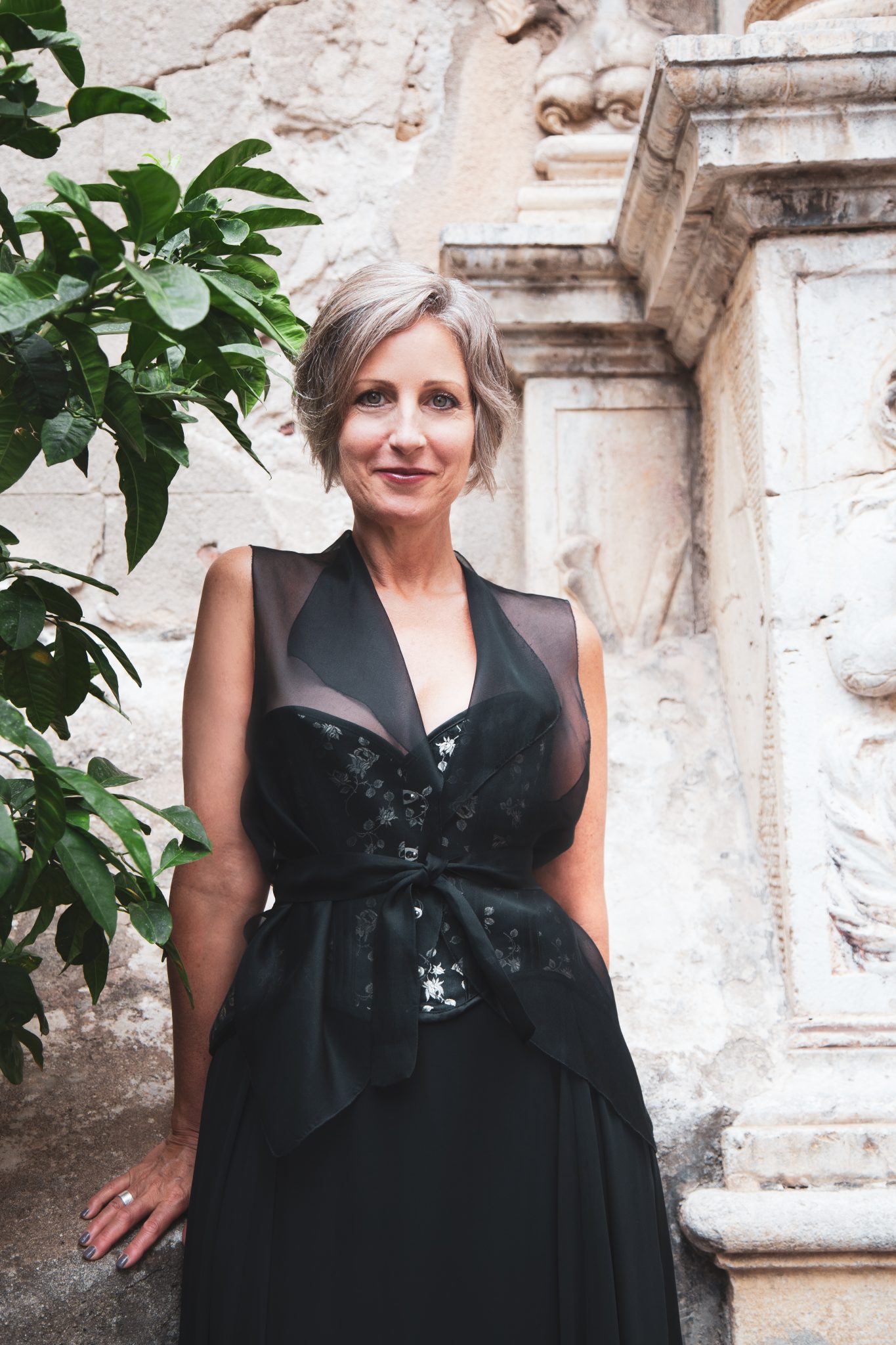
STACIE DUNLOP: SOPRANO AND PASSIONATE PROMOTER OF CONTEMPORARY REPERTOIRE, WHOSE TEACHING IS INFLUENCED BY HER ROY HART TRAINING WHICH IS BENEFICIAL FOR “ANY PERSON, SINGER OR NON-SINGER, ACTOR, POET, DANCER, PERFORMANCE ARTIST, SOMEONE WHO MIGHT HAVE HAD PAST STRUGGLES WITH THEIR VOICE…ANYONE…EVERYONE”…..A REVIEWER’S INTERVIEW WITH PEOPLE IN THE ARTS

JAMES STRECKER: I understand you’ll be going back and forth to France over the next 3 years to participate in a program called the Advanced Pedagogic Group at the Centre Artistique International Roy Hart. To begin, what is the history of this Centre and what is its purpose?

STACIE DUNLOP: These clarifying words come directly from the Roy Hart Theatre’s website: “Roy Hart’s dream when he came to Malérargues in 1974 was to create a living theatre of reflection, research, creation and recreation ‘away from the world’. The world has changed so much since that time and on many levels the revolution of the extended human voice has succeeded. But one thing that hasn’t changed is the alienation of the individual from soul, and art from life. Healing that gap is still the centre of the work and the inspiration of the theatre at Malérargues. Where there once was a tightly knit hermetic theatre of 47 persons, Centre Artistique International Roy Hart now is a centre and constellation point for a worldwide association of thousands, interested in furthering the heritage of that theatre. Especially active with workshops and performances during the summer months, the whole year is alive with rehearsal, workshops, open classes and residencies for creation and study. Roy Hart’s dream is still alive and well.”

JS: Please tell us about the Advanced Pedagogic Group, why it exists and what its purpose is.

SD: The Advanced Pedagogic program offered at the Centre Artistique International Roy Hart is a series of workshops that are ten days in duration that are offered in six sessions over a 2-3 year period. This training is very intensive and in order to be considered for accreditation, one must have at least 300 course hours and 15 private hours.
To become a Roy Hart teacher, you must attend the workshops offered at the Centre Artistique International Roy Hart, in Malérargues, France, as they do not offer this training anywhere else in the world. Melérargues is a unique place, situated in the Cevennes forest, where the studios and theatre space along with the residences is where the original members of the Roy Hart Theatre lived with Roy Hart after they moved from London, UK in 1974.

I have already participated in the first three sessions in March, July and September of 2018. Over the next three sessions the course work will focus on my crossing the bridge from student to practitioner while continuing to explore a personal development process which is vital to teaching this work. The process is facilitated through supervised group and individual lessons, along with teaching ateliers to the student teachers, in which feedback will come from both the participants and the supervisors. It is through this very hands-on process that the lead Roy Hart Teachers can monitor how the student teachers are absorbing their way of transmitting the voice work.

JS: Can you tell me a bit about your plans as a result of your participation there?

SD: As a Certified Roy Hart teacher, I will be able to conduct workshops in Canada as those offered currently only in Europe. Having this accreditation will help in building notoriety in the performing arts community, which could in turn attract students from across Canada to study the Roy Hart method at my private studio or through workshops that I would conduct.

JS: Who was Roy Hart, and what is your connection to him?

SD: Roy Hart was born in Johannesburg, South Africa in 1926. He studied psychology and English at Witwatersrand University where he emerged as a gifted actor, and gained a scholarship to the Royal Academy of Dramatic Art in London. He later met Alfred Wolfsohn, which led him to abandon a promising career in the ‘West End’ theatre to study with Wolfsohn. In search of that ‘something lacking’ he did not perform in public for the next seventeen years. He emerged in 1969 to a period of intense international artistic and psycho-therapeutic activity: solo performances in Henzes’ “Versuch über Schweine”, Maxwell-Davies’ “Eight Songs for a Mad King” and Stockhausen’s “Spiral” and Euripides’ “Bacchae” performed with his own company. He was also a guest speaker at psychotherapeutic and theatre congresses throughout the world. In 1972, he began to perform as an actor with his own company, which by that time had grown to more than forty members.

My initial training was in Canada and the USA with Richard Armstrong, an original member of the Roy Hart Theatre, with whom I studied through the period from 1993-2000. My main teachers for this APG program are Edda Heeg, Carol Mendelsohn and Saule Ryan, who are all experts in their field and Saule was an original member of the Roy Hart Theatre. The lineage of this teaching is vital, with guest teachers Kaya Anderson being one of the last students of Alfred Wolfsohn and Kevin Crawford, who was also an original member of the Roy Hart Theatre.

JS: What exactly is explored in Roy Hart voice work?

SD: It is not easy to explain what we explore in this work. Partly we explore our vocal range outside of the “normal” classical and perhaps traditional “boundaries” and classifications that are put on the voice types. We play with the ideas of male and female, and break down the traditional barriers that accompany this way of classification. We explore what Roy referred to as the 8-octave voice, a way of thinking that takes us out of the box that is typical of where one might think the voice, body, or soul of the human being can exist in. (Do you see what I mean by this not being easy to explain?)
To give you an idea as to what I am doing in a more practical sense, here is what the APG workshop structure looks like:

The 10-day workshop format has the day broken down into four 1.5 hour sessions in which there is a group warm up, group singing lessons, ateliers (which have a focus on technique and vocal physiology), group discussion on the history of Roy Hart and group pedagogic discussions. This all provides a structure whereby students can go deeper into their own voice work, while focusing on some of the main elements of voice teaching as practiced today by recognized Roy Hart teachers.

JS: You’re a professional musician, a soprano, so what makes this training so important to you in this stage of your career?

SD: This work broadens my thinking and engaging, as a performer, teacher and human creative being.

JS: How long will it take for you to become a certified Roy Hart teacher?

SD: I should be able to complete the initial 6-sessions of 10-day workshops by the spring of 2020, and after they are completed, a mentorship stage of an undetermined period of time will continue until my mentors feel I am ready to become certified.

JS: Are you planning to integrate this training into your classical vocal teaching?

SD: Yes, I do, and already have been. It’s impossible not to integrate this way of exploration into all facets of my performing and teaching life.

JS: Will you be offering this training in a different format to that of your more traditional and classically based voice training?

SD: Yes, I will be giving workshops. I plan to start with workshops of 6 participants and then grow the group size to a maximum of 12 as I become a more experienced teacher. Working in a group is very important in this type of training. There is a lot that can be learned by working and exchanging energy with other creative beings.

JS: Does this training at Roy Hart give you a different perspective on your current teaching and your performing practice?

SD: Definitely. In the first three sessions at Malérargues, I have rediscovered a deep physical and emotional connection to the work, which in turn I believe has further opened up my voice and mind and has also helped to ground me as a performer and teacher, building my confidence along with helping me in my journey to define myself as an artist.

JS: What type of “student” will benefit from working with you?

SD: Any person, singer or non-singer, actor, poet, dancer, performance artist, someone who might have had past struggles with their voice…anyone…everyone.

JS: I have several of your recordings and wonder how you think this pedagogic training will affect your future work as a performer?

SD: I hope it will help to deepen my approach as a performer and open up my voice even more.

JS: Roy Hart came from the theatre world and you are from the classical voice world. Can you draw for us some connections between the two?

SD: I am actually more specified in the classical genre, being a contemporary voice specialist, but Roy Hart worked with Peter-Maxwell Davies, Stockhausen and Henze, all whom I consider to be GODS of the “classical” music world. I perform Maxwell-Davies Miss Donnithorne’s Maggot, a companion piece to his Eight Songs for a Mad King, which was composed specifically for Roy Hart and his incredible voice. In the archives at Malérargues, there are letters between Roy and Stockhausen, Henze, and Maxwell-Davies…reading them puts me in complete awe.

JS: Where do you see yourself going forward as a teacher and a performer, in relation to your studies at Roy Hart?

SD: I see myself further opening up, and hopefully becoming a better listener, colleague and giving/connected performer and a more patient and supportive teacher.

Posted in Uncategorized | Leave a comment

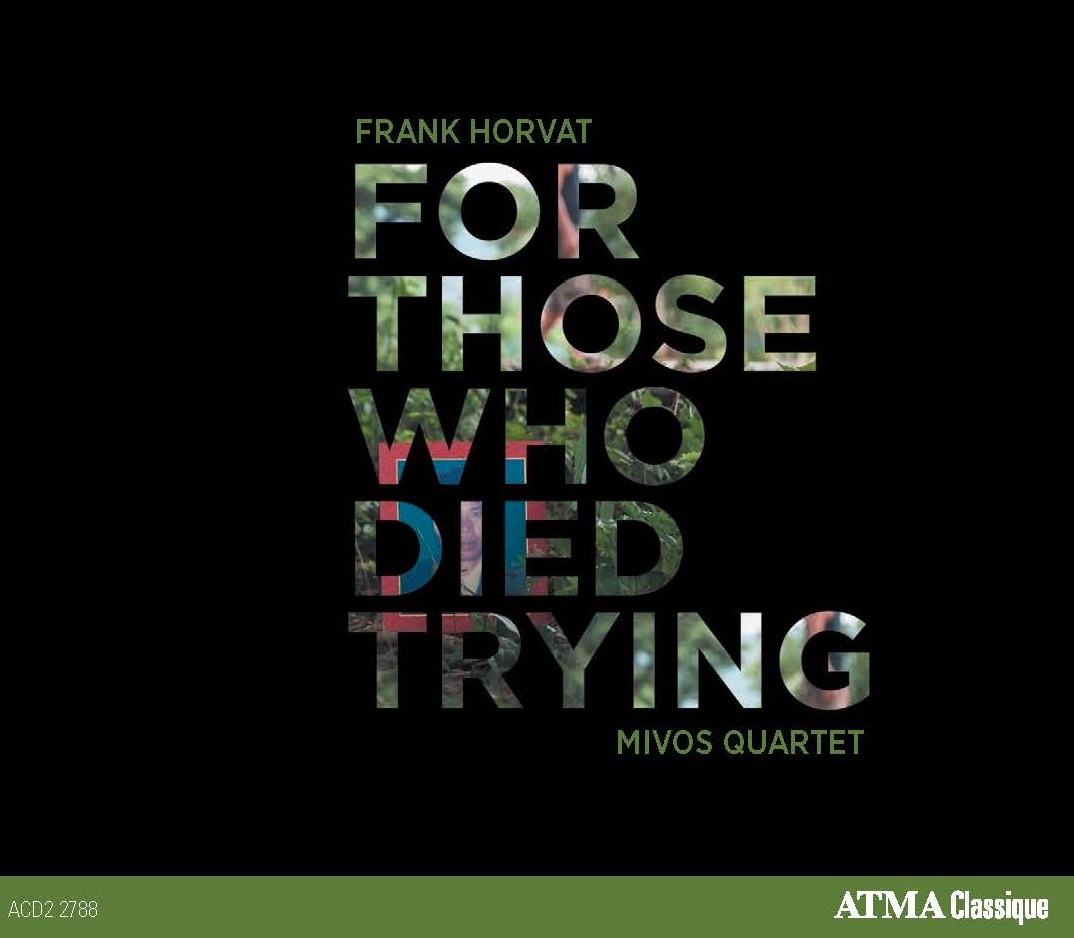
FRANK HORVAT: “FOR THOSE WHO DIED TRYING” – COMPOSER’S NEW CD ON ATMA, WHICH WAS INSPIRED BY “THE MURDER OR DISAPPEARANCE OF HUMAN RIGHTS ACTIVISTS IN THAILAND,” EXPLAINS, “THE 35-MOVEMENT STRING QUARTET HONOURS EACH VICTIM”…..A REVIEWER’S INTERVIEW WITH PEOPLE IN THE ARTS


Photo by Anita Zvonar


Composer Frank Horvat is known for compositions that tell deeply personal stories. For Those Who Died Trying is the world premier recording of The Thailand HRDs, Horvat’s 35-movement work performed by the Mivos Quartet, to be released on ATMA Classique on November 16.

JAMES STRECKER: If you were asked for 50 words for an encyclopedia to summarize what you do, or have done, in the arts, what would you say?

FRANK HORVAT: Composer | Pianist | Music Educator | Artivist
Eco-Artist | Mental Health Crusader | Human Rights Advocate

JS: What important beliefs do you express in or through your work?

FH: I hope that each of my compositions stimulates thought in an audience or brings revelations about their personal journey through life and their place in this world. Feeling a distinct emotion and/or provoking action is what I always aspire to as a composer.

JS: Name two people, living or dead, whom you admire a great deal and tell us why for each one.

FH: Philip Glass – Love his music. He has stayed true to creating his own musical voice despite critics. He is passionate about getting his music out there.

My parents – They immigrated to a new country without language, money or prospects and yet they built a successful life. If they could do that, then any of my creative endeavours are also doable.

JS: How have you changed since you began to do creative work?

FH: Perhaps a question I can’t answer since I can never remember a moment in my life that I wasn’t being creative. Being creative is an intrinsic part of who I have always been and most likely always will be.

JS: What are your biggest challenges as a creative person?

FH: Dealing with my own insecurities and low self-esteem. As someone who battles depression, I’m very susceptible to being my own worst enemy.

JS: Please describe at least one major turning point in your life.

FH: In early September 2001, my wife and I rented an apartment in the south of Spain. The weather was beautifully tropical and the apartment had no telephone or TV. Being detached from the rest of the world, in a wonderful paradise, I rethought everything that was important in my musical life. I gave up the notion of what I should do and instead dreamt of what I want to do. Two days following our return, September 11 happened. It was a further reminder not to waste time in life and do what I have passion for.

JS: What are the hardest things for an outsider to understand about what you do?

FH: I guess it is the sacrifices you have to make to make a living being a professional musician. But even more than that, it would be how even though these sacrifices can be hard, they really aren’t sacrifices because you get to do what you love. There is a balance though that musicians have to make in order to take care of themselves so that they can continue to do this work that they love. There is a fine balance between sacrificing too much that your health and well-being stop you from being able to move forward in your musical career and life. Developing a healthy mindset is one important key.

JS: How and why did you begin to do creative work in the first place?

FH: A feeling that this was a viable way to share who I am with the world.

JS: What haven’t you attempted as yet that you would like to do and please tell us why?

FH: I have not yet performed a solo piano concert of my own music outside of North America. I would especially like to do this in Europe as my ancestral roots are there. I guess I haven’t gotten around to it yet as there are always so many projects on the go and because of the expense and lack of contacts. But I’m working on that!

JS: What are your most meaningful achievements?

FH: Perseverance – continuing to lead a full-time life as a musician. Being and doing is more important to me than hitting a certain target.

JS: What advice would you give a young person who would like to do what you do?

FH: Figure out what your unique artistic voice is and work as hard as you can to nurture that and share with the world. Eliminate all obstacles that are in your way from making that happen.

JS: Of what value are critics?

FH: Lots of value if they’re constructive.

JS: What do you ask of your audience?

FH: Allow your ears, mind and heart to be open and let the music carry you wherever it wants to go.

JS: What specifically would you change about what goes on in the world and the arts?

FH: World: Only people who believe climate change is real and that humankind is at a moment of peril because of it can run for political office.

Arts: More artists would create more work based around social justice issues.

JS: If you could relive one experience from your creative life, what would it be and why would you do so?

FH: My first music lesson when I was 5 years old. It would be neat to feel again the awe of what it was like to make music from my own hands for the very first time.

JS: Tell us what it feels like to be a figure who is presented somehow in the media. What effect does this presence have on you?

FH: It sort of feels weird. I just do what I do because it’s me. Experiencing media coverage of oneself is like seeing yourself through someone else’s eyes. It’s sort of unnatural. That being said, I have gotten used to it since I just remind myself that it isn’t completely me since the vision is being filtered through someone else’s POV of themselves.

JS: Name two places you would like to visit, one you haven’t been to and one to experience again and briefly tell us why.

FH: I’ve never been anywhere in Asia, so China, Japan and Thailand are top of the list. I’ve learned so much about the culture and history over the years, it would be a thrill to be immersed within it.

I’ve been to New York City a number of times over the years but I always yearn to go back. I’ve never been to such an intoxicating city.

JS: Please tell us about one or more projects that you have been working on, are preparing, or have recently completed. Why do they matter to you and why should they matter to us?

FH: I’m about to have a large-scale string quartet composition released. It’s performed by the Mivos Quartet and I produced the album entitled, For Those Who Died Trying. It is coming out on ATMA Classique in November 2018. That composition, The Thailand HRDs, is based on a photo essay by Thai-based photographer, Luke Duggleby, chronicling the murder or disappearance of human rights activists in Thailand. The 35-movement string quartet honours each victim. People around the world are being threatened and murdered for standing up for their rights, this should make all of us take notice and help to stop these actions.

Plus, many, many other things! I always have at least ten projects on the go!

JS: Let’s talk about the state of the arts in today’s society, including the forms in which you work. What specifically gives you hope and what specifically do you find depressing?

FH: Because of technology, new ways of creating, presenting and sharing creative projects is always expanding and being invented. But arts are under constant threat in our education system, so I fear we will have a generation who will not have the tools needed to express their own artistic personalities and/or an understanding to appreciate the work of others.

JS: Finally, what do you yourself find to be the most intriguing and/or surprising thing about you?

FH: I’m a creature of habit and repetition in my life. I love routine and “everyday” things to be the same. Despite that, I never get tired of dreaming up new creative projects to share with the world. I’m surprised by the paradox of those 2 parts of my personality.

Posted in Uncategorized | Tagged , , , , | 1 Comment

A WEEK OF REST IN LONDON (HA!) WITH SUPERB FRENCH VEGAN CUISINE AT CAFÉ FORTY ONE, PLUS INFINITE RICHES OF ART AND MUSIC AND THEATRE – AND WITH ONLY ONE DAY OF RAIN

FRIDAY: Inauspicious beginning to a much-needed sanity break and rest. One hour to Pearson International with half the world on the highway going home on the Friday night of a holiday weekend and half the world going somewhere else. Night descends and the world is made of bright car lights everywhere and the tedious landscape of Mississauga which has expanded much too fast to maintain human scale. One looks out the window at these functional buildings and craves a field of weeds.

Sharing the van is a couple from North Bay who each reminisce about trips to Italy and Ireland. Exploring other countries seems to thrill them. They are now off to London, Paris, and Amsterdam, three days for each city, an impossible task. Almost two hours of waiting in line to check in at Pearson, a practice run for monstrous Heathrow. During the flight, announcements are spoken at a clip that is impossible to follow and hard to hear, yet ironically delivered in both English and then in French. You either want to be understood or you don’t, so why bother to speak, unless for simple pleasure of enjoying words, if you won’t be understood?

SATURDAY: After three hours of sleep it’s now Heathrow and two hours of endless zigzagging in a line that by rough calculation totals a thousand people in it. I pass the two travelers from North Bay several times who, near the end, seem worn. “This will be our last trip,” says he. “Never again,” says she. The pleasant fellow who stamps my passport has been called in from another terminal because the number of arrivals here is so many. I find myself laughing at each absurdity and that’s a good sign.

Three books just published and I am bloody sick of sitting at the computer, ergo London’s somewhat familiar and comforting turf. Too tired for now to do more than eat, so it’s a five-minute walk from my hotel on the Strand to EAT BY CHLOE, a vegan restaurant on Great Russell Street. As initiation into the British landscape I have fish (slab of battered tofu) and hefty chips, which includes squashed peas and tartar sauce. I’m looked after by a very pleasant Jorja, a second-year arts student at ‘uni’ – translation university.

Later, outside Drury Lane Theatre, a young man face to face with a woman shouts so loud that people come running from all directions. She seems embarrassed. One watcher films the whole thing and is physically attacked by he who shouts. Others intervene, a scuffle ensues. Later, on the Strand, crowds of people are all going somewhere.

SUNDAY: A BBC program during which two commentators critically discuss the political context of morning headlines in the British morning press. It’s Theresa May and Boris Johnson now taking over somewhat from the inescapable Trump. What a trivial thing some of humanity can be! On the way to CHLOE for breakfast I pass many homeless, behind Drury Lane Theatre, who sleep bundled in the streets of Conservative London.

My breakfast is the Early Bird at 9 pounds which includes scrambled tofu. The music they play, to my ears, has people fit into technology and be used as components. Some sounds imaginative, some like variety for variety’s sake, but little sounds like a vehicle for genuine human emotion as we find in great popular singers. Here we have mostly clichés that fill in for the human heart.

Down the Strand to ST. MARTIN IN THE FIELDS and, though not a Christian, I ease into the tranquility of an almost empty church. The tall and slightly opaque windows, as high as the walls of this famous church, give much pacifying light of no denomination. I begin a busy week with brief peace.

Into the NATIONAL GALLERY and its exhibition of COURTAULD IMPRESSIONISTS. Gerard who zaps our tickets at the door says, “I hope this thing works………Oh, oh, technology is gone again” but then technology does work again and I get to enter. I then have a seat facing the Bar at the Moulin Rouge and sense a lifetime in the eyes of Suzon, Manet’s model for a painting in which her reflection famously does not line up with her actual body. Her eyes seem intensely soulful, even intensely stoned.

To the left hang two Daumiers, both of Don Quixote with Sancho Panza. In one, Don Q chases after clouds of dust, thinking they are an advancing army, but in truth they are flocks of sheep – a life lesson there. Seurat’s Bathers at Asnieres is a quietly blinding work of inner light and inviting textures, haunting in its brightness. In front of A Young Woman Powdering Herself, a young woman explains the painting in Japanese to her male companion who says “Aaah” several times as he carefully considers brushstrokes.

Jane Avril in the Entrance of the Moulin Rouge shows an unusual tormented expression one doesn’t usually see in Lautrec’s paintings of the dancer. Of Le Loge by Renoir we are told that “the social ritual of theatre fascinated Renoir” – as it does me. The subtle emotional complexity in the woman’s eyes up close solidifies into a more penetrating gaze from afar. There’s more attitude in her, a slight disapproval tinged with sadness.

Cezanne’s Lac d’Anney was called “unsurpassed” by Roger Fry and certainly this exquisite work suggests a go-ahead for cubism and for me it works most hauntingly at ten feet. Why do I feel that I finally see Cezanne’s heart in his works? How was I distracted before? In Two Dancers by Degas, I see two ballerinas made into divine spirits by the footlights. I note that Manet spoke the ooziness of paint as effectively as Van Gogh.

This exhibition is too intense, in a way, since many of the paintings would each take days, a lifetime perhaps, to take in. So now a stroll through the NATIONAL GALLERY and first its Vigee le Brun’s self-portrait, with its very kissable lips and the penetrating insight of her gaze. Watteau’s The Scale of Love seems an old friend, as does Goya’s Dona Isobel. The Venus of Velazquez, my fave nude since high school, has many viewers. Her face in the mirror must be one of world art’s most enticing mysteries. But now I’m too tired to go see the Botticelli -never thought I’d say something as horrifying as that!

I buy an Americano at the National Portrait Gallery’s café from a Rumanian, Ada, a woman with a sexy twinkle in her manner and conversation. I buy a London Sunday Times at Charing Cross Station and during a walk pass Dishroom, a trendy restaurant du jour with a two hour wait for a table and filled with young diners. Off to the often-recommended SAGAR for a vegan Indian thali, with its delicious variety of six individual samplings. The waiter Abdull promises that on my next visit he will look after me in choosing a meal.

Later I walk to CHLOE for a ginger-cayenne drink and chat with waitress Jessica who grew up in Spain. She speaks English, Spanish, and German, is studying graphic design, and, already with two YouTube postings of her singing, is pursuing a career in vocal jazz.

MONDAY: From BBC News I learn that in just ten years we’ve had a “dangerous rise” in global temperatures. A scientist comments, “It’s up to governments what to do…. It’s time for us to decide.” With Trump? May? Yah, sure. Now to Soho to drop off a package and then to another of Happy Cow’s Top Ten Vegan Restaurants in London, TIBITS just off Regent Street. It’s buffet style, pay by weight, and each of my nine samplings is of dining quality, refreshing and tasty.

Next, drop in to the National Portrait Gallery to reconnect with and reconsider portraits I’ve known for decades: the Brontes, Shelley, Jane Austen (said to be a good likeness), a bust of Pope (also said by a contemporary to be lifelike), Shakespeare, and and and. New to me is a life mask of Wordsworth, but not Keats since, long ago, I bought a copy of his mask in the Gallery shop when they were on sale there. A life mask is a thrilling but also an unnerving experience.

New also to these eyes are both a photo and a painting of Elsa Lanchester whose opening scene to Bride of Frankenstein I have enjoyed many times, especially with the hammy contribution of Gavin Gordon as Lord Byron. It’s then off to Colley Cibber, mockingly devastated by Pope in The Dunciad, but here we learn that Cibber too didn’t think much of his poetry.

Night in one of my fave places on the planet, WIGMORE HALL, with its acoustics of graceful resonance and its atmosphere of ease and intimacy. Row A on the side puts me on the aisle and ten feet from the violinists who, to my delighted surprise, descend to occupy the three empty seats beside me when they are not required for a selection by the FREIBURG BAROQUE ORCHESTRA.

Soloist SANDRINE PIAU displays a confident versatility that serves the several texts with an actor’s incisiveness and the music with a soprano voice of subtle variations and thrilling passion. With Lucretia, we are drawn into her human inner frenzy and remain there breathless. Drama seems a second, maybe first, nature to her as an interpretive artist and we are gripped by her artistry.

The Freiburgs are constantly impressive with the worlds they evoke in music. They seem a good vibe band that is surely at one with each composer, always elegant and sometimes elegantly silly. Their runs in the strings mesmerize, as do their cross-weaving textures and assertive shaping of passages. These are musicians who dance in attitude, and some in body, with obvious delight before us. PLAMENA NIKITASSOVA, director and violinist, shows constant delight in the playing of the oboist and the violinist beside her obviously delights in everything, inside her and around her. What a life-celebrating evening!

TUESDAY: To handy CHLOE for a get-started vegan burger made with black beans, quinoa, and sweet potato, and it’s good. Again, the music is current, something I’m not. The emotion seems more created than felt, not something that develops in actual lives.
In London, I’ve stayed a number of times at B&Bs on Gower Street in Bloomsbury, and strolled daily through the neighbouring BRITISH MUSEUM on my way somewhere, but this time it’s a twenty-minute walk and then going through a security system that didn’t exist ten years ago.

Immediately to the two attendant Assyrian gods from outside the temple of Nabu, god of writing, from 810-800 B. C. The end of the inscription states, “do not trust in another god,” a kind of ego-tripping monotheism. But eye to eye with the god on the right is powerful stuff for me and feels deep as the earth can go in some kind of connection I feel. Across from my friend stands a ten-foot human headed winged lion from 865-860 B. C. and two protective spirits in relief. one of them eagle-headed. Just before the room of Elgin marbles stands an imposing pair of human headed winged bulls who stood before at the gates of the citadel of the Palace of Sargon in Khorsebad 721-705 B. C. as “magic guardians against misfortune.”

Next a walk around the Elgin theft and I pay attention to a “weary” horse from a chariot of the moon-goddess Selene and its “bulging eyes ad gasping mouth.” But, as in every museum nowadays, it seems that these stunning creations from long ago seem to exist only to be photographed and not experienced. Still, I take in the grand hollowness of this space which holds time at an arm’s length.

On the elevator to the Mesopotamian sculptures, an elderly woman declares, “Gosh, this is confusing, and I’m not even a foreigner.” Now more favorites: the statue of King Idrimi of Alalakh from 1570-1500 B. C., the silver lyre of 2500 B. C. from Ur, whose shape was preserved by pouring plaster into spaces where wood was no more. Next, an Americano from a server in the Great Hall who comes from Puglia where they have “nice weather, nice food, nice girls.” At which he smiles.

How the hell do I get to the reading room? I ask in frustration at the main desk – and the following ensues:
“I’m confused,” says I.
“I’ve been confused all my life,” says he.
“I worked in your reading room years ago on a project and then ten years ago I sat in the room again for old times’ sake.”
“Yes, and then they closed it ten years ago because the director called it dead space, this about a room where Karl Marx had put his gum under the seat.”
“That’s idiotic. The room has such an aura to it.”
“It does indeed, and the new director talks about opening it again…. but not in my lifetime.”
Damn bureaucrats!”
“Agreed.”

I feel a cold coming on, so I walk past my Assyrian god, the one on the right, do eye to eye, and again feel I am being seen in my private existential depth. I’ve twisted my knee by bending down to read the posting about an Assyrian relief, so I slightly limp home all the way through Covent Garden. So, it’s a humus wrap and filtered coffee from Pret a Manger at whose branches two people have died recently by eating unlabeled ingredients to which they were dangerously allergic. Then a shower and a lie down to watch, as it turns out, Mrs. Doubtfire, with the gifted Robin Williams and then a film with Daniel Craig which is utterly stupid but which puts me to sleep. Go Go Go Go has become Stop.

WEDNESDAY: From the BBC, Theresa May has created a Ministry of Suicide Prevention to address the fact of 4500 who kill themselves annually. It’s October 10 and the predicted weather is 23 degrees C. An item about prostate cancer, the “stiff upper lip” attitude of British men who should be “coming forward” if they have symptoms like “blood in pee” or “blood in the poo.” Another item looks at concerns about children’s mental health. Piccadilly station is closed because of a person on the track.

Over to ITV and some talk about a vegan week on British Bake Off. “What’s the point of a vegan cake?” asks the male host. “Give me a beef cake with lots of meat.” I’ve met or seen his asshole kind many times, a Trump or some other grown man who acts assertive with much bluster on some issue and who proves himself a man in his eyes and an asshole in the eyes of others. The UN has recently stated that the consumption of meat contributes significantly to the earth’s increasing crises, but not one of our smugly stupid hosts seems to know that as they talk about nothing.

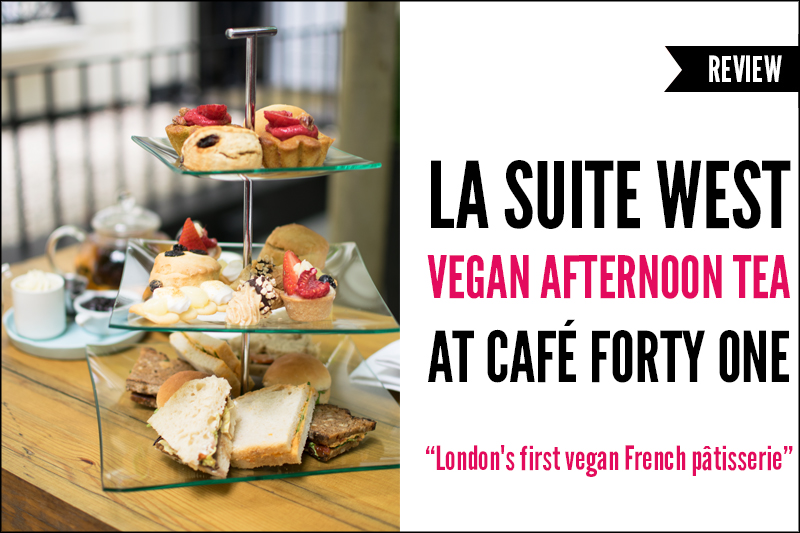
I’m off for breakfast, however, to a vegan paradise on earth, the newly opened CAFÉ FORTY ONE, near the Queensway tube station north of Hyde Park, which advertises itself as “Passionately Vegan” and “London’s first Vegan French Patisserie,” one that offers “a vegan alternative to the British Afternoon Tea tradition.” I’m here finally for a Full English Breakfast” which turns out to be “vegan sausages, roasted portobello mushrooms, baked beans, vegan bacon, sliced avocados, sourdough toast and roasted tomatoes” -and filter coffee over English breakfast tea. I can tell how delicious the food is simply because I have very small bites of it and chew very slowly in hedonistic pleasure with each one.

I have a chat with chef CLARISSE FLON, a woman of warm and spontaneous charm, who became a vegan four years ago because of a chronic digestive illness, plus her investigation of the appalling treatment of animals. I learn much. In France, people are aggressively hostile to vegans and throw rocks at the windows of vegan restaurants and cars with vegan stickers on them. Her staff of five in the kitchen had no training in vegan cuisine – what, no butter or milk in a bechamel sauce??!! -and had to be re- educated. Clarisse is an internationally experienced chef and “qualified in Patisserie with the French National Professional Certificate.” She intends to have a pastry counter in her restaurant because “there are few choices for vegans otherwise.” Her mother still can’t comprehend why Clarisse won’t eat eggs.

I leave the stylishly modern, serene and inviting Café Forty One and head to HMV near Bond Street, which saddens me because I remember many visits to the HMV near Tottenham Court Road which used to have a whole floor devoted to classical music and one devoted to jazz, blues, and world music. This store is a much-reduced and dying operation, alas.

I head to Marks and Spenser to buy some T-shirts and a sweater, am forced because of time to pass on Handel’s house – where he wrote Messiah – and walk to my hotel through Soho, stopping at Pret a Manger for an avocado wrap and coffee. I also stop at Mountain Warehouse for two wicking shirts on sale. I discover I’ve just missed the founder of the chain who had dropped into this store an hour ago with his dog named pooch.

Home/hotel at last and slowed down by the cold, I turn on the TV. Happily, a fave tenor Rolando Villazon is hosting a program on Don Giovanni and, as expected, he speaks with enthusiasm about this great opera and sings with passion. Then it’s a program titled Euclid to Descartes and we are asked – and asked to ask – if mathematics is created or discovered. Two terrific programs. And then I hang a Do Not Disturb sign on my door. But later, while in a deep and needed sleep, I am indeed disturbed – untimely ripped, I call it – from my rest.

THURSDAY: It’s 9:00 a. m. and the hotel’s fire alarm is the loudest and ugliest I have ever heard. So, it’s unintended slo-mo and I get clothes on, grab essentials like wallet and passport, and head down the emergency stairs to the street. As feet touch sidewalk, the alarm, caused by a “panel malfunction” I am told cheerfully, ceases into silence. So back to bed, but the Blue Dahlia is on TV and, with a script by the great Raymond Chandler, must not be missed. It’s followed by an American sci-fi flick from the 50s about plants with intelligence, and we hear about an “intellectual carrot.”

CHRIS MCKINNON, co-owner of Hamilton’s McKinnon Hair Design is in town for an annual London hair show and she invites me for dinner at MILDRED’S in Soho. It’s a delicious vegan meal of Smoked tofu, fennel, apple, white bean sausages and mash, pan-fried hispi cabbage, peas, dill, cider gravy, plus soup, plus dessert. Chris has just spent a month in Quebec as part of an intensive French course, so our appetizer is conversation en francais.

There’s much catching up and then, with my umbrella safely in my hotel room I run like hell through the rain to the Harold Pinter Theatre off Leicester Square. The first play, THE LOVER, is brilliantly realized with John Macmillan and Hayley Squires as husband and wife respectively in wide-eyed and semi-robotic performances that are beautifully eerie. She has a “lover” and he has a “slut” but so much is simultaneously going beneath and even on the surface. I really enjoy these stylish performances, am really taken by them.

With THE COLLECTION, I have this play embedded in my consciousness for many years, partly because I showed it many times to my college classes. This production, directed by Jamie Lloyd plays to the audience at times, with aggressive attitudes spelled out and David Suchet doing a thespian turn as Harry. It’s overstated in comparison to the film, but quite interesting. Of course, some lines in Pinter can sound deliberately clever, too stagey, and do let us off the hook of facing doubt, at least in this production. But it helps me to see Pinter differently in places. Strangely, Suchet is on the television when I get back to my room all wet.

FRIDAY: A note on spoken English on the BBC: future is few-CHAW, nature is nay-CHAW. And thus informed, I’m off now to CAFÉ FORTY ONE for an actual lunch. My waitress is Sara, a Hungarian studying journalism in London, who brings me a vegan -I remind you – Mushroom Bourgignon Pie and Mash at only, considering the high quality of the food, only 11 pounds 90. Because chef Clarisse is a master of pastry, I next succumb to the Chocolate and Praline Millefeuille with its layers of caramelized puff pastry with chocolate and praline crème patisserie. “If you are a chocolate person, you will love millefeuille,” advises Sara and it turns out to be one of the most stunningly delicious desserts I’ve ever had. I eat it slowly and we talk about veganism and animal rights. Later, I chat with Kata, also from Hungary, who was a history and English teacher and speaks at least five languages.

A brief lie down and it’s off to CUTTY SARK, the clipper ship now on display in Greenwich which once transported the sacred tea to England from the east. I’m here for a gig of MARTIN CARTHY AND JOHN KIRKPATRICK, two cornerstones of English folk music. I first met Martin when he sang for my students at the Sheridan College School of Crafts many years ago and have seen him perform and chatted with him many times since. The songs he sings, many of which I number as favorites, and the unique style of guitar playing that he himself created, mean a great deal to me, in part because they root me to the earth and its people. With John I finally get to tell him how his singing always touches me, always reaches into me.

A chat with Martin brings disturbing news. He had a dislocated shoulder from tripping while taking out the garbage. He says he let out such a loud scream on landing that daughter Eliza – yes, the brilliant singer-fiddler -came running from the third floor. The shock affected Martin’s memory for a time – I guess in the way that our house fire affected mine – and we talk of aging and all its related pleasures.

The gig is pure pleasure and even has lured a couple in the audience to travel from Edinburgh for it. John does most of the hosting, all with reference to the five million tons of Cutty Sark overhead, gives anecdotes about fiddler Dave Swarbrick who inevitably had a “falling out” with whomever he played, adds that Swarbrick’s singing “could be amazing,” and adds that Swarbrick did co-write six or seven songs with Richard Thompson. John proceeds to sing Crazy Man Michael from Fairport Convention days and Martin sings some of his “big ones” such as Prince Heathen, Dominion of the Sword, Maid and the Palmer, and Lovely Joan to which he adds, “I’ve been singing this song for fifty years!” Oh, time!

SATURDAY: To CHLOE for vegan breakfast of pancakes and coffee, and notice that the young noon hour crowd come here as much for communal chat as for food. It’s an alive place. To the NATIONAL GALLERY and so many paintings I’ve loved since my teens. With many visits to London and the National since then, some of these works have been part of my aesthetic and spiritual growth, I suspect. Take the Rembrandt self-portrait, done when he was 63 in the year of his death. I once did a newspaper feature based on his self-portrait at Vienna’s Kunsthistorisches and here I am again, talking silently to my friend Rembrandt. It’s not really weird that he is so alive for me. And then to works by Hobemma, Van Dyck, Rubens, Vermeer, Leonardo, Peter de Hooch, Jan Steen, Cranach, Holbein, and, yes, Botticelli at last.

To the WYNDHAM’S THEATRE which actor Paul Eddington once told me that he put into the same category as the Bristol Old Vic for acoustic quality. The matinee is THE HEIGHT OF THE STORM by Florian Zeller and it begins with violin music that is solo and sad. An old man stares out the window as his daughter speaks, unanswered, to him: “You can’t live here on your own” and “With some things, you need to let go.”

Jonathan Price is intensely old with simultaneously sharp and hollow eyes that look back in time and into the present. He rails from his own reality and licks his lips slowly like a dry old man. “I’m an old plant in an old pot,” he says, and then “People who try to understand, they are morons.” The audience titters nervously here and there, probably unsure what to feel and what to admit about themselves.

We experience many shifts in time and reality during Zeller’s play Andre’s wife Madeleine has recently died and then is alive before us and not dead for him, perhaps in the past that has happened or perhaps imagined in his mind. We change from past to present and back in split seconds. Now perhaps he is dead and being discussed by wife and daughters. He objects “I am here” and remains unheard, unseen.

“He made me promise to outlive him,” says the wife. There’s talk of “retirement homes, hospital rooms, and all that” and unspoken words in glances about the maybe affair and the maybe child in his past. There’s his diary that tells all and might get published. There’s sibling hostility about him, the father of two daughters who recalls, “a few names, a few faces in the fog here and there.” “Where’s your mother?” he keeps asking.

Back and forth in time. Mother says to elder daughter, “When I need you, I’ll send for you. In the meantime, fuck off!” and the audience applauds. Wife also says, “I prefer it when they’re gone. They have their lives and we have ours, and it’s better if we don’t mix them up. And at the heart of this powerful and profoundly moving play and production, sensitively acted, husband and wife talk about life being ended: “What would I do without you?” he asks. “I’ll always be here, don’t worry,” she responds.

After the no-interval 80-minute performance, I head again the BRITISH MUSEUM to stare once again at the Rosetta Stone, to look up into the eyes of the statue of Ramses II who inspired Shelley to write Ozymandias, and to stand before the statue of the Assyrian god-guard who, over and over for some years, has drawn me back to his presence. I begin to hum in his before, and higher seems more appropriate. I look into his eyes that, unrelentingly, ask what it means to be truly alive.

Saturday night and a wide expanse of seats on the stage of the ROYAL FESTIVAL HALL feels overwhelming, even with the LONDON PHILHARMONIC yet to take their places. The large choir is already seated looking down from above in three rows. Soon conductor Jeremie Rhorer produces an effectively nuanced reading of Poulenc’s STABAT MATER in which delicate spiritual passages feel strangely on equal par with spirit-shaking moments elsewhere. One feels as much a sense of spiritual emergence as development. The richness of the orchestra’s strings is full-bodied and demanding of attention without straining for effect.

And what to make of this: of the eight cellists seated before me, the four women sit with erect spines, while the four men lean forward or slouch in their seats. Trisha, aka she who welcomes us into the hall, suggests it is because the women use Pilates machines. She then continues to welcome audience members as if into her living room.

Now for CARMINA BURANA the Tiffin Boys Choir are plopped into the middle of the adult choir. The cellists, while waiting, have much chatter among them while the violinists seem more obediently- who knows to what? – silent. Orff’s O Fortuna soon blasts me out of any passive mode I had in listening and Rhorer’s take on Orff’s famous work shifts repeatedly and excitedly in its effects: earth gripping, breath holding anticipation as with the “chorus of the maidens, melodic force.

The weight of the piece does not exclude the lyricism of the small female groupings. Baritone Simon Keenlyside, of Don Giovanni fame, now offers plaintive passion in a semi-falsetto and then brings a ringing feet on ground urgency to his singing. There is a cosmic vigour in all this medieval drunkenness, as if it is a universal plan to get pissed, and, appropriately, a thrusting joie de vive throughout in the score. I’m surprised at how familiar I seem to be with Carmina Burana and how thrilling a performance like this one can be.

SUNDAY: Rain. Yuk. But at least I’m not washed out to sea like a man in Bristol during heavy weather there. I walk to Chairing Cross station for the Sunday Times. The underground attendant kills the 2 pound 10 debt on my Oyster card and plugs in 2 pounds 70 for my trip to Heathrow tomorrow. That’s the third time that people of the Tube have been so kind- I didn’t have to pay. Then its Itsu on the Strand for two serviceable i.e. warm soups – one Udon, one Miso.

To the NATIONAL GALLERY where I chat with guard Maria who also loves Vigee le Brun and we talk about the artist’s mastery of textures. I am blown away by le Brun’s handling of hair, lace, and feathers and Maria by the artist’s handling of skin. I note Watteau, and Velazquez, and Derain, and Monet, and Van Eyck, and Leonardo, and Holbein, and Cranach…. there isn’t a lifetime long enough to take in and understand the art in this gallery. And before leaving, I’m eye to eye with Rembrandt, his self portrait and age 63, the year of his death. I find myself inwardly talking to him and I find much comfort in that.

An afternoon recital in the Purcell room by pianist ALEXANDER ARDAKOV who, to my ears, is more geared to compositional methods and emphasis on form plus the piano’s expressive and percussive potential than etching human emotion and ethereal subtleties. Still, I’m tuned in, albeit more to Scarlatti’s mind more than the pianist’s heart – and don’t I sound pretentious! Tambourin by Rameau suggests a lightly stepping ballerina, while in Beethoven’s sonata 17 the pianist goes more for effects within a passage than developing an overall argument for the Opus 31 piece. That said, Ardakov offers emphasis that is fresh to my ears as he gives each passage passionate attention. This might not be a recital that I will often recall but, as a result of it, familiar music will now be heard with a more enriched perspective.

For the evening, it’s very compelling readings fresh and imaginative writing by the six MAN-BOOKER FINALISTS with host Damien Barr, again at the Royal Festival Hall. Barr remarks at the outset: “A question sits at the heart of each story – who am I?” Anna Burns reads from Milkman in a delightful Irish accent and notes “there is safety in not getting to the point”. Our host remarks “There are so many words for vagina in this book”

Next, it’s Washington Black by Esi Edugyen from which I note these potent lines: “his usefulness had surely passed” and “That was how it began: me and Kit watching the dead go free” and “A man who has belonged to another learns early to observe a master’s eyes” and “Big Kit determined calmly and with love, to kill herself and me.” The author remarks that she researches before writing a book, but also during its writing.

From Daisy Johnson’s Everything Under we hear: “You forget your name or where the bathroom is” and “Some mornings you know exactly who we are” and “Here where the days are so short, they are barely worth talking about” and “You can hear the water effing along.” During the Q&A we hear “The memories that we have, they’re never entirely ours.”

The Mars Room by Rachel Kushner, who sets the book in a women’s prison and has indeed done readings in prisons including some in Scotland, has these lines: “I peek under the sheet and he was the same as me down there” and “Our relationship had a lot of dreams to it like that.” Later she comments, “I never use the term research, I just write the book.” She concludes, “I didn’t learn a body of knowledge to employ it.”

The Overstory by Richard Powers, called “truly epic and operatic” by the host, offers these passages: “She wants to see what uncut forests look like, while there’s something left” and “The mosses are thumbnail forests all their own” and “Death is everywhere, oppressive and glorious” and “…primal terrors that will never be civilized, even when they are paved over” and finally “We’re sorry, we didn’t know how hard it is for you to go back.”

The last book is The Long Take by Robin Robertson which the host calls “a book drenched in film noir” and the author notes how Bunker Hill in LA was gone, so he had to watch 500 films to write the book. From it we hear, “wearing too many clothes, wearing all the clothes” and “as if the whole sky and all the stars had fallen” and “To find a black street trashed and empty and the city gone.” We also hear a ‘sense of urban paranoia and panic.”

Very interesting to watch animated and very physical sign language covering the event. Also, interesting to hear Edugyen comment “All of my novels have been 10-12 drafts, so it takes some years (to write a book). Fave line is from Rachel Kushner who is asked to summarize her book: “If a book could be reduced to two sentences, it would render the book unnecessary.”

MONDAY: At Heathrow, while checking in, I meet Kossar from Glasgow who comments, ‘We don’t get old, we get tired” and advises walking barefoot on the grasses and “touching your forehead to the earth.” I tell her how important the album Handful of Earth by Dick Gaughan, also from Glasgow, is to me and she says, “Glasgow is small and I know him, so I’ll say Hi! For you.” And soon, leaving Britain is much the same as coming to it, cramped and sleepless for seven hours or so, but now I have even more in my past to remember.
Posted in Uncategorized | Tagged , , , , , , , , , , | Leave a comment

ONCE MIRANDA AND NOW PROSPERO: TWO VISITS TO THE 2018 STRATFORD FESTIVAL’S THE TEMPEST


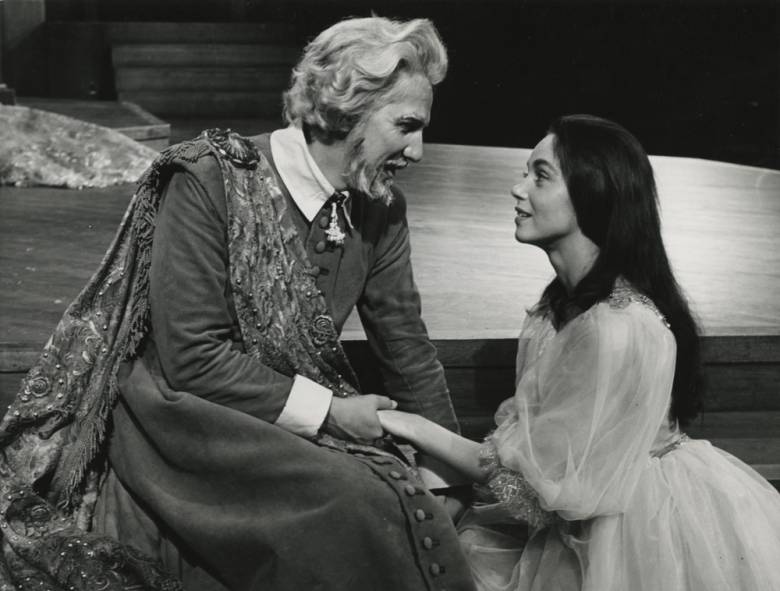
William Hutt as Prospero and Martha Henry as Miranda in 1962

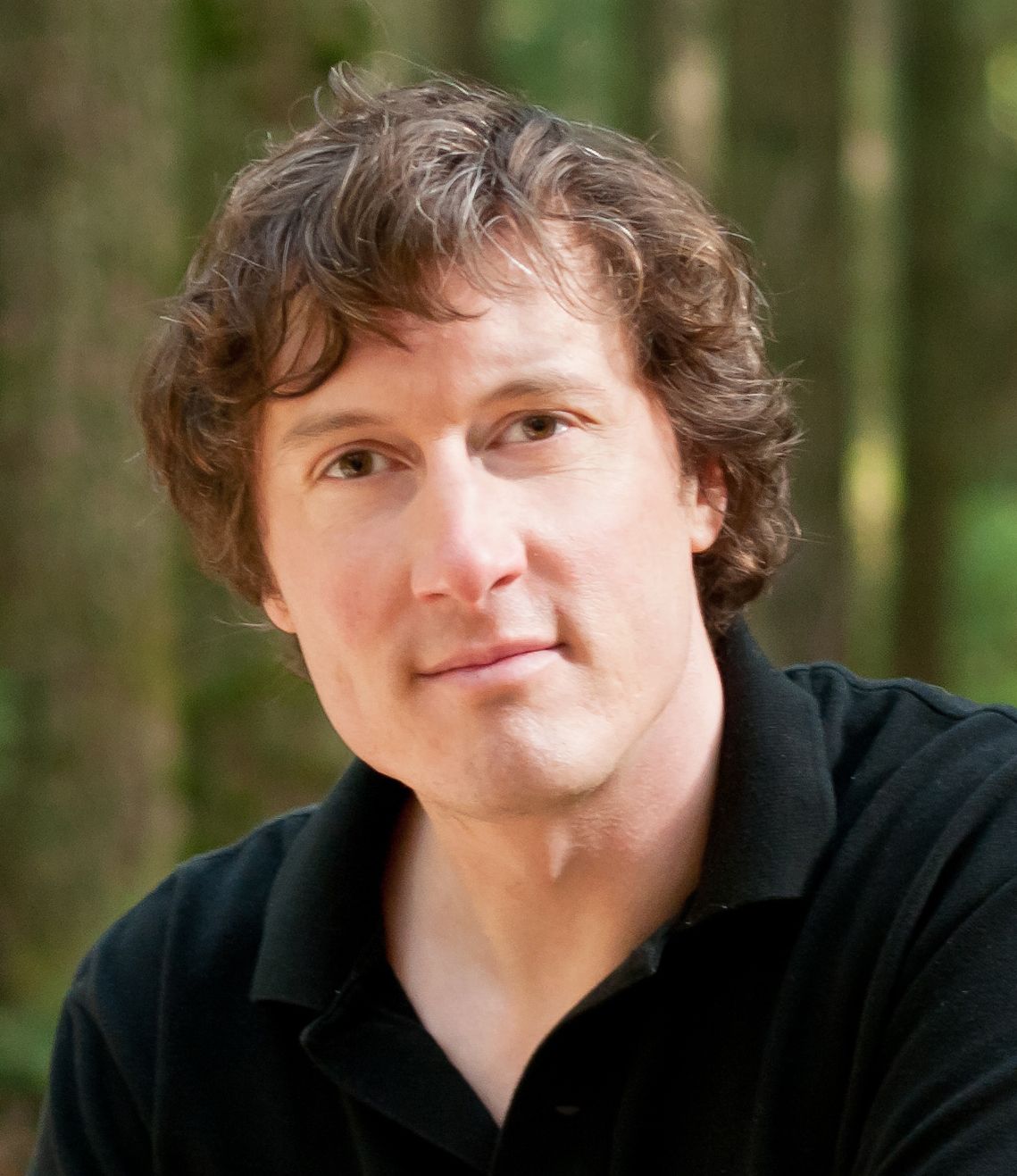
Martha Henry’s Prospero gazes down from the upper level of the Stratford Festival stage as we enter the auditorium to witness Shakespeare’s assumed last play, The Tempest. We are the audience and essential to Henry’s, Shakespeare’s and Prospero’s respective conjurations of realities. We are made so, as she looks down and, staff in hand, literally sticks it to us all.

In Antoni Cimolino’s production of the play, realities blend in theatrical fashion and we are thus implied to be part of the art in this mirror of drama. We hear movement of water and we hear, nay, feel, a loud thumping, as we experience a chaos of bodies and sounds. In this setting, this realm, Prospero speaks. The beginning of Shakespeare is the word and through words we begin to exist.

It’s a distinct voice – Martha Henry’s – we know well from decades of hearing it, and now it quiets the storm. We gaze up at the great hollow of the Festival theatre – a space which can be daunting to actors who might fade into it– and the voice seems to draw in the darkness of unfilled silence. It seems a voice that walks between benediction and theatrical pronouncement and, in speech, shapes itself into precise authority.

We also see Mamie Zwettler’s Miranda, a performance that has grown in subtle spontaneities, as delicate counterpoint it seems, since her speech unlike Prospero’s is exploratory and tentative and new to experience. Hers is also a strangely potent, achingly pure, contrast to the cruelty or inanity of humans revealed by the playwright, of which this play’s production has many sharply-realized examples. If hers is a “brave new world,” Prospero, as suggested through Henry’s voice, has seen too much of it

And then Ariel, a spirit, appears, a creation from imagination and our need to escape our ultimate impotence against death– don’t we all need an Ariel, a Puck? He is discreetly fantastical, self-indulgent in his gig of powers, and must be kept in his place, a task which Prospero easily achieves. He is now more assertive than in the run’s beginning.

Here we find, to my memory at least of a performance a month ago, a crucial shift in Henry’s Prospero. She now displays a theatrical assertiveness that delights in itself as performance among others, as much as it does so as authority. Prospero does hold a hand full of aces, and she keeps Ariel not quite dangling at the end of her staff, her wand. But in much of what she does, she seems kindly and playful as if she is freer now to call her own shots. She now conveys a wisdom in her mercies, not one born from bitterness but, it seems, from compassion.

Prospero now quite literally dances to the lines she speaks and in the presence of daughter Miranda she does a self-satisfied maternal strut. This Prospero is having fun and, no axe to grind, transmits some pain to Caliban with a flick of the finger. She also enjoys a good verbal battle which, with the inherent authority of Henry’s voice, she is bound to win. But the mother-daughter connection is much more than power games and Prospero is touchingly protective of her offspring and her intimate embrace resonates with palpable love.

We realize here, moreover, an intriguing before and after situation, since Henry long ago was Miranda on this same stage to William Hutt’s Prospero. We wonder what her own Miranda was like back then and what kind of Prospero Zwettler, who here seems ripe to mature, might one day be. Prospero and Miranda here have a seasoned and mutually-valued relationship and each knows how far to push the other and when to show love instead. How much of Henry’s Miranda is now in her Prospero?

Caliban as a character can take many routes and here Michael Blake, under Antoni Cimolino’s directorial staff, seems more a choreographed, weaving, mischievous energy – a serpentine motion that is beautiful to watch in motion – than an internally rotting evil we should fear. At the end, Prospero kisses the top of Caliban’s head and Miranda looks into his eyes as if they show something she might one day want to – have to -understand.

In a production that feels more domestic than metaphysical, Caliban is the ‘bad’ misbehaving child and not a tendency to evil in human nature. He is not arbitrarily malignant as, say, Donald Trump who does make us sick to be of the same human species as he. This Caliban disturbs more for what he may do than for what he is. He is driven, but he can be stopped.

Many performances in this production give compact but rich insight into human nature, behavior, and variety. Rod Beattie’s Gonzalo is firmly both decent and lovably tedious in his rambling. David Collins’ Alonso is solid in authority but definitely broken -and thus unreachable – by the loss of his son.

Stephen Ouimette’s hapless and endearingly hopeless Trinculo is delightfully wide-eyed and detailed in his human simplicity, while the Stephano of Tom McCamus is broadly present and laid back and self-inflated with drink. None here force their characters on us and are thus more human. They grow on us. We wonder about each one.

As the second half begins, Prospero again sits above like a stage director making notes at rehearsal. She watches her pairing of Miranda and Sebastien Heins’ Ferdinand take shape. Prospero does a slight but telling twitch at being referred to as crabby, but she is not affronted since part of Prospero’s wisdom is maternally experienced and therefore maternally wise.

Not so Miranda who is too unworldly to play society’s game of male superiority as she easily totes the tree stump that has wearied her clueless and lovably enthusiastic Ferdinand. Their mutual guilelessness, enthusiasm for each other, and innocence are joys to behold in this consistently engaging production.

The powerful but aging Prospero is cleaning up the house of her life, perhaps of “a heaviness that’s gone”. What then is the reason that Henry emphatically stresses the word ‘stuff’ in ‘We are such stuff as dreams are made on.’ Why does her relief seem so palpable on “I’ll drown my book?” Because Henry can easily twist or twirl a phrase many ways into playful accusation or punch hard dismissal or spontaneous sometimes arbitrary lightness of being, we listen for irony and deep human concern in all she says.

Prospero’s “They shall be themselves” does sound both freeing and also woeful, since human nature seen by the playwright has wrought much illustration of humanity’s darker side. Little wonder then that Prospero’s Epilogue ends “As you from crimes would pardoned be. Let your indulgence set me free.” Art can do only so much with humankind. But art is not escape from what we are.

My first shot at this production of the Tempest saw in it a fitting vehicle for a unique actress in her 80th year to command a large theatrical space with authority and nuance in voice and movement. My second sees an even more humanized and at times almost neighborly show. We believe the maternal presence of Henry that reaches out with visibly experienced insight into other lives, those on stage and ultimately our own. We trust her insights.

Director Cimolino relies here more on fluidity of motion and careful etching of character, than confrontation with existence. He counts too on theatrical spectacle – say, of a very overwhelming and much-discussed black bird – to give us chills, than making human action itself give us worry about our inner darknesses. As a result, I feel delightfully entertained, touchingly warmed, but too often, I do feel let off the hook.

Of course, the question remains throughout The Tempest as to how much art can actually reach into and remedy our lives as we live in this world – and how much art should distract us from troubles we cannot change. Playwright Edward Bond once told me that the need of theatres to sell tickets, and thus be inoffensive, and the need of a playwright like Shakespeare to tell the truth about this world are certainly at odds. Are Sebastien and Alonso in their unthreatening smiles at the end still the would-be murderers of Alonso they were earlier?

Still, although this production doesn’t get to feel too dirty with humanity and its foul deeds, it does reveal the poignant beauty of human beings alone and together. A cast to die for does bring a variety of characters to entertaining and sometimes thought-provoking life. And, after all, I did make a note as I watched, “Go see it again, open your heart, and your heart may, for moments here and there, be filled.”

Posted in Uncategorized | Tagged , , , | Leave a comment

RANEE LEE: JAZZ VOCALIST APPEARING AT TORONTO SUMMER FESTIVAL OF MUSIC ON AUGUST 2 AT KOERNER HALL EXPLAINS “I’VE ALWAYS BELIEVED THAT WE ARE PREDESTINED TO CULTIVATE OUR GIFTS AND, IN MY CASE, MUSIC, I BELIEVE, CHOSE ME!” … A REVIEWER’S INTERVIEW WITH PEOPLE IN THE ARTS


JAMES STRECKER: If you were asked for 50 words for an encyclopedia to summarize what you do, or have done, in the arts, what would you say?

RANEE LEE: I do what is in me to do. Music connects, offering solace from our mutual inheritance. This living organism is within us. We walk and hearts beat the rhythmic pulse of life, languages are musical, and our emotions describe the essence of feelings, like a song. I am a Singer!

JS: What important beliefs do you express in or through your work?

RL: I feel that I am in touch with the power that has made me aware of my personal life awards, And the gifts that principally accompany them. I believe that we are all granted our own set of personal gifts that are designated to our particular personalities and interests as part of the human design, more than any other species we can become anything we aspire to become. Developing self-expression is where it becomes a lifetime pursuit. When we have the opportunity to share in our specialties, we flourish in benevolence.

JS: Name two people, living or dead, whom you admire a great deal and tell us why for each one.

RL: (a) My first thought when I’m asked this question is of my Mother. Every opportunity to explore and become who I am today is due to her total support, and the examples and advice she so brilliantly and lovingly shared with me. Her rules were simple:
Strive to be honest first to self and others.
Do the best you can, then do better!
Respect self and teach others to be respectful of you, and if that’s not possible, move on!
Make room for mistakes and then learn by them.
Believe in the higher Power that lives in us and can make anything possible.

(b) My world is filled with admiration for a great number of people for a great number of reasons. And the answer can vary from reason to reason, but very recently one of the unsung heroes of my admiration is my husband Richard Ring. I say unsung because he is a brilliant and consummate musician who, although truly recognized and admired by the public and the music community alike for his virtuosity, his strongest claim to fame has always been to be by my side and share in the experience of our journey together. He is a man among men and truly one of Canada’s gifted guitarists.
For many reasons, Richard is primarily one of the greatest components to my world of music, and I am grateful to him forever.

JS: How have you changed since you began to do creative work?

RL: I don’t think my views have changed in my creative work in so much as I have always focused on Creativity!

Still, with the everchanging experiences of life, I’ve grown and continue to grow through the many opportunities to expand my horizons and learn from my mistakes, and all the while sharing knowledge and passions in the name of creativity with others on the same journey!

JS: What are your biggest challenges as a creative person?

RL: My challenges are generally more about time rather than ideas. Opportunity of presentation sometimes poses more difficulty because of time. Projects require many forms of attention, and involvement, finding time to nurture new and developing ideas can become the challenge, but never the opposition. Keeps me on my toes, so to speak!

JS: Please describe at least one major turning point in your life.

RL: My journey is frothed with turning points, but one definitive turning point in joint life and career was meeting the wonderful Montreal theatre director who helped turn the course of my career through his trust and belief in my skills and talent as an actor. His respect in my ability and the honesty to portray the character of Billie Holiday in the first Canadian theatre production of “Lady Day at Emerson’s Bar and Grill” brought acclaim to the production and awarded me the prestigious Dora Mavor Moore Award 1987/88. The tides turned in my career allowing more opportunity to believe in self – and anything is possible with passion and determination, thus honoring more of my mother’s rules.

JS: What are the hardest things for an outsider to understand about what you do?

RL: For the hard-working individual whose daily routine is filled with stress and all types of business and family obligations, who is looking for a special celebratory night out, or just to escape into the world of entertainment, our job of performance could be perceived only as pure pleasure, which it is for the most part, and the choice of our profession is not to feel otherwise, and this is our chosen field after all, filled with the obligation to entertain our public at any cost. “The Show Must Go On” is not a cliché, and the artists who perform generally have one thing in mind, to be good enough, or exceptional enough, for a positive effect on our audiences. They are important to us, it motivates us to reach higher, work harder and open doors to forgotten memories and bring on good feelings. The thing we have most in common, I believe, is we work hard to arrive at the status of creative artistry as professionals, and developing self-expression can be a study in self-confidence as well.

JS: How and why did you begin to do creative work in the first place?

RL: I’ve always believed that we are predestined to cultivate our gifts. In my case, music I believe chose me! I bet that I loved music from the womb. As a child I was always involved in some manner of musical performance or little theatre skits, dance classes, music lessons and the like. I am a movie, theatre and television buff from day one, and I’ve maintained that status to today. However, it was also strongly suggested to me throughout my youth that the security of having a real job trumped being an artist! But try as I would to make music secondary, it always surfaced as the strongest gift that I was meant to pursue.

Music was always played in our home, and my mom played piano and also because she sang in the church choir, I thought she was a star, and she was!

JS: What haven’t you attempted as yet that you would like to do and please tell us why?

RL: Well, I think I’ve just about in all humility challenged myself in the many principal areas of my own creative self-expression.

It’s been the ride of a lifetime getting through the bumps and elevations of my career, but if I think there’s room for yet another explorative excursion, I might like to take a course in anthropology:
The study of humans and human behavior and societies in the past and present.
Social anthropology and cultural anthropology that study the norms and values of societies.
Linguistic anthropology that studies how language affects social life.

JS: What are your most meaningful achievements?

RL: Raising three beautiful now adult children, especially as a working (mother) performer from the sixties on. Finding my place in our country’s musical community.
The fantastic comradery and friendships through music I’ve gathered.

Because of music, the geographical places I’ve visited and performed throughout the world.

To have the opportunity to be musically involved and tutor young vocal musicians at the University level for McGill University, Schulich School of Music, for over thirty years and witness their evolution, following in the footsteps of the legends and making their own footprints in the process.
Never last or least and truly most powerful, was being Awarded “The Order of Canada,” our Country’s Highest Honor!

JS: What advice would you give a young person who would like to do what you do?

RL: Just Do It! But do it your way! Tap into your gifts and work tirelessly and diligently with dedication to self and personal achievement. Don’t compare, copy, or compete, but be unique! It’s a journey that is worth time and effort and a whole lot of honesty. Nothing worthy of the wait goes unsatisfied or happens suddenly. The more you apply yourself, the truer the results.

JS: Of what value are critics?

RL: As valuable and necessary as getting the word out to your public. If you’re on your game, the support enhances everything from attendance to performance. They are the town criers and the guide lines to keeping it real!

Some critics can be constructive to correction, and the conscientious to our body of work.
But the focus is for the good of our audiences, and our best performance, and if that is in place, then………………………!

JS: What do you ask of your audience?

RL: In the immortal words of Pearl Bailey, “Honey, sit back, and have some fun”!!!!
My job is to bring it! Theirs is to be entertained by it! Everything else is extra gravy!

JS: What specifically would you change about what goes on in the world and the arts?

RL: Sometimes I have difficulty changing what goes on in my own world!

But I’m thinking that we could all use a great deal more of respectful support. Especially in music.

Things are changing, but when have they not? Every generation has had a twist or a spin on new and innovative approaches, and there has always been resistance from the conventional side, and yet we’ve come through it.

I believe today’s generation is so fully aware and active and vocal on varying topics and circumstances, music or otherwise, we must be willing to create open minded dialogue between generations, styles and cultures.

JS: If you could relive one experience from your creative life, what would it be and why would you do so?

RL: Some years ago, I had the pleasure of touring throughout Spain with my husband Richard Ring. We performed with and among giants of music in the world of Jazz in many cultural venues, exquisite theatres and historical locations.

The audiences were inviting, enthusiastic and accepting. It infused and established a certain understanding of where I was to fit in the huge scheme of things, and how small a part I play in this field, but how essential all of our parts are. I am a patch in the quilt of musical history and traveling to other lands is an important part of developing and understanding and communicating which is a continuous learning and sharing experience. I will never stop that cycle!

JS: Tell us what it feels like to be a figure who is presented somehow in the media. What effect does this presence have on you?

RL: It’s part of the roll call to our profession. Critics and Media are the umbilical cord to the public. The Media represents the public’s need to know and assess the connection between our worlds. When media is interested in the performer and promotes what the performance offers, it serves as a proper introduction, a conduit to the world of entertainment, bonding and encouraging attendance, serving as the liaison and support of the performers, straight to the public’s attention.

JS: Name two places you would like to visit, one you haven’t been to and one to experience again and briefly tell us why.

RL: I would love to one day return to Italy to perform. Visiting the geographical, cultural and a historical location that was home to the Renaissance inspired me so. It is a reflection of time encapsulated.

I have a strong desire to go to Scotland, and there is an attraction for me that is inexplicable. I feel the history of the land and the heart of its people will open a world of discovery and creativity, I’ll have to go to find out more, and I will!

JS: Please tell us about one or more projects that you have been working on, are preparing, or have recently completed. Why do they matter to you and why should they matter to us?

RL: Choosing projects that would be important to anyone is to explore the reason why I would pursue with personal endeavor of creating at all. It would be to share, to reach and to learn from. I am presently completing the second edition of the children’s interactive story book entitled “Nana, What Do You Say”? Based on a song that I wrote about several grandchildren at the time.

In the performance arena, there are a number of exciting big band concert appearances for me this year beginning with the Toronto Summer Music Festival at Koerner Hall Thursday, August 2, 2018. It will be musically uplifting and promises a grand diversity of ensembles and orchestral contributions that will satisfy magically the listening appetite. Among these special projects is a rare appearance with the Longueuil Symphony Orchestra this winter thrown in for good measure. Lol inside joke!

JS: Let’s talk about the state of the arts in today’s society, including the forms in which you work. What specifically gives you hope and what specifically do you find depressing?

RL: Everything gives me hope because the future is filled with it. I have grandchildren who want to play music as a career choice and have trained in the art form and respect it and teach their friends the respect of music. And they like everyone will go through the joy, the passion and the work, and although it may not be the style of music that I perform, I appreciate their pursuit and I am honored that I have contributed and influenced their musical quest. The character building of the arts diversifies feelings of accomplishment and self, and when we look inside we see an outstanding world of discovery, purpose and prospect.

But unfortunately for some “There are none so blind as those who will not see”. The most deluded people are those who choose to ignore what they already know. The proverb has been traced back in English to 1546 (John Heywood) and resembles a Biblical verse.

JS: Finally, what do you yourself find to be the most intriguing and/or surprising thing about you?

RL: How there is still so much that inspires and motivates me. That of all the things I still get a huge thrill from is an audience’s ovation. How music has brought longevity and history to my life. How the more things change, the faster they become familiar. And how precious time is, and how well spent it is when you put it to good use.

Posted in Uncategorized | Tagged , , | Leave a comment

TIM CORLIS: COMPOSER OF SOUNDING THUNDER: THE SONG OF FRANCIS PEGAHMAGABOW, AT TORONTO SUMMER MUSIC FESTIVAL ON JULY 23, REMEMBERS, “THE BIGGEST TURNING POINT IN MY LIFE WAS WHEN I MADE A DECISION TO MEDITATE REGULARLY AND DEVOTE MY ARTISTIC TIME TO WRITING MUSIC THAT SPEAKS FROM THE HEART” … A REVIEWER’S INTERVIEW WITH PEOPLE IN THE ARTS

JAMES STRECKER: If you were asked for 50 words for an encyclopedia to summarize what you do, or have done, in the arts, what would you say?

TIM CORLIS: My work, as a composer, singer, and choral director, has often had the goal of intercultural collaboration in mind. I enjoy the experience of working with artists from different cultures. I love the opportunities it creates to see (and hear) without being influenced by negative stereotypes, through the universal language of music.

JS: What important beliefs do you express in or through your work?

TC: I believe that the arts in general are a window to the artist’s soul. Music, more specifically, has a tremendous capacity to open the heart. This is what I always hope for when I write, an opening of my own heart and hopefully others will feel that.

JS: Name two people, living or dead, whom you admire a great deal and tell us why for each one.

TC: I am very much influenced and thankful for the mentorship of my teacher Christos Hatzis, someone who I would identify as one of Canada’s greatest composers. His work will have a lasting impact and in many ways he forged a path of intercultural composition at a time when it was much less popular. I also admire John Adams, who is equally bold in the way he writes.

JS: How have you changed since you began to do creative work?

TC: Being a composer for a living, if you commit to it, will change you. There are many reasons for this, one of which is the simple mechanics of it. It’s a time-consuming task and to do it well, you have to throw yourself into it fully. I find myself sometimes becoming like a method actor taking on the content of the music, I start to see echoes of my work in my personal life, the themes of the composition appearing in my own experiences with peers and colleagues.

JS: What are your biggest challenges as a creative person?

TC: One of the most challenging realities of being a composer in this day and age is that it’s not seen as a profession by most. I’ve often been asked the question, after introducing myself as a composer, “yes, but what do you do for money…” or “can you make a living at that?” It’s hard to imagine a similar response to someone who introduces themselves as a plumber or lawyer. This is partly because of cultural perceptions of the arts or music composition as a frivolous activity.

JS: Please describe at least one major turning point in your life.

TC: The biggest turning point in my life was when I made a decision to meditate regularly and devote my artistic time to writing music that speaks from the heart. This decision was influenced by the writings of Sri Chinmoy, among others. He was a composer, performer, visual artist, and meditation teacher who always emphasized the role of music as a heart centred spiritual awakener.

JS: What are the hardest things for an outsider to understand about what you do?

TC: Writing music takes a lot of time. There’s a reason why most great composers only wrote 8 or 9 symphonies. In this day and age, the craft of composition has changed dramatically because of the impact of computer software. Music can be composed quickly using prefabricated methods, through sampling and synthesizers. Some composers, like Hans Zimmer or Don Davies for example, use these methods to create new and interesting blends between the classical idioms and electronic. However, the overall impact that I perceive, is a change in perception of the value of music. Because of the increased efficiency for creating certain types of music, the perception of the value of original composition has declined. This, combined with the fact that mp3’s are readily available for free (or almost free) makes it challenging to be in the business of creating music for a living. Having said that, I’m always encouraged by those who appreciate and value the creation of new works. Certainly, the performers and administrators involved in Sounding Thunder are in this category.

JS: How and why did you begin to do creative work in the first place?

TC: My composing career started quite late. I was almost 30 when I decided to write music professionally. Before that, I had completed degrees in Physics, Anthropology, Social and Political Thought, and studied at the Institute for Gandhian Studies in Wardha, India. This was to my advantage in many ways, because I saw composition as a means to communicate ideas and interests that I’d explored outside of music.

JS: What haven’t you attempted as yet that you would like to do and please tell us why?

TC: I’d like work and live in a culture other than western culture, and write new music while in that context. This form of musical anthropology interests me – music composition with anthropological goals behind it.

JS: What are your most meaningful achievements?

TC: The work I’ve done on Sounding Thunder is very meaningful work. The collaborators are very on-board with the goal behind the work, of truth and reconciliation, and of honouring an important Canadian, who was both a soldier and a member of the Ojibwe Nation.

I’m also proud of my work as a director with the Vancouver Peace Choir, a group that has created some fascinating collaborations. Not my own pieces but other composers. For example, we commissioned Iman Habibi who wrote Colour of Freedom about the struggle for democracy in Iran. Also, we have worked with Kirsten and Randy Wood creating intercultural performances between First Nations music and western choral music.

JS: What advice would you give a young person who would like to do what you do?

TC: The best measure of artistic success is realizing that you’ll never succeed and keeping doing it.

JS: Of what value are critics?

TC: Tremendous value, especially in this day-and-age of media sharing – an experienced critic, much like a reporter has a responsibility to journalistic principles, upholding honestly and truthful practice, not propagating false news, or harmful myths. This is more and more valuable in today’s information society.

JS: What do you ask of your audience?

TC: Just to enjoy the experience and hopefully to feel open to being moved or touched by the music.

JS: What specifically would you change about what goes on in the world and the arts?

TC: Music in the Western context tends to be over-intellectualized. I’ve seen this many times in my experience as a professor. Young, talented performers or composers, often feel inhibited by the pedagogical demands and develop a separation between their voice and their soul, almost like the schooling process has a mandate to domesticate music. I suppose this makes sense in some ways since music is a fundamentally untamed experience at its core and often threatening because of this.

JS: If you could relive one experience from your creative life, what would it be and why would you do so?

TC: Can’t really think of something I’d like to go back to at the moment. Too many things to look forward to.

JS: Tell us what it feels like to be a figure who is presented somehow in the media. What effect does this presence have on you?

TC: Everyone is present in the media now.
JS: Name two places you would like to visit, one you haven’t been to and one to experience again and briefly tell us why.

TC: I lived in India for a brief time. I would definitely love to live in that part of the world again, in west Bengal area. The culture is very full, so much of the country is elaborately and artistically curated for the purpose of meditation and spirituality. The concept of “secular” has never really sunk in there.

JS: Please tell us about one or more projects that you have been working on, are preparing, or have recently completed. Why do they matter to you and why should they matter to us?

TC: I am currently working on Sounding Thunder, a piece commissioned by James Campbell and the Festival of the Sound. The project is intended to be a true collaboration, where the outcome has been shaped deeply by the perspectives of both cultures. In that sense it is a bicultural work of art, both First Nations and settler culture coming together to honour an important historical figure, Francis Pegahmagabow.

The collaborators are from both First Nations’ traditions and Western classical music traditions. My own background is as European as they get, with ancestors from Great Brittan and Germany, most likely some Jewish roots from before WWII. Armand Ruffo, the project’s writer is an Ojibwe author whose ancestors go back in Ontario thousands of years. Also, we’ve worked closely with Brian McInnes, Francis Pegahmagabow’s great grandson, and a professor at University of Minnesota. He will be playing the role of the narrator. In addition to Brian, the performers are James Campbell, Jennifer Kreisberg, Waawaate Fobister, Jodi Baker, Beverly Johnston, Guy Few, James McKay, Joel Quarrington, Mark Fewer, Rachel Thomas, and Larry Beckwith.

JS: Let’s talk about the state of the arts in today’s society, including the forms in which you work. What specifically gives you hope and what specifically do you find depressing?

TC: This project gives me lots of hope. Not sure if there’s anything about music that I find depressing.

JS: Finally, what do you yourself find to be the most intriguing and/or surprising thing about you?

TC: Difficult to answer this one… We’re not always the best judges on our own unique qualities. Often strengths that we perceive are really weaknesses and the things we are not happy with in ourselves, are what distinguish us.

Posted in Uncategorized | Tagged , , | 1 Comment

NATASHA PAREMSKI: PIANIST FEATURED IN MESSIAEN (JULY 19) AND SCHUBERT (JULY 20) AT TORONTO SUMMER MUSIC FESTIVAL REMEMBERS “…I STILL REMEMBER MY VERY FIRST PIANO LESSON SO VIVIDLY – THE WONDER AND THE MYSTERY AND THAT UNBRIDLED JOY” … A REVIEWER’S INTERVIEW WITH PEOPLE IN THE ARTS

JAMES STRECKER: Name two people, living or dead, whom you admire a great deal and tell us why for each one.

NATASHA PAREMSKI: 1. Charles Hamlen, because he is a god amongst men. A truly generous person who shows kindness to people of all walks of life, social status, shapes, and colors. A man who puts everyone ahead of himself, and the only person I know who is universally adored.

2.Sviatoslav Richter, because he is a god amongst pianists. He was without a doubt my biggest inspiration growing up, which I’m still doing!

JS: How have you changed since you began to do creative work?

NP: I have learned to be more open to the interpretations and opinions of others. I was a great deal more dogmatic in my younger years, but now I have found that even in a disagreement of opinion one can find a way of not only meeting in the middle but finding a new musical truth that may have been previously hidden.

JS: Please describe at least one major turning point in your life.

NP: When I was 8, my parents, brother, and I immigrated to the United States so that my father could pursue a job in the Silicon Valley. He came here first while the rest of us stayed in Moscow until he could get settled and get us visas. All he had was a pack of cigarettes and a passport. Months later we joined him, but with my family having lost all of their money to Perestroika, there were no means for me to continue playing the piano. Where in Russia my lessons, which I started at age 3, were paid for by the government, the lessons in the US were unapproachable in their expense. Not to mention the money for a piano. I dealt with it fairly well at first since there were so many distractions – a new country, a new language, new everything. After a few months, however, I started feeling a great loss. Suddenly, my mom was given tickets to see Evgeny Kissin in recital at Davies Symphony Hall in San Francisco. I couldn’t believe it. I would get to hear my idol in the flesh. And that was that. At the end of his recital, I turned to my mom in tears and said “I want to be a pianist again. Also, I want to be a soloist, and I want to play at Davies.” My parents talked and agreed for me to start lessons again. I was nine. At sixteen I made my San Francisco symphony debut at Davies Symphony Hall playing Tchaikovsky First Piano Concerto. Thank you, Mom and Dad.

JS: How and why did you begin to do creative work in the first place?

NP: I remember a totally beat up upright in our studio flat in Moscow. It was simply a partition to separate our living area from our sleeping area. I crawled to it as a two-year old child and demanded to play. As long as I can remember, I have been a pianist. I like to think it found me.

JS: What advice would you give a young person who would like to do what you do?

NP: To them I would extend the famous Churchill quote: “Success consists of going from failure to failure without loss of enthusiasm.” Indeed, in this as in any profession, there will be much disappointment, rejection, and criticism – both public and private. What you must always lean on is that deep love for music. In those moments when you feel broken, insecure, and hopeless, you must find in yourself the will to forget and move on back to your instrument, shut out the noise, and get back to work.

Also, you have to practice.

JS: If you could relive one experience from your creative life, what would it be and why would you do so?

NP: It would be my very first piano lesson. I still remember it so vividly – the wonder and the mystery. I would give anything to go back in time and experience that unbridled joy again.

JS: Let’s talk about the state of the arts in today’s society, including the forms in which you work. What specifically gives you hope and what specifically do you find depressing?

NP: I recently played a weekend of concerts with the Columbus Symphony, and both concerts were to capacity, sold out crowds in a 2,800-seat theater. That gave me great hope that it is indeed possible to draw audiences to our genre. The people I met in the lobby after were young professionals, and for some a first time at the symphony. Great credit must be given to everyone at the CSO, including their music director, Rossen Milanov, for finding ways of presenting themselves in a relevant way to their community. I hope that more organizations can follow that example of truly listening to their community and breaking down the high-brow image of classical music.

Posted in Uncategorized | Leave a comment

THANK YOU, PETER OUNDJIAN: CONDUCTOR’S VERY HUMAN BEETHOVEN’S 9TH AND 14 DISTINGUISHED YEARS WITH THE TSO

Photos by Nick Wons

The cellist we met on the tube warned us that her fingers would be a blur during Beethoven’s 9th Symphony that night at Roy Thomson Hall. And so it was, during the first of Peter Oundjian’s last three concerts as the Toronto Symphony’s conductor, one that emphasized musicality over metaphysics in this masterwork of the man from Bonn.

If a Toronto critic had only this week declared that he “would be overjoyed to never have to hear Beethoven’s Ninth again,” I, much to the contrary, was immediately gripped – as always – by the ambiguously suspenseful notes of the Allegro’s opening. And what followed was an interpretation less cosmically frantic and more humanly celebratory, one that at times suggested the step and sway of dance and less a vortex of existential push and pull. We felt daily human life.

I knew immediately why I would miss Oundjian. Beethoven’s instrumental combinations here felt fresh and newly heard, as if the composer’s creative mind was unfolding before us, fueled by a need for exploration of musical potential. Under Oundjian’s guidance, I heard passages that had passed me by during many, many previous listenings to the 9th. But the conductor was once first violinist of the Tokyo String Quartet and no doubt has brought, much to our benefit, a chamber musician’s sensitivity to the podium.

Yes, Oundjian’s orchestra sounds organically one and refreshingly new. In the second movement one felt singing throughout, here, for one, from open-throated horns. One sensed that an aural sense of humour had not abandoned Beethoven to deafness. One felt glad to hear both the composer’s human heart and human mind, and not necessarily the intimidating colossus one hears about in musical legends, united through a conductor’s guidance.

Yes, I’ll miss how every instrument, every combination of instruments, is given due weight and distinct musical flavor. And also, how a sense of mature reflection prevails over unquestioned sentiment. Such it was also at a TSO concert of Brahms 1st Symphony a few weeks ago, although the Gershwin concerto on the same program did seem given more to volume than genuine exuberance. But as a rule, Oundjian often draws our attention to so much in a composition and turns that composition into wealth of integrated riches.

The TSO is a large orchestra, but it also can have the feel of a much smaller one, one that functions at times like a jazz combo of potent individual voices whose presence is felt as natural and unforced but certainly crucial to the whole. Thus, in the fourth movement that apparently drives some critics, through its ubiquitous use, to despair, one had the Toronto Mendelssohn Choir – talk of potent! – creating a sense of human variety ignited into collective celebration. Here was a burst of gladness, a vague sense of something of value in human potential, a time when the individual voice sings and the choir takes over.

I bought my first 9th, an LP set, too many years ago at Sam’s on Yonge. It cost me $5.96 and eventually, through a process of selection I found that Toscanini’s Beethoven sounded too much like Verdi opera, that Klemperer sounded a bit too ponderous and weighty, that some like Harnoncourt or Gardiner sounded sometimes a bit too deliberately interesting, that Kleiber was right on, and that Furtwangler’s knack for eerily detailed and wisely-judged narrative in music was repeatedly thrilling. In this process, for 14 years, I could hop a Go Bus to TO and check what Oundjian was doing with a composer in whose apartments in Vienna, I, several times, became quite speechless.

A concert or recording of Beethoven is an encounter with one’s own life, to be sure. I don’t mean the kind of ordeal a friend, a soprano who sang the 9th and whose vocabulary has since become most colourful in recalling the experience -nope, Beethoven ain’t easy, by any means – but instead one that brings one’s human qualities of intellect, emotion, and selfhood to the fore. I’ve heard many TSO conductors take on Beethoven over the years – including Ancerl, Davis, Susskind, Herbig, Ozawa, Saraste, Feldbrill, maybe MacMillan – and I feel lucky that Peter Oundjian has constantly surprised and uniquely rewarded me with musical experiences that, alas, have now come to an end. So, darn it all, thank you!

Posted in Uncategorized | Tagged , , , | Leave a comment

KINAN AZMEH: SYRIAN-BORN CLARINET PLAYER, FEATURED AT TORONTO SUMMER MUSIC FESTIVAL ON JULY 18, DECLARES “BEING OPEN AND FREE IS THE MOST IMPORTANT, MUSIC FOR ME IS AN ACT OF FREEDOM.” – A REVIEWER’S INTERVIEW WITH PEOPLE IN THE ARTS

Photo by Martina Novak

JAMES STRECKER: If you were asked for 50 words for an encyclopedia to summarize what you do, or have done, in the arts, what would you say?

KINAN AZMEH: I would like to be described as Syrian-born, New York-based, genre-bending clarinetist and composer. I do believe that music is a continuum and I would like to bring that philosophy in the music I make where my music reflects all the different interests that I have in life.

JS: What important beliefs do you express in or through your work?

KA: I think being open and free is the most important, music for me is an act of freedom. Had I been able to express more concretely what I try to say with my music in writings, then we would not need the music itself. The best aspect of music making is that it enables us to experience emotions that we don’t have the luxury of experiencing in real life.

JS: Name two people, living or dead, whom you admire a great deal and tell us why for each one.

KA: I am more fascinated by the collective; I am not a fan of singling individuals as I have a wide palette and appetite for a variety of influences.

JS: How have you changed since you began to do creative work?

KA: I am not sure how to answer this as I grew up doing creative work (music, drawing etc), so I don’t have a “before” and “after”, but what I feel every time I am on stage, or even when I am at my desk composing, is that making music is incredibly empowering.

JS: What are your biggest challenges as a creative person?

KA: Deadlines!! Even creative work has deadlines. When I am composing for example, most of the time I cannot just sit and wait for the inspiration to come out of nowhere. I have to dig and research my own brain at times. But it is an exciting challenge.

JS: Please describe at least one major turning point in your life.

KA: Two things that come to mind that helped me become who I am, one is winning the Nicolay Rubinstein competition in Moscow in 1997 which gave me the self-confidence I needed at the time. The other one is the Syrian uprising in 2011 which made me relate to the art in a totally new way and made me realize that art is not simply a luxury, but rather it is our main tool to express ourselves.

JS: What are the hardest things for an outsider to understand about what you do?

KA: Most of the time people see you on stage and they don’t realize the amount of work and attention to details that goes behind what you do. Additionally, being every night in a different city sounds insane for so many people (which maybe is!!)

JS: How and why did you begin to do creative work in the first place?

KA: I started playing the violin at 5 years of age, but that didn’t work out well for me. Because I am left handed, controlling the bow with my right hand seemed impossible. My family even considered changing the strings on the violin so I could play with a bow in my left hand, but that would have made an orchestral life comic—I would poke an eye out from my stand partner. The alternative was to switch to an even-handed instrument, so we chose the clarinet. My parents are both music lovers and amateur instrumentalists.

JS: What haven’t you attempted as yet that you would like to do and please tell us why?

KA: Among many, many things: Skydiving, I would love to do that one day, but am simply too scared to do it. I have also had one time the dream of working on a fishing boat for few months, which I did not have the opportunity to do yet.

JS: What are your most meaningful achievements?

KA: My family, my loving wife and the life we have at home.

JS: What advice would you give a young person who would like to do what you do?

KA: You have to keep asking yourself; what keeps me in a practice room all this time? You have to cultivate the passion you have for the music, and not get dragged into “achievement”, “rewards” and “acknowledgment”. You need to be in touch with the pleasure that making music creates.

JS: Of what value are critics?

KA: Music critics add an incredible volume of literature to humanity. I truly enjoy reading reviews that have an artistic form. I believe that one should keep his/her ears open to everything, balancing what you hear from others while paying close attention to what you want to say.

JS: What do you ask of your audience?

KA: To dig deeper in the experience and not wait to be entertained. I also want them to have the freedom to empower their imagination. I think the art is created within the connection between the senses and the brain of the audience.

JS: What specifically would you change about what goes on in the world and the arts?

KA: One cannot even begin to describe what needs to be changed in the world: Democracy, freedom, human dignity. Art is not isolated from life and it deserves the same values. I would like to see people treating the arts as a basic human right. Art for me is what human culture is all about.

JS: If you could relive one experience from your creative life, what would it be and why would you do so?

KA: I am optimistic by nature, I don’t like to look back, I try to think about what is coming next. Additionally, some of the best moments in one’s life are that because we lived them once.

JS: Tell us what it feels like to be a figure who is presented somehow in the media. What effect does this presence have on you?

KA: It does not have any real significant effect on me, I feel I have a good connection with myself and I try to present something that is honest and I work very hard on that. Of course, you cannot control how people/media perceive you. I don’t think about that much.

JS: Name two places you would like to visit, one you haven’t been to and one to experience again and briefly tell us why.

KA: I would truly love to go and see Aleppo again back home in Syria, which I have not seen for close to 10 years. I also would love one day to go to Baghdad, a city that I have never been to.

JS: Please tell us about one or more projects that you have been working on, are preparing, or have recently completed. Why do they matter to you and why should they matter to us?

KA: I am now working on several projects. I recorded an album with the Deutsche Symphony Orchestra in Berlin with my own orchestral works but also works by Syrian composers who write me clarinet concertos (Kareem Roustom, Dia Succari and Zaid Jabri). I am also writing a new clarinet concerto for the Seattle Symphony which will be premiered in February, and two more pieces: one for musicians from the New York Philharmonic, and another for the Saint Paul Chamber Orchestra. Lots of writing is what I am doing these days.

JS: Let’s talk about the state of the arts in today’s society, including the forms in which you work. What specifically gives you hope and what specifically do you find depressing?

KA: As I said earlier, we all need art, it gives me hope to see that people still go and experience live music. What worries me is that there is a tendency to replace art with entertainment and I believe that there should be room for both.

JS: Finally, what do you yourself find to be the most intriguing and/or surprising thing about you?

KA: Three things that come to mind:
A- I am an electrical engineer (I did a double degree music/electronics)
B- I love to do triathlons (I have done 8 so far)
C- After hundreds of performances, I still feel a little nervous before every concert!!

Posted in Uncategorized | Tagged , , | Leave a comment

ALEX PANGMAN: HIGHLY RESPECTED JAZZ SINGER WITH TREASURED CHOPS – AND ALSO A DOUBLE LUNG TRANSPLANT RECIPIENT – EXCLAIMS “FOR A JAZZ SINGER, I SURE LOVE SINGING COUNTRY MUSIC WITH MY HUSBAND! I REALLY LOVED IT WHEN ONE REVIEWER CALLED ME A SINGER, AND NOT JUST A JAZZ SINGER” …. A REVIEWER’S INTERVIEW WITH PEOPLE IN THE ARTS

JAMES STRECKER: If you were asked for 50 words for an encyclopedia to summarize what you do, or have done, in the arts, what would you say?

ALEX PANGMAN: Oh man, this question is the hardest!!! I always find summing up what it is I do to be challenging! (Especially distilling it to 50 words)

I’ll just grab the 50 words from a bio I have kicking around:

“A unique and powerful songstress on the Canadian jazz scene, Pangman has an unerring take on classic-era jazz, making music of the past captivatingly present through her infectious charm and sincerity. Respectfully called “Canada’s sweetheart of swing”, and now on Justin Time Records, she is also a double lung transplant recipient. “

JS: What important beliefs do you express in or through your work?

AP: I often sing songs that have to do with living for today, for the moment. I also sing songs about feeling all of life’s emotions. Being honest about them, acknowledging even the sad ones. There is a catharsis to sad songs which gives the happy songs more meaning.

JS: Name two people, living or dead, whom you admire a great deal and tell us why for each one.

AP :You mean beyond my amazing family?

Well, I’d like to have had a chat with Connie Boswell. She sang from a wheelchair and was still one of the greatest voices and stars in jazz despite that adversity. In fact, she inspired Ella to sing. I’d love to ask her what it was like writing those arrangements in the height of her Boswell Sisters fame: of working with Venuti, Lang, the Dorseys on those seminal recordings. I’d like to ask her how her disability influenced her life and career. Was there pressure to keep it hidden on film? I’m curious about this on a personal level because I’ve dealt with an (invisible) handicap.

Similarly, I’d like to chat to Louis Armstrong whose career spanned a long lifetime & who largely codified the instrumental solo. I find him nearly endlessly inspiring and would just like to hang out with him. I saw his first cornet in New Orleans at the US Mint museum: I wasn’t expecting to come face to face with this historic horn and it brought a wave of emotion over me. He was the man. The great Louis Armstrong.

JS: How have you changed since you began to do creative work?

AP: I believe I have grown as a woman, and so my art has accompanied me on that journey. When I hear my first recordings, I hear a kid, but one with such naiveté that I can never repeat or come close to what I was. It’s charming. But, I am who I am now, and I embrace all the seasons of my life. (Luckily jazz is an idiom in which you are allowed to grow old/mature). Certainly, my band leading and singing have grown more confident in that time.

JS: 5 What are your biggest challenges as a creative person?

AP: My largest issue is just that so much of today’s success depends on attending showcases, writing grant proposals, meeting deadlines: it really takes away from the creative process/ mindset. I also spend a lot of time on horseback, which can be just a little distracting. In my defense, I listen to a lot of old jazz to and from the farm, learning from the masters.

JS: Please describe at least one major turning point in your life.

AP: I suppose there are many. But for the sake of getting to know me, my double lung transplant was about as major a turning point as you can get! In the space of an 8 hours surgery I was given back the breath that was so slowly stolen from me over a lifetime of suffering from cystic fibrosis. The ramifications of transplant have been both positive and negative. The negative would be that I rejected and needed a re-transplant after a few years. There’s a justifiable fear that at any point I could reject again or have some other side effect from immune suppression. The positives are what I like to focus on: I can sing again at a lung function I never before thought possible! It feels so wonderful to breath, to laugh, to SING with lungs that fill to full capacity and support my artistic ideas like never previously possible. I rarely cough. I am forever grateful to the donors, medical teams and family/friends who helped me when I was so dreadfully in need.

JS: What are the hardest things for an outsider to understand about what you do?

AP: I suppose they may wonder why would a person decide to be a jazz musician in this day and age when people don’t popularly go in for that anymore? Jazz isn’t exclusively an “old person’s music.” It was made popular by young men, young lions, in the earlier part of the last century. It is a music for every age. Are you broken hearted? Got a song for that. Want to dance? song for that. Need to get drunk? Got you covered there with a song. The list goes on and on. You gotta’ understand that I sing this music because it makes me happy to sing it, and to see it make the audience happy. Simple as that.

JS: How and why did you begin to do creative work in the first place?

AP: I was bad at Math. My right brain took over and there wasn’t any point in trying to stop it. Because of my lung disease, I knew I was quite likely here on earth for a short time, so my parents encouraged me to do what I loved. That was to sing and ride horses. I consider myself to be a very lucky unlucky person. Self-active children were encouraging at my school, & so creative work came quite naturally to me.

JS: What haven’t you attempted as yet that you would like to do and please tell us why?

AP: A country record of my own? Singing in Spanish? Portuguese? I love these musics, but I wonder if they aren’t my authentic self. I do love them though. So maybe that would make them authentically Alex. Essentially Virgo perfectionism and doubt hold me back on these fronts.

JS: What are your most meaningful achievements?

AP: Being an advocate for organ transplant means that I’ve given some visibility to the cause. That’s a pretty awesome thing: I’ve known too many people who’ve languished or expired on the transplant waiting list. We need more donors. When I was nominated for the JUNO I used that as a chance to mention organ donation nationally. I think that was the most meaningful thing about that admittedly exciting time in my career. I have lots of great things on my cv: this cause is probably the most important.

JS: What advice would you give a young person who would like to do what you do?

AP: Sing lots, listen to lots. Find your own voice. Don’t be a mimic. Having a unique artistic sound and personality is key to making you stand out. Be you! You are special! And learn the damn melody if you are learning standards. Be wary of that Billie Holiday; she simplifies the melody quite often. Seek out the original sheet music or melodic singers first: like Mildred Bailey & Maxine Sullivan. You can move on to the other ladies once you know the melodies.

JS: Of what value are critics?

AP: Honestly in this day and age, critiques of one’s work in publications are getting harder and harder to find. The value of a good critique in a high-profile publication can really sell one’s work and brand. All the smaller ones along the way can help to build a press kit too to book jobs. A great pull quote from a critique can pull an audience to a venue. Ultimately the best critic of music is the people: if they are dancing, or connecting otherwise, that is the most valuable feedback an artist needs. Beyond that, artists — singers anyways — are often our own worst critics. Holding ourselves to our own high standards can often be the harshest ruler.

JS: What do you ask of your audience?

AP: Come along for the ride, whatever that might be: a touching ballad, a rousing dance tune… a naughty blues song. Or maybe just when I say Hernando’s Hideaway, you say “Olé!”

JS: What specifically would you change about what goes on in the world and the arts?

AP: I don’t understand why artists are making (fractions of) pennies for plays on music streaming services while the executives of those companies make a very healthy living. The attitude that artists are good for streaming, and not streaming is good for artists seems bass backward.

JS: If you could relive one experience from your creative life, what would it be and why would you do so?

AP: Wow — hard one. I’d say playing Massey Hall. The acoustics were amazing, everything about the stage, space, and audience set us up for a great show. I wish I could do that gig again and again! Now, if you asked me that question again in a week I might have a different answer. There are so many lovely moments in a career.

JS: Tell us what it feels like to be a figure who is presented somehow in the media. What effect does this presence have on you?

AP: Very little. Hardly shocking, but it’s fairly rare that I am recognized except on the odd occasion, ha ha. That being said, I do have a bit of a Canadian presence and it is always great to get a chance to be in the media. Usually it is CBC or Jazzfm listeners who are familiar with my work.

JS: Name two places you would like to visit, one you haven’t been to and one to experience again and briefly tell us why

AP: I’ve been to all the places on my bucket list… but I suppose I would like to go back & be a fly on the wall in a battle of the bands at the Savoy Ballroom between Chick Webb and some other band, trembling in fear of their juggernaut adversary.

I would go back to several spots, but for the purpose of this question; I loved Portugal — specifically I loved the Fado music in Lisbon. Hearing people sing from their hearts is always a pull to a place, but what took me by surprise was that in hearing them sing in a different language I still felt connected to their passion.

JS: Please tell us about one or more projects that you have been working on, are preparing, or have recently completed. Why do they matter to you and why should they matter to us?

AP: A year ago I went to New Orleans to try and get to the root of what makes “old recordings” from the 20s 30s and 40s have that “special” energy they so often have. For this experiment, I took a trio of vintage style musicians into the recording studio and recorded directly into a 78rpm cutting machine. So much of today’s music recording happens in studios where there are bed tracks laid, overdubs, and effects added: it’s so much smoke and mirrors. It was important to me to get to the heart of what recording is about, what music is about. Together in this small room with bass, sax, fiddle and guitar, we all shared the single microphone. Our proximity to microphone was our volume pedal, so to speak. I sung about four feet from the 1930s Presto company cutting lathe as the vibrations we created traveled down the period microphone and cut the groove before our eyes. It felt VERY special. It put me in mind of thoughts Ethel Waters, or Louis Armstrong or even the ODJB would have had cutting the first jazz records. In the moment. Feeling the vibrations happen in the most analog sense ever. In experiencing some of the situational recording details of my early jazz idols, I also discovered some of the limitations, feelings and emotions created in creating a record this way. It was wild! It was real, and I think that is what makes it an important recording.

JS: Let’s talk about the state of the arts in today’s society, including the forms in which you work. What specifically gives you hope and what specifically do you find depressing?

AP: I am concerned that without a good way to monetize album sales, that artists will not be able to afford to produce new material. I am happy to see artists funding their recordings through crowd sourcing, but really? Is that the climate we find ourselves in? Selling t-shirts was not the game I signed up for. I get that the music world and the way music is consumed has evolved. I just am so frightened that without a physical product, artists who make good music are going to die off as not everyone can get placements in film and television.

Mostly I’d love to see people consuming melodic and artful music again, live music, eschewing Netflix and other digital age distractions. Music is life!

JS: Finally, what do you yourself find to be the most intriguing and/or surprising thing about you?

AP: For a jazz singer, I sure love singing country music with my husband! I really loved it when one reviewer called me a singer, and not just a jazz singer. To go along with the country music, I sure love my horses. Why you ask? Well for one thing…. horses have rhythm! They also brought me my career in a fun way: after singing a country song at a karaoke night with some horseback riding friends, I was invited to join a traditional jazz band helmed by one of the fellow equestrians at the stable where I rode. Before then I’d never heard much jazz. Without horses, perhaps I might have found another outlet for my creativity. I’m kind of glad it played out like it did 😉

Posted in Uncategorized | Tagged , , , , | Leave a comment