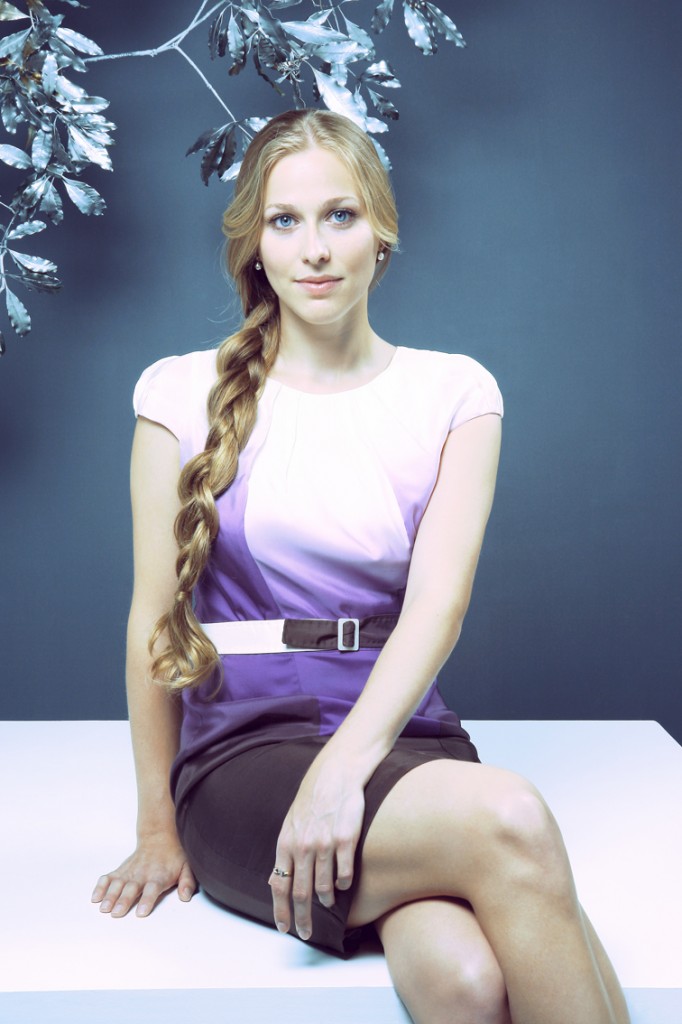
DAVID FALLIS: WITH MONTEVERDI’S MASTERPIECE ORFEO, UPCOMING IN CONCERT FROM MAY 25-27, TORONTO CONSORT’S ARTISTIC DIRECTOR DAVID FALLIS STATES “FOR MY MONEY, MONTEVERDI IS ONE OF THE MOST EXTRAORDINARY COMPOSERS, AS DARING TODAY AS HE MUST HAVE SOUNDED IN THE 17TH CENTURY. I GET GREAT PLEASURE OUT OF WORKING ON HIS MUSIC” …A REVIEWER’S INTERVIEW WITH PEOPLE IN THE ARTS

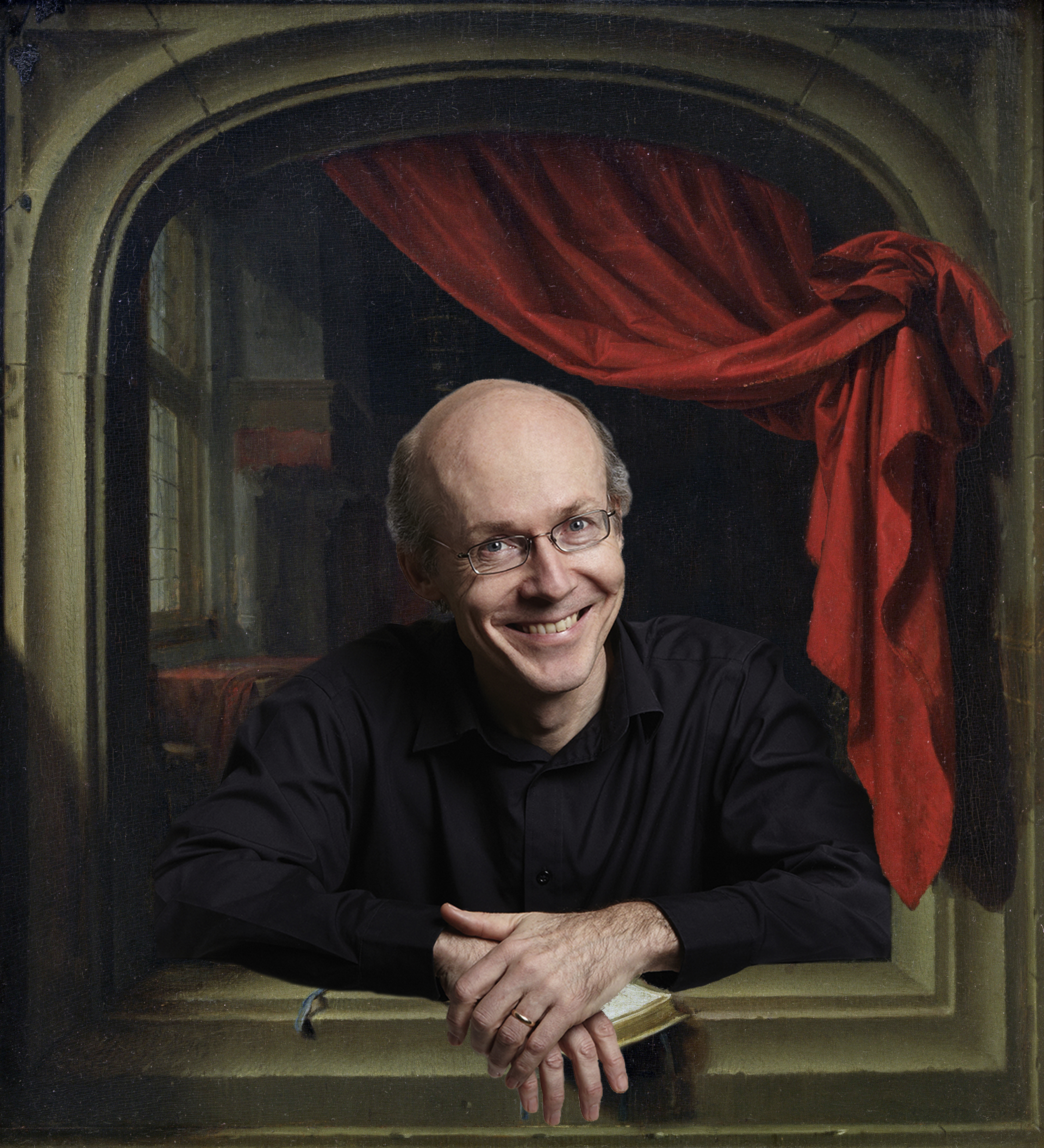
Photo by Paul Orenstein, digital work by Ross Duffin, background by Gerrit Dou (17th century, Dutch)

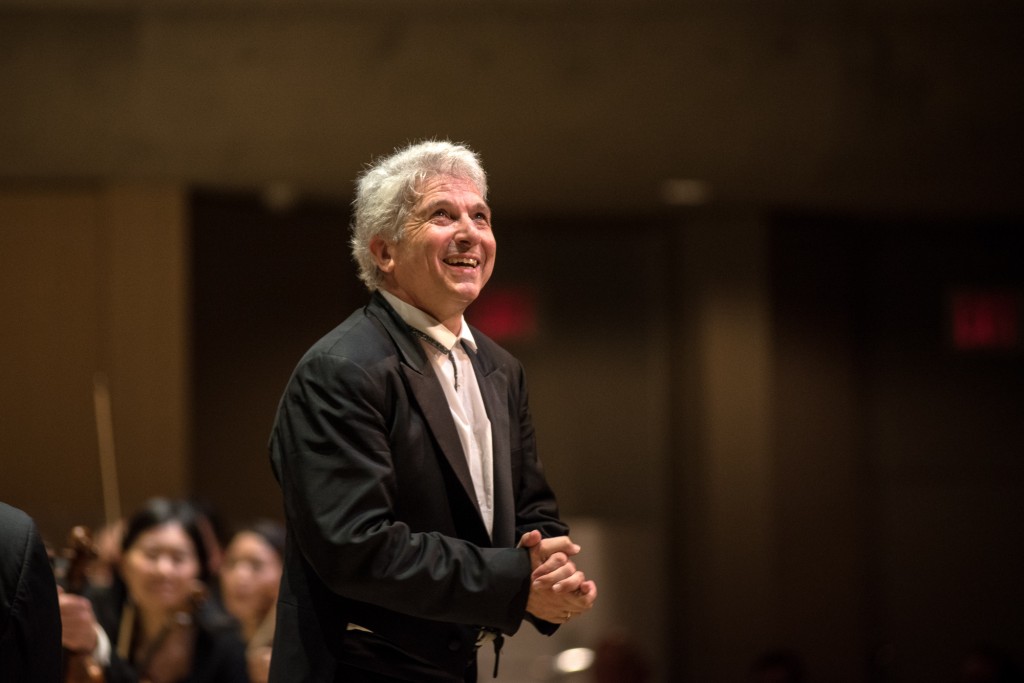
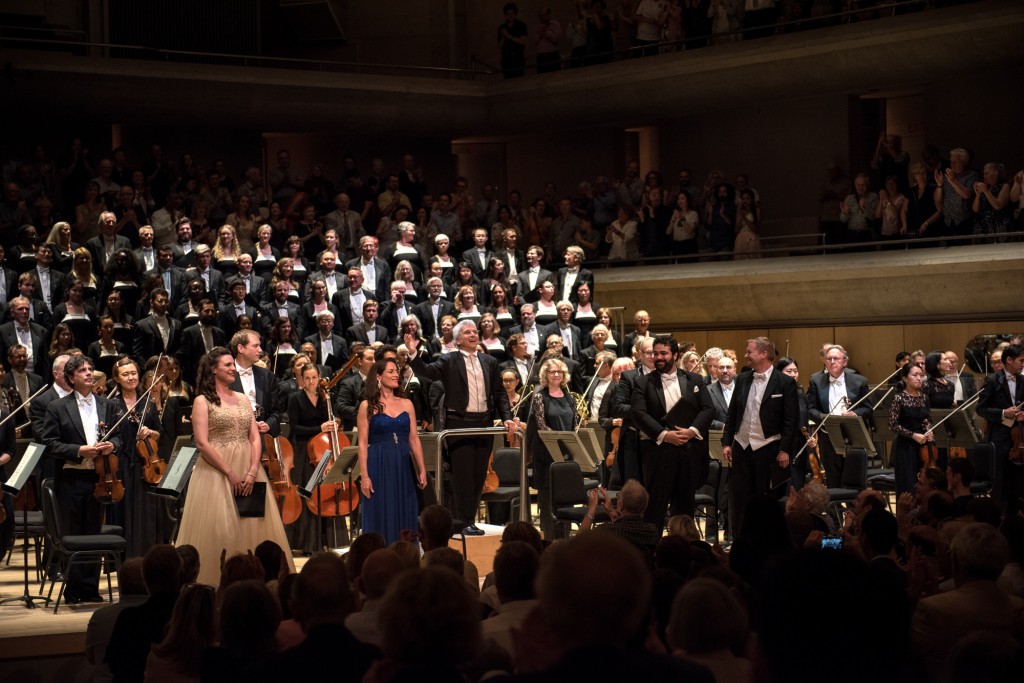
The Toronto Consort presents Monteverdi’s masterpiece Orfeo, in concert, as David Fallis’ final production in his role of Artistic Director. Running for three shows: May 25 & 26 at 8pm, and May 27 at 3:30pm, at Jeanne Lamon Hall, Trinity-St. Paul’s Centre, 427 Bloor St West. For tickets and information, visit www.TorontoConsort.org.

JAMES STRECKER: If you were asked for 50 words for an encyclopedia to summarize what you do, or have done, in the arts, what would you say?

DAVID FALLIS: David Fallis, singer, conductor, keyboard-player, teacher, arranger, and composer, has worked most of his career with musical ensembles based in Toronto, with whom he has had many occasions to travel around the world and perform for a wide variety of audiences. His work often includes singers – vocal chamber music, choral and operatic repertoires are his particular focus and love.

JS: What important beliefs do you express in or through your work?

DF: • That music and the arts are life-affirming and community-building
• That something is better than nothing
• That we are all given unique creative talents

JS: 3 Name two people, living or dead, whom you admire a great deal and tell us why for each one.

DF: Lao Tsu and Jesus. In the original sense of admire, meaning to wonder at, I wonder at their wisdom. I also admire them in the current sense of esteem. Their words and philosophies have sustained and inspired me over many years.

JS: 4 How have you changed since you began to do creative work?

DF: I am older; I am married (very happily); I am a father, and a grandfather. More people close to me have died than when I started out, and I feel their absence.

JS: What are your biggest challenges as a creative person?

DF: I think we are all creative people, so the challenges I face are similar to most people: is my work meaningful? do I have good relations with those around me? will our children have a better or worse world to live into?

JS: Please describe at least one major turning point in your life.

DF: I suppose it was a turning point when as a young singer I passed an audition to join the Toronto Consort, because that led me to many of the fields of music that I have worked in ever since. That is also where I met my wife.

But I have always tried to be guided by the advice, attributed to Yogi Berra: “When you come to a fork in the road, take it.”

JS: What are the hardest things for an outsider to understand about what you do?

DF: Some people have difficulty appreciating how all-consuming a life in the arts can be.

JS: How and why did you begin to do creative work in the first place?

DF: There were two people who particularly encouraged and helped in my formation when I was young.

One was my piano teacher Court Stone. He helped me enjoy the play of music, and to appreciate the fact that you need to spend lots of time on your own working at music, and that you’d better enjoy working on your own.

The other was the choral leader Lloyd Bradshaw. He helped me enjoy the play of music, and to appreciate that you need to spend lots of time with others working at music, and that you’d better enjoy working with others.

JS: What haven’t you attempted as yet that you would like to do and please tell us why?

DF: Of course, there are pieces I would still love to work on and perform. I would also like to see whether I could compose something worth hearing.

JS: What are your most meaningful achievements?

DF: I am proud of the work the Toronto Consort has done over the years, especially in bringing to life for modern audiences works of music that have not been heard for hundreds of years. It is always meaningful when you help impart understanding for others. And to share in the magic of sound.

JS: What advice would you give a young person who would like to do what you do?

DF: Find your own passions, remember that we play music, and pray for some good luck.

JS: Of what value are critics?

DF: By critic I guess we mean someone who can distinguish and articulate what makes an experience meaningful, why one work of art is moving and thought-provoking and communicative, where another is less so. In which case a critic is very valuable, and hopefully encourages each of us to develop our critical faculty. As a performer, you are always having to decide which is the better way of doing something, so you are always relying on your critical faculties.

Maybe the problem is that not many critics write for the papers or blogs. There are lots of reviewers, and people who want to tell you what they did or didn’t like, even gossips. This kind of work is also interesting and can be valuable. I like to read book reviews, theatre reviews, music reviews, to inform me about what’s going on, but it’s not very often criticism.

JS: What do you ask of your audience?

DF: Come and hear/see/feel what we’re up to. We’re doing it for you. You may be surprised where the music takes us.

JS: What specifically would you change about what goes on in the world and the arts?

DF: The arts are not separate from the world, and everyone should be encouraged to develop their creativity and ability to communicate. I hope the borders between the arts and the world get blurrier.

JS: If you could relive one experience from your creative life, what would it be and why would you do so?

DF: Fortunately, I have never been forced to make this choice.

JS: Tell us what it feels like to be a figure who is presented somehow in the media. What effect does this presence have on you?

DF: This is one of the places where Lao Tsu helps: “Work is done and then forgotten”.

JS: Name two places you would like to visit, one you haven’t been to and one to experience again and briefly tell us why.

DF: I’ve always wanted to see some of India. It is a fascinating country, made up of so many cultures, and I am in awe of the little I know of its classical music.
I had an all-too-brief but wonderful time once in New Zealand, and would love to return, particularly to see friends and how the beach at Piha is doing.

JS: Please tell us about one or more projects that you have been working on, are preparing, or have recently completed. Why do they matter to you and why should they matter to us?

DF: This spring I’ve had the privilege of working on two operas by Claudio Monteverdi: The Return of Ulysses with Opera Atelier, and coming up shortly, Orfeo with the Toronto Consort. For my money, Monteverdi is one of the most extraordinary composers, as daring today as he must have sounded in the 17th century. I get great pleasure out of working on his music.

JS: Let’s talk about the state of the arts in today’s society, including the forms in which you work. What specifically gives you hope and what specifically do you find depressing?

DF: I do not doubt that, like death and taxes, the arts will always be with us, so I am not worried about their survival. When you perform music from over ten centuries, you quickly learn that tastes change, certain forms are preferred at certain points in history, but there will never be no music, no dance, no literature, etc. Will opera as we know it thrive in the next hundred years? Will classical ballet as we know it? Will large symphonic concerts as we know them? All of these forms are facing a certain angst today about aging audiences, engaging young people, new technologies, etc. But in the bigger picture, succeeding generations will always find and create music, and dance, and literature, and visual art to love.

JS: Finally, what do you yourself find to be the most intriguing and/or surprising thing about you?

DF: I find it surprising (pleasantly so) that I have been able to work in music my whole career, and with such personal satisfaction. My talents are modest, and I have enjoyed good fortune and wonderful colleagues. Along with the sometime difficulties of routine, there have been many moments of ineffable beauty.

Posted in Uncategorized | Tagged , , | Leave a comment

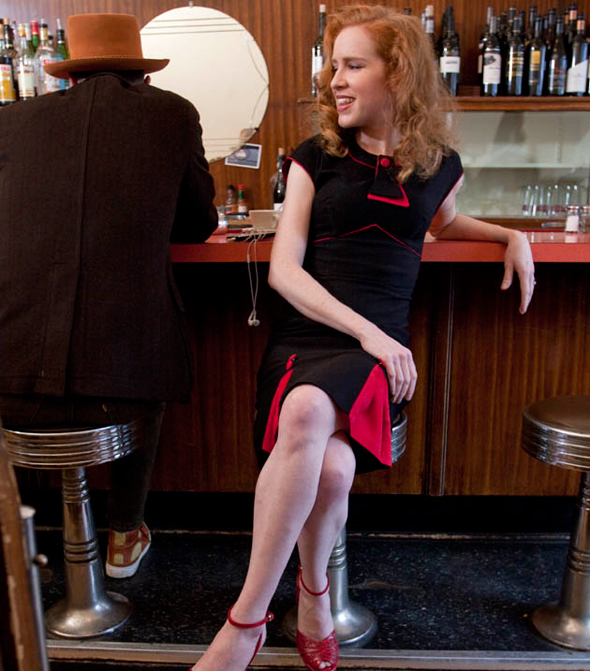
DANIELA NARDI: SINGER & ARTISTIC DIRECTOR, WHO TACKLES MYTHS SURROUNDING ITALIAN-CANADIAN WOMEN WITH BEYOND BELLA, EXPLAINS “THE MANDATE OF SALONE DI CULTURA IS TO SHINE A LIGHT ON ITALIAN CONTEMPORARY CULTURE IN CANADA WHILE LOOKING BEYOND AND/OR SHATTERING STEREOTYPES. ITS GOAL IS TO EXPLORE AND EXPRESS ITALIAN CULTURE, BRING TRADITIONS FORWARD INTO THE PRESENT, AND ALLOW THEM TO MINGLE AND EVOLVE, WHILE NURTURING CROSS-CULTURAL DIALOGUE.” … A REVIEWER’S INTERVIEW WITH PEOPLE IN THE ARTS

Beyond Bella, the seventh edition of the Salone di Cultura. Celebrating Italian-Canadian women artists and creators, takes place at 7 PM on Friday June 8 at Toronto’s 918 Bathurst Centre for Culture, Arts, Media & Education. Tickets, at https://salonedicultura.eventbrite.ca include a classic aperitivo curated by culinary partner Dinah Koo.

JAMES STRECKER: If you were asked for 50 words for an encyclopedia to summarize what you do, or have done, in the arts, what would you say?

DANIELA NARDI: I like to produce experiences which expand our relationship to beauty. Experiences which help us think a little, feel a little, and loosen up those shoulders, allowing us to – exhale.

JS: What important beliefs do you express in or through your work?

DN: We have a slow food movement well, I’d like to have a slow life movement. We tend to move way too fast which numbs our senses to beauty. In the work I do, I want to be able to provide a space where people can slow down and reconnect with their relationship to beauty.

JS: Name two people, living or dead, whom you admire a great deal and tell us why for each one.

DN: I admire my parents for what they achieved in their lives. How they came to Canada as young adults and were self-made. Without any help, without the language in hand, they created a rich, full, and creative life.

In terms of work, I admire a promoter in Toronto named Svetlana Dvoretsky of Show One Productions. She packed up her life in Russia, came to Canada, and built an incredible business for herself promoting Russian arts and culture in Toronto and Canada. The artists she has managed to bring to the city, high calibre shows, in A list halls – this is something I dream of doing with Italian artists. She’s a force. I truly admire her.

JS: How have you changed since you began to do creative work?

DN: When I was younger, my work was definitely way more ego driven. Having to prove something, be someone. Now, as I am getting older, I am focused on the work, on the art, on the experience. It isn’t about proving anymore, it’s about doing. I am in this in-between stage where I am not young enough to be relevant, but I am not old enough to be a legend in my circles. And that’s okay. What is satisfying is to know that the work is being done and it has a chance to exist. Period.

JS: What are your biggest challenges as a creative person?

DN: The biggest challenge for me is to not let the solitary practice of the creative work get to me. That is, it takes a lot of time spent alone, with one’s thoughts and drives. Most of the time, we only have ourselves to rely upon because there are no guarantees, no concrete validation about the work. Everything is so intangible, out of our control, that the only thing you can rely upon is yourself. Certainly, that is empowering at the best of times, but at the worst of times, when your insecurities and anxieties get the best of you, it is hard to not succumb to a false narrative which could potentially sabotage the work and its need to be in the world.

JS: Please describe at least one major turning point in your life.

DN: One major turning point in my life was when my mother passed away. Before that, I was pursuing my career in music as a singer/songwriter, writing and singing in English. When she died, I started to go through this identity crisis, wanting to explore my Italian roots which eventually led me to singing in Italian. This then led me to wanting to showcase Italian artists and produce the Salone di Cultura series, something which I never in my wildest dreams thought I would ever do

JS: What are the hardest things for an outsider to understand about what you do?

DN: I don’t fit into a particular category and I think that is hard for most people. For example, in my music, I was never clearly a pop artist or jazz artist or world music artist. I was always a mix of things. As well, my approach has always been more subtle, not bombastic and I think generally, the masses have a hard time with subtle energies. As a result, I tend to come across as mysterious or quiet or a dark horse. I can sometimes fly under the radar and, as I joke with my husband, be so far ahead that I am behind.

JS: How and why did you begin to do creative work in the first place?

DN: First off, I had an uber creative mother so, I think that was transferred to me. She was a fashion designer, had a deep love for music and photography. Everything she did, her reason for being was to create. She, by example, provided an environment that encouraged me to pursue and nurture my creative impulses.

JS: What haven’t you attempted as yet that you would like to do and please tell us why?

DN: I have always had an interest in photography. A deep interest, as a matter of fact. It is a true exercise in being present, in the Now. Being mindful, attentive to moments which perhaps may pass by others, but you have managed to capture it for eternity.

JS: What are your most meaningful achievements?

DN: There is one of my recordings which is the most meaningful to me and that is, “The Rose Tattoo”. The songs were written at the time my mother was going through her cancer battle. Each song is like a mini autobiography – I realize this in hindsight. It is my deepest, most raw work, in honour of her. The album wasn’t really a commercial success but, artistically, it was for me. I would also say that creating the Salone di Cultura was another meaningful achievement. To be able to create an environment where I am able to showcase the traditions and innovations of a culture of which I am most proud.

JS: What advice would you give a young person who would like to do what you do?

DN: A life in the arts is not for the faint at heart. Be prepared for much frustration, disappointments, and develop a thick skin. Work on your business, work with integrity and stay true to your values. Stay focused on the meaning of the work. That is what will bring the satisfaction. And be kind, be decent. There is no need to be a jerk, ever.

JS: Of what value are critics?

DN: Sometimes critics can shine a light on you, making you see things about yourself which you may never have realized because you are too close to the work.

JS: What do you ask of your audience?

DN: To pay attention. To listen. To be present.

JS: What specifically would you change about what goes on in the world and the arts?

DN: I wish I could have a dollar for every time someone asked me to do a show for no compensation but in return for “good exposure”. I would have a nice nest egg by now. It is remarkable to me how, generally, people don’t value what it actually takes to do what we do. That, somehow, we are living The Dream. Perhaps their dream. Yes, we may love what we do but exposure is not going to pay my mortgage.

JS: If you could relive one experience from your creative life, what would it be and why would you do so?

DN: I did a show at the Tchaikovsky Concert Hall in Moscow. The building has a dance school in it. For one number, I walked off stage and let the band do an instrumental. As I was standing on the side of the stage, a young dancer was there listening. He said to me that he heard the music upstairs and had to come down and listen because the music made him want to dance. Awesome moment. I will never, ever forget it. I will never forget him.

JS: Tell us what it feels like to be a figure who is presented somehow in the media. What effect does this presence have on you?

DN: People tend to develop their own narrative of what they think you are about. For example, when I say to people that I am an “accidental singer”, that I never intended to sing and that I never intended to be a performer, they are shocked by my response, saying that’s impossible. Because? That is what they see: The Diva. An image that is presented is just that: an image. It isn’t the full story. And without the full story, people draw their own conclusions and expectations which are not in sync with your reality and, as a result, they keep you pigeonholed, never really ever knowing who you truly are.

JS: Name two places you would like to visit, one you haven’t been to and one to experience again and briefly tell us why

DN: I would love to go to Colombia. Something about the culture, the language, the music, that resonates deeply with me. I would like to visit Russia again. I was there for a show and our visit was brief. I am fascinated by the culture and its people. I would like more time to dig into it further.

JS: Please tell us about one or more projects that you have been working on, are preparing, or have recently completed. Why do they matter to you and why should they matter to us?

DN: I have been working for the past few years on a cultural initiative called Salone di Cultura. Its mandate is to shine a light on Italian contemporary culture in Canada while looking beyond and/or shattering stereotypes. Its goal is to explore and express Italian culture 2.0, bring traditions forward into the present and allow them to mingle and evolve, while nurturing cross-cultural dialogue.

JS: Let’s talk about the state of the arts in today’s society, including the forms in which you work. What specifically gives you hope and what specifically do you find depressing?

DN: What always gives me hope is when I discover artists who are truly doing special work, breaking boundaries and creating mesmerizing experiences. What I am finding difficult these days is, considering the turbulent times we are living in, there should be more works out there expressing the challenges we are facing. I recall watching a Dave Chappelle special and how he was commenting on a similar thing. He was saying to his fellow colleagues to keep pushing the boundaries, keep talking, keep putting it out there because we need to speak up, we need to have our voices heard in all that is going on in the world at the moment. I would say that goes for all art forms.

JS: Finally, what do you yourself find to be the most intriguing and/or surprising thing about you?

DN: I think what surprises me most is that, though I undermine many things that I have done in my life, I do acknowledge and surprise myself on how much I have accomplished. I may not have achieved certain dreams or positions or awards or whatever. But I have recorded, toured, produced – I did what I intended to do. I guess I never really appreciated it all because I held some sort of measure, compared myself too much, held some sort of expectation of what a career in the arts was supposed to look like. That Expected Life was blinding me to what was actually happening – and there was a lot happening.

Posted in Uncategorized | Tagged , , | Leave a comment

NJO KONG KIE: COMPOSER OF PICNIC IN THE CEMETERY AT CANADIAN STAGE BERKELEY STREET THEATRE UNTIL MAY 6TH EXPLAINS “WITH PICNIC IN THE CEMETERY, WHERE THE PREMISE IS ABSTRACT EXPRESSIONISM, THE PIECE IS BUILT LIKE WE WERE CHILDREN PLAYING IN OUR TENTS, WITH INSTINCTS AND IMAGINATION MORE SO THAN LOGIC AND REASONING, SO IT IS EVEN MORE IMPORTANT TO NOT OVERTHINK THE WORK DURING THE PERFORMANCE. YOU CAN ANALYZE WHAT YOU EXPERIENCE AFTERWARDS IF YOU WANT.” … A REVIEWER’S INTERVIEW WITH PEOPLE IN THE ARTS

JAMES STRECKER: If you were asked for 50 words for an encyclopedia to summarize what you do, or have done, in the arts, what would you say?

NJO KONG KIE: A picnic and ping-pong enthusiast, Njo Kong Kie is also a composer, mostly for dance, opera, theatre and occasionally film/TV and new media. His music theatre work Mr. Shi and His Lover is the first-ever non-English presentation at the National Arts Centre English Theatre and the Tarragon Theatre.

JS: What important beliefs do you express in or through your work?

NKK: If the internet is to be trusted, Edgar Allan Poe said: “With me, poetry has not been a purpose, but a passion.” I think it is a little bit like me with composition. I didn’t set out to write music professionally, but I have always doodled. It has just always been something that I do. I didn’t necessarily think I was composing. I was just playing – making things up. I didn’t feel the need to say anything with it. I did it because I felt like doing it. That is still true today. But it is a little different now of course, since I work with text a lot.

I am sure there are common threads among the subject matters I cover in my stage work – knotty together is an operatic rom-com about same-sex marriage; La Señorita Mundo explores our obsession with the beauty in youth; The Futures Market deals with the ethical dilemma of organ transplants; Mr. Shi and His Lover explores topics surrounding gender identity, intimacy and the complexity of nationhood; I swallowed a moon made of iron (work in progress) is set to poems of Chinese poet Xu Lizhi who wrote about his life making electronic parts on an assembly in a factory.

But basically, I make work for the joy of putting something together, for the chance of actually creating something beautiful. I hope my work can give the audience some comfort and joy and can solicit empathy in all of us, even the ones who already have an abundance of it. We can never have enough empathy.

JS: Name two people, living or dead, whom you admire a great deal and tell us why for each one.

NKK: It is cliché of course, but I do genuinely admire my mother. She just knows how to let her children be.

And I take as role models people who, despite of the hardship they face or the lack of recognition of their efforts and achievement, persist with their pursuit nonetheless. We as artists deal with rejections day in day out, we must be persistent in order to continue. So, I look up to people who continue despite it all. But let me say though that I “admire” (perhaps “love” is a more appropriate word here) the oeuvres of

Erik Satie. They are humorous, irreverent, and beautiful. I think his work gives me permission to make a work such as Picnic in the Cemetery where we allow ourselves to be silly, to live in contradiction.

JS: How have you changed since you began to do creative work?

NKK: I guess in general, I now know better what I am getting up for. When I used to work outside of the arts, I would ask myself if I wanted to get up to go to work every single day.

The Chinese have a saying, literally translated as “How we are at eighty is determined at age three”, meaning that you form your personality very early on in life. When it comes to doing creative work, I think that is true for me. I feel that my creative process has not changed that much since I was a kid playing with building blocks and colouring books or writing down little tunes with the numbering system I learned at primary school. My skills have grown somewhat since then, but my habit of making things up continues.

JS: What are your biggest challenges as a creative person?

NKK: My inner challenge is to deal with my self-doubt and my fear of screwing up. It can make me a very ineffective person. I would sit on a decision for a long time, weighing the pros and cons; I won’t make a decision until I absolutely have to, and when I finally do take it, I tend to make the decision I first thought of taking anyway, so it is a time waster, all this considerations. Perhaps it is a disorder of some kind that renders me incapable of taking actions right away.

And from the outside, it is the consistent necessity to write grants and proposals all the time. I think they take up three quarters of my waking hours, leaving precious time to actually create and enjoy life. That and the constant struggle of achieving financial stability. This I think most artists can concur.

JS: Please describe at least one major turning point in your life.

NKK: Joining La La La Human Steps certainly changed my direction in life. The job took me all over world and showed me the inner world of the performing arts. Through extensive touring with the company, I observed what it took to put a work on the world stage, both from the artistic side and the producing side. So, when the necessity came for me to produce my own work, I was not too daunted by it. Mind you, there is a lot of guesswork still even now, especially when it comes to marketing and fundraising, but things seemed a little less impossible for me having observed how it was done.

Another turning point was participating in the Composer-Librettist Laboratory hosted by Tapestry Opera. To hear myself referred to as a composer was quite significant. It gave me some assurance that all the doodling I had been doing was in fact composing.

JS: What are the hardest things for an outsider to understand about what you do?

NKK: When I run into people whom I don’t see regularly, they often ask if I am still making art. Because they don’t hear about me in the media at all, they would think that perhaps I have switched careers. It is difficult to understand why we would keep going if we have not “made it” after all these years, and that artists whose work they have never heard of in the media can make a living.

It is also impossible to fathom how a lot of artists in fact live around or under the poverty line, how we can manage to live on so little, and how we can cope with it. Poe famously said: “I have made no money. I am as poor now as I ever was in my life – except in hope, which is by no means bankable”. I think that sums up lives of many artists.

What is important to note also is that artists have a lot more tolerance for insecurity when it comes to income than most and we are good at making choices and plans that allow us to keep creating even if we don’t know when we are getting paid next.

JS: How and why did you begin to do creative work in the first place?

NKK: I have memories of writing down tunes that came to me even as a child. That would be the start of it. As to why, I have no idea. Maybe that is why Gary Kulesha says in his questionnaire published here that music is a calling.

JS: What haven’t you attempted as yet that you would like to do and please tell us why?

NKK: Oh, the list is inexhaustible. If we just stick to music, we can already list orchestral work, a musical, a pop song, EDM (electronic dance music), electro-acoustic work, piano piece with live electronics, community projects. And that is just music! I am also interested in making live art and installation. The list goes on.

JS: What are your most meaningful achievements?

NKK: That I have not quit. It is difficult being an artist. For most of us, income is very precarious, and the emotional toll on dealing with “rejection” day in and day out, from granting bodies, institutions, peers and even yourself can be traumatic; and when you have multiple grant and proposal rejections within a short frame of time, it can kill your spirit. At that point, it is not only a question of money, but also a sense that perhaps you are not doing anything worthy. You can allow yourself to be sad for a bit, but you have to be able to pick up and go at it again, you have to be really determined not to crumble.
So, I pat myself on the back to have withstood many situations like that. I know my colleagues in the industry all have that determination.

JS: What advice would you give a young person who would like to do what you do?

NKK: I don’t know if I am exactly role model material, still being kind of a novice in what I do. And a lot of what we are able or not able to do really depends on our circumstances, and needless to say circumstances vary greatly from one person to another, and that would alter drastically what allowances we have the privilege to make and how we can operate in this world. I am therefore not that comfortable giving any advice in a very broad stroke. But perhaps I can say this: be helpful and be willing to accept help.

JS: Of what value are critics?

NKK: Lets face it, everyone, regardless of what they do, is always curious about what other people think of their work. And in the performing arts, it is important people talk about your work. It is just part and parcel of the performing arts ecology.

We hope the critics have nice things to say about our work of course, but we don’t always get that. And one would hope that the critics take enough care to write their impressions that the artists would find their negative comments useful in helping them improve the work in question or at least improve the work they will do in the future.

JS: What do you ask of your audience?

NKK: Each work I create is different, so it is hard to categorically say that I expect the audience to treat each project the same way. But I guess in general, I would say: experience the music with your heart more so than your head, especially when you don’t have text to deal with. Even with a work like Mr. Shi and His Lover that has such a dense libretto and you feel that you want to be able to catch every single word, it is quite impossible to do so the first time through. My hope is that with a piece like that, the music will be effective enough that the audience would want to experience it again, and the second time through they can take in a lot more of the text.

And with Picnic in the Cemetery, where the premise is abstract expressionism, that the piece is built like we were children playing in our tents, with instincts and imagination more so than logic and reasoning, it is even more important to not overthink the work during the performance. You can analyze what you experience afterwards if you want.

JS: What specifically would you change about what goes on in the world and the arts?

NKK: An equal distribution of wealth around the world; a world without borders; respect and protection of the environment, and empathy for everything.

As for the arts: more inclusiveness.

JS: If you could relive one experience from your creative life, what would it be and why would you do so?

NKK: It is rare that I manage to be truly in the moment when I am on stage performing, that I am one hundred percent in control of my technique and in tune with my performance. If I can relive one of these rare moments, I would be happy.

JS: Tell us what it feels like to be a figure who is presented somehow in the media. What effect does this presence have on you?

NKK: I have not been featured that much in the media, so this is not that relevant right now. But I do find doing interviews a little stressful. As you know, it has taken me months to complete this questionnaire.

JS: Name two places you would like to visit, one you haven’t been to and one to experience again and briefly tell us why.

NKK: Fogo Island: There is this beautiful artist residency there right by the ocean. I think it would feel like being at the edge of the world.
Tokyo: Because Chinese and Japanese cultures have a lot in common, I love how Tokyo can be both familiar and yet completely foreign to me at the same time.

JS: Please tell us about one or more projects that you have been working on, are preparing, or have recently completed. Why do they matter to you and why should they matter to us?

NKK: I have just completed productions of my music theatre work Mr. Shi and His Lover at the Tarragon Theatre and the National Arts Centre English Theatre a couple of months back.
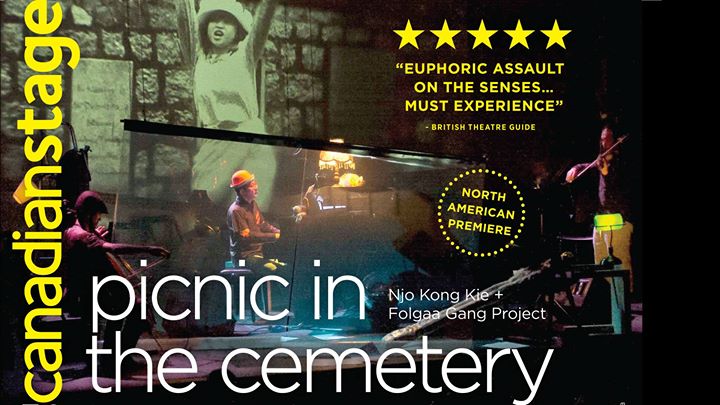
I have a show running at Canadian Stage Berkeley Street Theatre this week until May 6th. It is called Picnic in the Cemetery. www.canadianstage.com/online/picnic

This work is different to me because it is one that I take a lead on. And that it is not starting from a story or a script. We are trying to give the audience a concert+ experience from listening to abstract instrumental music. It is also a work that is made from working closely with a group of collaborators where the division of duties is a lot more blurred than my music theatre work.

I don’t dare to think that any of the work I do truly matters to people, but at the very least, in the case of Picnic in the Cemetery, there may be some joy in experiencing something completely new and unfamiliar. The music is original work, so most audiences would not have heard them before. But they may remind people of works they know, so the work is both fresh but comforting at the same time. With not knowing what is going to happen from one moment to the next, perhaps there is more a sense of adventure. I hope they will be pleased with the silliness of the play, the absurdist aspects of the performance. I also hope the work may give some people some joy and comfort.

JS: Let’s talk about the state of the arts in today’s society, including the forms in which you work. What specifically gives you hope and what specifically do you find depressing?

NKK: I often wonder about the divide between commercial and non-commercial theatre, but also about arts and sports in general, in terms of how commercial and sports events are so much more popular. I have friends who would be willing to shell out $400 for a couple of tickets to musicals or sports events but would find $50 an extravagant amount to pay for indie shows. What values are we not giving the audience that they would feel this way?

Disclaimer: I have fairly low success rate with Toronto Arts Council, only a moderate success rate with Ontario Arts Council, and have never successfully written a Canada Council grant application, so what I am about to say may sound like sour grapes and entitled. I understand that there are limited resources and I am sure my proposals can be better written, but I do find the granting ecology a little arbitrary and confusing. Outside of that, the least we can expect is that the proposals we spend weeks preparing are assessed efficiently. And recently, in the pursuit of getting more efficient, things seem to get actually less so. Perhaps it will get better over time.

But for the moment though, I wish I could count on the grant result announcement of my applications to the Canada Council to be on time. It really causes so much extra stress when they are not. Also, I am disappointed that we won’t be able to get feedback anymore for unsuccessful proposal. How is that helping artists? And when the OAC recently amalgamated several programs into one, I would assume therefore that fewer jury members are looking at a larger pool of applications, and I am not sure if that necessarily helps the assessment of the applications either.

And as mentioned before, artists like myself who are self producing, spend so much of our time writing grants and proposals that leave so little time for anything else, and the balance is all wrong. I need to find ways to break this cycle.

JS: Finally, what do you yourself find to be the most intriguing and/or surprising thing about you?

NKK: That I am actually quite persistent.

Posted in Uncategorized | Tagged , , | Leave a comment

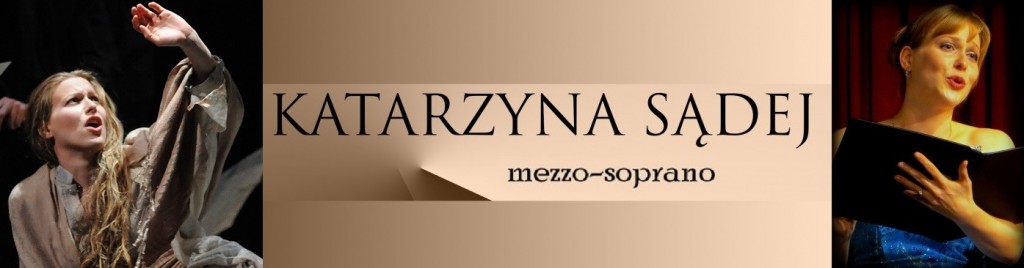
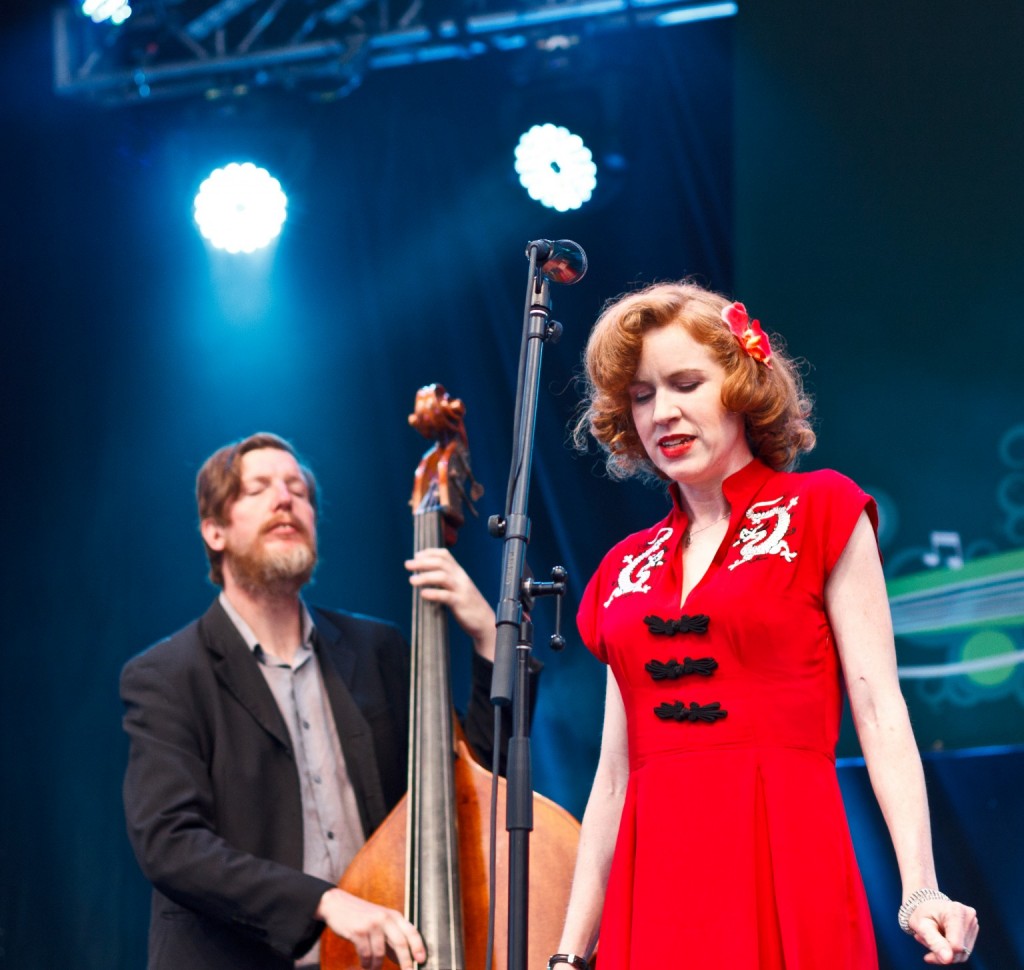
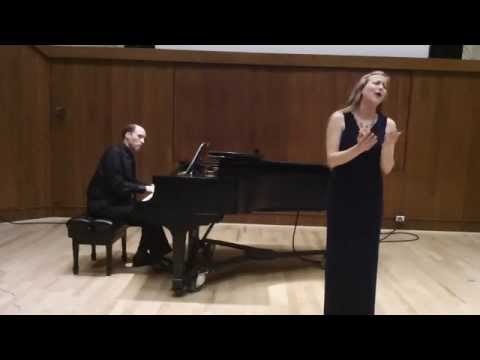
KATARZYNA SĄDEJ: POLISH-CANADIAN MEZZO-SOPRANO HAS PRESENTED OPERA IN LIMOUSINES THROUGHOUT LOS ANGELES, SUNG FOR GABRIEL GARCIA MARQUEZ, SUNG FOR BONOBOS, AND MADE IMPORTANT DEBUTS AT LA OPERA AND CARNEGIE HALL, NOW DECLARES “EACH MAJOR DEBUT IS LIKE A GIANT, GIANT, GIANT GLASS OF WINE CELEBRATING ALL THOSE HOURS IN THE PRACTICE ROOM, AND COACHING, AND STUDYING YOUR WORDS, AND MEMORIZING, AND THEN MEMORIZING SOME MORE…. AND THEN RE-MEMORIZING!” … A REVIEWER’S INTERVIEW WITH PEOPLE IN THE ARTS

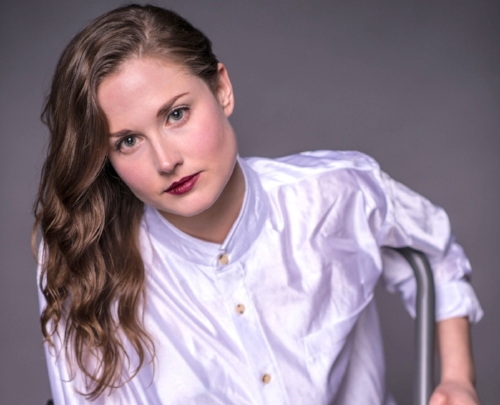
Photo portrait by Carlos Botero, Colombia
JAMES STRECKER: If you were asked for 50 words for an encyclopedia to summarize what you do, or have done, in the arts, what would you say?

KATARZYNA SĄDEJ: Polish-Canadian Mezzo-soprano Katarzyna Sadej has an international, eclectic career that spans concert, opera, chamber music, oratorio, recital, recordings, and voice over performance. Katarzyna has also performed many world premieres and has had numerous new works composed especially for her. She has performed in over a dozen countries and counting. www.katarzynasadej.com

JS: What important beliefs do you express in or through your work?

KS: Though it’s been said many times: Art represents our humanity. In music, I believe that certain works have a transcendental beauty and/or power that I want to share with my audience. When a work hits me with that transcendental power, my goal is to share that with my audience, so that they will, hopefully, feel what I feel.

On another note, it’s all about the message in the music and in the words we sing. If we can get over the insecurities that would otherwise cause us to make the performance about us, our performances become that much more meaningful.

JS: Name two people, living or dead, whom you admire a great deal and tell us why for each one.

KS: I’ve really been lucky in my development as a singer to have had amazing voice teachers and coaches, and I can’t just name one person because they were all so valuable in helping me achieve my best sound and artistry. I admire anyone who is successful as a singer and is then capable of taking what they have learned over the years and imparting it on young singers positively and successfully – that is not an easy thing to do! Not all great performers/singers are great teachers. But I’m so grateful to Beryl Devine, Joanne Kolomyjec, Ingemar Korjus, Darryl Edwards, Lorraine Nubar, Jennifer Ringo, Dawn Upshaw and Kayo Iwama for their part in helping me be the best singer I can be. And those are voice teachers and coaches I worked with regularly. There were moments in my development when I met with someone once or twice and the impact was huge! As a voice teacher myself, I admire good coaching techniques tremendously because one can be great at guiding someone on the right path but veering someone off it is also not so difficult!

Now…historically…Alexander the Great of Macedon: I discovered Alexander whilst playing Civilization on my brother’s computer growing up (don’t hate on all computer games – this one actually teaches you a lot!). I know that may sound a bit random, but here is why I admire this legend: Not that I promote warfare or conquering other nations to create empires – this was obviously something acceptable in the ancient world, and a brutal way of life. But what was amazing about Alexander was how he adopted and encouraged the customs of the nations he conquered, when he clearly had the option to oppress instead. He allowed for the practice of various religions; he connected so many different groups of people and races to create friendly trade routes across thousands of miles; and, above all, he promoted a mixing of cultures. If we need more of anything today, it’s a mixing of cultures and a cessation of such vehement nationalism that’s pervading our world today. Music, dance, visual art – all of those unifying art forms bring people of all cultures together.

JS: How have you changed since you began to do creative work?

KS: I think I welcomed change from the beginning of my life. I always did creative work. From childhood. But I suppose what has expanded is where I’ve gotten my feet wet. I began as a visual artist, inspired by my mother, who is a tapestry weaver, and also as a martial artist, inspired by my father who was a world-renowned judoka. I began singing popular music as a teenager, and then began training classically before I graduated high school. All of these shifts certainly molded me into the artist I am today. And then, looking past the early influences, I can think of so many adult life experiences that have also shaped my path and development as an artist. I think we should all always be constantly growing and evolving. When that stops, we begin to die inside, don’t we? We get stuck. Change is necessary for an artist’s growth. Look at something as simple as regular practice, which can be defined as a constant path to change. When we practice, we get better. If we stop practicing, our vocal chords lose elasticity, our technique will eventually suffer, etc. We can apply that rule, in just slightly different words, to so much in life.

JS: What are your biggest challenges as a creative person?

KS: I would say that the greatest challenge is the need to take a step back and be patient. And that’s hard to do…especially for anyone who suffers from a certain amount of anxiety from the “not-knowing”. Despite auditioning and despite hard work on an almost daily basis, sometimes the waiting can be so difficult…. Waiting for the next big gig…. Waiting to hear back about potential engagements…Waiting for that moment where we feel a certain work is truly ready to be performed… one must be so patient, diligent and determined, in order to keep a sane mind in this difficult career choice.

JS: Please describe at least one major turning point in your life.

KS: My life has always been defined by moving and changing homes. It started from when my family immigrated from Poland to Canada when I was a child; and we continued to move a lot when I was growing up because of my father’s job. Then, as an adult, because of my education and career choices, I have also been moving a lot! So, each of these moves created huge changes and was not easy. But then, such shifts really do make us stronger, more adaptable, more independent and open to change.

JS: What are the hardest things for an outsider to understand about what you do?

KS: Being a classical singer/opera singer requires a lot of discipline, quiet, solitude and, of course, time. When I have a concert coming up, I have to sacrifice going out, or going anywhere that’s loud, or hanging out and talking for hours on end, or drinking alcohol for that matter. Someone who doesn’t do what I do doesn’t necessarily understand that because they haven’t had to use their body as an instrument. The closest thing to an opera singer is a professional athlete who also goes to great lengths to keep their body healthy and in shape.

JS: How and why did you begin to do creative work in the first place?

KS: I think I always had a need to express myself and to express what I saw around me. I loved creative writing when I was a child, and also visual art.

Speaking more specifically about music… I always loved singing and performed at talent shows while at school. After I got my first job, while still in high school, I went to see a voice teacher, Beryl Devine, who introduced me to classical singing. I got totally hooked and decided to pay for my own lessons.

When I first began training my voice classically, I loved the thrill of the improvement when you practiced in the right way. I loved the idea that we can use our bodies to project such a powerful instrument. I loved how subtle it was, how these minor shifts could alter the sound and quality so much. The challenge was appealing. So, I stuck to it, because I already loved acting on stage, and I already loved to express myself. Adding this dimension of also singing, without a microphone, was thrilling to me. I had always loved the operatic voice and when I realized I could learn to do it too, I fell in love with the practice (and later, the performance as well!).

JS: What haven’t you attempted as yet that you would like to do and please tell us why?

KS: How about singing on a Space Station? Both inside the station, and outside in a space suit…. How about a whole opera on a Space Station??

On a side note to that idea: Yuval Sharon, with his opera company “The Industry” in LA created an opera that was presented in limousines and with various scenes outside throughout Los Angeles. I was very fortunate to be a part of that production (HOPSCOTCH) and I hope to be a part of many more performing arts projects like that. Projects that open the door to new performance practice, that explore different kinds of venues, and that draw modern audiences in because they are so unique.

JS: What are your most meaningful achievements?

KS: I’m always trying to follow my own path, and I don’t always follow the status quo. I’m actually quite proud that I followed my heart, stayed open to art song repertoire (not just purely opera) and new music. Thanks to those interests I have been able to travel to so many countries doing recitals and concerts. Having performed in so many countries is one of my proudest achievements.

Of course, I also have to mention some of the important debuts I’ve made, such as at LA Opera, Carnegie Hall, the Cartagena International Music Festival, among many other venues. Each major debut is like a giant, giant, giant glass of wine celebrating all those hours in the practice room, and coaching, and studying your words, and memorizing, and then memorizing some more…. And then re-memorizing!

JS: What advice would you give a young person who would like to do what you do?

KS: Be patient. Don’t try to be the young 20-something hot-shot. If that works out for you – great! But most of the time, it doesn’t work that way in classical music or in opera because the voice needs time to mature. While your voice is maturing, don’t be afraid to try out other passions, to travel, to get some life experience. Life is what inspires us and what will build us into the artist we are.

If you can’t help comparing yourself to others, compare yourself to who you were last month or last year and trust in your own individual path.

JS: Of what value are critics?

KS: Some critics bring value to promote high art because they are knowledgeable and actually care about maintaining a world with art in it. We need critics because we need opinion. How do we decide what high art is, for example, without people’s opinions? The only thing that troubles me sometimes, is that in this world of narcissistic promotion, many critics are just about making self-indulgent statements, getting a high on word-plays and scathing comments, as opposed to writing constructive, eye-opening reviews that work to better our art. Descriptive criticism doesn’t serve anybody but the critic.

JS: What do you ask of your audience?

KS: Turn off your phone, forget about any incoming messages you are waiting for, lean back, and allow yourself to meditate on the art. Our brains are completely wired nowadays for short-term, brief, immediate gratification. With high art forms like ballet, opera, theater, classical recitals, we need to allow ourselves to process the meaning of each work slowly, in order to truly appreciate it; to understand the deeper meaning.

JS: What specifically would you change about what goes on in the world and the arts?

KS: Art appreciation begins with education. It’s nearly impossible for someone to appreciate a complicated opera or symphony without having some sort of introduction to it. Sure, we are sometimes just drawn to the profound harmonies or themes within an orchestral piece, but in general, we need to train our ears a bit and understand what to listen for to truly appreciate it fully. So, we need our governments to support art education in schools so that young potential artists and lovers of art have a chance to emerge in the first place. We also need more arts promotion, letting the general public know about classical music performances, art show openings, and plays. And that’s a challenge in its own right because it’s so difficult to get through to people nowadays; it’s so much easier to binge-watch Netflix or to sit on Instagram all night than to drive over to the symphony or opera or theater…. I mean, that would entail actually seeing real people and having real interactions…. that is sooooo 10 years ago! OMG!

What would I change about what goes on in the world? I like to photograph animals and nature in my free time, and through that I’ve become quite passionate about environmental responsibility – we should all be doing our part to be more eco-conscious, whether it’s choosing to drive more fuel-efficient cars, using safer more natural cosmetic products, avoiding plastic, reducing our intake of cow meat, etc. What does that have to do with art? Well, if we no longer have a planet to live on, what’s the point of creating anything? I suppose that’s one topic for an opera: a bunch of greedy idiots made the entire world dependent on finite resources that produced huge amounts of pollution and doomed the entire plant. There’s our outer space opera – the only venue that may be left to us in a few years!

JS: If you could relive one experience from your creative life, what would it be and why would you do so?

KS: I think I’d rather describe a sensation I have gotten in various performances. You know, there are moments when you are performing that can be so transcendental and powerful; imagine sustaining a note and feeling your overtones harmonizing so perfectly with the orchestra or piano notes that are accompanying you, that you feel the music and meaning vibrating through your whole body. It’s meditative and thrilling all at once. It’s those moments that make me want to create more moments like it!

JS: Tell us what it feels like to be a figure who is presented somehow in the media. What effect does this presence have on you?

KS: I’ve had a share of interactions which taught me to be extremely cautious, as social media provides an excellent disguise for people who may not have the best intentions…or have too many intentions for that matter! … you just have to be careful.

But, in general, if I feel that I can offer insight or expertise, or if I can offer a performance that touches people, I’m grateful for that media presence. I want my voice to be heard, as I want to share my art with people. Media presence allows us to share more, so I welcome it.

I’d love to mention my experience in Colombia actually because that was pretty incredible, and in fact a wonderful example of how classical music can be promoted. When I sang in both Bogota and Cartagena for the Cartagena International Music Festival, each concert was nationally televised in several South American countries, all of the artists did masterclasses at the local music schools, we got interviewed on tv, I had a gown made for me by the country’s most famous designer (yes, I still have it!), and our concerts, which were held at glorious venues, were packed with people (including, I might mention, legends like the Colombian writer Gabriel Garcia Marquez, who attended our performance of Mozart’s Requiem and greeted us backstage). It was really something! It made me feel like I represented something that people were actually excited about… because it was beautiful music that we were presenting to the public. This was an example of media presence working with the whole country to create awareness for a fabulous music festival.

JS: Name two places you would like to visit, one you haven’t been to and one to experience again and briefly tell us why.

KS: Peru – Machu Picchu…I don’t think that requires too much explanation, since most people want to visit that amazing place. I love ancient history (hence my reference to Alexander the Great earlier!!), and I’ve already visited Mayan ruins in Mexico and Roman ruins in Italy, France and England. I’ve just always wanted to hike up to Machu Picchu and experience that awe-inspiring ancient city.

I’m only allowed to choose one, so I guess I won’t talk about wanting to go the Congo to sing to wild bonobos (there’s an explanation coming to that) or wanting to go to Thailand or Laos… just because it’s amazingly wild and beautiful there.

Choosing one place to visit AGAIN is also tough, as I love Italy and southern France, and Colombia, and many other places I’ve already been. But where I really long to go, and where I’d actually love to sing, is my birth town, Wroclaw. I’ve been to Poland many times since my family immigrated when I was a child, but I never got to spend a lot of time in Wroclaw. And yet, I feel so drawn to that city. Any concert organizers from Wroclaw reading by any chance? Locally-born talent wants to do a recital in your city!

JS: Please tell us about one or more projects that you have been working on, are preparing, or have recently completed. Why do they matter to you and why should they matter to us?

KS: Oh good, we can stick to the Polish theme – how convenient!

Currently I am in the process of recording very rare songs composed by Lutoslawki with pianist Basia Bochenek in Los Angeles. Unbeknownst to most people, Lutoslawski wrote tango, waltz and foxtrot songs for Polish radio under the penname “Derwid”; because he was primarily known for his avant-garde new music style, these “pop” songs of the day were largely forgotten. In case anyone is interested in my Campaign for this recording, more information can be found via this link: http://gofundme.com/derwid

One of my main goals as a classical singer, personally, is to present as much Polish repertoire as I can to the public, whenever I do recitals. In recent years, other Slavic languages like Russian and Czech have gotten into the performance practice in conservatories and music programs. I’d love to see Polish art song and operatic repertoire have the same attention, as there are so many wonderful Polish classical composers who’ve created beautiful vocal repertoire. It matters to me because it’s in my blood, and it should matter to others not familiar with Polish language or culture because learning about anything we aren’t familiar with expands our life experience. I have delved into Japanese song repertoire, and Argentinian song repertoire, among others – and I may not become an expert in these fields, but I certainly was able to connect with people from those cultures better because I took the time and effort to discover some of their roots. And, let’s be honest, if the music is beautiful and people want to listen to it, musicians will learn it just because it’s good and worthwhile to learn. My job is to let other singers know how beautiful and worthwhile some of this Polish repertoire is.

JS: Let’s talk about the state of the arts in today’s society, including the forms in which you work. What specifically gives you hope and what specifically do you find depressing?

KS: With high art it can be a bit depressing. It seems that there is barely room for it anymore: there’s no funding for it, and there’s no modern attention span for it. So, opera houses, symphonies and concert organizations are cutting their budgets and shortening seasons. I know that sounds negative, but we can’t pretend it’s not true! I hope that things will turn around, that innovative ideas will save the high art forms, as I can’t imagine not performing and not hearing this music that I studied and have adored all my life. I’m especially biased towards not wanting to lose the tradition of operatic singing. I really believe that there is a power to the unamplified voice that touches on our humanity like nothing else can.

I do want to mention though, that with all that reality checking I expressed above, you can have an experience like being involved with The Industry Opera in LA, which I mentioned earlier. The director Yuval Sharon’s vision for a production like HOPSCOTCH, which I sang in, was to create an entirely new type of opera performance, and it was extremely successful – it brought all sorts of audience members to our shows, including Hollywood celebrities, whose presence also helped sell more tickets. So perhaps that is the way opera and classical music need to go. Perhaps we need to be more creative in the way we showcase a performance – perhaps we need more visuals for example. I am in the process of developing a voice-piano recital with my colleague that includes more visuals during the actual performance. I suppose we’ll see how that is received soon enough!

JS: Finally, what do you yourself find to be the most intriguing and/or surprising thing about you?

KS: One thing that came about rather randomly for me was beginning my personal project of singing to great apes, and more specifically to bonobos, our closest ape relatives, who share 98.7% of our DNA. I was at first drawn to these magnificent apes at San Diego Zoo because I got into photographing animals and nature a couple years ago. But then I was given the amazing opportunity of singing for the San Diego Zoo bonobos when the head keeper heard that I was an opera singer interested in experimenting with that. So, what began as a fun experiment to see their reactions, turned into a bit of a study, and I’ve been in touch with anthropologists and primatologists about it, and have sung to bonobos in San Diego and in Germany! Even if the simple of act of singing to them draws attention to bonobos and their plight and encourages people to read about what these apes represent, that makes it all worth it! We can actually learn so much from bonobos. They are the only great ape that doesn’t kill members of its own species (not a single instance in the wild or in captivity has been recorded), they are matriarchal and… there are only about 10,000 of them, possibly less, left in the entire world.

If humanity allows for such a beautiful, fascinating creature – our cousins – to go extinct, then what is all our art and creation for? If we can’t even take care of our home and give other creatures a chance to survive alongside us?
Posted in Uncategorized | Tagged | Leave a comment

JEANNE LAMON: BAROQUE VIOLINIST, CONCERTMASTER, CHAMBER MUSICIAN, TEACHER, AND MUSIC DIRECTOR EMERITA WHOSE LEADERSHIP TOOK TAFELMUSIK TO INTERNATIONAL STATURE AS ONE OF THE BEST ENSEMBLES IN ITS FIELD, EXPLAINS “CREATIVE WORK IS EXTREMELY PERSONAL AND EVERYONE HAS THEIR OWN WAY OF DOING IT. SO, YOU CAN’T REALLY POLICE MUSIC MAKING. EVERY MUSICIAN WORTH HIS OR HER SALT HAS A LOT INVESTED IN THEIR CREATIVE WORK. OTHERWISE WE’D ALL BE BANKERS!” A REVIEWER’S INTERVIEW WITH PEOPLE IN THE ARTS

Photo credit Sian Richards.

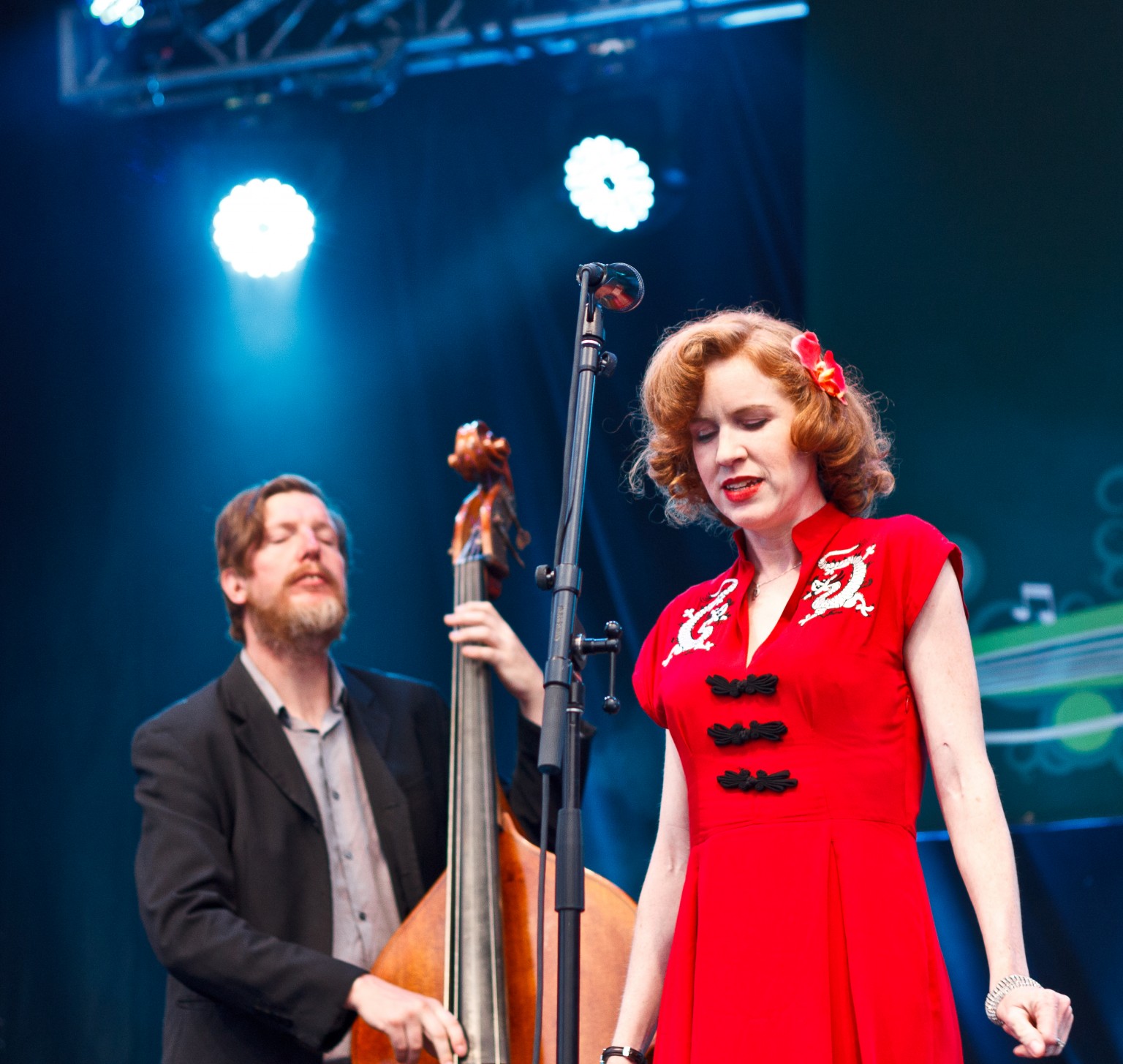
Music Director Emerita Jeanne Lamon joins Tafelmusik as concertmaster for the final all-Beethoven program of the 2017/18 season featuring Bruno Weil as conductor, and Music Director Elisa Citterio as violin soloist. May 3 to 6, 2018 at Koerner Hall, TELUS Centre for Performance and Learning details at Tafelmusik.org.

JAMES STRECKER: If you were asked for 50 words for an encyclopedia to summarize what you do, or have done, in the arts, what would you say?
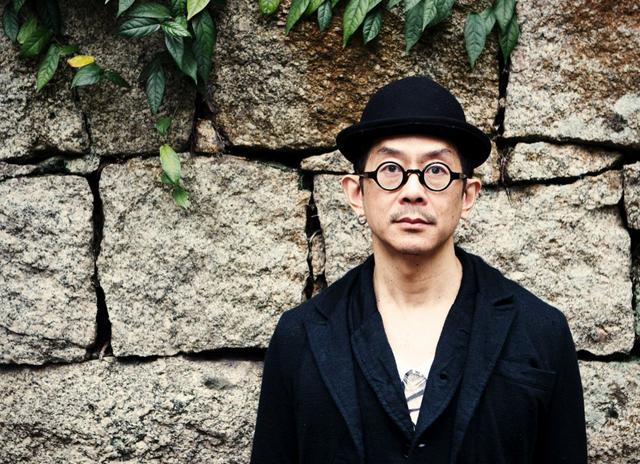
JEANNE LAMON: Jeanne Lamon was largely responsible for the artistic development of the Tafelmusik Baroque Orchestra, bringing it from its embryonic stage in 1981 to its maturity as one of the world’s preeminent baroque orchestras today. Her leadership style is a collaborative one. She has put a strong individual mark on the Tafelmusik sound, which some describe as robust and energetic.

JS: What important beliefs do you express in or through your work?

JL: I hope that I express the joy that I feel in my music making. The act of making great music come alive with like-minded musicians has been extremely powerful for me. It brings me great joy which I hope I convey.

JS: Name two people, living or dead, whom you admire a great deal and tell us why for each one.

JL: Malala Yousafzai is the most courageous young woman I can imagine! The very fact that she survived the attack on her life, and dares go back to Pakistan to help other young girls get educated is amazing to me.

Barack Obama was truly a great leader and I have found few great leaders to emulate in my life. One of the most important parts of good leadership is being a good listener, which he is. Once one has assimilated the information, one can make a wise decision, convincing people along the way that they helped make that choice. Much like leading a Tafelmusik rehearsal!

JS: How have you changed since you began to do creative work?

JL: 4. Since I began to do creative work, I have become a lot more reasonable in my dealings with others! I understand now what I didn’t understand well enough before. Creative work is extremely personal and everyone has their own way of doing it. So, you can’t really police music making. Every musician worth his or her salt has a lot invested in their creative work. Otherwise we’d all be bankers! Balancing that knowledge with the need to create a coherent whole is the ultimate challenge of the music director.

JS: Please describe at least one major turning point in your life.

JL: My biggest challenge as a creative person has been to constantly find new challenges; to push boundaries, try new approaches, and tackle new repertoire. Also, it can be hard to incorporate all the ideas of my colleagues in the performance on the occasions when I really don’t agree with their creative suggestions. The latter is a leadership challenge.

JS: Please describe at least one major turning point in your life.

JL: Hearing a concert with Leonhardt and his ensemble in Amsterdam as a student. That convinced me to be a baroque musician.

JS: What are the hardest things for an outsider to understand about what you do?

JL: That it’s hard work and there are no “days off”.

JS: How and why did you begin to do creative work in the first place?

JL: Music is fun. I’ve always enjoyed it, so I guess I’ve been doing it all my life, starting with singing songs as a young child.

JS: What haven’t you attempted as yet that you would like to do and please tell us why?

JL: I haven’t yet made arrangements of Rameau dances for a pop ensemble. I know they could be a big hit.

JS: What advice would you give a young person who would like to do what you do?

JL: Don’t do it unless you can’t NOT do it. It’s hard work. But it’s very gratifying too. Good luck and have fun!

JS: What do you ask of your audience?

JL: I ask of the audience that they be open with a “Do it to me” sort of vulnerability. That they put aside their day and just go along for the ride.

JS: What specifically would you change about what goes on in the world and the arts?

JL: All heads of government should sing songs together at the start of every meeting.

JS: If you could relive one experience from your creative life, what would it be and why would you do so?

JL: I’m happy to have many wonderful memories. I don’t need to relive anything. Let the past be the past.

JS: Tell us what it feels like to be a figure who is presented somehow in the media. What effect does this presence have on you?

JL: When there is a lot of media about me, or when they name a concert hall after me, that’s “someone else”.

JS: Name two places you would like to visit, one you haven’t been to and one to experience again and briefly tell us why

JL: I want to go back to Venice because it’s a 17th and 18th century city with no cars, so it’s quite well preserved and feels like you’re back in the time.

JS: Please tell us about one or more projects that you have been working on, are preparing, or have recently completed. Why do they matter to you and why should they matter to us?

JL: I have been working on performing Mozart violin sonatas with a wonderful fortepiainst named David Breitman. These pieces are too seldom heard. I’d love to do them all in the next few years!

JS: Let’s talk about the state of the arts in today’s society, including the forms in which you work. What specifically gives you hope and what specifically do you find depressing?

JL: The young upcoming generation of performers gives me great hope for the future of period performance. I find the general lack of respect for the relevance and importance of the arts in our society depressing.

Posted in Uncategorized | Tagged , , | Leave a comment

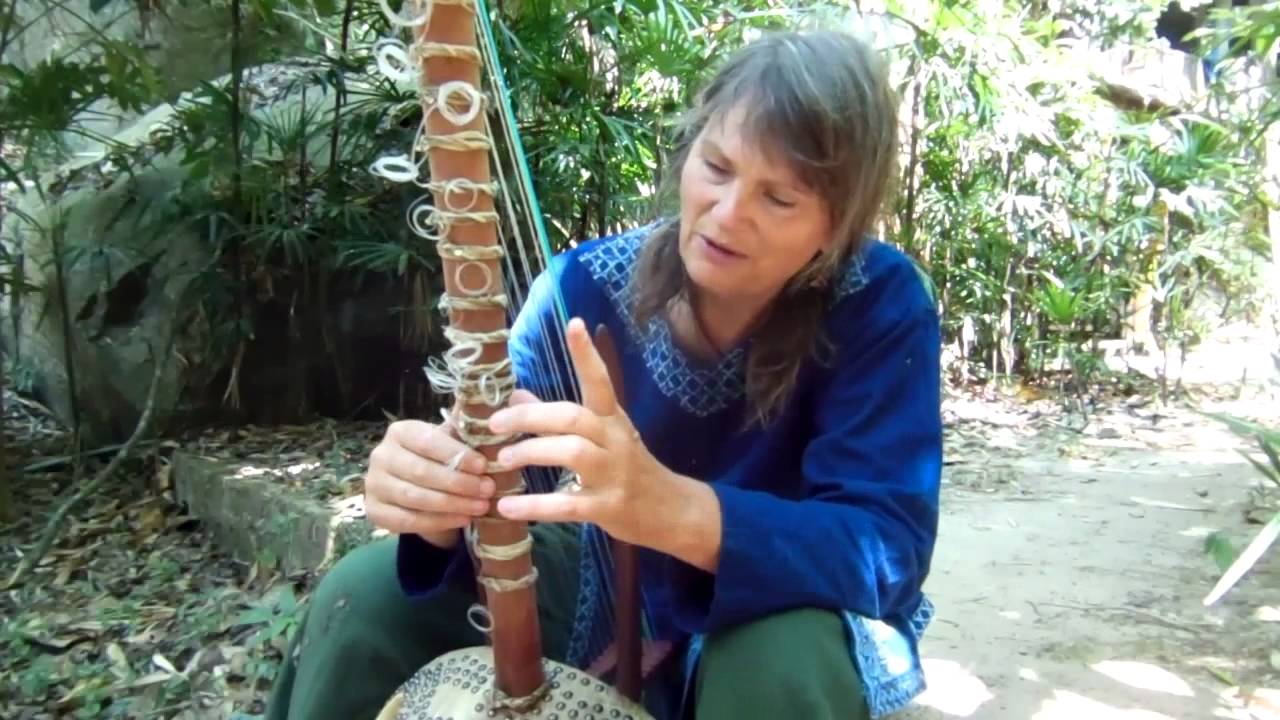
CATHERINE THOMPSON: CANADIAN LONG RIDER, INSTRUMENT MAKER, MUSICIAN, COMPOSER, PERFORMER, VISUAL AND MATERIAL ARTIST, NOW IN THE MOUNTAINS OF NORTHERN THAILAND, DECLARES “IT’S IMPORTANT TO NOT GET TOO TOO COMFORTABLE AND, IN THAT, WHENEVER POSSIBLE, IT IS VALUABLE TO REMEMBER WHAT IT FEELS LIKE TO BE DIMINISHED, TO BE UNCOMFORTABLE, TO BE IN DANGER.” … A REVIEWER’S INTERVIEW WITH PEOPLE IN THE ARTS

JAMES STRECKER: If you were asked for 50 words for an encyclopedia to summarize what you do, or have done, in the arts, what would you say?
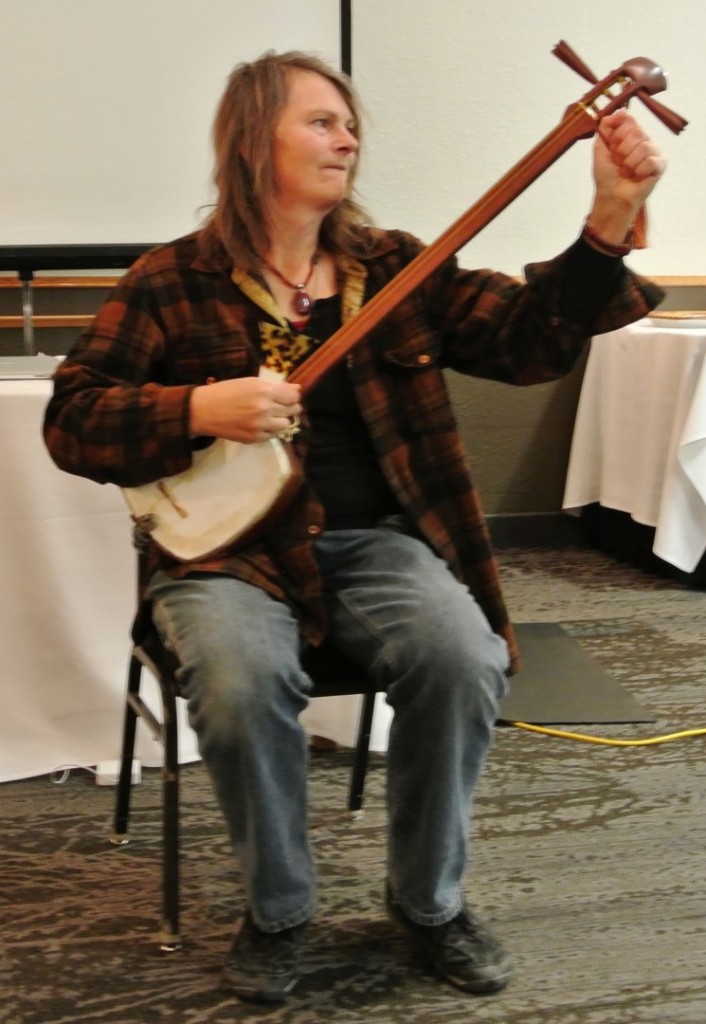
CATHERINE THOMPSON: Catherine Thompson was a Canadian long rider, instrument maker, musician, composer, performer, visual and material artist. Her work was devoted to connection with nature. After many years in Canada, her final time found her ensconced among the mountains of northern Thailand. She practised Kendo and Iaido.

JS: What important beliefs do you express in or through your work?

CT: My primary motivation in my work has always been focused around my deep personal connection with the natural world and in some way to present my perspectives to the world at large. It really is at the root of everything that I do and care about. Within that broad foundation I might say that I strive for a kind of clear thinking and focus in what I’m trying to do. I’m trying to find English words to express what I mean but it’s not really working. I think that perhaps the Japanese concepts of Wabi-sabi and Shibumi are much clearer meanings of what I mean. To explain Shibumi, Shibui (adjective), shibumi (noun), or shibusa (noun) are Japanese words which refer to a particular aesthetic of simplicity, subtlety, and unobtrusive beauty.

To explain Wabi-sabi, in traditional Japanese aesthetics, Wabi-sabi is a world view centred on the acceptance of transience and imperfection. The aesthetic is sometimes described as one of beauty that is “imperfect, impermanent, and incomplete”. It is a concept derived from the Buddhist teaching of the three marks of existence (sanbōin), specifically impermanence (mujō), suffering (ku) and emptiness or absence of self-nature (kū).

Characteristics of the wabi-sabi aesthetic include asymmetry, roughness, simplicity, economy, austerity, modesty, intimacy, and appreciation of the ingenuous integrity of natural objects and processes.

JS: Name two people, living or dead, whom you admire a great deal and tell us why for each one.

CT: The naturalist John A Livingston, who passed away, if I remember correctly, in 2005, has had a profound influence on my thinking in regards to our human place on the earth. Many might not know him by name but will, if of a certain vintage, know him from the older Hinterland Who’s Who nature vignettes. (https://youtu.be/i9X8RFABXRg)
A naturalist to the core, he refused to call himself an environmentalist and for that alone I adore him. On a CBC Ideas program in the late 80s, he said something akin to ‘the environmental movement is mostly made up with those who want to keep everything the same and still get away with it.’ To my eyes little has changed.

Not too sure who to mention as a second. There are many amongst family and friends that I truly admire, but I’d rather leave that bunch out of it.

JS: How have you changed since you began to do creative work?

CT: I’ve been doing creative activities since a young child and so there have been quite a few significant changes in my life since then, what with me being sixty years old now. I can say that as I have stumbled about and managed to get myself where I presently am, my focus has become clearer and my willingness to put up with nonsense (or at least what I perceive as so) is at a pretty low bar. I pretty much always did as I wanted, when I could, but now… well life is short and things are so very dire on multiple planetary fronts so… well, I seem to have managed to set myself up, for the time being, with a situation where I can manage to take doing whatever the hell I want to do to a pretty fine and continuous level. Unless it involves pots of cash. I haven’t got that down to a fine and/or continuous level at all.

JS: What are your biggest challenges as a creative person?

CT: Self-confidence. A lack of it has pretty much always dogged my heels. Didn’t really stop me in the end doing what I thought I ought to be doing, but it’s been a bugger for sure. I found, and find, at times, that much of this gets amplified when amongst others. From a fairly young age, I found myself out in the wilderness on my own for extended periods of time. This was essential, these journeys, on so many levels, but not being influenced by pressure from others was a big part of this for me. It is also, I think, why a great deal of my performing has been as a soloist. Seems easier to do it on my own, I suppose. Having said that I have also been lucky to have been a part of numerous collaborations over the years that were deeply fulfilling, so…

Oh yeah. Lack of money has been a hinderance, but I already mentioned that aspect, so I won’t go on about it here.

JS: Please describe at least one major turning point in your life.

CT: For three years between 2011 and 2013 (not during the winter) I embarked on a solo long-distance ride on horseback through the southern plains of Saskatchewan and Alberta. There were also three years of preparation for the journey that were very much a part of the trip itself and two years before that envisioning the damn thing. In the end, it was a long slow meandering that linked the endangered and almost disappeared native prairie grasslands in the region. Because of that journey, I had the great honour of being inducted as a full member in The Long Riders Guild which is the world’s preeminent organization of equestrian explorers.

That trip, in many ways, is what led me to moving to Thailand. I was what you might call ‘nomadic’ for a good 12 years before that and the ride was a kind of ultimate culmination of that life for me. I wondered during the ride if I might find a place to settle somewhere in the southern prairies where I travelled, but no, it ended up being Thailand. It was my mom and brother, who live in SE Asia that brought me here and, on top of that, it was the place and people that ensured my staying.

JS: What are the hardest things for an outsider to understand about what you do?

CT: This is a little tricky, as it means me trying to interpret what I perceive from others’ perception of me wondering what they are thinking about what I do when they are thinking of how and then what and wait wait wait… where? I guess, obviously.

I often feel outside the general loop of things and this has been so all along. I’m not really thinking so much about that these days because I am absolutely out of the loop of things now. Physically I mean. No metaphor.

Well… I think that some don’t take me seriously at all, or they doubt me and/or my work, at first especially. Sometimes later this perception seems to change and people like and accept me to my satisfaction. I sometimes get the sense that some in the main stream of things see me as some nutty bush bunny, interesting enough but not really worth serious consideration. No. Wait a minute. Maybe that’s how I see myself. Nah. It couldn’t be. I take myself VERY seriously and I know that I am seriously interesting.

JS: How and why did you begin to do creative work in the first place?

CT: I really don’t know. It has always been a part of my life and I have the bank balance to prove it. There I go again.

JS: What haven’t you attempted as yet that you would like to do and please tell us why?

CT: Ummm…. nothing, actually.

I wouldn’t say no to a long ride in Mongolia and/or Siberia, but I’ve done a major long ride already, so that doesn’t really count.

JS: What are your most meaningful achievements?

CT: The ride, for sure. It seems that a lot of my big achievements take place over 10 years or thereabouts. They are these big ill-defined ‘projects’ that are really attempts to ponder my (our) place in the natural world (it’s not going particularly well). So, it has a centre based in some sort of art or whatever, but that is really just the vehicle to explore the ideas and thoughts.

JS: What advice would you give a young person who would like to do what you do?

CT: Well, there’s the obvious self-deprecation humorous cliché… don’t.

Maybe if the question was more specific that would be easier. I do a lot of different things that need to be approached from different angles. I guess I might say to do what you really deeply wish to do (if you can figure that one out) in your life, do it with as much excellence as possible, never give up, never surrender – that’s from Kendo. I would for sure recommend practising Kendo. Practising a martial art or something that can give a person some sort of potential for mayhem is an excellent idea. We don’t have much of that these days in the west on a mass scale, especially for young people. It’s probably important for us to bonk (I mean hit, not…) one another once in a while just to keep our heads on straight. Get out in the woods a lot, if you like that sort of thing. Pay attention to the world around us because things are changing very quickly now and it deserves being witnessed. The previously mentioned shibumi/wabi-sabi concepts might be something I might pass on, but then that might not be terribly shibumi/wabi-sabi-like of me to specifically do so.

JS: Of what value are critics?

CT: For me, very little. I have been a part of very few media critical revues in the past. Any that came my way were generally from dance projects that I was composing for. But they were few and far between and I always got a short mention, if any. I did get a full two paragraphs – huge, that – in a brilliant review from Michael Crabb for a project that I did with choreographer Eryn Dace Trudell. Otherwise, for the arts world at large, I’m not sure. I guess there’s value in getting the word out for shows and things. It’s valuable to be compared with others in one’s specific practice, one’s peers, community. I guess. To some extent. It’s been a long time since I read any article at all from an arts critic. But I used to read them more often when I wasn’t doing so much galivanting.

JS: What do you ask of your audience?

CT: For quite a while now, my performances have been small in audience numbers and venue size and have been acoustic without any amplification and very intimate. I ask (indirectly) that when people come to see me perform that they simply allow themselves to be blanketed in the spirit of what I am doing. It works out nicely for the most part. I spent many years going to The Banff Centre and that was a place where I could set that sort of thing up easily and nicely. I’m not sure if I can play with a sound system ever again.

JS: What specifically would you change about what goes on in the world and the arts?

CT: Bwahaha! Those who know me would know what’s coming next!

And that would be to rapidly and immediately deconstruct industrial civilization with a medium to long term vision of we humans existing at a stone-age level of technology and pre-agricultural in our manner of living. I don’t think we’d need to worry too much about the arts in that context as that sort of thing, I suppose, would just follow along with the general mayhem of things.

JS: If you could relive one experience from your creative life, what would it be and why would you do so?

CT: My first music piece in collaboration with choreographer Sasha Ivanochko holds a really lovely memory for me in so many ways. The piece was called The King and Queen of Ruins. Sasha got me to compose for a number of her pieces after that over the years and they were all wonderful experience,s but that first one, well it was special special and that’s what popped into my mind.

JS: Tell us what it feels like to be a figure who is presented somehow in the media. What effect does this presence have on you?

CT: As I mentioned above, I get very little media attention. I do have a youtube channel, though, and have got into the habit of making videos of late. Many to do with music and my instrument making and I also did a series of videos that I called Water Walks that I made when I would go up the mountain to get my drinking water. It is an almost 4km walk there and back to the spring, about half in the forest and half on our windy village road. I often talked about environmental things, but I seemed to have lost the heart for making those videos. In part, I think, because I probably made enough of them and got my point across as much as I might and, when I’m in a more cynical mood, it seems past needing now. I’ll probably get back at it when I have something pertinent to say. Maybe when we have our first arctic sea ice blue ocean event! That’s something to look forward to.

JS: Name two places you would like to visit, one you haven’t been to and one to experience again and briefly tell us why

CT: Mongolia and Donegal in NW Ireland.

Mongolia is somewhere I have not been and it has been on my mind as a place to spend time in for a long while now. This place because of its similarity land-wise and climate-wise to south Saskatchewan and Alberta, its long and vital horse culture, and I also love the music from central Asia generally and Mongolia specifically.

I spent a summer in Gleann Colm Cille, Donegal in 2001 taking part in Irish language immersion and sean nós (traditional, literally ‘old style’) singing workshops. A good deal of my family roots are from Ireland (though not Donegal) and it felt like coming home in so many ways. My ideas that a language emerges, in part, from a land, a place, were deepened tremendously during that summer. Somehow the crash of the ocean on the rocks, the specific ways the wind plays over the grass, the rain upon the ground brought to my mind that the land helps to create a very language itself. In that context, English seems quite an imposing entity. If I wasn’t in Thailand, I might consider living in Donegal. If they’d have me. Might consider Mongolia too on that account. It’s less rainy there and then I could live in a Ger. I have spent a huge amount of my life tent living and I love that.

JS: Please tell us about one or more projects that you have been working on, are preparing, or have recently completed. Why do they matter to you and why should they matter to us?

CT: Goze in the Foothills of the Himalaya (https://gozefoothills.wordpress.com) is the most recent project that I have been working on, though it has been on a sort of hiatus for almost a year now. I need a couple more years away from it to continue on but, all willing, I will do so soon enough.

This project was an honouring and exploration of the Goze who were active in times past in Japan. Mostly blind, the Goze would travel the countryside and perform, sing, play the shamisen and no doubt pass on the news of the day as well as much-loved stories. This idea is an extension of my nomadic past and interests which in themselves come from my roots in traditional Irish music and the itinerant nature of that music in ancient times.

I have had an interest in moving cultures for a long time. Hunter gatherer especially. In terms of why they matter, there is a big aspect for me that it’s important to not get too too comfortable and, in that, whenever possible it is valuable to remember what it feels like to be diminished, to be uncomfortable, to be in danger. To my view, modern societies avoid that sort of thing like the bloody plague and avoidance of it will probably end up biting us in the ass. Hard.

My most recent ‘project’ or perhaps endeavour is a better word, has been shifting over to making guitars. ( http://musicforestinstruments.wordpress.com) I’m making flamenco guitars at the moment and will include classicals as well soon enough. There is something about the making of something beautiful with a lovely sound, and nothing more than that that feels like a really good thing to be doing right now. Shibumi, you know.

JS: Let’s talk about the state of the arts in today’s society, including the forms in which you work. What specifically gives you hope and what specifically do you find depressing?

CT: I’ve been so isolated from the outside arts world for so long that it’s difficult for me to comment other than to say that I can’t be arsed. I’ve been looking for a spot to use the phrase, ‘I can’t be arsed’, and now I’ve found it.

I lived in the fringes of the art world when I was in Toronto and it’s been a good 17 or 18 years since I left there. A lot of what I see and hear about now is via the internet and from what friends are up to. It seems that there are lots of interesting things going on. Not too many seem to care much at all about the state of the natural world so that is, I guess, depressing enough for me. Well, people say they care, but it does not seem a true confession, that. From this distance where I am looking from, I feel like identity politics is getting a bit of a foothold on things generally and in the arts specifically and I really dislike and distrust that. We’ll see soon enough where that all goes I suppose.

JS: Finally, what do you yourself find to be the most intriguing and/or surprising thing about you?

CT: Every now and then I get myself pulled into a project and I get the deep feeling and thought that I already know how to do this, that I have done this before. This has happened a number of times over the years, but it is still rare enough. I certainly felt this when I was teaching myself to brain/smoke tan deer hides and then a little while afterwards to hunt and dress deer.

More recently it came to me again when I started making guitars, flamenco guitars specifically. I did have reference materials, certainly, but it was a deep thought that I knew how to do this already and that all I really needed to do was to wait until I had a full image of what I was to do and then I went ahead and did it. I’ve only made two guitars to date but they are both really good – the second technically and cosmetically somewhat better – and sound excellent, pretty close to exactly what I was hoping for sound wise. When this happens, I will often say half-jokingly that it was ancestral memory at work. I don’t really know what it’s all about, but I can say that it is bloody exciting, if also exhausting. I would really like to say that I’ve been channelling Santos Hernandez, but that just seems a tad presumptuous.

Posted in Uncategorized | Tagged , , , | 1 Comment

AMANDA SMITH: DIRECTOR OF HAUS MUSIK (ON APRIL 26) – TAFELMUSIK’S EXPERIMENTAL, IMMERSIVE SERIES AT TORONTO’S LONGBOAT HALL (1087 QUEEN STREET WEST) – EXPLAINS “IT’S IMPORTANT TO SHOW THAT PEOPLE’S LIVES ARE NOT ALWAYS WHAT THEY SEEM TO BE.”… A REVIEWER’S INTERVIEW WITH PEOPLE IN THE ARTS

Photo: Dahlia Katz

The April 26 edition of Haus Musik, Tafelmusik’s experimental, immersive series is at Longboat Hall, The Great Hall, 1087 Queen Street West. Doors and electronic set at 8pm | Live music at 8:30pm. General admission, limited seating. Tickets: $20 Advance / $25 Door | Cash bar. Details at hausmusikTO.com.

JAMES STRECKER: 1 If you were asked for 50 words for an encyclopedia to summarize what you do, or have done, in the arts, what would you say?
AMANDA SMITH: “Canadian stage director, Amanda Smith, is the Founding Artistic Director of the interdisciplinary new music and opera collective FAWN Chamber Creative. Her work revolves around visual and dramatic interpretation of classical music through staged concerts and opera. Smith’s work is known for her frequent collaborations with artists from different disciplines.”

JS: What important beliefs do you express in or through your work?

AS: That’s a tricky question, because it changes based on the project and, probably, what’s most on my mind at the time of concept creation. I think it’s important to show that people’s lives are not always what they seem to be. In much of my work, I often focus on creating understanding around the complexities of people’s internal experiences that are often superficially judged. I try to create opportunities for empathy in my work.

JS: Name two people, living or dead, whom you admire a great deal and tell us why for each one.

AS: I admire my parents. It might sound cheesy but they worked very hard to give my siblings and I a loving, fun and fulfilling life. We grew up with a number of challenges but they made sure we stuck together and enjoyed being with each other. They taught us that caring for other people is of the utmost importance and I thank them for that.

JS: How have you changed since you began to do creative work?

AS: I’m sure I’ve grown in a lot of ways but one is that I’m a lot more collaborative in my directing approach. It’s easy to want to control everything but far less interesting. Some of the best ideas belong to many people all at once. An important part of my job is to bring focus to those collective ideas.

JS: What are your biggest challenges as a creative person?

AS: Burnout can be an issue, especially since I often direct and design for the shows I work on. It’s important to give yourself space for that.

JS: Please describe at least one major turning point in your life.

AS: Meeting my partner and soon to be husband, Julius. I would be a very different person if I had not met him. The type of love and support he has given me has allowed me to grow in very important ways.

JS: What are the hardest things for an outsider to understand about what you do?

AS: I think a lot of people have a hard time fully understanding what a director does. Every director works a little differently and may have more influence over some elements of a production than others, due to their areas of expertise and interests. It’s a highly collaborative role, so the lines of creative responsibilities can be somewhat blurred. The idea is that directors often have a few fingers in every pot.

JS: How and why did you begin to do creative work in the first place?

AS: I was in music school and craved a creative outlet. Before going to school for it, singing was my outlet but it no longer felt that way. I still love singing but making music is not how I personally access my creativity. With that said, music remains the source of my creativity. I wanted to find a way to interpret what I saw in my head while listening to music. I started directing and designing my school’s choir concerts in my second year of undergrad. I definitely caught the bug then.

JS: What haven’t you attempted as yet that you would like to do and please tell us why?

AS: I have always wanted to move to Berlin and was preparing to do so at the end of my undergrad. The range of work being done there looks like a place I would feel comfortable in. I stayed because I fell in love, as simple as that, and it was totally worth it. Living there for a short period is still on my list, but I’m enjoying the classical music and opera scene that’s growing in Toronto. There are many reasons to stay here!

JS: What are your most meaningful achievements?

AS: My most meaningful achievements come from times when I’ve been able to give people a voice to be heard, especially when it leads to self-discoveries. This is true when it happens in my creative work and also my personal life.

JS: What advice would you give a young person who would like to do what you do?

AS: I strongly encourage anyone who wants to become a director to experience life from multiple perspectives. Open yourself to different kinds of people and truly listen to their stories. Go to see different types of art and take the time to think about it. Attend a range of events by different social and professional circles. This all helps you to better understand the worlds and characters you’re imagining.

JS: Of what value are critics?

AS: It’s important to have discussions about the art we see. Critics help to keep that spirit alive.

JS: What do you ask of your audience?

AS: Remain open minded and take the time to think about what you’re experiencing. This is something I tell myself as well.

JS: What specifically would you change about what goes on in the world and the arts?

AS: Wow, this list is forever changing and growing as I get more settled in both. In both cases, inequality is ever-present, be it as a result of gender, sexuality, religion, physical appearance, physical abilities, culture and/or mental health. We see white, cis men at the top more often than not, so my hope is that we see more progress in this as time goes on.

JS: If you could relive one experience from your creative life, what would it be and why would you do so?

AS: Last summer I was the faculty Chamber Werx stage director for the Banff Centre’s summer opera program. I directed and designed two immersive, interdisciplinary music-theatre shows out of art song, arias and electronic music by ACOTE. Being there, where you can fully immerse yourself in your work, was an immensely powerful experience. High altitudes seem to be great for creative thought!

JS: Tell us what it feels like to be a figure who is presented somehow in the media. What effect does this presence have on you?

AS: Being in the media can be exciting but it’s also a bit unnerving, especially for a stage director. The best way to learn is by doing, so, unlike a performer, most of your learning is done publicly. Hopefully it just means that more people can be witness to your growth as an artist.

JS: Name two places you would like to visit, one you haven’t been to and one to experience again and briefly tell us why.

AS: One place I would like to visit is Berlin, as mentioned before. The plan is to head there in September 2018 for a visit, so I’m looking forward to that. As for a place to go back to, I always love going to New York City. It’s hard to explain why but I feel immediately at home there, more than any other city I’ve been to. The size of it suits me.

JS: Please tell us about one or more projects that you have been working on, are preparing, or have recently completed. Why do they matter to you and why should they matter to us?

AS: I just finished stage-one of a project called Belladonna, which is a new, queer techno opera developed by FAWN Chamber Creative. The story was created for the FAWN Team by U.K. librettist, Gareth Mattey, who specializes in writing queer narratives for opera, something that is very infrequently done despite the significantly sized LGBTQ community in the industry. As the Artistic Director of FAWN, I’m very excited to be helping to grow the queer voice in opera through this project.

The piece includes dance, modular electronics (by my upcoming Haus Music collaborator, ACOTE) and a classical ensemble of double-bass, piano, tenor and mezzo-soprano. Creating this piece was a very interesting process because the staging, choreography and music were all developed in tandem through guided improvisation, using the libretto as its guide. As a result, all three elements were intrinsically linked through the narrative. With over half of the Belladonna team belonging to the LGBTQ community, the creation of this work, from concept to performance, has been infused with the voices and experiences of numerous queer individuals. Be sure to keep an eye out for Belladonna because this is a piece that will continue to grow with every performance.

JS: Let’s talk about the state of the arts in today’s society, including the forms in which you work. What specifically gives you hope and what specifically do you find depressing?

AS: People are becoming less complacent and more vocal about prejudice and inequality – this gives me hope. I find it depressing that human decency is something we even have to fight for at all.

JS: Finally, what do you yourself find to be the most intriguing and/or surprising thing about you?

AS: I’ve had a wide range of life experiences, which I like to think gives me the ability to intrigue people through my work.

Posted in Uncategorized | Leave a comment

ISAIAH BELL: TENOR CURRENTLY IN MONTEVERDI’S RETURN OF ULYSSES (OPERA ATELIER), OCTOBER 2018 IN RUFUS WAINWRIGHT’S HADRIAN (COC), AND LATER IN HIS OWN CREATION THE BOOK OF MY SHAMES (TAPESTRY OPERA), DECLARES “ALTHOUGH THE INTERNET MAY HAVE SHORTENED OUR ATTENTION SPANS, I DON’T BELIEVE IT HAS DIMINISHED OUR BASIC DESIRE FOR QUALITY COMMUNICATION… THINGS THAT WERE PREVIOUSLY OBSCURED BEHIND VEILS OF HIGH CULTURE CAN (NOW) BE SEEN UP CLOSE” … A REVIEWER’S INTERVIEW WITH PEOPLE IN THE ARTS

JAMES STRECKER: If you were asked for 50 words for an encyclopedia to summarize what you do, or have done, in the arts, what would you say?
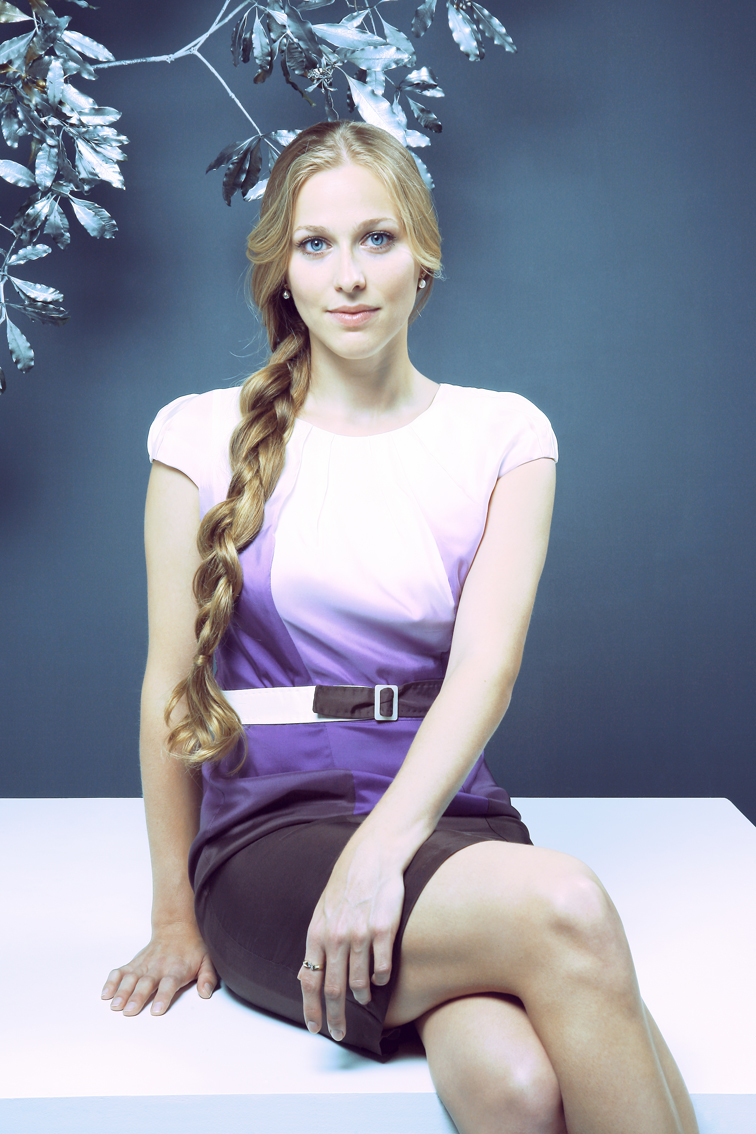
ISAIAH BELL: I’m a tenor working in the Classical tradition. Currently I sing primarily early music (up to and including Mozart and Haydn), and 20th and 21st century music, both opera and concert. I also write and compose. I have combined these disciplines in the past and hope to continue doing so.

JS: What important beliefs do you express in or through your work?

IB: I believe that my job as an artist is to bring my understanding of the world to my work as fully as possible. In my life I observe, and I learn about myself and the world. This informs my work. I hope that by exploring myself and my environment, and suffusing my work with that intimate knowledge, that I can show someone else something about themselves and their life. Art has many purposes — including connecting communities, celebrating beauty, and entertaining — but the one I find most compelling is its ability to show us ourselves in other people, and other people in ourselves.

JS: Name two people, living or dead, whom you admire a great deal and tell us why for each one.

IB: Cecilia Bartoli, who is an amazing synthesis of intuitive artist and intelligent technician.
Virginia Woolf, who had the keenest aptitude for observing and recording the invisibilia that swirls around us and shapes us, but which is so hard to name or even to see.

JS: How have you changed since you began to do creative work?

IB: Being a traveling performer has forced me to be a different person than I would be naturally if left to my own devices. I have to be more social, better at meeting new people, more comfortable with change, less patterned, and more adept at operating under pressure. Our lifestyles really do shape us. There’s not as much room in my life now for preparing for every new experience, so I’ve had to learn how to fly by the seat of my pants, a bit. It’s a challenge… daily.

JS: What are your biggest challenges as a creative person?

IB: Like many artists, I’m sensitive. I’ve chosen to make a business out of something intimate and personal, and so of course I’m always being critiqued and criticized and adjusted. And even though I’ve been working long enough to be able to functionally separate the personal from the professional to a large degree, it’s hard not to feel at times that it is me, not my work, that’s at fault, if something is. The further along I get, too, the more personal my work becomes — I don’t think I will ever get to a place where it is just a job, where I just unplug myself from it at the end of the day. Some colleagues say they can do that, but not me. As a singer your body is literally your instrument. Being both the sculptor and the clay can be an intensely vulnerable feeling — and not everyone in the room is necessarily interested in worrying about that. So, you have to get on with it, and you do, and sometimes you have to put yourself away entirely and just get through the day. Striking a balance between being a professional who gets the job done and being a person whose very self is the medium is always a challenge.

JS: Please describe at least one major turning point in your life.

IB: When I started to understand that my fear, stress, overanalysis, restlessness, anxiety, and frustration were expressions of my fundamental life energy — not burdens to be dispersed or distracted or eased or smothered, but essential parts of me to be understood, listened to, focused, channeled — my world view started to expand. This is a process that’s still happening, and, I’m sure, will go on indefinitely. Trying to bring my living self — the imperfect and volatile spirit that exists in my body at this moment — to my performance work creates a shift: I begin to care more about the integrity of what I’m doing than about how other people see me. It’s much easier and less scary to study, prepare, practice, produce, and then replicate a previously approved version of myself… but that’s not art in a way that’s meaningful to me.

JS: What are the hardest things for an outsider to understand about what you do?

IB: The inspiration is not bottomless. Being an artist is like being in a long-term relationship — the desire to express yourself and the joy in the art form are not naturally endless springs, not when they are called upon so often and in such various situations. There is a measure of technique and effort to constantly rediscovering and renewing, and even occasionally to going through the motions with all the craft you can muster and trusting that the work itself will speak through you when you feel tapped out. Like in love, the real joys may not be the ones that come at obvious times, and there is a deep and slow-burning satisfaction in the long game.

JS: How and why did you begin to do creative work in the first place?

IB: I’ve always had it oozing out of me — which sounds disgusting and uncomfortable, and often is. My last serious non-arts ambition was to be “a scientist in the Amazon jungle” – when I was 11.

JS: What haven’t you attempted as yet that you would like to do and please tell us why?

IB: I would like to work as a creator (writer, composer, etc.) at a professional level that’s on par with my work as a performer. I’ve been giving priority to my singing in the last few years because that’s always been my official vocation. It needs a lot of focus, especially at junctures where you’re trying to elevate yourself to a higher level. I’m starting to combine the two, but it’s a long way from where I want it to be. I’ve created my own productions before, on a shoestring or as part of a collective, but eventually I’d like to build enough influence that I can make that an integral part of my professional output.

JS: What are your most meaningful achievements?

IB: I have a somewhat self-defeating disposition, which at times is almost equal to my ravenous ambition. (I didn’t intend that to be a poem.) My life and my work are inextricable, so I see my whole life as an ongoing act of resistance against that sabotaging force. Deciding to get fit and sticking with it, maintaining a stable and mutually supportive and (knock on wood) happy marriage in the face of long separations and the vicissitudes of an unpredictable career and life in general — not to mention seeing success as a singer in a hyper-competitive field — this all feels like a blow struck against the void.

JS: What advice would you give a young person who would like to do what you do?

IB: When the pianist Evgeny Kissin was asked to give life and career advice to a roomful of young pianists, he said, “If anyone who does not know you personally, who does not know how you play, what kind of life you have, what kind of problems you have, starts giving you a piece of advice, send him or her to hell.” That makes me laugh, and it’s also kind of true. It’s hard to give helpful advice even to someone you know well, and much harder to give it generally to someone you don’t, or to a group of people. I’ve received a lot of bad or unhelpful or frustrating advice from well-intentioned, intelligent, experienced people who just didn’t — and shouldn’t have been expected to — understand where I was on the path. I have been called on more recently to offer advice to younger singers, though. In these cases, I try to make suggestions that might have been helpful to me at a younger age, like, “Try to start developing and trusting your own instincts now. Just because someone else is more experienced than you doesn’t mean your knowledge and input are of no value — especially when it comes to your instrument and your personal development. Most things are subjective, and any professional or “expert” might not have the right guidance for you, for where you are right now. Including me.” And even that might be the wrong thing to say to someone on the other side of spectrum from the too-submissive young me, someone who most needs to learn how to learn from other people.

JS: Of what value are critics?

IB: If I’m trying, as a prospective audience member, to decide which show to see (especially in a discipline other than my own), I may read some reviews to help me pick. Similarly, sometimes after I experience a show or a film, I’ll read a review to see if other people agreed with my opinion. I never read reviews of my own work anymore. It’s not helpful. It has never been helpful to me. I am surrounded every day by professionals whose job it is to make me better. I listen to them. In my opinion, critics are there for the audience, not for the artists.

JS: What do you ask of your audience?

IB: I don’t ask much from the audience because I know the difference between the job I have as an artist and my job as an audience member. As an artist I work hard to communicate so I have the best possible chance of being understood. For that reason, I bristle, as an audience member, if I feel like the same effort is not being made by the artists I’m watching. I resent feeling that some specialized work or prior knowledge is required for me to communicate with the artist. Of course, the audience’s experience will be deepened by their own knowledge, and I may or may not bring something extra, but I don’t like it when artists seem to be assuming that only an elite group will be capable of understanding their lofty goals. When I’m in the audience I’m not usually just there to be entertained — I’m open to learning, to being challenged, to being moved. Those things have the best chance of happening if I am open to listening to the artist, and if they are doing everything in their power to communicate what they want to say as clearly as possible. So, I guess I just ask for the audience to listen! Everything else is my job.

JS: What specifically would you change about what goes on in the world and the arts?

IB: This is too big a question to answer! However: I am increasingly bothered by the standardization of arts training. It can feel like an assembly-line, which is destructive to creativity and honesty and individuality and interest. As young artists in the Classical tradition we spend our energies trying to do things “right”; introspection is limited to determining our category and our marketable traits. Understanding our personal instrument, and how its controls and emissions are unique, is tertiary. Upon emerging from my decade-long training regime, I felt that I had been shown all the tools, but I didn’t know how I was supposed to use them. This, I think, is because I didn’t know who was supposed to use them. Not everyone has this problem, and some people thrive in the age of institutions. But I see a lot of young artists nearing the end of the standardized process who know that they are supposedly primed to enter “the real world”, but who seem over-educated and ill-equipped. I know I am too young to sound like such a codger. And this is an unforgivable generalization — but that’s what you get for such a broad question!

JS: If you could relive one experience from your creative life, what would it be and why would you do so?

IB: I’m not at a point in my life where I spend a lot of time looking back. I’m very focused on growth, and on the future. When I think about my past successes I often think about how I would improve them with the experience I’ve gained in the meantime. And often I’ve given that chance — one great thing about working in this tradition is that we do get to revisit some masterpieces over and over. I will always be excited to sing the Evangelist in the Bach Passions, to sing Monteverdi, to sing the great Schubert cycles, and to sing Britten. I’ve done a wonderful production of Britten’s Curlew River twice now with the Mark Morris Dance Group, which I’m keen to do again.

JS: Tell us what it feels like to be a figure who is presented somehow in the media. What effect does this presence have on you?

IB: As a working classical singer, I haven’t encountered anything really horrible, like tabloids or gossip columns or any kind of mud-raking. When I appear in the media, if it’s not specifically a review of my performance, it’s usually something I have a measure of control over. For that reason, I used to fuss a lot about the wording of my press materials and interviews. I’d be bothered when a presenter dug up an out-of-date bio which listed where I went to school and my greatest accomplishment of 2011, making me look like a rookie next to my peers. I remember giving an interview over the phone where the reporter wrote down everything I said as if I’d been dictating it into my iPhone, complete with “ums” and misspellings and no punctuation, and it made me look stupid. That kind of thing will still bug me if I let it, but I stopped googling myself years ago, and I try not to think about it all too much — other than doing the basic requisite self-promotion. I have a friend who updates my website with usable reviews, and for the rest of it I try to be Zen and take the stance that you can never control what people will think or say about you.

JS: Name two places you would like to visit, one you haven’t been to and one to experience again and briefly tell us why.

IB: I’ve always been interested in Japanese arts and culture, especially the theatre, poetry, and painting, so I’d love to visit Japan. And to go back to Turkey, where we went for our honeymoon. The combination of the history, the physical beauty, and the living modern culture… and the food…

JS: Please tell us about one or more projects that you have been working on, are preparing, or have recently completed. Why do they matter to you and why should they matter to us?

IB: Right now, I’m singing in a period production of Monteverdi’s Return of Ulysses, from the 17th century, with Opera Atelier. At the same time, I’m preparing to sing a lead in the premiere Rufus Wainwright’s Hadrian at the Canadian Opera Company, and developing a semi-autobiographical show that blends my own personal stories with original music, music from the Classical cannon, and 20th century popular music. Each of these projects stimulates me enormously.

I adore Monteverdi (it’s so modern, so beautiful, and so dramatic!) and it’s a rush to bring this ancient music and even older story to life in a way that draws heavily on what we know of the original idiom. There are many more steps involved in aiming for “authenticity” (whatever that means). But it’s so rewarding. You hammer out your ornaments, your gestures, your understanding of the social mores of a different era. But in the end, if you can live within all that, what you get is more than just a recreation — it’s the closest we can get to time travel. And we’re keeping alive the brilliance of history’s greatest minds.

With Hadrian, it’s a special project because, we hope, it will cross some of the boundaries that can be so limiting in opera. Rufus Wainwright obviously has a legendary reputation as a pop artist, but he’s gaining repute on this side of the divide too. Hadrian is a gay love story, which itself is a breath of fresh air for opera, and the librettist is Daniel MacIvor, a Canadian theatre heavyweight and a brilliant proponent of the kind of subjectivism I am obsessed with. I love the story and I love being a part of something brand new.

With my own project, The Book of My Shames, which I’m developing in conjunction with Tapestry Opera in Toronto and Intrepid Theatre in Victoria, I’m relishing the chance to explore unrestrainedly. The piece is a fusion of theatre and music and cabaret-confessional and comedy and religious ritual. I’m using all my tools to paint the war between the “me” inside and the “my public self.” I’m so fixated on how art helps us connect with other people, but this piece attempts to express how being disconnected from oneself can preclude that. It’s the most personal work I’ve ever done, and it’s as much an act of reconciliation in itself as it is a performance. My hope is that, if nothing else, it will contribute to the conversation about how we express ourselves as Classically-trained artists in the age of the Internet. Singers — all musicians — are usually intensely creative people, but the industry in general encourages us to specialize, not diversify.

JS: Let’s talk about the state of the arts in today’s society, including the forms in which you work. What specifically gives you hope and what specifically do you find pressing?

IB: I do get depressed about how opera can seem stuck inside itself and disconnected from the outside world. Cultures that are so insular quickly get rarefied, and, worse, boring. I wish that it was more generally understood that it’s OK to enjoy the “fine arts” in the same way that we enjoy the movies and music and shows that we don’t see as elite. That would be a total paradigm shift because the cultural capital of the fine arts is their high status. And because it’s a club, it’s alienating. Since we’re all initiated, there are lots of traditions and shorthands and shortcuts that exclude and mystify and bore outsiders, but that people on the inside don’t even notice. We’re also desperate to attract new audiences, but there’s no easy answer on how to do it. I don’t know how either. But when I go to the theatre or to a museum, if I enjoy it, I’m not enjoying it in the fancy part of my brain. It’s the same part that enjoys Breaking Bad. And I guess what gives me hope is that if I’ve figured that out, and if my friends have figured that out, then more people will too. Although the Internet may have shortened our attention spans, I don’t believe it has diminished our basic desire for quality communication. We can share our ideas and our excitement more directly now, and the true value of things — things that were previously obscured behind veils of high culture — can be seen up close.

JS: Finally, what do you yourself find to be the most intriguing and/or surprising thing about you?

IB: I’m not in a position to comment on what is surprising or intriguing about me!

Posted in Uncategorized | Tagged , , , , , , , | Leave a comment

RISING OUT OF THE ASHES WITH MUSIC AND WORDS: CDS THAT GOT ME THROUGH TRAUMA AFTER THE HOUSE FIRE

It was about a year ago, five months after the fire that kept us out of our home for eight months, that this happened: I was driving down King Street in Hamilton and playing, back to back, the Hungarian String Quartet’s recording of Beethoven’s Opus 130 String Quartet # 13 and John Coltrane’s jazz essential cornerstone, A Love Supreme, when for some reason I said aloud, “I didn’t think I would feel like this again.”

After five months of very little listening – or reading, for that matter, or anything but numbness – music felt once again part of my spiritual and physical fibre, as natural in its life-giving energy as breathing. Since that moment, I’ve been reconnecting with all kinds of music, some for the thousandth time, and sometimes making new discoveries for the very first time. Often, music and musicians I had listened to for years, even decades, through concerts and recordings – and some I had known or briefly met- sounded new and rich with much to discover in their art.

So, here are some recordings of many that reached deep into me, gave me much pleasure, and made the void around existence vibrate with life.

Billie Holiday The Complete Commodore Recordings: You can have a younger and sprightly Billie on Columbia with the beautiful Lester Young among many other greats of jazz (Teddy Wilson, for one), or Billie’s later Verve recordings which reveal many of life’s hard lessons in her delivery, but for now it’s a consummate vocalist proving, as it’s often been said, that she sang like an instrumentalist with astoundingly similar phrasing and sense of time.

I discovered that Doc Cheatham was playing trumpet on a good many of these, the same Doc who, after telling me memories of being in the pit band for Bessie Smith, then recommended bitter melon, which he swore by, for anything that ailed your truly. Another memory: “Billie could really use the language” added Barney Josephson once at his Cookery in NYC’s Greenwich Village, after recounting how Ms. Holiday had got quite pissed off with an audience member who complained that Strange Fruit had been too disturbing to listen to.

The Duke at Fargo 1940 is a legendary live “one-nighter” that fortunately got recorded in the middle of a grueling tour, and this recording certainly has an evocative and bursting “you are really there” feel to it. As you know, the Ellington band of 1940 is an unbelievable gathering of greats -Webster, Hodges, Carney, Blanton, to name a few (Ray Nance, too, with trumpet, violin, and vocals, since Cootie Williams had just departed for Goodman’s band). This gig, with its overdrive swing, embodies a whole era.

But then, so does singer Alex Pangman, the Toronto-based “Sweetheart of Swing” on her CD “New” or any of her recordings, for that matter, like “Live in Montreal” or “33” or “Have a Little Fun,” the latter featuring Bucky Pizzarelli. There’s so much to recommend Ms. Pangman. Her sense of style doesn’t feel acquired or forced at all, as with too many current singers, but more a natural evolution from the vocalists of the twenties to the forties. She seems one of them, she seems from their world, when jazz was popular music and vocalists conveyed a hip but understated knowingness and it was natural to swing. This lady’s music is a toe-tapping trip of fun.

When I first heard The Thrill is Gone and then the album B. B. King Live in Cook County Jail on which it is featured, I never imagined that I would some years later get to sit down and chat with him half a dozen times and that he would even write a foreword to one of my books. The man still touches me deeply with his vocal blend of crooning and shouting and aching vocals, his economical guitar picking that, as the world knows, can tell a lifetime in three or four notes, and in memories of this gracious and humble gentleman I was privileged to meet. We laughed a lot.

I once told Richard Thompson that if I needed music for my funeral, I would take, for one, his acoustic guitar solo titled Dargai. Richard Thompson? Yes, the one who combines technical versatility, a rich and subtle imagination, a sophisticated sense of poetry, and an always focused artistry in his songwriting, his guitar accompaniment and guitar soloing, and his singing. Among my faves of his CDs are Small Town Romance, a live gig, and the more recent Acoustic Classics. I recommend him often, simply because he’s a true artist, his idiom being folk and rock combined. Be warned that you’ll then be much less impressed with several enormously popular singer-songwriters who created their accessible images for an image-hungry audience. With Thompson, his art comes first and his sense of irony can’t accept shallow idolatry.

It took several months of listens to Shelby Lynne’s Just a Little Lovin’, an album “Inspired by Dusty Springfield,” for me to realize that her artistry resides, at least for me, in a vocal mastery of intimate space, one that is quietly rich with nuance, understatement, and deeply-felt life experience. I return to a number of her recordings when I want to believe another human being, when I want to believe a singer-songwriter who takes an inward path to feelings and difficult personal realities. She told me once that she has to tell the truth, and I believe her.

Try anything on the Dusty CD and then try Revelation Road which addresses her painful childhood (father kills mother and kills himself and Shelby then looks after kid sister). Or Tears, Lies and Alibis with the simply beautiful Like a Fool -during our interview I told her how much I loved this recording and later found out that she considered it her favorite. Shelby Lynne is often a stylist of intimate feelings and one is compelled to listen openly, which is respectfully, isn’t it?

Martin Carthy, MBE, has long been considered the most influential and premier folk singer of England, one who has had an impact on everyone. I first met him many years ago when, at Sheridan College School of Crafts where I laboured, he sang for one of my classes. I then got a tape of the LP Shearwater and, on a twelve-hour car trip to New York, played the eleven-minute song Famous Flower of Serving over and over, ultimately in a cold and windy night in the mountains near Pete Seeger’s home in Beacon.

Years later, Martin explained to me how he had developed this specific reworking of a traditional song by hanging fragments on a clothesline in his flat for several months. In any case, to listen to a Martin Carthy song is to enter an uncompromising and unique world where the fibre – be it celebratory, or oppressed, or bloody – of human existence is given brilliant and imaginative and absolutely appropriate guitar accompaniment and committed vocal artistry. As with others in this list, I go to Martin Carthy for truth through art.

Truth? There’s a lot of it in classical music, often of deeply felt sincerity, carefully realized passion, subtle risk-taking, and long developed technical know-how in the service of the music -at – hand’s heart, be it physical or spiritual. Of the latter, I was joyfully surprised to finally find recently a CD of an album from university days that introduced me to deep spirituality through music – Gregorian Chants: Monks of L’Abbaye Saint Pierre de Solesmes. The recording first appeared on the London label in the fifties, I believe, and, in any case, it gently pulls one into an experience of ineffable connections and heartfelt tranquility. And existential humility.

In 1993 I was commissioned to write and recite a cycle of poems on the pianist by the director of the Glenn Gould Festival in Groningen, The Netherlands. I then looked forward to a piano recital by Angela Hewitt, also invited to the Festival, but, alas, our gigs were scheduled at the same time. Nevertheless, after listening to many of her recordings and attending a number of her concerts since then, I find she’s become one of my essential pianists.

In The Art of the Fugue, for one, she infuses a blend of counterpoint and airy singability of musical lines with a quality of firm purpose. The playing is undeniably seductive, not because of any detectable sense of intention, but because we find an air of rightness in this unforced delivery of Bach’s creative mind. We feel beckoned, we feel an invitation not to analyze but to coexist with Bach’s creation, to breathe it in. Of late, I’ve also been enjoying Hewitt’s two CDs of Domenico Scarlatti Sonatas and, and, and….

Wilhelm Furtwangler conducts Ludwig van Beethoven The Complete Symphonies and Selected Overtures and Furtwangler’s Brahms: The Complete Symphonies, Haydn Variations, Piano Concerto No. 2 in B Flat, on the Music & Arts label, both illustrate for me the conductor’s unique genius. Over and over, we experience musical argument that unfolds in surprising steps, no matter the familiarity of the work.

We often sense as well a potent logic at work, a voyage of repeated discovery, a metaphysical drama in the works of which we can’t help but be a part. We also sense each interpretation’s undercurrent of inevitability, as if the music is gradually realizing itself. We also sense the conductor’s profound commitment to a given composer, a sense of love and respect, a need to be true to the music. We sense the human truth and profundity that creators and interpreters endlessly seek in what they do. Listening to Furtwangler conduct is always an event for me.

We often sense as well a potent logic at work, a voyage of repeated discovery, a metaphysical drama in the works of which we can’t help but be a part. We also sense each interpretation’s undercurrent of inevitability, as if the music is gradually realizing itself. We also sense the conductor’s profound commitment to a given composer, a sense of love and respect, a need to be true to the music. We sense the human truth and profundity that creators and interpreters endlessly seek in what they do. Listening to Furtwangler conduct is always an event for me.

Johann Baptist Vanhal? Who? Joseph Leopold Eybler? Who? Both composers were contemporaries of Haydn and Mozart – Vanhal lived from 1739 to 1813, while Eybler did his earthly duties from 1765 to 1846 – though each is hardly known nowadays. Happily, the Eybler Quartet has arrived with Six Quartets Op. 6 by the former and the performances are ripe with playing that is vigorous, breathtaking, playful, charming, delicately elegant, touchingly tender -and do I hear some understated mischievous?

String Quartets Op. 1 1-3 by the latter (hey, isn’t the quartet named after him?) are also given outstanding performances, rich with subtly dramatic shadings, a sense of solid presence yet also warmth, and a dancing nimbleness. The ensemble and solo work for both composers are often jaw-dropping for each one, not as a will to impress, but as an extension of eighteenth-century worlds and aesthetic values that reflected them. (Yep, I’m going to delve into Johann Huizinga’s Homo Ludens again, in its new and more accurate translation, and understand these folks better.) In the meantime, I totally submit to the implicit charm of these performances, and there is plenty of it, always in the warmest sense of the word.

“The protagonist is not quite the Ophelia of Shakespeare” we are told about Let Me Tell You by Hans Abrahamsen. The work, however, does allow Barbara Hannigan to navigate, always light as air, the upper levels of her soprano range and to embody, in voice, what seems an unstable and sometimes agonized state of mind. In both articulate words and gliding vocal extensions interwoven, one senses a mind dividing, perhaps a young woman’s or perhaps one’s own. Indeed, we experience, on listening, an intense vulnerability firmly secure in its own world. Both composition and performance are haunting, challenging, potently alluring. As a result, the listener feels as if in the grasp of eerie mystery. It’s an unsettling, even troubling place to be, yet we do not choose to leave, even if we could.

I’ve long given in to the underpinning echoes of longueur – or is the better word ennui? – in Erik Satie’s piano music, played, say, by Anne Queffelec. Now a new discovery I’m much enjoying is Barbara Hannigan’s take on vocal works by Satie – Trois Melodies, Trois Autres Melodies, Hymne, and Socrate – in which voice and piano support and seem to propel each other in the presentation of these delicate jewels. With this recording, I find myself holding my breath, drawn to many vocal glimmerings of light that settle lightly on my senses and then in a breath disappear. Satie and Hannigan are a subtly compelling pairing, always at the tip of one’s fingertips, it seems, where feelings are too elusive to grasp but solid enough to know.

I’m on my seventh composer, Mozart, in the Naxos Life and Works series -Chopin, Bach, Beethoven, Schubert, Brahms, Liszt, so far – with Dvorak, Wagner, Haydn, and Verdi to go afterwards, and am totally wrapped up with each recording and rapt with attention. These are all presentations of frequent musical selections in a biographical context of original sources, some very well known and some intriguing in their vague but not secure familiarity. In a word, we learn much. And not only musically, but in biography too. Who would have thought Brahms so overtly passionate as we hear in his earlier letters to Clara? Who would have thought that Leopold Mozart was such an out and out prick, always using and abusing? Who would have thought that each four CD set could bring such new life to composers we assumed to know well.? I look forward to each listen.

And then there’s the outstanding two CD set titled Six Poets Hardy to Larkin: An Anthology by Alan Bennett, Read by the Author. Bennett certainly knows how to read, how to tell, how to feel, how to share, and one of his many contributions to this venture is his ever-present dose of writer’s smarts. Bennett is insightfully and compassionately, though not uncritically, attuned to human tendencies on one hand and to the mastery and potential in a life of dealing with language. The other poets in question are Houseman, Betjeman, Auden, and MacNeice, and the works of each poet are read with a honed skill in emphasis, rhythm, inner rhyme, overview, and much else. I can’t think of a better introduction to the reading and -of course, it follows – the writing of poetry. Bennett’s insights are illuminating and his many asides delight without fail.


Posted in Uncategorized | Tagged , , , , , , , , , , , , , , , | Leave a comment

BRUCE DOW: AFTER BROADWAY, STRATFORD, AND BUDDIES IN BAD TIMES, THE AWARD-WINNING ACTOR DECLARES, “I LOVE STUDENT AUDIENCES. THEY ARE THE FIRST ONES TO PRAISE YOU FOR GOOD WORK, AND/OR TO CALL YOU OUT ON YOUR PRETENTIOUS BULLS*T” … A REVIEWER’S INTERVIEW WITH PEOPLE IN THE ARTS

JAMES STRECKER: If you were asked for 50 words for an encyclopedia to summarize what you do, or have done, in the arts, what would you say?
BRUCE DOW: Bruce Dow is an award-winning theatre artist and educator, best known for his 4 featured roles on Broadway; his 12 seasons as a leading member of the Stratford Festival acting company; and his Dora Mavor Moore award winning work with Buddies in Bad Times Theatre Company (the world’s largest and longest running LGBTQ2A theatre).

JS: What important beliefs do you express in or through your work?

BD: I try to exemplify honour, honesty and fairness in my life, and hope that that is reflected in my work. Sometimes you need to show life’s underbelly in order to best demonstrate its beauty – that whole Oscar Wilde “We are all in the gutter, but some of us are looking at the stars” thing.

JS: Name two people, living or dead, whom you admire a great deal and tell us why for each one.

BD: Judy Garland – the greatest singing actor of all time.

Kurt Weill – a composer who wasn’t afraid of using ugly noises to show our deepest humanity.

JS: How have you changed since you began to do creative work?

BD: I think, like many actors, I began in the profession in seek of praise and attention.

Now, that matters so little to me. I’m really more interested in what I believe to be the true
purpose of the theatre – to explore the human condition. Regardless of belief systems, none of us knows why we are here.

JS: What are your biggest challenges as a creative person?

BD: Time and money. Art doesn’t just happen.

JS: Please describe at least one major turning point in your life.

BD: The first major turning point in my life was coming out as a queer person. My life has long been divided between my desire to be the dutiful son – the one my family wanted – and in being who I am and living for myself.

It’s a long journey. I’m still on it.

JS: What are the hardest things for an outsider to understand about what you do?

BD: That being queer is not a catch phrase, nor a lifestyle. We are ALL different. But being queer makes you inherently different to everything our society supports and encourages. It’s been a long road from the ‘80s and the AIDS crisis to achieving some visibility and tolerance. But don’t fool yourself. Acceptance and understanding are still a long way off.

JS: How and why did you begin to do creative work in the first place?

BD: As a child, I was driven, out of fear of my narcissistic father (laughing – but wish I were kidding!) to live in a world of fantasy/make-believe. Imagination was my friend and solace. Not as pathetically sad as it sounds – I had a great time!

JS: What haven’t you attempted as yet that you would like to do and please tell us why?

BD: It’s hard to “attempt” new things in a world that is so driven by labelling and compartmentalizing.

I have had two original musicals produced as composer/lyricist – and I’m working on some new ones.

I look forward to presenting myself more as a creator. As an actor, I have been able to break the mould of “funny-character guy” thanks to a few think-outside-the-box directors – to whom I shall be forever grateful!

JS: What are your most meaningful achievements?

BD: Cabaret and Into the Woods at Stratford allowed me to first break the mould I felt I was being pushed into.

Directing for the National Arts Centre, and my work with Buddies in Bad Times helped me to feel some sense of national context. While, of course, working on Broadway and in Washington D. C. have allowed me some international context. I’m not famous. But I can hold my own in a number of circles and that gives me a nice sense of self.

JS: What advice would you give a young person who would like to do what you do?

BD: Get training. Learn to take direction. Never direct another actor. Although an actor needs to learn what market they will be working in, and to understand what kind of characters you will be asked to play based on your age and appearance, don’t let them put you in a box. Know your “type” and fight it every day of your life.

JS: Of what value are critics?

BD: I’ve known a lot of actors who don’t read reviews. I think that’s bullsh*t. While an actor should not allow themselves to be influenced by either a good or a bad review, it’s your job to know what is being said about your work.

JS: What do you ask of your audience?

BD: A lot. But, I also know that if I’m not giving them a lot, I have no right to ask for their attention.

I love student audiences. They are the first ones to praise you for good work, and/or to call you out on your pretentious bulls*t.

JS: What specifically would you change about what goes on in the world and the arts?

BD: In their efforts to remain ever politically forward, too often arts groups will undervalue good, solid, simple work. Trying to be ever-important undermines a lot of what I believe we should be doing as artists.

JS: If you could relive one experience from your creative life, what would it be and why would you do so?

BD: I have zero interest in reliving anything. I have a lot I’m proud of, but I’m a different person now. Move forward or die!

JS: Tell us what it feels like to be a figure who is presented somehow in the media. What effect does this presence have on you?

BD: I feel it is my role to demystify the precious in being in the public eye. I’m just a guy. I have a skill set. And while I am very serious about what I do, I don’t think there is any reason to underline that as a public message. The only times I’ve run into any trouble with it is when people either assume they have a right to know things that are private and make huge intrusions into one’s space, or when I am making friends with someone who has known me as an actor first: it’s hard to get past their preconceptions. Do they like me? Do they like Bruce Dow. That can get weird, ‘cause I never seem to see it coming.

JS: Name two places you would like to visit, one you haven’t been to and one to experience again and briefly tell us why.

BD: I would love to go to India. I think there is something spiritual and challenging for me there – it’s not more than a feeling so far. And I would love to go back to Hawaii. It’s a magic place. Even crazy Oahu has another-worldly feel to it.

JS: Please tell us about one or more projects that you have been working on, are preparing, or have recently completed. Why do they matter to you and why should they matter to us?

BD: Stratford star Graham Abbey has recently taken over a small summer theatre company two hours east of Toronto – the Festival Players of Prince Edward County. I will be serving as Director of their Academy for Young Actor Training. I feel very strongly about the need for there to be a training ground for young artists in-process or completing their formal training at a college or university.

Also, I have three new musicals in development with theatres across Canada – but, we’ll wait to start blowing the horn on those! lol

JS: Let’s talk about the state of the arts in today’s society, including the forms in which you work. What specifically gives you hope and what specifically do you find depressing?

BD: I find hope in the support being given to new and emerging artists. It’s a kind of support that didn’t exist when I was that age, and I find the level of talent and skill coming out now is so exciting. What I find depressing is the turning away from the elders in our community. A lot of gifted people with a lot to teach – and a lot still to learn themselves – are being shunned in favour of the new and shiny. It’s a double-edged sword. An artist of 75, for example, can be an emerging artist in a new field – or they may just have a lot of information and skills to share. New is great and needs to be supported – but new is not always best.

JS: Finally, what do you yourself find to be the most intriguing and/or surprising thing about you?

BD: I don’t think I’m that interesting. lol

Posted in Uncategorized | Tagged , , , | Leave a comment