RECONNECTING WITH MUSIC AFTER A FIRE – PART 1

After the fire of December 1, I didn’t listen to music, or do much of anything for that matter really, until just recently, almost five months later. I had lost a huge collection of recorded music on CD, LP, 45 rpm, 78 rpm, and audio cassette, all collected over decades and in many genres. Our neighbour, Steve, loaned me one of his guitars, since all my instruments had been too damaged in the fire and smoke to repair, and although my fingers at the moment feel heavy, stiff and clumsy as lead pipe, I do find delight in slowly trying out things I used to do. This will take time.

In the meantime, I am pleased at how much music I am starting to listen to music from all over the creative map, music that awakens me from a numbed-out condition of fatigue and sadness, music that feeds every part of me and, even at its gentlest, thrills me. Often there’s a personal connection of some kind to the music I’m playing, memories begin to take shape, and I smile. So, allow me to talk now and then about just some of this music.

Okay, of course I never met the conductor Wilhelm Furtwangler. But once, in Toronto, soprano Emma Kirkby declared after our interview that she would arrange for my interview with her friend David Watkin, the Oscar winning cinematographer, who was currently filming in town. In turn, after our ensuing interview – thank you, Emma – David asked, “What do you think of Furtwangler?” and before I could answer, he said, “You have to hear this.” “This” turned out to be the last movement of Brahms Symphony No. I, recorded in Berlin on January 23, 1945.

I have rarely been consumed as much by a recording, and for almost twenty minutes sat motionless and silent and gradually emptied out of anything that was not this performance. So I came to understand why some call Furtwangler the greatest conductor who ever lived. He was a master of musical development, proportion and timing in a work, aware like a theatrical director of all its architectural nuances, able with uncanny insight to build suspense in what always seemed an organically-realized metaphysical narrative.

One experiences, deeply, in a Furtwangler performance, an almost ineffable sense of meaning being born in one’s consciousness, as if music and metaphysics speak their minds as one. I’ve been listening to Furtwangler’s Beethoven and Brahms symphonies of late and, each time, hold my breath at what this master’s dedication achieves.

With Anton Kuerti’s Beethoven Sonatas arrived in the mail, it was first, of course, opus 31, especially No. 2. Again, as with Furtwangler, I felt an artist completely present to all the dimensions and implications of a musical work at hand. And what an unyielding pianistic presence, one with a confident percussive quality that still shows both delicacy of emotion and nuance in concept in each meticulously realized lyrical passage! What a blend of passion and mind, when Beethoven would have it so!

How many years ago was it that, Anton, performing in Hamilton that night, called up and suggested we go have a vegan lunch, which turned out to be bagel sandwiches as we sat outdoors on Locke Street. I was humbled by the range in his conversation as we later drove through the city. His recitals are always thrilling, much as his conversation is challenging.

Now here are some of my favorite recordings of songs: ‘The Banks of the Nile,’ ‘Famous Flower of Serving Men,’ The Bold Poachers,’ ‘Jim Jones on Botany Bay,’ ‘Prince Heathen,’ ‘Rigs of the Time,’ ‘The Death of Young Andrew,’ ‘The Bonnie Lass of Anglesey.’ Yes, they’re all by Martin Carthy, called by many the most influential of folk singers, an artist from whom Bob Dylan and Paul Simon borrowed or stole, your pick, an OBE, and a master of imagination in how he puts songs together with his instrument. I love the way Martin holds the beat back on the guitar, as if resisting the tempo, even as he provides a solid foundation for a tune.

I first met Martin when long ago, by happy chance, he sang for a class of my college students. Another time, over an Indian supper in London, he explained how he came to write most of ‘Famous Flower.’ Once, I gave a depth psychology workshop in Ottawa, flew to Pearson, drove to Toronto, parked on Spadina, ran to U of T’s Con Hall, and just as I entered the auditorium, Martin and the Watersons, his in-laws, began singing another fave, ‘The Good Old Way.’ Thank you again, fate, for that one. Norma Waterson, his wife, is celebrated for an exquisite earth-rooted voice in traditional music. She has smiled the times I called her my favorite jazz singer.

The music of sarod master Ali Akbar Khan, whom Yehudi Menuhin called the greatest musician in the world, is also essential to me. It’s music that inspires, yes, an immediate connection, but more than that, an actual state of being, one of rhythmic spirit, one that takes over the listener’s body. I first heard him at -memory time, folks – the Eaton Auditorium in Toronto in the late sixties. It was love at first Alap.

Several decades later I found myself interviewing Ali Akbar Khan in someone’s bedroom in suburban Mississauga. All the while, during talk of music’s potent effect on one’s spirit and the possibility that, if he hadn’t finished what he was here to do, he might be reincarnated to continue, we smoked cigarettes and his were – appropriately- king size. I guess all important music feels like home, in a way, to the listener, and the ragas of Ali Akbar Khan always do that for me. The man found peace in his music and he gave it too. I have gone to his music often.

In Hymns of Heaven and Earth, composer Peter Togni proves himself most expert in creating and sequencing musical effects. Each one takes form through his instinctive, it seems, sense of balance and proportion in composition. Each one makes great emotional impact through his restraint and understatement. Here simplicity, in the use of one’s many creative resources for creation, gives birth to a work full of implication, tension, ambiguous resolution, and a challenge to the listener to fill in where the composer has shown restraint.

That much said about Togni also describes his ideal collaborator in Stacie Dunlop, a soprano with a voice that is at once crystalline and gutsy, ethereal and sensual, vulnerable and defiant, very theatrical and very musical at once. Where Togni’s writing demands technical versatility, Dunlop delivers also a spot-on emotional precision. Where Togni sets up a musical framework, Dunlop inhabits, with graceful passion and ease, the endless subtle shifts of the composer’s musical language. Hers is a very engaging performance of Pablo Neruda’s esteemed verse.

Backstage at a St Patrick’s Day concert one time, fiddler Martin Fay walked up to me and, as he declared, “You should have this!” slapped a shamrock with adhesive onto my left shoulder. Alas, I had only the week before broken that same collar bone while somersaulting unintentionally down a hill in Pennsylvania -don’t ask. But what the hell, these were The Chieftains who, any time they perform, on stage or on disc, they and we are made of lyrical yearning and undeniable toe-tapping that shows us to be alive in music.

Mind you, a recorded interview you’ve have with band leader Paddy Moloney, a man thick of accent, is not easy at all to decipher for weeks afterwards, but the man burns with enthusiasm for his music and the warmth is infectious. So, it means a lot to have found again copies of Irish Heartbeat: Van Morrison & The Chieftains and The Chieftains Live from 1988. On the latter you hear Martin Fay, a most lyrically soulful fiddler, and harpist Derek Bell who, backstage elsewhere, told me a delicious tale that he later repeated for me in a letter. It was written as it should be, in a bold and impish hand, one that took on the whole tight-assed world and mocked it as it should be mocked. I miss Martin and Derek.

Posted in Uncategorized | Tagged , , , , , , , , , , , , | Leave a comment

HANNA SHYBAYEVA: BELARUSSIAN-BORN DUTCH PIANIST DECLARES, “I WOULD ERASE MUSIC COMPETITIONS FROM THIS PLANET, BECAUSE THEY GIVE VERY WRONG IDEAS TO YOUNG MUSICIANS ABOUT WHAT’S IMPORTANT IN ART:” A REVIEWER INTERVIEWS PEOPLE IN THE ARTS

JAMES STRECKER: If you were asked for 50 words for an encyclopedia to summarize what you do, or have done, in the arts, what would you say?

HANNA SHYBAYEVA: Classical pianist by education who is strongly influenced and inspired by other genres of music such as electronic, contemporary, jazz, rock and more. Equally active in every musical setting form from solo to a large ensemble performance.

JS: What important beliefs do you express in or through your work?

HS: I believe music can heal, educate and change people, and I hope I play my little part in bringing this belief over to them.

JS: Name two people, living or dead, whom you admire a great deal and tell us why for each one.

HS: Admiring people for me is easy, since there is so much talent around and I always admire people who did or do the best with their gifts and talents and let them flourish to the maximum for the benefit of all of us and the world. But there are too many of them to mention here.

JS: How have you changed since you began to do creative work?

HS: Life experiences made me more daring and less insecure about what I do and I guess this brings more colour, form and depth into my playing. I also at some point realized that I have to do what I believe in and like and not do what others think is right for me. That realization opened a totally new level of ways and forms to be creative in classical music.

JS: What are your biggest challenges as a creative person?

HS: To be a business lady. To be a good sales/PR agent and sometimes my own accountant. Next to what I do, these are for me extremely hard to combine.
Also, to be social and be at my best when I am not. People who paid money to hear me play shouldn’t care if I haven’t slept for two days or have a 39 degree fever.

Also, to somehow still have a ‘normal’ life sometimes which includes cleaning, buying food, going to see parents and friends.

JS: Please describe at least one major turning point in your life.

HS: Leaving my home town and country for good at the age of 18 made an impression. Though I travelled a lot through Europe since very young age, it was one of the major turning points in my life, a point that lasted for 1.5 years since I couldn’t find a place where I felt I wanted to stay and study further. At that stage I questioned everything I had done with my life before and didn’t know how I wanted to go further and even if I still wanted to go on playing piano.

Meeting my teacher and therefore moving to The Hague was the second big turning point, since it gave me a second musical life, a strong wish to live with music again and that was the start of what I am today.

JS: What are the hardest things for an outsider to understand about what you do?

HS: This after the concert question: ‘Your piano playing is great, but what do you actually do for living?’

Some people think we just do this for fun, as a hobby, because we’ve got a good job aside that pays the bills and they don’t realize that this 1.5 hours’ program I just played for them is a full-time job with months of preparation.

A lot of people don’t realize how physically and mentally demanding what we are doing is. Physiotherapists compare piano playing (and not only piano, of course) with a heavy sport training and sometimes I know for sure I lose a kilo or two after a solo recital.

Another point which is hard to realize for an outsider is that we basically don’t have weekends and ‘evenings off after work’ since that is when most concerts take place. That being a musician is not a job, but an existence, and that we don’t have working hours, we work on music and live music all the time.

JS: How and why did you begin to do creative work in the first place?

HS: My mom is a conductor and there was always music in the house. We also had an upright piano which my mother played for me regularly, so naturally I started touching the piano keys early enough and apparently was learning very fast< which brought me to the special music school soon after. So, you can say that my parents decided for me to be a musician, but I am glad now that they did.

JS: What haven’t you attempted as yet that you would like to do and please tell us why?

HS: I have to learn how to really improvise and I want to be able to play real jazz…It fascinates me how different jazz musicians’ brains work and I believe it would do a lot of good to my creativity as a classical musician. Maybe in my next life….

I want to open a music centre with practice rooms and a recording studio with a small concert hall for musicians to gather and meld ideas, where all genres of music are going to be equally welcome. I know a place, but have no money to buy it, so if somebody wants to donate, please let me know.

I also want to attempt to learn how to dance flamenco I have always danced a lot and it’s an amazingly liberating feeling.

JS: What are your most meaningful achievements?

HS: I don’t know how meaningful it is for the rest of the world, but I think my last recording production was the most important and made the most sense to me. I made my first LP production which was recorded live with an analog ‘direct-to-2-track’ system, and this meant no edits and corrections were possible, what you hear is what you get. I believe it is important to stay real in what we do and don’t agree with the nowadays fashion of recording in classical music where everything has to be perfect, with no possible wrong note or a pedal squeak allowed. In the end, we end up with a lot of recordings that are so perfect they all start sounding the same. I believe we should take a step back, relax about our imperfections, and let the public hear real music which is played once and once only.

I also for the first time used a recording technique with the microphones very close to the instrument and almost without reverb. My sound concept is the opposite of what is common in classical piano recording where the piano often sounds loud but far away and an ambiance of a big concert hall is being created. I believe in a close and more intimate sound where the listener should feel like I am playing in his living room. Basically, I think I am reaching out to the old recordings’ sound and this was my first attempt, and I know there will be more experiments in this field for me and can’t wait to try again!

JS: What advice would you give a young person who would like to do what you do?

HS: First of all, ask yourself if you really love music or is it that you love yourself in music. The difference is crucial and can make you either happy or a very frustrated person for the rest of your life.

JS: Of what value are critics?

HS: You mean people who write bad things about others and get paid for it? Just joking.

They can be of a great value if they know the subject and are able to remain objective. In this case, you read really interesting meaningful reviews and it doesn’t matter if it’s positive or negative. However, too many of them are using the motto ‘I don’t like it and therefore it’s not good’ or they just praise whatever is in fashion at that moment.

JS: What do you ask of your audience?

HS: I love my public and I hope they like me back. I don’t ask much of them, because it’s my choice to play for them and I am happy to see them when I come out on stage. I ask of them to forgive me if I have a bad day.

Maybe sometimes I want to ask of them to be a little more understanding right after the concert when I am still trying to catch my breath and not to be invasive or only want to talk about how their far away family member also plays piano and want to know how many hours I practice per day.

JS: What specifically would you change about what goes on in the world and the arts?

HS: What goes on in the world and the arts is unfortunately the same: egoism, vanity and greed.

To change these things I guess is impossible, since it’s never been different in history, or has it?

Hypothetically, I would force the whole world to start its day with one obligatory hour of dancing and singing together on the streets where presidents would be forced to dance as a couple with a cleaning lady and a Muslim person together with a Christian!

If I could change something really in arts, I would erase music competitions from this planet, because they give very wrong ideas to young musicians about what’s important in art and why we choose to do what we do. In music, it’s not about being better, faster, stronger, greater, or prettier.

JS: If you could relive one experience from your creative life, what would it be and why would you do so?

HS: No, I don’t think I want to relive any, I only want to make and live new ones.

JS: Tell us what it feels like to be a figure who is presented somehow in the media. What effect does this presence have on you?

HS: None whatsoever. I am not that much in the focus light that it would start to become disturbing. In my case, it actually helped me a little since I was always very shy and introverted. Having to deal with media taught me to be more present and express myself better also in words and not only through playing piano.

JS: Name two places you would like to visit, one you haven’t been to and one to experience again and briefly tell us why.

HS: I have to go to Iceland one day, I find everything about that country extremely intriguing.

I want to go back to that place in the middle of nowhere in the countryside somewhere between Berlin and the sea where a little pretty house stands, hear and feel again that strong wind and warm sun on my face, and experience that peace of mind I haven’t had in years.

JS: Please tell us about one or more projects that you have been working on, are preparing, or have recently completed. Why do they matter to you and why should they matter to us?

HS: I am always busy with ideas inside me, they have to grow and take shape and sometimes it takes time. Every solo program I come up with is a project for me, to think it, cherish it and make it blossom in the end. The important thing for me is to always have a surprise element in every program I make, and let’s say even if I have a quite conventional program there always will be a piece that nobody knows or expects. In every program I make I try to bring in a little educational aspect, to not only let my public hear what they already know, but always integrate an element of the new and unexpected, maybe then it becomes more meaningful for all of us.

Recently I am also preparing a contemporary tango project which might turn into a recording as well. I love dancing, as I told you before, and tango is one of my passions too. I found a lot of contemporary composers who apparently felt the same way and I think it’s interesting and also entertaining to bring this out as one project.

Another exciting project to come is a theatre piece I and my colleagues are working on, based on improvisation in music and also in acting. We are trying to expand our boundaries and show our public totally different sides of us as musicians.

I am always busy with my two-piano duo, Pianologues, with an amazing jazz musician Gianluca di Ienno who taught me so much about jazz. Based on improvisation and mutual feeling of the moment on stage, this project is growing into something that I cannot tell you yet.

JS: Let’s talk about the state of the arts in today’s society, including the forms in which you work. What specifically gives you hope and what specifically do you find depressing?

HS: I have the feeling that the arts, including my field, somehow are coming to standstill at the moment.

We are pressed by promoters, concert halls and all other mighty parties to come up with new ideas and exciting projects to make the arts move further, but I feel that under a lot of pressure, and especially time pressure, those ideas don’t have time to form themselves into something real.

On the other hand, the same promoters are quite scared to see something new or something they personally don’t know in our programs and the phrase ‘Our public will not understand this’ or ‘This is too difficult for our public’ is what I hear so often. How do they know if they never tried??

We end up repeating the known repertoire over and over again because today things have to sell and preferably sell easy and fast, but there is so much interesting and exciting music still to find out and perform! I have nothing against the great repertoire of the past and will never stop playing it, but I also feel it is almost the duty of my generation of the younger players to not forget to look around and embrace the repertoire that is being created for us right now.

Also, what always sells is sex appeal, I find it dangerous for young artists when a label or a powerful promoter gets them to dress up and behave in a certain way just to sell a lot of tickets and CDs. There should be no place for that in what we do, in my humble opinion.

The hope is that there are enough young greatly talented musicians who don’t go with this philosophy and stubbornly go on creating new interesting things, music and projects, at all costs, without thinking only about how to make a fast and glamorous career.

JS: Finally, what do you yourself find to be the most intriguing and/or surprising thing about you?

HS: I am surprised myself that I am breaking a lot of barriers for myself and am not afraid to go out of the framed image of ‘a classical musician,’ something I never thought I would be doing.

The intriguing and the exciting thing is that I don’t know where else this will bring me.
Posted in Uncategorized | Tagged , , , | Leave a comment

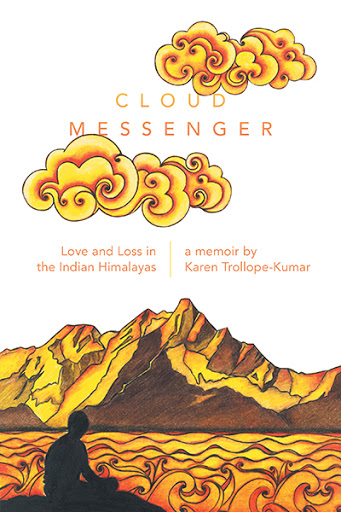
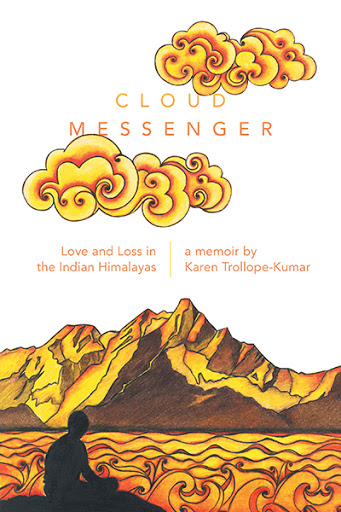
BOOK REVIEW: CLOUD MESSENGER: LOVE AND LOSS IN THE INDIAN HIMALAYAS BY KAREN TROLLOPE-KUMAR

Cloud Messenger, a memoir by Karen Trollope-Kumar about “Love and Loss in the Indian Himalayas” resonates, in understated yet evocative prose, with many passages that cling to the reader. Try this: “……I could see that flowers had burst into bloom. But something strange had happened. The world around me was like a black and white photograph – the colour had disappeared, leaving nothing but shades of gray…. Weeks passed and I remained lost in my shadow world……. The long hours of daylight dragged on, until I was desperate for night to come.” If you’ve known depression, or maybe if you’ve avoided the blunt fact that you are depressed, or could be, you may shiver in recognition and awaken to new unsettling depths in yourself.

But Trollope-Kumar’s subtly seductive narrative is many things –including a firm yet humane account of her many realizations during her spiritual development. This is shown as by no means an easy journey: “I had come to Garhwal filled with naïve enthusiasm and I had created naïve expectations for myself about building a medical program with specific outcomes and goals. The failure of these expectations had perhaps been inevitable…. Yet my outer life had always been intimately related to an inner movement of mysterious dimensions……That inner journey had led me to ever-deepening layers of understanding: how people of a different culture live and work, how they experience their bodies in health and illness, how they create meaning within their lives. At another level I had experienced the meaning of love – for Pradeep and my Indian family, for my children, and for the people of Garhwal.”

At a profound level, the author “felt a sense of unity or oneness with the natural world” and “deep” connection “with others.” She sums up, “My spirituality lay in the mystery of pattern, within nature and within human lives.” And later “I offered a prayer to remember the attitude of the true pilgrim – to be open, aware, humble, and mindful.” This she concludes after eleven years as a Canadian who, with her Indian husband, works as a medical doctor in remote regions of the Himalayas. Here she gradually grows into the culture, becomes more at one with it, as it were, and both the country and the author develop in complexity before the reader’s eyes.

The reader, however, does not remain a neutral observer, since both the country’s revelations and the author’s awakening require a thoughtful reader to share Trollope-Kumar’s probing attitude and to question so much that is taken for granted by a Westerner. Try this passage, one that I reread several times to let its implications start to settle in: “My brain swirled in confusion. I’d never seen a condition like this in my medical work in Canada and the symptoms just didn’t make sense to me.” Her husband, Pradeep, a doctor raised in the pulsations of Indian culture, comments in response: “This problem of safed panni is very common in India…. In Lucknow, we were seeing many women like her.”

To which Trollope-Kumar responds: “But a condition like that doesn’t even exist in Canada…. It’s as if people’s cultural background affects the way they experience their bodies – even someone’s symptoms can be different depending on the culture they grew up in. Isn’t that amazing?” To which Pradeep replies: “Maybe it’s because we people in India never used to think of the body like a machine with lots of parts. We think of the body as having flows of energy – something that is always changing. It’s a different idea completely.” Trollope-Kumar becomes “lost in thought: “Perhaps to become an effective doctor in India, I’ll need to decipher the language of the body……I suspect that this is a skill far more subtle than simply learning to speak Hindi.”

One beauty of Cloud Messenger is the frequent and clear articulation of nearly ineffable spiritual wisdom and of potent personal realizations. Friend Bill observes: “The problem with you is that you are still attached to the idea of ‘I’ as the doer. You need to pray to understand the movement of Divine will in your life. In that moment of surrender, you will find the peace your heart is seeking.”

Trollope-Kumar then reflects: “God, pray, Divine will, surrender, these are all words that arise in a faith tradition in which the Divine is perceived in the most intimate terms in an ‘I-thou relationship…. Yet what do these words mean for a Buddhist, a Daoist, or for an agnostic? What do these words mean for someone like me, who has so many questions? ……If we think about the universe as a dynamic dance, can we transcend the need for words like God and Divine will? The dance of the universe is revealed in the richness of the world, in the myriad names and forms that surround us. Suppose the seeker strives to attune herself to that cosmic dance, to move in its rhythm – will she then find the peace her heart is seeking?”

Meanwhile, Pradeep’s determined spiritual search has led to one realization that he should move with his depressed wife to Canada – “You’ll feel better in your own country”- and also this: “I am no more interested in NGO work. In fact, I am no more interested in the practice of medicine at all. It is time for me to take a new direction in life.” Before, when his wife teased him that he could have been a well-known guru, his response was: “Having disciples is the last thing I want…Too much power comes with being a guru, and most people can’t handle it.” Meanwhile, Trollope Kumar worries that “all that work” the two have done will “go to waste.” And she reflects, “Perhaps I was drawn to India in pursuit of that adventure. Perhaps Pradeep was just part of that romantic fantasy…”

In Cloud Messenger, we learn much, say, about India’s culture, everything from daily diet to the ways of childbirth and the treatment of women. Also about the perils of trying to deliver health programs, with limited resources and undertrained staff, to rural India. Also about a westerner’s unending adjustment to an intensely complex and elusive way of life that India is. Also about ideals confronted by a hostile world – a swami does get murdered, after all. Also about the fibre of love and friendship in their many manifestations. Also about human need and denial and the impact of each one.

Like the country she describes, the author’s intensely personal memoir draws one in and doesn’t sit still for passivity to be one’s response. It’s a fascinating and very readable tale, often rich with subtle humour and insightful lightness of being, that begins: “’Expect the unexpected,” I had been told when I left Canada for two months of medical studies in India.” Cloud Messenger shows itself to be a wise and gentle life shared. It’s a life that – by trying to move beyond intention and expectation and denial of one’s truer self- indeed earns its wisdom.

Posted in Uncategorized | Leave a comment

KARINA GAUVIN: A SOPRANO CONSIDERED “ONE OF THE MOST BEAUTIFUL VOICES IN THE BUSINESS” SINGS HANDEL AND VIVALDI IN TAFELMUSIK’S “THE BAROQUE DIVA” FROM MARCH 23 TO 26, 2017 AT KOERNER HALL: A REVIEWER’S INTERVIEW WITH PEOPLE IN THE ARTS

Photo by Michael Slobodian

James Strecker: What important beliefs do you express in your work?

Karina Gauvin: Staying true to the composer’s wishes and paying special attention to style. Style defines every era in music, and I try to mould myself to this as much as possible. Some singers like to put their own stamp on the music they perform and oftentimes, I believe, it distorts the original message and what the composer intended. I like to think that the composer was the best one to know how he wanted his music to be performed.

JS: Name two people, living or dead, whom you admire a great deal and tell us why for each one.

KG: I can’t tell you how often my colleagues and I have wondered what it would have been like to meet and work with either Handel or Mozart. Such fascinating human beings who wrote so magically for the human voice. What it must have been like to be in their presence, be guided by their requests and be given music that was being created right then and there, on the spot -the music of the time.

JS: How have you changed since you began to do creative work?

KG: I have changed immensely over the past two decades and mostly in my vocal range and my ability to stretch my limits. I constantly strive to improve what I do and try to stay open and fresh. Singing at a high level takes years and years of painstaking work. Listening to oneself and constantly taking a finer and finer grain of “sand paper” to refine what one is doing. My teacher used to always say, “cent fois sur le métier remettez votre ouvrage”. Which basically says: take what you have woven and put it back on the loom and weave again. A concept that many find hard to grasp in this day and age of fast, easy and discardable!

JS: What are your biggest challenges as a creative person?

KG: There are many challenges one faces in this career. Being a singer, we “live” with our instruments in our bodies 24/7. Being sick with a sore throat or cold, having indigestion or working long days on little sleep is part of what we have to deal with on a regular basis. Oftentimes, the biggest challenges an opera singer has to deal with do not have to do with the creative process at all. In this business, lots of travelling is required of us. Touring sometimes under very difficult conditions, rehearsing AND performing all on the very same day. Then we are required to set everything aside and to perform like angels. So before entering the stage, it’s about letting all of those extraneous worries behind and concentrating on the task at hand.

JS: Please describe at least one major turning point in your life.

KG: My work with [the late] Alan Curtis and the many recording and concert projects I did with him. When I met him, he changed my life forever and I will never forget it.

JS: What are the hardest things for an outsider to understand about what you do?

KG: Sometimes certain people do not understand the work that is required to get to this high level of performing. They think all we have to do is basically get up, open our mouths and sing! I say, you try it sometime and let’s have a chat afterwards….

JS: How and why did you begin to do creative work in the first place?

KG: Creativity was in the family. My mother has always been a creative person. She was a singer herself and was interested in many forms of art. This of course stimulated 2 of her 3 children to venture on the creative path.

JS: What are your most meaningful achievements?

KG: Besides all my work and recordings with Alan Curtis in particular, I would have to say how I pulled myself out of a very difficult divorce some years ago. After going through deep depression, I emerged a stronger, better person and definitely a better singer. Stepping out of darkness definitely makes you appreciate the light!

JS: What advice would you give a young person who would like to do what you do?

KG: It takes time. A lot of time and then some. More than you can ever imagine. One has to be very patient in this business. There are many factors that contribute to a successful career and many, many sacrifices have to be made. You have to be ready to accept that or you will be very unhappy. To be a performer is very demanding and you have to be able to leave all your cares behind before you get up in front of an audience. No one wants to see a sour face. They have paid good money to hear you sing. You have to be joyous and the audience has to hear it and see it!

JS: Of what value are critics?

KG: Any musician will tell you, when criticism is constructive, it’s useful. When critics can guide and inform people about music they know little about, it’s useful. When critics can make a liaison between the audience and the artist, something can be learned. However, when it gets personal and vindictive, that’s when we have to step out of the arena. Malicious and nasty comments have never helped anyone.

JS: What do you ask of your audience?

KG: I am happy they have come to hear me. It’s wonderful when people are open and receptive to what is happening on stage. A couple of requests though, please don’t pull out your bag of chips or your cell phone during a performance. It’s annoying. We can see so much when we are up there on that stage!!!

JS: What specifically would you change about what goes on in the world?

KG: We all need to listen more to one another. In this day and age of social media, everyone has an opinion. Opening a doorway to compassion and exchange is how we can heal ourselves and others around us.

JS: Tell us what it feels like to be a figure who is presented somehow in the media. What effect does this presence have on you?

KG: Being a classical musician is definitely not like being a Hollywood celebrity. It’s not invasive, I have my private life and it’s not being discussed in the tabloids. So, all is good as they say.

JS: Name two places you would like to visit, one you haven’t been to and one to experience again and briefly tell us why.

KG: I would like to go to India for the colours, the people, the food, the silks, I would love to visit a workshop where they do hand block prints and experience the utter culture shock of it all. I would also love to go back to the Highlands of Scotland. When I lived in Glasgow for a year during my postgrad, I got to see them only once and it was pouring rain that day. I’d like to be able to take my time the second time around!

JS: Please tell us about one or more projects that you have been working on, are preparing, or have recently completed. Why do they matter to you and why should they matter to us?

KG: I have several projects on the horizon, a few with a wonderful European orchestra. I don’t know if they would matter to anyone, but they certainly matter to me because I feel I am in such a good place in my life and in my voice now. I am at that place where my life experience can deliver a meaningful message and that I have the vocal strength to deliver that message. This matters to me and, who knows, maybe it can “speak” to someone out there as well.

JS: Let’s talk about the state of the arts in today’s society, including the forms in which you work. What specifically gives you hope and what specifically do you find depressing?

KG: The classical world has definitely “glammed” up in the past two decades. This has been good to clean up and modernize the image of musicians at large and make them more approachable to the general audience. Our classical world definitely needed a dusting off and getting up to speed. However, I fear that now, it’s a lot about that, and certain artists (singers) are being looked over because they don’t have that Hollywood/ supermodel glossy appearance that so many presenters are looking for nowadays. Yes, we need to present artists that are appealing to the public but we all need to hear and see people that have something to express through their art. I want to be moved and stimulated when I go to a concert or the opera. It is first and foremost about music, not a fashion show!

JS: Finally, what do you yourself find to be the most intriguing and/or surprising thing about you?

KG: How resilient I have been all these years, working at this career. Someone told me once, very early on, that I was too much of a fragile flower to aspire to this business. I would be lying if I didn’t say that there weren’t many frustrating moments and many tears along the way, but lo and behold, here I am over 20 years later, still going strong.

Posted in Uncategorized | Tagged , , , , | Leave a comment

KAREN TROLLOPE-KUMAR: AUTHOR, PHYSICIAN, MEDICAL ANTHROPOLOGIST, AND EDUCATOR ON HER NEW MEMOIR “CLOUD MESSENGER, LOVE AND LOSS IN THE INDIAN HIMALAYAS” AND ON FINDING ONE’S “ESSENTIAL NATURE” – A REVIEWER’S INTERVIEW WITH PEOPLE IN THE ARTS

James Strecker: If you were asked for 50 words for an encyclopedia to summarize what you do, or have done, in the arts, what would you say?
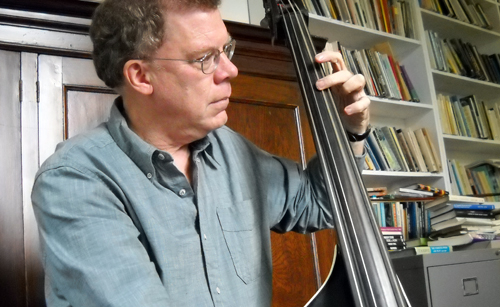
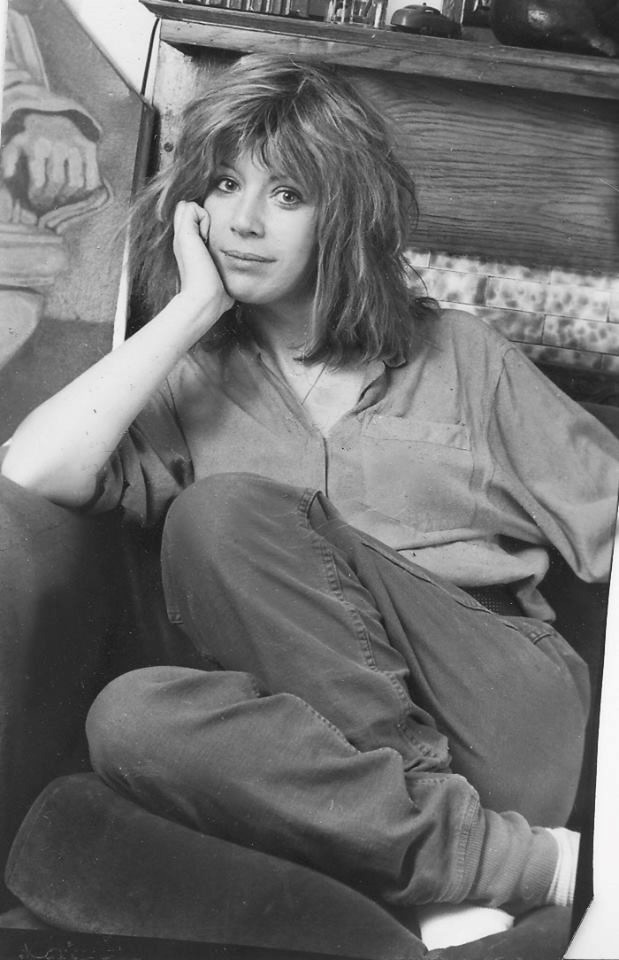
Karen Trollope-Kumar: Well, I don’t think I can come up with 50 words – how about 5? Memoir writing, scientific writing, teaching, journaling and public speaking.

JS: What important beliefs do you express in your work?

K T-K: First of all, I believe in connections of the human heart – that it is possible to build a bridge of love across the divides of religion, language, class, culture and ethnicity. In my book, Cloud Messenger, I reflect on the ways that I connected with so many people in the Himalayan foothills. Ultimately, I think this was my greatest achievement in those years I spent in India. Not the medical work that I did, but in the friendships I made.

Second, I believe that each of us has an essential nature – a set of personality traits, gifts and talents we were born with. When we try to fight against our nature or to try to be someone who we are not, then inevitably we’ll feel frustrated and disappointed. But when we begin to understand our true nature, we can find ways of expressing our gifts and talents in our daily life. It took me a long time to learn this life lesson, but it is so essential for happiness.

JS: Name two people, living or dead, whom you admire a great deal and tell us why for each one.

K T-K: Both of the people I’ll mention are also described in Cloud Messenger. John Last has been my mentor and friend for many years. He’s a renowned public health physician, who was one of the first scientists to write about the health consequences of climate change. I admire him greatly for his work, but also for his role as a mentor to hundreds of students over the years. He always took time to spend with students, and many of those students became lifelong friends. HIs encouragement for my writing has been invaluable. The second person is another friend, Ginny Shrivastava. She grew up in Canada, and as a young woman she met and married a graduate student from India. They moved to the state of Rajasthan in north India, and Ginny has lived there ever since. She’s done remarkable work with tribal women, helping them to organize and use their collective strength to improve their living conditions.

JS: How have you changed since you began to do creative work?

K T-K: I’ve always wanted to write, but I’ve certainly struggled a lot with “writers’ block”. I am rather a perfectionist about my writing, and as a result I have a lot of unfinished writing projects. Now that Cloud Messenger has been published, I think it will be easier for me to move on to other projects and actually finish them!

JS: What are your biggest challenges as a creative person?

K T-K: Probably my biggest challenge is trying to overcome perfectionism and self-doubt about my writing. Also, I need to be more disciplined about setting aside time for writing. I am still working as a family physician, and I also have numerous volunteer commitments in the community. Sometimes, I feel too busy to set aside some quality time for writing. I need to work on that.

JS: Please describe at least one major turning point in your life.

K T-K: Certainly, the biggest turning point in my life was that moment when I decided to leave Canada, move to India and marry Pradeep. It was a huge leap of faith, because I really didn’t know him very well and I certainly didn’t know much about India. That decision changed my life in every possible way – and I don’t regret it for a minute. My worldview has been broadened by the experience of living in another culture, and marrying someone so different from myself has been a fascinating journey. Pradeep and I have now been married for 32 years, and we are still very happy. Although we live in Canada primarily, we have deep connections to India and we spent part of every year there.

JS: What are the hardest things for an outsider to understand about what you do?

K T-K: Many people who have read Cloud Messenger say to me, “I just don’t understand how you could have decided to leave Canada in the way that you did.” I believe that some decisions are made on a deep intuitive level, and that was certainly the case for my decision to leave Canada. Somehow I knew that by moving to India I would embark on a great voyage of self discovery. There were many hardships and crises during those years I lived in India, and the work we tried to do had only limited success. But what an adventure it was!

JS: How and why did you begin to do creative work in the first place?

K T-K: As a child, I used to enjoy writing journals and short stories. I also used to like to make up stories and tell them to the kids I was babysitting. As an adult, I’ve written a number of articles on medical subjects during my career as a family physician. But “Cloud Messenger” is the first book I’ve ever written, and it took me a very long time to write it. I think that a memoir presents particular challenges – how do you decide what to include and what to leave out? How personal and revealing will the narrative be? How do you represent people in the narrative who are still living? Lots of questions to be considered! In writing the book, I began to perceive so much more about those eventful 11 years in India, and subtle patterns emerged that I had never considered before. It was a wonderful experience to try to capture that period of my life in prose.

JS: What haven’t you attempted as yet that you would like to do and please tell us why?

K T-K: Right now I am attempting to get Cloud Messenger more widely known. Since the book was published last fall, I’ve spoken at a number of different venues in Hamilton and Toronto. I’ve been getting excellent reviews, which is encouraging. But it would be exciting to see if Cloud Messenger could attract a national or international readership. That’s my next challenge!

JS: What are your most meaningful achievements?

K T-K: I’ve worked as a family doctor for over 30 years now, both in Canada and in India. It’s such a great privilege to work as a physician, because we become witnesses to such significant events in peoples’ lives. I’ve always loved that part of my work as a family doctor, and I treasure my memories of all the patients I’ve gotten to know over the years. I’ve also done a lot of teaching over the years, mainly to medical students, and I’ve tried to impart my love of the humanistic side of medicine to them. In my personal life, being a wife and mother has been a fascinating (though often challenging!) journey.

JS: What advice would you give a young person who would like to do what you do?

K T-K: I quite often have medical students asking me about my work in global health. I encourage them to get some experience at living and working in different environments. By crossing a cultural barrier, you learn so much about yourself. The experience of learning to see through someone else’s eyes changes you forever.

JS: Of what value are critics?

K T-K: Critics play an essential role for any creative person. It’s often difficult to see our own work objectively, and a critic can provide valuable insights and perspectives. When I was writing Cloud Messenger, I was fortunate enough to have several readers who provided me with excellent critiques of early drafts. My daughter was one of my sternest critics, who would tell me when I was beginning to sound pedantic or when my prose was filling with medical jargon. She encouraged me to write a much more personal narrative, and I think her critique improved the book immensely.

JS: What do you ask of your audience?

K T-K: In Cloud Messenger I describe the joys and challenges of 11 years of life in Himalayan foothills. Some of my experiences were frightening and disillusioning, and at times we faced problems of corruption and violence. But these negative experiences were far outweighed by the beauty and joy of those years in India. I would hope that people reading Cloud Messenger will see that this book is ultimately about the power of love. My greatest insight of the journey was the realization that it is possible to build connections of the heart across the divides of culture, class and religion.

JS: What specifically would you change about what goes on in the world?

K T-K: What saddens me most about the world today is that instead of moving towards a greater sense of unity among people, we seem to be moving in a direction of deeper divisions. This will diminish us as human beings. Our challenge should be to deepen our understanding of others, not to focus on differences.

JS: If you could relive one experience from your creative life, what would it be and why would you do so?

K T-K: It was that marvellous experience of finally breaking through a persistent writer’s block and feeling the narrative begin to pour out of my heart onto the page. I’d been struggling to write this book for years before I actually managed to do it – It seemed like such an impossibly difficult task to capture those 11 years of adventure and learning in prose. But once I finally broke through that block, I experienced such marvellous creative joy in the process of writing.

JS: Tell us what it feels like to be a figure who is presented somehow in the media. What effect does this presence have on you?

K T-K: I am not known as a writer as yet – I hope that one day I’ll be able to answer this question!

JS: Name two places you would like to visit, one you haven’t been to and one to experience again and briefly tell us why.

K T-K: I would love to visit New Zealand, which seems like a country of extraordinary beauty. Also, the New Zealanders I’ve met have all been kind and interesting people, and one of them became a special friend of mine. A place I’d like to visit again is a remote spot in the Himalayan foothills known as the Har-ki-Doon valley. I hiked to that place years ago with a couple of friends, and it was truly magical.

JS: Please tell us about one or more projects that you have been working on, are preparing, or have recently completed. Why do they matter to you and why should they matter to us?

K T-K: My daughter Sonia was ill with a severe eating disorder for a number of years, though thankfully she’s now recovered. When she was ill, we were both shocked to realize how little good information is available for parents as well as people suffering from these devastating disorders. Recently, my daughter started an advocacy and support organization for people with eating disorders called Body Brave. I have been working with her on several initiatives to promote positive mental health. We’ve started working on a book that shares the experiences of a parent and a child throughout the course of an eating disorder. I think it will be very helpful for families in which a loved one is suffering from one of these illnesses.

I’m also working on a writing project with my husband, called “The Seven Colours of Love”. My husband has been pursuing his spiritual life ever since I first met him, and he’s developed a set of teachings called Naturality. He describes this as a way of living that is neither religious nor spiritual, but natural. He’s written several books about his ideas and experience, and I think that “The Seven Colours of Love” will be a significant addition to this body of work.

JS: Let’s talk about the state of the arts in today’s society, including the forms in which you work. What specifically gives you hope and what specifically do you find depressing?

K T-K: Since Cloud Messenger has been published, I’ve been learning about a whole new world – the world of books, writers, and publishing. I’ve discovered some great sites online, such as Goodreads, where you can interact with other people who love books and get ideas for the next book to read. I’m also connected with some book bloggers and have attended some literary events. For me, it’s all completely new and I find it fascinating. The publishing world is undergoing a great deal of upheaval, but I don’t see this as a negative thing – I think it is opening up lots of interesting possibilities. Indie publishing is booming, and this certainly gives many more people a chance to see their work in print (including me!). The downside is that there are so many books on the market that competition for readership is fierce.

JS: Finally, what do you yourself find to be the most intriguing and/or surprising thing about you?

K T-K: On the surface, I look and sound like a calm, sensible family physician – which I am, of course! But what many people don’t realize is that I also have an adventurous and quirky side that leads me on all sorts of improbable journeys. Readers of Cloud Messenger will soon become acquainted with that side of my nature!

Posted in Uncategorized | Tagged , , , , | Leave a comment

KATE TROTTER: ACTRESS WITH OUTSTANDING STAGE CAREER AND OVER 100 CREDITS IN TELEVISION AND FILM -ALSO AN ACTING TEACHER AND PROFESSIONAL COMMUNICATION COACH- DECLARES, “I AM AN ACTRESS. I WAS BORN AND RAISED ON A FARM. WHAT GOT ME FROM THERE TO HERE IS A MYSTERY.” -A REVIEWER’S INTERVIEW WITH PEOPLE IN THE ARTS

JAMES STRECKER: If you were asked for 50 words for an encyclopedia to summarize what you do, or have done, in the arts, what would you say?

KATE TROTTER: I started my career under the guidance of Douglas Rain and Martha Henry at NTS. Under Douglas, the school had a classical tradition both in style (we called him “Mr. Rain”) and in focus. Douglas believed if you could do Shakespeare you could do anything. As a very young actress I was a part of the early seasons at The Blyth Festival and years later Janet Amos asked me to return there to direct. As a result of my training at NTS I worked all across Canada doing wonderful classical roles and even found myself on tour at The Kennedy Centre in the States. I spent my 30th birthday working on stage at the Royal Alexandra Theatre in Toronto and did several fabulous seasons at both the Shaw Festival and the Stratford festival. When my daughter was no longer young enough to drag around the country I began doing more on screen work. I was offered really wonderful roles on TV and in film often due to my classical training. I played Marie Curie in a movie about her life as well as the delicious part of a Shakespearean actress on Murdoch Mysteries. I have worked opposite many great international stars ranging from Sophia Loren, Angelina Jolie, Charles Bronson, James Woods and all three of the Carradine Brothers. I played a continuing role for Warner Brothers on the series Kung Fu: The Legend Continues. I have been nominated for numerous awards – and won several. I have had a rewarding and exhilarating career which still astonishes me. A recent film (Tru Love) won me best actress awards in Wales, Mumbai India and San Diego. All in all, it has been a wonderful ride and I am continually grateful for the opportunities I have been graced with.

JS: What important beliefs do you express in your work?

KT: I think I always express and explore the necessity of love and belonging. Often (and not surprising) it is the love of a child. I think my characters are always struggling to understand their own motivations. I think I express the belief that we should seek to know ourselves better. It is through that knowledge that we can live better lives. I do believe that the arts can (and do) change lives. I believe that connecting with other human beings (often they are part of an audience) is an honor and a privilege. I believe we stand on the shoulders of those who came before us. I believe that it is an honor to be an actress and speak the words of great writers. I believe that when it comes right down to it we all struggle with the same needs and fears and eventual loses. I believe that the arts give us the arena and the platform to both discuss those things and to share them. Because of these things, we are less alone.

JS: Name two people, living or dead, whom you admire a great deal and tell us why for each one.

KT: Well – (#1) Shakespeare of course – because he said it all and he said it brilliantly. Through his works we still ask the fundamental questions and we still seek to answer them. Doing The Winter’s Tale at Stratford was an honor. Shakespeare is a joy to perform. And (#2) Clare Coulter because she is the perfect actress. She simply cannot be false. She is a woman of great integrity and fierce intelligence. She played my nurse when I was Juliet and my daughter when we did Top Girls. She was astonishing in both. And I loved her in both – as both the character and the person. (…And of course Brent Carver for all the same reasons and many, many others). Now that is my answer if you want people in the arts: if it is someone not in the arts it would have to be my daughter Kathleen. By being born she showed me how to love and live and perform and dream. She continues to astonish me with her humanity and her drive and her courage and her determination to improve the state of the world one person at a time.

JS: How have you changed since you began to do creative work?

KT: I am less insecure and less anxious about pleasing people. It is a great relief. It is partly age and partly experience and partly that I have the good fortune to work with directors who have believed in me. There is not much more thrilling that being hired to be exactly the actress you are and having a director clear the way so you can do your work.

JS: What are your biggest challenges as a creative person?

KT: I think my biggest challenge as a creative person is to not lose hope between jobs. It is easy to forget I am an actress if I am not acting or preparing for a role. One has to have faith that right part will come along and the right director will be directing – sometimes that faith seems illusive. And this may seem superficial but it is a challenge to keep myself open and available to delicate and subtle suggestions, ideas and emotions on set. Sometimes people can chatter too much and I lose the delicate threads that are connecting me to the moment and to the scene and to the heartbeat of the character. When I am working, I get lost in a role. And I love that feeling. It is often a challenge to ensure that that can happen. One has to be open and friendly on set but still be able to establish the boundaries one needs when one needs them without upsetting or insulting anyone. Sometimes it is a tricky balance to strike.

JS: Please describe at least one major turning point in your life.

KT: Without a doubt the most important one was the birth of my daughter Kathleen. When Kathleen was born, I began to understand what was important and what was not. I understood there was a business side to being a performer – because I had to make enough money to raise her and put her through school. I understood the need to be present and honest and open and real and generous and available. I understood my limits and my failings. I understood that love was possible. There have been also been several roles that have been turning points. When I was offered a continuing role by Warner Brothers it was a huge turning point partly because then I was a lead on an American series. And that is a pretty fabulous thing to be offered out of the blue. And I was offered it without an audition which was even more astonishing. Playing Marie Curie was a turning point because I understood that acting was something important – and not a vain activity. Playing Miss Alma (in Summer and Smoke) showed me the power a piece of theatre could have. I think playing Miss Alma was when I decided with certainty that I would not leave Canada. The decision to not make the move to the States was a turning point and one I have never regretted. It was an important turning point when I turned down a fabulous offer to work at Stratford (under the guidance of Robin Philips) to honor a contract I had already signed to work at Theatre New Brunswick. I knew that integrity would always trump opportunity. It was a big decision but again, not one I regret. I got to work with Robin years later for which I am and forever will be grateful. He was a genius.

JS: What are the hardest things for an outsider to understand about what you do?

KT: It is hard work. And the goal is to make it look effortless and easy. Also, an actor is an unusual combination of qualities – and usually there is an emotional wound at the centre. And finally acting chooses you – you don’t choose it.

JS: How and why did you begin to do creative work in the first place?

KT: I had no choice. It was as much a surprise to me as it was to my family. There were no performers in my background and I had no aspirations to be an actress. I was raised on a farm and acting was not a topic at the dinner table. Somehow at university I discovered literature and somehow the fates arranged an audition for NTS. I spent the first year at theatre school thinking they had the wrong applicant. Every acting job I have ever done has been a gift and a surprise.

JS: What haven’t you attempted as yet that you would like to do and please tell us why?

KT: I have not done enough directing. I’m not sure why. I have had several wonderful experiences directing and been asked what I wanted to do next. But I haven’t followed those openings or opportunities – I’m not sure really why. Acting has always been front and centre and I was so fascinated by what might be waiting for me as an actress that I just didn’t carve out the time to invest in directing. And now I have discovered psychotherapy and it too has claimed my heart. Perhaps there will be room for directing down the road. I certainly love coaching and working with students of acting – and that is a form of directing. I’d like to do more.

JS: What are your most meaningful achievements?

KT: Well – Kathleen – if one can claim someone else’s life as an achievement. And loving and caring for my pets. I think I might say that I feel I have led an honorable life to date and that feels like an achievement. And it would be ingenuous if I weren’t to say that I am deeply proud of the acting awards I have won and been nominated for.

JS: What advice would you give a young person who would like to do what you do?

KT: Try to be honest with yourself about what you ‘need’ and want from your life before you commit to a life in the arts. It isn’t easy and often it isn’t financially rewarding. But if it is something you are called to do, do it with your heart and soul. Make connections with people of all ages and all stages in their careers. Never burn a bridge if you can help it. Care about your scene partners and help them be the best they can be – and they will do the same for you. No one does this work alone or in a vacuum. Don’t imagine you will succeed on your own. Have a full life outside your work so you don’t need your work to be your entire world. Love an animal. Love a child. Volunteer. Do things that seem unrelated to acting. See other actor’s work as often as you can and support what others are doing. Don’t be too critical. Develop your skills as a human being (kindness, generosity, humanity, curiosity) so you can hone them as a performer.

JS: Of what value are critics?

KT: They are of enormous value. They set a bar for excellence. They shape careers. They record history. And they give young and old performers courage. They validate the art form and they validate the artist. We could not do without the good ones. I still remember receiving my first review while I was in theatre school. Jamie Portman said I was an actress to watch for. And you – Jim Strecker – wrote me a poem after Summer and Smoke. I felt validated and supported. It kept me going through the lows and helped me celebrate the highs. Critics can be destructive and mean and dangerous. And I have certainly had to recover from the whips and scorn they have sent my way. But they can also be (and often are) the foundation we stand on.

JS: What do you ask of your audience?

KT: Ah – to show up. And also to let me take chances so that I grow as an artist. If I don’t try new things and risk failing I will never get better. If I don’t grow and learn and develop as an actress I will never be able to give them the performance that will open their hearts to new feelings. So – I suppose I ask them to occasionally give me a break – to believe in me. It is a big ‘ask ‘I guess. Maybe it is too much to ask?

JS: What specifically would you change about what goes on in the world?

KT: I would like animals and children to be safe from abuse and cruelty. I would like more therapy to be available for people in crisis. I would like the arts to be more accessible.

JS: If you could relive one experience from your creative life, what would it be and why would you do?

KT: I had to come back to this question because it took me a long time to think of an answer. But I think I would not have done a production I did of Jungle of the Cities (Brecht). It was too cynical and too harsh and I didn’t have the stamina or a thick enough skin to survive unscathed the rehearsal or the run of the play. I was also in a fairly fragile personal space and I don’t think I was able to understand the piece or my place in it. It would have been better if I had turned that one down.

JS: Tell us what it feels like to be a figure who is presented somehow in the media. What effect does this presence have on you?

KT: The media has been good to me – only a couple of reviewers have been unnecessarily mean. I suppose like everyone I have had my detractors and those reviews are seared into my brain. I have felt hurt by one reviewer who I felt used my friendship carelessly. But I think I can honestly say that the media has been good to me. I have not been trivialized or sexualized. I have been taken seriously as an artist. I think I have managed to skate the fine line between privacy and public presence with success. I have never gone to an interview with trepidation and I have often been sincerely grateful for what has been written or said about me. Again – I feel incredibly lucky. I don’t think everyone could or would say this.

JS: Name two places you would like to visit, one you haven’t been to and one to experience again and briefly tell us why.

KT: I would return to Ireland because it is in my blood. My father’s family came from there and many of my relatives still live there. If I could have made a living in Ireland I think I might have moved. The arts feel like the life blood of the country. One can strike up a conversation with anyone. When I have performed with an Irish accent I have gone to Ireland to do personal research. I have sat in restaurants with a tape recorder – or in my aunt’s living room reading dialogue. It was glorious. I would also return to Prague because it is stunningly beautiful and I loved filming there. I haven’t been to the northern part of Canada – and I would love to go there. I think it is partly to know more about this country I call ‘home’ – but I think I would also like to feel totally challenged by the weather and the silence and the vast landscapes.

JS: Please tell us about one or more projects that you have been working on, are preparing, or have recently completed. Why do they matter to you and why should they matter to us?

KT: There is a film project in the works that is being written and directed by a director I love and admire and have worked with previously. He has spoken to me about a role and I am hoping it all comes together. But it is his story to tell and not mine so I can’t say any more. And I am just about to complete a degree in an area of study that is new to me. I wanted to expand my horizons and I have …. It has been and continues to be a fascinating journey. Again I won’t say more just yet – as the journey is still in progress. I did a lovely episode of Heartland recently. When I was doing that series, I was reminded just how much I love to act and how much I love being on set. It was so great to be reunited with Chris Potter and so lovely to be welcomed into the fold. I also got to do some work with John Harrison on Anne of Green Gables. It is so lovely when a director asks you to come and “play let’s make a movie”. And that is what he did.

JS: Let’s talk about the state of the arts in today’s society, including the forms in which you work. What specifically gives you hope and what specifically do you find depressing?

KT: I find none of it depressing. The young minds and hearts of the new generation give me hope. I love working with the kids that are finding their way in this wonderful world of acting. I did a weekend intensive at Sheridan College last year called “Understanding the Actor”. It was designed specifically for the students studying directing, producing, editing and stage craft. I loved teaching and I loved the students. At the end of each day I fairly danced home. They were wonderful. They are the new generation and they make me very proud. And here I am – at 63 – still being asked to bring my experience and ‘talent’ to the table. I am treated well. I am given a lovely cup of peppermint tea when I need one. My agent still cares and thinks there is a place for me. Casting directors ask me to come and audition. Directors ask me to play ‘let’s make a movie’. How lucky I am. Now, I certainly can’t begin to understand all the latest forms of broadcasting, web series and production. I don’t know how to do a web series – but that’s ok. Others do. I just drink the peppermint tea, learn my lines and try not to bump into the furniture.

JS: Finally, what do you yourself find to be the most intriguing and/or surprising thing about you?

KT: That I am an actress. I was born and raised on a farm. What got me from there to here is a mystery.

Posted in Interviews from Theatre, Uncategorized | Leave a comment

MARGARET ILLMANN, BALLERINA WITH AN INTERNATIONAL CAREER, INCLUDING BROADWAY, A MENTOR, A PHYSIOTHERAPIST, AND A BALLET COACH: A REVIEWER’S INTERVIEW WITH PEOPLE IN THE ARTS

JAMES STRECKER: If you were asked for 50 words for an encyclopedia to summarize what you do, or have done, in the arts, what would you say?
MARGARET ILLMANN: Initially dance was the athletic desire for optimal movement quality and completeness of shape. Then, with time and coaching, I developed cognition and submersion through acting of storyline or emotive concept. Dance of my performance life was a medium of expression unifying the physical with the emotive. Now I pass on that passion and knowledge.

JS: What important beliefs do you express in your work?

MI: Truth as the choreographer required with personal vulnerability, allowing the physical to express the unspoken. Dance has the wonderful ability to be like a wondrous book, taking the viewer on a personal journey that can discuss anything within the confines of the imagination.

JS: Name two people, living or dead, whom you admire a great deal and tell us why for each one.

MI: Barack Obama for his effortless calm, intelligence, values and dignity in a political environment of racism, class struggle, global financial collapse and unprecedented global political confusion.
Violette Verdy for her vivacious attack on life, passion for dance and positive coaching style: A positively addictive, admirable woman.

JS: How have you changed since you began to do creative work?

MI: I have always been rational and optimistic, but being creative allowed my mind to be expansive and I believe that all things are possible with the right combination of people and situation. Some may call this naïve, but I choose not to.

JS: What are your biggest challenges as a creative person?

MI: I returned to Australia slightly singed from certain experiences in my career, but I wished to share the positive and teach how to avoid the negative: to aid those coming from the same background as myself. The arts are not highly prized in Australia and especially not in Western Australia. Having only performed in Australia a little during my career, it has been difficult to find the environment to offer this information.

It doesn’t matter what you have if you cannot find a home to support your offering: it took time but now I do and it is very rewarding.

JS: Please describe at least one major turning point in your life.

MI: Making the decision to go to Canada. It changed everything. A very positive, learning, environment that felt so right from the decision to try. I was told there was no contract but flew across and auditioned that same day. I took a “tall male” contract and didn’t look back. Ballet changed from a job that I enjoyed to a passion and career that I hadn’t imagined I could achieve.

JS: What are the hardest things for an outsider to understand about what you do?

MI: Previously it was the hours of physical repetition and now it is the hours of preparation and rehearsal given to others.

JS: How and why did you begin to do creative work in the first place?

MI: Most of us all begin our lives being very creative. Some find their time and thoughts focussed elsewhere and some of us never leave that bright creative place: Seeing the non-visualised and attempting to make it happen. I began dance as I couldn’t catch a ball and my mother thought I would gain co-ordination- I still can’t catch a ball but I have seen many bright places.

JS What haven’t you attempted as yet that you would like to do and please tell us why?

MI: I don’t know- when I do know what else I would like to do I would probably give it a go!

JS: What are your most meaningful achievements?

MI: Starting life on a farm, learning dance in a small suburban church hall, finishing year 12 and being Head Girl at the same college my mother went to and then having a wondrous career that took me around the world from Broadway to international Ballet stage. I still don’t quite believe I did that. From where I sit now it is almost a dream.

JS: What advice would you give a young person who would like to do what you do?

MI: Go for it. Work hard with a mentor that inspires you and commit, then aim to place yourself in the environment where you can develop and opportunity can occur.

JS: Of what value are critics?

MI: Educated critics are truly valuable, to discuss the performance, history and artistic environment: Especially to future audiences and for the archival history of the art form. Today we are beginning to see a greater use of the blog. Though personal opinion is always important, social media can become a powerful tool for misinformation if in the wrong hands. Artists are vulnerable and audiences can be fickle or easily swayed so it is necessary to always consider the individual behind a name on the cast list and write in a positive manner whether in criticism or praise.

JS: What do you ask of your audience?

MI: Audiences are something in which to be in awe. Like a huge beast that can be tamed if willing and it is a great feeling when you can sense an audience moving though the journey with you. I would ask that they come ready to open their minds and give their time and concentration to what is in front of them. To aim to allow themselves the time to be transported, if the performance is good enough!

JS: What specifically would you change about what goes on in the world?

MI: In Arts? Politics- it has no place. There are wondrous creative people and there are those that are self-serving, petty and cruel. It is a shame when art or anything can be censured and history re-written by these people.

In Life? Greed- when is enough enough.

JS: If you could relive one experience from your creative life, what would it be and why would you do so?

MI: Hard question… so many experiences in ballet such as dancing with New York City Ballet… but perhaps I would say the time dancing and acting Victoria Page on Broadway in “The Red Shoes”. It was all such an incredibly intense period of time working with Jules Styne, Susan Schulmann, Stanley Donan and two different storyline scripts. It would be good to re-live and appreciate more of this experience. Sixty-four previews with different scene orders was a difficult but exhilarating time. I was always told “it is not always like this…”.

JS: Tell us what it feels like to be a figure who is presented somehow in the media. What effect does this presence have on you?

MI: When you are at the centre of the attention, it is quite surreal. I have read articles and found it hard to believe that this was my life or what someone experienced from my performance. Strange to believe that others found my life interesting, different or exemplary- I was just like the local shop keeper, but I wore great costumes and had a job that kept me fit! I always surrounded myself by friends that kept me real.

JS: Name two places you would like to visit, one you haven’t been to and one to experience again and briefly tell us why.

MI: I have never been to Cuba but love their artistic culture where dance is a necessity of life and ballet is an athletic aspiration.
I would like to return to Canada where I felt so at home and had such great friendships.

JS: Please tell us about one or more projects that you have been working on, are preparing, or have recently completed. Why do they matter to you and why should they matter to us.

MI: My greatest project is mentoring the youth of today. It is such a different generation to my own. Their lives are so instantaneous, everything seems so fast and everyone is clamouring for attention. They aspire for an artistic career in a world with financial cut-backs, a nation with only scientific aspirations and global migrations from adversity or war. Yet their passion for one of the oldest forms of communication, dance, is strong enough to cut through all this and begin again. There will always be a few creative souls and this passion needs to be nurtured.

JS: Let’s talk about the state of the arts in today’s society, including the forms in which you work. What specifically gives you hope and what specifically do you find depressing?

MI: Art is the underdog of today’s society. Our culture forgets “culture” and hones in on the scientific, mathematical aspect for invention. Everything needs to be objectively proven.
Having completed a Bachelor of Physiotherapy after my performance career, this was an interesting road to travel but I missed the unknown boundaries of the subjective, music and artistic creation. We definitely have two sides to our brain and to omit the artistic aspect of our selves is to squash the bright and unspoken possibility of the arts. The humanities require resurgence for the sake of humanity.
I understand that the Arts need to be managed as a business, but there also needs to be room for failure to enable success to surprise and enchant. We need to allow our minds to be transported from the mundane and aspire towards the thought that all things are still possible. For this to occur there needs to be equal importance given to culture as a value and a fiscal investment.

JS: Finally, what do you yourself find to be the most intriguing and/or surprising thing about you?

MI: That I can survive without being Margaret Illmann the dancer. When I returned to Australia I had to leave my career behind.
We build our lives and become who we are based upon our previous work, work ethic, friendships and connections. This becomes our identity and it was difficult to lose that.
Yet here I am with a very rewarding job, married, a dog and a cat and I am still Margaret Illmann- just not the one I used to read about.

Posted in Interviews with Dancers, Uncategorized | Leave a comment

RACHEL MERCER: A CELLIST’S LIFE IN MUSIC WITH THE NATIONAL ARTS CENTRE ORCHESTRA, AVIV STRING QUARTET, ENSEMBLE MADE IN CANADA, MERCER-PARK DUO AND MUCH MORE TOURING, RECORDING AND TEACHING TO COME – A REVIEWER’S INTERVIEW WITH PEOPLE IN THE ARTS

JAMES STRECKER: If you were asked for 50 words for an encyclopedia to summarize what you do, or have done, in the arts, what would you say?
RACHEL MERCER: Performing, recording and teaching artist, cellist, toured extensively as member of chamber ensembles such as the Aviv String Quartet, piano quartet Ensemble Made In Canada, cello/piano duo Mercer-Park Duo. Currently Associate Principal Cello of the National Arts Centre Orchestra in Ottawa, Canada.

JS: What important beliefs do you express in your work?

RM: Communication & honesty.

JS: Name two people, living or dead, whom you admire a great deal and tell us why for each one.

RM: My maternal grandmother – she is 98 and has lived through a world war, internment as a Japanese-Canadian in Canada, being far from loved ones, relocating and creating a new life, was the oldest girl among 8 siblings, cared for her siblings, her parents, then her husband, and she can still face the world with sun and bring a smile to your face. She is strong and reminds me that we are human first…all that other stuff is noise.

I cheat and say my mother and father – because they have the strongest values and morals of any people I know, because they are tough and fight to keep themselves and family strong, because they are the most generous human beings I have ever known, because they gave my sister and I everything including love and unconditional support and continue to do so, because they live their lives with passion and ambition and drive and energy and that is inspiring.

JS: How have you changed since you began to do creative work?

RM: I’ve changed as I’ve realized I have more control over my creative activity than I did when I was younger. As the years go by I realize more and more that you get what you put in and anything is possible – you just have to do it! I’ve realized that there are people out there who have the experience that I can learn from and it has helped me overcome shyness to reach out. And I have found that people love to help and share knowledge.

JS: What are your biggest challenges as a creative person?

RM: As mentioned above, what you get is what you put in so it is never-ending. I don’t think “balance” is ever really possible. Or at least not how we usually imagine it. One must just get used to the ups and downs of activity and know how to manage the times when the energy level and output level is the most demanding. It is an intense life at times, but also, so, so rewarding.

JS: Please describe at least one major turning point in your life.

RM: One that sticks out is the day/time/year that I left the Aviv String Quartet, in 2010, with whom I’d been for 8 years, right out of school. I was so fortunate to join a world-class string quartet right out of conservatory. I had explored other options, staying in Europe, I was already freelancing and had regular chamber partners, but this was a great opportunity, a great quartet, and playing string quartet was my first love since the age of 13. I got to live in Paris, tour the world and play the most amazing music with wonderful colleagues. So why leave? At the time, I had begun to develop more musical and personal connections back in Canada. At some point I realized that while I love quartet, there are so many other things I would love to do. So I became a freelancer, based in Toronto. It was not easy, but for the first time I was really in control of where I played, with whom, and I had space for creative dreaming. There were less great gigs at the beginning, but as the years went by, I could pick and choose and eventually I felt that I had a great combination of inspiring people to play with, great music, great variety, plus the time to develop creative projects. It is only in the past year or two that I really feel that all the work and hustle is paying off and I am able to enjoy the fruits of the labour put in to developing these groups and projects.

JS: What are the hardest things for an outsider to understand about what you do?

RM: That there is always more to do and dream. Can’t turn it off.

JS: How and why did you begin to do creative work in the first place?

RM: a) I began the cello because apparently a family friends’ son, who was a little bit older than me, played and I thought it was cool!

b) I’m a dreamer. I get ideas or visions of something then figure out how to execute.

JS: What haven’t you attempted as yet that you would like to do and please tell us why?

RM: One thing that I have thought about for years is specific collaboration with dance. I’ve played with dancers over the years but I wish there was a way that I could actually collaborate with the choreographer. I have a specific piece in mind and can see the choreography – but I’m not a dancer and know nothing about it in technical terms! I think this hasn’t happened because of 2 reasons: practical (I don’t have a forum to present this) and psychological (I don’t – yet – have the confidence to approach a dancer/choreographer and ask to collaborate).

JS: What are your most meaningful achievements?

RM: One is a chamber music series that I run with Michele Corbeil in Hamilton Ontario. It is a small chamber series but we have a loyal and trusting audience who allows me to program great works mixed with things to challenge both them and the players. It moves me to see their appreciation for these concerts, and also to see that the musicians feel it as well; that this is not just another gig but directly meaningful in each person’s life.

JS: What advice would you give a young person who would like to do what you do?

RM: You must love music. Period. Give yourself space and time to dream, then figure out how to make those dreams happen!

JS: Of what value are critics?

RM: I find playing for and with colleagues growth experiences. I learn so much from other perspectives, and especially from people who make music really differently from myself. I am challenged and it always increases my expressive capabilities.

If we are talking about music critics…reviews are good for resume/promotional purposes! Even bad reviews can contain a great phrase that can be used! I’m still torn on this. I don’t understand the current role of the critic. The best reviews are more a description of the concert than passing any judgement. Personally I take all reviews to heart somewhat, even bad ones. But if I received hundreds, I might need to manage that differently!

JS: What do you ask of your audience?

RM: To be open. You don’t have to like it – every piece of work/performance ends!

JS: What specifically would you change about what goes on in the world?

RM: I don’t really know how to answer this. One thing that comes to mind today is increase people-powered media/information sharing rather than the current commercially controlled media sources. All in the search of truthful communication. But this is already happening through social media.

JS: If you could relive one experience from your creative life, what would it be and why would you do so?

RM: Playing in the townships in Soweto, South Africa with the Aviv Quartet. We played Beethoven in an open courtyard in a school for hundreds of kids aged 5-16. Their faces radiated joy and they sang for us. As we were leaving dozens of them came to us and hugged us. I realize more now what it meant for us to visit them, but maybe more important what it meant to us. I would want to have a moment with each kid and look into their eyes and reflect back the understanding and open-hearted sharing that they communicated to us.

JS: Tell us what it feels like to be a figure in the media. What effect does this presence have on you?

RM: I’m not a figure in the media, but in recent years I’ve received messages from young musicians starting out asking for advice or help and have realized that I can actually help them! It has made me realize that while I’m not a “role model” some young people might look to me and my activities for guidance and with that comes the responsibility of maintaining quality and values.

JS: Name two places you would like to visit, one you haven’t been to and one to experience again and briefly tell us why.

RM: I would like to go to Russia – because of all the incredible literature and music that came from there.

I would like to return to the Yukon – because it reminds me of a childhood trip, because the landscape and weather is so Canadian! Because the people are warm and welcoming.

JS: Please tell us about one or more projects that you have been working on, are preparing, or have recently completed. Why do they matter to you and why should they matter to us.

RM: While I can’t talk about details, my piano quartet, Ensemble Made In Canada, is preparing an epic cross-country tour and commission which will celebrate our country’s nature, people and cultures. This will be a huge collaboration and will show how “the little guy” (our modest chamber group) can, in some small, or possibly big! way bring people together in understanding. And I feel so lucky that we are in a position to make such a project happen.

JS: Let’s talk about the state of the arts in today’s society, including the forms in which you work. What specifically gives you hope and what specifically do you find depressing?

RM: It gives me hope when, at most concerts that I play, there is someone in the audience who has never heard classical music before and they have taken the chance! I don’t see it as depressing exactly, more eye-opening, when realizing how small that percentage of people is that actually listens to the kind of music I play.

JS: Finally, what do you yourself find to be the most intriguing and/or surprising thing about you?

RM: I’m pretty shy and can be a loner. But once I open up there’s a silly, goofy sense of humour waiting.

Posted in Interviews from Music, Uncategorized | Tagged , , , , , | Leave a comment

FRANK KOREN: AFTER 25 YEARS OF GUITAR WORK BACKING OTHERS, A LEAP INTO THE “UNKNOWN WORLD OF SONGWRITING” AND A CD TITLED RED CHAIR – A REVIEWER’S INTERVIEW WITH PEOPLE IN THE ARTS

JAMES STRECKER: If you were asked for 50 words for an encyclopedia to summarize what you do, or have done, in the arts, what would you say?
FRANK KOREN: Over the past 25 years I’ve mostly contributed to the arts by adding my guitar work to songs other people, including my wife, Kim Koren, have written. In 2015 I made the leap into that unknown world of songwriting for myself and released RED CHAIR later that year.

JS: What important beliefs do you express in your work?

FK: Caring about the human condition seems to find itself in my work. Sometimes it’s the story of a personal struggle and other times it’s the state of the world.

JS: Name two people, living or dead, whom you admire a great deal and tell us why for each one.

FK: Nelson Mandela. My formative years as a teenager and university student happened in the ‘80s and one principal struggle that I found myself involved with was the antiapartheid movement. I protested at the University of Toronto for the divestment from South Africa. He was not perfect but he always maintained integrity in his struggle for equality.
Tom Wilson. An amazing songwriter, musician, entertainer and someone who has promoted Hamilton, never shying away from his hometown. He should be the mayor of Hamilton!!

JS: How have you changed since you began to do creative work?

FK: I’ve become more focused on what’s important to me rather than what I think might be important to someone else.

JS: What are your biggest challenges as a creative person?

FK: I find it a challenge to make time for creativity. As a guitar-player-for-hire I’m usually learning other people’s songs. That said, my role in these songs can be equally creative.

JS: Please describe at least one major turning point in your life.

FK: Getting sober and staying that way for over 13 and 1/2 years.

JS: What are the hardest things for an outsider to understand about what you do?

FK: I usually hear “you’re doing what you love so don’t worry about not getting paid”. I too have bills!!

JS: How and why did you begin to do creative work in the first place?

FK: I don’t think I had a choice. Early on I listened to CKOC radio, then my parents’ records, then my older brother’s KISS records, and then a wide variety of styles from U2 to Motown, from prog rock to funk! I did my B.A. in history with sights set on law school but chose music instead.

JS: What haven’t you attempted as yet that you would like to do and please tell us why?

FK: Theatre. It would be completely out of my comfort zone!

JS: What are your most meaningful achievements?

FK: The various fund raisers I get involved with and the ones that I organize bring the most meaning to me.

JS: What advice would you give a young person who would like to do what you do?

FK: Work hard and grow a very thick skin.

JS: Of what value are critics?

FK: Who?

JS: What do you ask of your audience?

FK: Please listen to the music and please buy it if you like it. Share it with your friends but ask them to buy it too!

JS: What specifically would you change about what goes on in the world?

FK: Greed! I believe most wars and inequities would fade if this greed could somehow lessen its grip as a driving force!

JS: If you could relive one experience from your creative life, what would it be and why would you do so?

FK: I would like to relive my first time on stage with a band (Grade 9 talent show). The memory is clear but it’s just that, a memory!

JS: Tell us what it feels like to be a figure in the media. What effect does this presence have on you?

FK: I don’t think of myself that way though I’m aware it helps when putting together shows that aid the community like the annual Koren Christmas which helps support Hamilton Food Share.

JS: Name two places you would like to visit, one you haven’t been to and one to experience again and briefly tell us why.

FK: Egypt was fascinating in 1990. As a kid and teenager I loved all things to do with ancient Egypt (maybe having watched The Ten Commandments each year for 8 years or so helped create this obsession). I would go regularly!
I would like to visit the rest of Africa just to go “home”!!

JS: Please tell us about one or more projects that you have been working on, are preparing, or have recently completed. Why do they matter to you and why should they matter to us.

FK: I began writing a story in 1990 that was set in Egypt. The Arab Spring inspired me to continue. It may be some time before it ever gets finished but it’s fun.

JS: Let’s talk about the state of the arts in today’s society, including the forms in which you work. What specifically gives you hope and what specifically do you find depressing?

FK: Music, my particular art, will always be with us. Great music will always come from us. It would be great to be paid fairly for the work we do as musicians, as songwriters and as performers!

JS: Finally, what do you yourself find to be the most intriguing and/or surprising thing about you?

FK: I was quite surprised that this year at 50 I decided to start running and completed my first 1/2 marathon in late October, finishing 233rd out of almost 2,000 runners! This suggests that you just never know what you will find yourself doing from year to year and it makes life pretty exciting and full!!

Posted in Interviews from Music, Uncategorized | Tagged , , , , | Leave a comment

TAFELMUSIK CHAMBER CHOIR TURNS 35 WITH HANDEL, STEFFANI, LULLY, RAMEAU, AND ZELENKA IN A VERY SPECIAL CONCERT AND –IT’S THEIR DOING- A VERY HIGH AUDIENCE IN RESPONSE

I’m not aware of any debate in Ottawa concerning the legalization of Toronto’s Tafelmusik Baroque Orchestra. To be sure, there is much documented evidence confirming that any experience of this uniquely exhilarating band of players does indeed lead to scoring equally potent stimulants in the form of the intoxicating Tafelmusik Chamber Choir. And I have to admit I’ve tried both as often as possible and am thoroughly hooked. However, there is additional evidence that both groups, and especially when taken together, do have a distinct remedial effect on body and soul -for further proof you can check the often uncontrollable buzz felt by audience members at any Tafelmusik concert. They look happy, they look moved, they look and sound transformed.

My own reaction to Tafelmusik, both Orchestra and Choir, is often to babble incoherently but blissfully at intermission and afterwards. I once ran into violinist Edwin Huizinga at a Tafelmusik gig at Koerner Hall and, although I spend much time trying to be articulate and precise in words, I here ran out of coherence and sense in trying to explain my experience, my ‘high.’ As I struggled to find an apt language, he looked on kindly and said, “I understand.” No doubt he did, for Edwin –lucky fellow- was playing in the orchestra that night and said he felt much the same. But isn’t that the effect of remarkable music –which the Baroque so often is- played and sung remarkably -as the Tafelmusik collective so often do? One goes ethereal, one feels new, one feels ineffably complete. Or in the parlance of sixties drug culture, this is mind-blowing stuff and one gets high!

Take the recent Let Us All Sing! concert to celebrate Tafelmusik Chamber Choir at 35, a thoroughly evocative gig of many mind-expanding moments. It began with Laudate Pueri, a work of the young Handel in Rome, and it pleased and prodded one’s imagination throughout. In “A solis ortu…..” the choir seemed an eternal ocean of endless waves all interwoven in one potentially explosive momentum. In “Quis sicut Dominus Deus…’we experienced a grounding of lower registers which seemed not so much an immovable power as a constant unchanging presence made of inherent changes. Since this choir is one of many subtleties, the distinction is noteworthy. And then there was the soprano’s rounded tonal delicacy in a pairing with the cello, albeit with a text translated as ‘He lifteth the needy out of the dunghill.”

And then the Gloria which celebrated both a collective exuberance and the many delicately assertive groupings in the choir. And always this paradox: the Orchestra’s strings digging in vigorously as if to stay for good and just as easily drifting away with a full-bodied lightness of being. The individual players seemed to urge one another on with their own felt urgency as, meanwhile, we experienced elusive but clearly crystallized highs and deep as cosmos descents in the choir. And the various combinations, say, soprano and cello and oboe that delighted thoroughly and reminded us that the use of continuo establishes a uniquely seductive dimension like no other in music. Okay, I admit it, continuo always turns me on at a Tafelmusik gig.

I certainly was not ready for the progression from a youthful Handel to the gripping and profoundly sorrowful atmosphere conceived by composer Agostino Steffani in his Stabat Mater. This was a creation of interacting sorrows that, from the outset, one realized in the interaction of vocal and instrumental lines. These seemed, at least in my imagination, a spiritual pain throbbing from many sources at one time. Again the choir suggested an unforced power in its delivery of the text’s dramatic narrative, certainly with each section maintaining its distinctly textured presence while surrendering to a collectively sustained anguish. The result was breath-holding stunning as we sensed ourselves above a chasm of deepening despair. We also sensed the choir’s many inherent vocal energies and textures animating an ongoing struggle for salvation of which we were made a part. All this in a realm of scourging and wounds where the body perishes. The balm here was a choir of instinctive clarity in its vocal creation of a metaphysical dimension, one that counters sorrow with an implied –and implicit- beauty of eternal spirit. Even for a non-believer, this was heady stuff.

Not as incongruous as it might seem, however, was the irresistible lightness of lilt in the Chaconne from Amadis by Lully. Orchestra and Choir did not here present music as much, so it seemed, as act as flexible and multi-abled conduits of the baroque repertoire’s playful magic. Here the ethereal was made incarnate, here the ethereal was made fun. The air we breathed felt celebratory and it seemed less full of fanfare than a manifestation of interconnected gladnesses. Dance is not what one does, Lully seemed to say, but rather what one is, and this elation-pill of a choir followed suit, matching both their purpose and delivery to his. “Tout charme ici nos yeux” wrote Lully in this utterly delightful work and his words also well-described this group of singers who charmed nos oreilles for good measure. In this experience of ‘La gloire de l’amour’ one felt the ups and downs of perhaps a series of Truffaut films. It was all playful, pixie-ish, a revelling in love as an essence we live to know. But all was done with poise and a manner of gentle counsel and a style most evocative of the French court.

The text of Rameau’s In Convertendo Dominus is Psalm 126 and immediately we heard a heartfelt yet poised vulnerability firmly present in the tenor Philippe Gagne’s singing. The bass-baritone and soprano duet of Jonathan Woody and Sherezade Panthaki respectively, seemed a yin-yang of the cosmic psyche, albeit while still dance-stepping lightly. And then a bass solo offered the very odd experience of impish string runs chasing one another. But always a sense of proportion prevailed and the trio was indeed sprightly in “They that sow in tears shall reap in joy.” Again this most flexible of choirs proved adept at robust intimacy, able to dive into and negotiate the many surprises presented by Rameau. This was a choir adept at potency in small numbers, capable of cosmic rumblings in the basses and cloud-high purity in the sopranos, and an everyman grounding in between.

It’s always a pleasure to encounter the music of Bohemian Jan Dismas Zelenka –thank you, Tafelmusik, for long ago making the introduction- and his Missa Dei Filii certainly elicited some physically expressive moves –dare I say body highs?- in this concert’s audience. No wonder, since Zelenka’s compositional mind can seem like a party in full swing, one where a listener tends to feel simultaneously giggly and profound. This seemed like familiar turf for the choir who, with the orchestra, seemed wired to both Zelenka’s Gloria and to conductor Ivars Taurins, the man with the moves who, in all of this, was the physical embodiment of sound and dynamics. Now he shaped the sound, now he guided it along with a finger, an elbow, a hip, a tilt of the head. I’d been watching Fred Astaire and Ginger Rogers films of late, so I was somewhat prepared for Taurins elegantly doing all directions at once. But I’m never quite ready for the Tafelmusik Orchestra and Choir since, after all, how does one prepare for a high as rich as the one they always share with us? They’re so far out, man!

You can send Happy Birthday 35 vibes to the Tafelmusik Chamber Choir when they appear next with a series of Messiah performance at Koerner Hall from December 14 to 17 and join a Sing Along Messiah with them at Massey Hall on December 18. You might want to appoint a designated driver for the occasion unless, of course, your spirits find themselves soaring home on their own afterwards!

Posted in Tafelmusik, Uncategorized | Tagged , , , , , , , , | Leave a comment