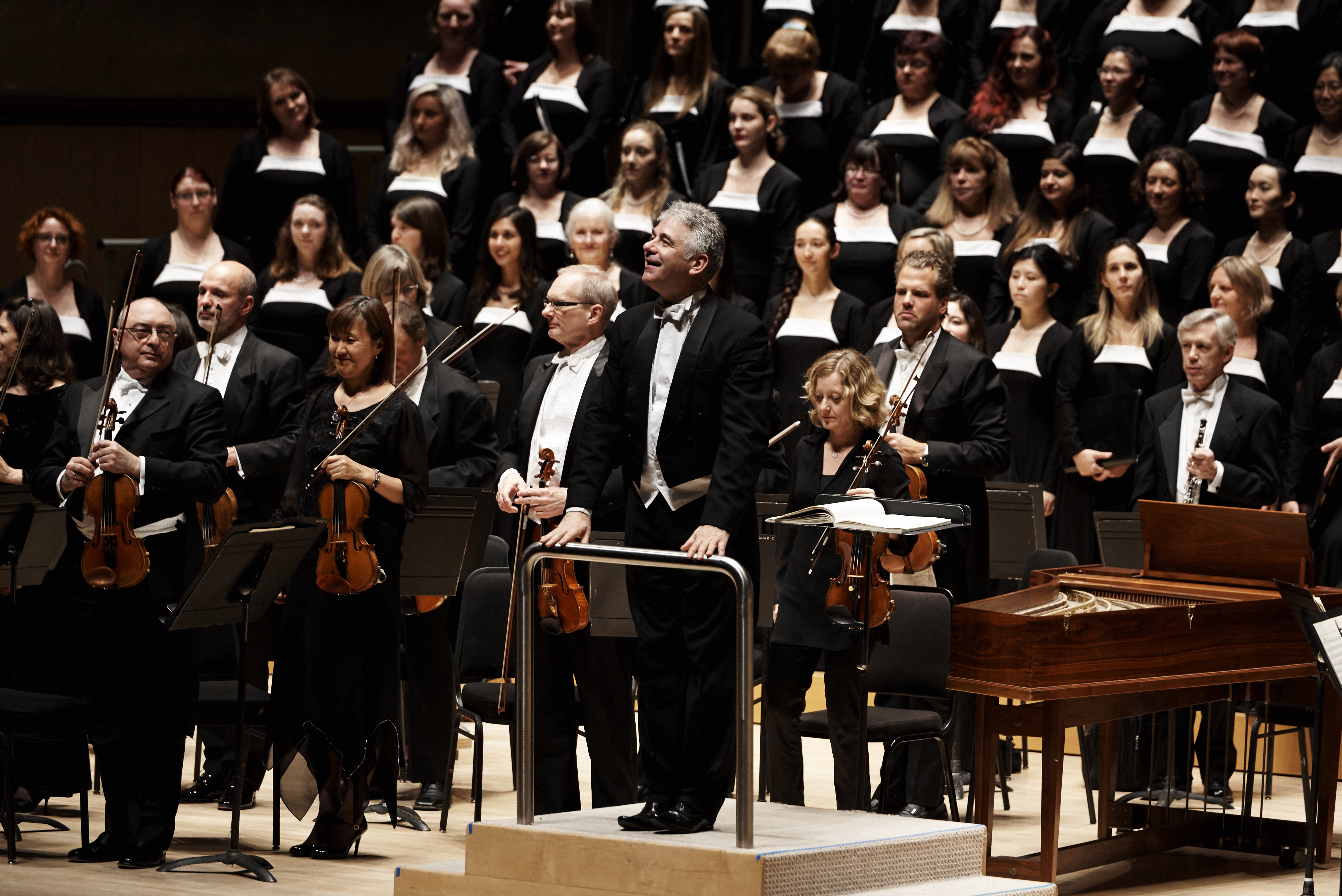
GEORGE BENJAMIN: AN INTERVIEW WITH THE CELEBRATED COMPOSER, CONDUCTOR, PIANIST AND TEACHER -APPEARING AT THE TORONTO SYMPHONY’S NEW CREATIONS FESTIVAL FROM FEBRUARY 28-MARCH 7

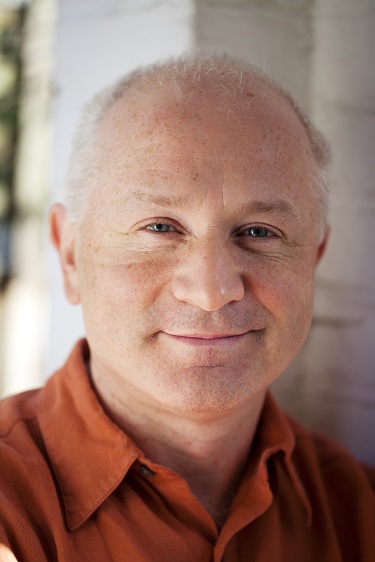
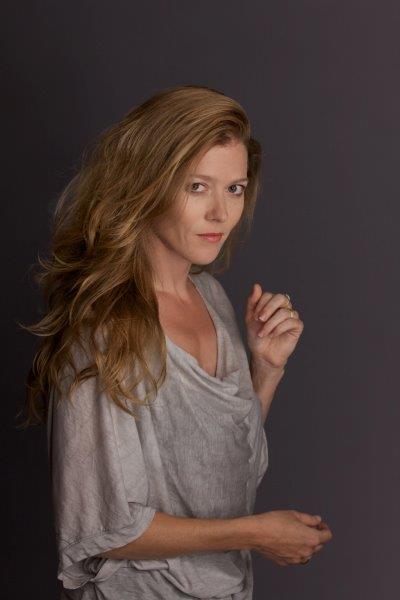
Photo by Matthew Lloyd

James Strecker: A Mind of Winter is the first of your three featured works in the Toronto Symphony’s New Creations Festival, so I’d love to know how introspective a work it is. A number of writers and actors have told me how they dig into their lives for material and I wonder if that is the case with you in the music for A Mind of Winter.

George Benjamin: While writing I devote my energies to just one thing: music. That’s enough! But, without the help of some expressive input, I would not be able to find the notes I need, though I would not be able to put such feelings into words. My approach is simple: musical emotion is discovered in the act of composition, and not imposed in advance by will. So no ‘digging’!

JS: How did the poem by Wallace Stevens, used as text, here influence how you set it to music?

GB: My piece is a portrait in sound of the extraordinarily evocative and mysterious Stevens poem, which I knew I wanted to set from the moment I first read it almost 35 years ago. The influence of the poem is evident in my score from the first note to the last, and affects everything from the smallest details to the largest structural element.

JS: I find it gripping, in the version I heard, how near the end the soprano sustains the word “behold,” all the while becoming engulfed by the orchestra and then freed from it before almost speaking the last line in a haunted and vulnerable voice. What response do you yourself go through, as the one who composed it, when you conduct the work?

GB: To serve the singer and the players to the best of my abilities, and to bring the notes I wrote on paper over three decades ago to life in the most vivid and precise way I can.

JS: What is there in your Duet for Piano and Orchestra, featured at the Festival’s second concert, that feels new and innovative to you in the context of your previous work? What about the piece gives you the most satisfaction?

GB: It’s my only concerto! Though, indeed, it’s more of an anti-concerto for the writing for the soloist, in the main, intentionally subverts the habitual requirement for such works to be vehicles for display and virtuosity.

JS: What were the main challenges for you in writing for a solo instrument and an orchestra and how did you effectively maintain the presence of each one?

GB: In terms of sonority my piece attempts to bridge the acoustic chasm between the piano and the orchestra by, in effect, trying to make one sound like the other. And I conceived this piece – like all my works – primarily in dramatic terms, while trying to avoid the conventional “individual against the mass” dialectic found in many works in this form.

JS: I’m sure you’ve heard many responses to your work in general, so could you tell us a few such responses that have pleased you and a few that have been less pleasing, perhaps even troubling.

GB: The response to my two operas has taken me by surprise, though I do feel that collaboration with the English playwright, Martin Crimp, has had something of a transformative effect on my work. But there is one specific incident I would like to recall. In 1993 I completed a complex orchestral piece “Sudden Time”, a score which took several years to conceive. One of its sources of inspiration was a fascinating short film I had seen, by chance, on television by the renowned Canadian animator Norman McLaren – something which I’d never disclosed to anyone. A few months after the premiere, I went to Mumbai and gave a talk about the work to a large and friendly Indian audience who, nevertheless, seemed baffled by what they heard. At the reception afterwards I therefore felt rather isolated – until an architect approached me, with considerably more enthusiasm than his compatriots, to tell me that that my music reminded him of Norman McLaren’s films – a comment I have never forgotten and which, in retrospect, seems to justify that whole trip to India!

JS: You have said that you spent two and a half years devoted solely to the writing of your opera Written on Skin and that you gave up everything else in your life to do so, so I wonder if you might describe for us your emotional and mental states during this time. This was a solitary and intensely focused experience, so how did you keep yourself going?

GB: I immerse myself in my work to a rather extreme degree. Once things begin, it’s very hard for me not to be inhabited by what I’m writing during all waking hours -and probably quite a few dreams too. A task as gigantic as an opera therefore requires uninterrupted concentration on the task in hand, so I virtually stop teaching, reduce my travelling to almost nil and refuse conducting engagements. The hope is to submerge oneself to such an extent that the compositional process begins to flow and, eventually snowball. Though onerous, it’s also a thrilling journey, watching the seasons pass as, scene by scene, the work expands.

JS: You have also said that “the challenge is to make opera seem natural in the 21st century, which is not necessarily so easy.” Please tell us more.

GB: We live in an era – now almost a hundred years old – which has been dominated by the movies. Modern opera can often seem arch or contrived in comparison and one of the challenges, I believe, is to by-pass the dominating influence of cinema and try to give opera – with its strange conventions, but also its uniquely magical potency – the illusion of naturalness. Acknowledging its artificiality from the first bar has been one of the approaches that Martin Crimp and I have adopted in the hope that, once achieved, expressive immediacy will – paradoxically – be strengthened.

JS: You talk about getting the singers to do what you want and I wonder if you might clarify with an example or two what you are requesting of them in Written on Skin.

GB: I designed the opera for the singers who premiered the work –so magnificently – in Aix en Provence in July 2012. And when I say “designed” I mean that: every line was conceived specifically to match and expose their vocal talents and strengths, their roles shaped according to what I discovered when we initially met and played through lieder together before I started composing. Two of these singers, I’m delighted to say – Barbara Hannigan and Chris Purves – will be appearing in the forthcoming performance in Toronto.
A specific example: Barbara has an exquisite high G#, while Chris’ “purple” note in is a top E. In response, these precise pitches are saved for specific moments in the work, and lines given to Agnes and The Protector frequently gravitate around them. In turn the orchestra – and the harmonic environment, a particularly important element for me- are influenced and shaped according to these notes, both short and long-term.
So the ramifications of my early contact with these singers were far from incidental. I should perhaps add, however, that other singers have taken all the roles in this opera in new productions since its premiere and in a highly convincing way too; that, for me, has been a very interesting process.

JS: Some composers have told me that it is sometimes very difficult getting musicians to understand what they specifically want of an orchestra. Have you had this experience?

GB: I have loved the orchestra passionately since my childhood and have conducted hundreds of concerts over the years so perhaps, by now, I know how to achieve what I imagine – though that doesn’t mean that, from time to time, I don’t still make mistakes! But I also often make contact with musicians, while writing, to see if things I conceive are both possible and effective.

JS: Since you studied with Olivier Messiaen in the 1970s, please tell us what that experience was like. Has there been any impact from knowing Messiaen on how you yourself teach?

GB: I cannot imagine myself – or, indeed, anyone – being able to match the subtlety, devotion, enthusiasm and wisdom that Messiaen was able to give his students. But, all the same, I do greatly enjoy my post at King’s College London and I try, to the best of my abilities, to follow the main tenets displayed by my beloved Maitre: to respect a student’s personality and specific talents, to increase their technical capacities, to open their minds and ears and, finally, to help them become themselves.

Posted in Interviews from Music, Uncategorized | Tagged , , , , , , , , , , | Leave a comment

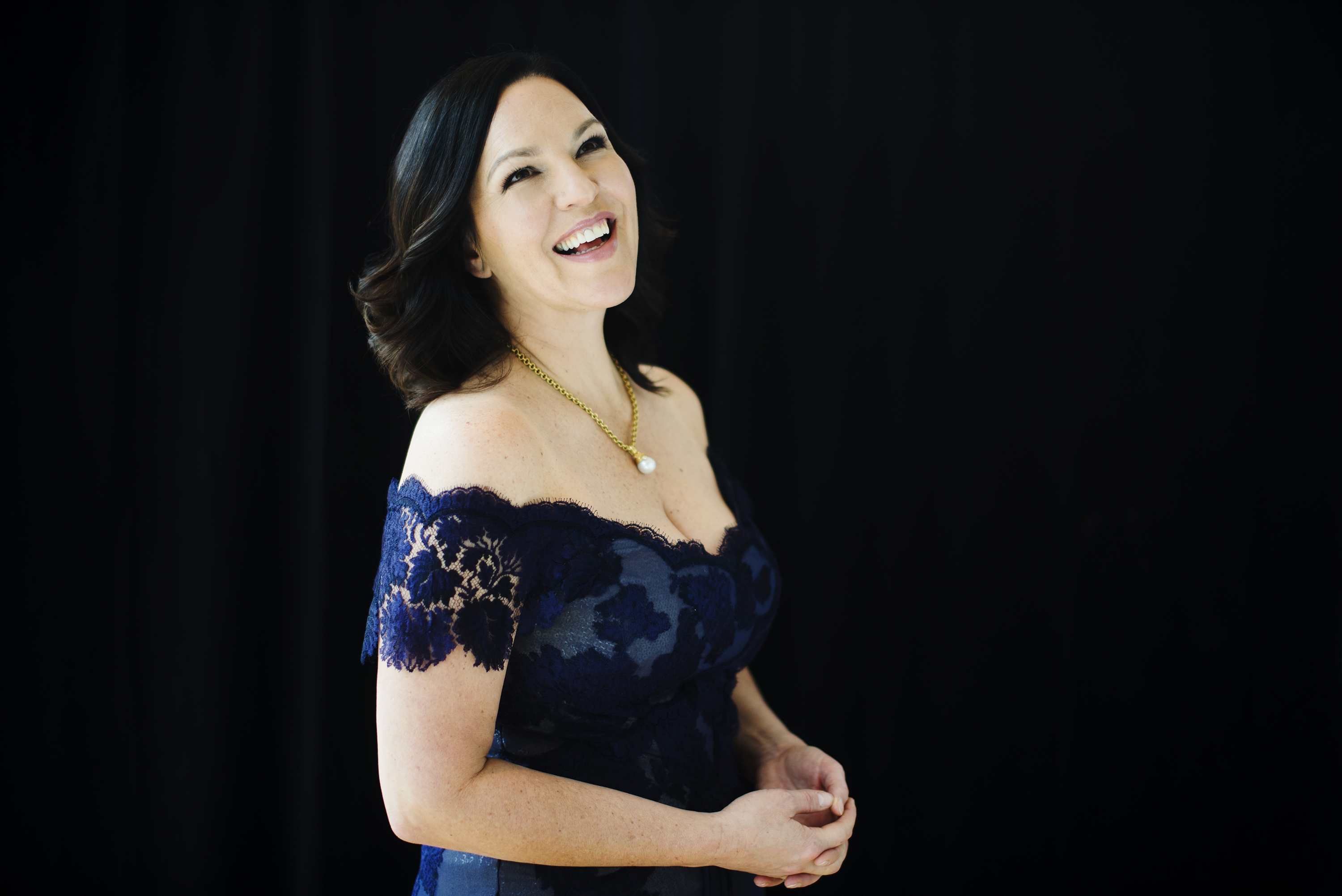
BARBARA HANNIGAN COMES TO TORONTO SYMPHONY’S NEW CREATIONS FESTIVAL FEBRUARY 28-MARCH 7: AN INTERVIEW WITH THE CANADIAN SOPRANO CONSIDERED BY SIMON RATTLE AS “ONE OF THE BEST MUSICIANS OUT THERE”

Photo by Raphael Brand

James Strecker: Since you’ll be performing in three concerts of the Toronto Symphony’s New Creations Festival beginning February 28, I wonder, first, how it feels to have festivals like this that celebrate the contemporary music to which you have dedicated much of your artistry. Also, how does it feel to know that not a lot of such music is programmed into the seasons of major orchestras?

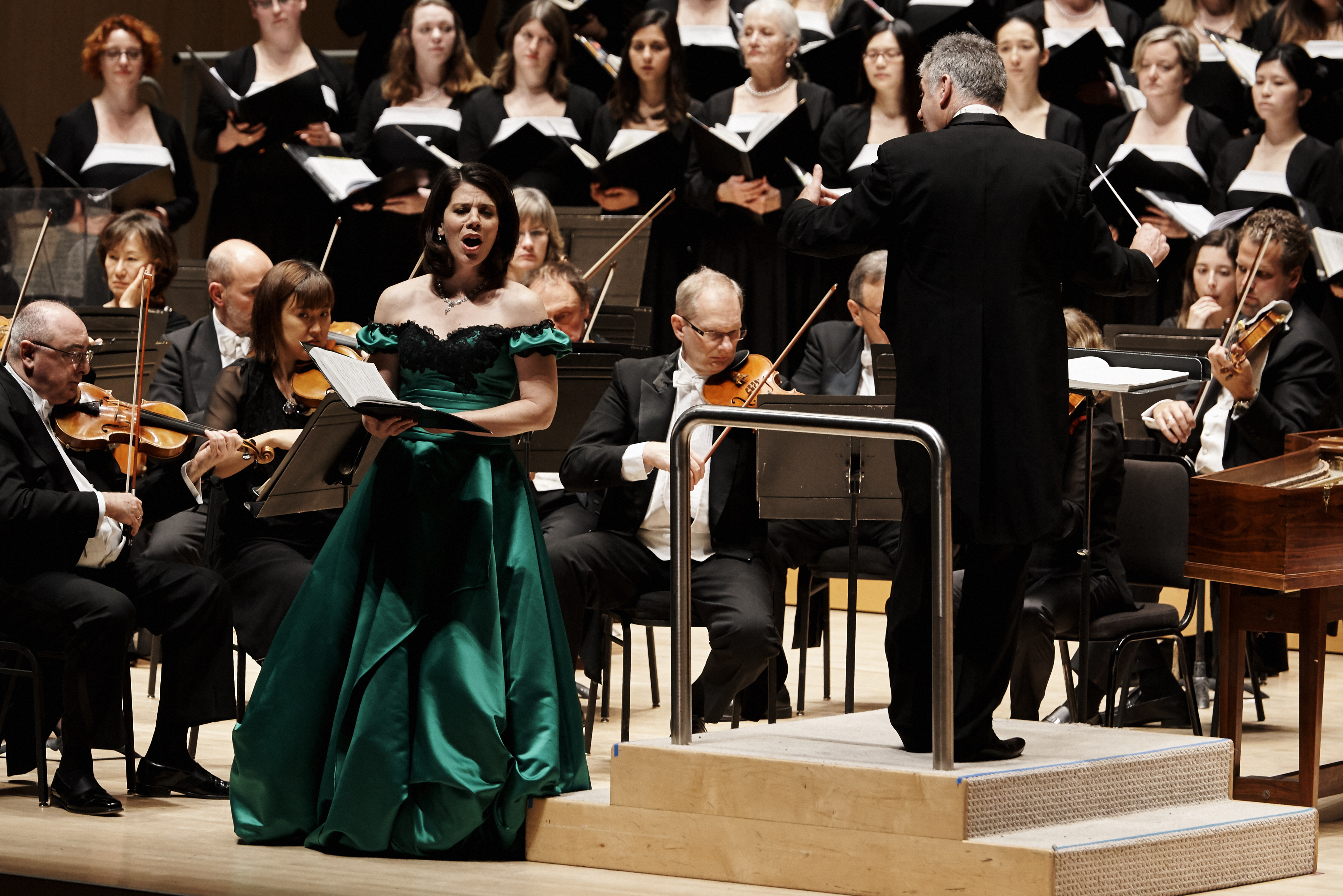
Barbara Hannigan: Well, I love to know that the music I believe in is being played, and that audiences are moved by it. But frankly, the works I am performing here are indeed programmed into the seasons of major orchestras. The Abrahamsen let me tell you was a Berlin Philharmonic commission (our premiere was Dec 2013) and in its first two years I’ll have performed it with 10 major orchestras. Written on Skin has been performed at major opera houses all over Europe, and we have consistently experienced sold-out houses, even at Covent Garden in London, where we’ll return in 2017 due to popular demand. There is certainly a place for modern music. This season I’ll sing Vivier with Vienna Phil and Grisey with Berlin Phil, so I do think the modern pieces are being played by the mainstream organizations. Sometimes I need to work hard in convincing the orchestras to programme the pieces, but that is getting easier.

JS: The first concert begins with A Mind of Winter for soprano and chamber orchestra by composer George Benjamin, a gradually haunting work which, from my first hearing of it, seems to suspend the listener in isolation. What does the work mean to you as an artist and, if such separation exists, as a human being?

BH: A Mind of Winter is the only “new to me” piece on this festival and I am totally enjoying preparing it. You are right – it is about isolation, solitude, and about deep listening. It makes me think a bit of Glenn Gould and his love of the Canadian North. There is a process of crystallization which I feel within it, and also a very human problem, that of loneliness.

JS: In the second concert, you’ll be singing Let Me Tell You by Hans Abrahamsen, an orchestral song cycle in which Ophelia from Hamlet “tells her story.” You premiered the work in Berlin just over a year ago and have performed it maybe eight times since, so how has your relationship with the work developed since then.

BH: This work fit me like a glove from the moment I started work on it. I remember opening the score and weeping for joy and something else, I don’t know what. I sang it from memory at the very first rehearsal with orchestra, and that was necessary, for me, but very scary. Now I feel as if I am improvising the piece, as if I am telling the story with a freedom -and accuracy, I hope- which only enhances the intimacy and poignancy of her story. And I love to perform it with different orchestras and conductors because every group is different and every conductor brings something special and new to it.

JS: Henri Dutilleux and Evelyn Glennie each once explained to me the process of letting a piece they composed or premiered, respectively, then go off into interpretations by others. How do you feel about a work like Let Me Tell You or Written on Skin having a life without Barbara, especially since you had so much to do with their birth?

BH: Indeed, both pieces are very personal for me. But what I wish for them is only that the other eventual singers will give them the care and attention that I did, and that they trust the scores. This is very important. The score doesn’t need “interpretation”, it needs to be bathed in light and seen.

JS: How have you become aware of new dimensions of being female over time through the roles and compositions you’ve taken on? How does such awareness make its presence known in your everyday life?

BH: I don’t think about being female, as a musician. Not very often, anyway. In music we are more like “creatures”, and even when I play a character like Lulu, known to some as a femme fatale, I do not think of her like that. She was neither seductress nor victim, she was much more than that.

JS: I’m also looking forward to George Benjamin’s opera Written on Skin which world-premiered in Aix-en-Provence, Britain-premiered at the Royal Opera House in London, and will Canadian-premiere in Toronto on March 7, all with you as Agnes. How is Written on Skin an important work, first of all for you and secondly for an average opera audience, if there actually is such a creature?

BH: I think it’s better that I don’t try to answer that in too much detail -who was it that said that “Talking about music is like dancing about architecture?” The piece’s success on so many levels speaks for itself. The staging is incredible and we will give the North American staged premiere this summer in New York. But even concertante, especially because we have the staging so deeply in our psyche as singers, it clearly is a powerful story, almost like a thriller.

JS: What should the audience give of themselves at this performance of Written on Skin?
BH: Well, they, like we, are witnesses. So listen, look, be open.

JS: What kind of training does one singer need to do both Mozart’s Don Giovanni and Ligeti’s Mysteries of the Macabre? Are we dealing with the same vocal issues and the same issues of temperament in the performer in both cases?

BH: Absolutely, it is the same technique for all singing. One could never sing Ligeti or any other contemporary composer without the technique to back it up.

JS: What standards of personal integrity do you bring to a decision to perform a new work?

BH: Hmmm, I never thought of it like that. I am drawn to the composer’s voice, and the urge to collaborate together can come about it so many different ways. I am a muse for them, during the creative process, and later, as I learn and prepare to give the score its “birth” and bring it up through childhood, I become the composer and so many other references, as I give light and breath and voice to the page. The path I have been on these last 20 years is sometimes not easy – one doesn’t know what one will get- and it is risky, therefore, to agree, sight unseen, to give world premieres. Sometimes, right up until the premiere, I don’t know how I feel about the piece. And at other times, I am 100% consumed by it, heart and soul, from the moment I receive the score. It is an exciting path and a responsibility. If I only was performing music that has been tried and true, it would be a very different life.

JS: Does contemporary new music reflect the contemporary world, does it evolve from that world, does it lead that world?

BH: I think all music can reflect society and our contemporary world.

JS: In your experience of the more traditional repertoire, how does one keep the work fresh with its original life energy, all while bringing individual imagination to it and without violating the original in some way?

BH: I think the secret is always to go from the score, not from tradition or convention.

JS: You do conduct while singing and I wonder, as you do, how each benefits and what each might lose from these two persons in one. One gain I suspect is that, since you take the music through you as a singer, you can offer an inspiring presence in voice not available from most conductors. Please fill me in.

BH: This is hard to explain, because the audience only sees the finished product. First rehearsals with the orchestra are very different than where we end up in performance. Even though the body of the orchestra can be large, we try to achieve a kind of chamber music. The players have more responsibility than usual, and it works well. I have to be careful with my voice during these kind of programmes, as speaking to a large group and singing the repertoire takes a lot of my vocal energy, and I can find my voice much more tired than if for a “normal” concert. So, I try not to speak too much!!

JS: Some reviewers, at least as far as I’ve seen, tend to describe your performances in enthusiastic language that reaches beyond the complacency of habitual response to classical music and more into surprise. You seem to go places that one doesn’t see that often in concert hall performances. Since the word risk is common among artists, I’d like to know how that notion fits into your life as a performer. Or does it?

BH: Risk – yes, an important factor. Risk, realizing that things may not turn out as one might have expected, for better or worse. These kinds of collaborations are fresh air for all of us – onstage and in the audience.

JS: What do you find fruitful and what do you find difficult in dealing with students of voice and how do you find an effective means of communication with them?

BH: Last summer I gave masterclasses at the Luzern Festival, as part of my residence there as “Artiste Etoile” there, and was working with a hand-picked group of wonderful young artists. This was ideal for me since they were there to work with me and all were focused, prepared, eager, and open-minded. I think working with each person is different and we need to find the key to what works for us. With some singers, I want to communicate on a very abstract level and, with others, be very specific technically.

JS: You’ll be returning to Toronto on October 7 and 8 of 2015 in your Canadian conducting debut. Any comments?

BH: Looking forward!

JS: Finally, allow me to take this leap. From watching your performances as a conductor-singer, especially with your playful and physically articulate presence on stage, I suspect that you are leading us to future concerts where we as the audience will get up and move and dance to the standard classical repertoire as we listen to it. Does this make sense to you or is my morning coffee doing some kind of hallucinogenic stuff on me?

BH: You need to drink less coffee.

JS & BH: (Laughter)

Posted in Interviews from Music, Uncategorized | Tagged , , , , , , , | Leave a comment

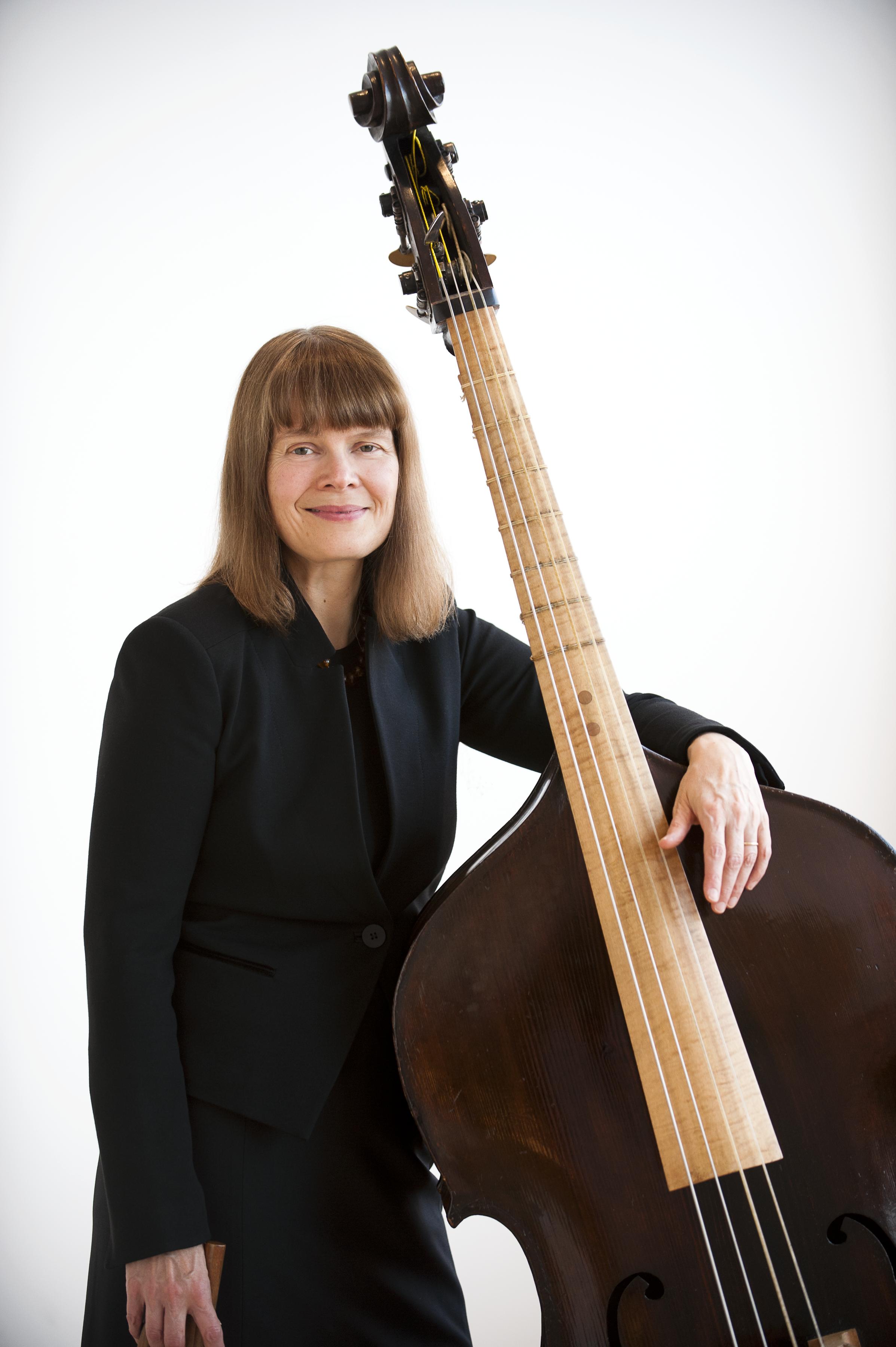
ALISON MACKAY OF TAFELMUSIK: AN INTERVIEW WITH THE AWARD-WINNING CREATOR OF THE GALILEO PROJECT, HOUSE OF DREAMS (REMOUNTED FEBRUARY 11-15), AND THE UPCOMING J. S. BACH: THE CIRCLE OF CREATION MAY 6-MAY 10).

Photo by Sian Richards

Alison Mackay is the recipient of the 2013 Betty Webster Award for her contribution to orchestral life in Canada. She has played violone and double bass with Tafelmusik since 1979 and is the creator of a number of multi-disciplinary and cross-cultural programs for the orchestra. Her creations have toured around the world and her Galileo Project has been “honoured in Australia with a Helpmann Award for distinguished artistic achievement, and by the International Astronomical Union with the naming of an asteroid, “197856 Tafelmusik.” I interviewed her in January, 2015.

James Strecker: The first of your multi-media creations I was fortunate to see was The Galileo Project and I got the feeling that you like to dive into an era or world and create from within it with a sensitivity to its many dimensions. I won’t use the term creative process, but is this what happens or is it something else?

AM: First of all, thank you so much for your interest in the Tafelmusik special projects! Yes, after the basic concept for a project is chosen, I spend a long time listening to repertoire and reading about cultural history in the University of Toronto library. For instance, I knew that our House of Dreams concert would be about painting and music in the 17th and 18th centuries, but beyond this I hoped to find a thread to give the concert more cohesion and focus. After doing quite a bit of reading about key players in the world of baroque art dealers, I began to see a pattern emerge about private collectors who also had musical connections and I decided to try and give our audience members a taste of the experience of being guests in the homes of art and music lovers.

Because I was able to choose five homes from the period that still exist today, we were able to forge partnerships with each of the present-day owners/administrators and we were able to go and take photographs of original rooms. Then we acquired high resolution images of the paintings that were originally in the rooms (all now in museums) and digitally put them back on the walls of the rooms. The final step was to put musicians playing live into the rooms, so that it would be possible to experience an amazing painting by Watteau at the same time as hearing the latest music by Handel.

JS: What kind human connection did you sense with the composers and with the authors of the texts recited in The Galileo Project?

AM: The composers and the scientists whose texts were recited in the concert represent the kind of striving of the human spirit that Galileo mused on in his Dialogue on the Two World Systems when he spoke about the written word and by extension written music being able to communicate important ideas and profound creations across barriers of time and place. At the same time, the fascinating detail of what scientists and composers ate and wore, what kind of paintings they loved and what kind of bequests they made in their wills helps us to enter their world in a more personal way and form an impression of their everyday lives. It’s fun for the musicians and the audience alike, I think, to feel this connection to the rich tapestry that the music we love is a part of.

JS: Is one correct in imagining that you changed in how you see life as a result of creating The Galileo Project and your other productions, or were these creations more of a continuum of who you already are?

AM: I have definitely changed! It’s been so energizing to work on these projects with my amazing colleagues and so inspiring to come in contact with theatre designers, scholars and scientists around the world. These projects are very much the product of the internet age since it’s now possible to immediately identify and correspond with experts around the world in many fields. My world view has been opened up tremendously and I am very humbled by the generosity of so many people who wanted to contribute knowledge or images to the projects.

As you can imagine, it’s very thrilling to have a chance to meet some of these people in our travels. For instance, in our recent tour of the Galileo Project to the U.S. there was a man in the audience at Penn State who was the co-founder of the Hubble Heritage Project and he was thrilled to see some of his own beautiful images of the night sky in the context of the performance.

JS: For productions like House of Dreams, the Tafelmusik musicians must memorize nearly two hours of music, so what is the impact on the individual and group by having to play without scores before them?

AM: Memorizing whole concerts of music has had a huge effect on our orchestral life. The countless hours people spend alone or with two or three colleagues working on sections of pieces; the experience of being able to communicate on stage without the barrier of music stands; the possibility of moving around while playing to be in the prime position for the ensemble needs of each piece -these aspects have all made us grow musically and become closer as friends. As you can imagine, there was a lot of hesitation about taking on such a huge task the first time we did it for the Galileo Project, but now we are busy memorizing our third programme, with all the music by Bach, and the musicians are so enthusiastic about the freedom we all feel in the end being able to perform in this way.

JS: I’ve always found visiting the homes of composers –Beethoven, Schubert, Haydn, Brahms and, more relevant here, Handel-to be both a thrilling and a profound experience. Could you tell us how it felt to give music a geographical location in the European houses you chose as well as a connection to specific paintings of the period?

AM: I completely agree that there is something very moving about being in the little study where Handel composed his oratorios or seeing where he slept in his red four-poster bed. I find it even more moving to perform a piece of music in the church or hall for which it was riginally written. We had that experience this summer playing the Bach Magnificat in the St. Thomas church in Leipzig.

JS: Speaking of buildings, what do each of Trinity-St. Paul’s and Koerner Hall do for the music you are playing there? Which do you prefer, or does it depend upon the music?
AM: Koerner Hall is a beautiful venue with gorgeous acoustics, particularly for the larger orchestra we have when we play Beethoven. But I think Trinity-St. Paul’s will always be our first love for baroque repertoire. The sound in the renovated space is incredibly beautiful and the seating in the hall makes us feel such a close connection with our beloved audience.

JS: The blurb for your new work, -J. S. Bach: The Circle of Creation -creation asks, “Who are the baroque artisans – the papermakers, violin carvers, and string spinners – who helped J.S. Bach realize his genius?” and one assumes that the answers will be revealed in May of 2015 when the work premieres. This sounds like a fascinating project, so please tell us about the work and how it developed.

AM: The Circle of Creation examines Bach’s material world and all the things that had to happen between the moment a musical idea came into his mind to the point of an actual performance for the public. So we take it step by step, first learning about the family of paper makers in a tiny Bohemian village in the NW corner of the Czech Republic who supplied Bach’s paper for five years -this is known because of research into watermarks in paper- and how the paper was made. We learn about how Bach made his ink and began composing by ruling lines on a page with a five-pointed “rastrum” to make manuscript paper. We learn about the Leipzig instrument makers who worked with Bach to create his instruments and we actually see a cello being created, specially by Quentin Playfair, from the plain cut wood to the finished instrument. This process will unfold while Christina Mahler and Allen Whear play some of Bach’s most exquisite music for solo cello. We’ll see amazing footage of gut strings being made from sheep intestines and the inner workings of harpsichord jacks. We’ll also learn about the financial aspects of musical life in Leipzig -the tax base which provided the funding for instruments, salaries and housing for the town musicians, and the debt which the city owed to highly-taxed Jewish merchants at the famous Leipzig trade fairs.

I’ve been enormously grateful to the Bach Museum in Leipzig for helping me with this project with images and advice. And while we were orchestra-in-residence at the Bach Festival in Leipzig last June, we spent a day filming the streets and buildings that Bach would have known. I’m hoping that the audience will be able to have a sense of what it was like to be a music lover in Bach’s Leipzig.

JS: What were your feelings about Bach at the outset of your career and what are they now?

AM: Bach has been my favourite composer since I was a child, long before I knew many of his works or anything about period performance. And now, the more I learn bit by bit about his music, the more astonished I am at his range of emotions and the complexity of his writing. Bach is especially rewarding for double-bass players because he writes more complex and interesting lines than any other composer of the time. You always feel that, as well as being a foundation for the orchestra, you are also a melody player in dialogue with every other player.

JS: I can’t leave without knowing what the initial inspiration was in each case for The Galileo Project, House of Dreams, and J. S. Bach: The Circle of Creation. What kicked each project into gear?

AM: The idea for the Galileo Project was proposed by eminent astronomer and long-time Tafelmusik supporter Dr. John Percy of the University of Toronto. He and the Dominion Astronomer Dr. James Hesser were part of the organizing committee for the Canadian activities of the International Year of Astronomy which marked the 400th anniversary of Galileo’s first use of the astronomical telescope. These two amazing scientists and wonderful friends had enjoyed some of our earlier narrated Tafelmusik concerts which had placed our repertoire in a historical context and they thought that we might like to experiment with the world of 17th and 18th century astronomers.

The Galileo Project was our first experiment with memorizing the music and staging the concert with a theatrical set and lighting design and when I saw the emotional impact that the combination of music, words and images had, I thought it would be very exciting to do a show about baroque painting. And set and lighting designer Glenn Davidson, projection designer Raha Javanfar, and stage director Marshall Pynkoski made such a wonderful team that I wanted to work with them again.
With the third project I thought it would be wonderful to be able to immerse ourselves in the music and world of Bach and at the same time introduce the audience to the way our instruments are built and how they work with each other in the orchestra.

JS: Any idea what your next projects will be?

AM: Our next project is the creation of a coffee house in the year 1740, which will magically transform back and forth from a cafe in Leipzig to one in the Syrian city of Damascus. Both of these important trade cities had a rich culture of coffee-house life where stories were told, music was performed and the daily newspaper was read aloud to patrons. We’ll have a guest ensemble of Arabic musicians and two narrators -there’s a great deal known about the social context for coffee drinking in both cities, so I think it will make for an interesting script.

JS: You have been with Tafelmusik for thirty-five years –congratulations- and I wonder what developments and changes you have perceived in the personality of the orchestra over that time. How have you developed as a result of being part of Tafelmusik?
AM: Yes I’ve been unbelievably lucky to be part of this wonderful ensemble for so long. We’ve had great opportunities for recording, touring and interesting projects since the beginning, but I think as the years have gone on there has been tremendous artistic and musical growth. Each musician in the ensemble has so much to offer in terms of knowledge, wisdom and performance, and Jeanne Lamon has been so wonderful at keeping the whole cohesive but allowing others to have strong opinions and make their contributions. For me personally it’s been a tremendous time of artistic growth because I was given so many programming opportunities.

It’s an exciting time as we discern our new path, seeking a new leader, and it will be fascinating to see what adventures the new person will take us on.

JS: Is it true that Tafelmusik has been nominated as the most magical band on the planet?

AM: Not that I know of! There are so many magical bands on the planet! But we did have an asteroid named after us, “197856 Tafelmusik – and that was very exciting!”

Posted in Interviews from Music, Uncategorized | Tagged , , , , , , | Leave a comment

THE ART GALLERY OF HAMILTON: 3 EXHIBITIONS AND A VISIT OF MEMORIES, AESTHETIC PLEASURES, AND DISCOVERY

Some decades ago, even before the Leafs won their last Stanley Cup, I as a young fellow used to hop on my bike in Hamilton’s east end and peddle seven miles to visit the Art Gallery of Hamilton in our city’s far west. Over time, a number of works in the Gallery’s collection have become part of my aesthetic consciousness and, happily, some are currently on display in the AGH’s centenary exhibition -Art for a Century: 100 for the 100th. If you haven’t already met, allow me to introduce you to a few of these.

First The Grand Windsor Hotel of 1939 by Reginald Marsh, probably for a dreary- sketched depiction of solitude, poverty and hopelessness that makes one feel vulnerable. For some reason, I’ve always also connected with several American painters who were Marsh’s contemporaries –Ben Shahn, Thomas Hart Benton, Edward Hopper and Charles Burchfield whose works, alas, reside elsewhere- maybe because the forties as a decade resonates most in my imagination. It was a hell of a time for the world, but at least the arts took a stand for being human.

Next we have Robert Whale’s view of Hamilton of 1863, probably because, at the time of my first viewing, Hamilton was not an environment of pastoral bliss depicted here but instead Steeltown where our industries dumped polluted smoke into the air each night. In 1863, one could probably inhale the lush growth of nature and not the foul choking fumes of industry, and it was striking to know that once it had been that way.

Forbidden Fruit of 1889 by George Agnew Reid, which depicts a young lad lying in the tallish grasses and intensely absorbed in a book, was and is a favourite of many from this collection, I am told. Who hasn’t had the experience of entering the world of books – especially if they are forbidden – and being so much consumed by the new realities offered there that one could not return to this world?

William Brymmer’s The Vaughn Sisters of 1910 still teases one’s curiosity about the two young ladies’ inner world. Who were they back then, when I first saw them, and who are they now? One pleasure offered by a portrait is how it demands that the viewer submit to the world of the painting’s subject. With The Vaughn Sisters we have two distinct personalities, certainly present but also seductive in the seemingly unreachable remoteness of their thoughts. One is drawn to their world, but one is always an outsider. Moreover, who understands women?

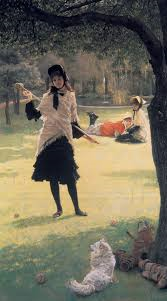
Such is the case too with James Tissot’s Le Croquet of 1878 when, at least in wealthier circles, one’s daily attire was not simply clothing but an event as well, an elegant one at that. With this Tissot, one has options in the degrees of charm, seduction, mystery, and aesthetic pleasure afforded by the painting’s subject. She is a young lady of black stockings, a misty vagueness in her eyes, and delicate fingers caressing a croquet stick as a medium sized white dog—Alaskan Husky? – looks on. Once in the 1980s, I discovered that a gallery in London had two engravings of the Le Croquet painting for sale and bought one. When I told friend Julius Lebow, owner of the then Westdale Gallery of my purchase, he immediately bought the other.

But not all of this visit was down memory lane. Joyce Wieland’s thoroughly enjoyable Swan’s Cupboard from 1990 proved that an installation, unlike some, can burst with life and humour and pure joy in its creation. William Kurelek’s This is the Nemesis from 1965 is fiery and apocalyptic and disturbing. Emily Carr’s Yan Q. C. I. from 1912 is atypically vibrant with singing hues and makes one want to give familiar and more darkly-hued Carr paintings another look. The Riopelle from 1960 feels bright and bold with its wider than usual white areas oozed across the surface and with its explosive and anti-stasis statement. It is also a pleasure to see Gustave Courbet’s Le Puits Noir of 1870, a Leger from 1947, and much else. There is also a delightful work titled Crème de la Crème de la Crème by General Idea. I smiled at this one–and I’m taking the tour next time to find out what those three poodles are doing? Runs until April 26,

Another current exhibition at the AGH until February 8 is Painting Hamilton. It is reassuring to experience ten such imaginative sensibilities as those whose works here display a compelling variety in intention, method, and attitude. Lorne Toews for one “is interested in depicting human form’ but what I also experience is four people, compassionately perceived by the artist, whose eyes penetrate through me. Manny Trinh states “these works come out of a desire to capture memories of my childhood in Vietnam” and, as he ably negotiates the shapes and lines and colours in which people live, he forces the viewer, overwhelmed by the dazzling complexity of edges and hues, to inhabit them too.

With Christina Sealey’s Anna, one anticipates intense gravitational movement in both space and emotion. One senses this: it’s happening and also about to happen. Catherine Gibbon, meanwhile, offers 16 square feet of ambiguous fire-bursting landscape in, surprisingly, chalk pastel and it really does burn. Charles Meanwell’s huge works offer an interesting interplay of method and depiction and can be massive and crude and undeniable, all with a touch of audacity. Five more artists -Jennifer Carvalho, David Hucal, Daniel Hutchinson, Matthew Schofield, and Beth Stuart- also bring creative issues to the fore with intriguing results that sometimes please and sometimes challenge. A good show here. Until February 8.

That most influential of artists, Paul Cezanne, painted over 300 still lifes in his day and The World is an Apple: The Still Lifes of Cezanne is, typical of the AGH, a rewarding plum of a show in concept and presentation, one that demands a repeat visit. “I want to astonish Paris with an apple” declared Cezanne, who came to Paris in early 1860s. One grouping of paintings here, four being examples of the more mainstream and au courant approach of others and three by Cezanne show the artist already contradicting the methods and attitudes of the conventional going rate of aesthetics

In the next room, second of two if you’re counting, there are three paintings by Van Gogh, Braque, and Emile Bernard, all intended to provoke comparative insights. Three of the paintings by Cezanne are not of fruit but of skulls, and this arrangement seems to declare both that a skull is an apple is a skull and Cezanne’s view that “Objects never cease to live.” Two paintings of flowers in a vase from 1880 and 1900 to 1903 respectively show the development of a driven painter’s mind to discover what he and his art can do.

During my visit, a large group of students went off individually to sketch specific paintings by Cezanne-and that is how it should be in any culture worth its salt. The arts, past and present, have much to teach us. Over and over in its many compelling exhibitions I’ve enjoyed during recent years, the AGH has made that point excitingly clear. I am indeed a junkie for art -and a good fix is always available, as it was many years ago, at the Art Gallery of Hamilton. Cezanne runs to February 8.

Posted in art & photography, Uncategorized | Leave a comment

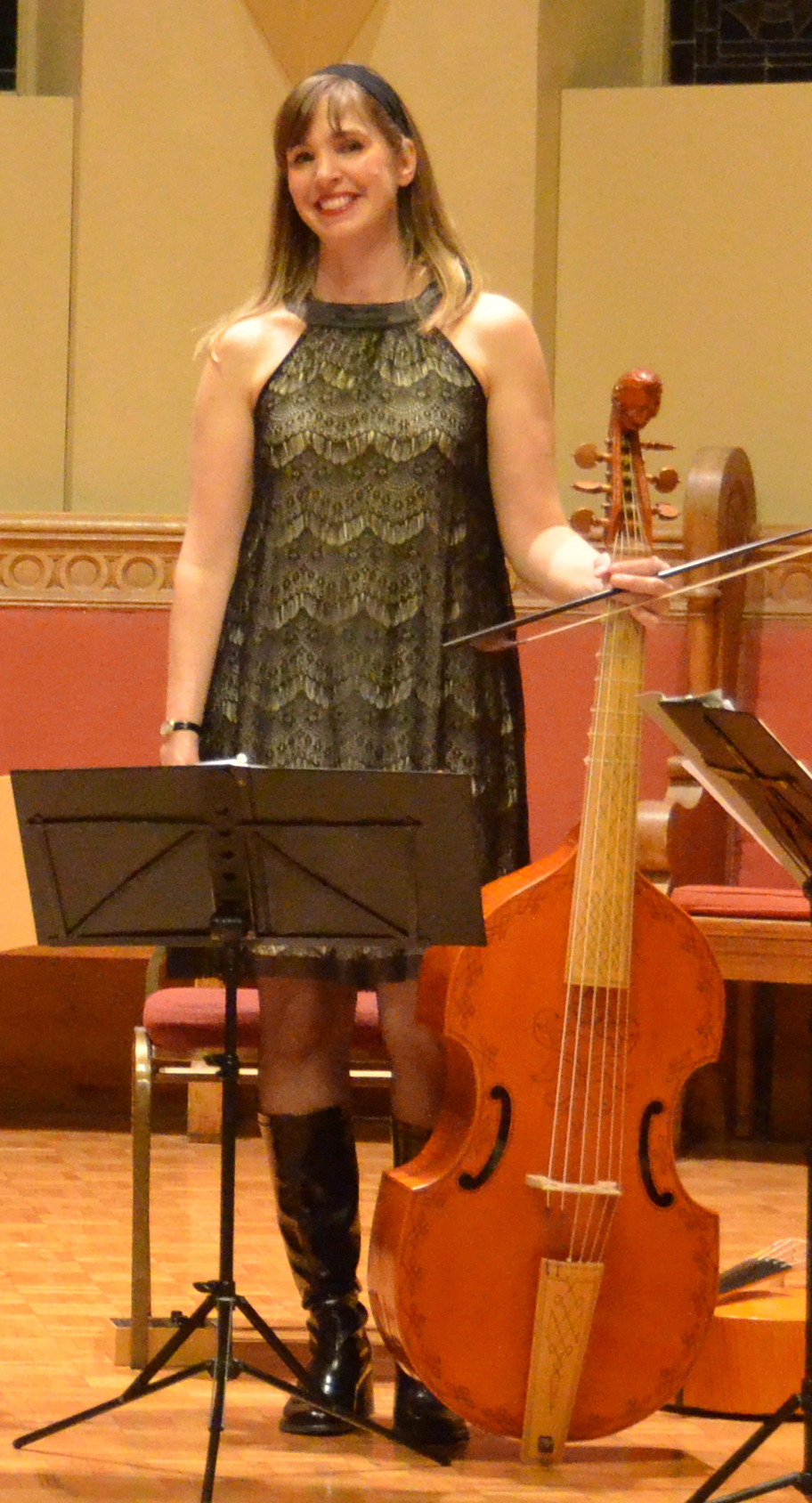
AN INTERVIEW WITH JOËLLE MORTON, MUCH-TRAVELLED VIOL PLAYER, PERIOD MUSIC SPECIALIST, SCHOLAR, EDUCATOR AND FOUNDER OF SCARAMELLA IN TORONTO

James Strecker: To begin, thank you so much for Scaramella’s recent Hamilton concert of music by William Lawes, in the series created by Hammer Baroque. It was a night of revelations and of constant musical surprises and one certainly had to pay consistent attention to the creative mind of Mr. Lawes in action. It was delightful and fun and poignant for me, so what musical qualities and methods in his music do you respond to as a musician?

Joëlle Morton: The music of William Lawes is particularly appealing for musicians to play – perhaps even more so than for an audience to listen to – because of the melodic and harmonic twists and turns that he takes, and how he passes material back and forth among the various voices. It’s a little bit like an ‘inside joke’ and as a player you hear instantly when someone else quotes your line, or takes it away from you. In rehearsal I commented to our fabulous violinist Paul Zevenhuizen that it felt like we were an old married couple, because we kept ‘finishing each other’s sentences!’ Lawes is tremendous fun in that regard and, of course, when you enjoy your colleagues’ company as I do, these exchanges are particularly meaningful.

JS: I find that baroque music is very playful in its complexity, and dense with creative riches, and it often can transport me to an elevated and almost ethereal world. What is it about baroque music that fuels you as a baroque specialist and as a human being?

JM: What we nowadays define as the baroque era spans a period of close to 200 years (c1580-1760), so there is of course a huge amount of variety to the music that was produced during that period. The period started, and ended as most phases do, with rebellion against pre-established forms. But it’s more than just the ‘newness’ and ‘forms’ and ‘language’ of this 200 year period since, at that time, there was additionally great variety between different countries and cultures. Each region had its preferred instruments and combinations of instruments, as well as a vogue and taste for specific genres of music. So a program of music from the baroque era is as much an exploration of culture and style as it is a bringing to life music that has not been heard for several centuries. Of course, the fact that much of the music we play is not well known is also an added component to the ‘adventure’ and it’s very stimulating to blow the dust off a manuscript and come up with an interpretation for something you haven’t already heard many times!

JS: What can baroque music offer to a modern audience? Could you perhaps suggest three or four compositions that an uninitiated listener might give a go in order to become eternally seduced by baroque?

JM: As I mentioned just now, there is so much variety to the music of this period, that I believe there is surely something for everyone. I guess it’s a little like going to an art museum: you may not like every picture that you see equally well, but there’s surely something that will speak to you if you allow it the opportunity. By way of illustration, here are six vocal pieces from the baroque. Some people are pre-disposed against vocal music, but I hope even they might find something in this selection that appeals. Some of these performances are presented in a very historically pure way, as true to the original as possible, but others have playful elements, or add modern instruments, making them representative of our own time.

Claudio Monteverdi – Sì dolce è’l tormento: https://www.youtube.com/watch?v=J6y6VToRwkw&spfreload=10

anon – Ciaccona del Paradiso e del Inferno (Milan, 1657): https://www.youtube.com/watch?v=EZ-VsKB_tNw&spfreload=10

François Couperin – Leçons de tenebre: https://www.youtube.com/watch?v=5RE3hy6PJaQ

Johann Sebastian Bach – Erbarme dich from the St. Matthew Passion: https://www.youtube.com/watch?v=aEHIgjoueeg

George Frideric Handel – Author of Peace: https://www.youtube.com/watch?v=mGXXLlvQXvM

Giovanni Battista Pergolesi Stabat Mater: https://www.youtube.com/watch?v=_2zc0wTORSI&spfreload=10

JS: Please tell us about the instruments you play, their unique features and demands and what delights they offer to you as a musical interpreter.

JM: My areas of specialty are historical double bass instruments, and members of the viola da gamba family. My first musical training was as a modern double bass player, and so, when I discovered early music in grad school, I was first drawn to ‘large’ historical instruments, those that were either part of the violin or viol families. But increasingly I began to specialize on viols. The viol family is made in many sizes, from tiny through huge, and most people who play viols play more than one size. In fact, for many of us, that is part of the appeal. By changing what size instrument you play in an ensemble, you get to change what kind of ‘musical persona’ you embody. I of course still enjoy playing bass lines, but it’s also very satisfying to play melody lines on a treble instrument. And truthfully, in much viol consort music I find the best parts to be the inner lines! So this ‘keeps things fresh’ for me.

JS: Tell us about your musical background. What were the key points in your life as a musician?

JM: I was very serious as a modern double bassist, and for a long time expected to make a career as an orchestral player. In fact, I did play as a member of the Toronto Symphony for a short while, and I also studied ‘solo’ and ‘chamber’ double bass in Europe on a Chalmers fellowship. It wasn’t until I was in my mid-20s that I discovered early music, and it came as a revelation. Everything was chamber music oriented, and I found that the intellectual approach of this field –from preparing my own musical edition of a piece to reading about how instruments were played, and thinking about all kinds of questions of interpretation and presentation– was really appealing. I’ve never looked back.

JS: What makes a group of musicians function well together? How does fluid interaction work as it did in the group you had for the Lawes concert? What does a musician contribute and what does a musician receive back from the others?

JM: The beauty of chamber music is that it is so much more than the sum of its individual parts. Each musician practices at home and gets their part to the highest level of their ability. But it’s really in rehearsal with others –and also in performance, responding to an audience– that the ‘magic’ happens, learning from others’ insights and responding to different musical lines. In baroque music there is additionally an accepted level of individuality that is expected and necessary in bringing the music to life. Early music performers are expected to personally interpret the music, and to inflect it according to their own personal mood and taste. As a result, the piece can be quite different from one day to the next, because the performers themselves are different! And an audience gets something that is truly one of a kind.

JS: Scaramella is ten years old this year and I wonder how you have managed to keep it running. What problems have you had in drawing an audience for music that many do not know and in finding funding from sponsors and government bodies? I would assume that government bodies would be very supportive, or am I wrong to thus assume?

JM: Over the course of Scaramella’s ten-year history we’ve been extremely fortunate to draw the support of a loyal audience and private donor base. Much of our audience genuinely values the unusual programming and approach that Scaramella takes, one that is not available elsewhere in Southern Ontario. Our ticket purchasers have also been extremely generous with private donations. We are truly grateful for it, since public funding to Scaramella is negligible or non-existent. We have been consistently shut out of funding from the provincial granting agency and, though initially supported at a nominal level, we have also been denied the last two seasons by the municipal one. Our perception is that increasingly, taxpayer dollars are not being used to subsidize traditional European art music projects, and that large organizations are generally prioritized more highly than smaller ones. This is a huge challenge to us since even with maximum attendance, ticket sales cover only approximately one third of what it costs us to produce these events. For the past eight years Scaramella’s budget has remained constant, but it is increasingly harder and harder each year to raise the funds we need at this minimal level, and there is seemingly no opportunity for growth.

JS: The creation of Scaramella meant major changes for you, I assume, as a professional musician. What were they? Any regrets? For one, I imagine that you must coordinate a great number of people as well as maintaining your own career.

JM: A career in early music is necessarily quite different from an orchestral one, but I have no regrets. As a free-lance player I am able to work with many different ensembles and colleagues and that has proven a great joy in my life. For example, the recent Lawes program was inspired by my dear friend, Julia Seager Scott. Lawes’ Harp Consorts are truly a showcase for the harp, and I couldn’t/wouldn’t have programmed them without knowing that my very accomplished and hard-working colleague was willing to tackle them! In a similar vein, our talented theorbist Madeleine Owen was someone whose playing I’ve admired from recordings for many years, but we had never worked together before. This was the perfect opportunity to get to know her, and at the same time to introduce her to a Toronto audience.

JS: What’s up for Scaramella in 2015 and, since your musical activities are many, what will you yourself be doing for the coming year?

JM: There are two more shows programmed for Scaramella this season. On January 31, we’ll be doing a concert of German late 17th and early 18th century music, for the yummy combination of countertenor, two viols and organ. And on March 7, we’re welcoming American baroque flutist extraordinaire Kim Pineda to Toronto for the first time, for a program centered on Telemann’s flamboyant Paris Quartets, and pieces by the four 18th century French musicians who first performed them and made them so popular. Outside of Scaramella and other free-lance performing, I am also active as a teacher and writer. In 2015, I will be traveling to Australia and Germany for viol workshops. And early in 2015 I am also expected to finally see the fruits of several years of research, with a groundbreaking scholarly article about the viola bastarda due to be published in the Journal of the Viola da Gamba Society (GB), and two very sizable scholarly performing editions, of music by Orazio Bassani and Bartolomeo de Selma y Salaverde.

JS: What kind of person must one be to survive nowadays as a classical musician?

JM: As is mentioned frequently in the news these days, the face of classical music performance is currently in flux. I don’t really know where we are headed, but it seems to me that for free-lance musicians to be successful these days, they have to be fairly versatile and adaptable and keep an open mind. Above and beyond the ‘practicality’ of that approach, in my experience, most of life’s greatest pleasures emerge serendipitously, and if you’re not keeping yourself primed to spot those moments, they will pass you by.

Posted in Interviews from Music, Uncategorized | Tagged , , , , , , , , | Leave a comment

SALUTE TO VIENNA: AN INTERVIEW WITH ATTILA GLATZ, CREATOR OF THIS NEW YEAR’S TRADITION NOW CELEBRATING ITS 2OTH YEAR OF INTERNATIONAL PRODUCTIONS, INCLUDING HAMILTON

photo by Wilhelm Denk (c) dewi

photo by Barry Roden

James Strecker: First of all, congratulations on twenty years of Salute to Vienna productions. What’s most satisfying for you about this anniversary?

Attila Glatz: Thanks for the congratulations! It is a dream come true, establishing this wonderful New Year’s tradition at first in our new home of Toronto and later across North America. This is a tradition we grew up with in Europe and every year our Salute to Vienna concerts bring back fond memories. It is a pleasure to see so many happy faces in the audience; this is our greatest motivation and what keeps us going.

JS: I know that, when you lived in Europe, you were a long-time devotee of the New Year’s Day broadcast from Vienna’s Musikverein, so could you tell us your reasons for creating Salute to Vienna and what you expected to come of it.

AG: Yes, both Marion and I grew up with the annual Neujahrskonzert. We will never forget how happy we were each New Year’s Day when we sat near the radio listening to the broadcast from the Musikverein. I must admit that I remember the concert most vividly when I was living in Hungary during the terror of the communist era. Listening to that Viennese music year after year, we looked forward to the light it brought into our lives and the sense of freedom it provided from the hardship of those most difficult times. This music is a flame of inspiration for us to carry forward and it is now a cherished responsibility for us to ensure its protection by developing new audiences who will appreciate its beauty and importance for years to come.

JS: I once had a chat with Werner Hink, who at the time was concertmaster of the Vienna Philharmonic, about the distinct aspects of Viennese music and I would love to hear your views on the idiomatic qualities that make Viennese music Viennese. What are the qualities necessary in a musician to play this music as it should be played.

AG: So-called Viennese music, which was written by so many different composers, has a distinct style. Strauss’ music is light, playful, and it makes you feel good. What makes it “Viennese” is that the phrasing is not played exactly as it is written in the scores. The interpretation is somewhat different and it is something that only the Viennese can do. That is why we always bring European conductors to our concerts and also why musicians from various orchestras all over North America love to do this gig year after year.

JS: Could you give us some insight as to the special qualities of the soloists featured in the Hamilton production? Why did you choose them? Should we be surprised to have a Heldentenor, Andreas Schager, singing operetta to us?

AG: This year we have an extended cast for our 20th Anniversary Season. Last year, we produced a PBS special in Vienna, which has already been broadcast 800 times, and this concert featured some fantastic performances including the Vienna Boys Choir. Because of this success, we added the Hamilton Children’s Choir to the cast in Toronto and Hamilton. It is an excellent ensemble that we’re excited to feature.

Regarding the tenor: Heldentenors are excellent at operetta repertoire and they usually sing operetta roles before they move into the Wagner repertoire. Andreas Schager is no exception. Before he became one of the best Siegfrieds in the world, he sang operettas. Now he is working everywhere, including the La Scala with Daniel Barenboim.

JS: There was a time when one could distinguish between European soloists and orchestras and those from North America, and I wonder, from your perspective, if such is the case today.

AG: This certainly still exists, simply because European orchestra musicians are exposed to this music much more during their studies than the students in North America. However, the gap is now much smaller for several reasons. Most top orchestras have music directors from Europe such as Ricardo Muti in Chicago and Franz Welser Moest in Cleveland. Also, a great many American conductors have established themselves in Europe but are working in North America, for instance Kent Nagano in Montreal and Alan Gilbert in New York. There are also some great orchestras in North America which are widely recognized in Europe. That includes the Toronto Symphony Orchestra, as they toured in Europe last summer. I happened to catch them in the famous Grafenegg Festival, just outside of Vienna.

JS: Please tell us about the types of dance and the dancers you have featured in Salute to Vienna.

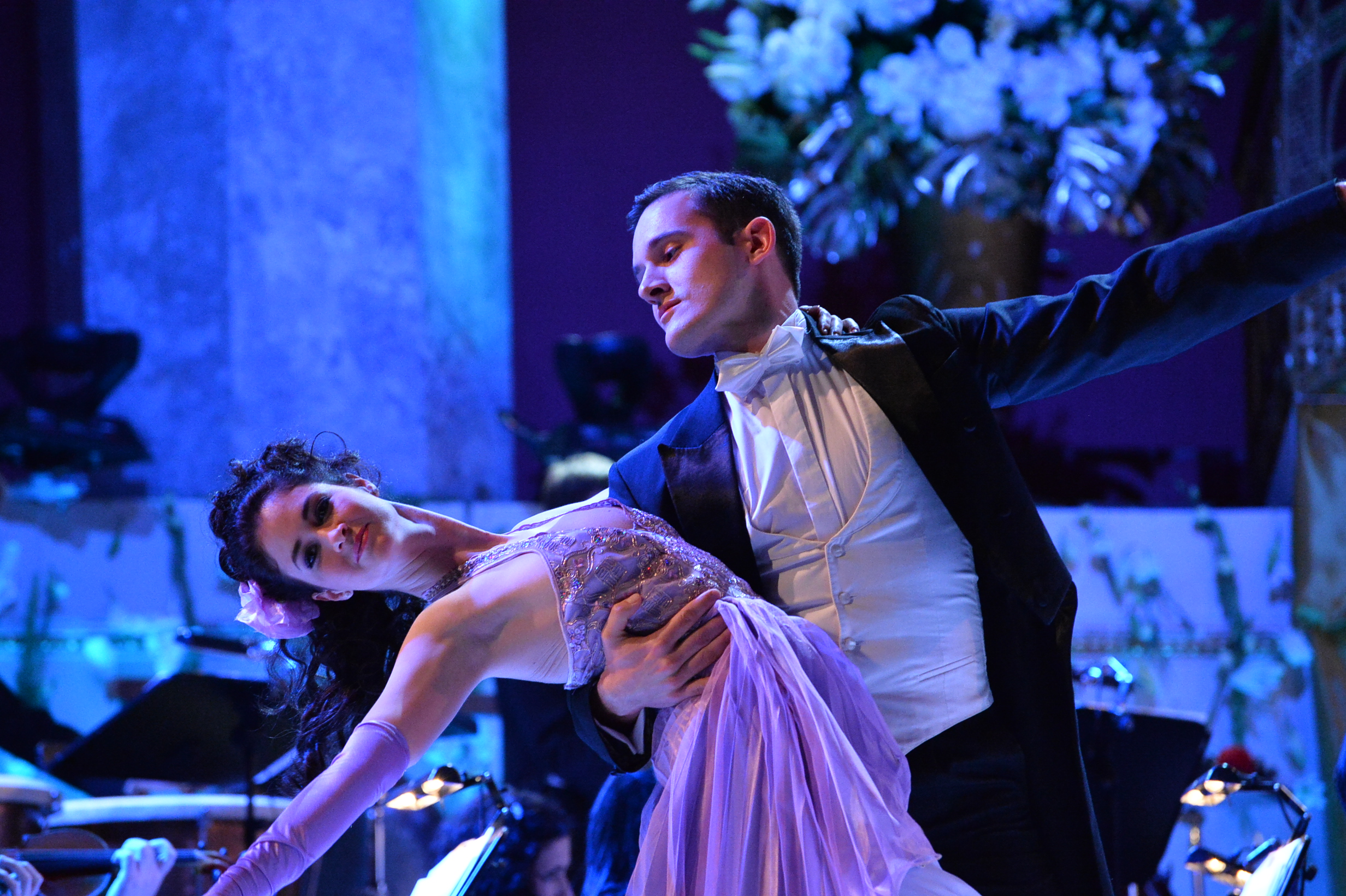
AG: We have two types of dancers for this year. We have engaged dancers from the Vienna Imperial Ballet and several other ballet companies from Hungary, Austria, and the Ukraine. We also have Champion Ballroom dancers from Europe who are award-winning dancers. The two styles blend together beautifully, and give a variety for the audience to enjoy.

JS: Your conductor, Christian Schulz, has most impressive credentials and I wonder what unique skills a conductor must bring to the podium for Salute to Vienna.

AG: Indeed, Christian is a veteran Salute to Vienna conductor and as a principle cellist of the Vienna Symphony, he understands Viennese music perfectly. He is also charming and speaks to the audience between pieces, re-telling interesting stories of Vienna and the Strauss Dynasty. This ability to engage the audience is one of the criteria we look for when we engage the conductors for the various Salute to Vienna concerts around the continent.

JS: Because the Viennese music featured in your production is so richly elegant and seductively melodic, it tends to get performed often. Do you as a producer have to wage war against stereotypes and familiarity, therefore, in producing an annual show, so the audience might experience this beloved music afresh?

AG: This music is always fresh and exciting, however we do change the program and the cast each year. While we don’t have as big a repertoire as the Vienna Philharmonic, we always add new pieces, even by Offenbach, or von Suppe to keep it fresh. Sometimes the conductors suggest pieces which we have never heard and they work. At the same time, we have to be careful what we choose; North American audiences are not the same as Viennese audiences. There are fewer pieces that are recognizable here.

JS: I’ve had a number of profoundly moving experiences in Vienna related to the arts and I’d like to hear your feelings about the city. What does Vienna mean to you and why?

AG: Vienna has been and continues to be a source of inspiration for so many artists, in so many disciplines. For me, the city is a hive of buzzing energy where there is a long history of musicians developing new ideas, celebrating their work and challenging their contemporaries. It is a place that has a legacy of welcoming change, thriving in the face of adversity and producing profoundly beautiful music. This is inspiring for me every time I am there and I feel lucky to be there regularly.

JS: Salute to Vienna is produced this year in eight Canadian cities and fifteen cities in the United States. Do you have to gear the production differently for each city? Also, in Hamilton you will be featuring the Hamilton Children’s Choir, so do you, in the case of each city, feature local talent in some way?

AG: We spend countless hours crafting our programmes and selecting our artists for every city. We are very excited to have the choir perform with us this year–nothing is as sweet as children’s voices in chorus and we are excited to hear them with our soloists. In almost every city we visit, we hire local musicians for the orchestra. This results in 55-65 local artists performing in each concert. In some cities we partner with specific orchestras, such as the Philly POPS who will perform this year in Philadelphia, New York, Scranton, New Brunswick, and Strathmore. In other cities, we hire independently. The blend of local professional musicians with soloists from Europe makes for a nice combination. We love that we can support the local and global music industry simultaneously–it feels really important when our concerts celebrate the legacy of Viennese music outside of Austria.

JS: Among other things, you are a jazz pianist. Who are some of your favorite jazz musicians and why? As well, please tell me about a musical mind that loves both jazz and Viennese music.

AG: Oscar Peterson has always been an inspiration to me, and Dizzy Gillespie to be sure. A musical mind that loves jazz and Viennese music? They’re not as different as they might seem; both rely on playing standards with a personal interpretation and flair. Music provides both an opportunity to connect with audiences and a way to pay homage to the creativity of composers you respect. I can do that with Strauss just as I can playing an arrangement of “Georgia on my Mind”.

JS: I have to ask: Are you planning any productions based upon the Second Viennese School?

AG: Not this year! But we are excited to hear Erwartung at the COC in the new year. We’ll stick to Strauss and Lehár, and partying like it’s 1899!

Tickets for Salute to Vienna are available from:
http://www.ticketmaster.ca/salute-to-vienna-new-years-concert-hamilton-ontario-01-04-2015/event/10004CFF915D5041?artistid=804261&majorcatid=10002&minorcatid=203&tm_link=search_msg-0_10004CFF915D5041


Posted in Interviews from Music, Uncategorized | Tagged , , , , | Leave a comment

THE TORONTO SYMPHONY, THE TORONTO MENDELSSOHN CHOIR, AND FOUR DISTINCTLY REWARDING SOLOISTS IN HANDEL’S MESSIAH

Mezzo Soprano Allyson McHardy with conductor Grant Llewellyn: photo by Malcolm Cook

Tradition be damned. The next time I attend a performance of Handel’s Messiah, I shall insist on seats in a section where one is not compelled to rise like a dutiful lemming upon hearing the first notes of the Hallelujah chorus.

Certainly, we all know that George II usually takes the rap in some, though not all, quarters for initiating this tradition. But wherever the blame for this mood-destroying practice lies, it is most unfair to have an audience rise as one yeast-infused loaf of bread on all sides and, in turn, dwarf one’s private submission to this beloved masterwork’s celebratory magic.

But such ruination is not always the case, especially if we are referring to last Sunday’s very special performance of Messiah by the Toronto Symphony Orchestra and the Toronto Mendelssohn Choir, conducted with an intriguing sense of purpose by Grant Llewellyn. One paid attention here without wavering, one hung on every musical phrase and on every word, one was moved.

This was indeed a subtly gripping take on Messiah, carefully measured, initially understated and cumulative in dramatic effect, more refined than restrained. One sensed an intimate warmth in the performance overall, a reassuring quality in the proportioned lyricism, an implied potency, sometimes explored to moving effect, in soloists and choir and orchestra alike. One felt throughout that, whatever was stated, more was always implied -and isn’t that the quintessence of musical power? Orchestral flavourings, now playfully sprightly, now fluid in phrasing, always served an unobtrusively but decisively propelled momentum negotiated by Llewellyn with his versatile musicians.

The Toronto Mendelssohn Choir, like the TSO, proved adept at a wide range of musical effects and, one would think, their spiritual values. Sometimes full-throated as a multi-textured mass of sound, sometimes clearly delineating Handel’s fugal writing, sometimes poised and ethereal, sometimes bursting from restraint with full-bodied exultation, theirs was a celebratory presence. Never mind George II, one often felt the urge to rise from one’s seat throughout the evening in response to this choir.

The quartet of soloists –Jane Archibald, Allyson McHardy, Lawrence Wiliford, and, filling in for cold victim Philippe Sky, Stephen Hegedus- offered a compelling variety of vocal riches. Jane Archibald proved to be a soprano of gently-emerging radiance, of almost prayerful assertiveness, of heartfelt word-caressing delicacy, and then, in “Rejoice, rejoice” most agile in trilling ascents at a fast tempo. Tenor Lawrence Wiliford’s contribution was a voice of delicate warmth edged velvety and metallic, lyrically refined with delicate shadings, and then, in “He that dwelleth” a lyricism that was not only fluid but emphatic.

Bass-baritone Stephen Hegedus was most compelling with his assertive declarative manner, especially in “The trumpet shall sound” and with both a deep resonance and ringing upper register, when needed, throughout a refined dramatic reading. Mezzo-soprano Allyson McHardy displayed mastery in the meticulous shaping of words for dramatic urgency, the ability to deliver meaty dramatic renderings as the orchestra maintained a propelled momentum, and, most poignant of all in “He was despised,” a sense of deliberation in a vocal telling that was reflected also in her physical movements. One held one’s breath to listen.

Conductor Grant Llewellyn provided, in all, a memorable Messiah, in part because he achieved an evolving sense of overall dramatic purpose, whether played or sung, held his resources in reserve until they were needed for the most potent logical effect, kept the listeners involved as he meticulously guided the telling of this much-told tale, and utilized the many mutually supportive qualities in the orchestra, choir, and soloists in the service of a sometimes breathtaking whole. This was a very fine performance and, yes, I’ll stand up, but for all of it.

Conductor Grant Llewellyn with the Toronto Symphony Orchestra and the Toronto Mendelssohn Choir :   photo by Malcolm Cook

Posted in Toronto Symphony Orchestra, Uncategorized | Tagged , , , , , , , , , , , | Leave a comment

“IT’S A DIVINE FEMININE ENERGY THAT SHOULD BE RESPECTED”: CANADIAN MIDDLE EASTERN DANCER BADIA STAR, WHO ONCE INDEED WAS A STAR IN CAIRO -AND ALWAYS A SPIRITUAL BRENDA BELL- IS NOW DIRECTOR OF THE INNOVATIVE “BRENDA BELL WELLNESS”

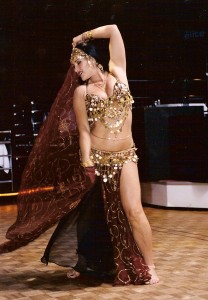
James Strecker: You do and have done so much in your life so, before we talk about all the parts that make up Brenda Bell Wellness –and Brenda Bell herself- please tell us about your fascinating life as a Middle Eastern dancer. How did someone who used to hang around Rochdale end up as a starring dancer in a posh Cairo hotel?

Brenda Bell: I had been introduced to the dance by attending a class during a trip to Maui, Hawaii of all places! The music was so rhythmic, the movements were so entrancing and it excited my existing passion for anything eastern. I believe it struck a karmic chord deep within in my subconscious mind.

“In 1976 or ’77 I was living in Vancouver B.C. and was walking down Broadway and passed a Greek restaurant where a belly dance event was going on. I stood in the doorway to watch a gala evening showcasing several professional local dancers. It was my very first time seeing professional belly dancing and I was thrilled
“I set off to take lessons with as many good local dancers as I could find, practicing for at least two hours every day. I was determined, and seemed to be pushed by this uncontrollable karmic force. My last teacher in Vancouver was the well-known Farideh. After six months of passionate practice, I started to perform in local Greek restaurants, likely stepping on the toes of local dancers. I feel sorry about that.

“But soon I was off to London, England. I found myself dancing at a Greek bouzouki club called Cleopatra, and then running off afterwards to the more prestigious Arab night clubs to study the Egyptian dancers. I ended up auditioning at the famous Il Nile Club.

“Just imagine, I was a young hippie dancer from B.C. Canada sporting an Afghani dress and arms full of silver bangles in a big, fancy, over-the-top night club full of wealthy gulf Arabs wearing long white thobs. There was an elaborately lit, raised stage with a full Egyptian orchestra, and the program consisted of at least four solo dancers, two singers, and a comedian. The program went on until the wee hours of the morning. Dancers wearing elaborate long evening gowns while sitting with the patrons between shows, when performing they donned racy costumes that exposed more than my modest full skirts and harem pants. They had sequins and rhinestones instead of tinkling little coins and chains. I became disillusioned, and declined the offer to stay and work because I was intimidated by the reality of the Arab clubs. Many dancers had a second job.

”I went back to Vancouver, but could not find the cultural stimulation nor the live music I craved. Once you’ve heard the nai (Arab flute) live, it creeps under your skin and you can’t forget that feeling, not to mention one, two or three tablas and other percussion instruments coming together to make your heart race in a way that nothing else can. So I moved to Montreal, and started dancing with live bands in Arabic clubs, weddings and private parties, even dancing in a feature film being made there at the time called “Your Ticket is No Longer Valid” starring Richard Harris.

“I made some good money and was invited by some Moroccan friends to Morocco. In Morocco I was introduced to a woman named Mania, who owned a nightclub and restaurant in Agadir. I danced there for a couple of months. It was a wonderful experience, as I was keen to learn about Moroccan folkloric dancing. I travelled all over Morocco and soaked it all in.

“Returning to Canada, I moved to Toronto, where I started dancing in a small place named Cleopatra! There were musicians and I believe that is where you first saw me perform. I was quickly in demand for concerts for visiting Arab singers, local and out of town weddings, cultural events and festivals. I also did many television appearances. I was teaching regular dance classes and have taught many women who went on to become successful performers and teachers.

Eventually, Egyptian friends encouraged me to go and dance in Egypt, and in 1982 I did, staying as a guest of their families in Cairo until I found myself a job. The Egyptian music and dance styles had become my favourite.

JS: Cairo must have been a quite a cultural leap for you, so I wonder what adjustments you had to make to survive and thrive.

BB: I didn’t find Cairo to be a major cultural impact on me because I already had quite a bit of experience in previous years from travelling and working with people of different middle eastern cultures. I was familiar with the varied traditions, customs, music, food, dress, language, dance, film stars and performing artists.

Professionally, I had to change my performance presentation. I had to give the Egyptians what they wanted to see. I dropped the ethnic looking costumes and became more glamorous and I couldn’t do my floor work unless I had a candelabra on my head.

Personally, I had to adjust to limited freedom of independence. As a woman, I had always to be escorted by someone. I had a relative freedom in the ability to take private taxi service that would wait for me while shopping and then return me to my home. Of course, I paid for this service, and it was well worth it because my alternative would be to share a taxi picking people up like a bus if they happened to be going the same route. It could get very crammed in a Fiat on a sweltering hot day with no AC, especially if these were Egyptian men smelling of fresh garlic! Then there was the city bus. Just imagine the previous description amplified by fifty and throw a few women in and they all have to bear the occasional grab when there is standing room only.

I have many stories about infringement of my privacy, even when working and having to view what should be private in public places. This type of behaviour made me nervous, paranoid and depressed.

JS: You have always been a spiritual person, it is obvious, and I wonder how you, especially as a woman, resolved that aspect of yourself to life in the entertainment world.

BB: This is a question that could take a while to answer, so I’ll keep it brief. Egypt is a Muslim country. I was a Dancer. I learned quickly not to engage in conversations regarding politics or religion, period. I was there to be recognized and respected as a dance artist and I tried to keep good company. A dancer is not viewed as a spiritual being but as a sensual icon.

I did my own personal spiritual practice in my home consisting of daily meditation, prayer and yoga asanas. I had a few expat friends who enjoyed having yoga lessons with me.

One of my dearest friends was an older woman, Mary, a Catholic and a relative of a friend in Canada. Mary was married to a Muslim and they had 4 adult children who were raised as Muslims. Mary was the daughter of immigrant Italian/English parents. She was like a mother to me and I would celebrate our Christian holidays with her and her Christian relatives. I would sometimes go to very old Catholic churches with Mary, mostly to see the beautiful art. These places were quickly being destroyed.

JS: Why did you give up a prestigious gig in Cairo, one that many would desire, and return to life in Canada?

BB: The life of a performing artist in Egypt is not the same as it is in Canada, especially for dancers. I could try for a lifetime to have people look at me as a respectable woman, but this would only happen if I had married an Egyptian artist and we worked together outside of the nightclubs -like the work of Farida Fahmy and Mahmoud Reda,. They are well respected Egyptian dancers and choreographers, founders of the renowned Reda Troupe.

As a “Rakasa” – dancer- I could live the night club life, make lots of money and be very lonely outside of it, or marry another artist and still have to socialize in the artist circles. Lots of drinking, drugs, and late night partying.

Or I could marry a decent businessman and leave dancing, but then what would be the purpose of being in Egypt?

I was getting lonely, desperate for someone I could relate to in my reality. I wasn’t interested in the complexities of living in a Muslim country or marrying an Egyptian man, nor did I find fulfilment in the idea of entertaining people for much longer. I preferred to go home and resume my yogic studies and teach, and help people live healthier lives. Get married and have a family.

Dancing is all about the ego “Look at me”, while my spiritual beliefs are about going inward and learning to deflate this egoic self and find my true nature. I believed that I would find more fulfilment in serving others rather than entertaining them. I felt that I had done what I came to do, I didn’t have anything more to prove.

JS: Okay, I know the term belly dancer does not sit well with you, so please distinguish between the kind of dance you have done and what is called belly dancing.

BB: I used to prefer describing myself as a “Middle East dance artist.” It wasn’t just about the “belly dance” since I was also trying to learn about regional folklore dance. I often used a folkloric theme for the second part of my show. Egypt has a wide variety of dance styles outside of the typical belly dance, which are very beautiful and often include a male counterpart.

JS: It seems, at least to me, that everyone nowadays calls themselves a belly dancer and caters to a popular North American stereotype of what is actually a very sensual, nuanced, and aesthetically rich form of dance. I am sure you have thoughts on the matter, so what are they?

BB: This is exactly why I chose to perform within the Arabic communities. For me, my dance is like a language. Most non-Arabs don’t know what they are looking at. They see something nice and can enjoy it to a certain degree but they never get the whole story. It’s kind of like watching a foreign film without the subtitles.

When I perform for Arab audiences I engage with them, we go on a little journey together for a short while, me expressing the emotions of the music and the words of the song though the dance, using typical gestures that they can relate to.

Because I understand the culture I was very popular. I didn’t need to impress them with a 1,000 different athletic moves, I just needed to use the right movements with the right rhythm at the right time. And there is this very special way of being sensual without being overtly sexual that I find most foreign dancers can’t grasp.

JS: What was it like having your own dance company in Toronto?

BB: It was a lot of work, because at that time I was a single mother of a very young daughter. I had my other work as well, teaching yoga and being a shiatsu therapist as well as teaching and performing dance. I was stretched so thin. I really couldn’t give it my 100% because my daughter should have been getting that.

But, for the time the ladies and I were doing it, we had a lot of fun. I felt that I taught them a lot about costuming, choreography and putting a good show together as a group and how to engage the audience.

JS: How does it feel to actually dance the way you do? To this spectator it is sensual, sexy, elegant, subtle, and a very personal expression. Is it?

BB: Yes, it is all that and I feel that it is a safe place to express all of what it means to be a woman. It’s a divine feminine energy that should be respected, that is why I get annoyed with women that exploit the sexual aspect of this dance. There is vulgar sexuality and then there is tasteful sensuality. There is a time and audience for both, I suppose. It’s up to each woman to represent herself the way she wants. But having said that, I believe that we are representing a culture, so we need to keep that in mind if we want to be true to the artistic aspect of this dance.

I love my dance, I feel very close to myself when I dance In the past sometimes I didn’t want to share myself with the audience because of depression , but I had to because I was on contract. But most of those times, when I felt like hiding, once I had finished my performance I usually felt better. The energy moved, I got out of my head full of thoughts and emotions and a connection to the creative Self was made which brought me into the present moment where joy and happiness exist. I forgot my issues.

JS: How does a dancer’s body pay in damage for a dancer’s art?

BB: Hahaha! You’re just asking that because you know how much damage my body has sustained! Let’s put it this way, the harder the dancer works the body, the more a dancer demands from it , the more injuries we sustain and if it isn’t injuries then it is osteo arthritis in the future from over use. Some mid-east dancers don’t make the same crazy demands that I made so they don’t suffer as much as someone like me. But if we keep dancing and change our method as time moves on we can stay healthier than if we just stopped altogether.

Adopting other forms of complimentary exercise such as yoga, Tai chi, Feldenkrais, swimming or light weights can help to balance the body, increasing circulation of blood and energy, relieving stiffness and correcting alignment.

JS: Let’s talk about Yoga, which you have practiced and taught for decades. When and why did you first study it, why do you teach it now as part of Brenda Bell Wellness, and how does it fit into your life?

BB: I started with yoga when I was a kid, I used to watch my mother practicing and she’d tell me to leave her alone, since it was a quiet time for herself amidst looking after a family of 5 kids.

I’d go to my room and copy what she did. When I was in my later teens, I read “Yoga, Youth and Reincarnation” by Jess Stearn, and this opened my mind to what yoga was really all about. I then took it more seriously and found my own teachers, who were many. Returning to Canada after Cairo Egypt, I decided to take a formal teachers training course and graduated in 1987. I haven’t stopped teaching since.

I then moved on to study Shiatsu therapy and this opened a whole new approach to practicing yoga for me -I don’t practice Shiatsu now, but I have moved on to Reiki. Because the course included in-depth anatomy, pathology and physiology, I found myself combining the two practices as an effective therapy.

Yoga is a major part of my personal life and it keeps me focused, pain free, and healthy in body and mind. For me, yoga isn’t just about the body, it is a science of the mind and a spiritual adventure. I share this knowledge with people who are open to it.

I teach different aspects of yoga during workplace wellness seminars according to the needs of the clients. If they want a simple general yoga workshop, I can do that, or I can focus on a particular topic such as back pain, stress management or carpal tunnel. I often offer some simple yogic techniques during informational seminars, depending on the topic being discussed.

JS: You are a Zen Shiatsu master, so what kind of attitude or philosophy does that require and what do you actually do?

BB: I was lucky to have studied with some very good Japanese teachers. Much like yoga the philosophy shares with us that we are not simple physical beings.
It is a holistic approach to well-being which emphasizes balance. The focus is on the complex energy systems that move through us, how to feel them and identify imbalances and what we can do to help create balance. This is why I became very passionate about it, finding that it wasn’t unlike the philosophy I was already living

JS: Your life has taken you into study in of many other areas of physical, mental and spiritual growth, especially from China. Please help us to understand each one.

BB: This is a question that requires a lengthy answer. I’ll simplify it by saying that all my practices involve creating balance in all aspects of human existence. It’s all about energy, even thought has energy. What we eat, how we live, move and think. We need a healthy body to have a healthy mind, and a healthy mind to create a healthy body, I’m talking about balance and no extremes one way or the other. Only then can we start to realize and understand that there is more to us than what we think we are. The teachings invite us to live in the present moment; there is a lot of power in the present moment.

JS: You are also are a student of Vedanta philosophy, which includes the practice of meditation, and although I know that this philosophy is not easy to simplify without selling it short, would you care to give it a try?

BB: Advita Vedanta is the philosophy of “Non-dualism” That absolute Self within me is the same Self within us all. Vedanta teaches us ways to find the Self, all existence, knowledge and bliss.

JS: I’m going to quote a passage from your site and ask you to help us understand how all the things you do fit into one unique consciousness as a practicing healer. The passage is this: ‘Through years of international travel and cultural study, I became a certified fitness instructor, yoga instructor, yoga therapist, Zen Shiatsu master and Usui Reiki master. Healing myself, loved ones and clients with these dynamically interconnected practices has strengthened my faith in the body’s inherent ability to heal itself – aided by positive thinking, conscious choices of lifestyle, diet and natural therapies.’ Okay, you’re on, and we have lots of time.

BB: I simply practice what I teach and share. My life has had its share of storms and difficulties, depression and doubt. I have focused on the teachings, the present moment, learnt from my mistakes and I feel I am a testimony to it all. Below is a excerpt from my blog:

I am not my body, my body is a biodegradable vehicle that gets me around while I’m here in this lifetime.
I am not my mind, my mind is just a bundle of thoughts which are wrapped around a feeling of “I” wrongly associated with my body. The mind is a tool for relating to the world. Yes, I know that is a hard one to swallow, but when you start to study the science of yoga and the vedanta philosophy, it all starts to make sense.
My body is the first temple of the creator, I am aware of that and I cannot ignore this fact. It gives me a sense of great respect for this creation my body, as well as all else that is part of creation.
So if I can figure out the basics of how this bio vehicle works, then I can take better care of it and it will serve me well until it is time to give it up. I will have a better quality of life with limited restrictions. Remember I love to be free, and along with good health comes happiness. Happiness is only present when we are not feeling pain. Unless, of course, you have reached Nirvikalpa samadhi and are living with knowing the Absolute Self and then you can override the physical discomfort.
Happiness is what all humans seek. Of course many of us think we are going to find it outside of ourselves and that is what big business is all about. Many people truly believe they are happy with their “Stuff”, but would be in agony if they had to give it up. There is a point to where money and stuff can present us with a temporary “Fix,” but it most certainly will not bring us into real and lasting happiness.
When I was a young adult I started to take a great interest in other systems of natural health and healthing, I discovered that the secret to good health was prevention. You learn this in all eastern philosophies. Even in martial arts, one can be a great fighter, but it is wisest to avoid confrontation and maintain harmony. That is the goal, that is the true secret for a happy life as a human. Harmony, balance, integration of all that makes us what and who we are.
When we establish a good balance, we can live in peace and be happy, physically, mentally and spiritually. We can remove restrictions and enjoy all that life has to offer us if we choose.
I often say that most people take better care of their cars than their own bodies. Seriously, it’s true.
I was taught through yoga that we start with the body, exercise, breathing and then diet. Then gradually the mind starts to become more clear. We feed the mind with right knowledge, and we start to see things differently, we start to understand what this whole journey is all about. We don’t take anything at face value, we ask questions that have to satisfy our intellect, and therefore the practice goes deeper than the body. We start to understand who and what we are with unshakable “Knowing”.
Balance is the key. Moderation in any aspect of living, whether it is exercise, diet, work or relaxation. Self education is important, not blind following.
I believe in learning how to become responsible for our health, learning preventative measures as well as curative. It can be done one step at a time, and we just need to have the desire to know ourselves as a complete human being and to respect that knowledge.
I’m not discounting the medical field at all, it has it’s place in our lives, but it sure would take a load off our healthcare system if more of us made this effort to improve our personal wellness.
It’s very liberating to be able to help oneself and to have some control in our lives. There are so many ways in which we can help ourselves.
Good health is a blessing and I feel that it is important to honor that and express gratitude in ways that feel right to us as individuals. We also need a good dose of compassion for ourselves in order to accept our shortcomings and develop self love. This will splash over and outward to others who come into our field of awareness and they will benefit from our examples.
I like to believe that I am setting a good example by living what I teach. I also believe that I am blessed and guided by a force that is greater than my individual mind and personal desires.

I could keep on going here, but I think I’ve given you a little bit of “Why” I do what I do.

JS: I’ve been blown away from the several Reiki sessions I’ve had with you, rarely so profoundly relaxed was I, so please explain what goes on in me during a session. Is it good for you too?

BB: I’m happy to know that you have enjoyed your experiences. Yes, it is good for me.

Reiki brings us both into the “Now.” I aim to help my clients let go of thoughts and feelings and go into state of deep relaxation. We are made of energy and our thoughts are energy, so it is important for me as a practitioner to empty my mind of thoughts that aren’t related to the Reiki session. Intention is a powerful force, my intention is for the highest good of the receiver. I pray for the total well being of the receiver and I pray for guidance.

I like to leave myself open to the life force energy to flow freely through me like a channel, unobstructed by my own stuff. I usually keep my mind focused on a healing mantra or phrase that affirms the presence of healing light. This sets up a positive vibration on the mental and spiritual level.

As the receiver relaxes, space is created in body and mind. This creative life force energy is received into the cells of the body. Naturally all cells of the body are programmed to perform a function, and the life force energy is cosmic intelligence and reminds the cells of their natural function. When space is created it helps the body’s energies move properly, bringing in more to areas that are depleted and moving it out of areas that have excess, therefore creating a balance.
When the receiver’s mind is silent this procedure is more effective.

JS: You have lived a unique life that has involved a sensual art form in two sexist cultures and a number of spiritual practices that are very subtle and deep in a North American culture that often thrives on the lowest common denominator. How have you survived when the world wants to destroy itself?

BB: I don’t focus on destruction or on the negative. I choose to focus on productivity and positivity. I try to live in the present and all that is good in my present. I focus on keeping myself healthy and how I can help others be healthy and happy. I believe this is a way to improve society in general. I am not ignorant to what is going on in the world, and I make my own small contributions when I can. And really it isn’t the world wanting to destroy itself, it’s the ignorance of humans that is destroying the natural balance. If each of us makes an effort to find balance in our own lives we can make a collective effort towards the greater good.

JS: What are your dreams and plans for Brenda Bell Wellness? I believe that, among other things, you intend to bring healing to the corporate world, so what does that mean?

BB: I have noticed that many of my clients who work in offices and schools or other jobs that involve being exposed to large groups of people and little fresh air, are often ill. They suffer from frequent viruses, or work related aches, pains, stress disorders and diet issues. I have found myself offering free counselling for many of these problems and I have noticed that the information I have given has been very helpful if they follow my suggestions.

Workplace wellness is a very hot topic right now because companies want to maintain a higher productivity level and it is in their interest to lower benefit costs. I’m actually more concerned with helping people understand that they are not victims of circumstance. There is much we can do for ourselves if we choose to make an effort one small change at a time. I like to believe that it is self empowerment that takes place.

If a company has more people who are self-empowered that could be a very positive and powerful energy towards financial success.

JS: What do North Americans misunderstand about wellness?

BB: Prevention. I believe that we need to educate ourselves and take responsibility for our individual health. We have many different lifestyle options, diet, exercise, and natural holistic therapies. There is so much we can do for ourselves, if we only make some effort, and not rely on the medical system entirely. Don’t get me wrong, I believe in allopathic medicine when needed, but I also believe that a healthy lifestyle is the best prevention.

JS: You are obviously a sincere student of life and a dedicated and responsible teacher in areas where too many, who in truth are unqualified, exploit others. How does that feel, to be serious and dedicated among charlatans? What happens when alleged healers become celebrities and what do you think of the gullible who idolize them?

BB: I think if we are sincere in our search for truth then it will be revealed to us eventually. I am not a blind follower. There needs to be logic behind the method. The more we educate ourselves the better our choices will be.

I don’t place myself above anyone else, I am simply grateful if I am able to help someone. People only accept and receive what they are ready for at the time.

JS: Overall, how’s life going?

BB: Life is always full of challenges. My life is not different from any other human, but perhaps my way of meeting my challenges is different than most. I turn my challenges into lessons. And then there are surprises and small wonders. In the big picture, I have nothing to complain about, I am ever grateful for my blessings.

JS: How do people get in contact with you?

BB: It’s simple. People can contact me at contact me at:

http://www.facebook.com/pages/Brenda-Bell-Wellness/701983636512323

or http://brendabell.ca

Posted in Interviews with Dancers, Uncategorized | Tagged , , , , , , , | Leave a comment

AN INTERVIEW WITH METIS TELEVISION AND FILM ACTOR+SINGER+WRITER+MESSENGER ANDREA MENARD

James Strecker: Okay, we’ll talk soon about the actor and singer and writer aspects of your creative life, but why do you declare yourself also as Messenger on your website? What does that mean?

Andrea Menard: It means that I am stepping into my role as teacher. I have finally admitted to myself that there are things I have been made to understand that are needed in the world. Things like how to use the “natural laws” of life to be a more loving human being. When I write, which usually means it will be performed at some point, I tend to become more of this messenger. And in the creation of my newest album, Lift, I discovered an important need in me to sing songs with a “positive” message. When I realized that I was surrounding myself with songs that made me feel bad, I went on a mission to find and sing songs that uplifted me and accidently discovered how lyrics had been unconsciously influencing my thoughts for my entire life. I took control of the content I allowed into my mind, and the content I was putting out, and uncovered a new movement along the way…The Music Messenger movement.

JS: You are so versatile, so let us do one part of your career at a time. First of all, how does being a Metis affect the songs you write and how you sing them?

AM: When you are comfortable in your skin, you just sing what needs to be sung. I am a proud Métis woman, and I am more connected to the universal part of me these days. At the beginning of my career, I questioned my identity a lot, and it was a big part of my work. But now, I just see the beauty in our big Métis hearts and our ability to bridge two amazing cultures within us. My new music reflects this perspective I think.

JS: Tell us about Velvet Devil, your one woman production that played the National Arts Centre in Ottawa and was broadcast on CBC. Why did you create it and what does it mean to you?

AM: The Velvet Devil was my emancipator. She has been with me now for over 15 years so the immediacy of my journey with her is not as fresh as it once was, but she truly was the reason I am fully established as a nationally known Métis actor, singer, and writer. Because I wrote and starred in all versions of the creation, including a national touring show, a music cd of the accompanying music, and made-for-television move, I had to learn three new industries in a sense: theatre and playwriting, music, and film. If it weren’t for the courage in following my heart and my story, I would have never broken through into the multi-disciplinary artist I am today. Back then, I didn’t know this Métis girl had anything to say, but with the help of The Velvet Devil, I know exactly who I am and what I have to offer.

JS: I found your TV series Moccasin Flats to be a revelation about native life and attitudes in Canada. How insightful and accurate was it and what did you like about the series?

AM: Moccasin Flats was the first series of its kind in depicting a dramatic version of Native life written, produced, and starring Native people. It was developed by Big Soul Productions. The producers went right to the source of Regina’s North Central (which is known as Moccasin Flats) to find their authentic stories. They talked to the youth living there so the element of heightened realism is accurate.

JS: Tell us about your other television work and what challenges it brought or brings to you both as an actor and a person.

AM: My role as Debbie Fraser in Blackstone has been a fun challenge in my recent career. It is the first time I’ve played a shallow “bitch” and it has been so much fun. Blackstone has hard-hitting edgy content that is sometimes called the “Native Sopranos” and I play the big bad “evil” Chief’s wife. My husband, played by Eric Schweig, is such a crooked and deceitful character that I have had to bring out the toughest parts of me to be a good match for him. Debbie is determined to be blind in this series, and personally, as a constant seeker of truth, she sometimes doesn’t make sense to me. It has made me reach further into places I don’t usually go. I like that, even if I don’t always like what she does.

JS: I once heard you say that you don’t believe in rushing the birth of a CD before both you and the songs are ready. Please explain your meaning and how this reflects your deeper beliefs.

AM: I guess you could say that by looking at my cd history! I seem to make a cd every 3-4 years, so I don’t really pump them out! The truth is, each of my albums have emerged out of a “concept,” involving 11-13 songs rather than just as a music release. The Velvet Devil, which is a nostalgic jazzy album, was the music from my one-woman show. Simple Steps was a folk tribute to the music I grew up with as a Métis woman. Sparkle is a winter songs/Christmas album, that developed over seven holiday seasons, and my latest album, Lift, was born out of a need to hear and create uplifting music with a positive message. Each project is dear to my heart and reveals a personal journey within me as a person and an artist. Songs always come one at a time, but an album only comes when a dozen or so songs seem to fit together as a whole.

JS: Which of your songs are especially meaningful to you and why are they so?

AM: More recently, one of my songs that is swimming in my head a lot is “I Love My Life” from the new album, Lift. Because I have become more conscious of the words and messages I am absorbing from my surroundings, I am determined to remind myself of the beauty and joy in this world. That’s why writing a song like “I Love My Life” was so fun. It makes me giggle every time I listen to it. And I’ve heard it gives that same uplifting feeling to others when they hear it as well. That gives me more joy than you can imagine.

JS: I haven’t heard your new CD Lift as yet, so please give us some background? Why is it important to you? Tell us about the songs?

AM: Lift is one of the most joyful projects I’ve been a part of. I went through a tough period where I was sad and increasingly sensitive to my surroundings, especially music. I could only hear music with a message of hope and joy, so I went searching high and low for music that made me feel hopeful. The search was fruitful, but my playlists were not nearly extensive enough, so I decided to write an album like that myself. I went to my long-time collaborator, Robert Walsh, and said, “we are making an album that makes me happy!”

Every song came from a good place. If you just look at the titles of our songs: Answer the Call, Faith & Patience, A Beautiful Balance, Hands Full, I Love My Life, or Four Directions Prayer, you will see how positively focused they are. In creating this album, I feel that some part of me as an artist has matured. I have grown into my historical role as “Bard”; I have earned the wisdom that allows me to go and bring the songs of life to the people. Any artist can create art, but not all artists can bring harmony. Here is a snippet about the album:

“Andrea Menard’s fourth album, Lift, gives you a boost of sunshine in times of need. For Menard, Lift is a personal and musical turning point. Conceived during the murky time before a creative explosion, Lift, with its unwavering optimism and joy, helped bring clarity back to her vision. The album is a collection of joyful songs about beauty, awakening, and unity. Co-written with her long-time collaborator, Robert Walsh, the uplifting rhythms, melodies, and lyrics of Lift are Menard’s attempt to bring a positive message to the world.”

I just want to make music that makes me feel good. I want to speak impeccable words, as taught to me by my elders, so that when I sing them joy radiates from my heart and affects the people around me in a good way.

JS: What life wisdom could the rest of Canada learn from Metis culture and attitudes?

AM: Like all people of mixed races, I believe we have a unique gift of teaching peace and harmony. Because we have two or more often conflicting cultures within our own blood, we must find peace and harmony within ourselves in order to function well in our lives. Change in the inner world always influences the outer world. I believe we can make real change in our society by finding forgiveness for the various sins of these different cultures and choosing harmony.

JS: What stereotypes of native peoples, positive or negative, trouble you most and how would you correct them?

AM: I am most aggravated by the misrepresentation of Native people in the media. Whenever something incredibly important is raised by Aboriginal people, the media and the government officials in charge of maneuvering a story to the media have a way of stirring old prejudices and completely playing on the “old” and incorrect but familiar stories of our people “screwing up,” “wasting government funding”, “behaving violently” or “getting drunk.” I have seen first hand how a massive story that needs to be heard by the mainstream population is destroyed and systematically covered up by sheer deception. Most people who have been interviewed by any media, are aware of how our very own words can be manipulated to make us sound different than originally intended. And it feels awful, but it is another thing entirely to see whole population’s world views and intentions manipulated so consistently. It would shock most Canadians to know the extent of it.

JS: I get the impression that, a few years ago, you seemed to have something of a spiritual shift or awakening or leap, so please help me out and explain what happened and how it affected both your life and your work?

AM: My most recent spiritual awakening was this idea that artists, when they have earned their wisdom, have a sacred role to play in society. It’s not a new idea, because artists have always held a special role, but I’m talking about the ancient role as the “initiated teacher.” In my culture, the role of the singer and the storyteller was terribly important. We practised that role from birth and were trained and initiated by experienced teachers in how to be a skilled instrument of entertainment and illumination that best served the tribe. Today, artists are just winging it and doing our best at releasing the chaos and drama in this time of over-stimulated emotions. But I’m discovering that when we work our way through that fog and learn how to rise above the drama, that’s when sacred work takes over. That’s when we begin to “serve the tribe.” This understanding has taken years to fully blossom and I’m still working it out.

JS: What are some other pivotal points in your life when you came to new truth and deeper understanding?

AM: As a seeker of truth, having pivotal moments would be a monthly thing for me. I have been blessed with a need to shift and grow into the best human being I can be, so that comes with many, many opportunities to grow. I don’t exaggerate when I say monthly pivotal points. There has been a long line of revelations that open the doorway to truth and build on the next understanding.

JS: How does an artist remain untainted by the obsession for fame and hits and marketability that prevail in popular culture? How strong is the temptation to sell out one’s person and one’s art and how does one remain honest in this situation?

AM: Since this obsession is prevalent in every aspect of our media, it is pretty hard to avoid. I’m sure for others the temptation to sell out doesn’t even feel like temptation; it probably just feels like the “path” as an artist. I don’t know why, but I think I have a slow-burning drive for fame. I am not exempt from this feeling of wanting fortune and accolades for my work, I just don’t have it in me to follow the traditional path. As an artist, my sense of what needs to be told next almost feels gifted to me. I like to say that my “ancestors” or guides on the other side are a lot louder than other folks’ so I can’t get away with selling out! Sometimes I wish I could!

JS: Name three things you would like to do as an artist in music, television, theatre, or what you choose and what are you doing about these wishes?

AM: First, I would like to see my television mini-series about the “awakening human” produced. I’ve been working on a project with my co-writer, Paula Costain, that plays with the deep subject of the “re-emergence of ancient knowledge from indigenous teachings and the divine feminine” but is told in a mystical murder mystery style. It’s the biggest project I’ve attempted, so getting that one off the page would be magical!

Two, I’d also like to see my brand new symphony show, titled “I Am Andrea Menard,” performed with orchestras all over the planet. It’s a 90 minute semi-autobiographical musical journey of my life as a Métis jazz singer and I truly want to get it on the symphony circuit. Here’s a synopsis of the show:

“In the very divergent worlds of jazz music and native music, how does a simple Métis woman win over a sophisticated audience and break through that elusive buckskin ceiling? By singing her heart out with swinging showstoppers, funny stories, and heart-breaking ballads that not only entertain audiences of all cultures, but also invite audiences to appreciate a world-class original Aboriginal.
With new compositions by Andrea Menard and Robert Walsh, and orchestrations by Charles Cozens, “I Am Andrea Menard” is a heart-warming, jazz-seasoned, Métis-flavoured feast of a show.”

Three, I would also like to be singing and speaking on stages that bring spiritual teachers, motivational authors, and audiences interested in a self-evolutionary path together. I feel a book coming! And I’m feeling called to sing -and talk-about what I have come to know about music. There seems to be an increase in these touring “Motivational/Healing/Spiritual Weekend Gatherings”, such as the “I Can Do It Conference” from Hay House Publishing, and I feel the desire to be a part of them. Who knew??

JS: What do you like about writing?

AM: That’s a good question because I’m finding more and more that if I surrender to the process, something bigger and wiser seems to flow through me. And once I do the work of showing up to the page, I tend to be surprised at what comes through. I will admit that I’m not a daily writer, and might even be a reluctant writer, unless I book a solid chunk of time dedicated to the project when something HAS to be born. I will let you know more about this question when I finish my book! Haha!

Posted in Interviews from Music, Interviews from Theatre, Uncategorized | Tagged , , , , | Leave a comment

FIBROMYALGIA & LIVING WITH PAIN: A WRITER”S ACCOUNT

Several doctors, physiotherapists, and sufferers from fibromyalgia have found this article to be an accurate description of living with pain, especially from fibromyalgia. Please feel free to share it with anyone you know who would benefit from reading this account, whether they work in the arts or not. Pain, after all, has no occupation.

He came to visit over fourteen years ago, without invitation. Gradually his presence took over my life and shaped how I walked and talked, even how my brain formed ideas. Certainly my moods and attitudes were always at the whim of his insidious presence. There was no pleasure, no work, no love, no life, no hope without his greedy influence.

Whenever I looked into the mirror to shave, I saw not my face but, instead, his reflection. I could no longer talk of myself and not be aware, in intimate details, of every subtle aspect of his nasty person. Soon I remembered no identity of my own before his arrival and realized that I had become my unwanted visitor. I had become pain.

A severe and silent pain consumes the identity of many, whether in the arts or not, and mine is called fibromyalgia. It’s one of those conditions that people almost know about. “My aunt has that, what is it?” they ask and, although I spend many hours as a writer seeking the most appropriate words, I stumble about, inarticulate, when the cruel tedium of fibromyalgia defies description.

But try this, if you will. You feel physically crazy, hysterical in your flesh, overworked and worn down with constant, unrelenting pain. You feel irritated with the throbbing pulse of pain and it hurts and then it hurts even more. It seems as if your pores want to scream, as if you are burning up, but in no heat of fire. It seems you are being squeezed to the breaking point, yet nothing is even touching you. You feel confused and unable to think clearly. You doubt everything you do.

When asked early on, before receiving medication, how the pain felt on a scale of 1 to 10, I responded, “What number says, “I do not want to live anymore” I wasn’t inclined to bury my pain under a blend of stiff upper lip and faux optimism, especially in a culture where the highest accolade conferred too often on one who suffers is, “He doesn’t complain.” But not everyone shares this dismissive attitude that forces the sufferer into solitary silence before he or she even speaks.

The Russian poet Yevgeny Yevtushenko once told me this: “North Americans are terribly afraid to look like losers and they always pretend that everything is fine. A Russian man will invite you to a pub and confess everything, because we like very much our sufferings, we like to complain. It’s our psychological reality.” We might well wonder why we tell those whose identity is woven through with pain not to complain and thus deny their very right to be.

In truth, it is not the one who complains who is weak, but the one who avoids knowing the suffering of others, especially with the blessing of our superficial culture of perpetual smiles. It’s a fundamental human need to be heard and compassion, in turn, requires the courage to acknowledge the realities of another life -if one is sincerely concerned about others.

I once told a friend with cystic fibrosis, the jazz singer Alex Pangman, that, considering the precarious state of her own condition, I felt embarrassed even mentioning my fibromyalgia. She replied, “Pain is very real to you and there’s no reason you shouldn’t talk about it.”

Living with fibromyalgia means a new social identity, partly because you feel rude to impose your unhappy company on others. Rather than being dismissed or patronized or labeled as something odd, bothersome, or pitiable, you instinctively do the best upbeat persona that your resources allow. You try not to be a ‘downer.’ You become an actor and try to fool even yourself.

In turn, ironically, you are then be seen as one without any pain at all. Not many, without this cursed fibromyalgia, understand why sometimes a pain pill and lying down are necessarily preferable to meeting for coffee. And, even as you seek understanding, there’s always the not too subconscious fear that if you, yourself, acknowledge the fibromyalgia, then you’ll be doomed to its reality.

My fibromyalgia came to be when several areas of my life experienced severe and unchangeable stress at one time. It led to one doctor who, no matter that I struggled to walk, denied the very existence of fibromyalgia. It led to another doctor -one with a doubting and judgmental look I’ll never forget- who, after a cursory examination, reported his dismissal of my pain back to the insurance company by whom he was paid to assess me. It led me to the humane but objective doctors under whose care I now am. They want to hear and to understand, and I’m grateful they do.

From square one, fibromyalgia introduced me to a world of multiple medications, and their incompatible side effects, that keep me going –weight-gain, drowsiness, dizziness, erratic innards, and all. It caused me to give up some dear aspirations, to make financial mistakes, to lose income, to misjudge people and situations, to be dumped by some acquaintances and embraced by others, to lose much sleep, to suffer fatigue, and for several years to crash in depression that still looks over my shoulder.

Pain brutally changes, even destroys, the lives of sufferers and those who try to help them. Fibromyalgia has long made my life as a writer an ongoing struggle. On the other hand, it has given me recourse to the most colourful words for pain. Alas, I cannot share this therapeutic vocabulary, such as pain demands, in a daily newspaper.

“James Strecker of Hamilton is a writer, poet, consultant in human development and in creativity, and author or editor of many books.”

Posted in articles by james strecker, Uncategorized | Tagged , , , | Leave a comment