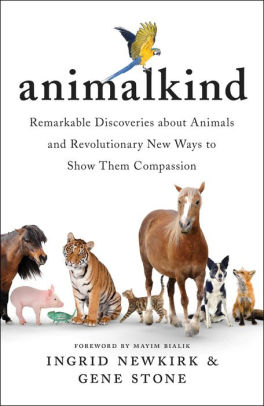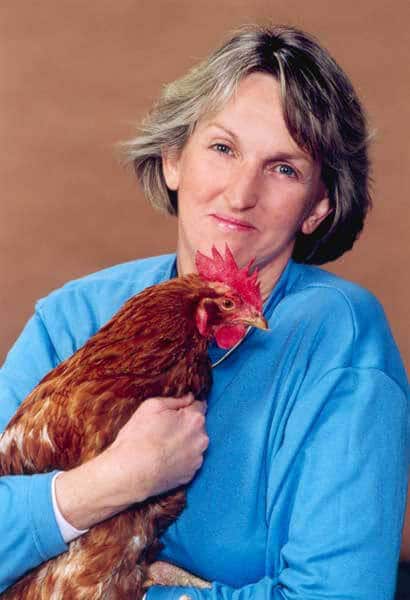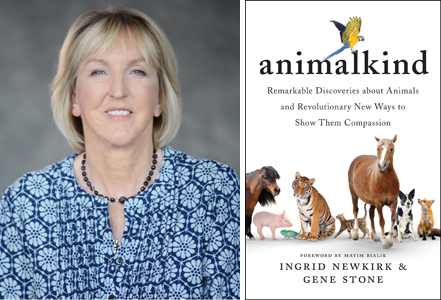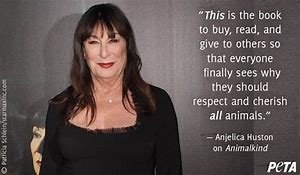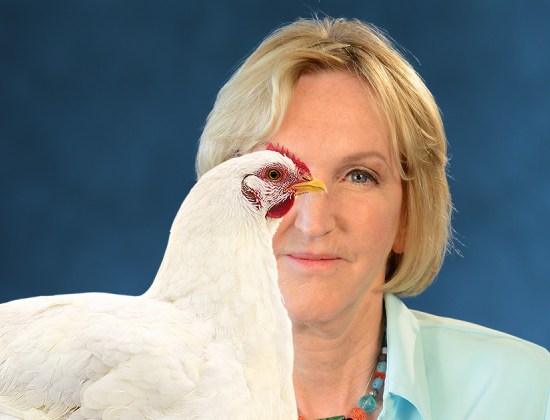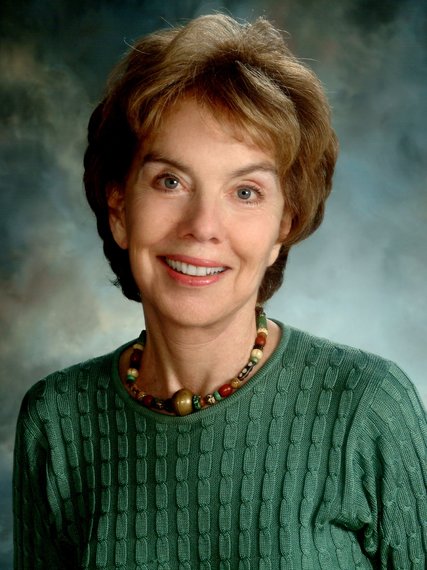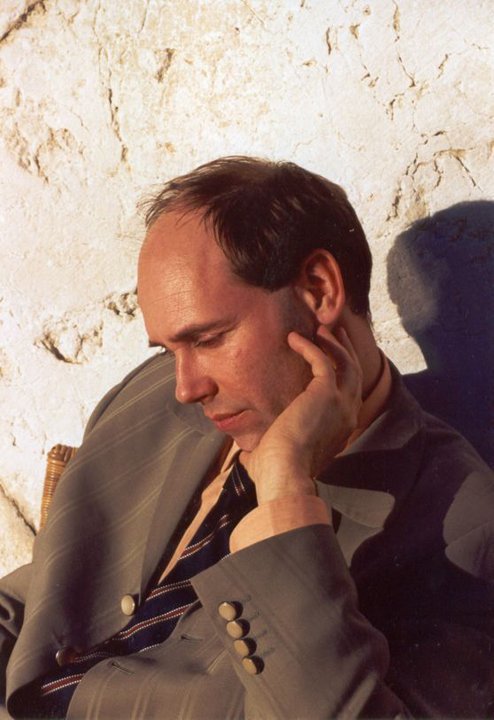
INGRID NEWKIRK: PETA FOUNDER AND PRESIDENT HERE DISCUSSES HER NEW BOOK “ANIMALKIND: REMARKABLE DISCOVERIES ABOUT ANIMALS AND THE REVOLUTIONARY WAYS WE CAN HELP THEM” AND MARCH 19 6:00 P.M. AT BEN MCNALLY BOOKS, 366 BAY STREET, TORONTO …. WHAT’S HAPPENING IN MY CREATIVE LIFE?

JAMES STRECKER: Please tell us what you want the public to know about your recent completed project or the one you are actively working on. What is it, why is it, and how was/is it done?

INGRID NEWKIRK: To mark PETA’s 40th birthday, I wrote a new book, just out now: Animalkind: Remarkable discoveries about animals and the revolutionary ways we can help them. The first half of the book offers examples of the jaw-dropping talents, abilities, intelligence and emotional complexity of animals – from elephants, who can use their trunks as snorkels as they swim up to 30 miles for the sheer fun of it; to dogs who can detect not only the scent of a pending epileptic fit or cancer in a human body, but seek out heat with their noses; mice who giggle when tickled and “talk” at subsonic levels; to monkeys who lay sticks at intersections to help laggardly troupe members choose the right path; and snails who do such things as build a window out of slime so they can seal themselves inside their shell during winter storms. The second half shows how easy it is to change any habit that might, even inadvertently, harm animals. You can be as poor as a church mouse or rolling in money; a student, lawyer, royalty, there are lots of things you can do that mean the difference between life and death for an individual who may not look exactly like you but under the skin, fur or feathers, is the same in every important way.

JS: What kind of audience will this project interest? What new audience are you also seeking? Why to both questions?

IN: This book will interest anyone who, like me, cares about and is in awe of individual animals and the animal nations, and wants them to be protected. However, I am hoping that people will buy the book to give to someone who hasn’t connected the dots, perhaps someone who hasn’t yet figured out that it they are appalled at the prospect of eating a dog, they should rightly be just as appalled to eat an equally sentient being, like a chicken or pig; and that if you are a vegetarian, you can’t wear wool, leather, fur, or anything stolen off an animal’s back because the meat and dairy industries depend on the profit from those parts of the animal. And that no-one can justify removing a loving mother from her child because you want what the child needs, as in taking the calf from the cow and stealing the milk meant for that calf so as to put cow’s milk cheese on a pizza. I would like the book given to university and high school students who might be ready to explore how speciesism (human supremacism) is a scourge and to open their minds to the idea that we are not gods but simply one kind of animal among many in the “Great orchestra of life.” If we wish to grow our movement for animal liberation from human domination, and make more kind choices available, to move forward more quickly, we need to open everyone’s hearts and minds.

JS: In what ways was/is this project easy to do and in what ways was/is it difficult to realize? How long did it take and why that long?

IN: I collect information about animals, so I already had drawers and files full of fascinating facts, that was the easy part. I had to do more research and that was fascinating and a great diversion and a rest from the very ugly undercover investigation videos I have to watch and the disgusting reports of abuse I have to read. I devoted my evenings and weekends, when I wasn’t traveling for work, to getting it done, and then the difficulty was what to leave out or it would have been several books instead of one.

JS: How are you planning to promote, market, and sell this project to the public?

IN: Amazon is doing the heavy lifting, and book stores are carrying the book, and peta.org has blurbs about it, including a beautiful picture of PETA’s Person of the Year, Joaquin Phoenix holding the book and saying he loves it. He’s a great ambassador for animals, of course, and now for the book.

JS: Please give us a brief autobiography, some stuff about yourself, that is relevant to this project.

IN: I grew up adoring and voraciously reading about animals, lived with a dog who was like a brother to me when I was child (and I hope I was a decent enough sister to him) but, that said, there was no animal rights movement and I ate and wore animals. My mother dressed me in so much wool, I probably had more on me than the poor sheep who had it taken from her. My travels in Asia exposed me to animal suffering and only later did I realize that it went on everywhere in the world, just mostly hidden away in places like Europe and the U.S. I inspected laboratories for the government and that disabused me of the naïve idea that there were only a few animals, kept comfortably, and used specifically in life-saving research. Gradually, the film fell from my eyes and I saw what we are doing and realized animals are downtrodden, expendable slaves in so many of our thoughtless pursuits.

JS: What’s next in your creative life?

IN: That would be telling but my daily obsession is to persuade people of their enormous power to influence others, but the materials we leave in our wake (think seat back pockets, bulletin boards, in the gym and doctor’s office, you name it), the conversations we decide to have with others about animal issues (in the lift, the supermarket check-out line, there’s always a way), and the practical gifts, like food, we give to those who need to see there are alternatives to every animal-based thing.

JS: Any final words?

IN: Please, please, please, if you have an ounce of breath (to speak to others), can lift a finger (preferably a typing finger), know anyone who might learn from your knowledge of how animals are abused (family, friends, strangers), use those wonderful powers to spread information (put PETA videos on social media), so that you will forward the cause and not be on your deathbed regretting a life wasted.

Posted in Uncategorized | Leave a comment

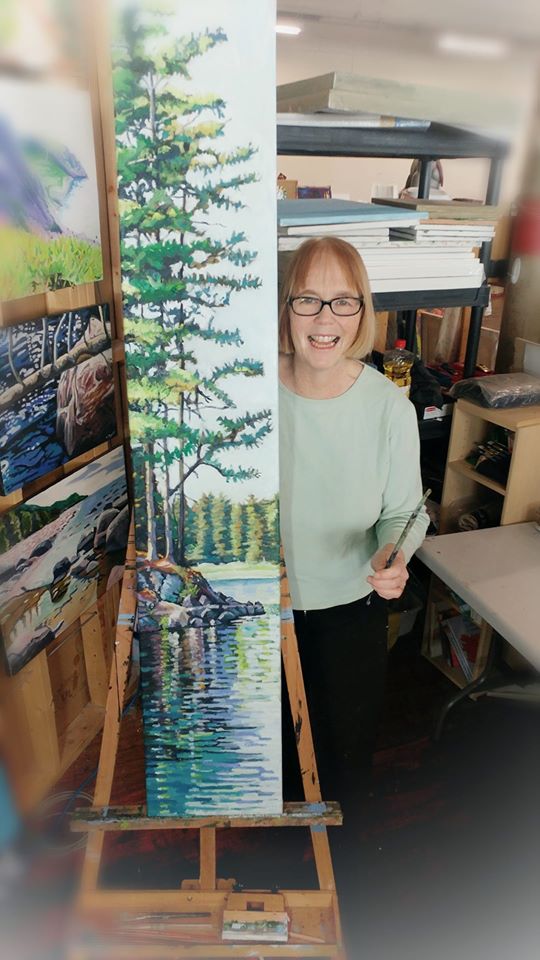
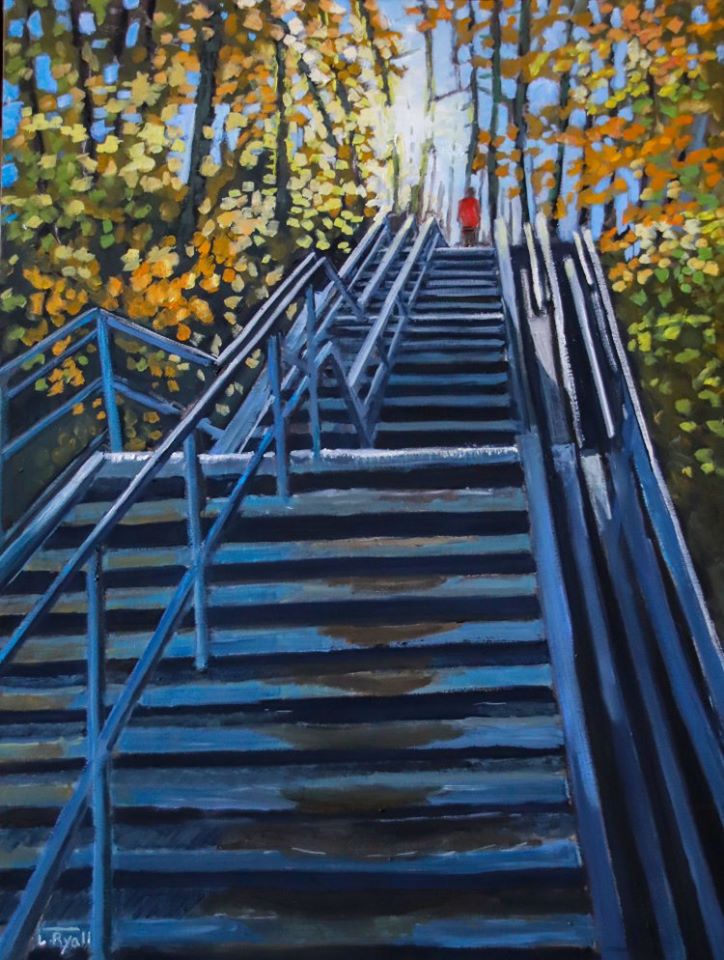
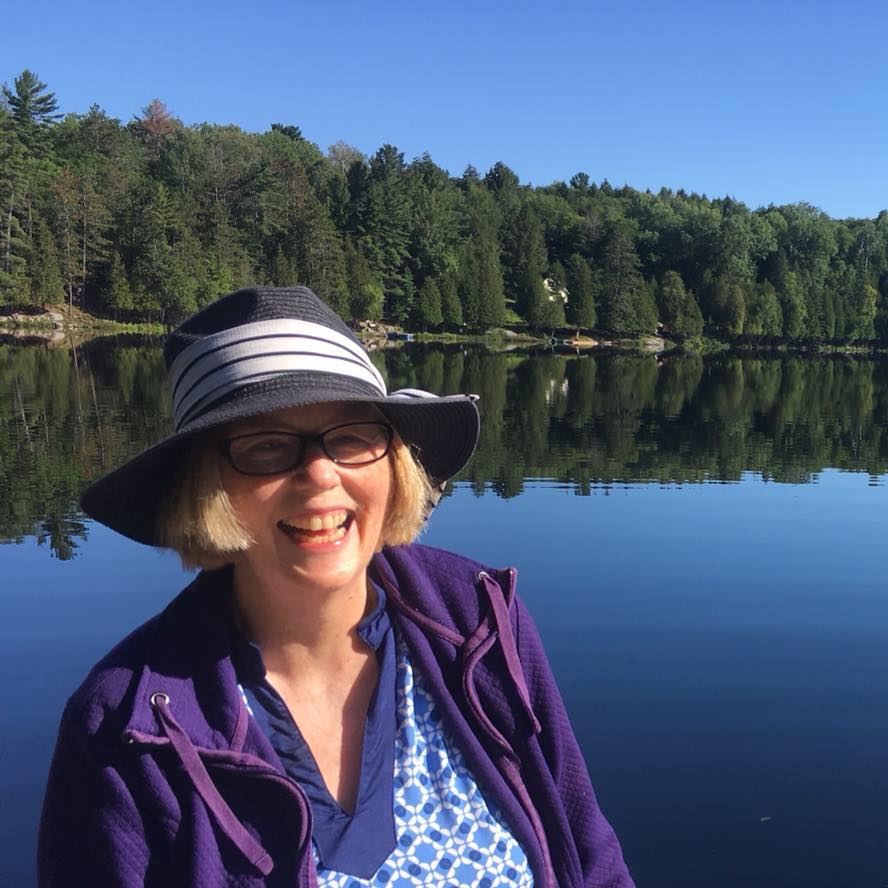
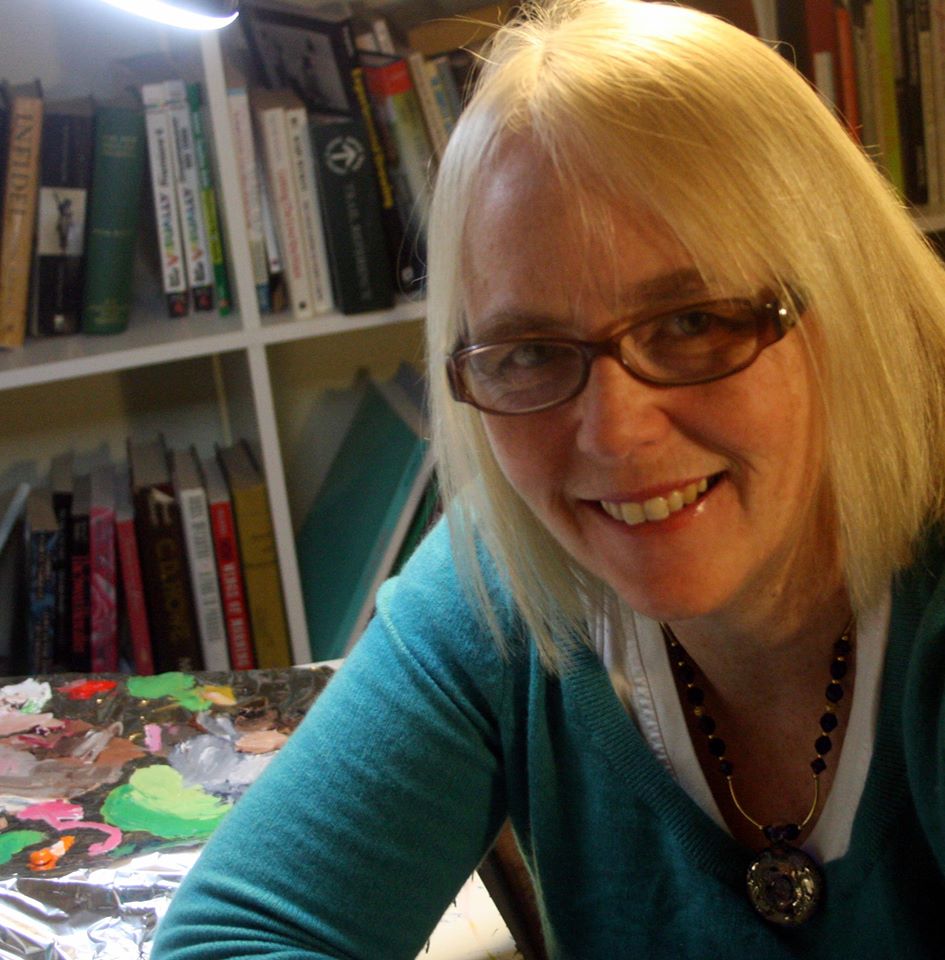
LYNNE RYALL: LANDSCAPE PAINTER PLUS GUITARIST-SINGER IN A FIDDLE GROUP PLUS VIOLA PLAYER IN DUNDAS VALLEY ORCHESTRA DELLA SERA STRINGS, PLUS ART TEACHER PLUS DIGITAL ARCHIVIST FOR RBG EXPLAINS “I ALWAYS WANTED TO WRITE A BOOK, PRODUCE A FILM OR ACT- MAYBE I WILL DO SO SOME DAY, BUT RIGHT NOW, I AM TOO BUSY.”..A REVIEWER INTERVIEWS PEOPLE IN THE ARTS

......JAMES STRECKER: Please tell us about one or more projects that you have been working on or have recently completed. Why exactly do they matter to you and why should they matter to

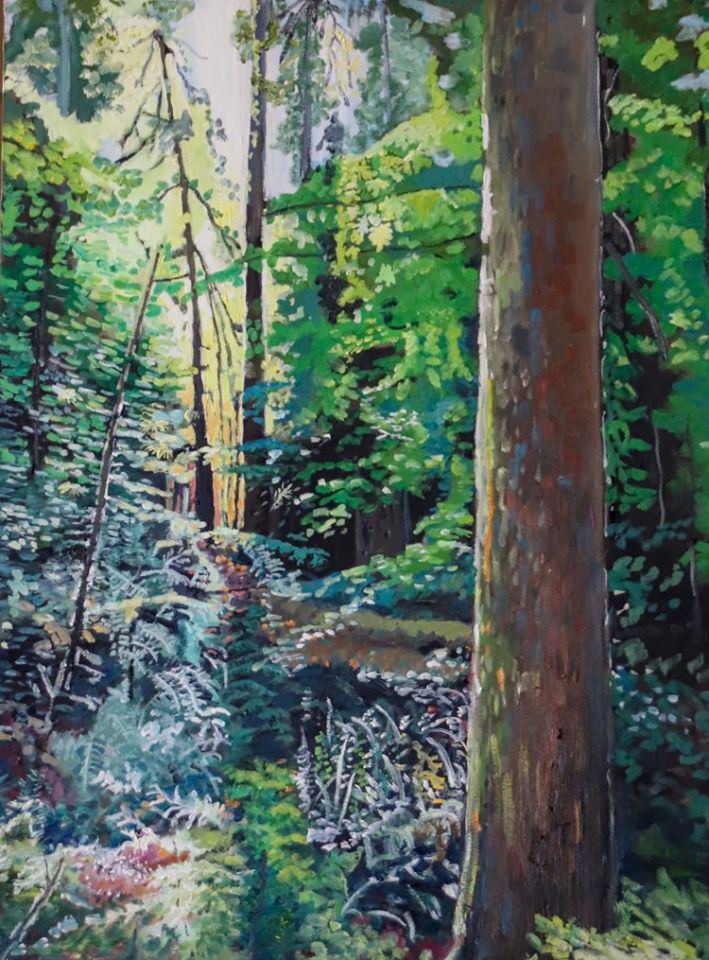
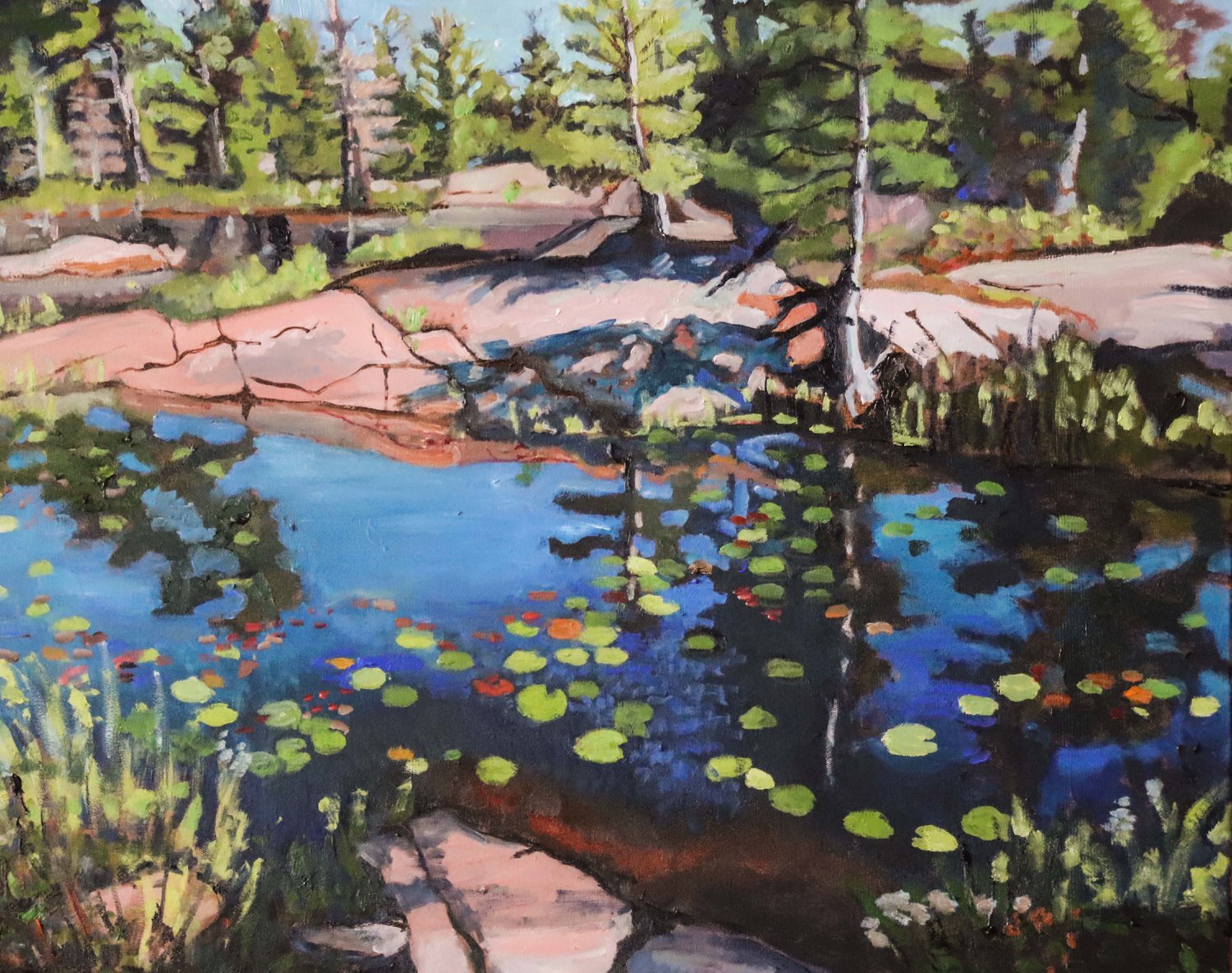
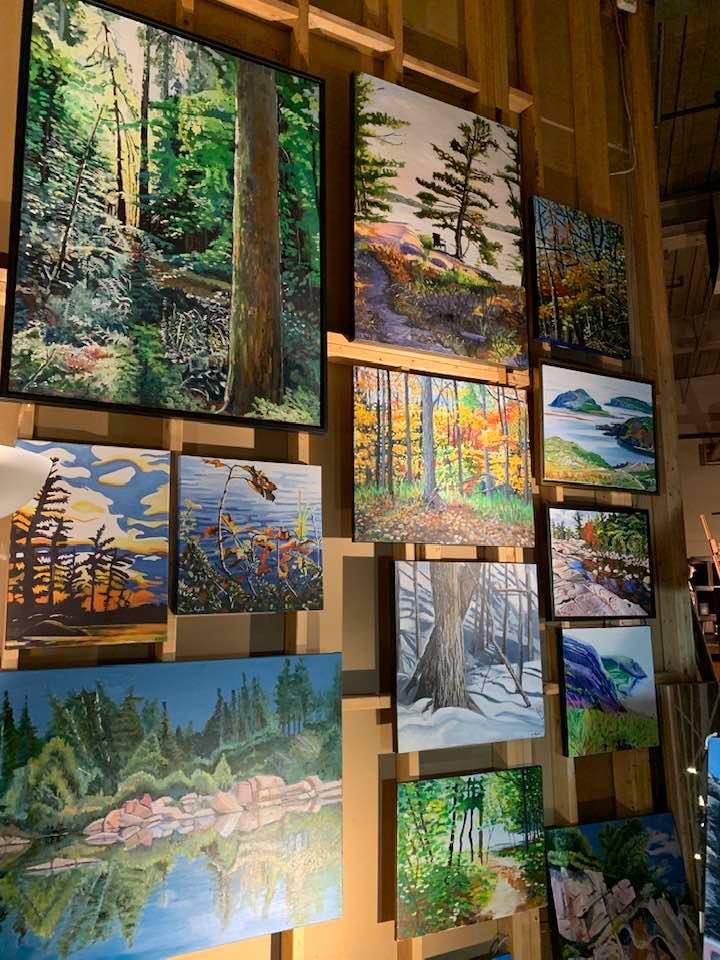
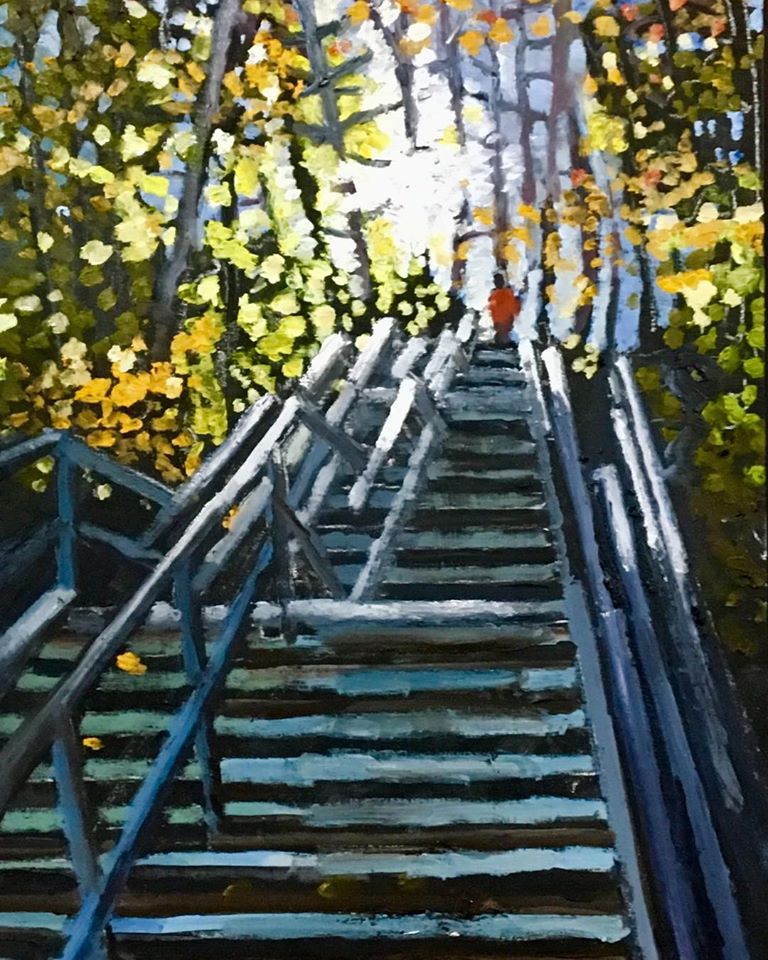
LYNNE RYALL: I am working on paintings for upcoming shows at the Pelham Arts Festival and the Kingston Artsfest. The Pelham Art Festival theme is on the environment and since I am a landscape painter it is a natural fit for my work. I am also involved in the Cotton Factory’s “Roar Show” that happens on March 7. In this show I will be showing off my art and also performing with my fiddle group (I play guitar and sing) for “Raspberries Pickles and Ham.” They are a Hamilton group formed out of the Dundas Valley Orchestra. We play for many retirement, and long-term care homes as well as hospitals. I am also a viola player for the Dundas Valley Orchestra and the Della Sera Strings, both amateur community orchestras that play community concerts. I also teach after school art classes at two Hamilton elementary schools. Finally, I do digital archiving and work with photoshop for the Royal Botanical gardens.

JS: How did doing these projects change you as a person and as a creator?

LR: I think as an artist I have become much more focused on creating paintings with a common message about the natural world which I perceive when I am out in it. I try to convey light and colour as perceptual moments in time. I think I am both more prolific, solidified in style and more professional in my presentation. Since I have taken up studio space at the Cotton Factory, I have become much more aware of what it takes to participate in the Ontario commercial art market and what it takes to put on shows for the public. As for the music, as I do so much of it, I have become aware of how much work it takes to be a proficient musician that performs in public. I have widened my musical repertoire and taste in music.

I am a much more disciplined person now in my practice of the arts than I was, because I
now really know how much work it takes to become accomplished in two areas. I think my
two practices have enriched my teaching expertise as well. I have also become aware of
how much the Hamilton community has to offer in terms of the arts. I was originally from
Toronto and had no idea of what was going on in Hamilton, when I first came here.

JS: What are the most important parts of yourself that you put into your work?

LR: In my art, my very spiritual love of nature is completely infused in my need to paint. I have had this need my entire life, but as I have aged, it has become an even more intense pursuit. I strongly believe that if people are not exposed to nature from an early age, they will not gain an appreciation for it and as such, will not feel the strong need to protect and preserve it. This I feel is more necessary now that climate change is upon us and the lessening of biodiversity and natural habit is occurring more rapidly. I think I try to transport people into my work so that they will cherish outdoor locations such as provincial parks and landmarks even more.

Music is a universal language of love and I relish participating in that. It makes me feel more whole when I can perform something, especially with a group. I have a real love for community groups working together. In music you have to listen to other people in order to perform well and it teaches people the necessity of co-operation. Music was the first community involvement I had when I moved to Hamilton and it means a lot to be part of it. I have made a number of Hamilton friends because of musical participation.

JS: What are your biggest challenges as a creative person

LR: I tend to move too fast and become impatient relying too much on my artistic instincts and musical memory. My biggest challenge has been to slow down and not try to do too much at one time on a project or learn a piece of music in one shot. I have had to begin to focus much more on a working process that requires patient stages of completion. I also battle between the priorities between music and art. Art is more of my priority, but I have trouble saying no to all the musical endeavours I get involved with to make more time for my art.

JS. Name a point in your life that helped to make you who you are as a creative artist

LR: Moving to Hamilton in 2010! It opened me up to community orchestras and joining the Cotton Factory in 2017, when I retired from teaching, made producing art the main focus of my new life and I am grateful for the transition.

JS: What are the hardest things for an outsider to understand about your life as a person in the arts?

LR: Creating does not have a lot to do with talent or gift but with a disciplined approach to working on your craft (the old 10000 hours thing). You will make a lot of awful stuff before you start making work or music that is reasonably good. I always liked to tell my students to not get too attached to their work because they wouldn’t like it in a few years. I also told them to paint for the garbage! It is also extremely difficult for an artist to make any real money in the arts unless they learn how to brand themselves, use social media and get really established with several galleries, and enter art show competitions.  It takes a long time and half the work of an artist is the paperwork of applying for shows and responding to social media feeds, getting work framed and labelled and setting up properly for shows. Doing the art is only half the battle. If you are creating work for a commercial market you are running a small business and that is a whole different skill set.

JS: Please tell us what you haven’t attempted as yet that you would like to do in the arts? Why the delay so far?

LR: I haven’t done a lot of conceptual work in visual arts because I am still so caught up with capturing my love of nature. Perhaps I will go more abstract as time goes on or do more metaphorical work but for now, I am totally in love with what I am doing.

JS: If you could re-live your life in the arts, how would you change it and why?

LR: I always wanted to write a book, produce a film or act- maybe I will do so some day. Right now, I am too busy.

JS: Let’s talk about the state of the arts in today’s society, including the forms in which you work. What specifically gives you hope and what specifically do you find depressing?

LR: The arts have expanded with the global fusion of international influences on cultural
styles. That is a good thing. To paraphrase the work of Wade Davis on culture- we have a lot to learn from the multitude of cultural entities that inhabit our world and art creation is no exception. I don’t think individual cultures have a monopoly on one style of art so I am not a big fan of the term cultural appropriation. Artists constantly borrow stylistic ideas from each other and that is how art evolves. I am against complete copying and copyright infringement, but not artistic inspiration from other artists. I also do worry that the arts are still seen as fringe optional subjects in education and that narrow-minded politicians and chairs of education do not see it as an integral part of developing as a whole educated person. Numerous studies indicate that students who have had an extensive arts education do better academically and socially. It is no secret that the arts stimulate the economy.
Artists are the first to transform an urban area into a vibrant and lucrative location.  I get depressed when the arts are not valued as an integral part of societal development on the part of government. It always seems to be the first thing cut when there is an economic crisis. Finally, I believe because artists are divergent thinkers, they are extremely valuable
in terms of creating unique and strong solutions to really difficult world problems. Bruce
Mau, the famous designer is a big promoter of the value of the artist in coming up with
unique solutions for society. In today’s increasingly polarized and entrenched political
world, we need this kind of skill set even more urgently.

JS: What exactly do you like about the work you create and/or do?

LR: I love creating a wonderful mix of colour and light in my work. I think colour schemes and reflected light are the real strengths of my work and a spiritual impression or feeling for the viewer which transports them into the piece.

JS: In your creative life thus far, what have been the most helpful comments you have heard about your work?

LR:  I think artists’ friends and family members have encouraged me to simplify and focus
my composition in their comments about individual pieces. Every time I do that, my
work gets better.

JS: Finally, what do you yourself find to be the most intriguing and/or surprising things about you.

LR: I don’t know if there is anything particularly intriguing. Perhaps one thing is that I
have the soul of an introvert in creating art about nature. I am also a relentless
daydreamer. However despite my love of untouched natural settings, I also love and am
inspired by being around other people. I am mostly an extrovert, socially. It is probably
no surprise that I tend to befriend a lot of introverts who share my love for the solace of
nature. I also still really love teaching, so perhaps that feeds the extroverted side in me.


Posted in Uncategorized | Tagged | Leave a comment

MARGARET ANN FECTEAU AND RUDY D. FECTEAU: MARRIED ARTISTS – AND MUCH ELSE – WORK TOWARD FUTURE JOINT SHOW, AND SHE EXPLAINS ALL, “OFTEN WE WILL DRAW OR PAINT THE SAME SUBJECT, BUT FIND THAT OUR TREATMENTS CAN BE VERY DIFFERENT. AT OTHER TIMES, WE WILL DO COMPLETELY DIFFERENT TOPICS” …. A REVIEWER INTERVIEWS PEOPLE IN THE ARTS

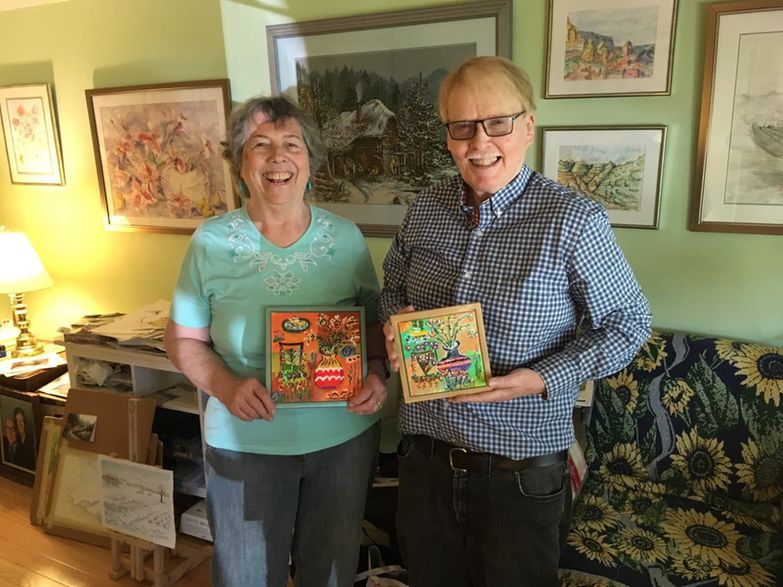
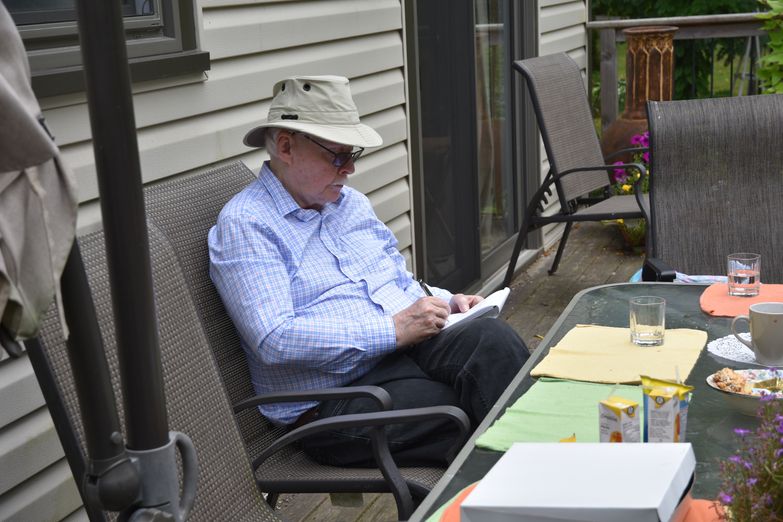
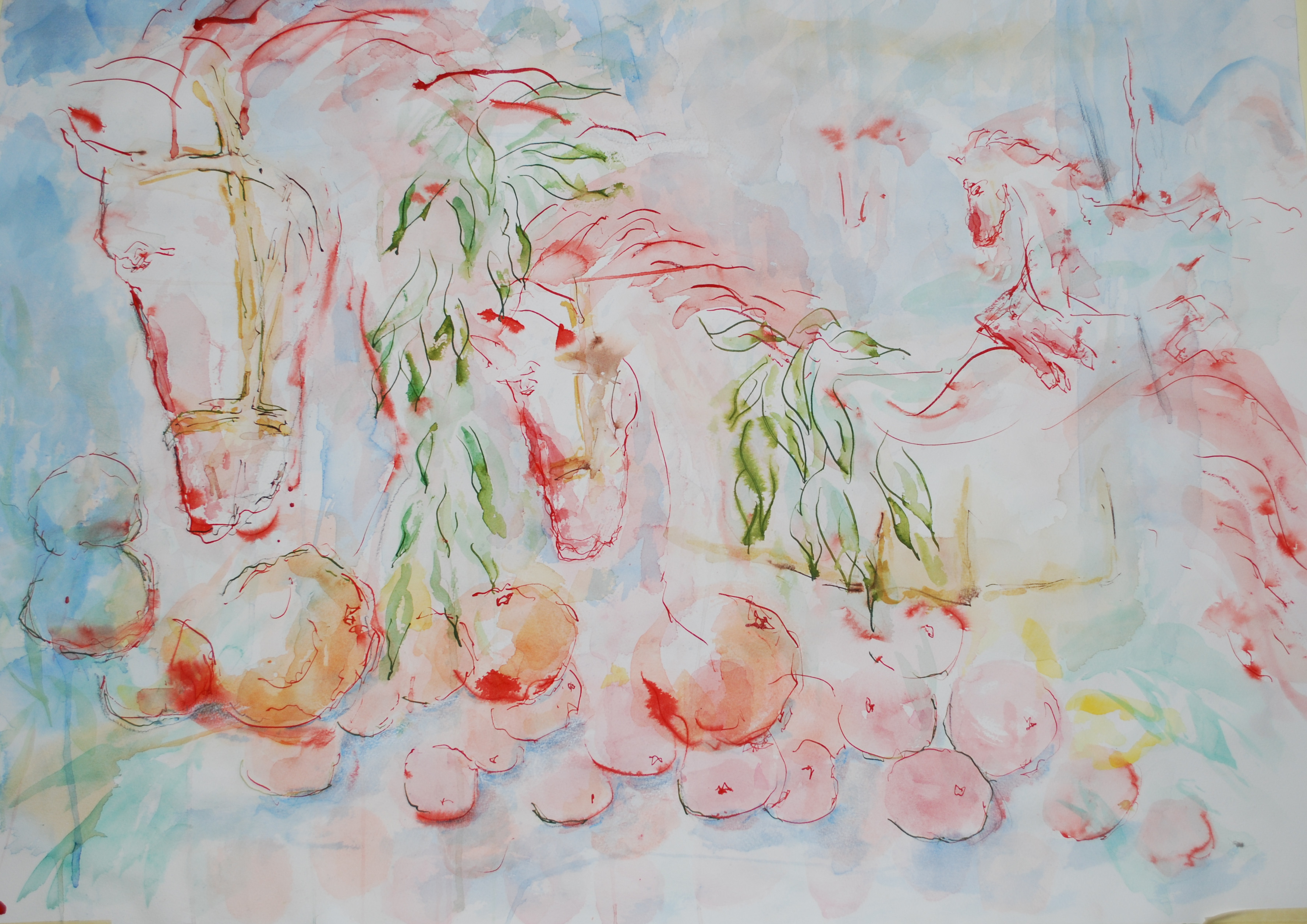
Margaret Ann and Rudy Fecteau (holding paintings by activist-artist Renee Sagebear)


JAMES STRECKER:  Please tell us about one or more projects that you have been working on or have recently completed. Why exactly do they matter to you and why should they matter to us?

MARGARET ANN FECTEAU: Often we will draw or paint the same subject, but find that our treatments can be very different. At other times, we will do completely different topics.

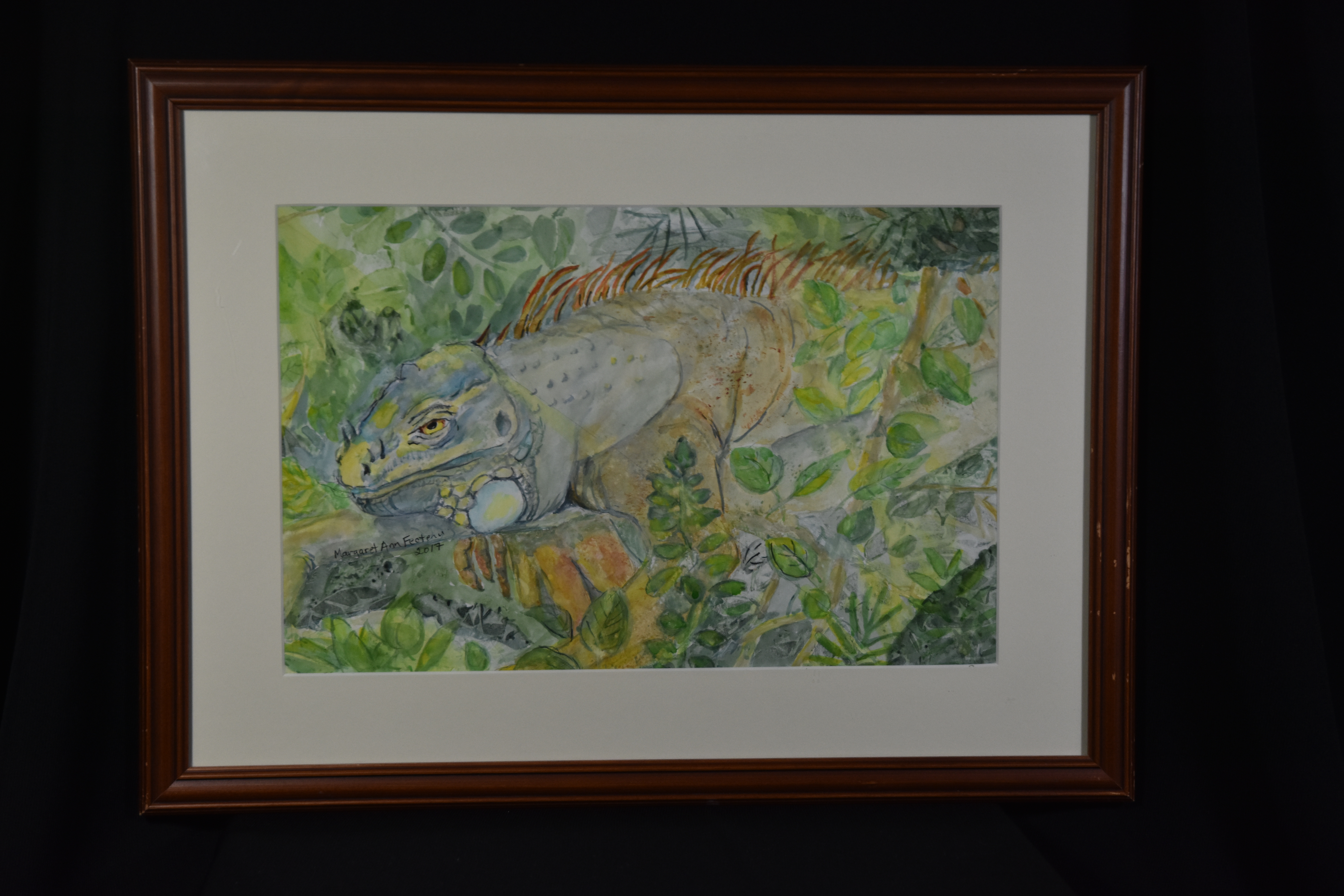
Recently I have been working on various watercolours and botanical ink drawings. All of these are for my own satisfaction and/or for gifts. Rudy and I may have a show of our work in 2021, so, I need to work on items for this as well.

Since I had not done much drawing or painting for quite some time, partly because I doubted my ability and the value of my work, these successes have encouraged me to continue. I would hope that other people enjoy my work.

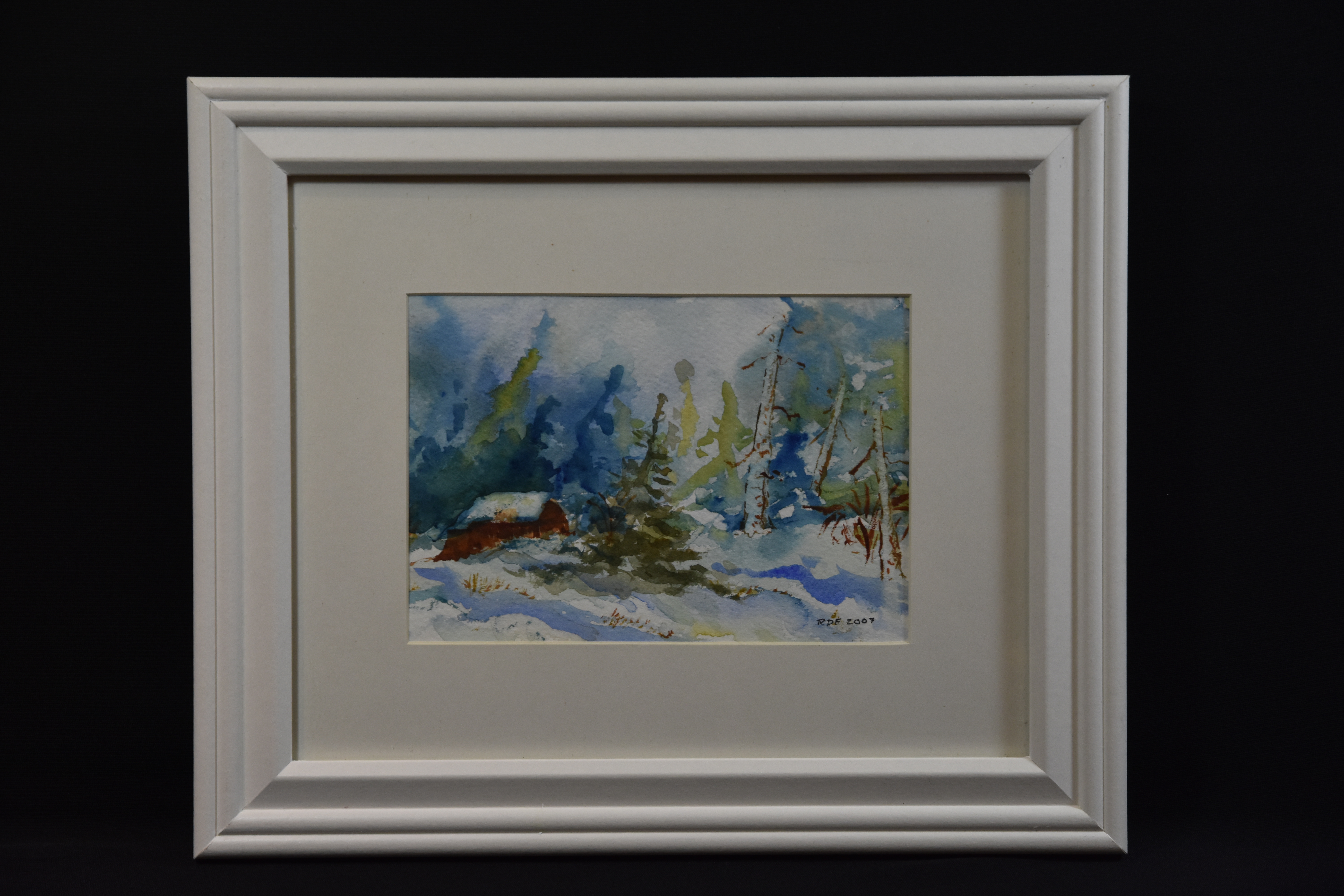
RUDY D FECTEAU: Over the last several months I have worked on several pieces that are related to my archaeology consultation work. I have done several drawings that can be incorporated into reports and visual presentations. I have also used these references for watercolours, one of which we had printed as our Christmas card.

I find drawing and painting very explorative. I often dream and use these images as a source for pieces of work. It encourages me to try different techniques and styles which I think that viewers might enjoy.

JS: How did doing these projects change you as a person and as a creator?

MAF: Managing to do a number of drawings and paintings successfully and having positive results and feedback about them has increased my self-confidence and encouraged me to try to do more.

RDF: Working on these recent projects along with current painting courses has allowed me to ‘see’ differently. This experience has encouraged me to work more spontaneously, which produces unexpected points of view that I incorporate into my art pieces.

JS: What might others not understand or appreciate about the work you produce or do?

MAF: Other people may not expect that I can produce drawings and paintings that have merit. They are often quite surprised when they see pieces that I have done.

RDF: People might not see that there is a relationship between doing archaeobotanical analyses and reports, publishing articles, preparing workshops and manuals and drawing and painting, but I see all of these things as part of the creative process.

JS: What are the most important parts of yourself that you put into your work?

MAF: I find that I tend to see objects and situations somewhat differently because of my art background. I like to try to incorporate this into my work. I also have a lot of interests such as plants and animals which I try to use as subjects for drawings and paintings.

RDF: I feel that my sense of humour is important in my work. I often enjoy creating cartoons that express this. These have been appreciated in the past since they illustrated people and situations from events that I had been a part of. I have also used cartoons, drawing, and paintings in publications and presentations as a way of sharing ideas with others

JS: What are your biggest challenges as a creative person?

MAF: Finding time to focus on drawing and painting, let alone complete work, is always a problem since we tend to be very busy with a wide variety of activities.

RDF: Since I have a consulting business and I am increasingly in demand for talks, workshops, mentorship, analysis and report writing, I find it difficult to set time aside specifically for drawing and painting.

JS: Image that you are meeting two or three people, living or dead, whom you admire because of their work in your form of artistic expression. What would you say to them and what would they say to you?

MAF: If I had my choice, I would prefer a living person because they’re not as scary.

Michael Warren: I would let him know that, even though I love his paintings, I really enjoy his rough coloured pencil sketches of birds. Doris McCarthy: I would like her to know that I thoroughly enjoy her use of a variety of media in her paintings, the wide diversity of locations and topics, but most of all, the fact that she could travel and paint even into her later years. I think that both of them would tell me to “get out there and get to work.”

RDF: I have not been trained in art history, but I am familiar with various cartoonists, editorial cartoonists and caricaturists.

Ding Darling: I would tell him that I appreciated his drawing and his interest in and work for environmental issues. Murray Ball: I’d let him know that I find his perspective of life on the farm in New Zealand through the eyes of a sheep dog to be different and amusing and I appreciate the detail in his drawings. Al Hirschfield: I’d tell him how much I have admired and been fascinated by his use of simple, contour lines to render figures and faces. I hear them saying to me “try to find more time to focus on your painting and drawing. You have talent!”

JS: Please describe at least one major turning point in your life that helped to make you who you are as a creative artist?

MAF: During my first year of teaching in elementary school, I took a Ministry of Education course in art for teachers. After a surprisingly successful completion of this course, I took three more in the following summers to get a certificate which qualified me to be an art resource teacher. Two years of training teachers and working with classes in a variety of schools led to teaching art full time in a large elementary school in Toronto.

RDF: I always liked to draw and sketch. When I got involved with the Ontario Archaeology Society in London, I did a lot of cartoons for their newsletter as well as artifact drawings. In the late 1990’s, Margaret Ann convinced me to take a watercolour course at Dundas Valley School of Art. It was a major disaster, but she persuaded me to sign up again. Mid-week I made a break through and was much more successful.

JS: What are the hardest things for an outsider to understand about your life as a person in the arts?

MAF: People are generally quite surprised when they see my work…the “good” pieces. I think that they see me as being chatty and inattentive, so they don’t realize that I have the creative talent to complete pieces of work.

RDF: I think that people who know me find it hard to understand where I find the time to do all the things I like to do in the creative arts.

JS: Please tell us what you haven’t attempted as yet that you would like to do in the arts? Why the delay so far?

MAF: In spite of an instructor at DVSA who used to hassle…uh, encourage…me to do more work and have a show, I have yet to do it. This is probably due to my insecurity and lack of self-confidence. My husband (RDF) and I are in negotiation to have a show of our work in 2021.

RDF: There are so many things that are constantly popping into my mind that I would not know where to start. I find when I take on some new art style, I delve into it almost immediately and start exploring my own style without thinking about it. Any delay would be caused by lack of time to do it.

JS: If you could re-live your life in the arts, how would you change it and why?

MAF: I could have taken better advantage of my years as a resource teacher doing teacher training workshops and demonstrating various techniques in their classrooms. And, during the twelve years that I taught art full time in an elementary school, I could have taken courses at university. I could have done at least an M.A. in curriculum design because I did that for all of the grades in the school.

RDF: If I had received positive feedback about my work when I was a child, I might have developed further. For the most part, I don’t feel that I would change much because my academic, archaeology career, cartooning for archaeology newsletters, writing, elementary school teaching, and drawing and painting are all interconnected.

JS: Let’s talk about the state of the arts in today’s society, including the forms in which you work. What specifically gives you hope and what specifically do you find depressing?

MAF: Music, drama, visual arts, architecture and writing are all around us all the time. There is a great deal of variety in all of these disciplines, many of which are popular with some segments of society and not others. However, I enjoy the fact that there is a lot of diversity. What I find upsetting is that governments in many large countries seem to be focused on cutting funding to schools, public television, orchestras, libraries, etc., supposedly to reduce spending on “frills” to “balance the budget”. They don’t seem to realize that, when people look back on previous cultures, they look at the arts which those people produced, NOT at their ledger books.

RDF: {See above}.

I have noticed on social media that watercolour and acrylic painting are becoming more and more prominent in the visual arts domain. I admire the various ways that watercolourists use the medium, often with pen and ink added. I am currently exploring this technique.

I find the misplacement of “art” in inappropriate public venues (tags and graffiti) disconcerting.

JS: What exactly do you like about the work you create and/or do?

MAF: I enjoy trying a variety of topics and techniques as well as various media.

RDF: I enjoy the journey from the dawn of an idea through the preliminary stages and subsequent developments which result in a finished product. It is pleasing to see the results of an idea bear fruit.

JS: In your creative life thus far, what have been the most helpful comments you have heard about your work?

MAF: “OMG, you guys are good!” This comment from a knowledgeable person was a major boost to my confidence.

RDF: In the second summer’s watercolour course at DVSA on the Wednesday afternoon, the instructor hollered at me to stop. Then he told me to hang my painting on the wall and asked the rest of the class if they could tell him why he was going to tell me to get it framed. At a later course, that instructor told MAF that he felt that I had made a quantum leap in controlling the medium.

JS: Finally, what do you yourself find to be the most intriguing and/or surprising things about you?

MAF: I surprise myself when I complete something that I feel is of value and when other people enjoy it.

RDF: I have found that during my entire life I have been pushed by other people and events to alter my life course. I have found that I became extremely adaptable to change because of this. I have done a variety of jobs, academic pursuits, planning (articles, presentations, mentoring students, workshops, public-speaking events), creative interests (drawing and painting, photography, developing PP presentations …) and I have enjoyed every one of them.

Posted in Uncategorized | Leave a comment

EVELYN LONG: DIRECTOR / SOUND DESIGNER FOR MANY HAPPIER RETURNS BY CHRISTINE FOSTER AT WOMEN AT PLAYS (S) (FEBRUARY 27-MARCH 8) EXPLAINS: “ON RARE OCCASIONS I GET A JOB WHERE I JUST HAVE TO WEAR ONE HAT (DIRECTOR, STAGE MANAGER, PRODUCER ETC.) BUT USUALLY I AM JUGGLING MANY RESPONSIBILITIES. I’VE HAD TO LEARN HOW TO DO MARKETING, SET BUILDING, COSTUME DESIGN, LIGHTING DESIGN AND MANY MORE THINGS TO PUT ON SHOWS.” A REVIEWER INTERVIEWS PEOPLE IN THE ARTS

JAMES STRECKER: Please tell us about one or more projects that you have been working on or have recently completed. Why exactly do they matter to you and why should they matter to

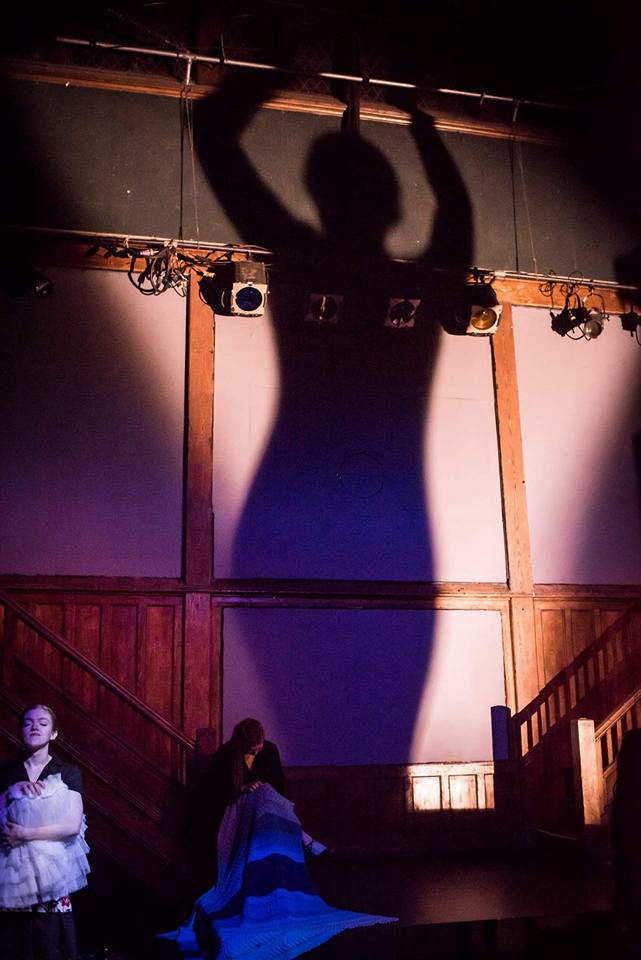
EVELYN LONG: A project I completed recently was Omen: The Musical in the 2019 Toronto Fringe. It was a show about the impending climate apocalypse our world is facing and followed a band of witches trying to reverse it. We had a sold out run and won the Patron Pick award for our venue. For me it’s very important to talk about current issues affecting our world. The climate crisis was something I and my Co-creator Marley Kajan felt hasn’t been covered in much theatre or art yet especially in more commercial productions. We also focus our work on female stories and creating dynamic roles for women in theatre because there is a lack of depth in many female roles. I am currently working on a musical about the story of Medusa, with an all-female cast. The story revolves about the Me-Too movement and different female perspectives of surviving within the patriarchy. I think telling female stories from female perspectives with primarily female casts is very important. So many great female stories have been told with men in the driver’s seat and led to watered down versions of these amazing women. Having a safe and empowering environment for the characters and actresses portraying them leads to an amazing powerful energy behind these stories.

JS: How did doing these projects change you as a person and as a creator?

EL: I have had to become very politically and socially aware. I am constantly researching current events and trying to understand different viewpoints. It’s important to me to have well rounded heroes and villains in all my shows and really show the inner conflicts behind every person no matter their choices and actions. I try to extend the same grace I have towards my characters to my actors. Knowing every person comes into the room with different insecurities, talents and baggage really helps create a loving and safe environment to do the work. People also want to be involved in work that they think is important, so I’ve been able to surround myself with likeminded artists which has improved my general quality of life.

JS: What might others not understand or appreciate about the work you produce or do?

EL; On rare occasions I get a job where I just have to wear one hat (Director, Stage manager, producer etc.) but usually I am juggling many responsibilities. I’ve had to learn how to do marketing, set building, costume design, lighting design and many more things to put on shows. Every job I do saves money and allows me to more adequately compensate my team members. I know there are tons of artists within Toronto who are pulling 2-3 full time jobs worth of work for every production they put on and I think that’s such a commendable task.

JS: What are the most important parts of yourself that you put into your work?

EL: Kindness and humility. I think every actor out there has had an experience that left them with a sour taste in their mouth after a show and I never want to be the reason for that. I want to foster safe creative spaces where people feel free to truly explore the extent of their talents. I do ask a lot of my actors physically, mentally and emotionally, so when they know they’re being respected and honored I get to see the most amazing work from them. We’re giving each other gifts at every rehearsal and it’s the most humbling experience for both sides.

JS: What are your biggest challenges as a creative person?

EL: I am very headstrong when it comes to certain things. I demand respect from everyone I work with no matter their age, gender or experience. Respect is essential for my rehearsal room. When I feel myself or anyone else on my team isn’t being honored in that way it’s hard for me to let that go. I also have had times where I was looked down upon or disregarded because of my age or gender and I don’t react softly to that. I will stand my ground even if it may damage my reputation with those people, but in my opinion those types of artists are not ones you want to continue working with.

JS: Imagine that you are meeting two or three people, living or dead, whom you admire because of their work in your form of artistic expression. What would you say to them and what would they say to you?

EL: Barbra Streisand would definitely be my go-to. She really gave breath to a wonderful type of female character. She showed me the types of roles I would want to play and the types of women I wanted to see in media. I hardly know what I’d even say she’s completely iconic- Thank you for helping an awkward, weird little gangly girl with a loud voice find out how powerful it could be. And then I hope she would just sing to me and I would cry and maybe we’d even hug if the mood was right.

Mindy Kaling would be my second. She wears many hats and saw a lack of roles for herself so she created them. I would ask her about balancing the joy she brings to her work with the quality of content and the constant stream of ideas. I just think it’s remarkable. I can only imagine she’d respond with a quirky joke or two and then unleash the secret of the universe for me.

Lastly, I would tell Michael Reinhart who was the biggest influence on my craft and the biggest help starting me off in my career how much that meant to me and how much I love his practice and methods and how good he is for the theatre community. And then he’d call me a nerd and we wouldn’t talk for a month.

JS: Please describe at least one major turning point in your life that helped to make you who you are as a creative artist.

EL: Going to school for Triple Threat Performance. I loved musical theatre so much growing up and you only ever really see the performance aspect of that. So, I decided I was going to be on Broadway. Unfortunately, I cannot dance and suffer from severe stage fright but the program had so many wonderful aspects that allowed me to explore other avenues. I fell in love with directing and found my passion for strong female performers because the school was full of them.

JS: What are the hardest things for an outsider to understand about your life as a person in the arts?

EL: My family cannot keep track of what I’m doing. I’m currently directing and doing lighting design for a festival, writing a show, stage managing a fringe show, directing a fringe show and writing music for a fringe show, producing a show, curating a festival and doing an emerging artists roundtable. And I still have time to play too many video games. It’s a constant balancing act with different jobs that are nearly impossible to explain to people not aware of the arts. My grandma still asks me if I’m performing in this show and the answer is eternally no.

JS: Please tell us what you haven’t attempted as yet that you would like to do in the arts? Why the delay so far?

EL: I would like to pull the triple threat feat of writing, performing in and producing a one woman show. I have to get over my stage fright and have faith my story is worth telling but I’m sure one day I’ll do it most likely because I’ll be bored.

JS: If you could re-live your life in the arts, how would you change it and why?

EL: I wouldn’t. I’m learning more every day and constantly moving onward and upwards. If I changed anything, I would lose an aspect of my craft.

JS: Let’s talk about the state of the arts in today’s society, including the forms in which you work. What specifically gives you hope and what specifically do you find depressing?

EL: New styles of musical theatre- Especially stuff coming out of Edmonton. Hadestown and Nevermore that both originated in Edmonton are two of my favorite theatre soundtracks. Knowing that different types of musical are succeeding on bigger venues is very exciting for me because I like making a very odd brand of theatre. I love seeing more inclusion of different types of people in the arts and that we’re seeing more diverse casting and crews all over. I don’t find it depressing but I’m excited for more mainstream media to catch up and more accurately represent the society it’s performing for. The main thing that does bother me is people who say they support marginalized groups but continue to hire people who are known abusers, racists or have platforms promoting hate. If those companies fix themselves, everyone can have a safe space to create art.

JS: What exactly do you like about the work you create and/or do?

EL: I talked about giving gifts in our rehearsals, sharing skills with one another in a safe space to create something beautiful. The lifted version of human connection with the goal of creation. It’s beyond any conversation or night out at the bar or anything like that- creating art with amazing people is the greatest joy in my life.

JS: In your creative life thus far, what have been the most helpful comments you have heard about your work?

EL: “If you like nuance- this isn’t for you.” That was from a review and really taught me two things 1. Work on nuance in my directing and 2. Not everything you make is for everyone.
“Everything on stage has to have a purpose and a meaning” That was said to me by Michael Reinhart after I put a dumb box on stage for no reason except to hold things. Everything you put on a stage the audience wants to give meaning to so make sure everything that happens is completely thought out.

JS: Finally, what do you yourself find to be the most intriguing and/or surprising things about you?

EL: I think that I (and everyone else) really has a limitless well of things they can learn. I love to learn new things, ideas and skills. I’ve taught myself how to do sound design, lighting, how to sew, knit, braid, play piano etc. If I want to learn it I can- I may take a minute- but if you really set your mind to something you can learn it. In the same vein how much I can get done in a day. I’ve definitely had times where I’ve gotten a handful of last-minute tasks and I’ve ever had a show where everything wasn’t done on time. I wasn’t this type of person who tried really hard or had good time management skills a couple years ago, but my craft has turned me into a productive competent person.

Posted in Uncategorized | Tagged , , , , | Leave a comment

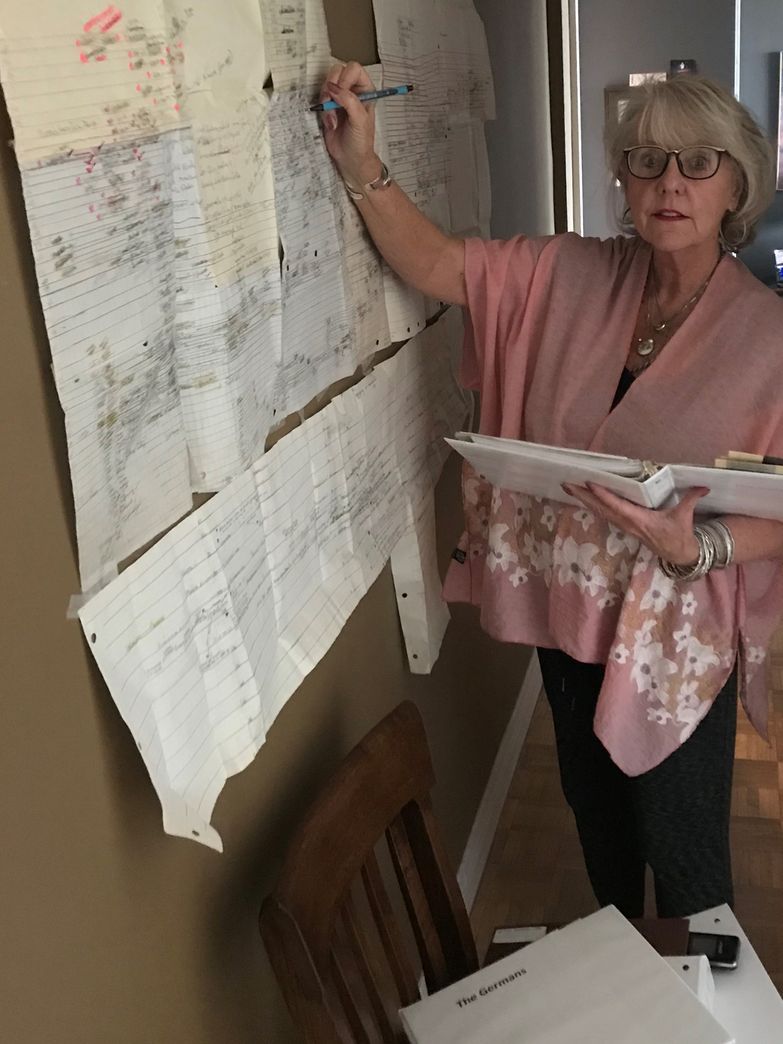
BEVERLY WILLIAMS: “WE REALIZE THAT WE ARE BECAUSE THEY WERE,” SAYS CHRONICLER OF HER ANCESTRY, WHO ADDS, “SOME 4066 PEOPLE LIVING IN 1354 FAMILY UNITS HELD A PLACE AT THE FAMILY TABLE AND THE SPAN OF TIME REACHES BACK TO THE YEAR 1460 BC…..WE ARE THE ACCUMULATION OF EACH OF OUR ANCESTORS AND THE FUTURE OF EACH OF OUR DESCENDANTS”…..A REVIEWER INTERVIEWS PEOPLE IN THE ARTS

JAMES STRECKER: Please tell us about one of or more projects that that you have been working on or have recently completed. Why exactly do they matter to you and why should they matter to us?

BEVERLY WILLIAMS: “Footsteps Through Time” is the result of a 13-year personal journey to discover my ancestry. As such, it began as an exercise in expository writing. This initial stage involved perfunctory research wherein names, birth and death dates became placeholders on a chart. I started with the 27 names that I knew of. As the intricacies of genealogical research were conquered, some 4066 people living in 1354 family units held a place at the family table. The span of time reaches back to the year 1460 BC.

In proceeding through the initial phase, primary sources of information began to reveal themselves in the form of photos, letters, archived documents, journals, and treasured memorabilia. These sources spoke silent, powerful messages. I listened intently as a life was revealed. I sensed that stories wanted to be told. I recognized that a voice should be given to those who had been silenced. This is the juncture of the project where I decided to write each person’s life story. Not only would I reveal their footsteps through their birth to death existence but I would capture their journey in the context of their extended family as well as the context of the times in which they lived. My narrative writing began to take shape. In composing the family biography and placing the lives of our ancestors in a context that embodies the political, social, economic milieu of their time, my overall goal was to trace our past in the hopes that those who are, and those who are yet to be, will understand and honour the legacy left to them.

Who cares? I have heard that from many. There tend to be two positions taken on the subject of one’s ancestry – rabid interest or abject disdain. There is no middle ground.
It mattered to me on several levels. In 1967 my father began to piece together our family tree. It was to be his “centennial project.” He devised a form for collecting information on his portable Underwood typewriter. He then mailed, via Canada Post, said form to immediate family members. One replied with a completed form. The remainder declined saying, “We don’t talk about these things.” Churches were contacted through a formal letter. All indicated that, “Records are private.” In one instance where hospital records were sought in order to find the final resting place of a loved one, a legal response declared, “If you can prove you are related, we will do our best to assist.” I felt that I had to complete his work in honour of his memory and the memory of those who could no longer speak for themselves.

It mattered to be on a personal level when one of my adult sons asked about my birthplace. That struck a chord that resonated with me throughout my writing. I wanted my sons and grandchildren to connect to our roots.
In following our footsteps through time, we realize that we are because they were. “Stories are part of the most precious heritage of mankind.” (Tahir Shah) I hope that each of us, no matter what our story, want to leave it for others.

It matters because in searching for our roots we uncover who we are and where we came from. It informs the basic question we all ask, “How did I get here? Revealed is the essence of our being as random circumstances through the ages. It also informs our life’s work and purpose. We come to realize that personal traits and characteristics are inherited generation to generation. As I uncovered each generation it became obvious that attitudes are also passed down through the generations. Our immediate future and that of those who will come after us was formed through time and it is ours to know. We are the accumulation of each of our ancestors and the future of each of our descendants.

JS: How did this project change you as a person and as a creator?

BW: My connection to universal truths was awakened through this project. I think in terms of larger contexts for situations encountered. I understand who I am to a greater degree. I know what motivates me. I have come to accept how each person lived their life as I now have some insight into what motivated their actions. I have become less judgmental. I no longer accept perception as being reality. I am now more evidence-based in forming my thoughts.

Project management was part of my forte before I began this writing odyssey. It was the essence of much of my career. There is an inherent difference between managing a project and being managed by a project. In exhausting all avenues to piece together these lives I needed to equip myself with advanced research abilities and freshly minted technical abilities. I learned when to let the creator stop, even for a short respite. It meant finding resolution strategies.

Risk management became a part of my everyday writing. How does one create a story line so as to preserve the dignity and integrity of the person without sacrificing the project? A sense of humour helps.

JS: What might others not understand or appreciate about the work you produce or do?

BW: The preparation required to write this family narrative was akin to being given the component parts of the Roman colosseum and being asked to piece it back together.
The process of gathering both primary and secondary sources of information on which to base my narrative was, at times, exacting, detailed drudgery. While exciting to have boxes of family photographs, not one of the 800 photos indicated who was staring back at me. Those from the early 20th century to the latter part of the century were identifiable by noting family resemblances. Cabinet card photos of the late 1800’s offered clues given the type of card stock, card colour, border type and lettering. The photographers name often appeared on these photos which assisted in narrowing who was portrayed. I sorted each photo by family, identified as best I could who was in each photo and then catalogued these photos for future use.

Personal letters dating back 130 years followed the letter writing etiquette of the times. With their heading, greeting and signature line I was able to assign them to their appropriate place. Preserving them and reading them presented unique difficulties.
Perhaps a concrete example will assist here. War heroes presented themselves throughout my research and subsequent story writing. I told their war journey through their eyes and that of those who had scribbled coded messages on their war records. Audiences read these with respect – not for my portrayal but for the actions of these heroes. To read about someone’s three-year internment in a concentration camp or four-year tour of duty is humbling.

What the audience did not see was the hours of research that went into being able to follow the footsteps of these lives. I waded through digitized records and personal letters written home to loved ones that were so time-worn as to be barely recognizable. It took weeks to parse the military nuances used in recording the details of those who served. At times the work was emotional for me. There were records that caused anger, frustration and profound sadness. These times prompted my opinion voice to seep into the narrative. Denying that opinion was often a struggle.

JS: What are the most important parts of yourself that you put into your work?

BW: I left a chunk of myself in my writing. Readers will know me through my writing. My respect for history which runs DNA deep nudged me ever so gently to keep searching for answers. My sense of humour, ability to empathize and my compassion peek out from the pages. I wrote from my gut without trying to please with words. I wrote as I speak. I disclosed aspects of my humanity through the lives of others. I grieved when they did. I felt afraid when they did. I applauded through their celebrations.

The part of the narrative on this side of the 1940’s is semi-autobiographical. I included discreet objective details based on evidence and laid bare my personal feelings.

JS: What are your biggest challenges as a creative person?

BW: In a word – WORDS! In fact, some 180,751 of them!

As an author, one can’t write without them but there are times when one can’t write with them. I try to be friends with words but we do quarrel at times.

With each draft, edit and re-write, a plethora of components come under scrutiny. Does my syntax create well-formed sentences? Have I overworked words that serve as qualifiers? Have I eliminated unnecessary words? Are my adverbs redundant? Are my adjectives overused? Have I used clichés? (Here I will confess – guilty! As much as I try to avoid them, they follow me) What tone do my words convey? Did I get to the point? Have I used a passive or active voice?

JS: Imagine you are meeting two or three people, living or dead, whom you admire because of their work in your form of artistic expression. What would you say to them and what would they say to you?

BW: “James Clavell, what an honour to meet you. Allow me to begin with an apology. Of the many books you have authored I have read only one – “The Children’s Story…but not just for children.” Perhaps the fact that I have read it countless times and provided a copy to every graduate of my “Foundations of Education” classes, will give me a pass. “
“You present two teachers in this allegory. How would you compare and contrast each of their styles? What changes would you want each of them to make in their teaching styles? What, if any, similarities to current models of world leadership do you see reflected in this story?”

Richard Bach, with reference to your book, “There’s No Such Place as Far Away”, would you give me permission to use a line as part of my epitaph?
James Clavell and Richard Bach may ask me anything! I would cherish a discussion with Richard Bach about making changes to the education system so that students are taught how to think and not what to think.

As for Richard Bach I would hope he would ask me what specific line I would like to use.

JS: Please describe at least one major turning point in your life that helped to make you who you are as a creative artist.

BW: I’m going to sneak in two turning points if I may. Way back in the early 1960’s my father was being schooled at the Canadian Forces College in Toronto, Ontario. This military school for senior officers of the Canadian Forces provides graduate level military education courses which enable officers to provide leadership within the Forces.
Each evening he came home with his “homework.” Each evening as he sat at the wee table cornered in the kitchen, he would invite me to sit and help. The context for completing said homework is important here. We worked with his textbooks, a thesaurus, a tome of a dictionary and a typewriter. Additional references included a set of encyclopedias. Such was the world of research and writing of those times.

It was here that I developed a devotion to the art of research and writing. I would be invited to confirm spellings, forage for the perfect synonym, avoid idiomatic phrasing, help formulate ideas and structure sentences to form a thesis. The love of writing was imbued in me with this nightly ritual.

Developing a devotion to writing came before learning the mechanics of writing. That happened with my Grade 13 English teacher. She taught me to respect the nuts and bolts of writing in the form of formal grammar and punctuation. By the time she ran out of red ink on my work, I understood complex and compound sentences, rejected split infinitives, and identified parts of speech with ease. Initially, commas were the bane of my writing. That trend may have continued had it not been for said teacher who ceremoniously threw a marked essay on my desk while sarcastically asking, “Have you ever heard of a comma?”

JS: What are some of the hardest things for an outsider to understand about your life as a person in the arts?

BW: Why we do what we do, how we do what we do, when we do what we do and where we do what we do. To those looking in, the research, write and re-write process appears to be a monotonous activity. The fact that I have a notepad with pencil at the ready for those times I get an “Aha” makes me appear single focused rather than someone who draws inspiration from life around me. For the outsider, there is a disconnect between our product and the effort to produce it. External reward motivates most human activity. The majority of those in the arts are not motivated by external rewards thus making their motivation hard to come to grips with.

JS: Please tell us what you haven’t attempted as yet what you would like to do in the arts. Why the delay so far?

BW: It is my intention to write my autobiography in the form of a series of short stories. Leaving something of myself to my children and grandchildren is what motivates me to do so.

This current project, “Footsteps Through Time”, has consumed most of my time throughout the past 13 years. The notebooks that I referred to earlier have autobiographical ideas percolating on the pages that just need time to get them off those pages.

JS: If you could re-live your life in the arts how would you change it and why?

BW: My formal education would have included courses in the art and science of writing both fiction and non-fiction. The nuances of writing historical fiction would be my preference as this would sate my research passion.

With “Footsteps Through Time” I seized the opportunity to embed history into the story of my family narrative by immersing each “character” into an historical era. This gave people a context for each person’s life story. Learning the etiquette of merging a character within history would enhance my writing and boost my confidence as a writer.

JS: Let’s talk about the state of the arts in today’s society, including the forms in which you work. What specifically gives you hope and what specifically do you find depressing?

BW: Those who wish to express themselves through the arts will always be. As human beings each of us has the desire to create. I believe that to be a universal truth. Each of us, in our own way, acts on that creative nature, either formally of informally. Creativity is what advances civilization. That, however, is the picture from 30,000 feet.

In looking at the state of the arts in today’s society from ground zero, I am dismayed by what we say we want and what we actually want and get. An example, if I may. In education, business and politics, we call for (cliché warning) “Out of the box thinkers.” We don’t mean it. Again and again, time worn organizational structures and processes are what we honour. Those who challenge existing cultures are seen as a threat.

I am not proposing that we completely do away with that which is time-worn, However, I do see a dire need to include those who are able to massage existing realities and improve the status quo.

In terms of our education system, we most often ignore the research that ties traditional premises of academic success to studies in the arts. There is a positive correlation. We silo the arts. We don’t dismiss but we do ignore that research that indicates how music education improves literacy. Performing arts and theatre arts are shown to improve those skills valued in the workplace – teamwork, communication, problem solving and planning. Few schools can “afford” these programs. We can’t afford not to include these programs for each and every student throughout their elementary and secondary school experience if we want to advance the human condition.

JS: What exactly do you like about the work you create and/ordo.

BW: My writing allows me to venture forth and explore new learning journeys. Essentially, I enjoy researching more than I enjoy writing. Researching satisfies my curiosity to learn why and how and who and when and what! Writing is the vehicle of my research. It helps me solidify concepts and ideas and organize them into a meaningful context.

JS: In your creative life thus far, what have been the most helpful comments you have heard about your work?

BW: Earlier I alluded to wishing I had formal training in the art and science of writing. I have been involved in several informal “writing” classes and the feedback that I have received has been most helpful. Comments about my attention to details, allowing my sense of humour to show and ability to include the personas, both public and private of my “characters,” have kept my writing spirits up.

On the flip side, even more helpful are those comments in the “needs improvement” category. These include a need to avoid using clichés, to worry about the opening line in the final draft and not before, to use of more dialogue to tell the story and to not underestimate the value of “25 cent” words.

JS: What do you find to be the most intriguing and/or surprising things about you?

BW: I am comfortable in any setting with the exception being book clubs. I have no patience for pretentiousness. I am drawn to people who are practical and realistic. I am unable to recall or retell a joke. On the personality test that defines us by colours, I’m orange.


Posted in Uncategorized | Tagged , , | Leave a comment

BOOKS, CDS, DVDS: A PERSONAL HIGHLY RECOMMEDED LIST: PART 3 DVDS

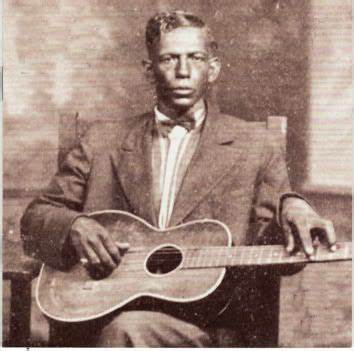
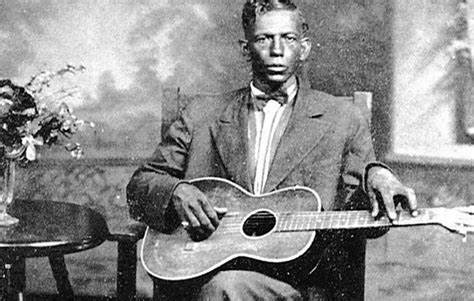
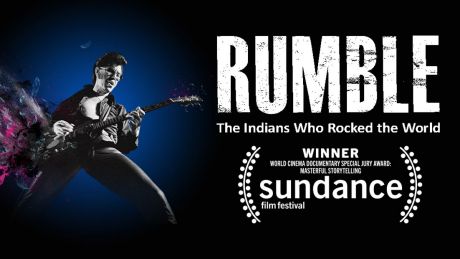
... ...1.Rumble: The Indians Who Rocked the World may change your understanding of rock music, of blues, and of jazz. Just as the music of native Indians significantly determined the nature of these genres of music, so it is that native Indian blood flows through the veins of many musicians and singers crucial to what our music of many kinds is. I remember when Link Wray’s Rumble first appeared on the rock & roll charts and how we all tried to duplicate, unsuccessfully, this unique, uncompromising, defiant, and haunting sound, as did a number of famous musicians interviewed in this film. Yes, Jimi Hendrix, Robbie Robertson, Buffy Sainte Marie, Mildred Bailey, Jesse Ed Davis, and Charley Patton (who some consider the most important bluesman in history) had some native blood in them. Yes, you can hear Indian singing in Charley Patton doing his blues, the influence of Indian singing on Mildred Bailey (Frank Sinatra and Tony Bennett called her a major influence on them), the influence of Indian Link Wray on the sound of Pete Townsend and Jimi Hendrix. The white Christian conquerors of the Americas brought genocide and slavery and ecological disaster to North America, while Indians, their victims, gave them the roots of much of the music we listen to today.st watched I Am Richard Pryor for the at speaking unpopular truths the media machines of our culture spend loads

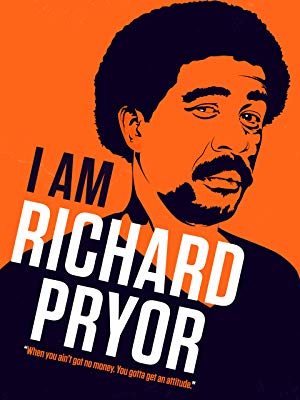
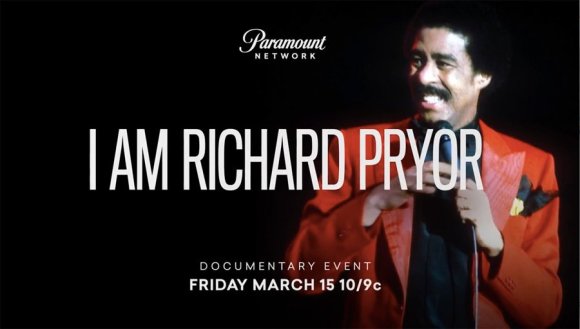
2.I Am Richard Pryor is another film full of insights and revelations, here about perhaps the most important comedian of all, a man who in spite of a media-constructed image of him and in spite of a terribly painful childhood and in spite of enduring racism all his life, set an exemplary model for what comedy of artistic quality and human truth should be. Pryor is shown as a tormented and perhaps a self-punishing individual, a sensitive and complex man who proved a genius while going down the road of his pain and imagination to create a comedy far above the going rate of white-bread America. He spoke many unpopular truths about life in this world that the media and its advertisers try to conceal. Many who knew him, like his widow Jennifer Lee Pryor and Lily Tomlin, share and clarify their experience of both the man and the artist, and we come away moved and laughing, though our laughter is now decidedly more imbued with human reality – and, no doubt, that’s how Pryor would have wanted it..

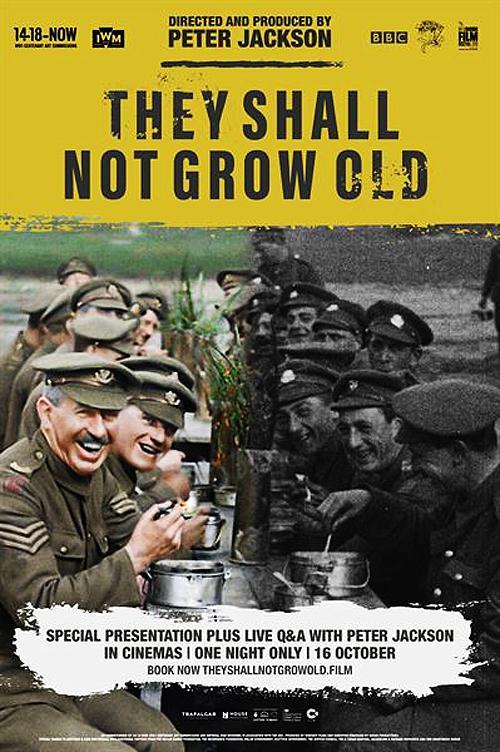
3.Director Peter Jackson’s They Shall Not Grow Old uses never-before-seen and now in colour footage of the First World War of “soldiers as they faced the fear and uncertainty of frontline battle in Belgium.” We hear first-hand accounts from men who lived through the horrors of the war in fields of mud and blood and fragments of bodies everywhere. These are taken from interviews conducted in the 1960s and 1970s and it’s unsettling to hear accounts, albeit told decades after the war, that are matter-of-fact, accepting, and casual, although some are certainly not. One veteran recalls his comrade having his arm and his leg blown off and further tells how he shot his comrade as the most merciful option. And then he breaks down crying, even decades after the war. It’s too bad that Hollywood, in its gun-worshipping culture, tosses out Stallone’s Rambo nonsense instead of telling some truth, but then the Pentagon rules and so many stupidly follow – as patriots or as those who simply like to kill.

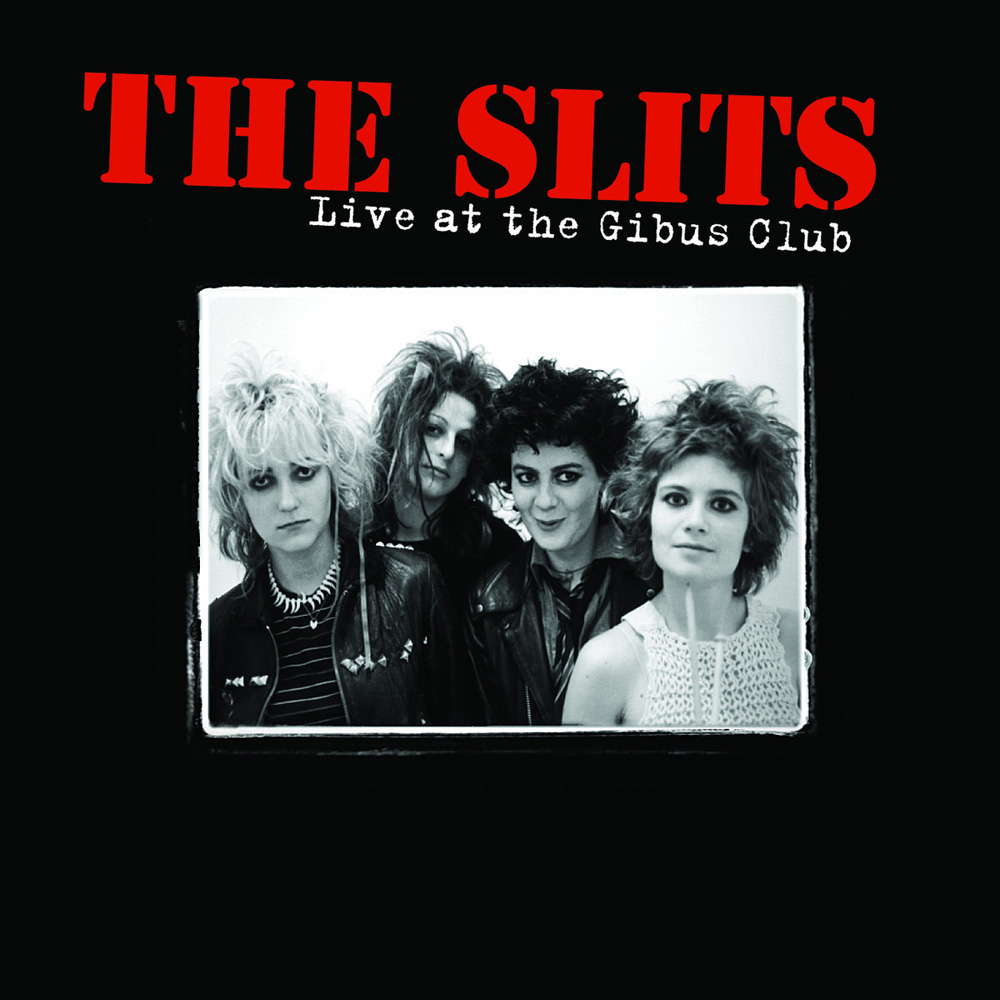
4.The four-part Punk, with Iggy Pop as co-exec producer, features informative and challenging interviews with many greats of the – dare I say it? -genre, like Henry Rollins, Jello Biafra, Iggy Pop, Joan Jett, Marky Ramone, Viv Albertine, Debbie Harry, and the now overweight, refreshingly media-critical, no-nonsense, and quite engaging John Lydon aka Johnny Rotten. The earlier episodes do show the music and the music’s attitude as an extension of the anger and hopelessness of a disregarded and forgotten generation, and the interview with The Clash for one seems even nobly defiant. Commercialism is always a lurking enemy, as are the poseurs, both audience or musicians, who are playing at punk or in it for solely violent and destructive ends -ergo the assertion that punk, a name many resented, was over by 1982. And yes, Malcolm does come across as a shallow and pointless twerp as do some TV interviewers. But the series contains much socially and musically valuable footage and the interviewees are articulate and committed in their telling.
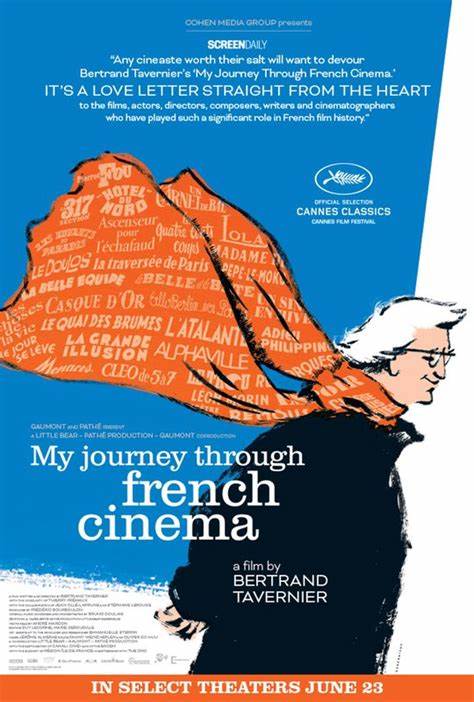
5.Bertrand Tavernier’s My Journey Through French Cinema takes us into a director’s ongoing experience of the art in which he creates, and Tavernier proves to be an engaging and thought-provoking guide to films and their directors who influenced him, won his respect and appreciation, or who merit consideration because of the stature in the history of French film. Thus, we consider, with Tavernier, the films of, among others, Jacques Becker, Jean Renoir, Marcel Carne, Francois Truffaut, Jean-Pierre Melville, Claude Chabrol, and Jean-Luc Godard. We also take a look at important non directors, like the archetypal French actor Jean Gabin and actor Eddie Constantine. Each section of the documentary provides revelations to think about – Jean Gabin who starred in Renoir’s La Grande Illusion sees the director as something of a genius in filmmaking and deeply lacking as a human being. Some directors Claude Sautet are new to me and encourage, though what we see of their work, further exploration.

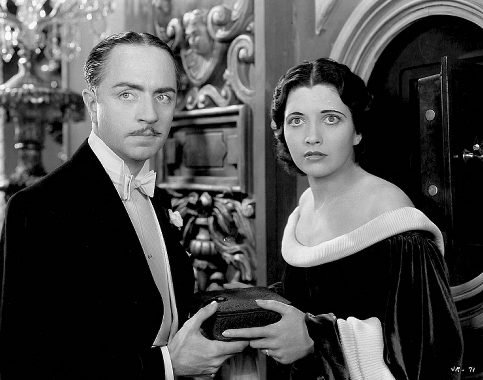
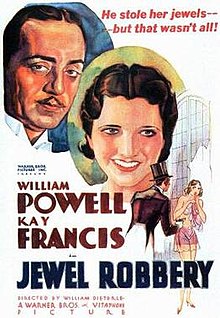
6.One film I watched over and over for a time was Jewel Robbery, directed by William Dieterle and starring William Powell and Kay Francis, all in a manner worthy of and much like Lubitsch. It’s all very European in delightfully varied characterizations, in awareness of social class separations, and in a taken-for-granted sexual savoir-faire that delights at every pre-code turn. My treasured copy is part of a film series titled Forbidden Hollywood and it affirms what a childishly puritanical culture America often is, with its hesitation at sexual delight and blind eye to the realities that people actually live. It’s directed with a precision rich with playfulness and behavioral details and offers wit, gentle romanticism, and joie de vivre. All Movie Guide gives it just three stars – they just don’t know what they are missing.

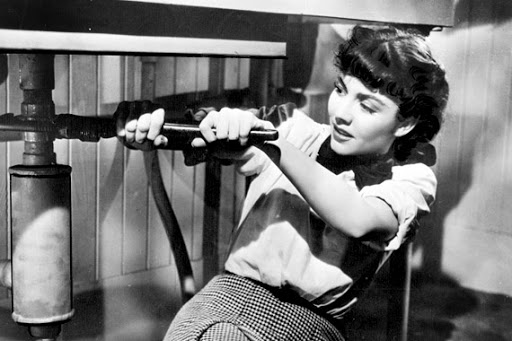
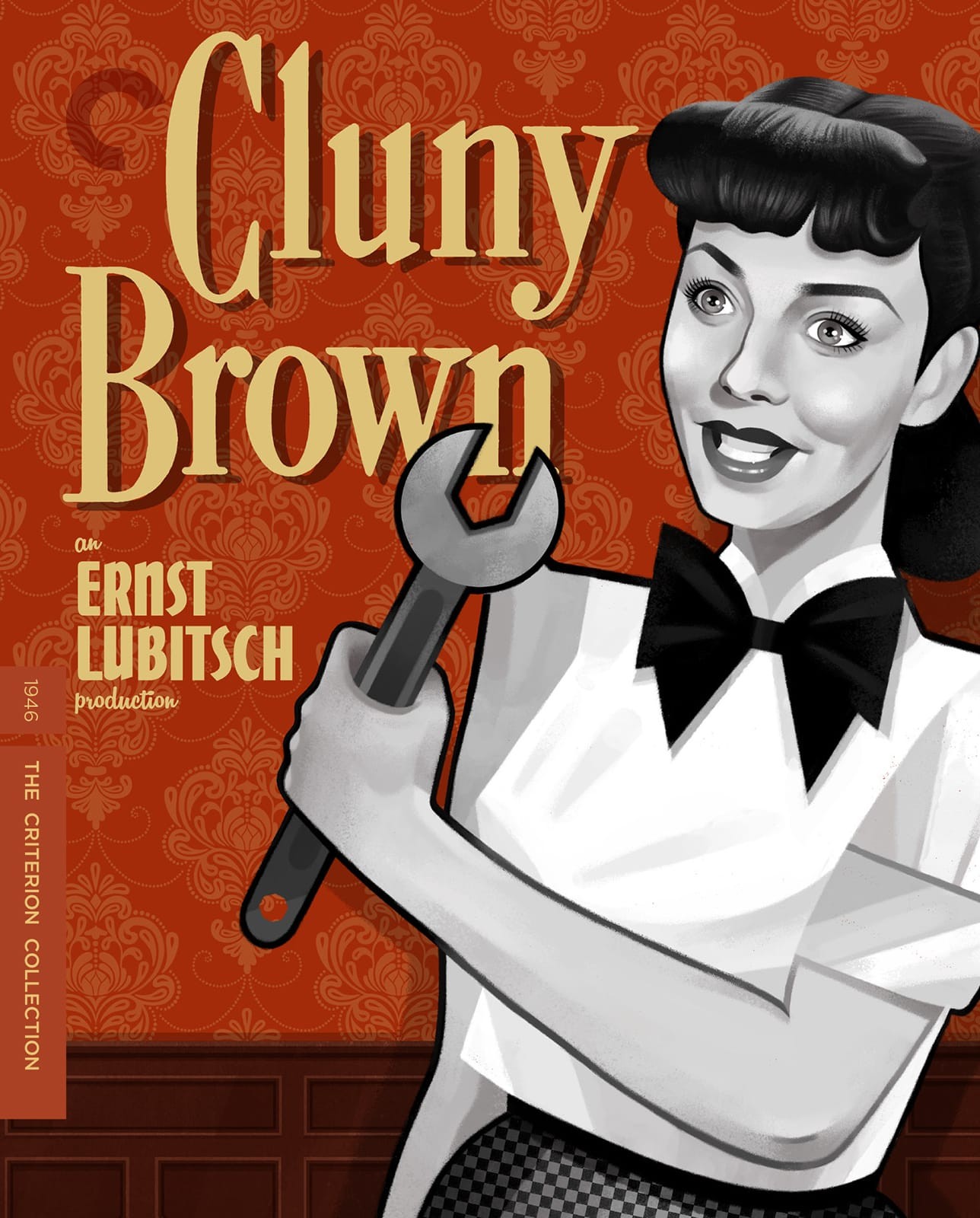
7.As for Lubitsch, what turned out to be his last film, Cluny Brown, is also a thorough delight. One of its stars is Jennifer Jones as the niece of a London plumber and she lives to roll up her sleeves at every plumbing problem and with her wrench go “Bang,,,bang…bang.” This she explains very slowly, with a contained eagerness that oozes sexual innuendo. The film takes place prior to the Second World War and the setting is mostly the country home of rigid and unworldly snobs where Cluny meets again a handsome and charming Czech author, a refugee from the Nazis, played by a handsome and charming Charles Boyer. Like Boyer we are quite taken by Cluny – with Jennifer Jones’ in a memorably free-spirited performance. Of course, the “Lubitsch touch” is delightfully conspicuous in many details.

8.Nothing Like a Dame is a film record of some of Britain’s greatest actors, now old but quite lively and quick, having a collective chat one afternoon outside about their careers, their lives, and theatre, film, and television in general. The Dames here are Judi Dench, Eileen Atkins, Joan Plowright, and Maggie Smith and each one is indeed a Dame. Each one is also a dame who can be quite biting, irreverent, touching, and funny in memories, comments, and observations. I was lucky at different times to interview Dame Judi and Dame Joan, almost blind now it here seems, and I’ve been fortunate to see each of the four on stage at least once, so this film is personally very moving to watch, and it’s fun to laugh along with these remarkable ladies who have long been distinguished in their art.

9. It’s very rewarding to see are From Caligari to Hitler: German Cinema in the Age of the Masses which here illustrates one of my personal favorites of books on film, also titled From Caligari to Hitler. It explores how a charismatic figure lures the collective masses into obedience and sees Weimar Expressionistic cinema as an indicator, with characters like Dr. Mabuse, of what lay ahead for Germany. What’s next? Caligari to Trump? Is a turd charismatic?

10. Finally, Concerto: A Beethoven Journey follows pianist Leif Ove Andsnes, with the Mahler Chamber Orchestra, in his four-year journey of exploring, performing, and recording the five Beethoven piano concerti. As promised, one does gradually see Beethoven in a new light through the course of this documentary and one is lured into the world of each concerto with new ears and a new heart. Andsnes is a man of profound passion in his music-making – and a top-level pianist – and the film is thus a celebration of Beethoven and of music, one we are lucky to share.

Posted in Uncategorized | Tagged , , , , , | Leave a comment

BOOKS, CDS, DVDS: A PERSONAL HIGHLY RECOMMEDED LIST – PART 1 BOOKS

1.The Uninhabitable Earth by David Wallace-Wells: The earth’s dire future, predicted – and far too much ignored or denied – not too long ago, is now our daily horrifying present tense, one which Wallace-Wells thoroughly details in chapters like Heat Death, Hunger, Dying Oceans, Unbreathable Air, and Economic Collapse. And, of course I still read just recently another smug and arrogant right-wing denier on the editorial page of Britain’s The Daily Telegraph. And like many others I do become angry whenever it is obvious that the fate of the world and all life forms are at the mercy of childishly egotistical and indifferent leaders and their followers who live only to look the other way.

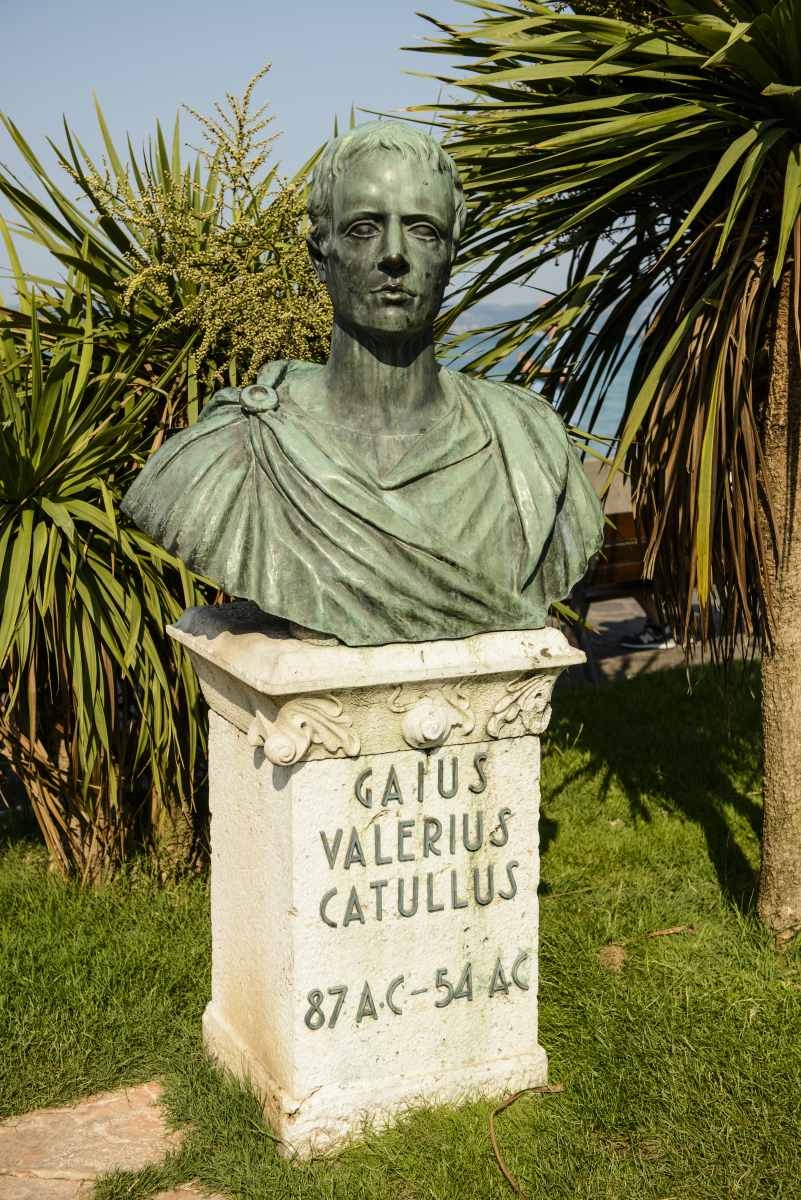
2.The Poems of Catullus: A Bilingual Edition Translated with Commentary by Peter Green may have its critics among classicists regarding translation of specific words or cultural accuracy or even among poets regarding meter and awareness of poetic methods, but this edition does offer the appeal of an energetic personality with an assertive, sometimes confrontational, attitude that makes for a compelling read. Try #16 opening with “Up yours both, and sucks to the pair of you.” There is much here that arouses delight, and who knows what else?

3. I once interviewed author John Banville, a man who spontaneously answered my many questions, including those about writing, in beautifully constructed paragraphs. So, I read his Time Pieces: A Dublin Memoir very slowly, surely with the intent to savour his quietly delicious and subtly moving writing. Also, to take in his connection to memory, time, cultural detail, and all else in one’s life that walks a fine line between remembering and reconstructing the past. “Dublin was never my Dublin, which made it all the more alluring. I was born in Wexford…” he begins, and later continues, “December days in the approach to Christmas are short, and end with a sense of soft collapse.” And he later exclaims, “Oh to be unhappy in the arms of Monica Vitti!” when first seeing L’Avventura. Oh, yes, agreed, give me some of that unhappiness!

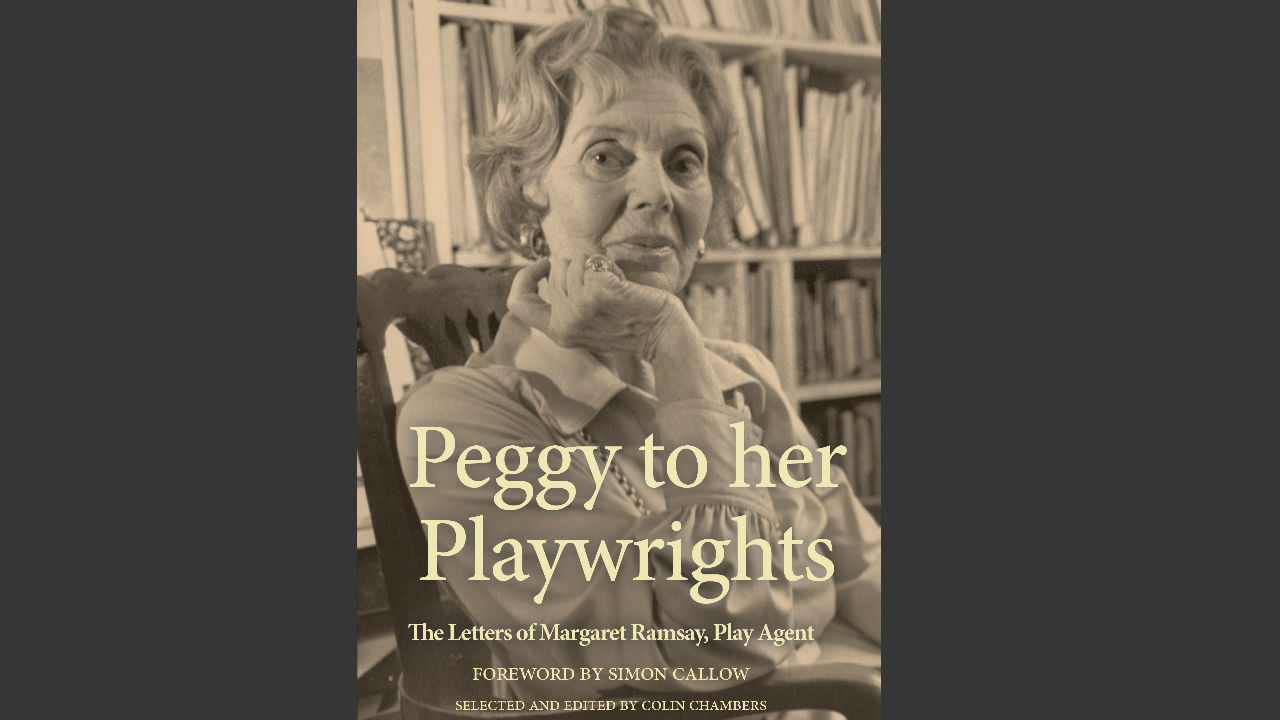
4.Talking of delicious, the back cover of Peggy to her Playwrights: The Letters of Margaret Ramsey, Play Agent’ with an Introduction by Simon Callow offers the following passage to David Hare from Ms Ramsey, a woman devoted to theatre and writing of the highest standards and writers of the highest integrity: “Fuck the critics. They’ve all compromised or sold out. They are failures. Along comes a shining child of twenty-six and tells them what’s wrong with them. They aren’t big enough to take the blows.” This book is an informed, opinionated, and exciting ride inside the real world of theatrical creativity and politics. Ramsey is a thorough pleasure to read and – why not? – perhaps emulate.

5.Whenever I weary of the ever-present denial of life’s hard realities posing as ‘positive thinking’ or ‘religion’ or ‘spirituality,’ I take an audio recording of Barbara Ehrenreich’s Bright-Sided: How Positive Thinking is Undermining America’ for another listen in the car, and find myself again applauding how this sharply-honed and ‘take no BS writer’ takes on both religious hypocrites and opportunistic new age gurus who make a good buck from the – take your pick – helplessness, gullibility, stupidity, or hopelessness of their followers. Her next book is Natural Causes: An Epidemic of Wellness, The Certainty of Dying, and Killing Ourselves to Live Longer, which, like the first, I’ve read, listened to, and thanked from the bottom of my sanity.

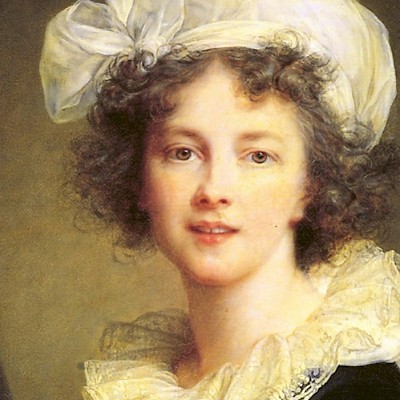
6.Elizabeth Vigée Le Brun: The Odyssey of an Artist in an Age of Revolution tells the story of an artist who has become a personal favorite, and I’m not alone in my high regard since Joshua Reynolds himself esteemed her higher than Van Dyck. I once flipped out over her technical mastery and depiction of character in her Self-portrait in a Straw Hat in London’s National Gallery where I later declared to the bookstore custodian – with her ensuing startled look – that the artist had the most kissable lips in town. Being Marie Antoinette’s favorite portraitist, Vigée le Brun had to quickly depart Paris after 1789, for travels in Italy, Austria, Russia, and England, during which both her clientele and her fame grew. This fascinating but discreet biography is as informed as possible, with sympathetic reference to the artist’s autobiography, and written in the somewhat guarded enthusiasm of academic prose.

7.The closest I ever got to The Band was through interviewing Garth Hudson some years ago in 2005. Recently, I have been deep-diving again into the one-of-a-kind and richly-realized music of The Band and, to support my listening to ten of their albums (okay, one is by a solo Rick Danko), have read two meticulously researched, consistently informative, sometimes eye-opening books: The Band: Pioneers of Americana Music by Craig Harris and The Band FAQ: All That’s Left to Know About the Fathers of Americana. The Harris book grabbed me early with its reference to If I Had a Hammer, originally The Hammer Song by The Weavers on the Hootenanny label (a 78 rpm recording I once owned). The FAQ chapter on clubs connected to The Band – or Ronnie Hawkins, actually – took me down memory lane of Toronto’s Le Coq d’Or, Warwick Hotel, Friar’s Tavern, Edison Hotel, Steele’s Tavern (yep, I heard Gordon Lightfoot there), Embassy Club, and Hamilton’s Golden Rail and Grange Tavern (there was one other where Hamilton Place was later built – name???). Both books are good reads full of information and certainly make one appreciate The Band even more.

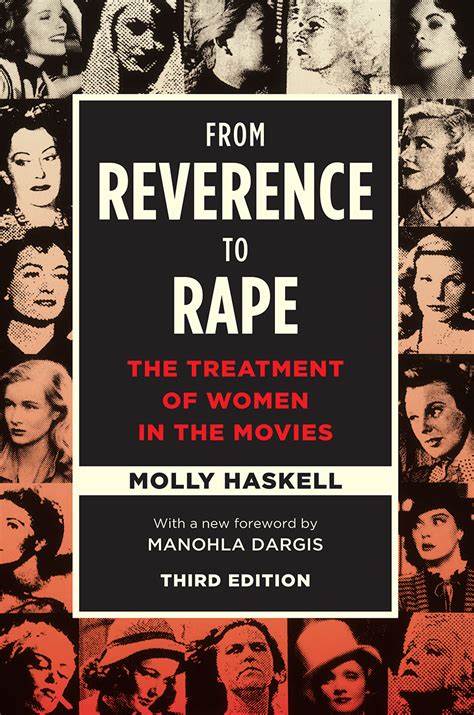
8. From Reverence to Rape: The Treatment of Women in the Movies (from 1974 and now revised and reissued in 1987) by film critic Molly Haskell takes an encyclopedic, feminist, acutely perceptive, insightfully critical, and ground-breaking look at the images of woman in film right from cinema’s beginnings. Haskell has a discerning mind and an evocative and razor-sharp writing style to match, so her take on women in cinema is always thought-provoking and challenging as she explores, say, the three types of women characters who appear in the woman’s film – the extraordinary woman, the ordinary woman, and ordinary woman who becomes extraordinary – and considers factors in a film woman’s life like the sacrifices she must make or the afflictions she endures or the choices on her plate or competition with other women. We rethink a great deal because of Haskell, say, about the misrepresentation of Doris Day as a professional virgin. Haskell is right on about Jeanne Moreau, Ingmar Bergman, Catherine Deneuve, and Francois Truffaut who “cannot, does not. lead innocence over the divide into experience.” Much here for both women and men to think about.
I also feel much appreciation for these bedside reads-in-waiting which I’ve been dipping into and, even at this early stage, am much taken by and craving time to further continue reading them:

9.Fighting Theory: Avita Ronell in Conversation with Anne Dufourmantelle in which the former, considered by some “one of the most productive, established, and shrewd literary and cultural theorists of our time” displays a compelling ability to think and think about thinking at one go, to run simultaneous lines of thought with all sorts of references brought forth, and a compelling ability with surprising and fresh observations like “French theory exists first of all as a product of exportation from France; cheese, wine, things connected with pleasure, or ‘French kissing’…..The label French connotes pornography, or at least excessive exploration, disordered morality.” I enjoy her recall of meetings with German scholars who criticized her thus: “she’s spoiling our fun…she sees problems in the texts, everything becomes problematic with her.” But then, thinking seems to be a crime in our culture, as it used to be a sin in religion. In any case, this is a book for slow reading of its interweaving concepts and references (Heiddeger, Derrida, and and) and much ensuing thought.

10.No doubt you have often wondered, “What is the relationship between performance and recording? How are modern audiences affected by the trends set in motion by the recording era? What is the impact of recordings on the lives of musicians?” Happily, Robert Philip – a lecturer, music critic, broadcaster, writer, and performer – has also had these questions in mind and he breaks new historical and aesthetic ground in his Performing Music in the Age of Recording. Often we can only piece together a hypothetical take on the styles of Brahms, Liszt, Chopin, and everyone else in the 19th century, but Philip makes such exploration a music-lover’s adventure, especially since we might not have recordings of a composer playing but we do have a student of a student of the composer in question on old 78s. And to think that Philip’s idea of doing research by listening was first met with academic disdain!

11.Yasujiro Ozu is considered by the Japanese to be “the most Japanese of all their directors” says Donald Ritchie in his full-length critical work on the director, Ozu, has its sections titled Introduction, Script, Shooting, Editing, Conclusion, plus a very detailed Biographical Filmography. I’ve been under Ozu’s spell for a long time via Criterion Collection prints of his late in career but sometimes very early in career films, been under the spell of one of his stars, the mysteriously radiant Setsuko Hara (even bought a book of her film photographs from Japan and, yep, it was in Japanese). But it’s hard not to treasure Ozu’s ability to stress subtly the profundities of day to day life, to present light brush stroke insights into human psychology and behavior, to imply so much by nuance. Ozu loved his sake, lots of it especially when working on shooting scripts, and, unmarried, he lived with his mother until her death, and he shows us so much about people and about ourselves with his usually knee-high camera angle and loads of spiritual and directorial artistry that we slowly come to understand.

12. Women Who Read Are Dangerous by Stefan Bollman contains this passage: “Reading now meant identifying with the emotions of another as expressed on paper, and thereby exploring and expanding the horizons of one’s emotional potential.” In other words, women who enter the worlds of worthy authors, enter with their imaginations and minds beyond the immediate control of the patriarchal cultures in which they live. They can learn more of life in the world and thumb a ride on the trajectories of their independent thoughts. Each painting in this beautiful collection of often new discoveries faces a sympathetic and often poetic description, but what often strikes the reader is the intense concentration and unviolated privacy of the depicted reader. Each painting is a world unto itself and we must give of ourselves to enter it.

13. Another essential book on Shakespeare? I used to have six or seven such books which felt fresh with each re-connection, and I’m adding This is Shakespeare by Emma Smith to that list of reference pleasures. How can one resist a book that begins, in the Introduction, with “Lots of what we trot out about Shakespeare…? blah blah blah is just not true, and just not important.” Whatever your take on Shakespeare, this book will challenge it and enlighten you with fresh perspectives on his plays. After reading Smith on Coriolanus, 1 Henry IV, Twelfth Night, and The Tempest, I already reread the sixteen page chapter on Coriolanus again, just to enjoy her inventive and informed perspective, her seductively fresh and undeniable writing style, her passionate commitment to Shakespeare as a master of theatricality and theatrical meanings, and her ability to communicate and celebrate the playwright’s “gappy” quality. Smith maintains “Gappiness is Shakespeare’s dominant and defining characteristic. And ambiguity is the oxygen of these works…”

Posted in Uncategorized | Tagged , , , , , , , , , | Leave a comment

BOOKS, CDS, DVDS: A PERSONAL HIGHLY RECOMMEDED LIST – .PART 2 CDS

.

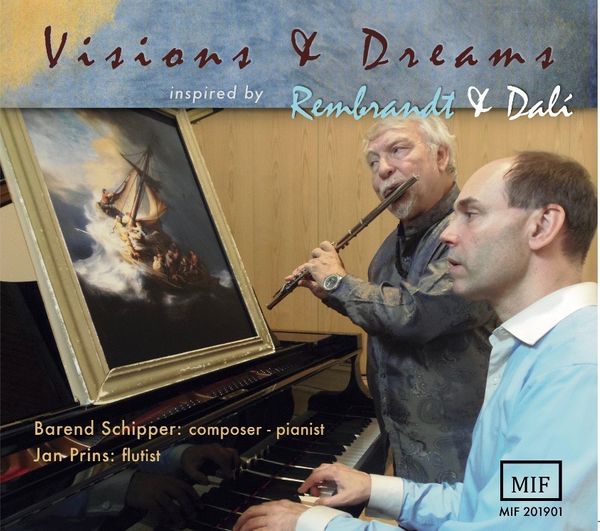
1.Visions and Dreams inspired by Rembrandt and Dali with composer pianist Barend Schipper and flutist Jans Prins in the Netherlands is available at www.barendschipper.com. It has for me, after many car rides with the CD, so much to offer and treasure, so let me count the ways. First, I am struck by the inescapably engaging nature of the recording. Whatever musical or philosophical problems are suggested by the music, the musicians take us through an imaginative, evocative, subtly challenging, and spirit-expanding resolution that quietly works the listener over. Also, the discreet employment of musical ideas is ever at play and always inviting, often in an ineffable area where, as depth-psychologist Ira Progoff once told me, “we don’t understand them, we just know them”. The music is beautiful, partly because we sense that the musicians are truly yet subtly engaged in their search for meaning. We sense something quite deep, yet unforced and natural here.

2.Beethoven String Quartets Op. 18 nos 4-6 by the Eybler Quartet pulsates with a joie de vivre that requires letting go on the part of the listener for ultimate effect. It also requires the use of seat belts, but I suggest going without. Why? The Eyblers, singly and collectively, seem not so much just very able players of Beethoven’s famous early quartets, but an extension of each composition, a realization of its inherent potential for musical energy and truth. What is happening and what should be happening seem melded as one and the listener submits to dazzling technical skill that seems natural and even off-handed. I love the momentum of the Eyblers, whatever their tempo, their full-bodied textures, their sense of spontaneous interaction in common musical purpose, their lungs-full musicality, their difficult but seemingly casual runs that leave the listener behind at the first several notes and catching up breathlessly, their vigorous and impish playfulness. Best of all I think of Beethoven with awakened imagination while listening – or is it that I know myself afresh as I do?

3. For Those Who Died Trying by composer Frank Horvat and offered by the Mivos Quartet is a profoundly haunting work, one that subtly works over the listener’s emotions and creates a feeling of unanswerable sadness. Its musical arguments are precisely and economically conceived, but potently and discreetly presented through the assured and insightful readings of the Mivos group. Both composer and musicians create a ritual of mourning in which the listener truly feels a loss of lives and the fragile values that make us human and are lost when the capitalistic purpose of profit rules. The work is described as “an epic 35 movement string quartet, a tribute to those Thai Human Rights Defenders who have lost their lives over the last 20 years defending their homeland, their villages, from corporations or state-run enterprises that seek to destroy them for their own profit, regardless of those affected.” Research has “documented over 59 cases of Human Rights Defenders (HRDs) who have been murdered or abducted in the last 20 years.” An essential recording.

4.The Shaman/Arctic Symphony: Orchestral Music of Vincent Ho delivers a thrilling experience in both compositions. The Shaman is epic, unpredictably dramatic, always dynamic, and rich with uniquely assertive moments throughout, something of an encyclopedia of percussive sounds from both the Winnipeg Symphony and percussion soloist Evelyn Glennie. Glennie is totally in control of both transitions and evocative potencies of sound, and one might say she is totally at one with sound as a presence, as a force, as a complex poetry. I once interviewed Glennie for a couple of hours and especially loved her criticisms of music schools that confined a student’s potential with unquestioned traditions int music education. Did I mention that, remarkably, she is deaf, a Dame, and renowned around the world?

Next, Arctic Symphony blends the Nunavut Sivuniksavut Performers with recordings of Arctic environmental sound and the Winnipeg Symphony in a compelling reading of Ho’s score. This composition is rich with a captivating variety of sounds and, in its many narrative paths and propulsions, consumes the listener’s mind and emotions, almost compels one’s surrender to a new and unfolding world created by Ho. A very exciting CD which at times feels cosmically playful.

5.Convenience Store Woman by Sayaka Murata with translator Ginny Tapley Takemori and read movingly deadpan and sympathetic by Nancy Woo concerns a 36 year old woman, Keiko, who works for 18 years in a convenience store and cannot imagine herself in a life beyond her job. She copies the styles of fashion and the personalities of others and the language they speak, and develops a self that above all fits in. She speaks of the placement of groceries on shelves as if this is of universal importance, and maybe that is why I think, while listening, of Hiroshi Teshigahara ‘s film Woman in the Dunes in which some critics have sensed Taoist ideas unfolding. I’m into my third listen of this quietly moving first-person novel which has been very popular in Japan.

6. A Dead Room Farce: A Charles Paris Mystery by Simon Brett and starring Bill Nighy with his unique undercurrent of laid-back yet urgent, precise yet pinched, irreverent yet involved, angst-ridden yet quietly merry, and achingly deadpan delivery. I first heard Nighy in similar gear as Trigorin describing the trials of a writer’s life in a National Theatre production of Chekhov’s The Seagull in London. opposite Judi Dench as Arkadina. As each tribulation was noted, I found myself laughing uncontrollably, since Nighy/Trigorin’s woes echoed my own at the time. This was one of the funniest moments in my life and when Nighy stepped forth to take a bow afterwards, I, sitting ten feet in front of him, applauded vigorously with my hands overhead and gave him my two thumbs up, at which point he gave me a wink. I have heard eleven episodes of the Charles Paris Mystery series which are directed and acted at a vigorous clip and written for refreshing moments at every turn.

7. Maryem Tollar sings with a quietly haunting presence, an easy dignified elegance, and a self-assured femininity in a new CD, Cairo Moon, from the group Al Qahwa which also features Ernie Tollar on Arabic nay flute and saxophone, Demetri Petsalakis on oud, Naghmeh Farahmand on the dumbek, an Arabic hand drum. We have multi instrumentalists in these musicians and the CD also features Alfred Gamil on violin as in the duet with Ernie Tollar’s sax, and also Majd Sukar on clarinet. One quickly surrenders to the irresistible atmosphere created by Al Qahwa, and because this is a small group of diversely-expert musicians, one takes pleasure in, say, many tonal varieties, rhythmic shifts, and individual instrumental voices as one might in listening to chamber music – all the while as one’s hips sway to the music and one feels summoned to a nameless somewhere.

8. I’ve been listening lately to Keith Richards’ autobiography compactly titled Life -deliciously read by Johnny Depp – and again am reminded of the musical influence of touring bluesman Big Bill Broonzy on Britain’s budding rockers who were Richards’ contemporaries in the ‘60s. British folk legend Martin Carthy has also noted Broonzy’s impact on him. Anyway, the Big Bill Broonzy Story on two CDs – I first had the recording on 3 LPs as a teen – remains a priceless combination of Big Bill’s memories, demonstrations, anecdotes, and insights interspersed with about thirty blues and folk songs. Broonzy, as always, displays one of the best blends of voice and guitar in the blues canon, and his sense of precisely-right and effective fills and their placement, and of supportive rhythms, is a gift to any lover of the blues.

9. After many years of listening to Angela Hewitt’s Bach on piano and, more recently her two Scarlatti Sonatas CDs and her Beethoven Opus 31 # 2 (the first Beethoven sonata recording I bought many decades ago, with Ernst Von Dohnanyi as pianist, was the opus 31 # 2), I began to wonder if one could detect a distinctly feminine voice in piano-playing. How would Hewitt, Martha Argerich, Anne Queffélec on Satie, Ivana Gavric, Hanna Shybayeva, Katia Buniatishvili, Beatrice Rana doing the Goldbergs, Helene Grimaud, and Imogen Cooper doing the Diabelli Variations offer grounds for comparison and exploration, along with the unique insights and pianistic thrills, overt and subtle, of each one. With each pianist I have felt many moments of “oh” and “aha” and the realization that my habits of thinking were at stake. I’ll keep you posted, but don’t rush me.

10. In London last year I got to chat with folk/traditional singer Martin Carthy and am very glad of the release of Live at the Pavillion with Martin and his wondrous fiddler-singer daughter Eliza Carthy. It’s an informal yet professional, heartfelt and subtly imaginative set that sets one’s feet on the earth, back in history, and among the working class. And if Eliza is a thrilling singer you should hear her with her legendary mom, Norma Waterson, probably the most thrilling voice in all of traditional music. Norma has an unsettling yet tender depth in her voice. These people are a legendary presence in folk music, for one because they reveal the haunting artistry available in profound human experience expressed in word and music. We listen and we feel connected, moved, and thrilled by humanity reaching for its values and its value.

Posted in Uncategorized | Tagged , , , , , , , , , , , , , | Leave a comment

HANNA SHYBAYEVA: ON HER NEW RECORDING OF CHAMBER VERSIONS OF BEETHOVEN’S PIANO CONCERTI 3 & 4 WITH THE UTRECHT STRING QUARTET AND LUIS CABRERA ON DOUBLE BASS (ON NAXOS) …. WHAT’S HAPPENING IN MY CREATIVE LIFE WITH JAMES STRECKER

JAMES STRECKER: Please tell us what you want the public to know about your recent completed project or the one you are actively working on. What is it, why is it, and how was/is it done?

HANNA SHYBAYEVA: My recent project is a combination of two of my great passions: Beethoven and chamber music. 2020 is coming and we all want to contribute somehow to the birthday year of one of the most amazing composers who ever lived. Since I never would have the ambition to bring out yet another complete piano sonatas or piano concerto box as we know it, I thought to combine my love for Beethoven’s music with another project I am busy with already for many years, namely – performing piano concertos and symphonies in a chamber music arrangements/settings. There are many existing, since the ‘salon concert’ fashion was very popular back in time.

So that’s how the first CD in the series of ‘Beethoven complete piano concertos arrangement for piano and string quintet by Vinzenz Lachner recently came to life on Naxos label (released November 8, 2019). On this first CD we recorded piano concertos no. 3&4, and the next CD will include piano concerto no.1 and the 2d symphony arranged for piano trio by Beethoven himself. The third CD will feature piano concertos no. 2 & 5 – recorded in the beautiful Riverside Studios in Cologne with the Utrecht String Quartet and Luis Cabrera on the double bass.

JS: What kind of audience will this project interest? What new audience are you also seeking? Why to both questions?

HS: I think it’s meant for a very broad audience. Some might like it because it’s the same music they know very well, but in a different setting and they will find something fresh and new for themselves. Others might listen to it only to confirm to themselves that it’s really nothing compared to the orchestral version. Maybe I also want to encourage the public and other musicians to not be afraid of these arrangements, as I know so many of us are, and give them a chance to be played and be listened to and do it with the open mind and ear. I know from experience that it is a very rewarding process in the end and people come to me afterwards saying how they didn’t expect to enjoy it, but they did a lot after they left out the expectations and only listened to the music.

JS: In what ways was/is this project easy to do and in what ways was/is it difficult to realize? How long did it take and why that long?

HS: A CD production is always difficult to realize, looking for money, organizing a recording venue etc., and it’s not easy. In this case, I am grateful and happy to have worked with people who all did their best to make this process as smooth as possible.

As for the creative part of it, it was a lot of fun to rehearse these concertos with the quintet – it has so much a chamber music feel to it! Also, not having a conductor in between yourself and the other musicians gives the whole process a very special flavour, we are all musicians and conductors at the same time.

It didn’t take us too long to rehearse the pieces and the recording was done in two days, so all together it wasn’t so long. The whole project though will take some time, and now I am preparing the 2d CD, aiming for release in autumn 2020. The 3d CD will most probably arrive in 2021.

JS: How are you planning to promote, market, and sell this project to the public or how is it being sold?

HS: Naxos is taking care of the promotion and marketing for this project. I am, of course, also promoting it through my website and social media. As far as I know it’s already doing quite well on Spotify.

JS: Please give us a brief autobiography, some stuff about yourself, that is relevant to this project.

HS: I am originally from Belarus and live in the Netherlands since 1999, where I also finished my studies and right now have the big part of my performances and activities. Six years ago, I also started teaching at the Rubinstein Academy in Düsseldorf (Germany), so I very much share my time between the two countries. I am also active in other genres of music, especially contemporary music, but also jazz, improvisation, world music.

I love chamber music and try to play a lot of it; for me it’s the best way to make music in general.

JS: What’s next in your creative life?

HS: Next to preparing the 2d CD in this project, I am playing several different new programs in the coming months and also preparing a program for the 2d CD of my other project ‘Tangos for Yvar’ which includes contemporary tango pieces written between 1983-1991 and commissioned by an American pianist Yvar Mikhashoff. You can read about it here:

https://www.hannashybayeva.com/recordings/TANGOS-FOR-YVAR-p139614406

Posted in Uncategorized | Tagged , , | Leave a comment

RACHEL MERCER: PRINCIPAL CELLIST WITH NATIONAL ARTS CENTRE ORCHESTRA – OUT SOON, 2 CDS, AN ALBUM OF VIOLIN & CELLO DUOS BY CANADIAN WOMEN WITH HER SISTER AKEMI MERCER-NIEWOEHNER AND A RECORDING OF THE MOSAÏQUE PROJECT WITH PIANO QUARTET ENSEMBLE MADE IN CANADA – DECLARES “IT HAS SERVED ME WELL (THINKING UP PROJECTS, PLAYING MUSIC, MAKING ALL KINDS OF CONNECTIONS) BUT I’M STILL SOMETIMES SURPRISED BY MY IMAGINATION” … A REVIEWER INTERVIEWS PEOPLE IN THE ARTS

Photo by Nikki Wesley

Photo by Jeewon Kim

JAMES STRECKER: Please tell us about one or more projects that you have been working on or have recently completed. Why exactly do they matter to you and why should they matter to us?

RACHEL MERCER: One of my most personal projects is just coming out; an album of violin & cello duos by Canadian women, recorded with my sister Akemi Mercer-Niewoehner, including 3 new commissions. This project grew out of a need and want to work with (and see!) my sister, who is an amazing musician, and we are really close, plus a desire to feature Canadian women composers in rarely performed works plus new ones. We honour the “grand dames” of Canadian music, Jean Coulthard and Violet Archer, and celebrate 2-3 generations of current composers with the music of Barbara Monk Feldman, Alice Ho, Jocelyn Morlock and Rebekah Cummings. These are all unique, diverse and fascinating voices that deserve to be heard.

As well, my piano quartet Ensemble Made In Canada is putting final touches on our recording of the Mosaïque Project; a project we’ve been working on for the past 3-4 years. It includes a 14 movement work each by a different Canadian composer of various genres, each inspired by a different region of the country, which we have toured to every province and territory over the past 16 months. At each concert, audience members draw on prepared cards which are then uploaded to our project website to be viewed. The material is a result of the composers’ imaginations, through our playing, through the listeners’ ears, to their art, through the net, to others’ eyes…a truly original view of this country through many minds.

JS: How did doing these projects change you as a person and as a creator?

RM: I think these two projects particularly really helped me experience how much the human connection can be a part of an artistic work; that it’s not always just about the music in a bubble on a concert stage. I also like when it’s just about the pure music, but adding the human element adds another layer of meaning and appreciation for the audience.

JS: What might others not understand or appreciate about the work you produce or do?

RM:Maybe for non-musicians, one thing might be that, yes, I play the cello in various roles (orchestra, chamber music, solo), but every role has totally different demands and technique. From the difference of playing a solo cello piece in a small venue to playing a concerto in a huge hall with an orchestra, or playing cello in a string quartet vs. a piano trio, or playing in a section in orchestra or leading, or playing in a group with people who always play solo repertoire vs. people who play regularly in an orchestral setting, to performing for a seniors’ home vs. playing standard repertoire in a traditional hall, every situation is completely different. And I believe they should be approached differently, from the actual presentation and interaction with the other musicians and audience, to the goals of each performance, to the actual technicalities of things like intonation, sound and articulation. Every situation demands different kinds of energy, leadership or collaboration, amounts of personal input, while all trying to remain true to the actual music!

JS: What are the most important parts of yourself that you put into your work?

RM: Despite all this activity described above, my “day job”, or at least my main activity is playing Principal Cello of the National Arts Centre Orchestra. This position has completely different demands from the other projects I work on, and I wholeheartedly throw my energy into it to contribute all that I can. I’ve had a huge learning curve that continues to grow over my few years in this position and I hope my colleagues feel that I offer complete dedication to the music and the role, including the responsibility of communicating and leading, all while trying to stay true to my values and beliefs as a musician and human being. I think anyone can tell when an artist is being honest and true to themselves and the art, and I believe that is the only way to connect to an audience.

JS: What are your biggest challenges as a creative person?

RM: These days probably most people’s challenge is time! For me, any creativity or creative thought needs time and space to grow, and one of the biggest challenges I find is allowing myself to have that time, particularly with the cello. Time to “play” (not practice, or “play the cello”, just “play”) and just explore and let anything happen without any specific goal in mind. Luckily my schedule often includes long drives, where, after I’ve listened to the music I am working on, my brain has time to wander and thinks up all kinds of things! Most of my projects and ideas come during these drives.

JS: Imagine that you are meeting two or three people, living or dead, whom you admire because of their work in your form of artistic expression. What would you say to them and what would they say to you?

RM: I don’t think I’d ever have the courage to actually ask these things – basically fan letters!

Yo-Yo Ma: You and your music transcend physical, emotional, racial, intellectual borders, and you work constantly to connect people. How can I use my activities and music to do that on a deeper level? How can I start? What should I do more? – I’m sure the answer would be deeply philosophical and inspiring!!!

Dietrich Fischer-Dieskau: Can I please have a masterclass in sound production? How do you infuse every work you perform with such depth and nobility? – No idea what he might say. Maybe that I should watch more of his masterclasses!

JS: Please describe at least one major turning point in your life that helped to make you who you are as a creative artist.

RM: Right out of school I joined a touring string quartet, the Aviv Quartet, and had an amazing 8 years with them – it was what I had always dreamed of doing as a career. When for various reasons it was time to leave, suddenly I didn’t have that core work, and while it was scary and hard to not have a regular position, in a way it felt like anything was possible. I had to learn how to find chances to perform, to make a living, while actually having time to dream a bit and think up long term projects. The “freelance” life as it was really forced me to learn how to create and follow through with projects, building tools and opening up possiblities.

JS: What are the hardest things for an outsider to understand about your life as a person in the arts?

RM: The projects that I’ve been so lucky to work on really take over my and my groups’ lives at various points. There are so many details involved beyond the actual music that is presented on stage or on recording, and these days musicians do most of the work themselves. We have to know about contracting (from fee rates to creating legal contracts), PR and marketing, budget management, fundraising, grant writing, design, music editing, the technicalities of cd production and the digital world, tour booking, publishing, licensing, royalties, distribution, concert presenting, audience relations, all while trying to maintain and evolve our artistic standards. Even though we have professionals working with us in most of these fields, and great support systems, it has been tough at times trying to make sure it all comes together at the right moment! But the result is always worth it and we’ve learned a lot.

JS: Please tell us what you haven’t attempted as yet that you would like to do in the arts? Why the delay so far?

RM: There are many projects that bounce around in my brain just waiting for the right time and for the need to do them to increase enough for action! But most of them are activities that I have done in the past, just with different people or repertoire, so I know how to get them done, how to execute them, and I have some idea what the result would look like. But, the real answer to this question is the same as your first interview with me; a collaboration with dance! I’ve played with dancers in different formations from orchestra with dancers on stage, to small ensembles being actually onstage with the dancers. For me the physical act of playing instruments and the arcs and shapes of the actual music could be realized in dance. I think even a literal realization of certain pieces would be beautiful! Almost like seeing a graph of the note shapes and lengths, but live by a human being…this is so far from my comfort zone and would be really an experiment in working with a dancer or choreographer, so I haven’t had the courage yet to explore further. I think I will eventually get there!

JS: If you could re-live your life in the arts, how would you change it and why?

RM: I don’t think I’d want to re-live anything differently. I have been so lucky, from a really natural and happy progression of studies, through many different career experiences that just keep evolving and changing. Honestly, there is still so much possibility and things to explore, and while sometimes it seems obsessive, I love even just the day-to-day activities of making music and working with others. I’m really lucky to be able to perform so often, constantly reminding me the purpose; to connect to others through music.

JS: Let’s talk about the state of the arts in today’s society, including the forms in which you work. What specifically gives you hope and what specifically do you find depressing?

RM: What gives me hope is realizing that audiences are actually quite open and ready to experience new things. Possibly crazy availability of anything on the internet has made us aware of so many things that we would never see otherwise. Also that the younger generation is creating and inventing at a huge pace! It’s hard to keep up

I don’t know about depressing, but when I see people, or even catch myself, working on autopilot, as if this is just a job, not a mission, I get a little sad. It’s almost impossible to avoid at some point, especially if one is not always in control of the creative output – we’re only human! – but when it happens, I wonder what has happened – where did that spark go that made us want to become musicians in the first place?

JS: What exactly do you like about the work you create and/or do?

RM: I love the feeling of physcially creating sound and making music with my cello, alone or in collaboration with others, and sending that sound out to a listener, telling them a story, helping them feel something. I love bringing people’s attention to a story in music, a particular musician, a particular composer, or a project that I feel is interesting, whether it’s mine or someone else’s. Anything that might inspire or enlighten or help someone feel lifted above the day to day, enhancing their life.

JS: In your creative life thus far, what have been the most helpful comments you have heard about your work?

RM: That I have moved them. Or that they understood the music better from watching me or hearing me play. These remind me why I’m doing it in the first place. As for constructive criticism, one I get a lot is that I’ll tend to play collaboratively all the time, even when a solo line possibly needs more “oomph” or a little more “ego” in it. I’m working on that, and I understand why it’s necessary, but I think I usually still find it really comforting to keep as much connection to the other parts around me that I can!

JS: Finally, what do you yourself find to be the most intriguing and/or surprising things about you?

RM: While I’ve lived with it all my life, I’m still sometimes surprised by my imagination. It has served me well (thinking up projects, playing music, making all kinds of connections), it has been challenging (night terrors, and years of little sleep as a kid after reading some scary books, or even just the hint of something otherworldly), and it constantly fascinates me through my dreams, of which I have a lot and are full of symbolism.

Photo by Bo Huang

Posted in Uncategorized | Tagged , , , | Leave a comment